
 Information
Information
Information
|
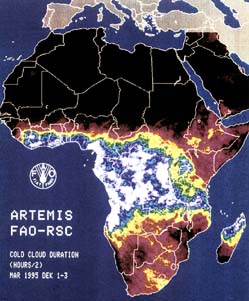
The System issued warnings of developing drought in southern Africa in 1991/92 and again in 1994/95, some 3-4 months in advance of the harvest. In 1987, GIEWS issued an Alert three months ahead of the harvest on the poor performance of the south-west monsoon in Asia and its implications for regional food supples. This enabled several countries to make critical decisions on imports and food stocks.
Here is how GIEWS works: Every day analysts study dozens of indicators that affect food supply. Satellite images and weather station data show how the growing season is progressing in broad areas of the developing world. Socio-economic indicators are monitored. In an emergency, major aid donors and humanitarian organizations are alerted by fax/telex. FAO missions are dispatched to the affected area to confer with local authorities and study the situation first hand. National and international efforts are mobilized to provide food for the hungry and to restore production and distribution.


Comments?: [email protected]