

The joint initiatives are established between several CPF member organizations to jointly coordinate and implement activities contributing to the same goals. The initiatives strengthen collaboration and mobilize political, scientific, technical and financial support within and beyond the partnership.

CPF continues its efforts to make reporting easier for countries. The objective of the CPF joint initiative is to propose ways to reduce the forest-related reporting burden, for example, through reducing and streamlining reporting requests, synchronizing reporting cycles, harmonizing data collection methods and increasing data comparability and compatibility, and facilitating the accessibility and flows of existing information.

The Global Forest Financing Facilitation Network was established by the UN Forum on Forests in 2015 to facilitate access to more effective use of funding for forests; share data and best practices on forest financing; and contribute to the Global Forest Goals of the UN Strategic Plan for Forests 2030. CPF members contribute to the scaling-up of sustainable forest management by assisting countries to access resources.

This Joint Initiative envisions global improvement in the knowledge and skills for managing forests and trees. It aims to catalyze action, generate awareness and support, and foster partnerships to sustain robust, holistic and inclusive forest-related education and knowledge-sharing systems. The scope of the JI includes actions to strengthen formal forest education in primary schools through university programmes, continuing education and field training through extension and farmer field schools, and the sharing and use of traditional and Indigenous knowledge.

Global forest expert panels (GFEP) are led by the International Union of Forest Research Organizations (IUFRO). GFEP produces objective and independent scientific assessments and provides state-of-the-art reports to international forums and policy processes to support more informed decision-making at the global level. The reports are prepared by thematic expert panels with internationally recognized scientific experts. All reports undergo rigorous peer review.

The CPF launched the first Wangari Maathai Forest Champions Award in 2012 to honour and commemorate the impact of the late Kenyan environmentalist, who championed forest issues across the globe. Winners are celebrated for their outstanding contributions to conserve, restore and sustainably manage forests and to raise awareness of the key role forests play in supporting local communities, rural livelihoods, women, youth and the environment.

The Communicators’ Network ensures effective coordination among CPF members, provides strategic advice to the CPF on communication and outreach, including participation in global events, and supports the development of related initiatives and products, such as the International Day of Forests, the Wangari Maathai Forest Champions Award, and Grow the Solution, implemented in partnership with the Sustainable Wood for a Sustainable World Joint Initiative.

This initiative was adopted in 2018 to strengthen sustainable wood value chains by enhancing their social, economic and environmental benefits from production through to consumption. It is led by the Food and Agriculture Organization of the United Nations (FAO) with support from the FAO’s Advisory Committee on Sustainable Forest-based Industries (ACSFI), Center for International Forestry Research (CIFOR), International Tropical Timber Organization (ITTO), World Bank and the World Wildlife Fund (WWF).

This initiative aims to upscale global ambitions to address deforestation in response to the UN Secretary-General’s 2019 call to “Turn the Tide on Deforestation”. It aims to keep forests high on the global climate agenda and enhances the integration of forests into countries' Nationally Determined Contributions. It also focuses on advocacy and scaling up ongoing efforts across and beyond the UN system to halt deforestation, following the UN Secretary-General’s initiative and consecutive recommendations.

This initiative aims to strengthen the conservation of tropical primary forests worldwide through increased awareness among government and donor decision-makers and stakeholders of their importance in combating climate change, biodiversity loss, and land degradation, leading to increased supportive funding and investments.
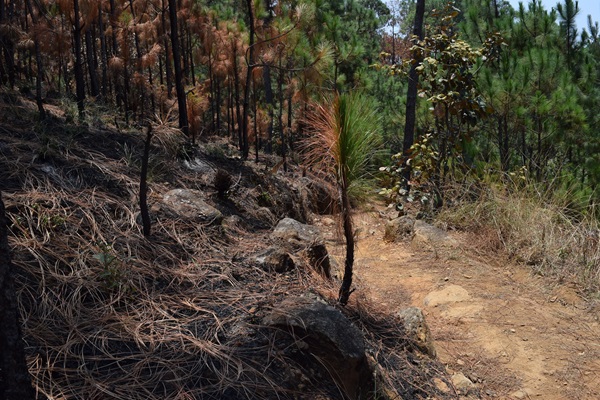
The overarching objective of this JI is to reduce the excessive use of fire and the risk of wildfire, and to promote integrated fire management in tropical forests and surrounding landscapes, thereby contributing to the sustainable management of these resources.

This initiative seeks to update data on the links between forests, food security, and nutrition through context-specific case studies at multiple levels. It aims to identify challenges and opportunities for cross-sectoral policies, share lessons and good practices globally, and create a roadmap to scale up actions, especially at the country level, to enhance forests’ contribution to food security and nutrition.

This joint initiative aims to assist countries in understanding the role of conservation and sustainable use of forests in the Kunming Montreal Global Biodiversity Framework goals and targets and the interlinkages of the Global Forest Goals and other forest-related instruments.

The overarching objective of this JI is to enhance sustainable forest management and compliance with the Convention’s requirements by promoting legal and sustainable trade in CITES-listed tree species. It aims to address the illegal, unregulated and unsustainable harvesting of and trade in CITES-listed tree species, which leads to deforestation, forest degradation, and loss of biodiversity.


