Food and Agriculture Organization of the United Nations- FAO

Payments for Environmental Services (PES) from Agricultural Landscapes

Agricultural Development Economics Division (ESA)EspañolFrançais

The role of the farmers

Of the numerous ecosystem services for which agriculture has a crucial role to play, the ones for which farmers already today receive a compensation are the following: carbon sequestration, water quality and quantity, biodiversity preservation and provision of landscape aesthetics.

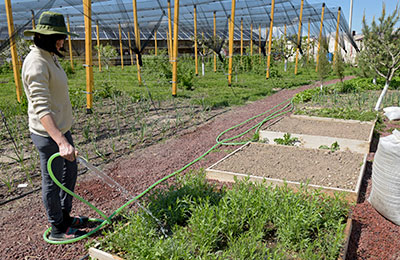
Agricultural ecosystems are by far the largest managed ecosystems in the world and their provision of ecosystem services beyond the intended production of food, fibre or timber, depend on the decisions of farmers, fishermen and forest users that manage them.  Farmers are therefore the biggest group of natural resource managers on the earth: their actions can enhance and degrade a broad number of natural and managed ecosystems.  If appropriately informed and supported, land managers can reduce the negative environmental impacts from their production activity and improve the regulating and supporting services whose effects spam regionally and globally.

Modern agriculture has been very successful in providing the ecosystem services for which markets exist – crops, livestock, fish and wood – but managing agro-ecosystems to obtain these provisioning services has often come with effects on the other ecosystem services which are not covered by markets - regulating, cultural and supporting ecosystem services (for more on this see the section About PES).Some of these effects are positive (e.g. recharging atmospheric oxygen and views of a pastoral landscape) but some others are negative (e.g. water pollution by plant nutrients, land degradation and soil erosion from slash and burn, tillage and over-grazing).

However, farmers can reduce their negative impacts on these services, and become important suppliers of environmental services – at different degrees of trade-off with agricultural production – by integrating conservation measures into their production process (e.g. reducing tillage or leaving more crop residues on fields, can enhance soil fertility, reduce the need for chemical inputs as well as increasing soil carbon sequestration potential), diverting land from crop and livestock production to other uses (e.g. set-aside, i.e. the practice of leaving a proportion of farm land uncultivated or put to non-agricultural use for a period of time) or avoiding a change in land use (e.g. not converting land from forest to agriculture).

Changes in agricultural production systems and in agro-ecological conditions determine changes in the combination of ecosystem services provided. In many cases, a reduction in some provisioning service (most of which take the form of private goods) is required in order to enhance the supply of other supporting, regulating or cultural services (which are often public goods).  Trade-offs may also arise among the various types of regulating and supporting environmental services supplied(1). 
Of the numerous ecosystem services, for which agriculture has a crucial role to play, here we focus on the following four:

  • carbon sequestration - encouraging increased sequestration and long-term storage of carbon in plant biomass and soil organic matter, for climate change mitigation;
  • watershed services - aiming mainly at increasing water use efficiency and at the protection or improvement of water quality, through nutrient and chemical load management and erosion reduction, which will help to reduce sediment load in streams and thus reduce the risk of landslides and floods; increased groundwater recharge by better infiltration of rainwater;
  • biodiversity conservation - supporting the protection of remaining areas important for wild biodiversity or enhancing the quality of on-farm habitats and agro-biodiversity; and
  • landscape aesthetics - involving the protection or enhancement of landscape features, like tropical forests, rice paddy terraces or a hedgerow-lined agriculture mosaic that are valued for their aesthetic and cultural aspects.

FAO. 2007. The State of Food and Agriculture 2007. Part I: Paying farmers for environmental services. Rome.