Global Soil Partnership
 

Pillar 4: Enhance the quantity and quality of soil data and information: data collection (generation), analysis, validation, reporting, monitoring and integration with other disciplines

©FAO/Roberto Faidutti

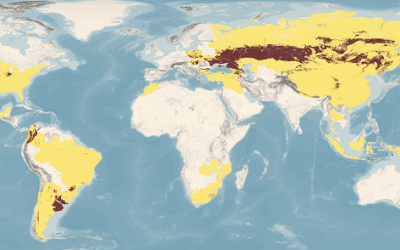
Current global databases are still essentially using a mixture of information collected more than 50 years ago at the time of the compilation of the first global soil map by FAO/UNESCO and more recently under SOTER (Soil and Terrain Database) and other regional or national programs.

The most recent Harmonized World Soil Database is essentially a compilation of these existing soil data into a common raster at 1 km resolution. With development in information technologies, there is an urgent need for updated high-resolution data and information on global, regional and local soil resources, for food security, climate change related issues, biodiversity conservation and other issues. Integration with other disciplines (e.g. hydrology, forestry, climate and engineering) is essential. Detailed and updated information on soil health and fertility,  on soil organic and inorganic carbon content from soil profiles, and also on soil pollution and water holding capacity is missing in many countries.

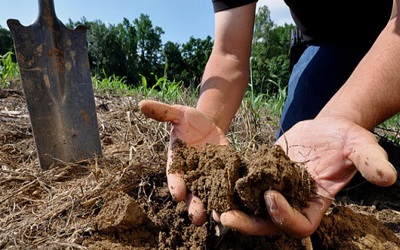
Even though many soil data worldwide are rather outdated, as well as being inconsistent, incomplete and at coarse resolution, nonetheless the wealth of soil related information (soil legacy data) gathered during fieldwork is of tremendous value (especially regarding soil change assessment). It is of utmost importance to the GSP, that existing soil legacy data (in the form of hard copy documents, reports and maps), are scanned, digitized and made available through updated soils databases and information systems. 

Ultimately the Global Soil Partnership should provide a common soil data and information platform responding to various users needs at global, regional, national and local scales. 

The provision of soil data and information needed by the end users should be a guiding principle of the GSP. 

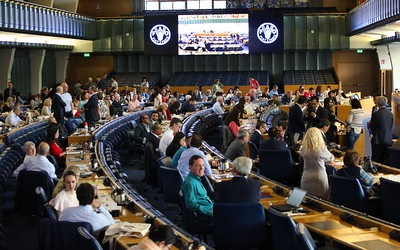
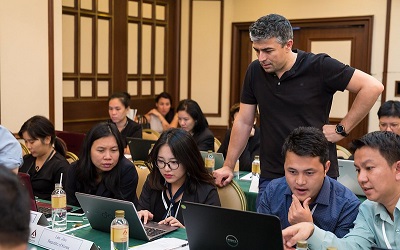
©FAO/Giulio NapolitanoAs part of the implementation of activities under this pillar, FAO together with e-SOTER project, the European Commission and the Gorup of Earth Obervations jointly organized a workshop “Towards Global Soil Information: activities within the Geo Task Global Soil Data” on 20-23 March 2012 at FAO HQ. The objective of the workshop was to review the state of the art of tools and techniques for mapping soils at global and regional scales and the related information gathered by the e-SOTER project as an input for defining future activities under the implementation of the Global Soil Partnership.

A detailed report of the workshop was prepared and can be found here.

As per the conclusion of the workshop, an agreement was reached on an international working group that would prepare a scoping paper and a plan of action for pillar 4 (Global Soil information) of the GSP by the end of 2012. 

The meeting elected a drafting committee for the working paper on the basis of a balanced regional representation as follows:

  • Africa: Martin Yemefack
  • Asia: Ganlin Zhang
  • Europe: Rainer Baritz
  • Latin America: Aracely Castro
  • MENA: Rachid Moussadek
  • North America Jon Hempel
  • Oceania: Neil McKenzie
  • Secretary: Ronald Vargas

GSP/E-SOTER Global Soil Information Workshop