|
Natural Resources and Environment
|
November 2008 Scoping agriculture-wetland interactions
Towards a sustainable multiple-response strategy |
 |
| FAO Water report #33
|
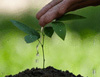
Enhancing sustainable agriculture-wetland interactions to maintain wetland ecosystems and foster their multiple services as food provision, water regulation and biodiversity, is an inherently complex and challenging task. Increasing demands for food and fuel, as well as rising food prices, continue to drive the agricultural intensification and transformation of wetland ecosystems – frequently at the loss of biodiversity and other ecosystem services. This new FAO Water Report provides a framework and assessment (based on 90 cases) of how socio-economic and political drivers and pressures continue to shape this agricultural intensification and lead to transformations of the state of the wetland ecosystem and the services it has to offer. The report argues that sustainable agriculture-wetland interactions require multi-response strategies that are targeted at: diversifying agricultural services and livelihoods; exploitation of multiple (rather than single) ecosystem services, and; policy, management and technical measures. How the presented framework can aid the formulation of such sustainable multi-response strategies is illustrated by its detailed application in five diverse cases. |
Available in:  |
|
| | For related information, see the following theme pages: -Water Resources |
October 2008 International Watercourses/River Basins including Law, Negotiation, Conflict Resolution and Simulation Training Exercises
|
 |
| Teacher's Manual |
Creating a comfortable environment for the study of international water law and conflict resolution in which participants can explore their behaviours is critical. This new FAO Water Teachers Manual features exercises and activities that can help make this possible; the manual addresses issue like trust, encourages learning and improves performance and interaction between group members.
The initiative which led to the development of these training materials grew out of discussions with the Development Law Service, Legal Office, Food and Agriculture Organization of the United Nations (FAO) on the occasion of the Program for the Regional Workshop on International Water Law and Negotiation Skills for Sharing Transboundary Resources in Bujumbura, Burundi in the Spring of 2006. |
Available in:  |
|
| | For related information, see the following theme pages: -Water Resources |
September 2008 Aquastat Water Resource Analysis |
 |
| Interactive maps |
This new interface enables you to make easy and quick comparisons of population and water indicators via Aquastat animated maps.
AQUASTAT is FAO's global information system on water and agriculture developed by the Land and Water Division. It collects, analyses and disseminates data and information by country and by region. Its aim is to provide users interested in global, regional and national analyses with comprehensive information related to water resources and agricultural water management across the world, with emphasis on countries in Africa, Asia, Latin America and the Caribbean. |
Available in:  |
|
| | For related information, see the following theme pages: -Water Resources |
September 2008 FAO project: Rehabilitating irrigation in Afghanistan |
 |
|
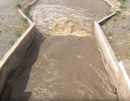
The Rehabilitating irrigation in Afghanistan project rehabilitates hundreds of irrigation canals from small to large categories throughout the country. This results in the supply of water to vast tracts of land, thereby recovering prior water losses and resulting in a direct impact on improved/increased crops, which promotes peoples livelihood while simultaneously minimising water users’ disputes on water allocations and distribution.
Due to the long conflict, Afghanistan has not produced hydro-meteorological records since 1978. As a result, the project is currently installing hundreds of hydrological stations countrywide to ensure proper planning for water resources management and infrastructure development.
The capacity building of hundreds of national staff has also contributed to the promotion of their technical knowledge. Many locals are now gradually assuming their responsibilities.
A photo gallery documenting the Afghanistan project is also available. |
Available in:  |
|
| | For related information, see the following theme pages: -Water Resources |
June 2008 Water and the Rural Poor |
 |
| Interventions for improving livelihoods in sub-Saharan Africa
|
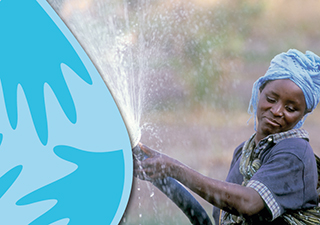
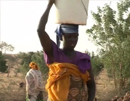
A joint FAO- International Fund for Agricultural Development (IFAD) Report. The primary goal of this report is to contribute to the development of strategies to reduce rural poverty in sub-Saharan Africa (SSA) through investments in the agricultural water sector. An estimated 75 percent of the world’s poorest people – 880 million women, children and men – live in rural areas, and the majority of them depend on agriculture and related activities for their livelihoods (World Bank, 2007a). One-quarter of these rural poor live in SSA, where agricultural output has not kept pace with population growth in recent decades and where yields on land have been stagnant or declining, causing reductions in agricultural income and in per capita food production. Efforts to reduce or eradicate poverty in the region will not be successful without substantial gains in agricultural income.
The present report relies strongly on the view that agriculture in SSA is the most promising option for broad-based poverty reduction in rural areas, and sets the role of water improvements in a wider context of overall reforms and investments in agriculture. Several commentators have noted the high cost of developing irrigation projects in SSA, while others have described the high cost of ... |
Available in: |  |
|
| | For related information, see the following theme pages: -Water Resources |
|
|
| |
|