FAO - AQUASTAT
 
FAO Home Page
FAO Home Page
 FAO Home Page
  
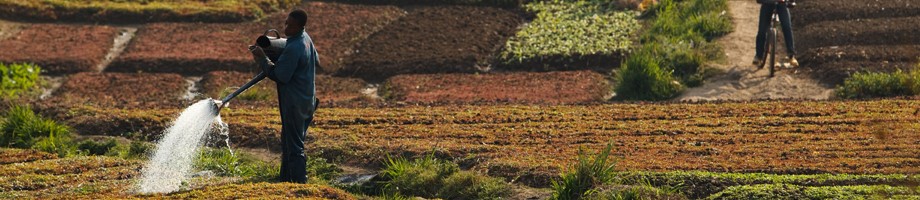
Intake structure of an irrigation project
   
   arrow AQUASTAT Home
   
   arrow Databases
 
   arrow Countries and regions
 
   arrow Climate info tool
   arrow Water resources
   arrow Agricultural water use
   arrow Global irrigation map
 
   arrow Maps
   
   arrow Publications and links
   arrow Glossary
     

Grenada

Source: FAO-Forestry. Disclaimer.


Version: 2000

Geography and population

Grenada is a tri-island state, located at longitude 61o 4' W and latitude 12o 4' N, situated 110 km southwest of St. Vincent and 145 km north of Trinidad and Tobago. It is the most southerly of the Windward Islands. The largest island, Grenada (311 km2), is 34 km long and 19 km wide, with two much smaller islands Carriacou (34 km2) and Petit Martinique (3.2 km2), thereby giving a total land area of 348.2 km2. Grenada is mostly volcanic in origin, of steep rugged topography, with a main mountain chain running almost northsouth in two main sections. The island is subdivided into seven parishes, six on Grenada with Carriacou and Petit Martinique together constituting the seventh.

The Draft Land Development Policy of the Ministry of Agriculture (1995) classifies 74.9% of the total land mass as being suitable for agriculture. Of the total land area of the three islands, the land use classification estimates that 63.7% (22 300 ha) is under permanent crops, 4.3% (1 500 ha) under temporary crops and an additional 2.6% (300 ha) left to fallow for up to three years. The remaining 29.4% includes forests, woodlands, grasslands and other uses.

Of a total population of 93 000 inhabitants in 1997, 63.4% are classified as urban. In the period 1990-1997 an average annual growth rate of 0.3% was registered in the overall population. In 1996 agriculture's share in the island's GDP was 10.4%, showing a decline from the 1981 contribution of 17.5%. At the end of 1995, 4.5% of the workforce was employed in the agriculture and fishing sector, as compared to a figure of 32.8% in 1999.


Climate and water resources

Climate

Grenada's climate can be classified as semi-tropical with a marked dry season from January to May and a wet season running from June to December. Spatial variations in annual rainfall range from about 1 500 mm to more than 5 000 mm, with an average totalling 2 350 mm.

Water resources

Water resources originate mainly from a system of permanent streams and rivers but there is some groundwater available from the limestone areas along the northwest coast. The entire population (rural and urban) has access to the domestic water supply. About 80 percent of the island is connected to the public water supply, 7 percent to standpipes while the remainder is supplied from rain water catchments. However, there is very little available from that supply that can be diverted to agriculture.


Irrigation and drainage development

Irrigated agriculture is largely undeveloped in Grenada. The irrigation potential has not been quantified and though there is water available from a number of surface and groundwater sources, these sources have not been tapped nor is the extent of this resource known. Currently for the island of Grenada alone, a total of 218.5 ha, or 1.5% of the area under cultivation, is under irrigation as compared to 4.8 ha in 1973. Micro-irrigation is utilized in more than 90% of the area, the remaining area being under sprinkler irrigation. Crops grown under irrigation include mainly vegetables (90%), fruit trees and grapes (5%), cut flowers (2%) and maize, roots, tubers and pulses (3%). Of the irrigated area, less than 1% is from river diversion, 6.5% from reservoirs while the remainder is from direct pumping from rivers. There is one limiting factor to the development of irrigation that has so far been observed, and that is that significant amounts of arable land are located in areas where there is no available water source, either domestic or otherwise. Costs for sprinkler and micro-irrigation systems are 6 200 and 8 700 US$/ha respectively.


Institutional environment

The National Water and Sewerage Authority (NAWASA) is responsible for the development of drinking water supplies as well as the sanitary disposal of sewage. The Ministry of Agriculture's Forestry Division is responsible for the protection of water catchment areas, while its Agronomy Division is responsible for the development of irrigation on the island.


Trends in water resources management

There is growing recognition of the potential importance of irrigation to Grenada's agricultural sector. Within the banana industry, with the recognition of a potential increase in yield averaging from 17 to 25 t/ha, investment in irrigation is being encouraged. In addition, attempts to encourage a more diversified agricultural production have resulted in a number of large estates being subdivided and made available to small farmers. As these farmers increasingly move into vegetable and cut flower production, this will necessarily create a greater need for supplementary irrigation to ensure year-round production.


Main sources of information

Central Statistical Office. May 1997. Annual Abstract of Statistics, 1996. Ministry of Finance, Grenada.

Ministry of Agriculture. 1996. Grenada Agricultural Census 95. Planning Unit, with technical assistance of FAO.Grenada.

Ministry of Agriculture. 1997. Agricultural policy and Programme of the Ministry of Agriculture 1997-2010. Grenada


arrow Printer friendly version