|
 |
|
Audio News:
World Water Day 2011: Water for urban areas |
|
 |
This Year’s World Water Day theme, “Water and Urbanisation” sheds the light on the importance of sustainable management of freshwater resources. Water and sanitation are critical factors to alleviate poverty and hunger, most of all in developing countries, where access to proper water supply and sanitation remains a major challenge. Urban migration and urbanisation are still growing, bringing up new challenges.
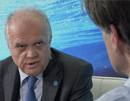
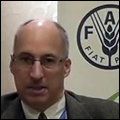
Mr Jean-Marc Faures, Water resources management, Land and Water Division (NRLW): "We work at safe farming practices including the use and re-use of water".
|
 |
Download the mp3 (Duration: 1min59sec) |
|
|
|
News:
FAO says innovative solutions are key to ensuring adequate water supplies to swelling urban populations |
|
 |
 |
As the world's urban population continues to swell, the need to employ new and innovative approaches to ensuring safe and adequate water for city dwellers in developing countries is becoming increasingly pressing, FAO said today.
"Within the next 20 years, 60 percent of the world's population will live in cities, with most urban expansion taking place in the developing world. Ensuring access to nutritious, affordable food for the poorer of these city-dwellers is emerging as a real challenge," said Alexander Mueller, FAO Assistant Director-General for Natural Resources.
|
Read the news article
Download factsheet
World Water Day 2011 at FAO headquarters |
|
|
 |
|
| Multimedia: Photogallery: World Water Day 2011 at FAO |
|
 |
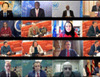
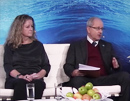
| This year the UN-Water World Water Day topic was Water for Cities: Responding to the Urban Challenge, to celebrate this FAO Land and Water hosted a special interdepartmental seminar on FAOs approaches to the challenge. This exclusive photogallery from the event examines some of the highlights that took place at FAO on the day. |
 |
ViewPhotogallery (flash required)
More FAO Water Multimedia |
|
|
|
 |
|
| New Software: AquaCrop launches new version and new plug-in |
|
 |
| Two new versions of AquaCrop are now availiable for download and installation. The new and improved standalone version of AquaCrop (Version 3.1+) and the new AquaCrop 3.1+ plug-in program which can be used in applications, such as GIS environments, where iterative runs are required. |
 |
Download AquaCrop Version 3.1+
Learn more about AquaCrop |
|
|
|
 |
|
| Promotional Material: 2011 FAO Desktop Calendar |
|
 |
 |
The April desktop calendar is now here! Download your calendar, selecting your screen size to open the calendar image in a new window then right click on the image and select 'Set as Desktop Item' form the menu that appears.
|
 |

April 2011: 1920
x 1200 | 1024
x 768 | 800
x 600 |
|
|
 |
|
Project:
Implementation of urban and peri-urban agriculture in Nicaragua |
|
 |
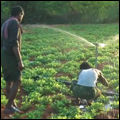
In many countries UPA plays a crucial role to ensure availability and access to high quality fresh food, creates employment and generates income for the benefit of the unemployed living in and around the city. Includes agricultural production with the participation of the population using different spaces and techniques within and around the city, including nutritional education in the household. The AUP requires good quality water for irrigation, especially if crops are vegetables.
|  |
View project
More FAO Water projects |
|
|
|
|
|
|
 |
|
 |
 |
|
 |
| |
 |
|
| Publication: Guidelines on spate irrigation |
|
 |
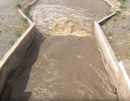
Spate irrigation has evolved over the centuries and provided rural populations in arid and semi-arid regions with an ingenious way to manage their scarce water resources. It is different from conventional irrigation in many ways and therefore needs special skills and approaches that address the unpredictability and magnitude of spate floods, their high sediment load, and the associated water rights and management models.
The objective of this publication is to assist planners and practitioners in designing and managing spate irrigation projects looking at the hydrology, the engineering, the agronomy, local organizations and rules, wadi basin management and economics. It is designed to be both a practical guidance document and a source of information and examples, based extensively on experience from across the world in places where spate irrigation is practiced.
|
 |
Access publication
Search for more publications
|
|
| |
 |
|
| Publication: Water and Cereals in Drylands |
|
 |
| As food and water needs continue to rise, it is becoming increasingly difficult to supply more water to farmers. The supply of easily accessible freshwater resources is limited both locally and globally. In arid and semiarid regions, in densely populated countries and in most of the industrialized world, competition for water resources has set in. This volume discusses the drylands and their land uses, with an emphasis on cereal production. The volume touches on the roles of livestock, placing the various technologies and practises that enhance water availability to crops in drylands in their technical, agro-ecological and socio-economic perspective. |  |
View Water and Cereals in Drylands
|
|
 |
|
Land and Water
discussion paper 7 :
Coping with Water Scarcity: What Role for Biotechnologies? |
|
 |
 |
Water
scarcity affects all social and economic sectors
and threatens the sustainability of the natural
resources base. Addressing water scarcity requires
an intersectoral and multidisciplinary approach
to managing water resources in order to maximize
economic and social welfare in an equitable manner
without compromising the sustainability of vital
ecosystems. Integration across sectors is needed.
This integration needs to take into account development,
supply, use and demand, and to place the emphasis
on people, their livelihood and the ecosystems
that sustain them. |
|
 |
Land
and Water discussion paper 7
Access
other FAO Water Publications |
|
 |
|
| Water at a
Glance |
|
 |
A brief introduction
to some of the issues facing FAO Water including
the relationship between water, agriculture, food
security and poverty. The reader will also learn
about effective ways of managing agricultural water. |
| View
Brochure (PDF)
|
|
|
|
|
|
|