Multimedia
Type Title/Details
 
Photo Gallery: Multiple use of Water (MUS)

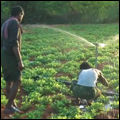
Photo Gallery focusing on Multiple use of water systems (MUS). MUS can provide the more vulnerable users with low cost services for domestic water, water for agriculture (irrigation, rain fed), homestead, garden, water for cattle, habitats for fish and other aquatic resources and rural enterprise water supplies.

[Launch Gallery - flash required]
 
 
Photo Gallery: Saving Lake Chad

Photo Gallery focusing on the plight of Lake Chad, the open water surface of which has reduced from approximately 25 000 km3 in 1963, to less than 1 500 km3 in the 2001 heavily impacting the Basin’s economic activities and food security.

[Launch Gallery - flash required]
 
 
Interactive Maps :
Irrigation in the Middle East

This interface enables you to compare and contrast maps used in the Aquastat Survey 'Irrigation in the Middle East in Figures'

[Launch Interface - flash required]


Interactive Maps : Aquastat Water Resource Analysis 2

This second interface enables you to make easy and quick comparisons of agriculture and irrigation statistics via these animated Aquastat Maps.

[Launch Interface - flash required]


Water 101 :
2.Water Scarcity

Second in the series highlighting the basics of water issues, this time focusing on the problem of water scarcity. The info-mation outlines different types of water scarcity as well as its global location and probable causes.

Launch animation [flash required]

Download as MP4 (Ipod Compatible)

  water 101
 
Photo Gallery: Expo Zaragoza 2008

Photo Gallery focusing on Expo 2008, an international exposition held from 14 June to 14 September 2008 in Zaragoza, Spain, with the topic of "Water and sustainable development".

[Launch Gallery - flash required]


Interactive Maps : Aquastat Water Resource Analysis 1

This new interface enables you to make easy and quick comparisons of population and water indicators via these animated Aquastat Maps.

[Launch Interface - flash required]


Photo Gallery: Water in Afghanistan

This photo gallery shows how FAO irrigation activities have rehabilitated more than 400 000 hectar of agriculture lands in Afghanistan.

[Launch Gallery - flash required]


Water and the Rural Poor

An interface which enables users to make comparisons between various categories of mapped data such as Rural Food Insecurity and Livestock/People Ratio, in order to establish simiarities and patterns in areas involving water and rural livelihoods.

[Launch Interface - flash required]


Typology of climate change impacts and response options for agricultural water management in selected agricultural systems

An interactive map showing the Typology of climate change impacts and response options for agricultural water management in selected agricultural systems around the world.

Launch Map [flash required]

  water cycle 1
 

Water 101 :
1.Water for Food

A new series of info-mations highlighting basic water issues. This first info-mation tackles the subject of Water for Food and aims to show the relationship between food production and water use.

Launch animation [flash required]

Download as recordable DVD File [24mb]

Download as MP4 (Ipod Compatible)

  water cycle 1
 
The Water Cycle:
surface water and ground water

Every time humans disrupt the natural water cycle there is a consequence. When large quantities of water are diverted or taken out of the natural system this affects the local surface water supply, which, in the long run, affects the ecosystem, plants and animals, as well as the local communities. This animation is the first in a series highlighting how the Water Cycle works and how we sometimes disrupt it.

Launch animation [flash required]

Download as MP4 (Ipod Compatible)

  water cycle 1
 
Water at a Glance

A brief animated introduction to some of the issues facing FAO water including the relationship between water, agriculture, food security and poverty. The reader will also learn about effective ways of managing agricultural water.

Launch animation [flash required]

HTML Version [no flash required]


  © FAO 2009
FAOWater Development and Management Unit