text only version   print friendly

Helping to Build a World Without Hunger
  FAO Water  
    frontpage
topics
    Information Resources
    Activities
Hot Issues
Water & Climate Change


AQUASTAT
AQUASTAT
UN-Water
Hot Issues
Water and climate change

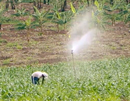
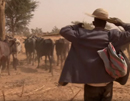
© FAO Giulio NapolitanoEnergy affects water management now and will do so even more in the future.
Energy prices are rising, pushing up the costs of pumping water, manufacturing fertilizers, and
transporting products.
This will have implications for access to water and irrigation. Increased hydropower will mean increased competition for water with agriculture.

Climate change policy is increasingly supporting greater reliance on bioenergy as an alternative to fossil fuel–based energy. But this is not consistently coupled with the water discussion. The Comprehensive Assessment estimates that with heavy reliance on bioenergy the amount of agricultural evapotranspiration in 2050 to support increased bioenergy use will be about what is depleted for all of agriculture today. Reliance on bioenergy will further intensify competition for water and land, so awareness of the “double-edged” nature of bioenergy needs to be raised.

Urbanization and the global market will dictate the choices of farmers around the world.

Changes in the global market and the spread of globalization will determine the profitability of agriculture. Where suitable infrastructure and national policies are in place, a variety of shifting niche markets will emerge, creating opportunities for innovative entrepreneurial farmers. In some countries the contribution of farming to the national economy will shrink, with implications for smallholders and subsistence farmers who rely on extension, technology, and regional markets.

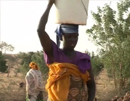
The demographics of farming change with urbanization.Many women and older people will be left in rural areas to look after farms Yet agricultural development remains the single most promising engine of growth in the majority of Sub-Saharan countries. To ensure the sustainability of the agriculture sector in many of these countries, investments in tech-
nology and capacity building need to go hand in hand with policies that make farming profitable.

Climate change will affect all facets of society and the environment, directly and indirectly, with strong implications for water and agriculture now and in the future. The climate is changing at an alarming rate, causing temperature rise, shifting patterns of precipitation, and more extreme events. Agriculture in the subtropics—where most poor countries are situated—will be affected most.

The future impacts of climate change need to be incorporated into project planning, with behavior, infrastructure, and investments all requiring adjusting to adapt to a changing set of climate parameters. Water storage and control investments will be important rural development strategies to respond to climate change.
The impacts of policies and laws set up to reduce greenhouse gas emissions or adjust to a changing climate also need to be taken into account.


spotlight item
Click here To View the Graph

Comprehensive Assessment of Water Mangement in Agriculture

view PDF
  © FAO
FAO water