


The Pa Sak River Basin Development Project is in effect a gift from His Majesty the King, a gift of abundance. The Royal Irrigation Department, the Ministry of Agriculture and Cooperatives, the Community Development Department and the Department of Public Welfare - together with the provincial governments - in effect extend the gift granted by His Majesty the King, facilitating the full functioning of the Monarch's intention in initiating the project.
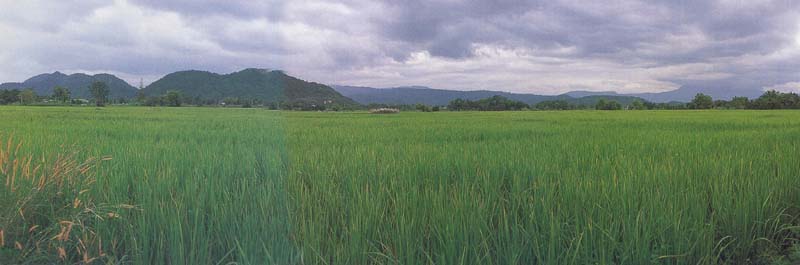
It is premature to project how independent subsistence farmers will choose to use their land in the areas which will come, by stages, under irrigation. But it is clear that for those who choose, three crops of rice each year will be possible. It should be noted that it will be normal to harvest a full crop, and not face major losses due to flood or drought.
Following completion of the Pa Sak Jolasid Dam and its related structures, a reliable water resource for lower risk agriculture, animal husbandry and aquaculture is now functional and capable of helping to enrich the lives of many.
Retaining 960 million m3 of water a year, the project can eventually redirect much of this water to downstream croplands to irrigate three new agricultural areas and seven existing areas. In addition, the reservoir will store surplus water and control overflows to reduce or even completely to avoid damage to farmland and crops.
The reservoir will also become an aquatic ecosystem for the culture of fish, river prawns and other aquatic species. This represents a substitute livelihood for lost croplands and animal husbandry capacity.
In Nong Bua, Royal Irrigation Department water resource development officer Prakong Suwan points to a red pole marking the boundary of a pump irrigation scheme for Pattana Nikhom and Pattana Nikhom-Kaeng Khoi, two of the three new irrigation areas. A pumping station will be built nearby, drawing water from the reservoir, and then discharging it through pipelines to be stored in a head tank a few kilometres distant. Another pumping station will divert water to the Kaeng Khoi-Ban Moh irrigation project, while 274 km of concrete-lined canals form the main water transmission system.
The reservoir will irrigate up to 131 300 rai in the project area - 35 500 rai in Pattana Nikhom, 20 000 rai in Pattana Nikhom-Kaeng Khoi and 75 800 rai in Kaeng Khoi-Ban Moh - allowing year-round cultivation. The first two areas are largely rolling plains with small flat plains at intervals and, with supplemental irrigation, will yield more reliable upland crops such as maize, soybean, sugar cane and sunflower in the dry season, plus rice in the wet season. The third area - a flat plain for the most part - will also produce a significant yield of wet season rice and increased amounts of upland crops in the dry season.
When the new irrigation systems are complete in 2005, the estimated main season cropping areas are expected to increase to 96 000 rai for rice; 30 000 rai for maize; 10 000 rai for soybeans and 10 000 rai for sugar cane cultivation. Sufficient rice production for residents adjacent to the irrigated areas is expected.
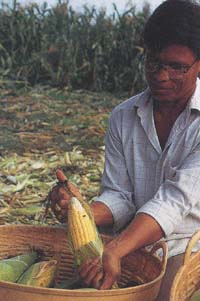
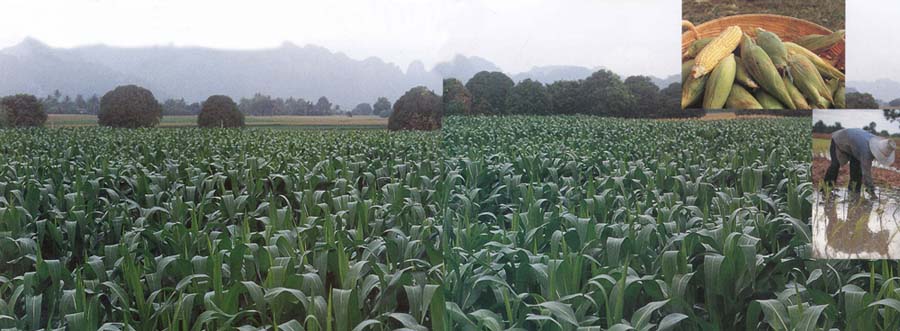
Not only the newly developed farmlands benefit; water will also flow to existing irrigated areas of 2.2 million rai in the Lower Chao Phraya East Bank.
A number of barrages, pumps and canals comprising the existing irrigation scheme are in use - and in heavy demand. The main facility is the Rama VI Barrage, which receives water from the Chao Phraya River and transmits it through the Rapheephat Canal to seven existing irrigated areas: Khlong Priew-Sao Hai in the Lower Pa Sak Basin and six sub-projects in the Lower Chao Phraya Basin; the Southern Pa Sak Basin; Nakhon Luang; Northern Rangsit; Southern Rangsit; Khlong Dan; and Pra-ong Chaiyanuchit.
Water released by the Rama VI Barrage to downstream beneficiary areas is as much as 2.1 billion m3 annually. However, water available for agriculture from the barrage is decreasing every year, particularly during the dry season, because of rising demand for domestic and industrial uses.
“We need supplemental water from the Pa Sak Jolasid Dam to reduce pressure on the Chao Phraya River,” said Manit Yensatit, a Royal Irrigation Department officer based at Ayutthaya, “and more Chao Phraya water can be tapped for domestic use in Bangkok and its vicinity.”
Eighty percent of the newly-irrigated land is devoted to rice cultivation; the rest is in vegetables and other crops, orchards and fishponds. Having a reliable water supply raises the spirit of local farmers. Their mood is optimistic. The project helps boost production, he said. “Now we grow rice twice a year. With the new irrigation, we can grow rice three times a year.”
Reliable irrigation means that cultivation can continue year round, with three stages of rice production at once: wet-season, between-season and off-season. Altogether, rice production in the seven areas is projected to reach 112 900 tons per year, occupying 2.5 percent of the total production in the Chao Phraya Basin and 0.73 percent of the whole country.
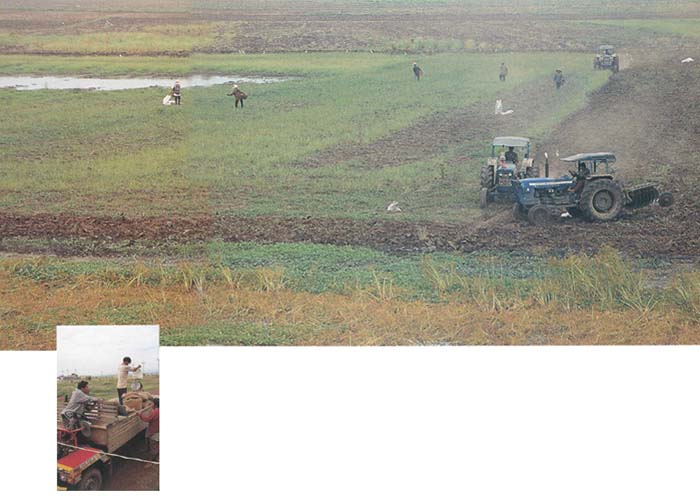
The dam will improve flood control to Kaeng Khoi in Saraburi province and through the Lower Chao Phraya Bas0in, from Ayutthaya to Pathumthani and Nonthaburi provinces and Bangkok Metropolis itself. Originally the Rama0 VI Barrage alone stored or held back floods from the Pa Sak River, as well as from the north and north-east. Now the load can be allocated to the Pa Sak Reservoir - holding back floodwater to reduce risk of crop damage. During the dry season, the released water will help stave off, dilute and drive off sea-water intrusion that often takes croplands out of production.
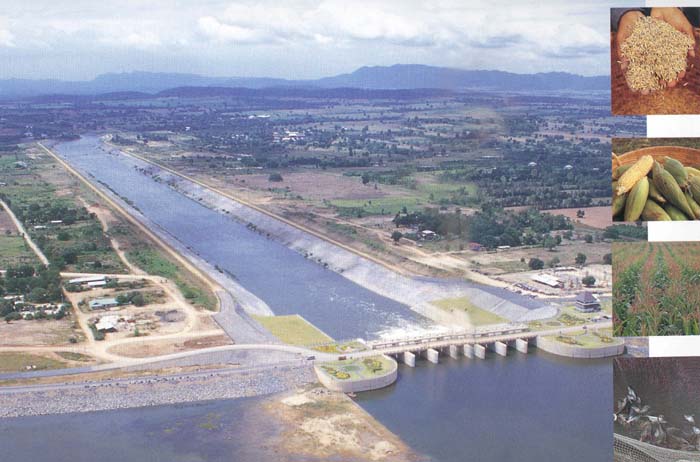
Damming the Pa Sak River caused a net loss of 2819 rai of rice fields, 5566 rai of maize, and a further 2523 rai of potato, cotton, turnip, roselle and millet, or a total loss of 10 908 rai (173 km2) of land.
However, the projected agricultural benefit from the newly-irrigated lands far outweighs the physical and economic losses. Lands planted in rice and maize are set at 96 033 rai and 27 075 rai respectively. Orchards and sugar cane fields in the immediate project area remained the same, at 4288 rai and 6072 rai respectively.
The new areas additionally include 1950 rai of fish pond, 16 279 rai in baby corn, 11 156 rai in cauliflower, 1540 in green beans, 847 rai in chili and an additional 3771 rai of soybeans, totalling 35 543 rai (57 km2) under largely more economically productive farming.
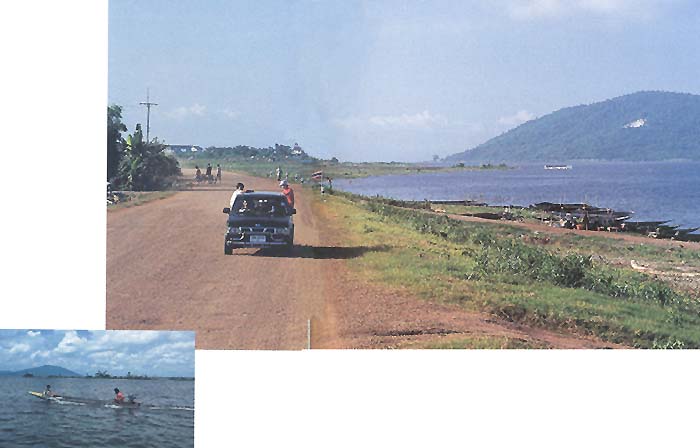
The reservoir has become a new habitat for fish already present in the Pa Sak River, such as the Greater Black Shark (Morulius chrysophekadion), Yellow Mystus (Mystus nemurus), Common Sheatfish (Kryptopterus apogon), Julien's Mud Carp (Cirrhina jullieni), Striped Tiger Nandid (Pristolepis fasciatus), Common Silver Barb (Puntius gonionotus) and river prawns.
The main fishing period is from November until May, from the beginning of the dry season to the onset of the rainy season. For four months a year, commercial fishing is illegal.
“Mid-May to September is the breeding season,” explained Sompong Klinrat, head of the Freshwater Resource Conservation Unit. During that period, he said, “fishermen are allowed to use only poles and lines and bamboo traps.” During the peak fishing season, fishermen are expected to become more commercial and earn at least 200 baht a day.
With abundant natural food, large fish populations are anticipated. “Fish and river prawns in this reservoir grow quickly,” Sompong added. “Soon fishing will be a main occupation of local people. They will rely on it for food and income.” The total fish catch is projected at nearly 2000 tons per year, generating an average of 30 to 70 million baht.
However, fishing is prohibited year-round in a zone 1.5 km from the dam crest and extending along the entire length of the dam. A string of red buoys marks a 5000 rai (8 km2) sanctuary preserved only for breeding and conserving aquatic ecology.
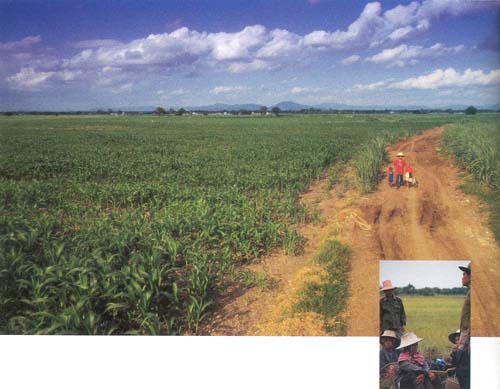
The Royal Thai Government endeavours to supply farmers with water and other basic elements to produce a reliable food supply. Under the Eighth National Economic and Social Development Plan (1997–2001), the Ministry of Agriculture and Cooperatives has implemented new policies, programs and projects to promote sustainable agriculture: self-sufficient farming for the production of food and raw materials to increase family incomes, while maintaining natural resources and conserving the natural environment, using management, proper techniques and inputs.
The Pa Sak River Basin Development Project follows these directives. Farmers are urged to live and work on their land to produce enough food for subsistence living, to make the fullest use of available land, labour, water and inputs to stabilize farm incomes, and at the same time conserve and rehabilitate natural resources, as follows, through:
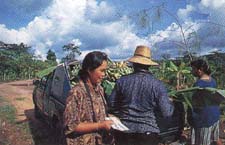
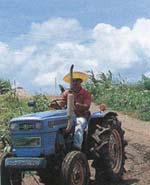
While rice is the major food crop in the project area, diversified farming is promoted on less productive land. For self-sufficiency, farmers are encouraged to turn from monocropping to multiple cropping of varied agricultural commodities. Integrated agriculture means that each piece of land is mapped and planned for rice, fruit trees, vegetables, poultry, and fish ponds, to produce food and earn farm-family incomes.
Technical inputs: Government agricultural extension officials provide a variety of services, including seed, tools and technical advice. Farmers learn through mass media and direct training, about improved farm management and production, how to protect and extend soil fertility, and animal disease prevention. There is a bias toward chemical-free agriculture, which is encouraged to reduce the degradation of soil and water resources.
Infrastructure: Infrastructure is provided to facilitate transportation, storage, processing and marketing of agricultural products. Schools, communications, electrical supply and health care programs are provided to enhance farmers' quality of life.
Financial support: Credit for agriculture and agro-industries is provided to farmers by the Bank for Agriculture and Agricultural Cooperatives at low interest rates. Farmers' group members may qualify for low-interest credit through agricultural cooperatives under the Cooperatives Promotion Department.
Marketing incentives: The Government promotes a full-cycle agricultural system to coordinate the sale of farmers' products at varied market levels by purchase contract to permit farmers to retain more benefit.
