


Land and water
management
Two of the most important agricultural resources, land and
water are crucial for the well being of the Asia-Pacific region, which is home
to nearly three - fourths of the world’s agricultural population. However,
Asia-Pacific tillers have to depend on about 28 percent of the world’s
cropland with the land available per person for cultivation being just one-sixth
of the average for the rest of the world.
A growing population is adding to pressure on arable land. To
meet its increasing food needs, the region will have to produce more food
largely from the existing farmlands because there is very little land available
for physical expansion. This can be done only by increasing crop yields and
stepping up cropping intensity.
While new farm technologies can bring about dramatic gains in
crop yields, much depends on the state of land and water resources. A major
problem is land degradation, which is largely caused in the region by water and
wind erosion. A joint study by FAO, the UN Development Programme (UNDP) and the
UN Environment Programme (UNEP) of land degradation in South Asia found that
water and wind erosion respectively damage 25 and 18 percent of the sub -
region’s total land. Latest estimates show that in China, water erosion
affects 34 percent of the total cultivated land and wind erosion a further two
percent. In Thailand, approximately 34 percent of the total land area is
affected by water erosion.
Deforestation, excessive use of chemical fertilizers, soil
erosion and excessive extraction of ground water are major causes of land
degradation in the region.
With more than half the world’s 30 largest cities located
in the region, rapid industrialization and urbanization are also responsible for
swallowing up and affecting arable land.
Asia-Pacific farms account for more than half of the
world’s agricultural water use with 60 percent of the world’s water
being consumed in the region in the year 2000. The region has some of the
wettest and driest spots on earth. The average annual per capita water
availability of about 3 800 cubic metres - slightly more than half the global
average - varies from about 1 500 cubic metres in the Indian subcontinent to
over 9 000 cubic metres in Southeast Asia and nearly 16 000 cubic metres in the
island nations.
Moreover, a large part of the region’s water comes from
the annual monsoon rains, with almost 80 percent of the water flow in the big
rivers of South Asia and China confined to a few months of the year.
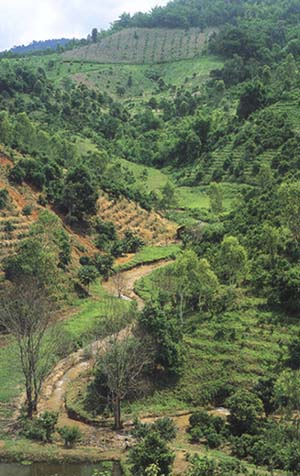
Irrigation systems are not only costly, but also inefficient.
It is estimated that up to 60 percent of the water diverted or pumped for
irrigation is not used for plant production. The region must give priority
attention to modernizing water delivery and irrigation systems.
Countries in the region need conservation techniques to cope
with land degradation. Integrated watershed management is one of the best ways
of developing rainfed areas. This has conservation and development aspects,
arresting and reversing land and ecological degradation while producing material
benefits to local communities in the form of food, fodder, forest and livestock
products.
Appropriate technologies should also be adopted to reduce and
prevent soil erosion, which is a serious problem in hilly areas. These include
correct tillage practices, land formation techniques and stabilization
structures. The Integrated Plant Nutrition System (IPNS) to increase soil
fertility can also help in reducing soil erosion. n Investment in land and
water.
|
 Investment in
land and water Investment in
land and water
Publication RAP 2002/09 explains the urgent need for arresting
and reversing the decline in investment in land and water development in
Asia-Pacific countries. Irrigation needs about one - third of the US$30.7
billion additional annual investment required in agriculture in developing
countries to ensure food security.
A meeting in October
2001 at the FAO regional office in Bangkok brought together high level
government officials from 12 countries (Bangladesh, Cambodia, China, DPR Korea,
India, Indonesia, Laos, Pakistan, Republic of Korea, Sri Lanka, Thailand and
Viet Nam), along with observers representing the Asian Development Bank, the
International Water Management Institute (IWMI) and the Mekong River Commission.
It was one of similar regional consultations organized by FAO across the world
in preparation for the June 2002 World Food Summit: five years
later.
A Bangkok Declaration issued by the consultation,
expressed concern over the declining quality and availability of land and water
in the region, which together with the serious decline in national and donor
support, is a major obstacle to reducing hunger and poverty in Asia and the
Pacific. Appealing to national government leaders to show the political will and
investment commitment, the declaration urges Asia-Pacific governments to involve
both public and private sector, and people’s participation in the
sustainable development and use of land and water resources to bring about an
‘evergreen revolution’.
FAO has developed
training programmes and materials for modernizing irrigation, water harvesting
and water conservation. Training workshops have been conducted on service
orientation for irrigation agencies in Thailand, irrigation modernization in
Indonesia and Viet Nam, and roving seminars on water harvesting in China, Laos,
Mongolia, Myanmar and Viet Nam.
FAO organized an
international e - mail conference on irrigation management transfer, modalities
for cost recovery and pricing of irrigation services. Technical assistance was
provided to Cambodia and Thailand on participatory irrigation management
covering, among other issues, user contributions to the provision of irrigation
services, monitoring and evaluation for policy implementation and development of
training material.
FAO collaborated
with the UN Economic and Social Commission for Asia and the Pacific (ESCAP) on a
pilot project to develop a ‘water vision’ for countries in Southeast
Asia (see section 3). |
Plant production and
protection
Fertile land and favourable weather conditions make the
Asia-Pacific region a major producer of cereals (rice, wheat and maize),
legumes, vegetables, fruits and industrial crops like rubber, coconut, pepper
and oil palm. The region produces 90 percent of the world’s rice, which is
Asia’s most important food crop and the staple diet for three - fifth of
the global population. Rice provides more than half the daily dietary energy of
over three billion people in the region.
A number of Asian countries are now self - sufficient in rice
production with the current annual harvest of 524 million tonnes expected to
grow to 700 million tonnes by the year 2025. However, the region is adding 51
million rice eaters to its population annually even as less and less land and
water are available for rice farms with more and more Asia-Pacific peasants
depending on degraded farmlands.
The key to future food security in Asia lies in boosting farm
yields without damaging the natural resource base, reducing the rate of
population increase and diversifying the food basket. FAO is helping increase
rice output in those Asian countries where paddy yields are lower compared to
the region’s efficient rice - farming nations.
The world food and agriculture agency is also encouraging
Asian rice farmers to combine their harvests with new crop types, including
hitherto neglected species, vegetables, fruits, herbs and spices, medicinal
plants and cash crops. Crop and farming system diversification, by including
livestock farming as well as others, will not only increase food variety, but
would help reduce the environmental, economic and nutritional risks associated
with planting only one type of crop.
Expanding rice production has, moreover, reduced profits from
paddy farming. FAO advocates farming diversification by rearing livestock,
planting higher value horticultural and cash crops and marketing value - added
products of all commodities as the best protection against falling farm produce
prices. In Asia and the Pacific, higher value crops produce ten to 15 times the
net returns per hectare of rice. The region produces over 50 percent of the
world’s industrial crops mainly through smallholders. Industrial crops
cover about 20 percent of available lands in Asia and the Pacific.
Effective plant quarantine measures keeps farm pests and
diseases from spreading. Developing countries in the region have to conform to
new international plant quarantine standards being developed under the new world
trade rules. While protecting farm harvests from pests and crop diseases, it is
important to ensure that the methods used do not cause irreparable damage to the
agrarian ecology and human health. The international code of conduct for
pesticide management, revised in 2001, requires countries to stop subsidising
pesticide use. FAO is promoting integrated pest management (IPM) techniques to
eliminate the use of expensive chemical pest killers that are known to be
harmful for farms and consumers. It is also encouraging organic farming such as
organic coffee, pepper, vegetables and fruits.
|
A sustainable
strategy was formulated to make Asia’s rice - centred farmlands yield more
food, incomes and livelihoods for the region. Publication RAP 2002/12 examines
the potential of the wide range of rice - based farming systems in the region to
meet the food and livelihood security demands that will be made on them in the
coming decades. It outlines a menu of inter - disciplinary strategies and
interventions to enable the rice - based systems to live up to the challenge and
the role that FAO can play in this. “A system that is so large and so pro -
poor as the rice system has a major potential to impact - favourably or
adversely - on the world’s food security and on its politico - economic
stability,” note the authors.
The FAO regional
office organized expert consultations and issued publications on crop
diversification (RAP 2001/03), tropical fruits such as grapes (RAP2001/07),
lychee (RAP 2001/09, RAP 2002/04 and RAP 2002/16), and on under - utilized
tropical fruits in Thailand (RAP 2001/26).
The first Asian
round table on sustainable and speciality coffee production, processing and
marketing was held in Chiang Mai in February 2001 with participation from East
Timor, Indonesia, Laos, Myanmar, Thailand and Viet Nam.
FAO worked with
countries in the region for the development of international standards for plant
quarantine in keeping with the World Trade Organization (WTO) agreement on the
application of sanitary and phytosanitary measures. The aim is to prevent the
use of unjustifiable phytosanitary measures as barriers to international trade.
In this connection, working groups of the Asia-Pacific Plant Protection
Commission (APPPC) met at the FAO regional office in Bangkok in July 2001 and
June 2002, and the 22nd session of APPPC was held in Ho Chi Minh City
in September 2001 with delegates representing Australia, Bangladesh, Cambodia,
China, DPR Korea, Indonesia, Laos, Malaysia, Myanmar, Nepal, New Zealand,
Pakistan, Papua New Guinea, Republic of Korea, Sri Lanka, Thailand, Tonga and
Viet Nam (see also RAP publication 2001/24).
Key experts from
China, India, Indonesia, Malaysia, Pakistan, Philippines and Thailand - together
with resource persons from CAB International (SEARC) and FAO - examined and
recommended ways of improving the current state of plant pest management
education in countries in the region and set up an Asia-Pacific working group on
plant pest management curriculum development to follow up on these. The
proceedings of the consultation are documented in publication RAP 2001/01
Curriculum development for plant pest management in
Asia-Pacific. |
|
|
|
Animal production and
health
Millions of rural households in Asia-Pacific countries depend
on domesticated animals for food, farm power and income. The region has 30
percent of the world’s livestock species. Though livestock food products
are still not a significant part of the diet in developing Asia-Pacific
countries, consumption is growing rapidly.
Developing Asian countries now have the world’s highest
growth rates of production and consumption of food derived from livestock. Meat
production in the region grew from about nine million tonnes in 1961 to more
than 90 million tonnes by the end of the 20th century. Small farmers
account for the bulk of the region’s livestock production, combining this
with cropping and other agricultural activities.
Income from the sale of milk, meat, manure and other basic
livestock products has traditionally protected small farmers from the shock of
crop failure and provided steady livelihood to peasants who do not have other
agricultural resources. Ownership of livestock also helps keep hunger away from
the poor person’s door. Possession of livestock, which feed on open grazing
lands, allows the rural poor to take advantage of common property resources to
earn income.
Livestock also provide a large part of power on Asia-Pacific
farms. According to one estimate in 1985, the 30 million draught animals used
then on Asia’s small farms did work equivalent to the same number of
tractors.
The big growth in the region’s poultry and pig meat
industries - the latter accounted for 55 percent of all meat production in 2000
- is promoting a shift from pasture - based production systems to feed cropping.
Some countries have to depend on feed imports to meet the livestock industry
needs.
Prevention, control and eradication of communicable livestock
diseases are central to FAO’s livestock development priorities. Some animal
diseases can also be transmitted to humans such as the Nipah virus, which
devastated Malaysia’s pig industry and claimed more than 100 human lives in
1998 - 99. A number of emerging diseases with the potential to infect humans
have been identified in the region in the past ten years.
Over the past quarter of a century, developing Asian countries
have introduced several exotic livestock species in a bid to increase
productivity. However, most such introductions - usually through crossbreeding -
have not been successful. The reasons for this range from increased feed
consumption, lower reproductive rates and greater disease susceptibility of the
new breeds, to indebtedness for local farmers who found themselves unable to
repay loans taken to procure the exotic species.
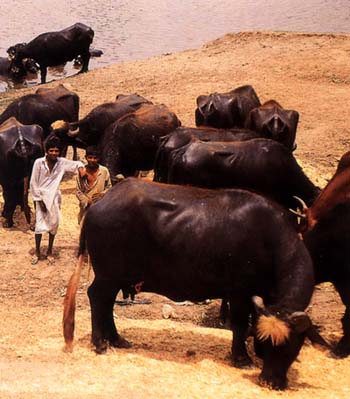
Livestock development in the region is also threatened by the
disappearance of indigenous breeds. Every week, the world loses two breeds of
domestic animals, according to a joint study by FAO and the UN Environment
Programme (UNEP). The Asia-Pacific region is home to 99.6 percent of the
world’s buffalo breeds, 56.3 percent of pig, 62.7 percent of goat, 46.4
percent of chicken and 85.3 percent of duck breeds. Among the livestock species
at risk of extinction is the H’Mong cattle of Viet Nam, which currently
number 14 000.
The coming years are a critical period for livestock
production in Asia and the Pacific. Poorly planned animal breeding strategies
and the loss of indigenous breeds threaten the region’s ability to meet
future food and livelihood demands. At the same time, the growing demand for
livestock products now offers the opportunity to launch a new food revolution to
reduce poverty and hunger among small farming households who form 80 percent of
all farmer families in Asia and the Pacific.
|
FAO supports the
Animal Production and Health Commission for Asia and the Pacific (APHCA) - see
the Internet web site http://www.aphca.org - and the South Asia Rinderpest
Campaign.
The diverse
functions of livestock are examined in detail in a publication - RAP 2002/06
Some issues associated with the livestock industries of the Asia-Pacific
region - produced jointly with APHCA. The study reveals the remarkable
growth in the consumption of livestock products in the region in the past four
decades as well as the striking diversity in its nature: pig meat is
China’s main livestock product while South Asia’s is milk. However,
with the exception of Malaysia and Mongolia, there is still a big gulf between
the livestock based protein intake of the high - income countries - Australia,
Japan and New Zealand - and the region’s developing nations. Livestock
products have traditionally provided more than half the protein intake of
Mongolia’s people, while livestock protein consumption almost doubled in
Malaysia since the mid - 1970s. The publication also examines issues surrounding
the growth of Asia’s modern livestock industry.
Other recent APHCA
publications issued by the FAO regional office are RAP 2001/25 Report of the
25th session of APHCA held in the Philippines in September 2001,
and RAP 2002/01 Manual on the diagnosis of Nipah virus infection in
animals.
FAO’s Domestic
Animal Diversity Information System (DAD - IS) assists in the conservation and
promotion of animal genetic diversity. The regional State of the World Animal
Genetic Resources is under preparation. The regional office also publishes the
quarterly Asian Livestock on the Internet.
A consultation,
jointly organised by FAO and the International Feed Industry Federation in
Bangkok in April 2002, discussed changes in livestock systems; enhanced
requirements for protein in the tropics and the potential of ruminants on
limited protein intake to utilize available forage; food safety issues related
to animal feeds derived from biotechnology crops, including genetically -
modified organisms (GMOs); current issues relating to the use of animal by -
products in feeds; adaptation of European laws and regulations on animal feed
use, to conditions in developing countries and countries in transition.
Presentations were made by animal production and health experts on developments
and issues relating to livestock production, protein supplies and the feed
industries of selected countries including Australia, Botswana, China, India,
Japan, Malaysia, New Zealand, Pakistan, Sri Lanka, Tanzania, Thailand, Turkey,
Viet Nam and countries of the European Union.
FAO organized a
number of meetings, training courses and workshops on various aspects of animal
production and health. One of these was the Regional Workshop on Bovine
Spongiform Encephalopathy (BSE) - better known as the ‘mad cow’
disease - in November 2001. The meeting was attended by over 250 participants
from China, Republic of Korea, Malaysia, Philippines, Thailand and Viet
Nam.
Biogas digestion is
a very efficient and cost - effective approach for treatment of abattoir wastes
at the small - to medium - scale sector, where communities usually cannot afford
mechanical treatment systems and prefer dumping the wastes into the environment.
An FAO workshop in February 2001 disseminated this technology to 12 countries
(Cambodia, China, India, Indonesia, Laos, Malaysia, Myanmar, Pakistan,
Philippines, Sri Lanka, Thailand and Viet Nam).
A joint endeavour of
FAO and a non - governmental organization, Humane Society International, offered
guidance to the livestock slaughter industry on ensuring humane treatment of
animals. The handbook RAP 2001/04 Guidelines for humane handling, transport
and slaughter of livestock includes sections on animal stress and pain and
the negative effects these have on meat quality. Highlighting prevalent faulty
methods that are objectionable on both ethical and economic grounds, it
recommends sizeable improvements in the equipment and facilities used in
developing countries for livestock slaughter for meat. At the same time,
determined efforts are needed to educate and train livestock slaughter industry
personnel to avoid negligence and economic losses. |
Fisheries
Fish and rice constitute the traditional diet of most Asian
and Pacific people. Per caput fish consumption in the region ranges from the
world’s highest level in the Maldives to among the lowest in Pakistan and
parts of northern India. In the Pacific, subsistence fisheries make an important
contribution to often high levels of per caput supplies in many of the
developing countries of the small islands. Fish provides nutritious food,
employment and income for millions of people. In 1998, capture fishery
production from this region accounted for half of the world production, and the
production from aquaculture reached 88 percent of the world aquaculture
production of fish and shellfish.
The fishery sector thus plays a valuable role for food
security in most countries of the region. However, in general, marine fishery
resources are fully exploited (e.g. in the Gulf of Thailand, the Bay of Tonkin
and the Bay of Bengal) and many heavily fished stocks will need to be
rehabilitated. It is unlikely that future demands from an increased population
in the region will be met from the seas. Aquaculture, and to a lesser extent
inland fishery, may provide considerable opportunities for further development
to increase fish production, but the region will probably need to rely more on
imports of fishery products for its future supplies.
For many countries in the region, the central issue remains
that of management and sustainability of the marine resources. Generally,
coastal resources are severely overfished by an overcrowded small - scale
fishery sector. There, catch rates, fish size and quality and, in some cases,
fishers’ incomes, are declining. Conflicts between small - scale fisheries
and trawlers in the coastal zones are frequent and fisheries management is
complicated. A partnership between local communities and the central government
is evolving to develop a community - based fisheries management system for local
resources. The prime concern is the need to increase the supply of fish and the
economic benefits from fishing by the introduction and enforcement of better
management.
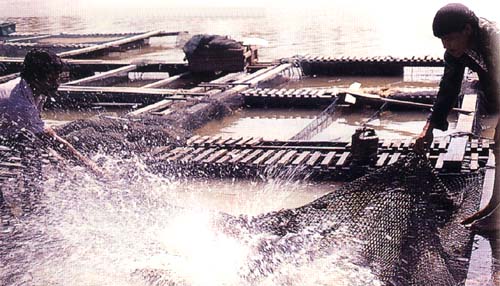
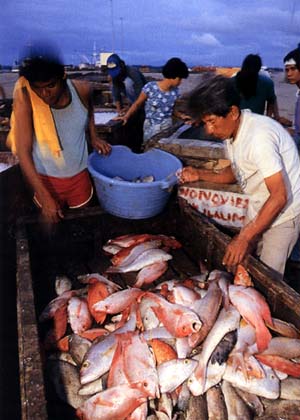
Aquaculture is an increasingly important supplier of food and
sustainer of food security in many Asian countries. Here again, considerable
benefits may be gained by the better integration of aquaculture into overall
rural and agricultural developments. Supply of fish from aquaculture could also
be further increased by wider application of technological advances and better
fish health management. Diversification and genetic improvement of cultured
species needs to be promoted, together with a wider application of semi -
intensive production systems.
Governments and FAO are tackling the above issues by promoting
appropriate policies and programmes. The implementation of the Code of Conduct
for Responsible Fisheries remains the primary goal for FAO in Asia-Pacific. The
code aims to raise awareness from top officials to local fishers, creating a
responsible fishery that stands on principles of protection for living aquatic
resources, environment and coastal areas. A responsible fishery also aims to
have all people involved develop fishery and aquaculture techniques and
conservation, as well as to improve food security and food quality.
|
The 27th
session of the Asia-Pacific Fisheries Commission (APFIC) was held in September
2001 in Manila. Representatives from Australia, Bangladesh, Cambodia, China,
France, India, Indonesia, Japan, Republic of Korea, Malaysia, Myanmar, Nepal,
New Zealand, Pakistan, Philippines, Sri Lanka, Thailand and Viet Nam met with
observers from intergovernmental and non - governmental organizations to discuss
the recommendations of three expert groups set up by the 26th APFIC
commission. As reported in publication RAP 2001/18, the session also deliberated
on changes in APFIC’s future role in the light of suggestions given at the
68th Session of the APFIC Executive Committee.
Jointly organized
with the Coastal Development Center (CDC) of Kasetsart University, a November
2001 meeting identified constraints and responsibilities in decentralized small
- scale fisheries management and developed practical solutions to the social,
economic, environmental and legal constraints to local fisheries management.
Publication RAP 2002/10 Interactive mechanisms for small - scale fisheries
management includes country papers which examine national experiences in
small - scale fisheries management in Cambodia, India, Indonesia, Malaysia,
Myanmar, Philippines, Thailand and Viet Nam. Intended to support the process of
decentralizing small - scale fisheries management to prevent over - fishing and
coastal degradation in many developing countries in the region, the document
offers suggestions based on the experience of practitioners from various
fields.
Based on information
collected by two FAO - commissioned surveys during 2001, the publication RAP
2002/13 Pacific Island fisheries: regional and country information
reviews the state of fisheries in the Pacific Islands, both on a regional
basis as well as in each of the 14 independent countries (Cook Islands,
Federated States of Micronesia, Fiji, Kiribati, Marshall Islands, Nauru, Niue,
Palau, Papua New Guinea, Samoa, Solomon Islands, Tonga, Tuvalu and Vanuatu).
With exclusive economic zones (EEZs) spread across 30.5 million sq km - 60 times
their total land area and 28 percent of the world’s EEZ area - Pacific
Island states are vitally dependent on fisheries for their economic well being.
The publication reviews the small - scale commercial and subsistence fisheries,
which are crucial for the national economies, food security and rural
livelihoods in the Pacific. A regional overview provides detailed information
about fisheries in the sub - region as well as issues of coastal fisheries
management. There are detailed country profiles with national fisheries data, an
overview of marine and inland fisheries and aquaculture, and utilization of the
catch. Development prospects, the institutional arrangements and international
issues relevant to the sector are also reviewed.
Commissioned by the
FAO regional office in Bangkok, a review of inland capture fisheries in eight
Southeast Asian countries shows that statistics about the sector are severely
underestimated and fail to give an adequate idea of its real importance. The
actual production from inland capture fisheries in these countries is likely to
be at least three times as much as that reported for freshwater aquaculture
production. Report RAP 2002/11 is based on field trips to Indonesia, Malaysia,
Myanmar and Thailand and the author’s professional experience in Cambodia,
Laos and Viet Nam. The document provides a regional overview of statistics
collection and reporting methods used, the sources of error in the official
statistics, other constraints to data collection and recommends strategies for
improving these. A second section reviews the current state of inland capture
fisheries statistics in the eight countries that were reviewed.
Living aquatic
resources play a vital role in providing food security and income for the rural
poor in Asia, especially women. Aquaculture development interventions should
bear this in mind. Experts from eight countries (Bangladesh, Cambodia, India,
Laos, Nepal, Philippines, Sri Lanka and Thailand) met in Bangkok in February
2002 to share experiences and discuss ways of making aquaculture an effective
tool for poverty alleviation in the region. The consultation - jointly organized
with NACA - responded to the growing awareness within the aquatic resource
sector of the need to address poverty more directly. The session noted that poor
- friendly aquaculture technologies are largely in place and aquaculture
development for poverty alleviation should focus on effective extension of low -
cost technologies, appropriate management practices and securing access and
control to the poor. |
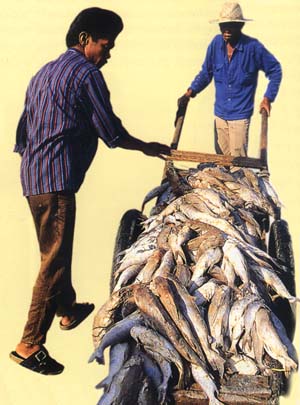
Forestry
Covering a quarter of the world’s land area, the
Asia-Pacific region has about 15 percent of the world’s 3.8 billion
hectares of forest. The green cover has to meet the diverse environmental,
economic, cultural and social needs of more than half the world’s people
living in these countries. Asia’s forests provide food, fodder, fuelwood,
timber and livelihood to hundreds of millions of people. The forests also
sustain one of the world’s richest storehouses of biodiversity.
The forestry sector provides formal and informal employment
for millions of people and continues to act as a food reserve in times of
hardship. Forests have an important role in supporting agriculture in the mainly
rural Asian nations by protecting watersheds and water quality. Furthermore,
forestry is a significant contributor to export earnings in many
countries.
In recent decades, many countries in Asia and the Pacific have
realized the importance of forests and there is growing awareness of and
commitment to forest management and public involvement in forest management
decisions. This has resulted in a significant impact on forest conservation, and
the problem of destructive logging practices is addressed in several
countries.
The use of plantation forests to substitute for wood from
natural forests is increasing with Asia-Pacific countries leading the world in
forest plantation development. However, deforestation continues because of weak
regulation and law enforcement, and continuing incentives for competing land
uses. This, along with forest degradation, wasteful use and sharp inequalities
in the distribution of forest benefits, remain serious problems that require
novel solutions and joint action by all those with an interest in forests.
Forest crime and corruption are also serious threats to the region’s
forests.
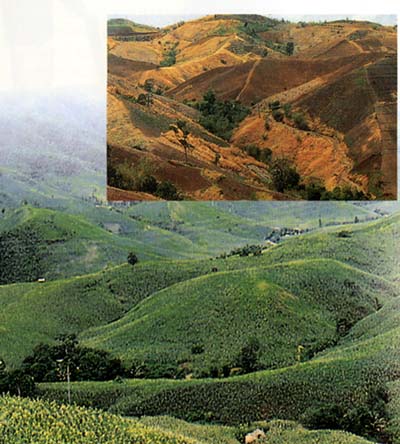
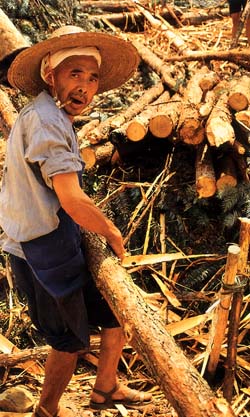
Many countries in the region are now decentralizing forest
management into the hands of local communities that are directly in touch with
the forests. This fundamental shift from large - scale government forestry to
small - scale, community - based forestry management - often called devolution -
is increasingly proving to be an effective way to use forests sustainably and
conserve biodiversity.
A key concern is the sustainable use of wood and non - wood
forest products. FAO gives high priority to the production, trade and marketing
of these products to support livelihoods in the rural areas of Asia and the
Pacific.
|
FAO supports the
Asia-Pacific Forestry Commission (APFC) - see the Internet web site
http://www.apfcweb.org - established in 1949 as a forum for advising and taking
action on key forestry issues pertinent to Asia-Pacific. The APFC developed a
Code of practice for forest harvesting in Asia-Pacific to reduce negative
impacts and enhance sustainability of forest resources. The code guides
countries in drafting national harvesting codes. A regional strategy for
implementing the code was developed and a complementary regional training
strategy in its support was published as RAP 2001/15.
To support countries
in their efforts to encourage forest plantation development, FAO coordinated a
series of national studies on the impacts of incentives for private sector
establishment and management of plantations. A workshop was held in March 2002
in Manila, bringing together forestry experts from Australia, China, India,
Indonesia, Malaysia, New Zealand, Philippines and Thailand along with FAO
specialists to discuss the national studies. The meeting was supported by the
European Commission - FAO Partnership Programme and the United States Department
of Agriculture/Forest Service. The results of the studies including a regional
overview will be presented to the 19th APFC session, scheduled to
take place in Mongolia in August 2002.
Several Asia-Pacific
countries have declared their natural forests ‘off limits’ to logging
companies by imposing logging bans or other restrictions on timber production.
These policies have effectively closed legal timber harvest operations in many
areas. FAO has carried out a groundbreaking study on the effectiveness of
logging bans as a means of conserving natural forests. The study examines
experiences in six countries (China, New Zealand, Philippines, Sri Lanka,
Thailand and Viet Nam). Publication RAP 2001/08 (and its summary RAP 2001/10),
presents the results of a two - year study conducted under the auspices of
APFC.
Various timber -
producing countries in the Asia-Pacific region have recognized the substantial
potential of reduced impact logging (RIL) in advancing sustainable forest
management. Their efforts to promote improved timber harvesting are supported by
several organizations, including the International Tropical Timber Organization
(ITTO), the Center for International Forestry Research (CIFOR), and the USDA
Forest Service. In response to these challenges and opportunities, an
International conference on the application of reduced impact logging to
advance sustainable forest management was held in Kuching, Malaysia attended
by more than 250 participants.
Field researchers in
the Philippines have developed a practical, low - cost technique known as
Assisted Natural Regeneration (ANR), for restoring forests on imperata
grasslands. ANR is used to restore the forests that once occupied these lands.
During 2001, FAO supported forest rehabilitation in the Asia-Pacific region by
bringing senior forestry officers from Bangladesh, Cambodia, China, Laos, India,
Indonesia, Malaysia, Myanmar, Philippines, Sri Lanka and Viet Nam together for
workshops and study tours to observe and discuss ANR in the Philippines, giving
special attention to the advantages of low cost, fast results, bio - diversity
and environmental stability inherent in the ANR approach.
To advance the
understanding and enhance awareness of the potential for community - based fire
management, an international conference entitled Communities in flames
was organized in July 2001, in Balikpapan, Indonesia. More than 120 individuals
from 21 countries participated. The conference was organized by Project
FireFight South East Asia, the Regional Community Forestry Training Center
(RECOFTC) and FAO. FAO also supported case studies of community - based fire
management in China and India.
The first
international conference on domesticated elephants was organized in February
2001 by FAO in Bangkok. The meeting reviewed the present situation of
domesticated elephants in Asia focussing on the socio - economic and
environmental conditions for the care and management of the elephants. Eighty
participants from 19 countries attended, mostly from Asia. The participants were
elephant owners and managers, veterinarians and animal husbandry experts with
hands - on elephant experience, and representatives from governments and non -
governmental organizations. |
Agricultural support
systems
Deregulation, liberalization and globalization of trade in
agricultural products under the new WTO regulations have a considerable impact
on domestic agricultural producers in the region. Small farmers need support not
only to be more productive, but also to make their produce more marketable in
order to enhance their incomes.
In the present era of globalization there is a critical need
to strengthen the capabilities of small farmers to move from subsistence
production to agricultural enterprises. Commercializing small farmers is a very
complex process involving the cultural and psychological settings of the farmers
themselves as well as the economic and market - oriented performance of the
agricultural sector through increased efficiency of the farms and the private
and public providers of related support services.
To effectively build the capacity of small resource - poor
farmers to adopt market - oriented farm production will generally require some
form of group action for the identification of appropriate commercial
activities; use business management principles and practices; add value and
market agricultural products; and access services such as rural and micro
finance.
To accomplish this aim, the FAO regional office promotes
market - oriented farm production and support to small farmers. It also works
with the private sector to provide agricultural inputs to rural areas, and
develop efficient marketing chains for diverse agricultural products to meet
both rural and urban needs.
Farmers in the region also need assistance to reduce heavy
post - production losses and add value to their produce. FAO is assisting
Asia-Pacific countries to develop post - production loss prevention programmes
and agro - processing technologies, especially for cereals and horticultural
crops. The aim is to enhance rural employment and incomes through development of
agro - industries, value - added products and full utilization of raw
materials.
FAO helps enhance rural employment and income opportunities
both on farm and off farm; promotes a diversified and integrated market -
oriented farming system approach for sustainable development; and enhances the
managerial capacities of the small holders in support of commercial agriculture
through improved agricultural extension strategies.
Rural and micro finance are increasingly important tools of
rural and agricultural development in Asia and the Pacific. FAO promotes viable
rural banking, savings and agricultural credit schemes as tools to alleviate
poverty. However, lack of proper administration, recording and accounting
systems to process the huge number of transactions associated with this type of
finance, is a common problem.
|
A study on small
farmers’ diversification in Cambodia, Laos, Nepal and Viet Nam is analyzing
the macro - level socio - economic elements of smallholder farming in the region
and preparing specific case studies giving real examples of and potential for
further expansion of viable agricultural diversification in Asia.
The FAO regional
office is reviewing the training guide on farm management for agricultural
extension. The strategy to implement this activity includes the training of
trainers for message identification, farm planning and management.
Government and
private sector experts from China, India, Indonesia, Republic of Korea, Nepal,
Philippines and Thailand attended a mini round table meeting on marketing and
food security in Bangkok in November 2001.
The FAO regional
office commissioned translations of the summary proceeding of the Feeding
Asian Cities seminar held in November 2000 in Bangkok, into Bahasa
Indonesian, Bengali and Thai languages.
In follow - up to
the 1996 WFS, FAO and the Asian Institute of Technology (AIT) organized a
workshop on agribusiness development with representatives from Cambodia, Laos,
Myanmar and Thailand in November 2001. The meeting considered ways of making
better use of agricultural and food engineering knowledge to improve food supply
and farmers’ incomes. An exhibition of agricultural and food industry
machinery was also held at the venue.
In collaboration
with GTZ, the FAO regional office acts as the global development and support
centre for the MicroBanking system, currently in use in more than 1 100 offices
worldwide. The new Windows - based version, called MBWin, is the system of
choice for a wide variety of rural finance and micro finance institutions (e.g.
Cambodia, East Timor, Nepal and Thailand). Six training courses were held for
participants from Africa, Asia and Europe, and the software upgrade with added
functionalities for group - technologies is used by institutions such as the
Grameen Bank in Bangladesh.
FAO maintains close
collaboration with development partners dealing with rural and micro finance
such as the Asia-Pacific Rural and Agricultural Credit Association (APRACA), the
Association of Food and Agricultural Marketing Agencies in Asia and the Pacific
(AFMA) and ESCAP. |
|
|
|
