


Manual on the diagnosis of Nipah virus infection in animals
RAP PUBLICATION 2002/01
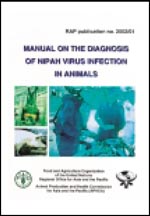
76 pages. 15 x 21 cm.
Between September 1998 and May 1999, the outbreak of a new disease in pigs in Malaysia claimed over 100 human lives and devastated the nation’s pig industry, causing economic losses worth hundreds of millions of dollars. Subsequent clinical investigations revealed this to have been caused by the Nipah virus hosted by fruit bats, which are found all over Southeast Asia. Classified internationally at the highest biosecurity level, the Nipah virus needs the maximum level of care in the field and laboratory. This manual provides information on the emergence of the virus and detailed instructions for dealing safely with the virus. It includes chapters on risk assessment in field investigations, safety procedures during field and laboratory investigations, all aspects of control and eradication along with guidelines for action by the pig industry and governments to keep the virus out. A series of appendices list hands-on safety instructions and essential safety equipment.
Country: Malaysia
http://www.fao.org/DOCREP/005/AC449E/AC449E00.HTM
Science and technology for sustainable food security, nutritional adequacy, and poverty alleviation in the Asia-Pacific region
R.B. Singh
RAP PUBLICATION 2002/02
73 pages. 21 x 29.5 cm.
Science and technology have played a vital role in keeping agricultural production a step ahead of rapid global population growth during the past four decades. However, Green Revolution technologies did not benefit the vast rainfed and other marginal areas with high concentrations of hunger and poverty. The new farming technologies were also not friendly to the environment, often resulting in degradation of land, water and biodiversity. The region needs to step up agricultural production by 80 percent by the year 2030 to meet its growing food needs. However, because there is very little room for expanding the area under farm cultivation most of this increase will need to come from making existing farmland more productive. This publication examines the agrobiophysical, socio-economic and environmental status of farming systems in Asia-Pacific and the role that science and technology will be called on to play in “breaking the unholy alliance of hunger, poverty and environmental degradation”.
Region: Asia-Pacific
http://www.fao.org/DOCREP/005/AC483E/AC483E00.HTM
Smallholder farmers in India: food security and agricultural policy
R.B. Singh, P. Kumar and T. Woodhead
RAP PUBLICATION 2002/03
54 pages. 21 x 29.5 cm.
The average size of nearly 80 percent of India’s over 106 million farm holdings in the early 1990s was less than 2 hectares. Covering only 33 percent of the total cultivated land in the country, these farms produced 41 percent of the nation’s food grain harvest - up from their contribution of 28 percent in 1971. This document analyses national farm census data between 1971 and the latest available estimate for 1991 to highlight the growing role of the country’s small farms in national food production. Ironically, smallholder farmers form the bulk of India’s over 200 million hungry and poor people today. This points to the urgent need for reversing the decline in public investment in agriculture, while strengthening agrarian reform, infrastructure and institutions, creating off-farm employment and using size and scale-neutral technologies to boost crop and livestock production on small farms. The authors recommend safety nets as well as government initiatives in the international arena to ensure a fair deal to the country’s small farmers.
Region: India
http://www.fao.org/DOCREP/005/AC484E/AC484E00.HTM
Lychee production in the Asia-Pacific region
Edited by M.K. Papademetriou and F.J. Dent
RAP PUBLICATION 2002/04
128 pages. 20.5 x 29.5 cm.
A compilation of the country papers presented at and the conclusions/ recommendations of the May 2001 expert consultation on lychee production in the Asia-Pacific region held in Bangkok, Thailand. First cultivated in China over 2 000 years ago, the fruit is now grown in a number of countries with subtropical climates, being most important for Bangladesh, China, India, Nepal, Thailand and Viet Nam. The Asia-Pacific region accounts for more than 95 percent of the global lychee production of over 2 million tonnes. Smallholders with less than 100 trees each are the main producers and the crop is mostly sold fresh, though a third of the lychee harvest in China is dried. The country papers review production, management and marketing of the crop as well as constraints to development. Low productivity, with average yields below 5 tonnes per hectare - compared to 15 tonnes achieved in Israel and some other nations - and short shelf-life are issues needing priority attention to enable smallholders to gain the most from the high value crop.
Countries: Australia, Bangladesh, China, India, Indonesia, Nepal, Philippines, Thailand and Viet Nam
http://www.fao.org/DOCREP/005/AC684E/AC684E00.HTM
Case study on education opportunities for hill tribes in
northern Thailand.
Implications for sustainable rural
development
R. Fujioka
RAP PUBLICATION 2002/05

43 pages. 21 x 29.6 cm.
Over 750 000 indigenous persons live in the hill areas of northern Thailand. They are among the country’s poorest people and still lack full citizenship and land rights. This document reviews half a century of government support programmes to promote education opportunities for hill tribal people in order to raise their living standards and bring about their integration into Thai society with full rights, while preserving their cultural and religious identity. The author notes the need for: improved participation of and communication with the indigenous people in planning and implementing support activities; local curriculum development; local capacity building; closer coordination among the multiple government support programmes for the hill tribes; and collaboration among government agencies and non-governmental organizations (NGOs).
Country: Thailand
http://www.fao.org/DOCREP/004/AC383E/AC383E00.HTM
Some issues associated with the livestock industries of the Asia-Pacific region
RAP PUBLICATION 2002/06
87 pages. 21 x 29.6 cm.
The livestock sectors of the countries of the Asia-Pacific region have experienced phenomenal growth in the last few decades. This has created opportunities for farmers to reap economic benefits, and has also opened the way for people living in the region to improve their nutritional status through the consumption of livestock products. At the same time, the expansion of the livestock industries has created new challenges for policy-makers because of the far-reaching and sometimes unexpected impact that the industry is having on various parts of the economy. This report addresses a number of issues that have been associated with the expansion of the livestock industries and provides insights into the weaknesses of the livestock sector in the region to help policy-makers identify priority areas of research.
Region: Asia-Pacific
http://www.fao.org/DOCREP/005/AC448E/AC448E00.HTM
Agrobiodiversity conservation and the role of rural women: an expert consultation report
RAP PUBLICATION 2002/07
42 pages. 21.7 x 27.6 cm.
A report of the proceedings of the expert consultation on the above theme, which was held at the University of the Philippines Los Banos, Laguna, Philippines from 10 to 13 September 2001. There is growing empirical evidence of the key role of rural women in agrobiodiversity conservation for food security in developing countries. Yet, there is still not adequate understanding of women’s contribution in this field. The consultation involved experts working on community-level projects supporting women’s participation in agrobiodiversity conservation as well as resource persons who offered critical perspectives on the subject. The document includes summaries of the country case studies and the discussions as well as the recommendations that emerged from the exercise to promote women’s role in agrobiodiversity conservation. These focus on strategies to strengthen institutional partnerships among governments, research organizations, non-governmental organizations and communities, as well as research, development and extension interventions to support the role of rural women as local agrobiodiversity managers for food security.
Countries: Bangladesh, Bhutan, China, India, Indonesia, Lao People’s Democratic Republic, Nepal, Philippines and Thailand
http://www.fao.org/DOCREP/005/AC545E/AC545E00.HTM
Rural and tribal women in agrobiodiversity conservation. An Indian case study
RAP PUBLICATION 2002/08
29 pages. 21.5 x 28 cm.
This publication examines the role of rural and tribal women as custodians of food plant genetic resources in three ecologically distinct and fragile regions in India. The growing awareness of the threat to food security from agrobiodiversity erosion has led to increased international recognition of the vital role of rural and indigenous people, especially women, in the conservation of food plant genetic resources. The study, conducted jointly with the M.S. Swaminathan Research Foundation based in Chennai, India, is an attempt to understand gender differential roles, responsibilities, access and control over the resources of rural and tribal women in agrobiodiversity for better designing of plant genetic resource conservation programmes through local stewardship. It documents and analyses the advantages of the various practices used by women farmers who cultivate traditional paddy varieties and minor millets.
Country: India
http://www.fao.org/DOCREP/005/AC546E/AC546E00.HTM
Investment in land and water
RAP PUBLICATION 2002/09
356 pages. 21 x 29.8 cm.
A report of the proceedings of the October 2001 regional consultation on the above theme, the document explains the urgent need for arresting and reversing the decline in investment in land and water development in Asia-Pacific countries. Land and water investment priorities include coping with worsening land degradation, increasing productivity of the region’s large rainfed areas and modernising wasteful water delivery and irrigation systems. A Bangkok Declaration issued by the consultation expressed concern over the declining quality and availability of land and water in the region which, together with the “serious decline” in national and donor support, is a major obstacle to reducing hunger and poverty in Asia and the Pacific. Appealing to national government leaders to show the political will and investment commitment, the declaration urges Asia-Pacific governments to involve both the public and private sector, and people’s participation in the sustainable development and use of land and water resources to bring about an “ever-green revolution”.
Countries: Bangladesh, Cambodia, China, Democratic People’s Republic of Korea, India, Indonesia, Lao People’s Democratic Republic, Pakistan, Republic of Korea, Sri Lanka, Thailand and Viet Nam
http://www.fao.org/DOCREP/005/AC623E/AC623E00.HTM
Interactive mechanisms for small-scale fisheries management. Report of the regional consultation
RAP PUBLICATION 2002/10

153 pages. 17.6 x 26 cm.
This document is a report of the proceedings and compilation of the papers presented at the regional consultation on interactive mechanisms for small-scale fisheries management, which was held in Bangkok, Thailand in November 2001. The meeting identifies constraints and responsibilities in decentralized small-scale fisheries management and offers practical solutions to the social, economic, environmental and legal constraints to local fisheries management. The fisheries sector has grown dramatically in Asia over the past three decades and the region is now a main supplier to the global fish market. However, the impressive growth has been accompanied by serious challenges in the form of over-exploitation of coastal resources. Country papers included in the publication examine national experiences in small-scale fisheries management in Cambodia, India, Indonesia, Malaysia, Myanmar, the Philippines, Thailand and Viet Nam. Separate papers provide regional perspectives on the issue while experience papers report on the working of small-scale fisheries management projects in the region.
Countries: Cambodia, India, Indonesia, Lao People’s Democratic Republic, Malaysia, Myanmar, Philippines, Sri Lanka, Thailand and Viet Nam
http://www.fao.org/DOCREP/005/AC467E/AC467E00.HTM
Inland capture fishery statistics of Southeast Asia: current status and information needs
D. Coates
RAP PUBLICATION 2002/11
114 pages. 21 x 29.7 cm.
Inland fisheries play a key role in meeting the livelihood and food security needs of millions of rural households in Southeast Asia, yet do not receive the attention they deserve from national policy makers. A major reason is the lack of reliable information and statistics about the sector compared to marine fisheries and aquaculture. Such statistics provide the basis for opinion, policy, planning and management decisions, “even among those who recognize the weaknesses of the statistics”. This has led to a significant undervaluing of inland capture fisheries and has implications for the relative attention and investment it receives. This document provides a regional overview of statistics collection and reporting methods used, sources of error in the official statistics and other constraints to data collection, and recommends strategies for improving these. A second section reviews the current state of inland capture fisheries statistics in the eight countries that were reviewed.
Countries: Cambodia, Indonesia, Lao People’s Democratic Republic, Malaysia, Myanmar, Philippines, Thailand and Viet Nam
http://www.fao.org/DOCREP/005/AC487E/AC487E00.HTM
Rural Asia-Pacific: inter-disciplinary strategies to combat
hunger and poverty.
The rice-based livelihood-support
systems
T. Woodhead and R.B. Singh
RAP PUBLICATION 2002/12
120 pages. 21 x 29.6 cm.
This document identifies sustainable strategies to make Asia’s rice-centred farmlands yield more food, incomes and livelihoods for the region’s over 3 billion people. Stretching from the Solomon Islands and Japan on the eastern rim to Pakistan and Iran in the west, about 135 million hectares of Asia-Pacific rice lands are tended annually by over 300 million people. In addition, they support 200 million bovine livestock and a lesser number of small ruminants. This publication examines the potential of the wide range of rice-based farming systems in the region to meet the food security demands that will be made on them in the coming decades. It outlines a menu of inter-disciplinary strategies and interventions to enable the rice-based systems to live up to the challenge, and the role that FAO can play in this.
Region: Asia-Pacific
http://www.fao.org/DOCREP/005/AC800E/AC800E00.HTM
Pacific Island fisheries. Regional and country information
RAP PUBLICATION 2002/13
168 pages. 17.7 x 26 cm.
This publication is based on information collected by two FAOcommissioned surveys during 2001 which reviewed the state of fisheries in the Pacific Islands, both on a regional basis as well as in each of the 14 independent countries. With exclusive economic zones (EEZs) spread across 30.5 million sq km - 60 times their total land area and 28 percent of the world’s EEZ area - Pacific Island states are vitally dependent on fisheries for their economic well being. The document examines the different aspects of the deep sea-based tuna fishing industry, and reviews small-scale commercial and subsistence fisheries in the region. A regional overview provides detailed information about fish species in the region, various fishing methods used, production and catch value by country, species and fishing vessel type, per capita fish supply as well as issues of coastal fisheries management. Detailed country sections are also provided. Development prospects, institutional arrangements and international issues relevant to the sector are reviewed.
Countries: Cook Islands, Fiji, Kiribati, Marshall Islands, Micronesia, Nauru, Niue, Palau, Papua New Guinea, Samoa, Solomon Islands, Tonga, Tuvalu and Vanuatu
http://www.fao.org/DOCREP/005/AC682E/AC682E00.HTM
Applying reduced impact logging to advance sustainable forest management
Edited by T. Enters, P.B. Durst, G.B. Applegate, P.C.S. Kho and G. Man
RAP PUBLICATION 2002/14
311 pages. 21 x 29.5 cm.
There is growing awareness in timber-producing countries in the Asia-Pacific region of the great potential of reduced impact logging (RIL) to minimize the negative environmental and social consequences of commercial forest harvesting. Developed over several decades as a systematic approach to planning, implementing, monitoring and evaluating forest harvesting, RIL has been tried on a small-scale in the region, with promising results. However, it has still not gained widespread acceptance due to a variety of reasons. This publication is a compilation of the papers discussed at the International Conference on the Application of Reduced Impact Logging to Advance Sustainable Forest Management held in Kuching, Malaysia from 26 February to 1 March 2001. The meeting brought forth a wide diversity of perspectives and experiences in RIL from around the world, especially with regard to its economic implications. After reviewing the insights provided by the conference, the editors identify knowledge gaps and offer recommendations for various stakeholders in the forestry sector.
Countries: Australia, Bhutan, Bolivia, Brazil, Cameroon, Guyana, Indonesia, Malaysia and Philippines
http://www.fao.org/DOCREP/005/AC805E/AC805E00.HTM
From farmer field school to community IPM. Ten years of IPM training in Asia
Edited by J. Pontius, R. Dilts and A. Bartlett
RAP PUBLICATION 2002/15
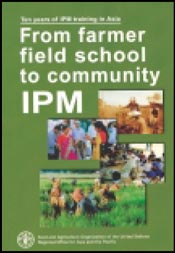
106 pages. 18 x 25.5 cm.
A comprehensive account of integrated pest management (IPM) as a farmer-centred and local need-responsive approach, which was developed on the rice farms of Southeast Asia to tackle the dangers of excessive pesticide use. The FAO programme owes it success to the pioneering farmer field school (FFS) approach that was first tried with Indonesian paddy farmers in early 1990 and has since become the model for farmer education in Asia. More than 2 million rice farmers in Asia have taken part in over 75 000 farmer field schools between 1990 and 1999, boosting their yields and incomes, cutting down the use of chemical pest killers and improving the ecological health of their fields. Above all, it has given them greater control over their livelihoods and greater confidence to face new challenges. This publication includes step-by-step instructions on organizing and running farmer field schools along with detailed case studies of farmer field schools in Southeast Asia. A separate section outlines the IPM programme activities in Bangladesh, Cambodia, China, Indonesia, Nepal, Sri Lanka and Viet Nam.
Countries: Bangladesh, Cambodia, China, Indonesia, Nepal, Sri Lanka and Viet Nam
http://www.fao.org/DOCREP/005/AC834E/AC834E00.HTM
The lychee crop in Asia and the Pacific
C. Menzel
RAP PUBLICATION 2002/16
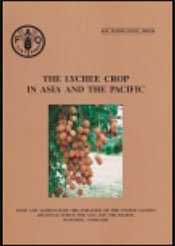
108 pages. 21 x 29.7 cm.
This publication provides a comprehensive account of the origin, distribution, production and trade of different species of the commercially important fruit crop that is mainly cultivated in Bangladesh, China, India, Nepal, Thailand and Viet Nam. These countries produce more than 1.8 million tonnes of the about 2 million tonnes of lychee crop cultivated annually in Asia, which accounts for over 95 percent of the world lychee harvest. Prepared by Christopher Menzel of the Maroochy Research Station, Queensland Department of Primary Industries, Australia, the document follows up on an expert consultation on lychee production in the Asia-Pacific region, which was organized by the FAO regional office in May 2001. It offers a detailed description of the botany and taxonomy of the plant, as well as its cultivation in different areas. Separate sections offer practical advice on orchard management, tackling pests and diseases, harvesting and storage, and review the prospects for the expansion of Asia’s lychee industry.
Countries: Australia, Bangladesh, China, India, Indonesia, Nepal, Philippines, Thailand and Viet Nam
http://www.fao.org/DOCREP/005/AC681E/AC681E00.HTM
Focusing small-scale aquaculture and aquatic resource management on poverty alleviation
R. Friend and S. Funge-Smith
RAP PUBLICATION 2002/17
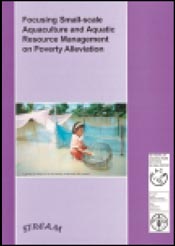
24 pages. 21.5 x 30 cm.
Living aquatic resources play a fundamental role in sustaining the livelihoods of many of the rural poor in Asia, providing crucial buffers to shock and food insecurity, and offering opportunities for diverse and flexible forms of income generation. As with any production-based intervention, the poorest groups face significant constraints to entry into aquaculture. However, aquaculture offers many opportunities for livelihood benefits that other sectors do not. Aquaculture technologies appropriate for poor people are now largely in place. Emphasis must therefore be given to more effective extension of low-cost technologies, appropriate management practices and securing rights of access and control, rather than technical research. This report provides a background to the issues of focusing aquaculture on poverty alleviation based on the conclusions of an expert consultation which was organized in order to provide field-level professionals in Asia with a unique opportunity to come together to share experiences on working in the field of poverty alleviation and aquaculture, and to prepare a platform for future networking.
Countries: Bangladesh, Cambodia, India, Lao People’s Democratic Republic, Nepal, Philippines, Sri Lanka, Thailand and Viet Nam
http://www.fao.org/DOCREP/005/AC624E/AC624E00.HTM
FAO in Asia and the Pacific. Annual report 2001
RAP PUBLICATION 2002/18
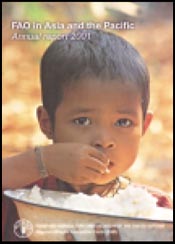
45 pages. 21 x 29.2 cm.
This publication marks the 50th anniversary of the FAO Regional Office for Asia and the Pacific in Bangkok. It describes FAO priorities and activities in the region during 2001 till mid-2002. Agriculture is of crucial importance to the region, which is home to two-thirds of the world’s 800 million hungry people and three-fourths of the world’s farming households. As one of the largest UN specialized agencies with a mandate to fight hunger and rural poverty, since 1945 FAO has provided its expertise in food production, distribution and rural development to member countries. This document gives an account of FAO priorities and programmes in areas ranging from production and access to food to sustainable rural development. Achieving food security for all is at the heart of FAO’s efforts. FAO support to countries in the form of policy guidance and field projects is also explained. A summary of the main management issues, including the identification of medium-term priorities for interdisciplinary action over the next 15 years, is provided.
Region: Asia-Pacific
http://www.fao.org/DOCREP/005/AC680E/AC680E00.HTM
Selected indicators of food and agriculture development in Asia-Pacific region 1991-2001
RAP PUBLICATION 2002/19
206 pages. 21 x 26.2 cm.
Over the last ten years, the agricultural population of developing Asia-Pacific nations declined from 62.5 to 56.9 percent of the total population. This document is a comprehensive and detailed compilation of statistics on farming, livestock, fishery, forestry and nutrition in Asia-Pacific countries for the above period. The statistics are listed separately for the developing and developed countries in the region. The annual report for the first time uses coloured charts and graphics and provides a handy comparison of changes over the past decade in the use of agricultural land and farm inputs, production of farm and horticulture crops, livestock, fisheries, forestry and agricultural trade. Changes in the daily per capita dietary energy supply in these countries over the past decade are shown for the first time for Fiji, Maldives, Solomon Islands and Vanuatu.
Countries: Australia, Bangladesh, Bhutan, Cambodia, China, Cook Islands, Democratic People’s Republic of Korea, Fiji, India, Indonesia, Iran, Japan, Lao People’s Democratic Republic, Malaysia, Maldives, Mongolia, Myanmar, Nepal, New Zealand, Pakistan, Papua New Guinea, Philippines, Republic of Korea, Samoa, Solomon Islands, Sri Lanka, Thailand, Tonga, Vanuatu and Viet Nam
http://www.fao.org/DOCREP/005/AC832E/AC832E00.HTM
How design, management and policy affect the performance of
irrigation projects.
Emerging modernization procedures and design
standards
H. Plusquellec
RAP PUBLICATION 2002/20
156 pages. 14.7 x 21 cm.
Irrigation is in a quiet crisis. Despite undeniable past successes in contributing to food production, irrigation expansion has dramatically lost momentum since the 1980s due to a considerable slowdown in new investment and losses of irrigated areas owing to water logging, salinization, aquifer over-drafting and urban encroachment in some countries. However, irrigated agriculture still remains essential for future food security. This publication is intended to be of interest to all stakeholders of the irrigation sector: irrigation agencies, financing institutions, water users’ associations, planners, designers, and training and research institutions. It provides a useful contribution to the debate on irrigation sector reform and modernization, and to efforts to improve the performance of irrigation by increasing awareness of the critical importance of proper modernization procedures and design criteria.
Countries: China, Egypt, India, Indonesia, Iran, Malaysia, Nepal, Pakistan, Sudan, Thailand and United States of America
http://www.fao.org/DOCREP/005/AC799E/AC799E00.HTM
Report of the nineteenth session of the Asia-Pacific Forestry Commission
RAP PUBLICATION 2002/21
27 pages. 21.1 x 29.7 cm.
This publication reports the proceedings of the APFC session held in Ulaanbaatar, Mongolia from 26 to 30 August 2002. Representatives of 27 member countries participated in the session, along with United Nations specialized agencies, and intergovernmental and international non-governmental organizations. Delegates cited several common threats to the region’s forests, including continued deforestation and degradation of natural forests, competition from alternative land uses, poor timber harvesting practices, pests and diseases, forest fires and illegal logging. Two in-session seminars were held, one on the issues and threats associated with invasive species (plants, pests and diseases) and a second on the impact of incentives on the development of forest plantation resources in the Asia-Pacific region. The commission also presented and discussed two key issues: illegal logging and trade, and the increasing array of international forestry fora and the multitude of objectives and demands arising from them. The document lists a summary of the 29 recommendations made by the commission session on the topics discussed.
Countries: Australia, Bangladesh, Bhutan, Cambodia, China, Fiji, France, India, Indonesia, Japan, Lao People’s Democratic Republic, Malaysia, Maldives, Mongolia, Myanmar, Nepal, New Zealand, Pakistan, Papua New Guinea, Philippines, Republic of Korea, Samoa, Solomon Islands, Sri Lanka, Thailand, United States of America, Vanuatu and Viet Nam
http://www.fao.org/DOCREP/MEETING/006/AC686E/AC686E00.HTM
A basic laboratory manual for the small-scale production and testing of I-2 Newcastle disease vaccine
S.E. Grimes
RAP PUBLICATION 2002/22
136 pages. 21 x 29.7 cm.
Chickens are susceptible to many infectious diseases. One of the most important of these is the viral disease known as Newcastle disease, which causes devastating losses in both commercial and village chickens. Reducing losses of large numbers of village chickens to virulent Newcastle disease is an essential first step to improving their productivity. Newcastle disease can be controlled by the use of vaccines. However, many Newcastle disease vaccines deteriorate after storage for one or two hours at room temperature, making them unsuitable for use in villages where the vaccine may need to be transported for hours or in some cases days at ambient temperature. The I-2 Newcastle disease vaccine is more robust and therefore does not deteriorate as quickly as traditional vaccines. This manual summarizes the basic laboratory procedures used to produce and test experimental I-2 thermostable Newcastle disease vaccine in the research and training programmes associated with the John Francis Virology Laboratory.
Region: Asia-Pacific
http://www.fao.org/DOCREP/005/AC802E/AC802E00.HTM
The livestock industries of Thailand
RAP PUBLICATION 2002/23
47 pages. 18.5 x 26 cm.
The material in this publication provides information on a broad range of issues related to the livestock sector of Thailand. Such information is useful in designing policies for the livestock sector overall as well as for individual livestock industries. The design of appropriate policies will assume increased importance as livestock industries in Thailand grow. To date, information on livestock industries is limited and this makes the job of the policy adviser difficult owing to the uncertainty related to the specific effects of particular policy initiatives or developments. Following a short introduction on the fundamental economic situation in Thailand, the characteristics of the beef, diary, broiler and layer, and swine industry are examined. The prices of livestock and livestock products, the animal feed industry and livestock performance, as well as other issues including finance and government policy, are examined.
Country: Thailand
http://www.fao.org/DOCREP/005/AC797E/AC797E00.HTM
Report of the twenty-sixth session of the Animal Production and Health Commission for Asia and the Pacific (APHCA)
RAP PUBLICATION 2002/24
165 pages. 18.2 x 25.7 cm.
An account of the meeting of the 15 member nations of the Commission in Subang, Jaya, Malaysia from 24 to 26 August 2002, the publication also includes a report of the preceding session in Manila, Philippines in August 2001. The document includes an account of APHCA’s work during October 2001 to August 2002, details on on-going and future activities including protecting the environment from the impact of the growing industrialization of livestock production in East Asia, an update on the first report on the state of the world’s animal genetic resources, and village poultry development. In addition, a half-day workshop was devoted to the theme “feed safety, food safety”, joined by a group of 20 persons comprising farmers, livestock entrepreneurs, feed millers and food processors.
Countries: Australia, Bangladesh, Bhutan, India, Indonesia, Iran, Lao People’s Democratic Republic, Malaysia, Myanmar, Nepal, Pakistan, Papua New Guinea, Philippines, Sri Lanka and Thailand
http://www.fao.org/DOCREP/005/AC801E/AC801E00.HTM
Communities in flames: proceedings of an international conference on community involvement in fire management
Edited by P. Moore, D. Ganz, L.C. Tan, T. Enters and P.B. Durst
RAP PUBLICATION 2002/25
133 pages. 21 x 29.8 cm.
As global concern over the fate of the world’s forests has grown generally, so too has specific concern over the frequency and intensity of forest fires, which have increased dramatically as a result of human activities in recent years. Since the widespread fires of the late 1990s, numerous organizations have supported various fire prevention, suppression and management initiatives. These efforts have indicated that no single actor can independently solve the serious social, economic and ecological challenges associated with uncontrolled forest fires. Importantly, it is now increasingly recognized that in many countries local communities can play significant positive roles in fire management. This publication provides long-awaited and first-hand insights into community-based forest fire management. It should prove useful to those responsible for formulating and implementing fire management policies and programmes in better understanding the key issues and challenges of involving local people as effective partners in managing forest fires.
Countries: Côte d’Ivoire, Gambia, Germany, India, Indonesia, Mongolia, Namibia, Philippines, South Africa, Thailand, United Republic of Tanzania, United States of America, Viet Nam and Zambia
http://www.fao.org/DOCREP/005/AC798E/AC798E00.HTM
World Food Day 2002. Water: source of food security
RAP PUBLICATION 2002/26

28 pages. 20.6 x 29.7 cm.
A report of the World Food Day celebration at the FAO regional office in Bangkok, which was presided over by the Minister of Agriculture and Cooperatives HE Sora-at Klinpratoom of Thailand. It includes a section on the 2002 theme Water: source of food security, the address by HE Sora-at Klinpratoom, a message by the FAO Director-General and a statement by the FAO Regional Representative for Asia and the Pacific. Highlights of the day include a keynote speech on the theme of the celebration by Y.K. Alagh, Sardar Patel Institute of Economic and Social Research, India and the presentation of the Y.S. Rao awards to five outstanding farmers from China, Republic of Palau, Sri Lanka, Thailand and Viet Nam.
Region: Asia-Pacific
http://www.fao.org/DOCREP/005/AC807E/AC807E00.HTM
Building awareness in aspects of fishery statistics, stock assessment and management. Proceedings of the FAO/SEAFDEC regional training workshop on the use of statistics and other information for stock assessment
RAP PUBLICATION 2002/27
90 pages. 21 x 29.7 cm.
An account of the FAO/SEAFDEC workshop, this document includes a brief account of the fishery statistics programme undertaken by the FAO Fishery Information, Data and Statistics Unit. Catch statistics from the FAO database are provided for each country along with comments relevant to the quality of the statistics. Fish stock assessment initiatives in the region are briefly reviewed. This is followed by an introduction to spreadsheet applications of the Thompson and Bell’s approach to assessing fishery performance and on the use of trophic models as applied in the aquatic ecosystem off the southwest of India. Issues concerning fishery management are also discussed. These include a brief review on marine fisheries management in the region, and suggested approaches to achieving better linkages between research and management. The latter include formalizing the linkages through legally empowered fisheries management plans, and fishing community/industry/government co-financing of fisheries research and management.
Countries: Bangladesh, Cambodia, India, Indonesia, Malaysia, Maldives, Myanmar, Pakistan, Philippines, Sri Lanka, Thailand and Viet Nam
http://www.fao.org/DOCREP/005/AC831E/AC831E00.HTM
International plan of action for the conservation and management of sharks and the shark fisheries of Thailand (Thai version only)
RAP PUBLICATION 2002/28
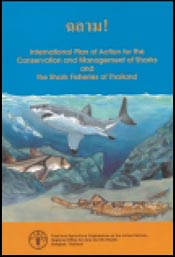
171 pages 18 x 26 cm.
At least 106 species of sharks, rays and other Chondrichthyes are found in Thai waters. The shark catch increased from 3 246 metric tonnes in 1985 to 7 737 metric tonnes in 1999, with an average of 4 450 metric tonnes per year. Most catch was consumed fresh or processed into products such as fish balls. Frozen shark meat was exported to China, Republic of Korea and Singapore and dried shark fins were exported to 20 countries. However, Thailand also imported shark fins from 24 countries for its domestic consumption. In order to facilitate the implementation of the 1999 International Plan of Action for the Conservation and Management of Sharks (IPOA-Sharks) by the Royal Government of Thailand, this publication was prepared by Thai fishery scientists and presents a review of the shark fisheries for consideration by the authorities concerned.
Country: Thailand
Report of the regional expert consultation of the Asia-Pacific network for food and nutrition on the status of FIVIMS initiatives
RAP PUBLICATION 2002/29
49 pages. 21.2 x 29.7 cm.
An account of the consultation at the FAO regional office in Bangkok from 19 to 22 November 2002, attended by representatives of Bangladesh, Cambodia, China, Fiji, India, Indonesia, Nepal, the Philippines, Sri Lanka, Thailand and Viet Nam. The Asia-Pacific network for food and nutrition attaches great importance to the implementation of national Food Insecurity and Vulnerability Information and Mapping Systems (FIVIMS) systems - networks of national information systems that assemble, analyze and disseminate data on food insecurity and vulnerability. The expert consultation took stock of advances made by countries in design, implementation and monitoring of actions to address food insecurity and vulnerability. The report provides conclusions and recommendations from the papers presented and discussed, including progress by countries in the region toward implementing FIVIMS.
Countries: Bangladesh, Cambodia, China, Fiji, India, Indonesia, Nepal, Philippines, Samoa, Sri Lanka, Thailand and Viet Nam
http://www.fao.org/DOCREP/005/AD032E/AD032E00.HTM
Giants on our hands. Proceedings of the international workshop on the domesticated Asian elephant
Edited by I. Baker and M. Kashio
RAP PUBLICATION 2002/30
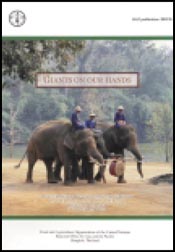
278 pages. 21.1 x 29.5 cm.
FAO organized the first ever international workshop on domesticated elephants from 5 to 10 February 2001 at its regional office in Bangkok. Prior to the workshop, a series of studies in 11 domesticated elephant range countries was carried out and the results were presented at the workshop. The countries include Bangladesh, Cambodia, India, Indonesia, Lao PDR, Malaysia, Myanmar, Nepal, Sri Lanka, Thailand and Viet Nam. The workshop defined the situation of domesticated elephants; identified priority areas of work, especially on registration and laws; developed work plans for each identified priority area; and developed a networking mechanism. This publication should serve as a useful source of information and a good reference guide for elephant managers, specialists, non-governmental organizations and donors seeking opportunities to improve the management and utilization of Asian elephants.
Countries: Bangladesh, Cambodia, India, Indonesia, Lao People’s Democratic Republic, Malaysia, Myanmar, Nepal, Sri Lanka, Thailand and Viet Nam
http://www.fao.org/DOCREP/005/AD031E/AD031E00.HTM
Report of the twenty-sixth FAO Regional Conference for Asia and the Pacific (APRC)
APRC/02/REP
43 pages. 21.1 x 29.8 cm.
The final report of the twenty-sixth FAO Regional Conference for Asia and the Pacific (APRC) held in Kathmandu, Nepal from 13 to 17 May 2002. Ministers of agriculture from 40 countries in Asia and the Pacific were invited to attend. The two-day plenary session of the conference opened on 16 May 2002. It was preceded by a three-day session of senior government officers who held in-depth discussions on a range of issues central to food security and rural poverty alleviation in Asia-Pacific countries. Held once every two years, the regional conference focused on the International Year of the Mountains (IYM) and assessed problems and outlined a strategy to promote sustainable mountain development in the region. Other items on the agenda were improving the contribution of livestock and fisheries development for food security and poverty alleviation, and empowering the rural poor. The report outlines the outcome of the conference, including the main recommendations that emerged.
Countries: Australia, Bangladesh, Bhutan, Cambodia, China, Cook Islands, Democratic People’s Republic of Korea, Fiji, France, India, Indonesia, Iran, Japan, Kazakhstan, Kiribati, Lao People’s Democratic Republic, Malaysia, Maldives, Marshall Islands, Mongolia, Myanmar, Nauru, Nepal, New Zealand, Niue, Pakistan, Palau, Papua New Guinea, Philippines, Republic of Korea, Samoa, Solomon Islands, Sri Lanka, Tajikistan, Thailand, Tonga, United States of Amer ica, Uzbekist an, Vanuatu and V iet Nam
http://www.fao.or.th/APRC26-FinalReport.htm
New approaches for the improvement of inland capture fishery statistics in the Mekong Basin. Ad-hoc expert consultation
RAP PUBLICATION 2003/01
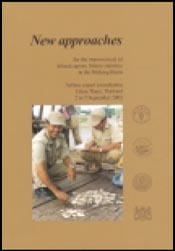
145 pages. 21.2 x 29.8 cm.
Inland capture fisheries make a valuable contribution to food security in many parts of the world, especially in the Mekong Basin. Many of the 60 million inhabitants living in the subregion engage in small-scale fishing or fish only part-time and represent some of the least empowered and poorest people in society. However, the contribution that inland fishery resources make to rural livelihoods is often unknown or underestimated due to a lack of basic production and consumption information. As a result, development activities may inappropriately focus on other sectors at the expense of rural communities that depend on inland fisheries. Accurate information on the contribution of inland fisheries is essential for responsible development. To address these concerns an ad-hoc expert consultation was convened on 2 to 5 September 2002 in Udon Thani, Thailand with the overall objective of improving the state of knowledge in inland capture fisheries in the subregion. A report of the meeting as well as country reviews, thematic papers and case studies are included.
Countries: Bangladesh, Cambodia, China, Lao People’s Democratic Republic, Thailand and Viet Nam
http://www.fao.org/DOCREP/005/AD070E/AD070E00.HTM
Proceedings of the mini roundtable meeting on agricultural marketing and food security
RAP PUBLICATION 2003/02
72 pages. 20.8 x 29.2 cm.
Despite unprecedented rates of economic growth, food insecurity remains a major challenge for many countries in the Asia-Pacific region. Although the output of food grains and other agricultural commodities in many of these predominantly agricultural countries recorded impressive gains, the incomes of small and marginal farmers failed to improve to desired levels. Rural poverty and food insecurity at the household level remain pronounced, notwithstanding pervasive government interventions in agricultural markets. Apart from internal challenges, the countries of the region also face challenges posed by rapid changes in the international trade and economic environment. FAO brought together the above mini roundtable meeting to seek the views of member countries and to establish priorities for its programme of work in agricultural marketing for the next few years. The proceedings outline the outcome of the two-day roundtable meeting, including the main conclusions and recommendations that emerged.
Countries: China, India, Indonesia, Nepal, Philippines, Republic of Korea and Thailand
http://www.fao.org/DOCREP/006/AD639E/AD639E00.HTM
Report of the nineteenth session of the Asia and Pacific Commission on Agricultural Statistics
RAP PUBLICATION 2003/03
57 pages. 21 x 29.8 cm.
This document presents the report of the nineteenth session of the Asia and Pacific Commission on Agricultural Statistics held in Seoul, Republic of Korea from 21 to 25 October 2002. The session was attended by 60 delegates and observers from 20 member countries and four UN and international organizations. The conference assessed the current status of food and agricultural statistical development in the member countries and discussed new developments in agricultural statistics including millennium development goals, image scanning technology for processing of agricultural survey and census data, impact/consequences of irregular censuses, and preparations for the World Census of Agriculture 2010 and indicators for agricultural policy analysis. A report on the Japan/FAO projects to improve agricultural statistics in Asia and Pacific countries and strengthen regional data exchange was also discussed, besides fishery and forestry statistics. Recommendations and follow-up actions are included in the session report.
Countries: Australia, Bangladesh, Cambodia, China, India, Indonesia, Iran, Japan, Lao People’s Democratic Republic, Malaysia, Myanmar, Nepal, New Zealand, Pakistan, Philippines, Republic of Korea, Sri Lanka, Thailand, United States of America and Viet Nam
http://www.fao.org/DOCREP/005/AD091E/AD091E00.HTM
The role of aquaculture and living aquatic resources. Priorities for support and networking
RAP PUBLICATION 2003/04
99 pages. 21 x 29.8 cm.
Aquaculture and inland fisheries are vital components of rural livelihoods worldwide, particularly in many Asian countries. Previous support to projects focused on aquaculture development where the goal was improved aquaculture. Today the focus has shifted to poverty alleviation and emphasis is placed more on the use of aquaculture as a tool for development. The benefits are improved food supply, reduced vulnerability to uncontrollable natural crashes in aquatic production, added employment and increased income. This publication is a report of the regional donor consultation held in Manila, Philippines from 27 to 28 November 2002. Nine donors and five regional organizations were represented. Discussions focused on the types of appropriate interventions needed in sustainable aquaculture development and mechanisms for their implementation. The conclusions of the report are targeted at donor agencies, international and regional institutions related to the fisheries sectors and national policy-makers.
Region: Asia-Pacific
http://www.fao.org/DOCREP/005/AD089E/AD089E00.HTM
Practical guidelines for the assessment, monitoring and reporting on national level criteria and indicators for sustainable forest management in dry forests in Asia
Edited by S. Appanah, F. Castaneda and P.B. Durst
RAP PUBLICATION 2003/05
94 pages. 21 x 29.5 cm.
For much of the last two decades forestry discussions have been dominated by calls for sustainable management of forest resources, but practical solutions are few and far between. Among the few exceptions has been the development of criteria and indicators for sustainable forest management which provide a meaningful and practical means for countries to gauge periodic progress towards sustainable forest management. This practical guide for the assessment, monitoring and reporting on national level criteria and indicators for dry forests in Asia is a comprehensive instruction book on the process of collecting and assembling national level information and reporting. In addition, the guide describes an overall format for reporting the progress made towards sustainable management of dry forests and the provisions that need to be in place in order to ensure successful implementation of the assessment system. These provisions include institutional arrangements and preparations for assessment and training needs.
Region: Asia
http://www.fao.org/DOCREP/006/AD640E/AD640E00.HTM
The yak, second edition
G. Wiener, H. Jianlin and L. Ruijun
RAP PUBLICATION 2003/06
460 pages. 18.5 x 25.8 cm.
The yak must be regarded as one of the world’s most remarkable domestic animals. It thrives in conditions of extreme harshness and deprivation while providing a livelihood for people. Chinese historians have argued that without the yak’s capacity to live in such a hostile environment, human civilization might not have established and flourished in these remote areas. This book traces the development of this unique animal and then describes in detail its characteristics, performance and products. There is also a discussion of more recent research and development projects that may provide a basis for improvements in yak performance and in the utilization of rangelands. This research may lead to a wider distribution for the yak and to the better utilization of yak products. Any marked changes in yak husbandry are likely to have far-reaching consequences for the social fabric of a society of pastoralists.
Countries: Afghanistan, Bhutan, Canada, China, India, Mongolia, Nepal, Pakistan, Tajikistan and United States of Amer ica
http://www.fao.org/DOCREP/006/AD347E/AD347E00.HTM
A handbook for trainers on participatory local development: the Panchayati Raj model in India
S.P. Jain and W. Polman
RAP PUBLICATION 2003/07
137 pages. 21.1 x 29.6 cm.
Awareness that the ‘trickle down’ effects of economic growth take too long to reach the poor has led to the realization that poverty alleviation programmes cannot be effective unless the poor have a voice in the planning and implementation of schemes meant to help them. This book describes and supports the world’s biggest endeavour in grassroots governance taking place in India. Some 238 000 Panchayats (village councils) representing about 600 000 villages have been constituted. Preparing the Panchayat members for their new roles as local decision-makers calls for education and training on a massive scale, for which adapted training methods and tools are needed. Although this handbook is designed for the training needs of all categories of local functionaries associated with the decentralization process in India, it provides guidance on core issues in institutional capacity-building for local development planning, useful for other developing countries within the region.
Country: India
http://www.fao.org/DOCREP/006/AD346E/AD346E00.HTM
Community-based fire management: case studies from China, The Gambia, Honduras, India, the Lao People’s Democratic Republic and Turkey
RAP PUBLICATION 2003/08
140 pages. 21.1 x 29.5 cm.
The frequency and intensity of forest fires have increased dramatically in many parts of the world in recent years, resulting in major impacts on forests and on rural and urban people and economies. Faced with increasing fire occurrences and decreasing fire suppression budgets, government agencies, local organizations and forest users must consider the full range of fire management options from around the world. By considering proactive approaches - in particular those that engage local communities in the planning and implementing of fire management activities - fire management organizations may avoid the pitfalls and mistakes of the past. The community-based fire management approaches presented in this publication illustrate a recent shift in direction; a movement away from centralized and state-driven forest fire management towards decentralized and mainly community-based management regimes. These approaches offer promise of being more effective and sustainable than conventional fire management and suppression approaches over the long term.
Countries: China, Gambia, Honduras, India, Lao People’s Democratic Republic and Turkey
http://www.fao.org/DOCREP/006/AD348E/AD348E00.HTM
A handbook for training of disabled on rural enterprise development
J. Hanko and W. Polman
RAP PUBLICATION 2003/09
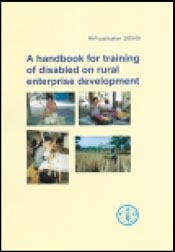
99 pages. 16.6 x 24.3 cm.
There are an estimated 400 million persons with disabilities in Asia and the Pacific. A vast majority of them live in rural areas and are small farmers dependent on the agricultural sector for livelihood security. This practical handbook identifies income generating opportunities for setting up small-scale businesses for these farmers so that they may become self-reliant while remaining in their community. It is based on an innovative entrepreneurship training programme developed by FAO, enabling small farmers with disabilities to overcome social, cultural and psychological hurdles to becoming successful, self-employed rural entrepreneurs. It uses a field-tested methodology for promotion of micro-enterprises by small farmers by mobilizing successful, local small farmers to become trainers of their peers. The handbook takes the user through all the steps to be considered when a disabled person decides to start a small enterprise, from the difficulties and advantages involved and training methodologies to preparation and setting up of the micro-enterprise.
Region: Asia-Pacific
http://www.fao.org/DOCREP/004/AD453E/AD453E00.HTM
Selected indicators of food and agriculture development in Asia-Pacific region 1992-2002
RAP PUBLICATION 2003/10
207 pages. 21 x 29.6 cm.
This is the twentieth issue of the above publication, a comprehensive and detailed compilation of statistics on farming, livestock, fishery, forestry and nutrition in Asia-Pacific countries for the above period. Statistics are listed separately for the developing and developed countries in the region. The publication uses mostly FAO statistics which are based on information provided by member countries. A table reporting on the status of organic farming in the region has been included for the first time. This document provides a handy comparison of changes over the past decade in the use of agricultural land and farm inputs, production of farm and horticulture crops, livestock, fisheries, forestry and agricultural trade in countries of the Asia-Pacific region, where nearly 56 percent of the total population of about 3.4 billion were engaged in farming and related activities in 2001.
Countries: Australia, Bangladesh, Bhutan, Cambodia, China, Cook Islands, Democratic People’s Republic of Korea, Fiji, India, Indonesia, Iran, Japan, Kazakhstan, Kiribati, Lao People’s Democratic Republic, Malaysia, Maldives, Marshall Islands, Mongolia, Myanmar, Nauru, Nepal, New Zealand, Niue, Pakistan, Palau, Papua New Guinea, Philippines, Republic of Korea, Samoa, Solomon Islands, Sri Lanka, Tajikistan, Thailand, Tonga, Uzbekistan, Vanuatu and Viet Nam
http://www.fao.org/DOCREP/004/AD452E/AD452E00.HTM
The role and nutritional value of aquatic resources in the
livelihoods of rural people.
A participatory assessment in Attapeu
Province, Lao PDR. A contribution to the
Dialogue on Water, Food and
the Environment
E. Meusch, J. Yhoung-Aree, R. Friend and S. Funge-Smith
RAP PUBLICATION 2003/11
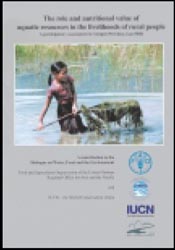
34 pages. 20.8 x 30 cm.
Fishing and foraging for aquatic animals are often an integral part of rural food strategies and are as much about the management of water and aquatic environments as they are about the management of land. This publication is the result of a participatory assessment conducted in Attapeu Province, Lao PDR to determine the role of aquatic resources in the nutritional status of people engaged in rural livelihoods. The results of these activities illustrate that a broad diversity of aquatic plants and animals are frequently accessed and used by villagers, and that fish and other aquatic animals make up the main animal protein sources in peoples’ diets. These findings indicate that strategies for rural development, food security and poverty alleviation in these areas need to pay special attention to the management of aquatic resources to ensure the health and well-being of rural people.
Country: Lao People’s Democratic Republic
http://www.fao.org/DOCREP/004/AD454E/AD454E00.HTM
Report of the expert consultation on livestock statistics
RAP PUBLICATION 2003/12
22 pages. 20.8 x 29.6 cm.
An account of the proceedings of the 8 to 11 July 2003 consultation held at the FAO regional office in Bangkok, attended by ten experts in specialized areas of livestock statistics. The livestock sectors of the countries of the Asia-Pacific region have experienced phenomenal growth in recent years. However, the quality of livestock data and methodologies available have not kept pace with growth and need to be improved to allow proper planning for the sector to play an adequate role in food security. Four areas required the special attention of the experts: strategies for improving national systems of livestock statistics; review of national methods and practices for producing and disseminating statistical data on livestock; methodologies for collecting data on livestock numbers and parameters; and methodologies for estimating livestock products. The documents and recommendations of the expert consultation will be used in the preparation of a series of publications documenting country practices.
Region: Asia-Pacific
http://www.fao.org/DOCREP/004/AD451E/AD451E00.HTM
Expert consultation on agricultural extension, research-extension-farmer interface and technology transfer
RAP PUBLICATION 2003/13
58 pages. 21.2 x 29.8 cm.
Numerable changes and forces shaping the world these days - globalization, liberalization, decentralization, breakthroughs in communications, genetic engineering and biological technologies, to name but a few - are impacting or have the potential to affect agricultural extension. The effects are both positive and negative. Of particular concern is that agricultural extension is unknown or unutilized in some areas of the Asia and Pacific region and that in many places technology transfer and adoption has not met the needs of target beneficiaries, despite efforts in research and development. The above consultation held in Bangkok, Thailand on 16 to 19 July 2002 brought together experts to review the status of agricultural extension, examine problems, needs and opportunities and discuss strategies to address these issues both nationally and regionally. The participants drafted several recommendations for future directions and identified priorities and presented frameworks for projects that will address the recommendations coming out of the consultation.
Countries: Bangladesh, Cambodia, China, India, Indonesia, Malaysia, Nepal, Pakistan, Philippines, Republic of Korea, Sri Lanka, Thailand and Viet Nam
http://www.fao.org/DOCREP/006/AD643E/AD643E00.HTM
Bringing back the forests. Policies and practices for degraded lands and forests
Edited by H.C. Sim, S. Appanah and P.B. Durst
RAP PUBLICATION 2003/14
337 pages. 17.5 x 25.1 cm.
Forests are important natural resources that fuel the continuous economic and social development of many countries. This is especially true of many developing countries in the Asia-Pacific region. However, the rather rapid economic and social development experienced by many of these countries was partly fuelled through exploiting these natural resources in an unsustainable manner. Concerned with the severity of the problems, a number of countries in the region have implemented numerous forest rehabilitation projects. While much knowledge and experience have been gained from these initiatives, they have not been widely publicized or adopted. There is an urgent need to bring this understanding to natural resource managers and policy-makers so that appropriate action is taken and supporting policies are adopted. This publication, the proceedings of a conference held in October 2002 in Malaysia, is a collection of some of the most valuable papers that have been recently produced on the subject.
Countries: Australia, China, Costa Rica, Germany, India, Indonesia, Malaysia, Nepal, Philippines, Thailand and Viet Nam
http://www.fao.org/DOCREP/006/AD496E/AD496E00.HTM
Report of the expert consultation on rural women and distance learning: regional strategies
RAP PUBLICATION 2003/15
44 pages. 21 x 29.8 cm.
Rural women in Asia make significant contributions to the agricultural sector, but their access to information and communication technology and current techniques of production still needs to be improved. The Asian region has yet to fully utilize the immense potential of distance learning for agriculture and rural development, particularly among rural women. The above expert consultation, held in Beijing, China from 23 to 26 October 2001, focused on identifying modalities of distance learning and open university programmes that could be used for improving the status of rural women. Specifically, the aim was to define a regional strategy that would incorporate partnership linkages among Asian distance learning programmes and institutions to improve rural women’s learning, and promote distance learning approaches to improve technology transfer to strengthen rural women’s competence in farm and household production. The report gives a summary of the presentations and highlights of the discussions and recommendations.
Countries: Bangladesh, Bhutan, China, India, Malaysia, Mongolia, Pakistan, Philippines, Sri Lanka and Thailand
http://www.fao.org/DOCREP/004/AD455E/AD455E00.HTM
Report of the Asian regional expert consultation on rural women in knowledge society
RAP PUBLICATION 2003/16
30 pages. 21.6 x 27.9 cm.
The above consultation, held in Hyderabad, India from 16 to19 December 2002, was designed to address issues relating to two of the most critical components of the digital divide, namely rural communities and women, and to explore with partners the processes, designs and models that can generate positive impacts in harnessing information and communication technologies (ICTs). While t here are a number of studies documenting t he disparity between rural and urban locations in access to ICTs, far fewer studies are available on the gender specific impact of ICTs, especially on women living in rural areas. This report presents an overview of the stakeholders deliberations and recommendations regarding ICTs and rural women, and distance education and rural women, with particular reference to those who have been marginalized in the previous phases of technological revolutions, namely rural communities, illiterate rural women and populations living in resource poor environments and isolated areas.
Countries: Bangladesh, China, India, Malaysia, Philippines, Republic of Korea, Sri Lanka, Thailand and Viet Nam
http://www.fao.org/DOCREP/006/AD450E/AD450E00.HTM
Proceedings of the training workshop on forest products statistics
RAP PUBLICATION 2003/17
87 pages. 21 x 29.6 cm.
The importance of timely and reliable information for strengthening sustainable forest management, planning, and policy formulation in the forestry sector is well recognized. The purpose of the training workshop, held in Canberra, Australia from 16 to 19 December 2002 and jointly organized by FAO and the International Tropical Timber Organization (ITTO), was to strengthen collaboration between FAO and member countries to enhance the quality of national and regional statistics. The workshop was based on reports on the status of national forest product statistics, which were prepared by national correspondents. The proceedings contain summarized reports from the national correspondents on national forest product statistics, as well as selected thematic papers on specific case studies relating to data collection, analysis and dissemination, or particular perspectives on the need for forest product statistics. Training material as well as the main findings and recommendations from the workshop are presented.
Countries: Australia, China, Cook Islands, Fiji, Maldives, Mongolia, Myanmar, Papua New Guinea, Samoa, Solomon Islands, Tong a and Vanuatu
http://www.fao.org/DOCREP/006/AD638E/AD638E00.HTM
Myanmar aquaculture and inland fisheries
RAP PUBLICATION 2003/18
60 pages. 21 x 29.8 cm.
Fish and fish products are crucial in the nutrition and livelihoods of the Myanmar people. However, little information is available on their patterns of consumption, inter-regional differences, availability and types of fish consumed. Myanmar has impressive freshwater capture fisheries. The aquatic resource area of the river systems within Myanmar encompasses a total of 8.2 million ha of permanent and seasonal water bodies. These resources support, in many ways, the livelihoods of the people of Myanmar. Myanmar has a long coastline of nearly 3 000 km and coastal aquaculture contributes significant export earnings and shows potential for future development and diversification. This report is the outcome of two concurrent missions, one to coastal areas and one to inland areas. The report includes the findings of the missions as well as conclusions and recommendations in support of the long-term sustainability of fishery resources in Myanmar.
Country: Myanmar
http://www.fao.org/docrep/004/ad497e/ad497e00.htm
Advancing assisted natural regeneration (ANR) in Asia and the Pacific
Edited by P.C. Dugan, P.B. Durst, D.J. Ganz and P.J. McKenzie
RAP PUBLICATION 2003/19
44 pages. 21.1 x 29.8 cm.
Assisted natural regeneration (ANR) is a forest rehabilitation technique based on the ecological principle of secondary succession. It utilizes natural processes and promotes the regeneration of indigenous species. Because ANR relies on natural processes, it is especially effective in restoring and enhancing biological diversity and ecological processes. FAO and partner organizations convened a workshop and study on ANR in the Philippines in April 2002 to highlight the potential and opportunities of ANR as a restoration strategy. The workshop discussions and presentations underscored the importance of ANR in the broader context of sustainable forest management and the potential for cost-effective rehabilitation of forestlands through more aggressive implementation of ANR. This publication includes selected papers of the workshop dealing with the technical, environmental and social dimensions of ANR, as well as papers describing country initiatives.
Region: China, Indonesia, Philippines, Thailand and Viet Nam
http://www.fao.org/DOCREP/004/AD466E/AD466E00.HTM
World Food Day 2003. International alliance against hunger
RAP PUBLICATION 2003/20
38 pages. 21.1 x 29.3 cm.
A report of the twenty-third World Food Day celebration held at the FAO regional office in Bangkok. Each year on 16 October FAO celebrates World Food Day in commemoration of its founding in 1945. This year’s theme, International Alliance Against Hunger, is a call to action to encourage all those concerned about the problem of hunger to join forces in a common effort. The publication includes an address by HRH Princess Maha Chakri Sirindhorn, a message by the FAO Director-General, a statement by the FAO Assistant Director-General and Regional Representative for Asia and the Pacific and a statement by Kim Hak-Su, UN Under Secretary-General and Executive Secretary of ESCAP. Highlights of the day include a keynote speech on the theme of the celebration by Sartaj Aziz, former Agriculture, Finance and Foreign Affairs Minister, Pakistan and the presentation of three awards to outstanding farmers from Pakistan, the Philippines and Thailand.
Region: Asia-Pacific
http://www.fao.org/DOCREP/006/AD641E/AD641E00.HTM
Report of the regional expert consultation of the Asia-Pacific network for food and nutrition on food composition activities
RAP PUBLICATION 2003/21
72 pages. 21 x 29.8 cm.
An account of the consultation at the FAO regional office in Bangkok from 18 to 21 November 2003, attended by 15 experts from ten member countries. Reliable and updated food composition statistics are vital for national planning and policy making on food security and nutrition. The expert consultation reviewed the food composition activities in the region, developed strategies for enhancing the quality and quantity of food composition data and provided guidance towards the development of better methodologies and procedures on food composition. The experts also examined the usage of food composition data in a wide range of areas such as evaluating diets and food preparations, including considerations of its use in trade, preservation of agro-biodiversity, and risk reduction for chronic diet related diseases.
Countries: Afghanistan, Bangladesh, China, Cook Islands, Fiji, India, Indonesia, Kiribati, Marshall Islands, Nauru, Nepal, Niue, Pakistan, Palau, Papua New Guinea, Philippines, Samoa, Solomon Islands, Sri Lanka, Thailand, Tonga, Vanuatu and Viet Nam
http://www.fao.org/docrep/004/ad498e/ad498e00.htm
State of forestry in Asia and the Pacific - 2003. Status, changes and trends
C. Brown and P.B. Durst
RAP PUBLICATION 2003/22
67 pages. 21.1 x 29.8 cm.
The Asia-Pacific region is characterised by diversity and rapid change. These attributes are reflected in the forestry sector, where rapid evolution of social, economic and environmental issues means policies, legislation, institutions and the broad forestry community are being challenged to cope with constantly shifting goals and expectations. State of forestry in Asia and the Pacific 2003 endeavors to present a broad summary of relevant policy information and data. Its purpose is to provide policy-makers, civil society and those who derive their livelihood from the forestry sector with a comprehensive and objective view of forestry. It particularly highlights the contrasting approaches being adopted by countries across the region in addressing the most pressing challenges confronting the region, including developments in participatory forest management, forest conservation, illegal logging, promotion of sustainable management and institutional restructuring. The publication documents recent changes in national forest policies and forestry legislation that address these crucial issues.
Region: Asia-Pacific
http://www.fao.org/DOCREP/006/AD642E/AD642E00.HTM
