


|
RAP PUBLICATION 2004/01 |
by S. Premchander, V. Prameela; in collaboration with W. Polman
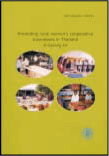
210 pages. 21 x 28.1 cm.
This publication is an outcome of an FAO Technical Cooperation Project in collaboration with the Cooperative Promotion Department (CPD) of the Ministry of Agriculture and Cooperatives, Thailand. The project assisted in strengthening the training capacity of the CPD through training of trainers and field demonstration activities in five regions of Thailand. While cooperative women's groups have been set up as part of the Government's efforts to help increase the incomes of women, the focus to date has been mainly on providing support services. This training kit instead focuses on capacity building to help women's cooperative groups manage, promote, expand and diversify their businesses and move from dependence to self-reliance. The publication includes a comprehensive set of training modules on business concepts, gender issues, costing and pricing, bookkeeping and financial statements, marketing, risk management, business planning, leadership and team work, networking, and monitoring and evaluation. Case studies are also provided.
http://www.fao.org/docrep/004/ad499e/ad499e00.htm
Country: Thailand
|
RAP PUBLICATION 2004/02 |
20 pages. 21 x 29.8 cm.
This publication presents the final report of the sixty-ninth session of the Executive Committee of the Asia-Pacific Fishery Commission (APFIC) which was held in Pattaya, Thailand from 15 to 16 December 2003. Among the major topics discussed was the future role of APFIC. Given changing conditions in world fisheries and the emergence of numerous regional fisheries bodes, the Commission recognized that it must become more proactive. Most members wished to see the Commission continue its existing functions and to assume a new role as a regional consultative body to promote integration of regional activities relating to fisheries. To provide an integrating mechanism for APFIC to assume its proposed role, it was recommended that APFIC organize and conduct a regional consultative forum as a biennial event. A summary of the main recommendations/decisions is included as an appendix to the report.
http://www.fao.org/docrep/007/ad500e/ad500e00.htm
Region: Asia-Pacific
|
RAP PUBLICATION 2004/03 |
by Z. Yongling; edited by M. Riggs, M. Hazelman and L. Weike
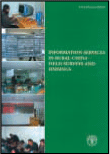
33 pages. 21 x 29.7 cm.
The Government of the People's Republic of China has formulated a series of policies in agricultural information services to strengthen rural market information systems and information management capacity in rural communities. To take stock of and identify effective and easy-to-replicate models for use in other regions, FAO collaborated with the Chinese Information Centre of the Ministry of Agriculture to set up a study group to carry out field surveys of information services in rural China. This document reports on the findings of the surveys and analyses the differences and similarities between the three main models identified. The impact of rural information services on agricultural production, constraints encountered in promoting and providing information services, and key issues and conclusions are also reported. The study group concluded that three factors were key to the relative success of the three models identified: policy support, service delivery and nature of the information content. The publication is available in both English and Chinese.
http://www.fao.org/docrep/007/ad504e/ad504e00.htm
Country: China
|
RAP PUBLICATION 2004/04 |
edited by H.C. Sim, S. Appanah and W.M. Lu
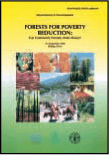
189 pages. 20.6 x 29.1 cm.
Poverty reduction strategies are increasingly becoming the framework for development planning and implementation, and the role of forests and forestry towards achieving poverty reduction is gaining more attention. This workshop, held from 1 to 2 September 2003 in Beijing, China, gathered over 60 experts from 16 countries in the Asia-Pacific region and from international organizations to examine the opportunities that community forestry can offer in alleviating poverty for people living in forest-dependent communities. For centuries forests have been providing subsistence as well as income to the communities living in and near them. Forests can therefore be an effective resource base for alleviation of poverty in rural areas, but new and innovative means have to be formulated so that community forestry can become a major source of income, particularly to marginalized communities. Sustainable management, marketing, processing and value addition to forest products are some areas for further exploration. This publication is a compilation of papers presented during the workshop, and represents the experiences of countries in the Asian region in implementing community forestry.
http://www.fao.org/docrep/007/ad511e/ad511e00.htm
Countries: Bangladesh, Bhutan, Cambodia, China, India, Indonesia, Malaysia, Mongolia, Pakistan, Philippines, Sri Lanka, Thailand and Viet Nam
|
RAP PUBLICATION 2004/05 |
75 pages. 21 x 29.5 cm.
An account of the Commission session held in Kuala Lumpur, Malaysia from 4 to 8 August 2003. Delegates from 19 Commission member countries -Australia, Bangladesh, Cambodia, China, Democratic People's Republic of Korea, Fiji, India, Indonesia, Lao People's Democratic Republic, Malaysia, Myanmar, Nepal, New Zealand, Pakistan, Republic of Korea, Sri Lanka, Thailand, Tonga and Viet Nam - as well as observers from Japan, Malaysia and the United States of America were present. The meeting reviewed the body's work since the previous Asia and Pacific Plant Protection Commission (APPPC) session and the status of plant protection in the 19 member nations. The Commission surveyed implementation of the revised Plant Protection Agreement for Asia and the Pacific, progress in integrated pest management in the region and a range of issues linked to plant protection.
http://www.fao.org/docrep/007/y5335e/y5335e00.htm
Countries: Australia, Bangladesh, Cambodia, China, Democratic People's Republic of Korea, Fiji, India, Indonesia, Lao People's Democratic Republic, Malaysia, Myanmar, Nepal, New Zealand, Pakistan, Republic of Korea, Sri Lanka, Thailand, Tonga and Viet Nam
|
RAP PUBLICATION 2004/06 |

29 pages. 21 x 29.8 cm.
The product of a year-long effort, this document reiterates FAO's global vision and mission in sustainable agriculture and food security, and articulates the elements of strategy that FAO and its member countries in Asia and the Pacific might adopt to realize them. Six thematic programme areas are identified to guide the Asia-Pacific region in national and collective actions towards achieving the World Food Summit target of halving the number of undernourished by 2015. These are: restructuring of the agricultural sector; decentralizing governance in support of sustainable development; reducing vulnerability to disasters; promoting effective and equitable management, conservation and sustainable use of natural resources; strengthening biosecurity; and alleviating poverty in rice-based livelihood systems. Within each thematic area, the general rationale, goal, objectives, strategic elements, outcomes and impact indicators are given and an implementation strategy is outlined.
http://www.fao.org/docrep/007/ad501e/ad501e00.htm
Region: Asia-Pacific
|
RAP PUBLICATION 2004/07 |

43 pages. 21 x 29.5 cm.
Shrimp farming and processing in ASEAN is targeted at the export market which means that the quality and standards of shrimp products depend largely on the requirements of importing countries. Consumers worldwide are increasingly demanding safe and high quality seafood. Issues of contamination with pathogenic bacteria and drug residues have triggered importing countries to tighten their import requirements and regulations. There is growing concern among ASEAN countries that existing systems for inspection and testing are not adequate to respond to these new requirements. In response, an ASEAN Sectoral Task Force was formed to harmonize quality and inspection standards for shrimp exports and imports in the region. The first strategic planning workshop of the task force was held in Bangkok, Thailand from 4 to 6 November 2003. This document contains the report of the workshop as well as conclusions and recommendations.
http://www.fao.org/docrep/007/ad502e/ad502e00.htm
Region: Asia
|
RAP PUBLICATION 2004/08 |
57 pages. 21 x 29 cm.
The first in a new series of biennial reports, this publication describes FAO priorities and activities in the Asia-Pacific region during 2002 and 2003. The introduction contains a succinct analysis of the main socio-economic developments affecting agriculture in the region. Other sections describe the challenges facing the region and offer solutions in support of food security and poverty alleviation while protecting the region's natural resource base. Selected examples of FAO programmes and activities carried out in natural resource management, food production, sustainable rural development and food security are provided. Policy guidance and capacity building are described and examples are given of regional and national projects. The publication also contains indexes - by country and organization - which offer a handy reference to specific partnership activities undertaken during the reporting period.
http://www.fao.org/docrep/007/ad517e/ad517e00.htm
Region: Asia-Pacific
|
RAP PUBLICATION 2004/09 |
35 pages. 21 x 29.7 cm.
This publication reports the proceedings of the Asia-Pacific Forestry Commission (APFC) session held in Nadi, Fiji from 19 to 23 April 2004 in which representatives from 29 member countries participated. The Commission reviewed the state of forestry in the region, identified regional issues for the attention of the committee on forestry, and reported on the progress and implementation of APFC and FAO supported activities and initiatives. Two in-session seminars were held, one on exemplary forest management in the region and a second on alternative forest management models, particularly those oriented towards achieving sustainability and alleviating poverty. The Commission also presented and discussed two key issues: (i) the challenges of securing adequate financing for sustainable forest management and (ii) global, regional and bilateral forest-related agreements and arrangements -are regional agreements the way to go? A listing of the recommendations made by the Commission session on the topics discussed is included.
http://www.fao.org/docrep/008/ad503e/ad503e00.htm
Countries: Australia, Bangladesh, Bhutan, Cambodia, China, Fiji, France, India, Indonesia, Japan, Lao People's Democratic Republic, Malaysia, Maldives, Mongolia, Myanmar, Nepal, New Zealand, Pakistan, Papua New Guinea, Philippines, Republic of Korea, Samoa, Solomon Islands, Sri Lanka, Thailand, Timor-Leste, Tonga, United States of America, Vanuatu, and Viet Nam
|
RAP PUBLICATION 2004/10 |
by M. Briggs, S. Funge-Smith, R. Subasinghe and M. Phillips
79 pages. 21 x 29.5 cm.
Both Penaeus vannamei and Penaeus stylirostris originate off the western Pacific coast of Latin America. They were introduced in the early 1970s to the Pacific Islands, where research was conducted on breeding and their potential for aquaculture. Beginning in 1996, P. vannamei was introduced into Asia on a commercial scale. The main reason behind the importation was the perceived poor performance, slow growth rate and disease susceptibility of the major indigenous cultured shrimp species, P. chinensis in China and P. monodon elsewhere in Asia. However, there remain many unanswered questions regarding the possible effects of introduced species. This report has attempted to gather all the currently available data on the extent of P. vannamei and P. stylirostris importation and culture in Asia, their advantages and disadvantages and potential problems. It offers recommendations, for both governments and the private sector, aimed at controlling the importation, testing and culture of these species.
http://www.fao.org/docrep/007/ad505e/ad505e00.htm
Region: Asia-Pacific
|
RAP PUBLICATION 2004/11 |
104 pages. 21 x 29.6 cm.
According to World Bank estimates, South Asia is home to 40 percent of the 1.3 billion poor people in the world. A number of targeted programmes for achieving sustainable rural livelihoods have been implemented in the region. The programmes undertaken so far have demonstrated that decentralization of power and capacity building of institutions and individuals contribute greatly to the effective utilization of funds allocated to rural development. This subregional workshop held in Kathmandu, Nepal from 24 to 26 February 2004 brought together senior policy-makers, non-governmental organizations and donor agencies from South Asian countries to share national experiences, strengthen strategic partnerships and formulate recommendations for decentralization in support of sustainable agriculture and rural development in the region.
http://www.fao.org/docrep/007/ad506e/ad506e00.htm
Countries: Bangladesh, India, Indonesia, Lao People's Democratic Republic, Malaysia, Myanmar, Nepal, Pakistan, Philippines, Sri Lanka, Thailand and Viet Nam
|
RAP PUBLICATION 2004/12 |
36 pages. 15 x 21 cm.
Although fishery production in Asia and the Pacific - which accounts for over 63 percent of world production - continues to rise, a study conducted by FAO on the sustainable contribution of fisheries to food security points to alarming shortages in the near future in a number of Asia-Pacific subregions. In response to this challenge, the 16 members of the Asia-Pacific Fishery Commission (APFIC) unanimously agreed during their twenty-sixth session in Beijing (1997) that the Commission should assist members to move closer towards sustainable fishery development and management. Five years later the Commission is intensifying its efforts to respond effectively to changing requirements in fisheries. As part of this undertaking a website [www.APFIC.fao.org] has been launched and this handbook has been produced to better link members to other fisheries organizations and projects in the region. The handbook provides data on 36 bodies/arrangements, including establishment, contact details, area of competence, membership, objectives and information resources on the web.
http://www.fao.org/docrep/007/ad507e/ad507e00.htm
Region: Asia-Pacific
|
RAP PUBLICATION 2004/13 |
37 pages. 21 x 29.8 cm.
The United Nations General Assembly Declaration of the International Year of Rice in 2004 focused the world's attention on the crop that drives millions of people's livelihood strategies in Asia. Small-scale farmers in Asia and the Pacific grow and consume about four-fifths of the world's rice. But small rice producing farmers face many challenges of economic viability and food security. Subsistence rice farming systems depend on family labour, particularly women's labour. This reality is seldom recognized when developing agricultural support systems to assist farmers. This consultation, held in Bangkok, Thailand from 9 to 12 March 2004, highlighted the importance of women's role in rice livelihood systems. The consultation facilitated multi-sectoral dialogue on rice livelihood systems including the effects of economic realities and technological changes on gender roles and gender constraints. The report summarizes the papers presented by experts from 13 countries in the region and offers recommendations that are both country and region specific.
http://www.fao.org/docrep/007/ad512e/ad512e00.htm
Countries: Bangladesh, Cambodia, China, India, Indonesia, Lao People's Democratic Republic, Malaysia, Nepal, Pakistan, Philippines, Sri Lanka, Thailand and Viet Nam
|
RAP PUBLICATION 2004/14 |
64 pages. 21 x 29.7 cm.
Despite high economic growth, increasing per capita income and high agricultural production and productivity, Asia-Pacific remains home to the majority of the world's poor and hungry. The region faces several challenges and constraints to sustainable agricultural development which call for collaboration at regional and subregional levels to attain sustainable poverty reduction and food security. To address these issues, FAO, UNESCAP and ADB jointly organized a roundtable meeting in Bangkok, Thailand on 23 to 24 February 2004 to discuss how Asia and the Pacific can meet the Millennium Development Goals and World Food Summit Declaration through opportunities offered by subregional and regional collaboration, derive lessons learned and formulate a future course of action. The report provides a summary of the discussions and statements made by the high-level participants, as well as the Declaration adopted by the roundtable.
http://www.fao.org/docrep/007/ad508e/ad508e00.htm
Region: Asia-Pacific
|
RAP PUBLICATION 2004/15 |
25 pages. 21 x 29.7 cm.
The importance of good statistical data and its analysis in formulating national development programmes is seldom appreciated. In order to make progress in alleviating poverty, national capacities in data collection and statistical analysis need to be strengthened to provide decision-makers with accurate information, and benchmarks need to be established to measure progress. This is especially true of the Pacific countries where a clear definition of poverty and its scope in the region is still lacking. This workshop, held in Nadi, Fiji from 10 to 13 November 2003, focused on ways to measure food security and poverty in the Pacific and, specifically, to assist countries in formulating and utilizing a food and agricultural statistics system in the framework of an integrated system on agricultural statistics.
http://www.fao.org/docrep/007/ad509e/ad509e00.htm
Countries: Australia, Cook Islands, Fiji, Kiribati, Marshall Islands, Niue, Palau, Papua New Guinea, Samoa, Tonga and Vanuatu
|
RAP PUBLICATION 2004/16 |
edited by R.L. Welcomme and T. Petr

357 pages. 20.8 x 29.3 cm.
Volume I of the proceedings on the above theme, which was held in Phnom Penh, Cambodia from 11 to 14 February 2003. The three primary objectives of the symposium were to provide a forum (i) to review and synthesize the latest information on large rivers; (ii) to raise the political, public and scientific awareness of the importance of river systems, the living aquatic resources they support and the people that depend on them; and (iii) to contribute to better management, conservation and restoration of the living aquatic resources of large rivers. Over 220 river scientists and managers from around the world attended the symposium. Selected papers appearing in the proceedings represent 96 rivers from 61 river basins from all continents and climatic zones. Volume I includes recommendations for action and summary conclusions.
http://www.fao.org/docrep/007/ad525e/ad525e00.htm
Worldwide
|
RAP PUBLICATION 2004/17 |
edited by R.L. Welcomme and T. Petr
309 pages. 20.8 x 29.3 cm.
Volume II of the proceedings on the above theme, which was held in Phnom Penh, Cambodia from 11 to 14 February 2003. The three primary objectives of the symposium were to provide a forum (i) to review and synthesize the latest information on large rivers; (ii) to raise the political, public and scientific awareness of the importance of river systems, the living aquatic resources they support and the people that depend on them; and (iii) to contribute to better management, conservation and restoration of the living aquatic resources of large rivers. Over 220 river scientists and managers from around the world attended the symposium. Selected papers appearing in the proceedings represent 96 rivers from 61 river basins from all continents and climatic zones.
http://www.fao.org/docrep/007/ad526e/ad526e00.htm
Worldwide
|
RAP PUBLICATION 2004/18 |
167 pages. 18.2 x 25.6 cm.
A report of the meeting of the 15 member nations of the Animal Production and Health Commission for Asia and the Pacific (APHCA) conducted in Lahore, Pakistan from 25 to 29 August 2003. The document contains an account of APHCA’s work during September 2002 to July 2003 and details on ongoing and future activities including development of an animal identification and movement control (traceability) system; livestock waste management in East Asia; an update on the first report of the state of the world's farm animal genetic resources; regional approaches to livestock disease control in the Greater Mekong subregion; Severe Acute Respiratory Syndrome (SARS) and FAO's involvement; and APHCA’s activities in the area of WHO's Sanitary Phytosanitary Agreement, veterinary public health and food safety.
http://www.fao.org/docrep/007/ae533e/ae533e00.htm
Countries: Australia, Bangladesh, Bhutan, India, Indonesia, Iran, Lao People's Democratic Republic, Malaysia, Myanmar, Nepal, Pakistan, Papua New Guinea, Philippines, Sri Lanka and Thailand
|
RAP PUBLICATION 2004/19 |
31 pages. 21 x 29.6 cm.
This is the final report of the twenty-eight session of the Asia-Pacific Fishery Commission (APFIC) held in Chiang Mai, Thailand from 3 to 5 August 2004. The session was attended by representatives of 15 member countries of the Commission as well as observers from UN agencies and intergovernmental organizations. Major topics discussed were: an overview of the status and potential of fisheries and aquaculture in Asia and the Pacific; APFIC's new role and potential as a regional consultative forum in facilitating collaboration on fisheries issues within the region; regional arrangements for fisheries - an analysis of gaps and opportunities; and the APFIC work plan for 2004-2010.
http://www.fao.org/docrep/007/ad510e/ad510e00.htm
Countries: Australia, Bangladesh, Cambodia, China, France, India, Indonesia, Japan, Malaysia, Myanmar, Nepal, New Zealand, Pakistan, Philippines, Republic of Korea, Sri Lanka, Thailand, United Kingdom, United States of America and Viet Nam
|
RAP PUBLICATION 2004/20 |
233 pages. 21 x 29.7 cm.
This is the twenty-first issue of the above publication, a comprehensive and detailed compilation of statistics on farming, livestock, fishery, forestry and nutrition in Asia-Pacific countries for the decade 1993-2003. The statistics are listed separately for the developing (including transition market countries) and developed countries in the region. The publication uses mostly FAO statistics based on information provided by member countries. Included is a table reporting on the status of organic farming in the region and a new section on country profiles. The publication provides a handy comparison of changes over the past decade in the use of agricultural land and farm inputs, production of farm and horticulture crops, livestock, fisheries, forestry and agricultural trade in countries of the Asia-Pacific region, where over 53 percent of the total population of almost 3.6 billion were engaged in farming and related activities in 2002.
http://www.fao.org/docrep/007/ad513e/ad513e00.htm
Countries: Afghanistan, Australia, Bangladesh, Bhutan, Cambodia, China, Cook Islands, Democratic People's Republic of Korea, Fiji, India, Indonesia, Iran, Japan, Kazakhstan, Kiribati, Lao People's Democratic Republic, Malaysia, Maldives, Marshall Islands, Micronesia, Mongolia, Myanmar, Nauru, Nepal, New Zealand, Niue, Pakistan, Palau, Papua New Guinea, Philippines, Republic of Korea, Samoa, Solomon Islands, Sri Lanka, Tajikistan, Thailand, Timor-Leste, Tonga, Tuvalu, Uzbekistan, Vanuatu and Viet Nam
|
RAP PUBLICATION 2004/21 |
by D. Staples, B. Satia and P.R. Gardiner
42 pages 21 x 29.7 cm.
Small-scale fisheries and related activities make an important contribution to the nutrition, food security and sustainable livelihoods of people in many countries, especially in the Asia-Pacific region. In the Mekong Delta region alone, more than 15 million people are estimated to depend on fisheries activities on a daily basis, either for income, employment or food supply. The majority of these people live in rural (often remote) areas with poor standards of living and are unable to influence their operating constraints. Small-scale fisheries have tended to receive little attention from policy-makers despite their significant contribution to food security. Systematic research support to improve understanding of their functioning, governance, and human and resource benefits has been lacking. This publication identifies some of the major issues affecting small-scale fisheries and provides a research agenda for addressing them. Consideration is also given to the means by which the gap between research and action can be bridged.
http://www.fao.org/docrep/007/ae534e/ae534e00.htm
Worldwide
|
RAP PUBLICATION 2004/22 |
edited by H.C. Sim, S. Appanah and Y.C. Youn
178 pages. 20.2 x 29 cm.
An account of the proceedings of the above workshop held from 27 to 29 August 2003 in Seoul, Korea which brought together 47 experts from the Asia-Pacific region. A number of new and interesting global initiatives to benefit the poor were examined. The clean development mechanism - payments for afforestation and reforestation activities to mitigate climate change - is attracting global attention. However, opportunities to tap this source are confined to larger organizations and it remains an uphill task for the poor to capture this source of funding. Likewise, biodiversity wealth remains largely untapped. Converting ecological services into financial payments offers a ray of hope. Albeit, there are still disputes about who should be the recipients and how the payments should be spread. This publication is a compilation of the papers presented at the workshop whose focus was on improving the contribution of forests to poverty reduction strategies. A summary of the recommendations is included.
http://www.fao.org/docrep/008/ae537e/ae537e00.htm
Countries: Australia, Bangladesh, Bhutan, Cambodia, China, Costa Rica, Finland, India, Indonesia, Malaysia, Mexico, Nepal, Norway, Philippines, Republic of Korea, Thailand and Viet Nam
|
RAP PUBLICATION 2004/23 |
13 pages. 15 x 21 cm.
Phytosanitary measures are often required for imported commodities to prevent the introduction of quarantine pests. Such measures need to be appropriate for a specific commodity and effective against the quarantine pests of that commodity. Among the options available, heat treatment is regarded as one of the measures that is environmentally friendly and free from residues. Endorsed by the twenty-third session of the Asia and Pacific Plant Protection Commission (APPPC) held in Kuala Lumpur, Malaysia in August 2003, these guidelines describe methods for identifying and developing appropriate heat disinfestation treatments against quarantine fruit flies in host commodities traded by APPPC member countries. Regional standards for phytosanitary measures are developed and adopted by APPPC as part of the plant protection programme of the Commission's contracting parties to support regional harmonization and facilitate trade of commodities by member countries.
http://www.fao.org/docrep/007/ad515e/ad515e00.htm
Region: Asia-Pacific
|
RAP PUBLICATION 2004/24 |
17 pages. 15 x 21 cm.
Plant quarantine inspectors face a wide variety of tasks on a daily basis in the inspection of regulated articles. Harmonization of inspector training across the region will increase understanding and cooperation among national plant protection organizations. This training standard was endorsed by the twenty-third session of the Asia and Pacific Plant Protection Commission (APPPC) held in Kuala Lumpur, Malaysia in August 2003. It aims to provide a sound basis for the development of competent and efficient plant quarantine inspectors and to achieve a consistent approach to training of inspectors across the APPPC region. It gives guidance on the development of training requirements for plant quarantine inspectors in phytosanitary inspection theory, methods and procedures. Regional standards for phytosanitary measures are developed and adopted by APPPC as part of the plant protection programme of the Commission's contracting parties to support regional harmonization and facilitate trade of commodities by member countries.
http://www.fao.org/docrep/007/ad516e/ad516e00.htm
Region: Asia-Pacific
|
RAP PUBLICATION 2004/25 |
by S. Sugiyama, D. Staples and S. Funge-Smith
52 pages. 21 x 29.5 cm.
Capture fisheries and aquaculture are of fundamental importance to the Asia-Pacific region, providing food security, revenue and employment to millions. In many countries, catching or farming aquatic resources forms a vital part of rural people's livelihoods and plays an important role in both the food security and nutritional security of many rural and coastal populations. This publication reviews the current status of inland and marine fisheries resources and their contribution to national economies and food security. Regional fishery data and information stored in FAO databases are analysed to provide a comprehensive picture of production trends of fisheries and aquaculture in the Asia-Pacific region, which is further illustrated by a detailed view of subregions and aquaculture production by species groups. The document also touches upon issues that require closer attention in order for fisheries resources to be managed in a sustainable manner.
http://www.fao.org/docrep/007/ad514e/ad514e00.htm
Region: Asia-Pacific
|
RAP PUBLICATION 2004/26 |
28 pages. 21 x 29.5 cm.
A report of the twenty-fourth World Food Day celebration held at the FAO regional office in Bangkok in commemoration of the Organization's founding on 16 October 1945. This year's theme highlights the importance of conservation and management of biodiversity for food security. Loss of biodiversity is a threat to social and economic development as a whole. As genetic diversity erodes, our capacity to maintain and enhance crop, fish, forest and livestock productivity decreases along with our ability to respond to changing conditions. Sustainable ecosystems and agricultural practices need to be identified that can both feed people and protect the oceans, forests, prairies and other ecosystems that harbour biological diversity. Highlights of the day include a keynote speech on the theme of the celebration by Jim Peacock, CSIRO Plant Industry, Canberra and the presentation of five awards to outstanding farmers from Bhutan, China, Indonesia, Niue and Thailand.
http://www.fao.org/docrep/007/ad519e/ad519e00.htm
Region: Asia-Pacific
|
RAP PUBLICATION 2004/27 |
by T. Enters and P.B. Durst
278 pages. 21 x 29.7 cm.
Over the past two decades, political developments as well as macro-economic and extra-sectoral policies have affected the forests of Asia and the Pacific to an unprecedented extent, resulting in deforestation and forest degradation. Responding to the diminishing capacity of the region's natural forests to produce timber, many countries have turned to forest plantations. Governments and their respective forest agencies are asking what it takes to encourage nongovernment entities to grow trees. Yet little is known about the role that direct and indirect incentives have in influencing plantation development. This publication helps fill the knowledge gap by examining how incentives influence plantation development through a series of country case studies in the region. The overall picture that emerges is sufficiently coherent to outline a set of guiding principles to help policy-makers and forest managers better understand the key issues, challenges and opportunities concerning private investment in forest plantation development.
http://www.fao.org/docrep/007/ae535e/ae535e00.htm
Countries: Australia, China, India, Indonesia, Malaysia, New Zealand, Philippines, Thailand and United States of America
|
RAP PUBLICATION 2004/28 |
by T. Enters, P.B. Durst, C. Brown, J. Carle and P. McKenzie
43 pages. 21 x 29.7 cm.
Over the past two decades, political developments as well as macro-economic and extra-sectoral policies have affected the forests of Asia and the Pacific to an unprecedented extent, resulting in deforestation and forest degradation. Responding to the diminishing capacity of the region's natural forests to produce timber, many countries have turned to forest plantations. Governments and their respective forest agencies are asking what it takes to encourage nongovernment entities to grow trees. Yet little is known about the role that direct and indirect incentives have in influencing plantation development. This executive summary of the main publication provides an overview of plantation development in the Asia-Pacific region; introduces the concept of, and rationale for, providing incentives; and summarizes the main insights gained from the case studies. The picture that surfaces is sufficiently coherent to conclude with guiding principles for supporting plantation development.
http://www.fao.org/docrep/007/ad524e/ad524e00.htm
Countries: Australia, China, India, Indonesia, Malaysia, New Zealand, Philippines, Thailand and United States of America
|
RAP PUBLICATION 2004/29 |
141 pages. 21 x 29.8 cm.
An account of the consultation held at the FAO regional office in Bangkok from 26 to 27 October 2004, attended by 17 representatives from 11 countries, to exchange experiences and lessons learned among member countries of the Asia and Pacific Plant Protection Commission (APPPC) that are facing or may face coconut beetle outbreaks. Brontispa longissima is one of the most damaging pests of coconut in Asia and the Pacific and has spread to new areas in the region at a rapid pace. The beetle can cause significant production losses, and high infestation levels may result in tree death. The traditional pest management approach based on insecticide use has not been able to stop the spread and the damage continues unabated. Experiences from countries in the Pacific demonstrate that the insect can be quickly, effectively and sustainably contained using classical biological control. This publication brings together the papers and presentations of the consultation as well as recommendations for common strategies to contain the pest.
http://www.fao.org/docrep/007/ad522e/ad522e00.htm
Countries: Cambodia, China, Indonesia, Lao People's Democratic Republic, Malaysia, Maldives, Myanmar, Sri Lanka, Thailand and Viet Nam
|
RAP PUBLICATION 2004/30 |
29 pages. 21 x 29.7 cm.
An account of the meeting held in Chiang Mai, Thailand from 19 to 23 April 2004 on the above theme. Organized jointly by FAO and the Network for the Development of Agricultural Cooperatives in Asia and the Pacific (NEDAC), the meeting brought together participants from Bangladesh, China, India, Malaysia, Nepal, the Philippines, Sri Lanka and Thailand. The establishment of the World Trade Organization has brought increased competition at home and abroad and cooperatives must adopt information technology applications to remain competitive. This report gives a summary of national strengths and weaknesses in computerization of agricultural cooperatives within the eight participating countries, as well as a questionnaire for collecting country information on agricultural cooperatives. It also contains summaries of the country presentations, issues discussed, and conclusions and recommendations.
http://www.fao.org/docrep/007/ae539e/ae539e00.htm
Countries: Bangladesh, China, India, Malaysia, Nepal, Philippines, Sri Lanka and Thailand
|
RAP PUBLICATION 2004/31 |
43 pages. 21 x 29.7 cm.
This report provides a synthesis of the country papers and recommendations presented at the above expert consultation held from 31 August to 3 September 2004 in Vientiane, Lao People's Democratic Republic. Organized in collaboration with the Ministry of Agriculture and Forestry, Government of Lao People's Democratic Republic, the consultation brought together gender experts from 11 Asian countries as well as from UN agencies and other development partners. The meeting came as the momentum gathered in the global development community to review the implementation of the 1995 Beijing Declaration and Platform of Action, signed by 189 governments, on the advancement of women. The report explores the achievements to date among participating countries and examines persisting impediments challenging women's progress in Asia, especially for women living in rural communities who have lagged behind. The recommendations identify policies, programmes and legislative measures to support the advancement of rural women in the region.
http://www.fao.org/docrep/007/ad521e/ad521e00.htm
Countries: Bangladesh, Cambodia, China, India, Indonesia, Lao People's Democratic Republic, Nepal, Pakistan, Philippines, Sri Lanka and Thailand
|
RAP PUBLICATION 2004/32 |
by L.H. Ti and T. Facon
123 pages. 21 x 29.7 cm.
An outcome of the second phase of a joint FAO-ESCAP pilot project, this document provides the study reports of three countries - Cambodia, Lao People's Democratic Republic and Myanmar - in their efforts to transform their national water visions to action in the quest for better management of water resources in the region. The process of formulating national water visions serves as a guide for integrated water resources management in all sector activities and at all levels of water resources management. Enhancing awareness and acceptance of the national water vision also facilitates coordination of activities among relevant sectors and management levels. The country studies give an overview of water-related issues (policies, management, challenges) and outline the formulation and achievements of the water vision to action programme. Important findings and recommendations are also provided.
http://www.fao.org/docrep/008/ae546e/ae546e00.htm
Countries: Cambodia, Lao People's Democratic Republic and Myanmar
|
RAP PUBLICATION 2004/33 |
61 pages. 21 x 29 cm.
An account of the consultation at the FAO regional office in Bangkok from 16 to 19 November 2004, attended by 21 nutrition experts from ten member countries. The term "functional foods" is not well understood and its usage varies greatly among countries. The generally accepted understanding is that functional foods provide health benefits beyond basic nutrition. Identification of functional foods is at very different stages in the region and it is time for the region to have an agreed technical definition for functional foods and appropriate methodologies for scientific substantiation of health claims. Appropriate regulatory mechanisms to ensure safety and efficacy of the products are also needed. Such mechanisms and regulations would be beneficial not only for the industry, but to instill greater consumer confidence in functional foods. The consultation deliberated on various aspects of functional foods, especially nutritional considerations, with the aim of promoting the improved nutritional status and health of the population, in Asia in particular.
http://www.fao.org/docrep/007/ae532e/ae532e00.htm
Countries: Bangladesh, China, India, Indonesia, Malaysia, Nepal, Philippines, Sri Lanka, Thailand and Viet Nam
|
APRC/04/REP |
53 pages. 21.1 x 29.8 cm.
The final report of the twenty-seventh FAO Regional Conference for Asia and the Pacific (APRC) held in Beijing, China from 17 to 21 May 2004, attended by representatives from 33 of the 46 member countries. The two-day plenary session of the conference opened on 20 May 2004. It was preceded by a three-day session of senior government officers who held in-depth discussions on a range of issues central to food security and rural poverty alleviation in Asia-Pacific countries. Held once every two years, the regional conference focused on rice in sustainable agriculture and rural development and institution building to strengthen agriculture extension. A round table on financing for agricultural development was convened as a parallel meeting on 18 May 2004. The report outlines the outcome of the conference, including the main recommendations that emerged. The publication is available in English, Chinese and French.
http://www.fao.org/docrep/meeting/008/j2409e/j2409e00.htm
Countries: Afghanistan, Australia, Bangladesh, Bhutan, Cambodia, China, Cook Islands, Democratic People's Republic of Korea, Fiji, France, India, Indonesia, Iran, Japan, Kazakhstan, Kiribati, Kyrgyzstan, Lao People's Democratic Republic, Malaysia, Maldives, Marshall Islands, Micronesia, Mongolia, Myanmar, Nauru, Nepal, New Zealand, Niue, Pakistan, Palau, Papua New Guinea, Philippines, Republic of Korea, Samoa, Solomon Islands, Sri Lanka, Tajikistan, Thailand, Timor-Leste, Tonga, Turkmenistan, Tuvalu, United States of America, Uzbekistan, Vanuatu and Viet Nam
|
RAP PUBLICATION 2005/01 |
116 pages. 21 x 29.6 cm.
A report of the above workshop, held in Cha-am, Thailand from 25 to 26 March 2004, attended by members of leading policy centres and institutions from countries in the region. These organizations normally function as policy "think tanks" and have an influential role in shaping polices and programmes in their countries. The workshop provided intellectual inputs to help shape and focus FAO country policy work in the region in coming years, and a forum to discuss collaborative strategies, policy instruments and country experiences to reduce food insecurity and poverty in the context of increasing globalization and agricultural trade liberalization. The publication contains highlights of the workshop as well as papers on key development concerns in agriculture and rural development in the region.
http://www.fao.org/docrep/007/ae540e/ae540e00.htm
Region: Asia
|
RAP PUBLICATION 2005/02 |
edited by P.B. Durst, C. Brown, H.D. Tacio and M. Ishikawa
404 pages. 18 x 25.5 cm.
This publication reflects the outcome of an ambitious initiative to identify instances of exemplary forest management in the region and examine the core components of high quality forest management in an effort to illustrate good forest management to a wide audience and encourage others to take up some of the most promising ideas, methods and approaches. More than 170 nominations were received from 21 countries in the region. Twenty-eight case studies were selected. Each tells a compelling story of innovations in meeting management challenges and of initiatives that might provide learning experiences for other forest managers. The book shatters the myth that there is no positive forestry being practiced in the region and celebrates the triumphs of forest managers, farmers and local communities in balancing the range of socio-economic and environmental demands made on forests. In doing so, it reveals monumental accounts of innovation, perseverance and dedication from across the region - stories that should inspire and motivate others to redouble their efforts to protect and manage effectively the region's spectacular forests.
http://www.fao.org/docrep/007/ae542e/ae542e00.htm
Countries: Australia, Cambodia, China, Fiji, India, Indonesia, Japan, Lao People's Democratic Republic, Malaysia, Nepal, New Zealand, Philippines, Republic of Korea, Sri Lanka, Vanuatu and Viet Nam
|
RAP PUBLICATION 2005/03 |

30 pages. 17.5 x 25 cm.
There is a tendency to blame all natural disasters on human abuse of the natural environment. This is no more evident than in the case of devastating floods and landslides that affect the personal and economic fortunes of millions of people every year. Each disaster is followed by a predictable response. Upland farmers and loggers are blamed for clearing and degrading forests. In many people's minds the use and abuse of forests in upland watersheds represents the main cause of massive lowland floods. This booklet explores the scientific evidence linking floods and forests. It distinguishes fact from fiction and recommends alternative approaches for effective watershed and flood plain management. Ultimately, the publication aims to better inform policy-makers, development agencies and the media, and so constructively contribute to the development of sound watershed and river-basin management and improved flood-mitigation policies.
http://www.fao.org/docrep/008/ae929e/ae929e00.htm
Region: Asia
|
RAP PUBLICATION 2005/04 |
24 pages. 21 x 29.8 cm.
A report of the above workshop, held in Bangkok, Thailand from 27 to 28 January 2005, attended by 37 participants comprising representatives from Bangladesh, China, India, Indonesia, Nepal and Thailand as well as experts from various national and international specialized agencies in the region. The overall purpose of the workshop was to develop guidelines for reducing vulnerability to natural disasters for sustainable agriculture and food security. Emphasis was given to examining regional needs and translating global initiatives, such as those developed through the International Strategy for Disaster Reduction, into regional and local actions in the context of agricultural disasters. The workshop also considered concrete priorities and proposed implementation mechanisms including regional alliances - in the context of agricultural disasters - in building a resilient rural community to meet the Millennium Development Goal of halving the number of the world's malnourished by 2015. The recommendations of the workshop are included in the report.
http://www.fao.org/docrep/007/ae541e/ae541e00.htm
Region: Asia-Pacific
|
RAP PUBLICATION 2005/05 |
162 pages. 18.6 x 26 cm.
An account of the meeting of the 15 member nations of the Commission held in Chiang Mai, Thailand from 27 September to 1 October 2004, the document gives an account of APHCA's work during October 2003 to August 2004, details of ongoing and future activities including transboundary animal diseases, food and feed safety, WTO's sanitary and phytosanitary agreement, livestock waste management and an update on the state of the world's animal genetic resources. In addition, a special session was devoted to avian influenza and a workshop was convened on small-scale dairying. Presentations of both events are provided in the report.
http://www.fao.org/docrep/008/ae930e/ae930e00.htm
Countries: Australia, Bangladesh, Bhutan, India, Indonesia, Iran, Lao People's Democratic Republic, Malaysia, Myanmar, Nepal, Pakistan, Papua New Guinea, Philippines, Sri Lanka and Thailand
|
RAP PUBLICATION 2005/06 |
33 pages. 21 x 29.7 cm.
A report of the regional workshop held in Bangkok, Thailand from 28 February to 1 March 2005 organized by CONSRN - a consortium of regional fisheries/aquaculture bodies formed in the aftermath of the 26 December 2004 tsunami to restore the shattered livelihoods of communities in tsunami affected countries. The objectives of the workshop were to build a strategic framework and draft programme based on country inputs and advice from non-governmental organizations and donors. The meeting was attended by 53 participants from six of the tsunami affected countries (India, Indonesia, Malaysia, Myanmar, Sri Lanka and Thailand), CONSRN participants, donor agencies and nongovernmental organizations. Major topics discussed were: country priorities for rehabilitation; vision and guiding principles for rehabilitation activities; rehabilitation strategies; and aligning donors/agencies/countries to strategies and recommendations. A summary of country presentations and guiding principles for rehabilitation and development are given in appendixes F and G.
http://www.fao.org/docrep/008/ae544e/ae544e00.htm
Countries: India, Indonesia, Malaysia, Myanmar, Sri Lanka and Thailand
|
RAP PUBLICATION 2005/07 |
30 pages. 21 x 29.6 cm.
In an instant the 26 December 2004 tsunami devastated the lives of millions living in the coastal communities of the affected countries. FAO took on the task, together with other international and national organizations, of fielding experts to assess the damage and identify critical needs. In the process it became evident that many organizations were working without the benefit of exchanging information and lessons learned, collaborating fully or coordinating effectively. To help remedy these gaps, FAO organized the above workshop in Bangkok, Thailand from 7 to 8 March 2005 to enhance rehabilitation efforts through better coordination of national, regional and international agencies involved in forest rehabilitation and management of the affected areas. The report includes an outline of the critical issues identified, a common vision and principles to guide forest related rehabilitation and reconstruction efforts, recommendations for strengthening coordination efforts in the region and summaries of the technical presentations and discussions.
http://www.fao.org/docrep/008/ae547e/ae547e00.htm
Countries: India, Indonesia, Malaysia, Maldives, Myanmar, Sri Lanka and Thailand
|
RAP PUBLICATION 2005/08 |
compiled and edited by P. McKenzie and P.B. Durst
79 pages. 21 x 29.5 cm.
FAO has identified forest management certification as an important tool in support of the sustainable use and conservation of forests. Certification provides an opportunity to strengthen comprehensive approaches in the forestry sector because it deals with issues related to forest management and ecological and social sustainability. China is one of the world's largest wood producing countries and has rapidly become a leading producer of value-added wood products for export. As such, it must deal with issues of forest certification for the purpose of improving its forest management and to maintain or increase its market share. Over the past decade there has been a proliferation of certification schemes in different countries and at different levels. China is interested in developing a single, coherent national forest certification strategy. A workshop was therefore organized in Hangzhou, China from 21 to 23 July 2004 to explore various options. This report provides an overview of the workshop and main recommendations for China.
http://www.fao.org/docrep/008/ae550e/ae550e00.htm
Country: China
|
RAP PUBLICATION 2005/09 |
22 pages. 21 x 29.7 cm.
The massive earthquake and subsequent tsunami waves that originated off the west coast of northern Sumatra on 26 December 2004 caused extensive damage to coastal communities. As we move away from immediate emergency relief to long-term reconstruction and rehabilitation there is a much greater need for coordination of efforts. To fill this gap a consortium of key regional agencies involved in fisheries and aquaculture (CONSRN) organized a workshop from 28 February to 1 March 2005 to consult with impacted countries and to guide the development of a regional strategy and programme framework for rehabilitation based on regional perspectives and country dimensions. The framework presented in this document consists of six strategic elements based on a shared vision. Potential activities in their support are described and an implementation strategy is given to guide further action. The regional strategic framework is intended to support not just the work of the partners, but also to guide and inform other agencies involved in broader aspects of tsunami rehabilitation and development work.
http://www.fao.org/docrep/008/ae548e/ae548e00.htm
Countries: India, Malaysia, Maldives, Myanmar, Sri Lanka and Thailand
|
RAP PUBLICATION 2005/10 |
by P. Phuangkum, R.C. Lair and T. Angkawanith
152 pages. 14.5 x 21.2 cm.
This manual represents the latest collaboration in a long and fruitful relationship between the Forest Industry Organization of Thailand and the FAO Regional Office for Asia and the Pacific to improve the conservation, management and welfare of the Asian elephant. Intended primarily for mahouts - elephant keepers whose education rarely extends beyond four years - the purpose of this manual is not to do the veterinarian's job, but to enable mahouts to better support the work of veterinarians. The three primary goals are to help mahouts come to quicker diagnoses, to better communicate symptoms to veterinarians over the phone and to improve care in follow up. An underlying goal is to encourage prevention of diseases and conditions occurring by paying more attention to food, appropriate work and hygiene. Besides mahouts, the second important audience for this book is camp managers. Some camp managers are quite knowledgeable about elephants while others are simply administrators. Given their control over food, budgets, work assignments, etc., camp managers often have more influence over elephants' health than do the mahouts themselves. Finally, it is hoped that this manual will help outsiders more clearly see the elephant health care problems facing both mahouts and managers. The book is available in both Thai and English.
http://www.fao.org/docrep/008/ae943e/ae943e00.htm
Region: Asia
|
RAP PUBLICATION 2005/11 |
57 pages. 21 x 29.8 cm.
The 26 December 2004 earthquake and tsunami devastated the lives of millions. With considerable determination, local communities have joined national and international organizations and governments to bring relief and start the recovery work. FAO has been involved in assisting the affected countries in numerous ways so that agricultural activities may be resumed. While short-term assistance is indispensable, strategic planning for medium and long-term rehabilitation in collaboration with partners and governments is required for appropriate intervention. To strengthen regional coordination and collaboration in support of rural development and food security, the above workshop was organized in Bangkok, Thailand from 31 March to 1 April 2005. The overall goal was to enhance rehabilitation efforts for the reclamation of salt-affected soils in tsunami affected areas and to identify suitable management practices for sustainable crop production. A major outcome of the workshop was a regional strategic framework for the rehabilitation of salt-affected soils and agricultural recovery in the affected areas. Country reports from India, Indonesia, Maldives, Myanmar, Sri Lanka and Thailand on the impact of the tsunami on soil and water resources are included.
http://www.fao.org/docrep/008/ae551e/ae551e00.htm
Countries: India, Indonesia, Maldives, Myanmar, Sri Lanka and Thailand
|
RAP PUBLICATION 2005/12 |
by S.S. De Silva and S. Funge-Smith
93 pages. 21 x 29.7 cm.
The contribution of inland fisheries to the livelihoods and food security of the peoples of Asia has long been acknowledged. Inland fisheries are one of the last open-access natural resources and provide both income and food to some of the poorest rural inhabitants of the region. In recent years, Asian inland fisheries have declined owing to environmental degradation, overfishing and population pressure. This report evaluates the inland fishery practices in a number of Asian countries according to habitat type, role in overall fishfood supply and development trends. Stock enhancement is an integral component of many inland fisheries. This review provides suggestions and recommendations on what needs to be done to improve current enhancement practices and the institutional and practical issues that relate to this. The effect of enhancement on wild fish stocks and the implications for hatchery management of stocks and stocking strategies are also covered.
http://www.fao.org/docrep/008/ae932e/ae932e00.htm
Countries: Bangladesh, Cambodia, China, India, Indonesia, Lao People's Democratic Republic, Myanmar, Sri Lanka, Thailand and Viet Nam
|
RAP PUBLICATION 2005/13 |
compiled by D. Lamb; with contributions from: A.L. Hoe... [et al.]; edited by V. Poopathy, S. Appanah and P.B. Durst
21 pages. 21.1 x 29.7 cm.
It may come as a paradox that while interest in tropical forests worldwide has been steadily growing in the last century, this has in no way halted its continued loss and degradation. Concern for this loss is not limited to the extinction of animal and plant species. Of more immediate concern is the impoverishment of people dependent on forests for their livelihoods - as a source of food, housing material, fuel, medicine and even products for sale in the market. So reversing the trend may not necessarily just require filling the denuded land with trees. It must take into consideration the special needs of the people. This publication presents, in language bereft of technical jargon, the basic issues behind rehabilitation. It exemplifies the work on reforesting with interesting case studies and points out the environmental and market forces that go into rehabilitation of landscapes. The work is further enhanced with clear illustrations, making it accessible to all, from stakeholders and policy-makers to the general public.
http://www.fao.org/docrep/008/ae945e/ae945e00.htm
Region: Asia-Pacific
|
RAP PUBLICATION 2005/14 |
49 pages. 21 x 29.8 cm.
This document presents the report of the twentieth session of the Asia and Pacific Commission on Agricultural Statistics (APCAS) held in New Delhi, India from 20 to 24 September 2004. Attended by 86 delegates from 17 member countries, the session assessed the current status of food and agricultural statistics in member countries and discussed new developments in FAO statistical databases. Papers on use of trade flow data in agricultural policy, on application of remote sensing technology and geographic information systems for estimation of area and yield for early forecasting of crop production, and on use of this same technology in forestry and fishery statistics are presented, among others. Reports are provided of several round table discussions on diverse aspects of food and agricultural statistics. Recommendations and follow-up actions are included in the session report.
http://www.fao.org/docrep/008/ae552e/ae552e00.htm
Countries: Australia, Bangladesh, Bhutan, Cambodia, China, Fiji, France, India, Indonesia, Iran, Japan, Lao People's Democratic Republic, Malaysia, Myanmar, Nepal, New Zealand, Pakistan, Philippines, Republic of Korea, Sri Lanka, Thailand, United Kingdom, United States of America and Viet Nam
|
RAP PUBLICATION 2005/15 |
18 pages. 21 x 29.7 cm.
An account of the workshop convened in Vientiane, Lao People's Democratic Republic from 26 to 27 January 2005. The meeting brought together 61 rural youth from 18 provinces in the country to discuss the needs, constraints and challenges confronting young people. Youth make up a large proportion of the population in Asia-Pacific, many of whom live in poor, rural areas and lack adequate education or training - conditions that make them vulnerable to exploitation. In the Lao People's Democratic Republic, 36 percent of the youth aged 10 to 25 have never attended school. Only 17 percent complete upper secondary school. Although working in agricultural fields is a daily duty for most rural youth, many consider themselves unemployed owing to the irregular and seasonal income from their endeavours. A large number move to urban areas where boys usually find employment in the construction industry and girls work in the garment industry, restaurants or entertainment localities. This report includes summaries of the group discussions and presentations as well as recommendations for improving the prospects of rural youth in the Lao People's Democratic Republic.
http://www.fao.org/docrep/008/ae933e/ae933e00.htm
Country: Lao People's Democratic Republic
|
RAP PUBLICATION 2005/16 |
by S. Funge-Smith, E. Lindebo and D. Staples
38 pages. 21 x 29.6 cm.
Throughout the Asia-Pacific region, captured and cultured marine fisheries continue to play an important role in the economies of many countries, especially in support of food security and poverty alleviation. Marine fisheries resources have been largely overexploited and, as a result, development of coastal aquaculture has been encouraged to provide a source of protein, income, employment and export earnings in many countries. Such a policy trend implies, however, that sufficient food for aquaculture production will be available. Inevitably, a dangerous spiral has evolved where the demand for low value/trash fish has led to increased fishing pressure on already degraded resources, raising important questions about the social, economic and ecological costs and benefits of the system and its sustainability. This publication analyses production trends and uses of low value/trash fish in the region, as well as issues associated with the rapid development of the aquaculture industry and the increasing demand for fish by consumers. The sustainability of the current system and future prospects are also examined, and important questions are raised for further research to slow down or halt the viscous spiral that has developed.
http://www.fao.org/docrep/008/ae934e/ae934e00.htm
Region: Asia
|
RAP PUBLICATION 2005/17 |
25 pages. 20.8 x 29.7 cm.
Proper use of timely and reliable agricultural sector data is essential for agriculture policy formulation and programme development. However, in many cases the information available is incomplete or unreliable. To fill these information gaps, alternative methods are needed to complete the analysis. This expert consultation helped to identify some of these approaches and illustrated the use of various analysis procedures. In addition, procedures and analyses related to formulation, monitoring and evaluation of relevant policies critical to poverty alleviation and food security were considered. Early warning systems, food balance sheets, crop forecasting, time series and seasonal price indices, trade flow data for estimation of production, principal components analyses and agricultural census tabulation and analysis are all important inputs to this process. However, the availability of information alone is not sufficient; it is also necessary to ensure that users have access to it. The expert consultation looked at the way in which FAO is developing a database system for countries to organize national data (at subnational levels) and how the data warehouse can be used to present information from censuses and surveys.
http://www.fao.org/docrep/008/ae931e/ae931e00.htm
Region: Asia-Pacific
|
RAP PUBLICATION 2005/18 |
edited by P. McKenzie, C. Brown, S. Jianghua and W. Jian
160 pages. 21 x 29.5 cm.
Invasive species have a long history of causing damage to forests in Asia and the Pacific, and a variety of infestations are currently having significant impacts in a number of countries. The damage caused by invasive species imposes enormous costs on the forests of the region in terms of ecological destruction, economic losses and detrimental social effects. To begin to address the challenges of forest invasive species, the Asia-Pacific Forestry Commission convened the Asia-Pacific Forest Invasive Species Conference in Yunnan Province, China from 17 to 23 August 2003, attended by 136 participants from 20 countries. The conference provided opportunities to share experiences and knowledge relating to the threats of invasive species to forests and forest products - and to develop proposals for regional cooperation and action in addressing invasive species problems. This publication provides an overview of the results of the workshop and includes a summary of the technical presentations, as well as papers describing country initiatives related to invasive species.
http://www.fao.org/docrep/008/ae944e/ae944e00.htm
Countries: Australia, Cambodia, China, Fiji, India, Indonesia, Japan, Lao People's Democratic Republic, Malaysia, Nepal, New Zealand, Papua New Guinea, Philippines, Sri Lanka, United States of America, Vanuatu and Viet Nam
|
RAP PUBLICATION 2005/19 |
edited by H.C. Sim, S. Appanah and N. Hooda
219 pages. 21.1 x 29 cm.
Despite the dramatic economic transformation experienced by the Asia-Pacific region in the last 30 years, a significant proportion of its population is still living in extreme poverty. A very large number of the poor are forest dwellers or living in forest fringes. It is paradoxical indeed that their dependency on forests has led directly to their impoverishment, yet these forests can also be the solution to their indigent condition. Innovative approaches for development and diffusion of poverty alleviation technologies are being pioneered in many parts of the developing world. However, disparities in scientific capacity and capability, coupled with the often archaic and bureaucratic administrations in the developing and underdeveloped countries, have hindered the effective adaptation and application of these technologies. This publication is a compilation of papers presented at the workshop organized from 17 to 18 June 2003 in Dehradun, India to share the experiences hitherto gained from poverty alleviation initiatives by forestry research and development agencies in the Asia-Pacific region. These proceedings serve to increase the recognition of the role of forestry in poverty reduction as well as the need for a more pro-poor focus.
http://www.fao.org/docrep/008/af349e/af349e00.htm
Countries: Bangladesh, Bhutan, Cambodia, China, India, Indonesia, Myanmar, Nepal, Philippines, Thailand and Viet Nam
|
RAP PUBLICATION 2005/20 |
233 pages. 21 x 29.5 cm.
This is the twenty-second issue of the above publication, a comprehensive and detailed compilation of statistics on farming, livestock, fishery, forestry and nutrition in Asia-Pacific countries for the decade 1994-2004. Statistics are listed separately for developing countries (including transition economies) and developed countries in the region. The publication uses mostly FAO statistics based on information provided by member countries. Included is a table reporting on the status of organic farming in the region and a section on country profiles. The publication provides a handy comparison of changes over the past decade in the use of agricultural land and farm inputs, production of farm and horticulture crops, livestock, fisheries, forestry and agricultural trade in countries of the Asia-Pacific region, where almost 53 percent of the total population were engaged in farming and related activities.
http://www.fao.org/docrep/008/ae937e/ae937e00.htm
Countries: Afghanistan, Australia, Bangladesh, Bhutan, Cambodia, China, Cook Islands, Democratic People's Republic of Korea, Fiji, India, Indonesia, Iran, Japan, Kazakhstan, Kiribati, Kyrgyzstan, Lao People's Democratic Republic, Malaysia, Maldives, Marshall Islands, Micronesia, Mongolia, Myanmar, Nauru, Nepal, New Zealand, Niue, Pakistan, Palau, Papua New Guinea, Philippines, Republic of Korea, Samoa, Solomon Islands, Sri Lanka, Tajikistan, Thailand, Timor-Leste, Tonga, Turkmenistan, Tuvalu, Uzbekistan, Vanuatu and Viet Nam
|
RAP PUBLICATION 2005/21 |
32 pages. 21 x 29.6 cm.
An account of the workshop convened in Hanoi, Viet Nam from 7 to 9 June 2005, attended by 70 experts from APFIC member countries and from fishery organizations in the region. "Trash fish" is a broadly used term for fish species that by virtue of their small size or low consumer preference have little or no commercial value. The huge number of small-scale fisheries in the Asia-Pacific region generates a large quantity of trash fish, much of which is consumed or utilized locally as part of household food security, artisanal processing or for small-scale rural aquaculture and livestock raising. The aim of the workshop was to come up with a clear picture of the current trends and status of trash fish exploitation and utilization - in each country and in the region as a whole - and the impact of trash fish use in aquaculture, marine fisheries and livelihoods of coastal communities. The report includes actions and strategies to address identified issues at national and regional levels.
http://www.fao.org/docrep/008/ae935e/ae935e00.htm
Region: Asia
|
RAP PUBLICATION 2005/22 |
21 pages. 21 x 29.6 cm.
This document presents the final report of the seventieth session of the Executive Committee of the Asia-Pacific Fishery Commission (APFIC) convened in Kuala Lumpur, Malaysia from 23 to 25 August 2005. The APFIC Executive Committee's main function is to direct the conduct of business and affairs of the Commission between its biennial sessions. Major topics discussed at the session were: progress reports on the intersessional activities of APFIC; regional response to the tsunami; regional fishery bodies in Asia and the Pacific; outcomes of the trash fish and co-management workshops; and preparations for the regional consultative forum meeting and the twenty-ninth session of APFIC. The Committee reiterated that the main focus of APFIC's activities during the next biennium would remain small-scale fisheries and rural aquaculture, which would be pursued through partnerships with competent regional organizations. It was also agreed that the emerging need for an additional focus on fisheries trade and food safety (for both aquaculture and capture fisheries) would be brought into an expanded portfolio of activities for APFIC. A summary of the main recommendations and decisions are included in the session report.
http://www.fao.org/docrep/008/ae936e/ae936e00.htm
Region: Asia-Pacific
|
RAP PUBLICATION 2005/23 |
48 pages. 21 x 29.6 cm.
A report of the workshop held from 9 to 12 August 2005 in Siem Reap, Cambodia and attended by 63 participants from APFIC member countries and collaborating and partner institutions and projects. Many agencies (both governmental and non-governmental) are striving to improve the livelihoods of poor people who are dependent on aquatic resources by including them in the planning and implementation of fisheries management. Many countries, especially developing ones, have adopted decentralization as the way to implement future fisheries management which often involves a partnership between government and local communities, i.e. a co-management approach. The challenge is to find a way for co-management to become a mainstream practice of both government and non-government organizations and communities. The objective of the workshop was to develop summary conclusions on the status of co-management in the region and provide some concrete recommendations for action towards mainstreaming fishery co-management in Asia-Pacific. An action plan and recommendations are included in the report.
http://www.fao.org/docrep/008/ae940e/ae940e00.htm
Region: Asia-Pacific
|
RAP PUBLICATION 2005/24 |
by D. Brown, D. Staples and S. Funge-Smith
18 pages. 21 x 29.6 cm.
There is a long tradition of fisheries management in the Asia-Pacific region. Traditional (or customary) fishery management systems evolved over centuries in response to increasing population pressures and the need to resolve disputes over access and exploitation of fishery resources. The control of access to what were initially "common property" resources was originally the responsibility of local communities and customary fishery organizations, but these systems broke down owing to modernization and their management was transferred to government. Unfortunately, government-managed models of management have proved to be largely unsuccessful. Over the last 20 years it has become increasingly apparent that management initiatives will not be effective if the resource users are not fully involved in the management process. Focus has therefore now shifted from scientific/economic management models to those of co-management that involve both governments and communities/resource users in sharing decision-making and planning, to varying degrees. This report provides a concise summary of the "fishery co-management" concept. It builds on the vast experience already gained in fishery co-management in the Asia-Pacific region and argues that it is timely to move fishery management more into mainstream, government-supported management processes.
http://www.fao.org/docrep/008/af347e/af347e00.htm
Region: Asia-Pacific
|
RAP PUBLICATION 2005/25 |
92 pages. 21 x 29.8 cm.
An account of the Commission session held in Bangkok, Thailand from 5 to 9 September 2005. Delegates from 20 commission member countries were present: Australia, Bangladesh, Cambodia, China, Democratic People's Republic of Korea, Fiji, India, Indonesia, Lao People's Democratic Republic, Malaysia, Myanmar, Nepal, New Zealand, Pakistan, Philippines, Republic of Korea, Sri Lanka, Thailand, Tonga and Viet Nam. The meeting reviewed the activities of the Commission carried out during the past two years - involving significant programmes dealing with plant protection in the region - and took stock of the overall plant protection situation at national and regional levels. The session also discussed and adopted two regional standards for phytosanitary measures and identified the work programme for the next biennium.
http://www.fao.org/docrep/008/ae947e/ae947e00.htm
Countries: Australia, Bangladesh, Cambodia, China, Democratic People's Republic of Korea, Fiji, India, Indonesia, Lao People's Democratic Republic, Malaysia, Myanmar, Nepal, New Zealand, Pakistan, Philippines, Republic of Korea, Sri Lanka, Thailand, Tonga and Viet Nam
|
RAP PUBLICATION 2005/26 |
23 pages. 14.9 x 21 cm.
This standard describes the requirements for establishing and maintaining a fruit fly pest free area. The target pests for this standard include insects of the order Diptera, family Tephritidae. The establishment of a fruit fly pest free area and its recognition by trading partners implies that no other phytosanitary measures are required for the target species of fruit fly for host commodities sourced from within the fruit fly pest free area if the phytosanitary integrity of the host commodity is maintained throughout harvest, sorting, storage, packaging and transport. This standard was endorsed by the twenty-fourth session of the Asia and Pacific Plant Protection Commission (APPPC) held in Bangkok, Thailand in September 2005. Regional standards for phytosanitary measures are developed and adopted by APPPC as part of the plant protection programme of the Commission's contracting parties to support regional harmonization and facilitate trade of commodities by member countries.
http://www.fao.org/docrep/008/ae941e/ae941e00.htm
Region: Asia-Pacific
|
RAP PUBLICATION 2005/27 |
18 pages. 14.9 x 21 cm.
A standard method for the confirmation of non-host status of fruit and vegetables to tephritid fruit flies has important ramifications for international trade in many fresh fruit and vegetable commodities. Non-host or conditional non-host status at a particular stage of harvest maturity can be used as a phytosanitary measure to ensure freedom from fruit fly infestation. However, published records of hosts for particular fruit fly species may not always be reliable for determining non-host status for phytosanitary purposes. They may be misleading, incomplete or incorrect for negotiating market access protocols. This standard uses well-known techniques to provide a regular methodology for solving the problem of inaccurate host status records or the absence of host status information. This standard was endorsed by the twenty-fourth session of the Asia and Pacific Plant Protection Commission (APPPC) held in Bangkok, Thailand in September 2005. Regional standards for phytosanitary measures are developed and adopted by APPPC as part of the plant protection programme of the Commission's contracting parties to support regional harmonization and facilitate trade of commodities by member countries.
http://www.fao.org/docrep/008/ae942e/ae942e00.htm
Region: Asia-Pacific
|
RAP PUBLICATION 2005/28 |

29 pages. 21 x 29.6 cm.
A report of the twenty-fifth World Food Day celebration held at the FAO regional office in Bangkok in commemoration of the Organization's founding in 1945. This year's theme highlights the contribution of different cultures to world agriculture and argues that sincere intercultural dialogue is a precondition for progress against hunger and environmental degradation. Highlights of the day include a keynote speech on the theme of the celebration by Hon. Misa Telefoni Retzlaff, Deputy Prime Minister and Minister of Finance, Samoa and the presentation of four awards to outstanding farmers from India, Mongolia, Thailand and Vanuatu.
http://www.fao.org/docrep/008/af339e/af339e00.htm
Region: Asia-Pacific
|
RAP PUBLICATION 2005/29 |
249 pages. 21 x 29.7 cm.
Pesticides should not threaten the welfare, health or lives of farmers. Many pesticides that have been banned or severely restricted in developed countries are still marketed and used in developing countries where pesticide regulations are often deficient, enforcement of decisions is inconsistent and there is a shortage of trained personnel. Overuse of pesticides is still very common and many old, often highly toxic pesticides continue to be used. In response, FAO brought together all stakeholders to establish an international code of conduct on the distribution and use of pesticides. First adopted by the FAO Conference in 1985, it has served now for 20 years as a set of globally accepted standards for pesticide management. With these issues in focus, the FAO regional office brought together governments, the pesticide industry and civil society organizations to provide participants with an opportunity to learn about the newest provisions of the code, collectively assess the status of observance of the code in Asia, share information, and develop mechanisms for improved monitoring and future collaboration. Also included are country reports, a regional overview of pesticide policy and monitoring guidelines, an assessment of country monitoring capacities and recommendations.
http://www.fao.org/docrep/008/af340e/af340e00.htm
Countries: Bangladesh, Cambodia, China, Democratic People's Republic of Korea, India, Indonesia, Lao People's Democratic Republic, Malaysia, Myanmar, Nepal, Pakistan, Philippines, Republic of Korea, Singapore, Sri Lanka, Thailand and Viet Nam
|
RAP PUBLICATION 2005/30 |
by R. Balakrishnan; with contributions from P. Fairbairn-Dunlop
96 pages. 17.7 x 25.2 cm.
Asian and Pacific farmers, both men and women, are guardians of biodiversity, household food security and providers of food to urban communities. In these small farm enterprises distinct gender roles and gender differentiated access to technology and resources are evident. This disparity is compounded by the neglect of investment in rural social infrastructures such as education, health care and communications. In such resource poor rural environments, the struggle by rural women for access to resources and services is inevitable. Development innovations such as microcredit and self-help groups promote rural women's economic development, but emerging evidence suggests that gender equality in rural communities is far from an everyday reality. This publication presents an overview of both the substantial contribution made by rural women to the economies in the region and the persisting barriers to their advancement, and aims to make rural women visible to policy-makers and to advocate their concerns to stakeholders.
http://www.fao.org/docrep/008/af348e/af348e00.htm
Region: Asia-Pacific
|
RAP PUBLICATION 2005/31 |
37 pages. CD-ROM
AGRIS, the international information system for the agricultural sciences and technology, was established by FAO over 30 years ago as an international initiative to build a common information system for science and technology in agriculture and related subjects based on a collaborative network of institutions. To date, 240 national, international and intergovernmental centres participate. Thailand was quick to become an active partner in the AGRIS network, with the Thai National AGRIS Centre celebrating its 25th anniversary in 2005. Capitalizing on new advancements made in communication technologies in the 1990s, a "new vision for AGRIS" was developed which allowed for decentralization, strengthened capacity building, emphasis on full text documents and use of web-enabled tools with a focus on the establishment of standards for effective exchange and retrieval of information. One of the first institutions to take up the new vision was the Thai National AGRIS Centre. This report describes the work and experiences of the Thai national AGRIS Centre in adopting the new AGRIS strategy, with the intention that it may serve as a useful reference for other organizations seeking to do the same.
http://www.fao.org/docrep/008/ag084e/ag084e00.htm
Country: Thailand
