


FRA 2005
National Tables 1-4
Peter Holmgren
Table 1: Extent of forests
Rationale:
• Criteria theme 1
• Forest area change considered important (eg in Agenda 21, UNFCCC)
• Correlation with major forest benefits (?)
Table 1: Extent of forests
Contents, area of:
• Forest
• Other wooded land
• Other land with tree cover (?)
Time series:
• 1990 – 2000 – 2005
Table 1: Extent of forests
Issues:
• Definitions unchanged but reworded
• Remove ”other land with tree cover”?
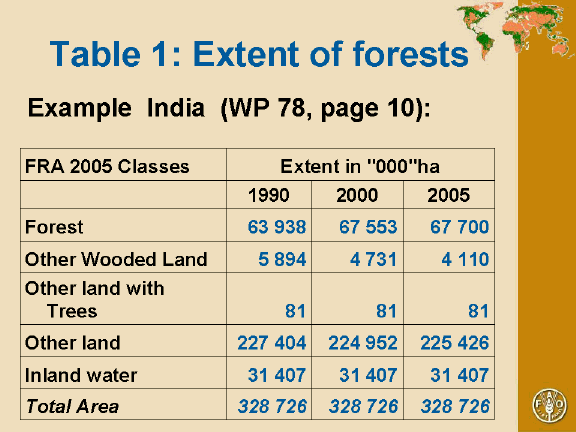
Table 1: Extent of forests
Example India (WP 78, page 10):
FRA 2005 Classes
Extent in "000"ha
1990
2000
2005
Forest
63 938
67 553
67 700
Other Wooded Land
5 894
4 731
4 110
Other land with Trees
81
81
81
Other land
227 404
224 952
225 426
Inland water
31 407
31 407
31 407
Total Area
328 726
328 726
328 726
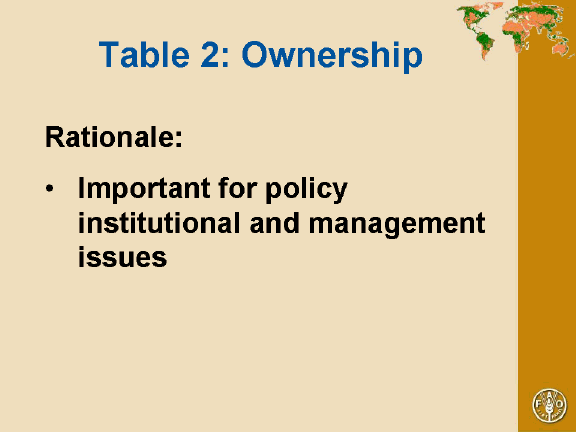
Table 2: Ownership
Rationale:
• Important for policy institutional and management issues
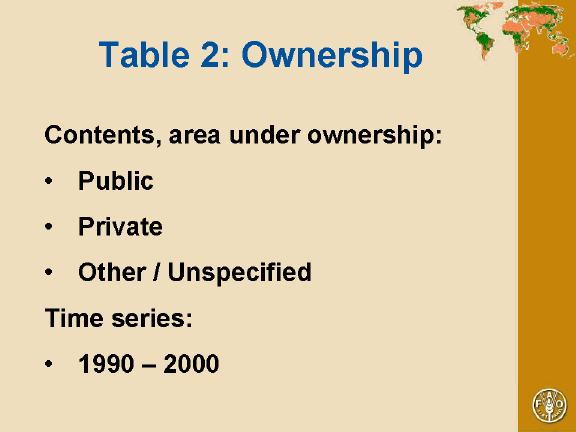
Table 2: Ownership
Contents, area under ownership:
• Public
• Private
• Other / Unspecified
Time series:
• 1990 – 2000

Table 2: Ownership
Issues
• ”Traditional” ownership
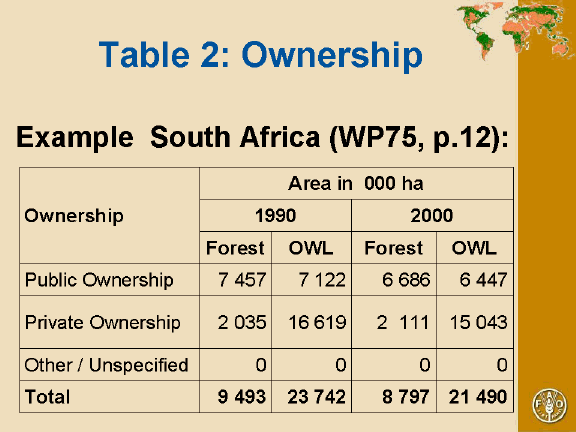
Table 2: Ownership
Example South Africa (WP75, p.12):
Ownership
Area in 000 ha
1990
2000
Forest
OWL
Forest
OWL
Public Ownership
7 457
7 122
6 686
6 447
Private Ownership
2 035
16 619
2 111
15 043
Other / Unspecified
0
0
0
0
Total
9 493
23 742
8 797
21 490

Table 3: Forest designation
Rationale:
• Responds to several criteria themes
• Measures policy intervention over area

Table 3: Forest designation
Contents, area designated for:
• Production
• Protection
• Conservation
• Socio-economic purposes
• Multiple purposes

Table 3: Forest designation
Issues:
• Protected areas definition
• All areas = multiple use?
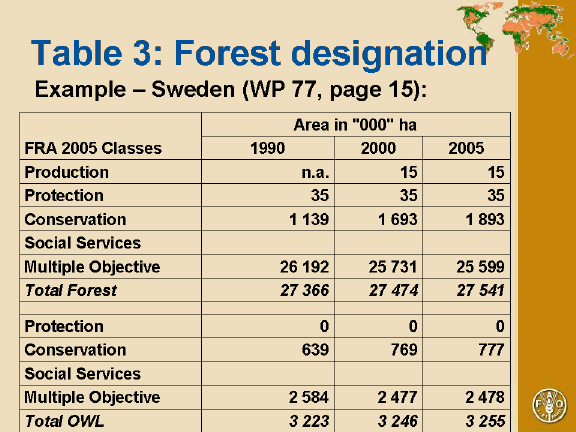
Table 3: Forest designation
Example – Sweden (WP 77, page 15):
FRA 2005 Classes
Area in "000" ha
1990
2000
2005
Production
n.a.
15
15
Protection
35
35
35
Conservation
1 139
1 693
1 893
Social Services
Multiple Objective
26 192
25 731
25 599
Total Forest
27 366
27 474
27 541
Protection
0
0
0
Conservation
639
769
777
Social Services
Multiple Objective
2 584
2 477
2 478
Total OWL
3 223
3 246
3 255

Table 4: Forest characteristics
Rationale:
• Combines ”naturalness” and management intensity
• Refers to several C&I themes
• Addresses the ”planted forests” issue

Table 4: Forest characteristics
Contents, areas that are:
• Primary
• Modified natural
• Semi-natural
• Production plantation
• Protective plantation

Table 4: Forest characteristics
Issues:
• Remove ”modified natural”?
• Plantations distinguished by
• Introduced/native species ONLY
• OR include instensively managed stands of native species as before?
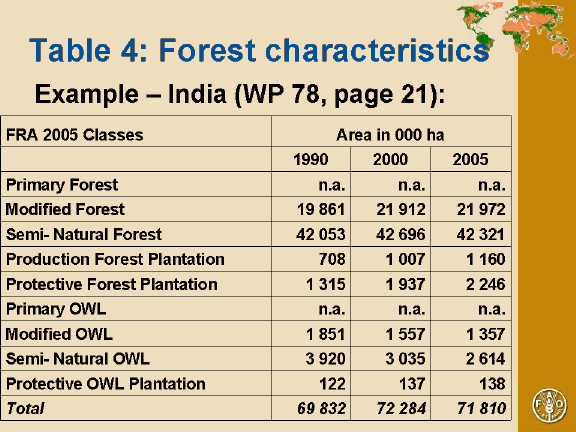
Table 4: Forest characteristics
Example – India (WP 78, page 21):
FRA 2005 Classes
Area in 000 ha
1990
2000
2005
Primary Forest
n.a.
n.a.
n.a.
Modified Forest
19 861
21 912
21 972
Semi- Natural Forest
42 053
42 696
42 321
Production Forest Plantation
708
1 007
1 160
Protective Forest Plantation
1 315
1 937
2 246
Primary OWL
n.a.
n.a.
n.a.
Modified OWL
1 851
1 557
1 357
Semi- Natural OWL
3 920
3 035
2 614
Protective OWL Plantation
122
137
138
Total
69 832
72 284
71 810

Conclusion
- Challenge to achieve globally harmonized tables on these topics
- Improvements from FRA 2000, without changing / adding concepts or definitions
- Some outstanding issues to discuss
- Pilot studies performed well in all regions
Thank you!
