

At the end of 1980 the FAO Fisheries Department contacted the Government of the Popular Republic of Mozambique to inquire about their interest in a project idea which had been formulated by the inter-regional Aquaculture Development and Coordination Programme (ADCP) as a follow-up to the World Conference on Agrarian Reform and Rural Development (WCARRD). The project idea proposed the development and operation of a brackishwater aquaculture farm on a pilot scale, to test whether aquaculture could provide means to create income and employment for coastal population groups, and, at the same time, increase the production of fish and shellfish. When the government agency concerned, the Institute for Fishery Development, indicated its interest, Mr. U.W. Schmidt of the ADCP visited the country (30 April to 5 May 1981) to discuss the idea with local authorities and to make a preliminary assessment of feasibility. His findings indicated both the potential and need for the proposed pilot project. As a follow-up to the first visit, ADCP agreed to finance a regular identification and formulation mission (20 November to 12 December 1981). The terms of reference of the Mission were to investigate in detail the socio-economic and technical feasibility of the development approach, and if indications are positive, formulate a workable project. The Mission consisted of Mr. P. Padlan, Aquaculturist, and Mr. U.W. Schmidt, Sociologist, of ADCP. The following report is the result of this Mission.
The Mission is indebted to the staff members of the Institute of Fishery Development who were instrumental in carrying out the work, Special thanks are due to Mrs. A. Twohig and to Mr. Fernando Simoes for organizing most of the Mission's activities. Without the cooperation, advice and assistance from the numerous persons contacted in various Government agencies, institutions and in the field, the Mission could not have been carried out.
The contribution of information by individuals was particularly important, because published information is very scarce for most aspects covered in this report.
Based on experience obtained in many countries, the Mission believes that a technically sound and socio-economically appropriate development of coastal aquaculture can provide income and employment to coastal population groups of Mozambique.
The Mission found environmental features sufficiently suitable for brackishwater aquaculture in ponds in the Greater Maputo Area. After detailed studies, the Mission concluded that the condition of soil, water, climate, etc., in the sites it visited, does not represent major constraints to brackiswater fish and shellfish farming. Coastal aquaculture being a virtually new endeavour in the region, it recommends the establishment of a pilot farm in Costa do Sol to undertake a low input farming for production of tilapia, penaeid shrimp and swamp crabs, under the management of a Collective Group.
As the target group to benefit from brackishwater aquaculture development, the Mission recommends the marginalized and unemployed poor of the Greater Maputo Area. A sufficient number of deserving people can be mobilized from among them.
The Mission proposes the operation of a pilot farm with external funding for the first three years, under conditions which would follow as close as possible those imposed on similar development projects. It proposes to involve a larger group for construction in the beginning, and to reduce the number of participants in the production phase. During the initial production period, the participants are expected to establish themselves as a Collective and to take part actively in all aspects of coastal aquaculture production. After this they will form a Cooperative, following the Government strategy for rural development. The project will be assisted by a team comprising representatives of the Collective, technical officers from local institutions, and internationally recruited experts.
It is expected that the proposed project will demonstrate the feasibility of coastal aquaculture as a means of rural development and provide data and other information for future large-scale development.
Most of Mozambique is tropical savannah, the rest being forest and limited areas of dense forest. Almost half is coastal plains (up to 200 m), another 40 percent mediumhigh (up to 1 000 m) plateau. Mountainous regions (above 1 000 m) cover 13 percent of the territory. Three types of climates prevail:
humid tropical climate in the north and centre, with a long rainy season;
dry savannah climate in the south, with a longer dry period;
cool and wet tropical climate of the high altitude areas.
Of the variety of soils found in Mozambique, the alluvial types are the most important. Unexploited arable land is available in abundance. The coastline measures 2 795 km and an estimated 8 500 km2 of swamp areas exist along the coast.
Of 26 000 km of roads, less than a fifth are asphalted. Of these, most run from east to west; the north to south communication is highly deficient. The railway system is fairly well developed, but is used mainly to transport freight from Mozambique's harbours to the neighbouring countries. Air traffic links the major provincial centres with the capital. Transport facilities, particularly in the rural areas, need further development.
Piped water is available in the cities. Peripheral settlements around the urban centres have much less access to clean water and appropriate water supplies are largely inadequate in rural areas.
In the middle of 1980 the total population of Mozambique was, according to the census completed during the same year, 11 654 446 inhabitants; 8.4 percent living in rural areas and 16 percent in the urban centres. The mean birth rate was 46 percent and the mortality rate, 19 percent. Natural growth was estimated at a rate of 2.7 percent/year. Urban growth rate was estimated at 6.0 percent/year for 1975 to 1980 1, of which some 3.5 percent was accounted for by migration. The average family size is 4.2 persons/family and the average population density, 15.6 persons/km2. The female population covers 48.7 percent and almost half of the population is under 15 years old 2. Infant mortality is high (100 to 200/1 000) and average life expectancy is 40 years. Nutritional standards are highly deficient with an intake of 1 930 cal and 36 g protein/person/day being the statistical average 3.
The majority of the population is African. They are composed of different ethnic groups of Bantu origin. In the south, the dominant group is the Tsongo which form five tribes (Ronga, Shangana, Chopi, Tswa and Hlengwe), all speaking their own dialect 4. Non-African population groups comprise Europeans, Chinese, Indians and Pakistanis. Lingua franca is Portuguese.
1 Boletin informativo, May-September, 1981
2 1980 census, quoted in ‘Mozambique Country Analysis’, I.V.S. 1981
3 (Mozambique, DD:DP/MOZ/80/026)
4 In the Maputo area Shangana appears to be predominant
The national economy of Mozambique has had, and still has, to cope with a number of constraints, i.e.:
The departure of most skilled people after independence, together with the results of a colonial education policy which had largely neglected the African majority of the population, left the country with extremely little qualified human resources; the impact of the enormous post-independence efforts to educate the people has yet to set in.
Various factors (abolishment of forced labour, increased internal demand as real incomes increased, little planning and management capacities, etc.) have increased the balance of payments deficit and led to a scarcity of capital goods and production inputs. This trend was further aggravated by loss or reduction of foreign exchange earnings during the conflicts with Rhodesia and following UN initiated sanctions and the reduced numbers of labourers going to the South African mining industry.
The present centrally planned and controlled pricing and marketing system provides little incentive to producers to increase production, leaving the country with a large bill for food imports. (Most fish marketed through official channels is low cost imported fish - more than 20 000 tons in 1979).
In addition to these constraints, which require immense investment in infrastructure, human resources, technology transfer, etc., to overcome, Mozambique still has to keep up defense spending to keep armed insurgents at bay.
During the eighth session of the People's Assembly convened in October 1981 the indicative prospective ten years plan (plano prospectivo indicativo, PPI), which would guide development during this decade, was presented and discussed. The plan listed, in this order of priority, the following major objectives:
the socialization of the countryside;
industrialization;
training and education.
Under the socialization of the countryside, two main strategies were proposed:
the organization of the rural population in cooperatives involving five million peasants until 1990, and
the strengthening of the statal sector of agricultural production.
Both aim at increasing agricultural output, production of food for domestic consumption, and provision of raw materials for the agro-industries in order to increase export earnings and to substitute imports.
The Government body in charge of agricultural production is the Ministry of Agriculture. Only sugar production and fisheries are organized through the Ministry of Industry and Energy. Water resources are managed by the National Directorate of Water of the Ministry of Public Works and Housing.
According to the Ministry of Agriculture, state farms are using at present 4 percent of the total cultivated areas, but produce 15 percent of the total agricultural output. Cooperatives are cultivating 1 percent of land and produce 0.3 percent of the output; some 70 000 peasants are presently members of cooperatives. 94 percent of the cultivated land is farmed by rural families, which provide 80 percent of the total production 1.
1 Statement by the Minister, M. Machungo, quoted in AIM, Information Bulletin, No. 64, October 1981
Cooperatives, which number about 300 at present, are viewed as the principal instrument for the socialization of rural production. According to observers, Government controlled production inputs have, until now, mainly been supplied to state farms and agroindustrial complexes. This, and the general lack of trained personnel, account for the continuing weakness of this important sector. Nevertheless, the 10 year-plan envisages the organization of all rural production collectively.
The concept of communal villages (aldeias communaís) was introduced and promoted by FRELIMO 1 cadres even before independence. In the liberated zones, mainly in the north, such villages were founded and became ideological and physical bases of FRELIMO's struggle for independence. FRELIMO provided the villagers with basic social services and information and promoted cooperative food production and supply.
After independence the concept was institutionalized and strong ideological support induced a rapid initial growth. The third party congress in 1977 declared the communal villages the central tool of transforming rural Mozambique into a socialist agrarian society. It also formulated recommendations for the size (some 250 families), production patterns (cooperative primary and/or artisanal production and provision of an individual plot per family), revenue distribution (according to quantity and quality of labour input), etc. Declared objectives were, after supplying food and income to the participants, to produce surplus for the overall economic growth of the country. Collective production was to assure peasant control over the means of production. Collective planning of increased production was to lead to appropriate usage of improved technologies and ultimately, mechanized agricultural production. Apart from eliminating the quality gap between rural and urban life, communal villages were seen as an instrument to facilitate the participation of the rural masses in the process of developing the country.
After an initially promising development of the communal village sector, the trend has slowed down and, in some areas, reversed. Reportedly people have been returning to atomistic settlement patterns and individual subsistence production.
Many of the reasons of the limited success of communal villages have been recognized by Government planners and decision-makers 2 and measures to rectify negative aspects are being taken. Apparently, present malfunctions are seen as temporary, and the general approach of communal village development continues to be regarded as the central strategy for rural development 3.
2 See AIM, October 1981, tempo
As previously mentioned, there are about 850 000 ha of swamp areas along the coast of Mozambique, reached by tidal waters and therefore potential sites for brackishwater fish farming. No data are available on the area in each coastal province but it is reported that the swamps are mainly in the provinces of Beira, Inhambane and Maputo. A soil mapping programme that will eventually delineate these from the agricultural lands is in progress, starting with Maputo Province.
This report discusses the Maputo Bay Area which comprises Maputo Bay, the Estuario do Espirito Santo and portions of six main rivers flowing into the Bay (Fig.1). These are the Incomati, Maputo, Matola, Tembe ou Mitembe, Umbeluzi and Macocorutuan. The first two originate from South Africa; Rio Matola has tributaries reaching as far as Swaziland. The rest are all located in Maputo Province.
Up to where tidal influence is felt, deltas and river banks have formed as a result of the steady deposition of silt and soil brought in by these rivers. A rough calculation of the area of these low-lying lands based on charts and aerial maps furnished to the Mission comes to about 6 000 ha, distributed as follows:
| Location | Extent (ha) | |
| (i) | Incomati River Basin, up to about 6 km upstream from the mouth | 1 200 |
| (ii) | Shoreline north of Maputo City, including the low swampy depression at Costa do Sol | 600 |
| (iii) | Estuario do Espirito Santo, including Catembe | 800 |
| (iv) | Along the banks of Rios Macocorutuan, Umbeluzi, Tembe ou Mitembe and Matola | 1 000 |
| (v) | Along Rio Maputo, up to and including the brackiswater lagoon at Bela Vista | 400 |
| (vi) | Along the southern and southeastern shores of Maputo Bay, from west of Maputo River to Inhaca Island | 2 000 |
| Total | 6 000 |
Observations could be made only on a few sites in view of the inaccessibility of many areas and the lack of appropriate transport facilities. Features noted on these sites, particularly soil conditions and tidal amplitudes, indicated fair to good possibilities for pond development and fish farming operations. The high elevation, consequence of uninterrupted soil deposition, could, however, influence the cost of development.
The utilization of intertidal land for raising fish in ponds is of very recent origin in Maputo. The earliest known attempt at brackishwater fish culture was started some time in 1972 with the construction of three 500 m2 experimental earthen ponds at the outskirts of Maputo City (then Lourenço Marques) beside the Rio Matola. Abandoned due to engineering problems (water had to be pumped, and leaks and seepage), the project is now being revived and improved with bilateral assistance and expertise from MONAP (Mozambique-Nordic Agriculture Programme). At present the ponds are being deepened to allow for adequate entry of tidal waters. After the work is completed, experiments on the culture of tilapia (T. mossambica) are envisaged.
Attempting to farm fish and shrimps on a commercial scale, one entrepreneur obtained a lease on a brackishwater lagoon in Bela Vista (about 40 km south of Maputo) shortly before independence. He converted the area into one big rearing pond by constructing canals to connect it with the Rio Maputo. Self-closing concrete sluices were installed to allow inflow and retention of water for aquaculture operation. The area had started to produce shrimps but for some reason or another, the leasee left. The area has since then been abandoned.
Except for the present work on the experimental ponds mentioned above, brackishwater fish farming in Maputo has not been developed, despite the obvious potentials and the availability of seeds and other inputs that could support certain culture systems. The Mission, therefore, recommends to operate a pilot fish farm that would serve as a testing ground for commercially viable fish farming.
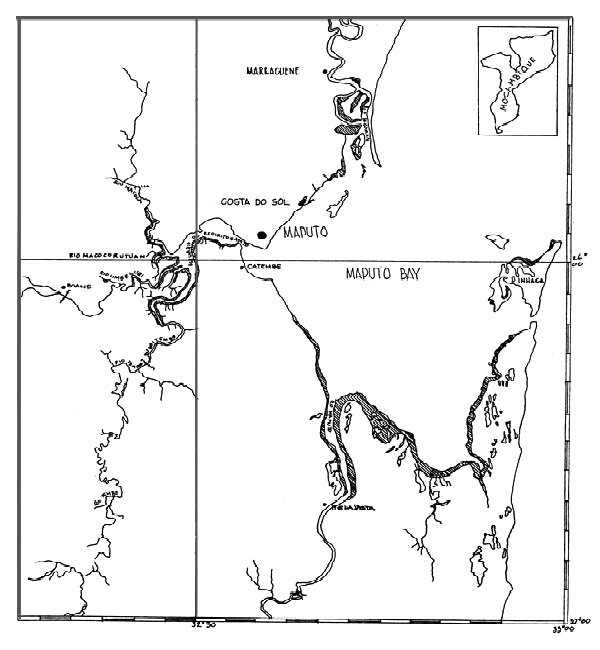
Fig. 1 Map of Maputo Bay Area showing river systems and location of intertidal lands (shaded areas)
Two sites were finally identified, one at Costa do Sol and the other at Catembe. Both were considered good sites for the pilot farm, with favourable characteristics insofar as soil and vegetation were concerned.
On the basis of its better accessibility and lower pollution risks, however, the Costa do Sol area was finally chosen. To reach the Catembe site from Maputo City, one has to cross the narrow Estuario do Espirito Santo by ferry and travel by car or by foot over the only dirt road, connecting it to the ferry landing some 1.5 km away. Being closer to Maputo, Catembe can easily be affected by wastes coming in from the increasing number of industrial factories now being established in Maputo City. Most of the city's sewage is also being discharged into the Estuario do Espirito Santo.
Although Costa do Sol is about 6 km north of Maputo City, it is easily reached through good roads. A regular bus service plies between Maputo City and Costa do Sol. A sea resort area, Costa do Sol has electricity, potable water and telephone connections to Maputo. A recent study has shown the area not to be affected by industrial and organic wastes 1.
The prospective site is only a few metres walk from the resort area. It is part of a tidal basin boxed in by an asphalt road and salt pans on the north, the bayside road on the east and low-rising land on the south and west. The total area of the basin is estimated at about 90 ha, of which approximately 14 ha will be utilized to enclose 10 ha of effective water space for the farm.
The land is fairly level, sloping slightly toward the Quenhenguanine Creek through which tidal water flows. The Creek provides the only drainage for the whole area and its environs.
The general elevation is about 3.1 metres above the 0.0 tidal datum plane.
There is sparse, second growth of mangrove trees. Only near the creeks are they over 3 m high with trunks of 20 to 25 cm dia. Avicenia is predominant, estimated at about 80 percent; Ceriops and Rhizophora make up about 15 and 5 percent respectively. Creeping Sesuvium occupy open patches in slightly higher grounds.
At the eastern border of the proposed site, top soil up to a depth of 30 cm is black loam. The underlying layers are silty to sandy. Elsewhere, the first 30 cm profile is dark, silty clay; the second, clay to sandy clay; and the third, clayey sand or sandy.
Representative samples collected from three sites were kept for about 45 days, then tested for pH to find out the acid sulphate potential. The following values were noted:
| Profile | Before treatment with H2O2 | After treatment with H2O2 |
| First 30 cm | 7.6 | 7.7 |
| Second 30 cm | 6.6 | 6.3 |
| Third 30 cm | 7.8 | 7.6 |
The very slight difference in pH readings before and after oxidation indicates the almost near absence of acid sulphate, the bane of many peaty hydrosols and the most important cause of low productivity in brackishwater fish ponds in the Far East.
5.2.4.1 Salinity
Salt water comes into the area directly from Maputo Bay. The Bay is seasonally affected by fresh, run-off waters from the Incomati and Maputo Rivers during the rainy season (December to March). Additional volumes, though much less, come from the four other rivers mentioned in 4.2.
This inflow results in the reduction of Bay water salinities to as low as 23‰ just off the tip of Maputo City, about 7 km south of Costa do Sol. Table 1 shows mean monthly salinities from a sampling station at this point. While no data are available in the immediate vicinity of Costa do Sol, salinity tests taken from Rio Quenhenguanine at ebb tide, indicate fresh water coming into the area from some sources. Freshwater vegetation was seen at the southern and western periphery. At a pig farm nearby, fresh water was being drawn from a 6 m deep artesian well. In view of the proximity to the mouth of the Incomati River, a decrease in salinity, as more fresh water flows into the Bay, is to be expected.
Table 1 - Mean Monthly Salinities in ‰ at a Sampling Station (C-7) located about 1.5 km SE of Maputo Ferry Landing 1
| Year | Months | |||||||||||
| J | F | M | A | M | J | J | A | S | O | N | D | |
| 1969 | 28.9 | 28.4 | 29.7 | 30.4 | 31.1 | 32.1 | 30.1 | 27.1 | 25.0 | |||
| 1970 | 26.8 | 27.9 | 29.7 | 31.0 | 32.1 | 32.3 | 33.1 | 32.9 | 34.1 | 34.3 | 33.9 | 34.3 |
| 1972 | 26.0 | 23.1 | 25.2 | 24.9 | 29.4 | 29.9 | 30.0 | 30.8 | 32.0 | 31.7 | ||
5.2.4.2 Temperature
Mean lowest water surface temperature occurs in July (about 19°C). Thereafter there is a gradual rise, reaching in January a peak of 28 to 29°C. Data from the same sampling station gathered in 1970 and 1972 are shown in Table 2.
Table 2 - Mean Monthly Water Surface Temperatures, Station C-7
(°C)
| Year | Months | |||||||||||
| J | F | M | A | M | J | J | A | S | O | N | D | |
| 1970 | 29.1 | 26.8 | 27.0 | 25.0 | 22.1 | 20.0 | 19.2 | 20.9 | 24.1 | 23.9 | 26.0 | 27.9 |
| 1972 | 28.9 | 26.0 | 26.1 | 25.4 | 23.4 | 18.3 | 19.5 | 20.1 | 19.7 | 24.2 | 23.5 | 27.3 |
5.2.4.3 Tides
A semi-diurnal tide pattern exists. The highest astronomical tide predicted in 1981 was 3.83 m occurring in April. Highest spring tides (3.7 to 3.8 m) occur from March to April and again from October to November; lowest (3.2 to 3.5 m) from December to January and June to August; normal (3.6 m) during the rest of the year. Possibly, seiches may result from strong southeasterly to southwesterly galeforce winds frequently blowing across the Bay.
5.2.5.1 Day length and solar ratiation
Day lengths vary from 10 ½ hours in June to almost 14 hours in December. Mean sunshine for the year is 65 percent of the day length. The minimum is in November (50 percent), the maximum in June (80 percent).
5.2.5.2 Precipitation
The average rainfall over a 30-year period (1941–70) is 783.7 m. January and February are the rainiest months with about 130 mm each. Monthly rainfall then decreases until July and August when the average is about 18 mm each. Table 3 shows mean monthly rainfall for the area.
Table 3 - Mean Monthly Rainfall for Maputo (Maputo Weather Station)
over a 30-Year Observation Period from 1941–70
(mm)
| January | 139.8 |
| February | 137.4 |
| March | 89.0 |
| April | 68.4 |
| May | 28.2 |
| June | 27.3 |
| July | 18.0 |
| August | 18.2 |
| September | 35.9 |
| October | 56.8 |
| November | 77.7 |
| December | 87.0 |
| Total | 783.7 |
5.2.5.3 Evaporation
Mean yearly evaporation is 1 201 mm. The lowest is in March (89.3 mm) while the highest is in December (109 mm). Only during January and February is evaporation exceeded by rainfall by 29 and 48 percent respectively.
5.2.5.4 Relative humidity
Mean monthly relative humidity is fairly even (68 to 75 percent) but daily differences between maxima and minima recorded within 16-hour periods from 0500 to 2100 h often go beyond 20 percent.
1 Based mainly on information gathered from the Weather Bureau, Maputo
5.2.5.5 Air temperatures
Although the area lies below the Tropic of Capricorn the climate is relatively mild, being influenced to some degree by the waters of the Bay. Mean air temperatures are lowest during June and July at 13.9 and 14.1°C respectively; highest in January and February (29.7°C). Winter cold seldom goes below 10°C. Summer heat goes up to 43°C. Table 4 shows mean monthly temperatures over a 30-year period.
Table 4 - Mean Monthly Air Temperature for Maputo based over a
30-Year Observation Period from 1941–70
(°C)
| J | F | M | A | M | J | J | A | S | O | N | D | |
| Average | 25.8 | 25.8 | 25.2 | 23.6 | 21.4 | 19.4 | 19.2 | 20.2 | 21.5 | 22.7 | 24.0 | 25.2 |
| Maximum | 29.7 | 29.7 | 29.2 | 28.1 | 26.5 | 24.6 | 24.5 | 25.4 | 26.3 | 27.0 | 28.0 | 29.2 |
| Minimum | 21.9 | 21.9 | 21.1 | 19.2 | 16.4 | 14.1 | 13.9 | 15.1 | 16.7 | 18.4 | 19.9 | 21.1 |
5.2.5.6 Winds
Maputo is outside the cyclone belt. There are no prevailing winds and at any time of the day direction would shift from the NW to SW quadrants. North-easterly, easterly and southerly winds are more frequent. While mean velocities are considered low (13.3 kph), south and southeast winds have been clocked at over 50 kph, 80 to 90 kph being quite frequent. May to August have the highest frequencies of these gale winds
According to the results of the 1980 census, the greater Maputo area, which covers 67 544 ha, had 768 350 inhabitants. Average family size is 4.8 persons per family and male/female distribution is 53.4 to 46.6 percent. The growth rate in the township (the socalled cement city) was 5.3 percent/year in the sixties and 2.4 percent in the seventies. The reduced growth rate during the last decade is the result of massive emigration of the white population during the independence struggle. Marginal settlements have grown at 6.2 percent per year during the last decade. Rural-urban migration is estimated to have accounted for 3.8 percent urban growth from 1975 to 1980.
The following table illustrates age-groups and available work force in the greater Maputo area:
Table 5 - Percentage of age groups and work force in Greater Maputo
| urban areas | semi-urban areas | rural areas | |
| under 15 years | 40 | 48 | 48 |
| over 55 years | 2 | 2 | 5 |
| work force 1 | 50 | 44 | 42 |
1 As related to total population; the total work force amounted to 348 280 people in 1980
There are no recent figures on un- and under-employment of the work force but the general consensus is that 25 percent or more of the people have no regular income. It is important to note that, apart from the newly arrived rural/urban migrants, many members of the work force have had some professional working experience, either in the service sector or in industries. A marked preference for wage labour is reported, with very little labour used for subsistence-level primary production.
The number of academically educated or comparatively well-skilled people is believed to be extremely limited. The middle-management professional posts are filled often by expatriates recruited from abroad.
Within the project area, four settlements are located. A recent survey complied the following data:
Table 6 - Settlements in the Project Area 1
| Population | Persons per family | Density (persons/ha) | Density in the inhabited areas (persons/ha) | |
| Laulane | 9 575 | 5.3 | 10.7 | 86 |
| Triunfo | 1 863 | 5.4 | 9.0 | 116 |
| Costa do Sol | 1 315 | 5.2 | 3.0 | 18 |
| Aldeia dos Pescadores | 2 175 | 3.7 | 5.0 | 33 |
1 Unpublished data from the Direcçao National de Habitaçao
The two settlements which are the closest to the proposed project site are Triunfo and Costa do Sol. Triunfo is close to the road and a suburb-like settlement, with 32 brick houses occupied by rather well-to-do families. Around the nucleus of brick houses, there are some 218 cane huts (caniços). Costa do Sol is more closely structured, with 47 brick houses and 278 cane huts. The inhabitants of these cane huts seldom have permanent employment - they go long distances by public transport to find a day's work. Some fish in the creeks and the sea, some collect clams at low tide. A few patches of land (machambas) are cultivated on a subsistence basis.
Enquiries indicate that these population groups have a high degree of mobility and are certainly in need of income and employment. The Mission therefore considers them as the most likely target group for a pilot project, and proposes to recruit the labourers required for pond construction from among them.
The project will be assisted directly by two national institutions.
The Institute of Fishery Development, which has been instrumental in the preparation of the project, will provide technical assistance. The Institute forms part of the Secretariat of State of Fisheries and is responsible for directing and coordinating artisanal fishery and aquaculture development. Apart from providing one of their staff members to work directly for the project, the Institute is also expected to assist in technical tasks such as fry occurrence surveys, organization of catching and transporting stocking material, marketing and processing, etc. It will also direct, as for technical matters, eventual future large-scale development of brackishwater aquaculture in other suitable areas.
For the organization of the target group of participants, for supervision of construction work, for the organization of production, etc., the Mission suggests the G.Z.V. to be involved. The G.Z.V. was founded in 1981, following an initiative taken by the President and the Popular Assembly. Its objective is to organize marginal population groups, unemployed, migrants, etc., into production units and cooperatives, in order to produce food, mainly horticulture and animal husbandry products, for the City of Maputo. Its responsibilities cover the greater Maputo area, for all aspects of cooperative agricultural production. Usually its staff reactivates abandoned properties and other agricultural production capacities which are lying idle, involving groups of unemployed or marginalized people. As a first step a ‘unidad do produçao’, a production unit, is formed. Here participants work on a wage-labour basis. Some production units transform later into cooperatives. The G.Z.V. has organized these and already existing cooperatives into a union of cooperatives, facilitating credit acquisition (from the Banco Popular do Desenvolvimento) and the pooling of certain production inputs, such as heavy machinery, fertilizer, etc.
To carry out these tasks, the staff of the G.Z.V. work hand-in-hand with specialized national agencies, international and bilateral organizations, and political bodies such as the Grupo Dynamizadore, a political base organization at the local level.
Coastal aquaculture is a new technology in Mozambique and, with few exceptions, in most African countries. Although it has been demonstrated in other regions that it can contribute significantly to integrated rural development by providing income and employment and by producing protein foods, its viability remains to be established in Mozambique. The project proposed by the Mission is therefore intended to implement coastal aquaculture on a pilot scale, to show that it can contribute to rural development. According to the general determinants of rural production in the country the technology is to be tested and adapted employing an organizational approach likely to be used in future development, i.e. village-based collective production on a technological level appropriate for the envisaged producers, involving a local target group from the beginning and gradually transferring responsibilities to them. Funds to cover construction and initial operating costs will be provided by the project. These funds will, however, be administered the same way as a credit provided by the national development bank.
By continuous monitoring of the implementation with respect to technical, economical and social dynamics, the project is expected to evaluate and demonstrate the feasibility of the approach, especially its potential to provide income and self-employment for coastal population groups.
The project will be incorporated into the structure of the Secretary of State for Fisheries (Institute for Fisheries Development - Department of Aquaculture). Due to the social and economic implications of the project work, close connections will be established with the governmental bodies responsible for rural development.
A project team to administer and guide project implementation will be formed with representatives of all groups involved in the project, as follows:
Participants
During the construction period the labourers will elect two representatives to be part of the project team. After the construction period the production collective to be formed by a limited number of labourers will elect two representatives to become, on a yearly basis or until the majority of the members of the collective withdraw their confidence, members of the project team. They will take part in daily decision making and will be responsible for resolving any conflicts that may arise. They are expected to contribute substantially to the monitoring programme which is foreseen for the project team to carry out.
Government agencies
Two Government agencies will be responsible for the implementation of the project:
Institute of Fishery Development
The Institute will be responsible for technical assistance to the participants. It will second one of their staff on a permanent basis, as a member of the project team. In addition it will assist in technical tasks as fry surveys, assessment of biological and environmental potentials for further development, technical reporting, etc.
Gabinete de Zonas Verdes (G.Z.V.)
The G.Z.V. will be responsible for the organization of construction, production and marketing of the produce. It will second one staff member full time as a member of the project team. It will further arrange for the lease of required land, assist in identification and motivation of the participants, advise on overall administration, accounting and division of labour and liaise with other institutions and organizations as required.
International expertise
Two internationally recruited staff members will assist in the implementation of the project, one providing technical assistance, one assisting in the organization, monitoring and evaluation. The former should have adequate training in brackishwater aquaculture, the latter should be trained in social and economic aspects of rural development. Both will work full time for the project. For specialized tasks a total of 12 m/m of consultancies will be made available.
The pilot fish farm will test aquaculture methods using indigenous species which are successfully cultured in other countries. These will be mainly tilapia, penaeid shrimps and swamp crabs.
6.2.2.1 Tilapia culture
Tilapia mossambica will be the finfish to be cultured. Although a freshwater fish, it has been found to reproduce and grow well in brackishwater ponds, utilizing both benthic algae and filamentous algae for food.
The culture method will include production of fry and rearing them through the fingerling stage to marketable size. The first part starts in the breeding/holding ponds where fry will be produced from the selected breeders stocked in the pond in December. The fry will be grown to fingerlings of 20 to 30 g and will be overwintered in the pond before transfer to the grow-out ponds sometime in August, or as soon as weather conditions permit.
The second stage starts with rearing the fingerlings to marketable size in the grow-out ponds. The rearing season will last about three months. Intermittent harvesting by selective fishing will be done. The ponds will be totally drained at the end of the crop season to harvest all the marketable fish. Selected breeders and small non-carnivorous fish, including tilapia, will be transferred to the breeding/holding pond. All the rest will be sold.
In both stages the natural food will be mainly benthic algae. A simple low-input process of growing benthic algae will be initiated in November in the breeding ponds and in June in the grow-out ponds. The procedure involves enrichment of the pond bottom with organic and inorganic fertilizers and a water management regime that would create and maintain favourable conditions for algal growth. Organic fertilizers, poultry and barnyard manures are available free of charge from the state farms. A few of these farms are located at the outskirts of Maputo itself. Inorganic fertilizers, although imported, are also available from Government stores.
Artificial feed may have to be given to the fish in the breeding/holding ponds only. Unless absolutely necessary, its use will be discouraged in the grow-out ponds. Although coconut oil cake, rice bran and corn meal are available in Maputo, they cannot easily be acquired. These mill by-products are channelled to the feed mills for the manufacture of animal rations. Brewery wastes, also available free, go to the cattle and hog farms. Of these a small quantity may be allocated to the farm.
Being the major source of food, it will be of the greatest concern to keep the algae in the grow-out ponds healthy and to protect them from being overgrazed. Regular dressings with inorganic fertilizers and intermittent cropping of the bigger fish, once they have obtained marketable size, will help to maintain sufficient food almost to the end of the rearing season. The fertilizers will help to keep the algae growing under the constant ever increasing demand of the stock, while selective fishing will reduce fish population to allow the algae to recover from the feeding pressure. The results of these two measures will be higher production and better quality fish.
6.2.2.2 Shrimp culture
Penaeid shrimps (Penaeus indicus and Metapenaeus monoceros) will be raised in the grow-out ponds after total cropping of the tilapia in late November. A short land preparation that will involve drying for one to two weeks, culture of a food base (benthic algae, filamentous green algae, even Ruppia, as conditions would warrant) where natural shrimp food can attach or feed on, will follow, after which the ponds will be stocked with shrimp juveniles.
Post larvae and juveniles of M. monoceros and P. indicus are available from September to March, the breeding season of the two species in Maputo Bay. These can be collected from the rivers, brought to the farm in oxygenated plastic bags and released into the ponds. Workers on the farm can be trained to collect the shrimps. Suitable gears (beach seines or set nets) and holding equipment (suspension nets, hapas or tubs) will be necessary to ensure that the larvae are not stressed before they are packed for shipment.
Ponds will be provided with fine screens or bag nets of fine material (1.0 to 1.5 mm mesh), set at the gates to prevent or minimize entry of fry of carnivorous fishes. A regular partial water exchange schedule during the spring tide cycles will help to maintain salinity within limits and also provide additional nutrients as well as food organisms that could come through the screens with the water. In addition, inorganic fertilizers will be applied to keep the fertility level up, principally for the food base.
M. monoceros has a shorter growing period, usually 45 to 60 days. For cropping, their tendency to swim with flowing water facilitates easy collection with bag nets set at the outlet gates during partial drainage of ponds. Another method is by trapping. A portable trap consisting of an impounding chamber with a no-return opening on one side and a leader, staked from the edge of the pond and ending at the opening, leads the actively swimming shrimp into the trap. This contraption can be easily fabricated, using iron bars for the frame and cheap bagging material for the sides and leader. Both harvesting techniques are more effective during moonless nights.
P. indicus on the other hand will be caught with cast nets. At the end of the season, the pond will have to be totally drained to fish out all the shrimps.
The season for growing shrimp should end by April when the cold weather begins to set in.
6.2.2.3 Culture of swamp crabs
Swamp crabs (Scylla serrata) are abundant in Mozambique. They have high export value. It is reported that they retail for U.S. $ 5–6/kg in neighbouring Swaziland.
Studies on the biology of the species in two estuaries on the east coast of South Africa have shown that maximum growths during summer compare favourably with those attained in other tropical countries. However, growth during other parts of the year appears to be quite negligible.
This offers possibilities of crab culture in the pilot farm. With the limitation in growing time, however, the culture will be possible only in the breeding/holding ponds, where the crabs are less likely to affect fingerling production or prey on actively swimming fish (they should not be held with shrimps, particularly during the moulting season).
Stocking the pond with juveniles of 7 to 9 cm carapace widths will start in December, after the tilapia breeders and small fish have been introduced.
The crabs are expected to feed on whatever they can find in the pond, including any dead fish. Later they will be fed with the spent breeders and small fish.
As the crabs tend to climb out, a low fence of latticed reeds (Phragmites) will be set all around the pond at the edge of the dikes. Berms will also be provided with a trench filled with sand to discourage the crabs from boring through the dikes.
After three months, or as soon as the crabs attain 11 to 12 cm carapace width, harvesting will commence. Catching will be done by dip nets when they seek new inflowing water and congregate at the gate. The space in between the inner and outer screens would be a suitable impoundment area. Crabs are also easily captured when they take to bait. Fresh meat (frogs, etc.) set inside a crab trap or tied to the end of a line attracts crabs readily.
6.2.3.1 Layout
The pilot farm will consist of a series of ponds arranged along a centrally located common supply and drain canal. Each pond will be provided with one or two gates installed along the canal dike. This will allow independent filling or draining operations. A main gate at the lower end of the canal will be used to regulate water entry and outflow for the pond area. The layout is shown in Fig. 2.
Two types of pond, breeding/holding and grow-out, are incorporated in the plan.
Breeding/holding ponds will be narrow and deep, capable of maintaining from 60 to 80 cm of water. This is to ensure that water temperatures do not fluctuare widely in winter. This will also facilitate frequent partial water exchange needed to bring in additional oxygen to an overcrowded stock being kept prior to transfer to the grow-out ponds.
Grow-out ponds, on the other hand, will be much larger but shallower, able to hold from 30 to 50 cm of water, yet offering possibilities of partial exchange during 6 to 7 consecutive days of the normal spring tide cycle. The incomplete secondary dikes bisecting the ponds would promote a raceway effect for effective water circulation during partial water exchange.
Considering the frequent, although short, periods of south to southwesterly gale winds, the ponds will have to be reasonably narrow and constructed with the length facing the direction of the wind.
6.2.3.2 Earthwork
It will be necessary to establish pond bottom levels at elevations where water entry by tidal energy will be adequate, considering the many factors that would tend to limit the flow once the whole area is enclosed. With spring tides reaching 3.2 to 3.5 m-levels only during December, January, June, July and August, it is estimated that excavation should reach up to 50 cm below the present land level for the grow-out ponds and about 80 cm for the breeding/holding ponds.
All the earthwork will be done by manual labour. The excavated soil will be used to make the dikes. Provisions should be made, however, to leave as much of the top soil inside the pond to conserve fertility and good soil quality. This will have to be accomplished by taking the soil from alternate strips instead of a blanket excavation operation, and using the remaining strips for the ensuing levelling work.
For proper drainage, final pond levelling should provide a slight slope from the periphery to a central longitudinal canal. The canal ends at the outlet gate.
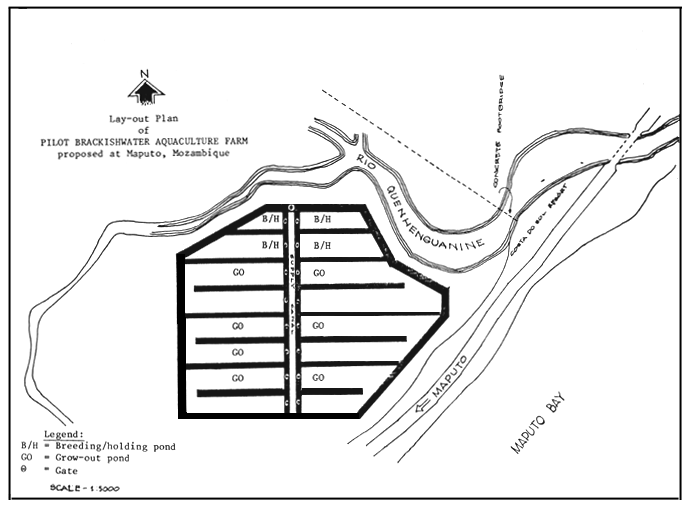
Fig. 2 Proposed Layout of the Pilot Brackishwater Aquaculture Farm
6.2.3.3 Gates
Gates will be of wood. The main gate will have two openings of 1 m each. Secondary gates will also be 1 m wide. They will be given at least two coats of asphalt paint before they are set or before the materials are mounted. All gates for the grow-out ponds, whether inlet or outlet, should be able to drain the pond entirely.
6.2.3.4 Buildings
The farm will need a small inexpensively built house to serve as a store and office. The building will be of semi-permanent materials.
6.2.3.5 Auxiliary work
The construction of the foot bridge across the Quenhenguanine somewhere below the proposed site has resulted in sand settling and raising the creek bed by almost 1 m. The sediment will have to be flushed out in order to lower the bed level to facilitate easy drainage of the farm pond. This could be done simply by removing the barrier of boulders piled underneath the bridge to create a scouring action as the water flows out.
Under the management system proposed, soil stabilization and development will be the major pre-requisites before the ponds would respond well to the techniques that are to be employed. The yield during the first year, therefore, may be marginal or even poor, despite the inputs applied, but as the soil improves, production should be expected to improve also.
Management charts showing operation details, inputs and expected yields from both breeding/holding and grow-out ponds, are shown in Annexes II and III.
The initial costs for pond construction and funds covering initial operating cost will be provided by the project. It should be noted that the major item, i.e., manual labour for pond construction, represents a social benefit in the way of providing almost 35 000 man/days of employment. Once the culture operations yield sufficient returns, these funds will be repaid according to modalities which would apply to a credit provided by a local bank and to which the participants would need to agree before-hand. Repayments would then be credited to the project accounts.
The Mission estimates the following initial investment to be necessary:
| 1. | Fixed cost | In Meticais 1 | |||
| (A) | Construction: | ||||
| (i) | Clearing - 14 ha at Mc. 187.50/ha | 2 625 | |||
| (ii) | Earthwork: | ||||
| a) | digging of 3 465 m of dike puddle trench (4 metres/man/day) | 54 140 | |||
| b) | excavation and movement of 56 000 m3 of soil (2 m3/m/day) | 1 750 000 | |||
| c) | levelling of 10 ha pond area at Mc. 9 000/ha | 90 000 | |||
| (iii) | Gates: | ||||
| a) | 1 wooden main gate, two openings 2nd-class wood, painted (materials only) | 23 500 | |||
| b) | 16 secondary gates, wooden, painted (materials only) | 187 200 | |||
| c) | labour for construction and setting | 90 000 | |||
| (iv) | Buildings: | ||||
| a) | 1 storehouse/office, 60 m2 floor area | 120 000 | |||
| (v) | Contingencies (10 percent of construction cost) | 231 746 | 2 549 211 | ||
| (B) | Equipment | ||||
| (a) | digging blades | 7 200 | |||
| (b) | nets | 7 200 | |||
| (c) | boat | 10 800 | |||
| (d) | others | 5 000 | 30 200 | ||
| Total | 2 579 411 | ||||
Based on prices monitored by the Mission in the Costa do Sol area, farm level benefit costs are projected to be as follows:
| I. | Probable Income | In Meticais | |||
| (i) | Sale of 9 000 kg tilapia at Mc. 35/kg | 315 000 | |||
| (ii) | Sale of 400 kg shrimps (Metapenaeus monoceros) at Mc. 200/kg | 80 000 | |||
| (iii) | Sale of 1 200 kg shrimps (Penaeus indicus) at Mc. 250/kg | 300 000 | |||
| (iv) | Sale of 320 kg crabs (Scylla serrata) at Mc. 100/kg | 32 000 | 727 000 | ||
| II. | Probable Expenses | ||||
| (i) | Fertilizers: | ||||
| (a) | chicken manure, 20 tons | 1 | |||
| (b) | Diammonium phosphate, 2.42 tons at Mc. 14 340/ton | 34 703 | |||
| (c) | Urea, 2.42 tons at Mc. 15 480/ton | 37 462 | |||
| (ii) | Seeds: | ||||
| (a) | crab juveniles, 2 000 at Mc. 5 | 10 000 | |||
| (b) | shrimp fry | 2 | |||
| (iii) | Feeds: | ||||
| brewery waste | 1 | ||||
| (iv) | Supplies - oil, fuel, chemical, etc. | 10 000 | |||
| (v) | Sundries - hire of transport, repair of equipment, etc. | 45 000 | |||
| (vi) | Depreciation: | ||||
| (a) | gates | 30 000 | |||
| (b) | tools and boat | 3 600 | |||
| (c) | nets | 2 376 | |||
| (vii) | Miscellaneous (10 percent of operating cost) | 17 314 | |||
| (viii) | Interest on fixed cost (3%) 1 | 77 365 | 267 820 | ||
| III. | Net Returns | 459 180 | |||
1 Available free of charge
2 To be collected by the members of the collective
1 Interest presently charged to G.Z.V. projects by the Banco Nacional do Desenvolvimento
This would mean an effective net return of some Mc. 460 000 per year and a return on investment of 17.8 percent. Even considering that say 50 percent of this would be used to repay initial investment, the Mission believes that the income level thus obtained would be sufficient incentive for the participants. The level and timing of repayment should, however, be decided by the collective and the project team together.
The strategy the Mission proposes for the involvement of the target group is based on the experience gained through the development of cooperatives by the Gabinete das Zonas Verdes and takes into account the orientation towards wage labour which prevails among most of the economically active population living in the project area. It suggests a gradual and selective transfer of benefits and responsibilities, starting with a large number of wage labourers and aiming at a small number of collectively operating producers as the final beneficiaries. The following chronological steps are proposed:
(i) Mobilization:
The initial project team composed, at that stage, of representatives of the cooperating agencies and the international experts, approaches the “Grupos Dinamizadores” (see 5.5.2) of one or both settlement areas (barrios) proposed, which in this case usually call a meeting of the potentially interested persons and families 2. The project team will outline construction and production approaches, explain work methods, duration, remuneration, etc., and recruit a sufficiently large number of labourers for the construction phase.
(ii) Construction:
During the construction phase the modus operandi will be that of an “unidade de produção” i.e., a large number of labourers will construct the ponds on wage labour basis. Interested labourers will receive on-the-job training, participate in daily decision-making regarding work organization, and take on responsibilities as foremen or for specialized tasks. This qualitative differentiation of the work force is expected to lead to the identification of a small number of workers who show particular interest in becoming aquaculture operators. It will be necessary to reduce the initial work-force because much less labour will be needed for operating the unit than for constructing it.
(iii) Production trials
For one or more production cycles the selected labourers will then form a production collective which will continue to operate as a “unidade de produção” i.e., receiving wages for operating the farm under the guidance of the project team. The length of this period will be decided by the project team and the members of the collective. During this period the participants will actively and responsibly perform the different tasks involved in the culture operations and the marketing of the products. On-the-job training and systematic instruction will be provided by the project team. The project team will advise not only on technical aspects, but also encourage group decision-making on division of labour, work organization, systems of remuneration, etc. It is expected that after this period the participants will have become sufficiently knowledgeable in fish culture technology and that they have established themselves as a self-determined and functioning production team.
2 The G.D.'s keep lists of the unemployed people of their “barrios”
(iv) Cooperative production:
Following the achievement of the above objectives, the “unidade de produção” will be transformed into a cooperative, according to the organization framework of G.Z.V.. After a scheme to repay the initial investment not repaid by then has been decided by the project team, the assets of the project will be turned over to the cooperative. The cooperative will still be assisted by the G.Z.V. in organization and other general matters. For necessary assistance regarding technical aspects, the cooperative can still turn to the Institute for Fishery Development.
Anon., 1969 Relatório Scientífico - Missão de Bioceanologia e Pescas de Moçambique, Junta de Investigações do Ultramar
Anon., Considerações sobre a população de Grande Citade de Maputo, Unpublished
Anon., Mozambique, Country Analysis, International Volunteer Service (IVS), mimeo
Becker, W.L., and C. McNeilly, Mozambique, 1981 Community Fishery Centres for Small-Scale Fisheries Development, FAO, Rome
Direção Nacional de Habitação, Boletin Informativo, Vol. 1, No: 5/9, Maio-Set. 1981
Duarte, J. and F. Cunha, 1970 Observações de salinidade et da temperatura no Estuario do Spirito Santo durante o ano de 1970. Missão de Bioceanologia e Pesca de Moçambique, Junta de Investigações do Ultramar (unpublished)
Hill, B.J., 1975 Abundance, breeding and growth of the crab Scylla serrata in two South African estuaries, Marine Biology 32, 119–26
Lazarev, G., 1978 Observations et suggestions sur le rôle et les fonctions des Aldeias Communais et le dévéloppement économique de Mozambique
Lobo, M.L.M., J.F. Cunha and M.I. Ferreira, 1972 Oceanografia de Baia de Lourenzo Marques e do Estuario do Espirito Santo. Missao do Estudos Bioceanologicos e de Pescas de Moçambique (unpublished)
Matthes, H., 1981 Summary of activities and accomplishments of inland fisheries research and development project (25 November 1978 – 4 April 1980). FAO/GCP/FAO/GCP/MOZ/006(SWE), FAO, Rome
UNDP/FAO, DD:DP/MOZ/80/026, 1981 Strategy Review and Project Formulation for the Agricultural, Forestry and Fisheries Sectors, 2 Vol., Rome
Universidade Eduardo Mondlane, 1978 Centro de Estudos Africanos, Relatório Provisorio sobre o Desemprego no Maputo, Instituto de Investigação Scientifica de Moçambique (IICM)
Universidade Eduardo Mondlane, 1979 As mineiros moçambicanos na Africa do Sul, (IICM), Maputo
Universidade Eduardo Mondlane, 1979 Problemas de transformação rural na Provincia de Gaza, Um estudo sobre a articulação entre aldeias comunais selecionadas cooperativas agricolas e a Unidade de Produção do Baixo Limpopo (UPBL)
University of Edinburgh, 1978 Centre of African Studies, Mozambique, ‘Proceedings of a Seminar’, Edinburgh
Whyts, Marc, 1978 Componeses e economia rural em Moçambique, IICM, Maputo
Wield, David, Mine labour and peasant production in Southern Mozambique
