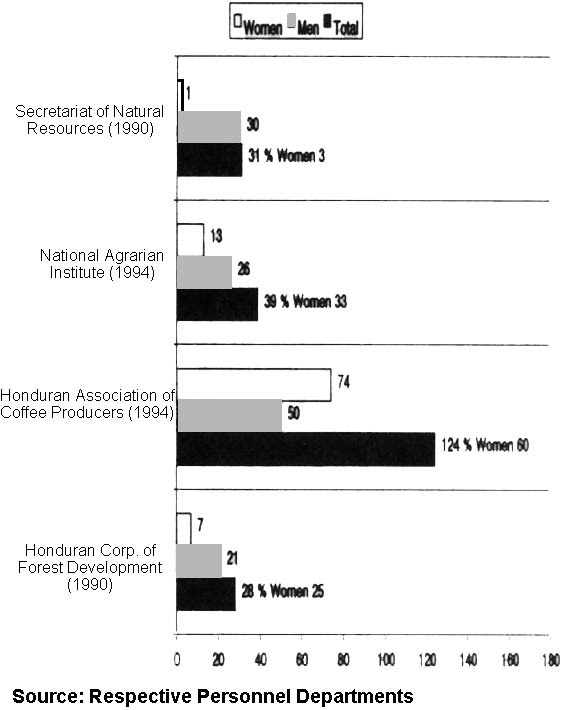
Sharing of power and decision-making
Members and Officers of Agricultural/Rural Organizations. Rural organizations are important for access to institutional resources. Rural women are organized in several types of groups, especially women-only organizations, including the traditional housewives clubs. In 1993, there were .14 federations or associations of peasant women, some independent and others women's sections of peasant organizations. In mixed rural organizations, women hold a growing but still small percentage of decision-making positions. One of the two major confederations has a woman in the national leadership. Few men or women are members of unions in rural areas and women do not participate significantly, although they comprise the majority of agricultural and agro-industry workers. The cooperative movement has a 30-year tradition, and in 1990 women comprised 61.4% of cooperative members. Of these, 88. 1% belonged to savings and credit cooperatives, 15% to agricultural and 1.6% to forestry cooperatives. Women represented only 1.9% of the membership of agricultural and 0.2% of forestry cooperatives. In 1993, women comprised 15% of the leadership, up from 3% in 1988. A National Committee of Women in Cooperatives was formed in 1993 to promote women's participation in economic activities and equality with men in the movement. From 1990 to 1993, the Secretariat of Natural Resources served more than 5000 groups, approximately 25% of which were women's groups.
Women in decision-making positions in ministries and government bodies