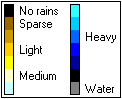
Desert Locust numbers increased during the first half of July in the south-west and south-east where solitary adults were present west of Aleg and east of Nema. Nomads saw a small group of adults near Aioun El Atrous on 11 July and a mature swarm near Nema on 15 July. During the second half of the month, infestations persisted in the above areas. On 21-25 July, there was a total of seven reports of low density swarms moving south in southern Adrar, Inchiri, Tagant and south-western Trarza. Additional adults and perhaps a few small swarms are likely to appear in central and southern areas early in August. Breeding is expected to be in progress in some areas of the south, especially in the two Hodhs where recent rainfall has been the heaviest and to a lesser extent in southern Trarza. Breeding will continue and probably extend to other central and southern areas. Low numbers of hoppers are likely to appear from early August onwards and fledge.

| 
|

| Legend
|