


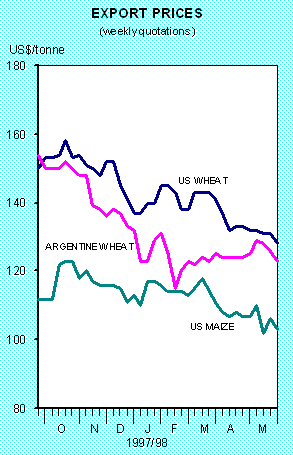
Maize, barley and sorghum prices have also fallen further in recent months, mostly reflecting slow trade activity, smaller than expected domestic use in the United States and continued weak import demand from Asia. By late May, US maize prices were quoted at around US$103 per tonne, about US$8 per tonne lower than in March and about US$12 per tonne below the previous year. The decline in maize prices is partly explained by the availability of ample supplies, weak import demand and favourable crop prospects in almost all regions with the exception of southern Africa. Similar to price developments in wheat futures markets in recent months, maize prices have also fallen significantly. By late May, Chicago Board of Trade maize futures fell further, setting a new contract low for July and a 10-month low for December deliveries.
|
|
|
||
|
|
|
|
May |
|
|
|||
| United States | |||
| Wheat 1/ | 128 | 141 | 162 |
| Maize | 103 | 111 | 115 |
| Sorghum | 98 | 111 | 114 |
| Argentina 2/ | |||
| Wheat | 123 | 125 | 165 |
| Maize | 103 | 99 | 115 |
| Thailand 2/ | |||
| Rice white 3/ | 342 | 306 | 325 |
| Rice, broken 4/ | 194 | 193 | 213 |
 Looking
further ahead, given the good 1998 crop prospects and a likely decline in import
demand for wheat, prices for nearly all types of grains are expected to remain
under pressure at least through the first half of the 1998/99 season. The price
development during the second half of the season will depend on plantings and
prospects for 1999 crops while the economic situation in Asia is also likely to
continue to affect international grain prices through the end of the 1998/99 season.
Looking
further ahead, given the good 1998 crop prospects and a likely decline in import
demand for wheat, prices for nearly all types of grains are expected to remain
under pressure at least through the first half of the 1998/99 season. The price
development during the second half of the season will depend on plantings and
prospects for 1999 crops while the economic situation in Asia is also likely to
continue to affect international grain prices through the end of the 1998/99 season.
In contrast to recent developments in grain markets, international rice prices from most origins continued on an upward trend through May. As a result, the FAO Export Price Index for Rice (1982-84=100), which has been on the rise since December last year, averaged 128 points in May, up from 125 points in March. The increase in prices is partly attributable to concerns about the availability of exportable supplies, especially in Vietnam and Pakistan, particularly in light of large purchases by Indonesia and the Philippines, and partly to the partial recovery of the Thai baht against the United States dollar. In the next few weeks, rice export prices are expected to be influenced by the development of the Asian monsoon. In addition, the market is expected to react to Viet Nam's decision on lifting or maintaining the temporary freeze on export sales.
The export price for Thai 100B averaged US$331 per tonne in May, up
by US$12 per tonne from April but still slightly below the previous year.
Prices of fully broken rice (Thai A1 Super) also increased slightly from
their April average to US$197 per tonne. In the United States, the likelihood
of increased import demand from South America has supported prices. Quotes
for US No. 2, 4 percent broken rice averaged US$ 424 per tonne in May,
up by US$8 per tonne from the April average but down from US$445 per tonne
in May 1997. A combination of rising Thai prices and declining US prices,
relative to their respective levels at the end of 1997, has led to a considerable
narrowing of the price premium enjoyed by the US No.2, 4 percent over the
Thai 100B. Export prices from India and Pakistan have also remained firm
due to increased import demand.
