
 Food
Outlook
Food
Outlook Global Information and Early Warning System on food and agriculture
Food
Outlook  No. 4, 1998 - Rome, September
1998
No. 4, 1998 - Rome, September
1998
|
The outlook for cereal supplies in 1998/99 remains satisfactory,
despite a slight deterioration in the 1998 production prospects. If current
forecasts materialize, supplies would be sufficient to meet anticipated
consumption requirements in 1998/99 and the stock-to-use would remain
virtually unchanged and within the minimum safe range. Food emergencies are now afflicting 40 countries worldwide, compared
to 38 in June, mainly due to the effect of both El Niño and La
Niña weather phenomena in Africa, Latin America and Asia. Africa
remains the continent with the most acute food shortages due to adverse
weather and/or civil strife (see Box on page 4). FAO’s latest forecast puts 1998 cereal production at 1
892 million tonnes, 1 percent below the 1997 record crop but
still above trend. Wheat output is forecast at 606 million tonnes, some
1 percent down from last year, while latest indications for coarse grains
point to an output of 907 million tonnes, virtually unchanged from 1997.
Global rice production is now forecast at 379 million tonnes (milled),
2.4 percent down from the previous year’s record crop, partly due
to recent floods (see Box on page7). FAO’s latest forecast of world trade in cereals in 1998/99 is
199 million tonnes, 2 million tonnes lower than forecast in the last
report, and 8 million tonnes down from the previous year. A significant
reduction in global wheat trade and a return to a more normal level of
rice imports after the record level in 1998 would more than offset a slight
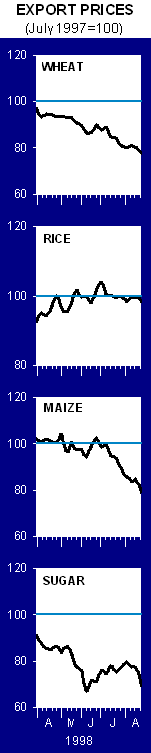
increase expected for coarse grains trade. International prices for wheat and coarse grains weakened further,
reflecting generally favourable crop prospects and stagnant import demand.
By late August, both wheat and coarse grains prices had fallen to about
30 percent below their levels a year earlier. Rice export prices from
most origins remained firm reflecting limited export supplies and concern
about the new crop. Meat production in 1998 is forecast to rise by 2 percent. In sharp
contrast with recent years, preliminary estimates for international trade
in meat point to zero or negative growth, mostly due to the financial
crises in Asia and the CIS. The combination of depressed import demand
and abundant export supplies is anticipated to depress prices, possibly
to their lowest levels in the decade. The world fish catch in 1997 is tentatively estimated at 122 million tonnes, virtually unchanged from the previous year’s record level. Increased production in China, the world’s largest producer has been mostly offset by a smaller catch in South America. |


