


Interest in market access questions, including protectionism, is growing, despite the fact that protectionism, together with the obstacles it presents to trade, is a long-standing concern for international trade in forest products. Interest has risen in recent years with the increasingly global nature of forestry and international trade in forest products and the changing nature of protectionism. For various reasons, current conditions have made the topic of trade restrictions an even higher-profile issue than in the past. Partly it is because of the General Agreement on Tariffs and Trade (GATT) Uruguay Round negotiations concluded in 1994; partly it is because of ongoing trade disputes between countries such as the United States and Canada; the United States and Japan; and the United States and the European Union, but probably the main reasons have been the increased concern over the loss and degradation of the world's forests, especially its tropical forests, and concerns over environmental issues. This has increased attention on trade's role as both a cause of, and a solution to, the problems. Increased trade restrictions, or policies which have the potential to restrict trade, have been promoted by a number of developed countries and particularly by environmental non-governmental organizations (NGOs), as a means of solving these problems.
A study such as this must focus most of its attention on broad trends or tendencies, or on the most common situations, since it is not possible to discuss every individual product, country, or situation. Thus, throughout the report the aim is to identify the overall situation facing the main forest products, not to identify and discuss every situation. At the same time, many trade restrictions are of such diverse nature that their impacts are selectively significant and product and country specific. Such effects are not captured by generalizations but can be indicated by using illustrative examples. This applies to most NTBs and is even more the case with respect to environmental issues, some of which are incorporated in formal NTBs through standards, but others can better be described as "trade impediments".
It must be remembered that trade does not take place between countries, although the terms and conditions that are developed apply to countries and have been established on the basis of relationships between countries. Trade takes place between trading organizations - which are usually private organizations. The products being traded vary with the trader; and the products may face different restrictions depending on the product or even its specific dimension, species composition, degree of surface preparation, etc. For example, different paper grades, sizes, etc., have different tariffs in some markets. All of these differences cannot be discussed in this paper which focuses on the principal forest products traded, and trade restrictions in, and the impacts on trade between, the main producing and importing countries.
While the question of trade protectionism is being increasingly raised, the subject is proving to be one where views and positions vary considerably. Proponents of trade expansion see protectionism as one of the main obstacles facing international trade. They argue that trade levels and the profitability of exporting could be substantially increased if exporters were not faced with a series of discriminatory import barriers against their forest products. Others however see increased trade as being against the sustainability of the forests and they consider that protectionist practices may be an essential part of overcoming the pressures on the forests.
This paper examines whether, and in what way, trade restrictions of various types impact on forest products trade. It updates information presented in the FAO report "Trade in Forest Products: a Study of the Barriers Faced by the Developing Countries" (Bourke, 1988, FAO Forestry Paper No. 83). That report gives a comprehensive discussion of the intent and effects of tariff and non-tariff trade measures, provides definitions and explanations of such measures, and assesses the situation as it stood at the time of the study. It should therefore be seen as the base from which this present report builds. The reader should consult that report for much of the background, definitions, and theory, and also for its conclusions.
This present paper firstly looks at the more long-standing trade barriers affecting forest products, which have been, and are still being, used largely for economic or social rather than environmental reasons. It considers how significant these barriers are. One important question is where trade restrictions facing forest products appear to be heading. Thus the impacts of the agreements reached under the Uruguay Round of multilateral trade negotiations, concluded in 1994 and carried out under the auspices of GATT, are presented. A significant aspect, though, is that in addition, the report also discusses the more recent restrictions being largely promoted for environmental reasons.
It is important to note that in the language of trade analysts and trade negotiators, trade restrictions are limited to formal institutional measures which restrict trade - either overtly or in many cases covertly. In particular, this involves government imposed measures which are either deliberately aimed at restricting or distorting trade patterns, or do so inadvertently. These are the restrictions that are the subject of formal international trade negotiations such as the World Trade Organization (WTO). These formal institutional measures affecting trade have traditionally been divided into two categories: tariffs and non-tariff measures (sometimes also called non-tariff barriers).
There are, however, some restrictions of a recent nature, which fall into a grey area - such as those that are related to environmentally oriented concerns. They may be regarded as trade impediments rather than formal barriers. Since their impact or potential impact is very similar to more formal measures - and in many cases their intention is the same - they are also discussed in this paper.
Finally, it must be mentioned that in addition to the above there are also many things that make trade difficult or affect the competitiveness of individual countries or firms that must be faced by those wishing to be successful on the market. These are often called trade barriers, but are in fact 'natural' barriers which result from comparative advantage (or disadvantage) and normal competitive conditions. Thus differences in freight rates, wage rates, business practices, language, etc., while making it difficult for exporters, are not trade barriers specifically imposed by the importing or exporting country. They reflect such things as geographical location, natural resource endowments, and cultural differences. They are not considered in this paper.
The evaluation of tariffs focuses on the developed countries of the European Union, Australia, Canada, Japan, New Zealand and the United States; the developing countries of Brazil, Chile, China, India, Indonesia, Malaysia, Mexico, the Philippines, and Thailand; the newly industrializing country of South Korea (the Republic of Korea); and Taiwan Province of China. Data on the most current operational tariff rates for forest products were obtained from country tariff schedules, the Bulletin International des Douanes, and the UNCTAD (United Nations Conference on Trade and Development) information system TRAINS (TRade Analysis and INformation System), which includes both quantitative data and trade control measures.
Non Tariff Measures (NTMs), which are all other mechanisms that directly or indirectly restrict trade, are much more difficult to identify and evaluate. Various sources were used to build a picture of the situation involving these. The main ones were the TRAINS data base and industry journals.
The information on measures which are called 'trade impediments' in this report, has come from a variety of sources - papers, reports, press cuttings and the internet, since there is little detailed coverage of them in any data bases or formal studies. For this reason the information on them should only be seen as indicative.
It is important to note that many of the measures discussed in this report are continually changing. As a consequence some of the details may have altered since the report was prepared. For example, many tariff rates will have changed, the details of some standards and phytosanitary regulations may have altered, the details of activities concerning certification and attitudes to the various schemes will have evolved, etc. Nevertheless, while some of the details may be different, in general the overall situation and the conclusions on the impacts, likely directions and consequences will still be true.
The extent, form and direction of trade are an important consideration in the analysis and assessment of the impact of trade restrictions. Global trade in primary forest products has been expanding over the past decades in both volume and value, and also as a proportion of global production. In addition, the location of roundwood production, and the products being traded have changed and their locations shifted. All of these facts are related in varying degrees to the presence or absence of restrictions, although it is difficult to separate the effects of restrictions from the various other factors affecting trade levels and flows.
There has been substantial growth in demand for wood products in the last 25 years - both of fuelwood and industrial wood. FAO estimates show consumption of total roundwood increased from around 2,400 million cum in 1970 to 3,391 million cum in 1997, a 41 percent rise. Total world roundwood production is dominated by fuelwood and charcoal, and about 90 percent of this fuelwood production is in developing countries. Fuelwood consumption expanded more rapidly than industrial roundwood consumption, growing by 55 percent, to 1,853 million cum in 1997. Industrial roundwood consumption grew by 21 percent to 1,537 million cum in 1997, although actually declining from a high of 1,730 million cum in 1990. Sawnwood production in the last 15 years has remained static, with non-coniferous production rising while coniferous production has fallen, largely because of a fall since 1990. In the case of wood-based panels, growth in production has been substantial, both in developed and developing countries.
Forestry has become increasingly global in recent years. Ownership of forests and processing plants, concession rights, and management contracts for such things as harvesting, are increasingly held by foreign companies. Trade is also increasingly global with the number of countries exporting and importing various forest products growing; and the rules and conditions of forest management and trade are being set or influenced by foreign interests (e.g. the current efforts on criteria and indicators of sustainable forest management, the global convention on bio-diversity, and proposals for some type of global forest instrument, such as a forest convention).
Non-industrial roundwood makes up about half of global roundwood production, and accounts for as much as 80 percent of developing country production. However, only about 6-8 percent of this roundwood production enters international trade, since little fuelwood and charcoal production is traded internationally.
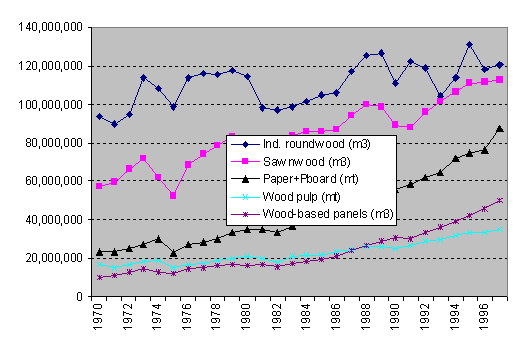
Exports of most products have expanded, and the value of primary forest products (i.e. logs, sawnwood, panels and pulp and paper) exported had reached US$ 136,000 million in 1997, although that was a decline from the 1995 high of US$ 148,000 million. In addition to this, exports of secondary processed products such as mouldings, doors, furniture, etc., and those of non-wood forest products (NWFPs), such as rattan, rubber, Brazil nuts, oils and medicines, also make a substantial contribution. However, estimating this contribution is more difficult. Globally, export volumes of industrial roundwood have increased by 22 percent since 1970 to 120 million cum in 1997; sawnwood has almost doubled to 113 million cum, as has wood pulp (to 35 million metric tons); wood-based panels have increased fivefold to 50 million cum; and paper and paperboard has quadrupled to 87 million metric tons. Within this, as markets have changed, resource conditions altered, product forms changed, and domestic consumption levels altered, there have been changes in the importance of different countries as exporters.
Figure 1: Global forest product exports 1970-1997 (volume)
Source: FAO
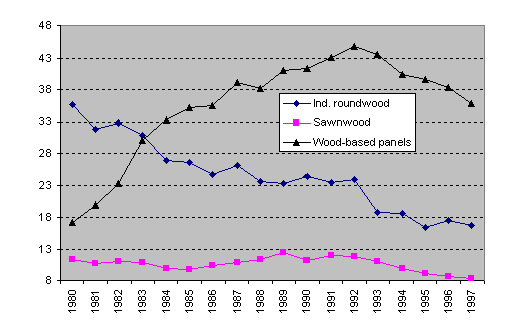
Tropical products only represent a small share of exports for most forest products. For 1997 tropical industrial roundwood production is estimated to represent about 18 percent of world industrial roundwood production; it accounts for varying, but generally small, shares of the total exports of different products: 17 percent of the industrial roundwood exported; 8 percent of sawnwood; less than 10 percent of pulp and paper and paperboard products; and 36 percent of wood-based panels. It does however account for about 70 percent of plywood exports. The share of world production accounted for by tropical products has risen overall, but, while its share in trade has increased for wood-based panels it has declined for industrial roundwood and sawnwood.
Figure 2: Global trends in tropical timber production and exports (cum)
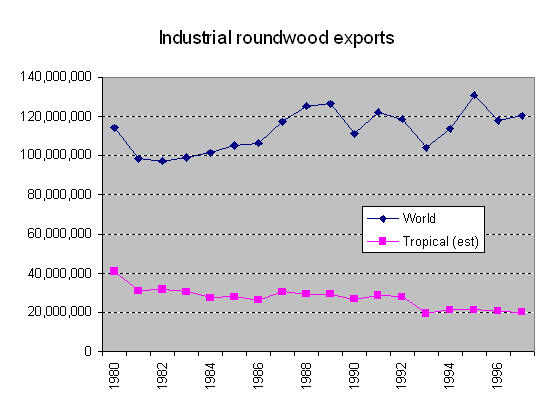
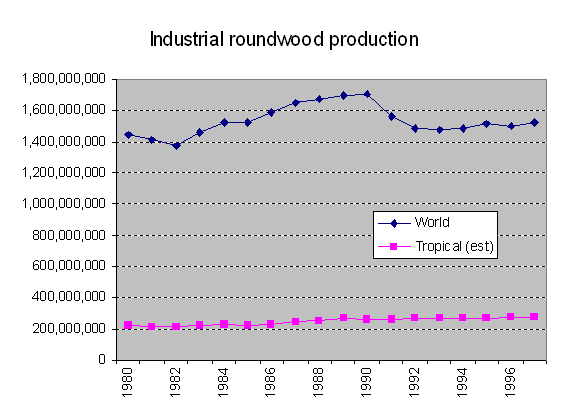
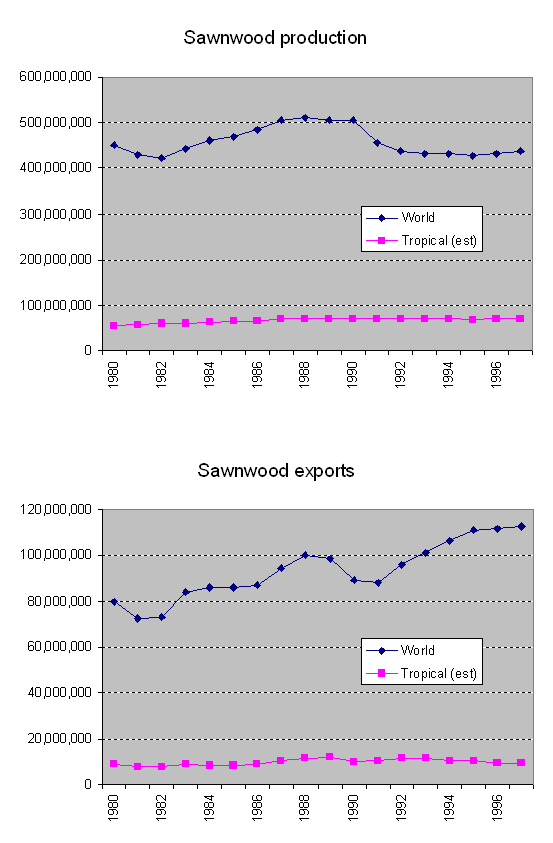
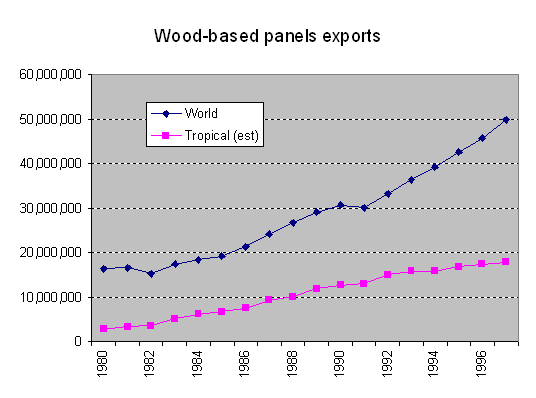
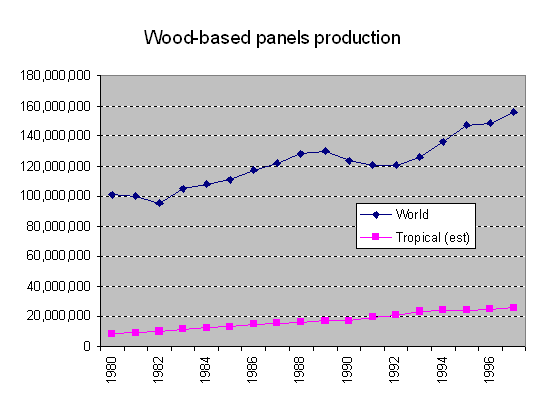
Figure 3: Tropical production as share of world total (percent by volume)
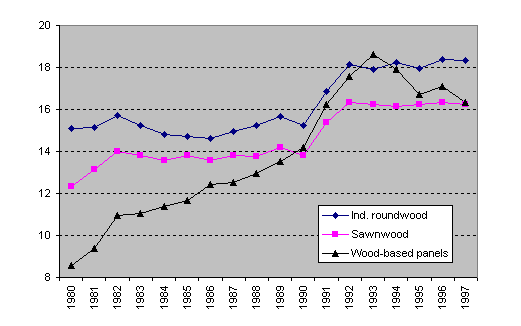
Figure 4: Tropical exports as share of world total (percent by volume)
Source: FAO
While trade in all product categories has been growing, the relative export importance of some of the products has been changing (Table 1). There has been a move from logs and to a lesser extent sawnwood, towards plywood and secondary wood products, although there is still substantial trade in unprocessed logs and woodchips by some countries. While expanding in absolute terms, industrial roundwood's share of the value of global exports dropped from 15 percent to 8 percent, largely since the early 1980s. Wood pulp's share has declined steadily to 13 percent, and sawnwood has also declined slightly from 21 percent to the current 19 percent. By contrast, over this period the share of wood-based panels increased from 9 percent to 12 percent, while the greatest change has been in paper and paperboard which moved from 35 percent to 48 percent. Additionally, exports of furniture components, mouldings, etc., have increased substantially, a trend that is largely driven by a few countries.
Table 1: Product share in global exports (% by value)
1970 |
1997 | ||||
|
Industrial roundwood |
15 |
6 | |||
Sawnwood |
21 |
19 | |||
Wood-based panels |
9 |
13 | |||
Wood pulp |
20 |
12 | |||
Paper and paperboard |
35 |
50 | |||
Total |
100 |
100 |
Source: FAO
The rising trend in export volumes depicted in Figure 1 represents an expansion in the share of total production being exported for all products except industrial roundwood - in most cases a substantial increase in their share.
A notable feature of world trade is the dominance of developed countries, both in exports and imports. With the exception of Japan and Russia, the major developed country traders, both exporters and importers, are in North America and Europe. Only plywood exports are dominated by developing countries, with Indonesia alone accounting for 41 percent, and Malaysia accounting for a further 20 percent.
Another characteristic of forest product trade is the fact that although there are many countries involved, only a few of these account for the bulk of both exports and imports. This can be seen in Table 2 which shows the major global importers and exporters of forest products in 1997. Five countries accounted for 55 percent of world exports of forest products in 1997 and ten accounted for 70 percent. Canada and the United States alone accounted for one-third (33 percent). On the import side, five countries accounted for 47 percent and ten countries for 64 percent, with the United States and Japan being responsible for over one quarter (28 percent).
In value terms, developed countries account for about 75 percent of total exports and imports, down somewhat from the 1970 level of 87 percent. Their dominance is greatest for pulp, paper and paperboard - all with over 75 percent (from 84 percent of the wood pulp exports and 76 percent of the imports, to 90 percent of the paper and paperboard exports and 75 percent of the imports). With the exception of Russia, the major developed country exporters are in North America and Europe. The top five exporters are Canada, the United States, Sweden, Finland and Germany. The main developed country importers are Japan and the United States and a number of countries in the European Union, particularly Germany, the United Kingdom, Italy and France. Thus most of the main importers are also the main exporters.
Table 2: Major global importers and exporters of forest products, 1997
|
IMPORTERS |
(1000 US$) |
EXPORTERS |
(1000 US$) |
|
USA |
24,134.454 |
Canada |
25,647.813 |
|
Japan |
16,684.401 |
USA |
19,835.072 |
|
Germany |
10,916.458 |
Finland |
10,414.170 |
|
United Kingdom |
9,992.619 |
Sweden |
10,295.373 |
|
Italy |
6,823.034 |
Germany |
9,828.224 |
|
France |
5,866.290 |
Indonesia |
5,142.289 |
|
China Main |
5,661.407 |
France |
4,663.716 |
|
Korea, Republic of |
3,739.716 |
Malaysia |
3,951.831 |
|
Netherlands |
4,657.664 |
Austria |
3,834.619 |
|
Canada |
3,976.011 |
Russian Federation |
3,007.700 |
|
China Hong Kong |
3,835.956 |
Netherlands |
2,667.467 |
|
Korea Republic |
3,739.716 |
Italy |
2,650.942 |
|
Spain |
3,719.661 |
Brazil |
2,647.469 |
|
Taiwan Province of China |
3,144,211 |
Bel-Lux |
2,446.365 |
|
Switzerland |
2,211.772 |
China, Hong Kong |
2,267.271 |
|
Austria |
2,016.214 |
United Kingdom |
2,124.055 |
|
Denmark |
1,950.245 |
Switzerland |
1,893.527 |
|
Thailand |
1,528.178 |
Spain |
1,698.686 |
|
Australia |
1,498.010 |
Norway |
1,655.114 |
|
Mexico |
1,470.208 |
Japan |
1,640.459 |
|
World |
144,980.524 |
World |
138,280.840 |
Source: FAO
The import restrictions that the major importers impose are of considerable importance. In addition, however, restrictions imposed by countries which may not currently be major importers, but which have large and growing demand and are economically capable of purchasing imported products, are of interest. Some of these have had limited imports in the past partly at least because of the severe import restrictions they have had in place. Countries in this category include India, Brazil, Indonesia and Malaysia.
There has also been increasing trade between developing countries. In addition to the major flows in Asia to Japan, increasing trade is taking place between neighbouring countries such as China, Republic of Korea, Thailand, Indonesia, Malaysia and Myanmar. A number of Asian countries have increased their imports from outside the region. Japan has also changed some of the products it imports, such as moves from logs to more processed products, and also changes in species with softwoods increasingly being substituted for tropical hardwoods. Developing countries with expanding economies (notably China and Taiwan Province of China, Republic of Korea, the Philippines and Thailand) have increased their share of global imports. This has been mainly logs and semi-finished wood products, but also paper products in some cases. Paper products tend to be the main imports of China, China Hong Kong, Mexico and Singapore. In addition, some developing countries are moving from being net exporters to being net importers. The Philippines is now a net importer of all products except pulp; Thailand is a net importer of logs, sawnwood, and panels; and Singapore has become a net importer of sawnwood and panels.
The vast majority of developing country exports come from Asia (around 66 percent). Wood-based panels, predominantly plywood, account for the largest share by value (31 percent) of all developing country exports. Asian countries alone contribute almost 90 percent of developing country wood-based panel exports. Asian exporters also dominate log, sawnwood and paper exports, with Latin American countries the major developing country exporters of wood pulp. Indonesia is the world's largest exporter of wood-based panels, Malaysia is the world's second leading exporter of logs, behind the United States, and the fifth leading exporter of sawnwood, and Brazil is the world's fourth largest exporter of wood pulp.
Many of the developing country exporters are tropical countries. While the total volume of tropical timber trade has been declining, the trend is for producer countries to export a higher proportion of value-added wood products. Asia continues to be the dominant producer and exporter of tropical timber but Africa and Latin America are becoming relatively more important as exporters of logs and sawnwood, respectively.
A further feature of trade flows has been increasing intra-regional trade, fuelled by regional trade agreements such as the expansion of the European Union; the signing of NAFTA; and the stimulus provided by the Mercosur Agreement. Much of Europe's trade is between countries within the region, and the majority of the United States imports are from neighbouring Canada. Trade between the United States and Mexico has also changed significantly since NAFTA.
Trade in forest products has risen as a share of production for all products except logs, and on an absolute basis it has increased for all products. Both imports and exports are dominated by the developed countries, though that has declined very slightly. It is greatest in paper and paperboard products, which are high value products which account for almost half the total value of trade in forest products. The developing countries are the main exporters of raw tropical timber, although there is some trade by developed countries which are either further-processing tropical wood or are acting as trans-shipment points. While representing a fairly small share of overall trade in forest products, tropical products make up a significant portion of developing country exports. In addition, tropical products have accounted for certain notable changes in the trade pattern: the reduction in the log trade and an increase in the plywood exports from developing countries.
It must be emphasized, however, that in many cases the global picture hides considerable regional and country variation. For example, Asian exports of some products have declined recently while at the same time those of South America have risen. Further, in some cases the regional variation actually reflects changes in only one or a few countries (e.g. Malaysia, Indonesia and Brazil) rather than all countries in a region.
|
Box 1: Trade measures which may act as barriers to trade Specific limitations on
trade: quantitative restrictions; export restraints; health and
sanitary regulations; licensing; embargoes; minimum price regulations,
etc. |
Access to markets is influenced by a wide range of measures, from formal trade barriers to a host of informal ones. Formal trade restrictions are institutional measures which restrict trade - either overtly or in many cases covertly. In particular, this means government-imposed measures which are either deliberately aimed at restricting or distorting trade patterns, or do so inadvertently. These are the restrictions that are the subject of formal international trade negotiations such as WTO. The measures have existed for many years, but the scope and relative significance of the various types has changed considerably in recent years. Box 1 indicates some of the formal measures that most commonly affect trade, and which under certain circumstances act as trade barriers.
There are, however, some measures that do not strictly fit into this category, such as many connected with environmental issues. Where they affect trade they may be regarded as trade impediments rather than formal barriers. Nevertheless, although not formal measures their impact or potential impact is very similar - and in many cases their intention is the same.
The formal trade restrictions have been the focus of the international multilateral trade negotiations held under the auspices of GATT3. The most recent Round was the Uruguay Round which was formally signed into force in 19944 and which also resulted in the conversion of GATT to a new global trade institution, the WTO. Changes consequent upon the Uruguay Round are discussed in chapter VI. As well there are many bilateral and regional negotiations which have also been addressing the subject, such as those of ASEAN5, the Asia-Pacific Economic Co-operation (APEC)6, the expansion of the European Union, the NAFTA, and the Mercosur Agreement.
As the most direct and also the most visible protectionist measures, tariffs have been the main target of consecutive rounds of GATT negotiations. The extent to which trade is affected by tariffs is, as with all trade measures, very country, product and even company specific. Annex Table 1 provides a summary of current tariff rates for selected categories of forest products in a number of countries. As shown tariff barriers have reached relatively low levels in most of the main import markets. The level differs with the market and the specific product, but overall few developed country tariffs are now particularly high.
Nevertheless, for specific products and specific markets rates are still relatively high and create significant problems. This is especially true for panel products - particularly plywood - builders' woodwork items, and furniture. Some types of paper products also have relatively high rates in some markets. While tariffs are generally less than 5 percent in many developed countries, rates for these particular products are much higher, commonly 10-15 percent.
Import duties create marketing difficulties, particularly in the competitive basic commodity products where price competition is greatest, and in periods of weak demand when competition is high. It is worth noting that even a relatively low duty can add a substantial extra cost and give domestic producers valuable protection because import duties are usually charged on the c.i.f., not the f.o.b., price. This therefore creates greater problems for distant suppliers. It should also be noted that a low nominal rate may in fact mask a much higher effective rate - with a considerably higher protective effect for domestic producers.
While developed country exporters may face the Most Favoured Nation (MFN)7 rates in the developed countries, many developing countries manage to avoid the main impacts. This is due to the fact that various preference schemes reduce tariff rates for developing countries, and sometimes provide preferential access to markets. The most notable scheme is the UNCTAD GSP. Under this, individual developed importing countries offer lower tariffs to selected developing countries without requiring any reciprocal benefits. These rates are also shown in Annex Table 1.
The GSP conditions vary widely. Each importing country which offers GSP preferences sets its own conditions. Countries can therefore be very selective both as to the product and the exporting country they apply to. Each country can individually decide when, to whom, or under what conditions the preferences apply, and when they may be withdrawn or modified. For example, some countries exclude some products, some only make minor reductions, some limit duty-free access by quotas, etc. Some curtail, or completely remove, eligibility for GSP treatment from countries when they reach a certain level of economic development or achieve a certain share of the market in the product. For example, Taiwan Province of China, Republic of Korea, China Hong Kong and Singapore, which account for the bulk of the developing country exports of value-added products, have had GSP privileges removed by many developed countries and must face the higher MFN rates. One feature of the GSP benefits is that they are also limited for the products mentioned above as still having high tariffs - i.e. various panel products, builders' woodwork items, and furniture.
As the MFN rates have declined, the advantages of the GSP have diminished. The effect of declining MFN rates has been improvement for exporters who already face full MFN rates, but a decline in the position of those who receive GSP benefits.
Although most import tariff rates are low in the main developed countries, those in the developing countries are generally much higher. Developing countries have tariffs that range from 10-60 percent, and few offer preference schemes. For example, Brazil's rate on many products is one of the lower at 10 percent, while many other countries have rates that are more typically 20-40 percent. In addition, in many cases the tariff is only part of the restriction, with additional taxes and duties lifting the level. Egypt has a tariff of 15 percent but additional elements are estimated to raise this to around 40 percent; Mexico to 20 percent; and Jordan to 30-40 percent.
One feature of many of the tariff schedules is tariff escalation. Tariff escalation occurs when rates increase as the degree of processing increases, such as when logs are generally duty-free, sawnwood faces low tariffs, panels higher rates, and higher processed products higher rates still. This trend acts as a disincentive to exporting higher processed products. Depending on the degree of escalation, it can have a significant effect on the form of the products exported, since exporters may be forced to export less processed forms where they are more competitive because of the lower charges these face.
The extent to which tariff escalation is a difficulty is very country and product specific. In particular, it may be more of a problem for many developed country exporters than for developing country exporters. Developed countries generally face this problem since they must face the full MFN rates, while many (but not all) developing countries manage to avoid the main impacts because of the preference schemes mentioned above. They do, however, also face it with at least some products. Again though, this is obviously very specific to the particular situation concerned.
In the main developed importing countries, although there is generally a progression in tariffs from logs at zero tariffs through products such as beadings and mouldings to furniture at (often substantially) higher levels, this progression is not perfect. Nevertheless value-added products, such as builders' woodwork (i.e. joinery and carpentry such as windows, doors and door-frames, and laminated timber); beadings and mouldings; and wooden furniture, etc., tend to face higher tariffs than other less processed forest products. The progression appears to be a reflection of factors such as the degree of protection that the country wishes to provide its domestic industry (for a variety of reasons) rather than a direct one-for-one reflection of increased sophistication of processing. For example, some panel products, especially plywood, face higher rates than many higher-processed products; and some panels face higher tariffs than others do.
In the case of developing countries, tariff escalation is less clear, although logs typically have lower (often zero) rates than other products. Developing country rates are often all at similar levels (generally high) for all products, since the basis of the tariff setting is less related to the degree of processing involved and often more to the extent to which they may either raise revenue or effectively reduce the expenditure of foreign exchange.
Conclusions on the effects of tariff escalation are difficult. The tendency to export less processed forms can reflect many other factors, especially the fact that freight costs are often significantly lower for less processed products, it may be easier to meet quality requirements, the importing country may have a more developed processing industry, etc. Nevertheless, the existence and the possible negative impacts of escalation should be noted.
On the whole, tariffs on forest products have been declining and this is certainly consistent with the overall trade expansion already noted. While rates for most of the main import markets are 5 percent or lower, and thus not a major difficulty for exporters, there are a significant number of products where the rates are considerably higher. This is typically true for various panel products - especially plywood - and some higher-processed products such as builders' woodwork and furniture. These are typically 10-15 percent. In general, it can be said that those trading into the main developed-country markets face relatively low rates - although there are specific exceptions to this general comment. Since trade takes place between separate individual organizations, the extent to which trade is restricted by tariff measures is often difficult to assess. What may be restrictive to one supplier may not be to another.
The rates in developed countries mentioned above are examples of tariff escalation - higher rates on higher levels of processing. Although many products are exported in unprocessed or slightly processed forms, the extent to which this reflects the tariff level is very difficult to assess. Nevertheless, the existence and the possible negative impacts of escalation should be noted. However, other factors also exist which would appear to be working in the opposite direction to the expected effects of escalation - such as the reduction in the relative share of logs that are exported and the increase in plywood exports.
In addition to tariffs, a wide range of NTMs exist (see Box 1). These include a host of different rules and procedures, ranging from health and technical standards to measures influencing prices. NTMs are much more complex and difficult to recognize and therefore assess than tariffs, especially in quantitative terms. Forest products face a variety of measures which in some cases can have restrictive effects while in others not. Thus the existence of NTMs, the manner in which they operate, and whether or not they act as NTBs, is often very difficult to determine. Even the effects of the same mechanisms can vary widely between different countries, depending on the way in which they are implemented and the exact details of the regulation. They may also have widely differing effects on different trading partners due to the circumstances of these partners. At the very least, though, they make exporting more difficult, especially for smaller and less experienced developing country exporters. In these conditions marketing becomes a more difficult, complex, costly and challenging task.
Some of the NTMs which have most effect on forest products are:
Box 2: Examples of import quotas The European Union imposes import quotas on board and panel products. While imports of non-coniferous plywood from countries that are eligible for GSP treatment pay duty at a lower rate than MFN recipients (70 percent of the full duty rate) on all their volume, coniferous plywood is still controlled through a duty-free global annual quota of 650,000 cum. This is not allocated to specific countries, except for an allocation of 50,000 cum for Canada. The European Union also has tariff quotas or tariff ceilings on newsprint, fibre-building boards, builders' woodwork and some furniture items. |
Where they operate, the impact of quantitative restrictions is very direct - and often severe. Direct quantitative restrictions take many forms, such as an overall quota, a quota allocated to imports from a specific country or a quota limiting eligibility for a particular tariff rate (e.g. the GSP rate). Generally the within-quota quantities for developing countries are duty-free, but the quotas are commonly allocated by both the exporting source and the importing country. Above-quota imports face full duties. In general the use of quotas on forest products has declined, but for some products in some markets they still exist, and create difficulties.
Another difficult area, and one that seems likely to continue to give problems for forest product exporters is that of standards, both technical standards and those concerned with plant health, known as phytosanitary standards. There is, however, little ability to accurately assess the extent to which this is a serious problem, but it is definitely an area which creates difficulties for many countries.
Technical regulations and standards related to the protection of animal and plant life from pests and diseases; to human health and safety; and to maintenance of air, water and land quality, result in considerable adjustment and re-adjustment in terms of trade. While perhaps not trade restrictions in the formal sense of the term, since they do not have as their main aim the restriction of trade, they do create difficulties for trade by changing relative costs and comparative advantages, and consequently trade patterns.
|
Box 3: Examples of technical standards Japan, as do a number of other countries, maintains a complex system of standards and codes which create many difficulties for exporters to that market. Many which relate to plywood and veneer are not compulsory (except if used in government-financed housing), but they must be adhered to if a producer wishes to compete successfully on the market. While not trade barriers, they are certainly obstacles to trade. Another example is the European Union effort to harmonize European standards. These create difficulties for exporters whose conditions and systems differ from those of the European Union countries. |
Even though most health and technical standards are legitimate controls, they still present considerable difficulties for exporters to overcome. While few of the standards and codes discriminate specifically against imports and are therefore not strictly trade barriers, they do create much greater problems for exporters than domestic producers. The latter have easier access to testing procedures, greater information, less documentation to complete, and easier access to the organizations controlling the system. Additionally, domestic standards which differ from those of potential competitors can form an effective protective mechanism for a domestic industry which is producing for home consumption.
Overall they are probably of less concern for value-added products than for logs, sawnwood and other solid wood products. One reason is that many of most significance to wood products concern health and safety standards. The safety concerns are usually connected with strength characteristics of the products - such as whether the material is suitable for building or structural purposes. Since value-added products are largely destined for non-structural uses, they are not affected to the same extent by these controls. They do have to meet many quality and safety standards but often these are not government imposed, but industry quality standards or labelling requirements that must be met if the product is to be successfully marketed. There are, however, a number of countries which have government supported industry labelling and quality standards, such as members of the European Union.
Similarly, the strict health and phytosanitary controls imposed by many developed countries for logs and sawnwood, often do not affect most value-added products, or are at least more readily overcome, since the timber used in producing them has usually been dried before use, a factor that reduces or eliminates phytosanitary risks. Additionally, success in exporting many of these products is more dependent on fashion, the level of promotion, appearance and service, than on a small price advantage.
a) Environmentally-related technical standards
Of particular note are the technical regulations and standards which are environmentally motivated. Some of these are specified on the basis of the physical characteristics of products and the materials used in their manufacture; others relate to the production processes themselves. Examples include: restrictions on wood panels which use formaldehyde glues, a glue with human health risks; restrictions on certain timber preservation processes and materials; controls on processing methods (e.g. in the bleaching of pulp where there have been widespread moves to encourage or force companies to replace chlorine, which produces extremely toxic by-products, with other more environmentally friendly bleaching agents); and packaging regulations.
Recycling and recovery of waste paper is an area where restrictions, either voluntary or compulsory, have had significant effects on trade.
|
Box 4: Waste paper recovery and recycling In 1989 about 56 percent of all newsprint consumed in the United States was supplied by Canada, but by 1992 this had declined to 50 percent. This reduction was influenced by the United States legislation (both federal and state) which set minimum levels for recycled fibre content in newsprint (typically 40 percent), together with programmes to stimulate market demand for recycled paper, and tax incentives for companies installing recycling technologies. To meet the United States waste paper content requirements, Canadian newsprint producers have had to import significant volumes of waste paper from the United States (over 1.9 million tonnes of recovered paper in 1995). |
As with recycling of waste paper, regulations on
recovery and recycling of packaging waste (wood and paper) introduced in many
Western European countries have effects on the direction and extent of
international trade in forest products. These types of regulations have the
potential to affect competitiveness, particularly of more distant foreign
suppliers. Imports may be disadvantaged in a number of ways - overseas suppliers
may have to meet a variety of different requirements in different markets; and
simply keeping informed of regulations and requirements may be a major hurdle.
Moreover, the often long distances between overseas suppliers and their markets
can make the cost of returning packaging material such as pallets prohibitive.
The result is distortion of trade.
Thus to a degree
they may be considered NTBs
in a formal sense.
b) Phytosanitary regulations
Overall phytosanitary regulations do not affect forest products to any major extent, but problems do exist in specific situations. Most are obstacles to overcome, rather than deliberate attempts to block trade, since all producers, including domestic producers, must meet them, not just foreign producers. There are, however, cases where they seem to be deliberate attempts to restrict trade. Some have resulted in major trade disputes between particular countries.
Plant health standards are generally acknowledged as legitimate means of protecting countries from pests and diseases, but the complexity and severity of the requirements and the manner in which they are enforced can have a substantial effect on trade. As a result they are often seen as obstacles to trade by exporting countries. Some countries have particularly strict quarantine requirements. The primary complaint against them is that the regulations and their administration are excessively restrictive, and go beyond the level needed to ensure adequate protection, not that such regulations are unnecessary.
Trade in NWFPs such as rattan, rubber, Brazil nuts, oils and medicines, which are receiving more attention in trade, seems most likely to be affected by health standards and phytosanitary rules since many are used in food or pharmaceutical industries. With that exception, most NWFPs currently face low barriers because they are classified under customs lines which have low tariffs (often not in forest product classifications), or because their trade is small and they receive little attention that can result in NTMs.
|
Box 5: Examples of plant health disputes | |
|
European requirements that coniferous timber be treated prior to importation because of fears of pinewood nematode infestation have been the cause of a recent trade dispute between Europe and North America. The dispute centred on the risk faced from the nematode, and on the appropriate way to protect against it. Imports of green coniferous sawnwood are prohibited into most European Union member countries unless they meet conditions for exclusion from the prohibition. Further, all imports of coniferous sawnwood must be kiln-dried and accompanied by phytosanitary documents and/or certificates. For non kiln-dried sawnwood a number of wood species must have a phytosanitary certificate. All softwood logs imported must be debarked and free of B. Xylophilus. Problems/disagreement on this issue have centred on the cost and method of meeting these requirements. |
The United States import restrictions imposed for phytosanitary reasons on "unmanufactured wood products" have been the focus of concern by some environmental groups in the United States Pacific Northwest as not strict enough. As a result of a legal challenge by three environmental groups to the import of these products, which alleged that the United States Department of Agriculture's Animal and Plant Health Inspection Service (APHIS) regulations are inadequate for protecting local forests against forest pests and diseases, a United States District Court issued an injunction against imports. This has stopped the issuing of new import permits until APHIS prepares an adequate environmental impact statement and reissues certain regulations. The restrictions are reported to affect the import of logs and lumber from Chile, New Zealand and Siberia, and also apply to wood packing material and new or conditioned pallets. The restriction is discriminatory in that it does not include imports from Canada, or Mexico, non-Siberian temperate hardwood logs or tropical hardwood logs. It has been suggested that the action is more a way of limiting forest product trade and changing consumption patterns, than one which is addressing a legitimate phytosanitary problem. a a See reports in IHPA News, May/June 1997 and Chilean Forestry News, August 1997. |
Other measures which can have restrictive effects depending on the way in which they are implemented are Import licensing procedures; Customs procedures; and Domestic policies such as subsidies, financial assistance, tax concessions, export encouragement schemes, etc., which provide domestic producers with protection from imported products.
|
Box 6: Import licensing example Import licensing is considered to present a particular barrier, whether intentional or unintentional, for imports into India and China. Imports of wood, waste paper and pulp into India are subject to an open general licence, and China has a comprehensive, though diminishing, system of import licences and quotas on various products. |
a) Import licensing is used for a variety of reasons including statistical purposes, monitoring and quota control. Licences may be legitimate requirements or may be misused and act as barriers to trade. The difficulty is often in determining which situation exists. A majority of countries have some form of licensing but the degree of difficulty it presents varies widely.
b) Customs procedures can present difficulties, particularly to smaller firms. Problems include the complexity of documents, difficulties in obtaining necessary authorizations, complex inspection procedures, and physical problems in clearing goods. Customs valuation procedures can cause problems through variations in how the shipment value on which the tariff rate should be estimated is determined, and on what tariff rate should actually be applied. The latter involves the problem of determining which tariff category the product should fall into. There can be wide differences in interpreting and implementing tariff schedules.
Again, whether they are in fact being used as trade barriers can be very difficult to determine. It does, however, seem likely that in some cases the regulations and/or the way in which they are administered, are excessive.
|
Box 7: Example of subsidy dispute Canada and the United States have had a long-running dispute over the pricing of provincially-owned Canadian timber. This issue continues to re-surface at regular intervals even though apparent agreement has been reached many times. (See Cashore, B. (1997) "Flights of the Phoenix: Explaining the Durability of the Canada-United States Softwood Lumber Dispute" Canadian-American Public Policy Volume 32, December 1997.) |
c) Domestic policies on subsidies, financial assistance, tax concessions, export encouragement schemes, etc., also act as trade barriers. They can substantially improve the competitiveness of domestic producers in both their own domestic market and export markets, and are often used specifically for these purposes. Assistance can take many forms, but often involves reducing production costs through low stumpage fees, planting subsidies and tax concessions, assisted transport, the provision of infrastructure such as roads, etc. They occur in many countries though it is difficult to assess whether they create barriers to trade and whether they have increased in recent years or not. While some reductions in subsidies are apparent (e.g. in countries such as New Zealand, Canada, Chile, Brazil and Eastern European countries) little change is obvious in most other main regions, such as the United States, European Union or Japan.
Although import restrictions are the most obvious barriers in forest product trade, export restrictions are of considerable significance for trade. Export restrictions are common in most developing countries and in some developed countries, and have had a major impact on world trade patterns for some forest products - notably logs and plywood. Export controls include total bans, export quotas, or selective bans based on species; indirect quantitative restrictions due to controls on harvest levels; direct charges such as export taxes or export levies; indirect charges in the form of royalties and reforestation levies; and administrative controls such as permits and licences. They may be imposed primarily as a revenue generating instrument, especially if this method of collection is more efficient than other instruments to capture resource rent. Permits and licences may simply be information and quality control instruments or their intent may be to restrict export quantities, especially if they are conditional upon factors other than product attributes.
|
Box 8: Examples of export restrictions on tropical wood products | |
|
South Pacific Indonesia began phasing in a total ban on log exports in 1980 and eventually replaced the ban with a high export duty in 1992. Log export restrictions vary in Malaysia among the states. Timber is used only for domestic processing in Peninsula Malaysia. Export quotas are being phased in during the 1990s in Sabah and Sarawak, with the former also imposing export duties while the latter provides a royalty rebate on timber processed domestically. During the 1990s both Indonesia and Malaysia also began imposing variable export taxes on sawntimber, veneer and further processed products. Phased reductions of log exports accompanied by export duties have recently begun in both Papua New Guinea and the Solomon Islands, two countries whose log exports had been rising significantly following restrictions elsewhere. |
Africa Controls on log exports have increased significantly during the 1990s. Ghana and Côte d'Ivoire both have lists of species banned from export which have lengthened over the past few years. Ghana, Gabon and Cameroon each have export duties on logs eligible for export, ranging from 10 percent to 30 percent. Log export restrictions in the latter two countries are in the form of a planned progressive increase in the share of annual cut going to local processing. As of 1996, Ghana also imposed an export levy on air dried sawnwood in order to encourage the export of kiln-dried sawnwood. |
Restrictions on log exports have traditionally been associated with promotion of the domestic processing industry in timber producing countries, mainly for export rather than domestic demand. Other aims range from attempts to increase the financial return to the country, efforts to ensure adequate wood supplies for the domestic wood-working and other wood-based industries (especially in competition with overseas log buyers), through to attempts to protect forests from overuse.
Log export controls have increased markedly in recent years, especially as many tropical countries have attempted to retain logs for domestic processing, or as is the case more recently, to reduce harvesting levels. Controls on harvest levels are in place or scheduled in many countries. Since export bans are technically illegal under Article XI of GATT, many countries are turning to other measures - ranging from export taxes to permits and licences, in place of direct quantitative controls.
|
Box 9: Examples of export restrictions on coniferous wood products Log export restrictions have a long history in North America, especially in Canada where those in British Columbia date back to 1906. Policies on the prohibition of log exports from the United States national forests has been strengthened recently following concerns about withdrawals of forest from commercial timber production for environmental reasons. |
The use of indirect charges in the form of royalties and reforestation levies has also increased. In recent years the focus has shifted towards the encouragement of value-added timber products, including placing export controls on intermediate products such as sawnwood, and even more recently towards forest sustainability issues. Their intent in this latter role is the reduction of overall forest exploitation rates. Export restrictions seem likely to continue, since developing countries find them the most direct way of controlling some of the undesirable practices that exist in their forestry sectors. Many of these controls are being changed or re-assessed.
For many non-tariff import measures it remains very difficult to determine whether their impact is severe or not, and whether they are primarily used to restrict imports or are legitimate restrictions with important functions other than import control. In some cases they may be legitimate protection measures; in others the same restrictions may be excessively restrictive and make importing difficult. There are also cases where the trade protective effects are unintentional. Despite the uncertainties in determining their impact though, and regardless of their intention, NTMs appear to have more impact on imports than do tariffs since they are less visible, more difficult to adapt to, and often far more costly to meet than most tariffs.
The use of import quotas on forest products, the most direct of the NTMs, has, like tariff rates, generally declined, but for some products in some markets they still exist, and create difficulties. Other measures affecting imports are much less obvious and it is more difficult to assess their impact on trade, and whether they have increased in recent years or not. Complying with various administrative requirements such as import licences and customs procedures does add costs to imports not borne by domestic products, but mainly presents difficulties to smaller firms. Various domestic policies indirectly impose costs on importers by reducing costs for domestic producers. As with tariffs and import quotas, these measures should decline, and become increasingly integrated into GATT/WTO rules.
Export restrictions, particularly log export controls, have been on the increase in recent years, and have had a major impact on world trade patterns for some forest products. They help explain certain trade trends which are opposite to what would be expected as a result of tariff escalation - the lower relative share of logs and the increasing trade in plywood. Export restrictions are common in most developing countries and in some developed countries and seem likely to continue.
The use of standards has increased as trade has expanded and seems likely to continue to provide difficulties for forest product exporters. Even though they may not be deliberate attempts to block trade, since all producers, including domestic producers, must meet them, standards often have the effect of imposing additional costs on importers because of inter-country differences. Both technical standards and phytosanitary standards are probably of less concern for value-added products than for logs and sawnwood. Although it is hard to assess the extent to which standards create any serious problems, it is definitely an area that requires monitoring since it has been growing.
One area where the divergence in standards among various countries is still particularly wide is that of environmentally related technical regulations and standards, which are described in the next section. These can impose substantial compliance costs on exporters, especially standards that are process related.
In addition to formal restrictions there are many measures which may be considered to be impediments to trade rather than formal trade restrictions as discussed above. They are not considered to be formal restrictions because they are either legal under GATT/WTO rules, or outside its control. Nevertheless, they have many similarities, often have a similar effect, and in many cases their intention is the same - i.e. to restrict trade. They have emerged in recent years and have been growing in significance. Many, deliberately or by default, result in increasing trade difficulties. Some deal with transport, processing and consumption issues such as pollution from processing plants; the use of polluting materials in the production processes; energy requirements for processing; and problems of waste disposal8. The most recent type of barrier, however, deals with forest management issues, and are aimed at limiting trade to products which are made from wood which comes from a sustainably managed (variously defined) forest resource. Notable amongst these are certification, eco-labelling, processing methods, and sub-national and private market actions. Producing countries have argued that many of these are unwarranted, lack a scientific basis, go against multilateral efforts to develop effective and balanced procedures, and discriminate against developing countries, especially tropical countries. Proponents disagree.
In Europe, the United States and to a limited extent in some other developed countries, restrictions or bans have been put in place under the guise of concern (real or imagined) for the environment. They are actions which usually, but not always, have no direct links to official government policy (though they may be unofficially encouraged by governments). The main measures used to date have been bans on the use of some wood products, mainly, but not exclusively, tropical timber, by sub-national or local governments; and decisions to cease handling products by retailers and timber traders. The bans or boycotts are either absolute or linked to restricting the use of timber to supplies that have been "approved" by external assessors.
a) Local authority restrictions
Sub-national governments (i.e. regional councils, local authorities, municipalities, etc.), and in some instances even parts of national governments (e.g. government departments), have banned, or proposed banning, the use of timber from sources which do not meet some definition of sustainably managed resource.9 The main target, either implicitly or explicitly, has usually, but not exclusively, been tropical timber. Actions of this type have been especially prevalent in Germany, the Netherlands, the United States, and the United Kingdom. The moves range from complete bans on tropical timber to bans unless the timber is independently certified. Such moves continue to be promoted even though it is becoming generally accepted that bans and boycotts are either of limited value or at worst counterproductive.
|
Box 10: Examples of local authority actions | ||
|
United States A number of states, cities, or municipalities in the United States have made efforts to ban or control the use of tropical timber. Some have been successful, others unsuccessful. A recent example is a proposal in New York City (IN[1014] Miller 1997). This seeks to ban the purchase of tropical hardwoods and products in future city contracts unless the wood comes from a sustainably managed forest and is independently certified by any group accredited by the Forest Stewardship Council, a body established largely by NGOs and strongly promoted by the World Wide Fund for Nature (WWF). |
The Netherlands In the Netherlands local authorities and municipalities have adopted legislation aimed at limiting or prohibiting entirely the use of tropical timber in construction of publicly-funded projects unless it is certified as coming from sustainably-managed sources. A further version is a bill presently (May 1998) in the Netherlands Lower House of Parliament which would oblige importers to label their timber and timber products as either "green" (from sustainably managed forests) or "red" (from other sources).a The general view is that this move would be against international (and European Union) trade obligations. a Statement by Bram Van Overbeeke, Director of Trade Policy and International Investment, the Netherlands. Undated 1998. |
United Kingdom In the United Kingdom, WWF is promoting a project under which local councils would restrict their timber purchasing to supplies from sustainably managed resources, as indicated by the Forest Stewardship Council (FSC) certification. To date three councils have joined this initiative. Under the scheme, from April 1999 contractors would only use independently certified timber and wood products.b b "Warning: exclusion zone", Timber Trade Journal 16/23 August 1997. |
There are also some slight signs of reversals in these moves, such as the April 1997 case where the German Ministry of Transport withdrew their restriction on the use of tropical timber in public projects.
While proponents of these restrictions argue they are legitimate moves taken by autonomous bodies, there is considerable concern by exporters and governments in exporting countries that they are in fact NTBs. Certainly they have an impact on market access. Many appear to conflict with multilateral obligations of governments. Various questions remain as yet unresolved. One important issue is the extent to which these do, or may, restrict trade, by discriminating either intentionally or unintentionally amongst producers. Another is whether actions taken for environmental reasons which act as trade barriers are legitimate within internationally agreed trade rules, such as under Article XX of GATT/WTO which allows certain measures to be taken for environmental reasons which would otherwise be against its rules.
There are also differing opinions as to whether restrictions imposed by sub-national governments are against GATT/WTO rules, or are outside these agreements. Although there is no clear evidence whether they are in fact inconsistent with GATT/WTO rules, the GATT/WTO rules do give governments an obligation to make all efforts to ensure that actions taken by sub-national bodies are consistent with the government's obligations. What this actually means in law is, however, far from clear. One view is that bans imposed by sub-national governments do not conflict with the government multilateral commitments if they apply to the council's own purchases, but do if the council imposes them on other individuals or consumers.
Although there is little clear evidence that these measures are growing to any major degree, except in a few countries, the situation has been in a considerable state of flux over the last five years. Despite some sign of declining focus on this type of measure in some countries, new measures or new versions of old measures continue to appear.
They are clearly significant barriers to some producers in a few markets. In addition to stopping trade of some products they also create widespread uncertainty in the market-place and have negative effects for foreign (versus domestic) suppliers.
b) Retailer and trader actions
Closely allied to the above is the situation where a few retailers and timber traders in some countries have as a group "voluntarily" agreed to cease handling products that are perceived as not coming from sustainably managed, or well managed resources.
|
Box 11: Examples of retailer and trader actions | |
|
One version of this type of restriction is that of "buyers groups", which are being promoted by WWF. Initial focus of these was in the United Kingdom where members of the WWF 1995 Group (subsequently modified to the 1995 Plus Group) have committed themselves to only stocking products from sources approved by FSC. The WWF has been promoting similar "buyers groups" in a number of other (largely European) countries. Active groups are reported in Austria, Belgium, the Netherlands, United Kingdom, Germany, Switzerland and the United States. a |
Membership of the groups is very diverse but with a weighting (based on value of sales) towards retailers and DIY (do-it-yourself) stores whose main goal is to increase their market share over other similar suppliers. Few members are timber importers, merchants or traders. The Netherlands Buyers Group lists 476 members, of which 252 are municipalities, 139 are housing associations, 10 are state departments, 72 are project developers, and 3 are DIY companies: thus there are no timber merchants or traders listed. a a Source: WWF Internet site, June 1998. |
One reason for the emphasis being placed on this type of approach by environmental groups is that eco-labelling schemes, such as environmental labels, are considered to be least successful when they depend on individual consumer responses. Evidence tends to suggest that they have only limited effect unless they are accompanied by strong and widespread promotional campaigns. They are considered to be much more effective when they serve as the basis for retailer, government and institutional purchasing decisions.10
To date buyers groups have not had a significant impact on the market because of the limited extent to which they have been taken up, and also a lack of supplies of approved wood. Although basically voluntary, and only applying to those companies who have become members of the group, they do have many similarities with formal trade restrictions, in that they represent group action to deliberately restrict sales of certain (mainly imported) wood products. Their main effect is to transfer market share from one supplier to another, but they also appear to have a downward pressure on total demand since retail outlets are restricted to some suppliers, consumers are less sure of what products are acceptable, and if price is raised some demand falls off. They may also restrict sales of wood products which are acceptable but have not been certified for one reason or another. The presence on the market of labelled products generally does little to stimulate increased levels of demand. At best its effect is to avoid further loss of demand. Their effect may therefore be considered to be a potential, rather than an actual problem at present.
Most of the bans, boycotts and other controls mentioned above have now been associated with the issue of forest product certification11 which attempts to link trade to the sustainable management of the forest resource by providing consumers with information on the production status of the forests from which the timber came. Promoters of the approach hope that consumers will decide to only purchase products made from timber from sustainably managed forests.
|
Box 12: Eco-labelling and certification in the WTO Committee on Trade and the Environment (CTE) | |
|
The CTE has considered many issues connected with eco-labelling. In most cases the focus has not been on forest products, although some examples covering forest products have been used in recent discussions in the Committee. There are clearly many differing views on eco-labelling systems, in a similar manner to those on whether trade liberalization will reduce environmental difficulties in forestry or do the reverse. These include opinions on the extent to which eco-labelling limits market access; the conditions that are required for an effective, non-discriminatory system; and what the link between trade and environment really is. A recent CTE meeting included discussion of many of these issues. |
Some issues raised in that meeting of relevance to forestry included the extent and under what conditions certification and labelling can contribute to alleviating market failures for forest products; the importance of ensuring that current efforts to ensure that forest products only come from sustainably managed forests do not impede market access; and how to deal with eco-labelling programmes and their potential to discriminate between equally valid approaches to improving environmental performance. (See Report of the Meeting of the WTO Trade and Environment Committee, 19-20 March 1998.) |
While often referred to as eco-labelling, most certification of forest products does not result in an eco-label since in most cases it only involves an assessment of the management of the forests (a single-issue assessment). Multi-issue assessment (i.e. true eco-labelling) involves assessment of most aspects of the production, processing and transport of the product to its final product form. There are, however, some examples where forestry is assessed through a life-cycle analysis process and therefore qualifies as eco-labelling, such as the European Union certification of paper products, which incorporates an assessment of a number of characteristics.
Certification is still in its infancy in forestry, but it is continuing to be a very high profile, and somewhat controversial, subject. Interest is greatest in important importing countries in Europe, especially Germany, the Netherlands and the United Kingdom, where environmental groups are active and where some retail interests see a potential market advantage from providing certified products. By contrast, major Asia-Pacific import markets, such as Japan, Republic of Korea and China, are showing little or no interest.
Among exporters, interest in certification is limited to countries whose main export markets are showing greatest interest in the resource management conditions of their imports. Major exporting countries such as Canada, Malaysia, Indonesia and Nordic countries are actively developing their own certification schemes, both as a defensive market strategy and a means of improving their forest management practices. These moves by major forestry countries may encourage/force others to follow suit. The approach taken and the system favoured differs, with some favouring the FSC approach, while others are supporting one based on an International Organization for Standardization (ISO) system.
The aspect of certification of interest to this report is whether certification does, or may, act as a trade barrier, not whether it contributes to improved forest management. While most schemes are essentially private, and therefore outside international trade-rule obligations, some at least have links to government influence.12 Although many proponents argue that certification is not a trade restrictive practice, it seems to have many of the characteristics of one. In fact this is to a degree the very goal that the approach is trying to achieve - to encourage consumers to discriminate in favour of certain products (and therefore against others).
In forestry, even though most certification schemes seem likely to be voluntary they may in reality be compulsory since some important retailers may be unwilling to carry uncertified products (as is occurring in the United Kingdom). There is also concern that certification may give consumers the impression that unlabelled products have been produced in an environmentally irresponsible way - and thus may act as a restriction to those who, for one reason or another, have chosen not to seek certification. If imports are in fact restricted to sources whose production has been certified as "sustainable", producers could also face the significant barrier of adapting to different requirements in different markets, unless a degree of mutual recognition or harmonization between the numerous systems being developed, is achieved.
The CITES is an international agreement which deliberately has trade-restrictive elements. The CITES uses a system of permits issued by designated authorities in member countries to regulate international trade in endangered species. Species, sub-species or populations may be listed in one of three appendices to the Convention and as a result face varying degrees of trade restriction: Appendix I essentially prohibits commercial trade; Appendix II requires an export permit issued by the Authority in each exporting country; Appendix III requires commercial trade to have export permits for the country(ies) listing the species, or a certificate of origin from other countries.
Although CITES has been in existence for over 20 years, it has only recently become a high-profile and very controversial issue for forestry. The main cause of the controversy has been attempts by developed countries, largely at the instigation of environmental NGOs, to have a number of commercially important forest species found in tropical developing countries (especially Sweitenia macrophylla - mahogany) placed in CITES appendices. Concern has been expressed by forestry and trade interests that CITES is being used to stop or limit trade. These interests argue that the mere fact of having a species listed - even in Appendix III - will have a negative impact on trade in that species. Difficult issues that have surfaced in the discussions/negotiations include - whether the species being proposed for listing are really endangered or threatened, and what procedures should be used to determine this; who should have the right to instigate the listing of a species; and what the rights of the affected countries should be.
Despite its past impacts, the growing attention being given to tree species that have commercial significance means that CITES could have an increasing effect, and may act as a trade barrier in some cases.
The trade impediments that have emerged in recent years are all actions taking place around environmental issues. Some of them deal with transport, processing and consumption issues, while others relate to the method by which the forests are being managed. Although they are currently relatively limited in their impact, they have been growing in significance and appear to have the potential to create increasing difficulty in some markets. While not formal barriers in the traditional sense, their impact on trade is similar to that of formal trade restrictions, although they may differ in various ways. They are generally either outside the control of, or are of questionable legality under, GATT/WTO rules. In addition, their trade restrictive intent is not always confined to protecting the interests of domestic producers, but may be aimed at reducing overall trade in, and consumption of, forest products.
Many of the emerging trade impediments centre around the issue of forest certification, which rests on the assessment of forest management standards, and thus is a type of process-related standard. The natural diversity of forests makes this a particularly costly and complex proposition. While certification is continuing to be a very high profile, and somewhat controversial, subject, its future scope and impact is difficult to predict with any certainty.
Trade impediments in the form of actions aimed at making sure forest certification standards are adopted come in various types. Bans and boycotts by local authorities raise particular questions in relation to central governments and their responsibility for international trade agreements. While these measures seem to be declining in some markets, they are growing in others and can be significant barriers for certain suppliers, as well as creating widespread uncertainty. Similarly, as far as bans and boycotts by retailers are concerned, to date (with the exception of the United Kingdom) the effect of buyers groups appears to be minor, so the problem at present is potential, rather than actual. Although basically voluntary, and only applying to those companies who have become members of the group, they do appear to be having a growing impact on the ease of trade, if only by creating uncertainty for many traders.
Although in general tropical countries are not singled out for more difficult treatment than non-tropical countries, there are exceptions to this. Typically the same rules and regulations apply to each, but many of these actions seem more directed at tropical supplies than non-tropical because there is heightened concern over tropical forests. In some cases they are specifically targeted, such as in the regulations of municipalities. Since tropical timber producers are all developing countries, they face additional difficulties through having fewer financial resources, less expertise, or less opportunity to keep up with changing rules and regulations. They also have less ability to mount campaigns to counter some of the measures. Tropical countries appear to be facing much greater difficulties with trade impediments than non-tropical countries.
Although the overall effect on trade of the above measures has been limited to date, a considerable degree of market uncertainty is being generated in many markets.
The full impacts of the Uruguay Round are still emerging, and some agreements are not yet fully implemented. Even so, moves were made in December 1999 to launch a new Round of WTO multilateral trade negotiations (the so-called "Millennium Round"). Follow-up negotiations covering agriculture and services were built-in to the Uruguay Round and as a result these will proceed. The precise nature of these negotiations on agriculture and services is, however, undecided at this point. The idea of wider negotiations was, however, rejected in Seattle despite strong support for the idea of expanding the negotiations beyond agriculture and services to address other areas, and also to include some new areas not covered in the Uruguay Round. Many developing countries opposed the idea. They believe that the Uruguay Round agreements should be fully implemented before any new round is contemplated, and also fear that they will lose out further if new subjects that are against their interests are introduced. In principle, the major trading powers (Japan, the USA, the EU) and most other important trading nations (both developed and developing) supported the idea of a "comprehensive" new round of negotiations which would cover a number of trade sectors. This would allow countries to make cross-sectoral trade-offs - i.e. balance offers in one sector with gains in others.
The feature of cross-sectoral trade-offs is important for forestry. Multilateral negotiations which cover many sectors and many individual products invariably result in governments concentrating on getting reductions in areas of most importance to the country, often at the expense of some other sectors. Concessions may be given on `less important' sectors to achieve gains in others. In this process forest products often receive little focus when compared with some other sectors. As an example, industry interests in the USA have argued that in previous negotiations their government negotiated away protection on paper and wood products in order to win concessions in other areas13.
Since the idea of extended negotiations was, however, rejected in the Seattle meeting, countries are back considering whether to proceed, how, when and in what form. The outcome of this process is far from clear at this stage (January 2000). There are varying views on what topics should be covered in a new round, how widely the talks should be expanded, whether new areas should be included, how long any negotiations should last, and how the negotiations should actually be conducted. Suggestions for coverage include industrial tariffs, e-commerce, regional agreements, labour standards, investment, competition policy, and the environment. Not all of these have significance for forestry however.
Tariffs will continue to decline or be completely eliminated as the results of the Uruguay Round are implemented. The net effect of these on individual countries will vary, depending on the products and trade partners involved, and the commitments the countries have made.14 Many tariffs are scheduled to be reduced over a period of years; or at least there will be limitations to what future changes can be made to them. The extent and the speed of the reductions varies considerably between countries and also products. Actions have already begun, and significant reductions have taken place. Implementation of other actions will extend into the twenty-first century (see Annex Table 2).
Even before the Uruguay Round agreements have been fully implemented, tariffs may be included in a new round of WTO multilateral trade negotiations. Further efforts to cut industrial tariffs are supported by countries such as the U.S., Japan, and European countries (both western and eastern), Chile, New Zealand, Australia and Korea. As far as specific changes in tariff rates are concerned, implementation of the Uruguay Round commitments has already meant significant reductions for many forest products imports into the developed countries, with further reductions still scheduled for certain products. For the developed countries three features stand out - firstly, there have been significant reductions agreed to for many of the product groups. Secondly, despite this, for some products the post-Uruguay Round rates are still high. In particular this applies to wood-based panels, especially plywood. Thirdly, tariff escalation will be reduced in the main developed country markets. It has been estimated that the developed country reductions will average (on a trade-weighted basis) 43 percent for solid wood products, and 99 percent for pulp and paper products. Within the solid-wood group the reduction for wood-based panels is estimated to be 31 percent, for semi-manufactures it is 50 percent, and for wood articles it is 67 percent. For paper and paperboard products, the main importers - United States, Canada, European Union and Japan - together with some smaller importers will phase out tariffs completely over an 8-10 year period. Similarly, major importers such as the European Union, Japan and the United States have also agreed to eliminate tariffs completely on furniture over the next 8-10 years.
|
Tariff Pre-UR (%) |
Tariff Post-UR (%) |
Change (%) | |
|
Wood Wood in the rough (logs) |
|
|
|
|
Paper |
|
|
|
|
UR = Uruguay Round; tariffs are weighted averages for all tariff lines
in the product group. | |||
Tariff rates in a number of developing countries, will also be lowered (see Annex Table 2). With limited exceptions though, even after the changes, rates will generally still be substantially higher than for developed countries. The changes themselves are also very mixed - in some countries rates on some products will be lowered, but there are a number of cases where the agreed rate is higher than the current actual rate, and thus rates could in fact rise. Some examples of proposed reductions are: Thailand will reduce wood-based panel tariffs by 20-50 percent and furniture rates by 60 percent; China will make 30 percent reductions for furniture, and 10 percent for particleboard and builders' joinery;15 the Republic of Korea will reduce tariffs on paper products by 9 percent and furniture items by 7-9 percent; India will reduce sawnwood tariffs by 27.5 percent; and Malaysia has agreed to reduce rates across many solid wood products by 5 percent, for logs and furniture by 10 percent, and coated paper by 7.5 percent. Chile and Indonesia have opted for uniform though high rate across all forest product imports, while Brazil has increased some rates and decreased others.
An additional benefit from the Uruguay Round is that most tariffs have now been bound. Binding is where countries place a ceiling on their tariff rate, and thus agree not to raise it above this level, a move which provides greater certainty for exporters. Virtually all pre-Uruguay Round rates were unbound but under the Uruguay Round agreement almost all countries are to bind their tariffs. Thus for the first time many countries which could previously increase their rates without warning will have established a permanent upper limit to their rates. It should be noted though that some countries have bound their rates at higher levels than they have in fact achieved in recent years, thus removing some of the potential benefit.
The implementation of Uruguay Round tariff reductions as well as any upcoming WTO multilateral negotiations take place against the backdrop of a proliferation of significant bilateral and regional negotiations. For example, APEC is seeking to liberalize trade in the Asia-Pacific region. In addition to setting a target of free trade by about 2010 for the developed nations, 2015 for the newly industrialized countries, and 2020 for the developing countries, APEC has also initiated an Early Voluntary Sectoral Liberalisation effort which seeks to speed up tariff reductions in nine sectors, including forest products, with a target of zero tariffs by 2004 at the latest16. The ASEAN countries reached agreement to establish an ASEAN Free Trade Area (AFTA) in 2000, with programmed tariff cuts from that date. Moves are also under way to expand NAFTA to include other Latin American countries, and Mercosur has made a number of moves towards freeing up trade in the region. In some instances the impacts of these moves, if actioned, may be very significant because they are regionally oriented and also they will build on the Uruguay Round results. It should, however, be noted that these decisions have not yet resulted in binding agreements, so that the actual actions are still under consideration.
Like tariffs, some NTBs have also been declining. Others, however, have been increasing. Continuing efforts are being made to reduce, or at least limit expansion of, NTBs but the level of success is very difficult to assess with any degree of certainty. At present most restrictions (with some important exceptions) do not appear to be of major significance. This is likely to remain the case. Of special note though for forest products are health and technical regulations and standards. These often create significant difficulties.
Some future improvement on NTBs is likely to flow to forest products from two of the general agreements that were negotiated in the Uruguay Round: the Agreement on the Application of Sanitary and Phytosanitary Measures (SPS Agreement) which could improve conditions surrounding inspection and quarantine; and the Agreement on Technical Barriers to Trade (TBT) which could limit the use of technical regulations for other than legitimate health, safety, product quality, and environmental protection purposes.
These and some of the other agreements negotiated should reduce the effect of many NTBs and improve the way in which trade is conducted. Many NTBs will be subject to more scrutiny and control, and there should be benefits from the greater degree of discipline imposed, and uniformity in the way in which countries interpret and implement various regulations. Of particular note is the fact that participation in the various agreements which was voluntary following the Tokyo Round has now been made a mandatory requirement for membership in the WTO.
Assuming that eventually a next round of multilateral trade negotiations will take place and will include forestry, the overall impact for forestry should be very much for continued progress in the current direction. As far as NTB's are concerned that would involve further progress on strengthening the rules surrounding non-tariff measures to limit or remove their ability to be used as trade barriers. In this, forestry would benefit most from possible strengthening of the SPS and the TBT Agreements, with some slight benefits from improvements in other Agreements covering subsidies, the use of anti-dumping and countervailing duties, and customs valuation and licensing procedures.
Overall though, it is very difficult to say how the situation of NTBs will change in the future since the measures are difficult to identify and to quantify, and their impacts are much more complex and difficult to predict. Individually restrictions do not appear to be of major significance, but much greater difficulties are presented when a number of measures exist together, and where tariffs are also present. This is likely to remain the case. If past actions are anything to go by, NTBs will continue to require close attention.
While formal barriers are set to come down, impediments to trade seem likely to grow in significance. They are, potentially at least, the most disruptive measures that may affect trade, especially for the developing countries. Many will hamper or restrict trade, though in the short term their effect may be largely limited to selected market segments and countries.
Although they have generally had relatively limited effects to date their potential impacts are high. If adopted widely, their effect could be far more significant than formal restrictions, since they are potentially very difficult for exporters to counteract, as they are often based on issues which are difficult to either prove or disprove. The future impacts of certification is a case in point. To date the volume of products covered by operational certification schemes is insignificant in global or even regional terms. However, their future potential impacts remain high - the deciding point will be how many countries impose them, and what the details are. In the future they may expand and have a significant impact in some markets - or market segments. Equally, they could remain limited to a few markets and a few segments. The deciding factor will be consumer reaction to the products - and this is far from clear at this stage.
As far as any new round of WTO multilateral negotiations is concerned there is little agreement on whether and if so how, issues connected with the environment might be covered. Inclusion might result in highlighting questions which are of major interest to forestry such as: whether actions that are being taken for environmental reasons and which act as trade barriers are legitimate within internationally agreed trade rules; what exceptions are possible under Article XX; and whether boycotts or bans taken by sub-national governments are GATT/WTO-legal.
There is, however, considerable opposition by many environmental groups to further forest products trade liberalisation. They believe that liberalisation of trade will increase consumption, dilute rather than improve forest management standards, and dismantle environmental regulations. They argue that it will increase the risk of pests and diseases being introduced into countries which currently have tight restrictions. They are also concerned that it will lead to controls on the use of eco-labelling and certification.
While environmental issues are, potentially at least, the most disruptive measures that may affect trade, especially for the developing countries, they also have the potential, if used soundly, to contribute significantly to improved trade and environmental conditions. Sound marketing strategies combined with effective forest management will be essential. Group action will become increasingly important to address many of the issues. In particular certification will require attention until its effects, the interest (or not) in it by consumers, retailers and producers, and the relationship between different certification systems becomes clearer. Certification will increase but the exact extent of its growth and its impacts are very difficult to predict. Most attention will continue to be focused on Western Europe (with limited attention in southern countries such as Spain, Italy and to some extent France), and to a lesser degree North America and Oceania. Major import markets in Asia (e.g. Japan, Republic of Korea, P.R. China, India, Thailand), the Middle East, and Latin America will show limited interest.
The focus of this report has been on identifying restrictions to trade in forest products and their impacts on trade. The Executive Summary presents the findings in brief. It is clear from the findings that increased efforts are needed to alleviate the problems restrictions cause for trade. This might be achieved in a number of ways - by reducing the barriers themselves, by improving the way in which the measures that act as the barriers are operated so that their effects are reduced, or by adjusting the way trade takes place so that these measure have less restrictive effects. An obvious requirement is improved transparency on both what barriers exist and how the regulations that operate as barriers work in practice.
While the report has described trade restrictions and their effects, it should be noted that in developing policy solutions it is necessary to consider not just the effect of the restrictions, but also the reason they exist. A comprehensive set of recommended actions would require a better understanding of the purposes of various measures so that the causes as well as the effects of the restrictions could be considered. That is beyond the scope of this report, but the subject warrants further investigation, in order to address the causes, not just the symptoms. This applies both to those measures that have a specific protectionist purpose, and those designed to achieve other goals. In the former case, past evidence suggests that if the goal is protection then a reduction of one type of barrier may not eliminate the restrictive effects, but merely change the type of measure used - often resulting in ones that are harder to identify and deal with. This is what has happened in many situations as tariffs have been reduced - non-tariff barriers have increased. When tariff barriers were high they often either concealed, or rendered unnecessary, other obstacles to trade. However, the lowering of tariffs did not necessarily eliminate the desire to provide protection - just the means that was being used. This has resulted in the search for other less obvious and more indirect means of providing protection.
As the report indicates, many measures that act as restrictions are not designed primarily for protectionist purposes, but the trade restrictive effects are a by-product. Where this is the case, the issue is one of improving the way the measures are operated in order to make their effects on trade less severe, or finding alternative mechanisms which do not have the trade restrictive side-effects.
Trade restrictions related to forest sustainability both resemble and differ from those associated with more traditional restrictions. The main difference is in their objectives. Those related to forest sustainability are not seeking to protect domestic interests, aid in macro-economic management of the economy, or raise revenue. They are largely aimed at reducing both trade and growth, largely for environmental reasons. The focus, however, does appear to be shifting as many commercial interests use them as a tool in their marketing strategy. In this case they are specifically trying to win market share, or possibly encourage greater total consumption - although in this case, only of products which are made from wood from sustainably managed forests. Despite the difference in motivation, however, the primary intent in both cases is trade restriction.
Various actions can be taken to encourage the reduction or elimination of the array of barriers that exist and to seek the liberalization of trade barriers globally, regionally and in individual countries. Government-instigated barriers require negotiation and pressure at governmental and intergovernmental level if they are to be reduced. In this regard regional and international bodies have a significant role to play in ensuring barriers are reduced. It is also very important that producers and processors and governments act together, so that the opinions and requirements of those directly affected are taken into account.
It is equally important to develop appropriate positive responses to restrictions. Some of these restrictions have legitimate goals, especially those barriers being promoted and put in place to reduce deforestation and degradation of forests. If producer countries can show they are addressing the forest problems more directly, the use of measures which affect trade are less likely to gain favour. One important step, therefore, is for countries and companies to ensure that sound forest policies exist. It must be stressed that better solutions to the deforestation and degradation problems can be found outside the area of trade than inside it. Trade restrictions are a poor mechanism for addressing the problems faced, since slightly over half the global roundwood production is used as fuelwood, not as products that enter trade - either domestic or international. In the case of developing countries almost 80 percent of roundwood production is used as fuelwood and charcoal.
Finally, while trade restrictions are important, it is essential that their significance is not overemphasized. The main difficulties facing trade will remain those that have confronted industry for many years - processing and marketing problems, which must be resolved if companies are to operate profitably. Exporters must work to develop efficient, low-cost production, and sound marketing policies and practices, including those that make trade barriers less significant. Further, as has been dramatically highlighted by the Asian economic crisis, the effects of actions outside forestry's control can often have significantly greater effects on trade than most within its control.
1 All figures quoted in this section are from FAO sources. The statistics together with a range of other information are accessible on the FAO Internet site at www.fao.org.
2 More discussion may be found in a recent FAO publication which looks at important issues facing forestry "State of the World's Forests, 1997", FAO Rome 1997.
3 Now the World Trade Organization (WTO).
4 For full details see Barbier, E.B. (1996). "Impact of the Uruguay Round Agreement on International Trade in Forest Products", FAO and Bourke, I.J. (1996) "The Uruguay Round Results - an Overview". In Tropical Forest Update, ITTO, Vol. 6 (2) September.
5 ASEAN comprises Indonesia, Laos, Malaysia, Myanmar, the Philippines, Singapore, Thailand, Brunei and Viet Nam.
6 APEC comprises Malaysia, Singapore, Thailand, Indonesia, Brunei, the Philippines, Australia, Canada, Republic of Korea, Japan, New Zealand, the United States, China, China Hong Kong, Taiwan Province of China, Papua New Guinea, Mexico and Chile.
7 The term MFN is not used in some country schedulesappears to be losing popularity. For example the 1999 tariff schedule for the U.S. refers to this rate alternately as "general" and as NTR (normal tariff rate), and the current Japanese schedule uses "WTO1" to refer to rates applicable to December 31st 1999 and "WTO2" to refer to rates operative from January 1st 2000.
8 See Bourke, I.J. (1995). "International Trade in Forest Products and the Environment". In FAO "Unasylva", Vol. 46 No. 183, p. 11. October.
9 See table 12.1 Baharuddin and Simula (1998) for a recent list of these.
10 Polack, J. and K. Bergholm (1996). Eco-labelling and Trade: A Cooperative Approach. (OECD).
11 See Bourke, I.J. (1996) "Global Trends in Marketing of Environmentally Certified Forest Products". In Proceedings of the National Agricultural and Resources Outlook Conference, Canberra 6-8 February 1996 Vol. 1, Commodity Markets and Resource Management, pp 168-176. Australian Bureau of Agricultural and Resource Economics, Canberra.
12 For example, many governments are actively promoting the introduction of certification, and the Netherlands Keurhout scheme must meet a minimum set of requirements that have been defined by the Dutch Government. (Source: The Netherlands Department of Nature (1997). Timber Certification and Sustainable Forestry. Ministry of Agriculture, Nature Management and Fisheries, February.)
13 Comments by forest industry representatives to the US International Trade Commission hearings in May 1999.
14 For discussion and quantitative estimates of the impact of the Uruguay Round see Barbier, E.B. (1996) "Impact of the Uruguay Round Agreement on International Trade in Forest Products", FAO.
15 China is not a member of WTO, but is making similar reductions.
16 These are: environmental goods and services, fish and fish products, forest products, toys, chemicals, medical equipment and instruments, energy, gems and jewellery, telecommunications mutual recognition arrangement.
