


In the future, the planning direction is to put up new and/or related but are larger-scale IGPs that contribute to value-added formation. These IGPs involve investments in productive assets, in addition to working capital, in order to increase income and create employment opportunities in the fishing communities of Pangasinan. Such asset-based, larger-scale IGPs can be carried out on an individual basis or by several women's groups as whole.
Some of these IGPs are hereunder presented by way of concept plans or financial studies. Proposed IGPs involving improvement of fish processing technologies were developed/studied in consultation with Mrs. Anselma S. Legaspi, Fish Processing and Marketing Consultant, PHI/89/P16.
1.1 Background
Pangasinan is rich in aquatic resources which have made its people highly dependent on the marine waters for food and livelihood, especially those living in coastal communities.
Because of the abundance of fresh fish and the shortage of supply at different seasons, a participant from the Narvarte Women's Association, Mrs. Norma Orjeda of Nibaliw, San Fabian, Pangasinan, has identified the prospects of a fish drying project. She decided to engage in this IGP with the initial batch of loan she obtained from the Land Bank.
Although her second tranche of loan is being processed at present, Mrs. Orjeda hopes that in the future, she could invest in productive assets that would improve the project's earning capacities.
1.2 Objective
This section focuses on the development of an appropriate fish drying technology and analyzes its effects on the production, finance and management of the project, in order to provide a guiding tool in the preparation of a feasibility study in the future.
1.3 The Product
Dried "tuyo" ("lapad" and "tulis") and bolasi constitute the project's main product lines. The dried fish are packed in corrugated boxes at 20 kilograms per box for wholesale buyers, or in plastic bags of varying sizes depending on the number of kilograms ordered by retail buyers.
1.4 Market Prospects
In general, the dried fish industry is a sellers market since consumers as well as wholesale and retail buyers purchase dried fish as fast as the processors can produce them.
The market for dried fish in the project area is composed of households and eateries. The present market coverage of the project includes Mangaldan, Dagupan City and Baguio City. Market expansion towards the northern provinces is projected.
Due to the shortage of supply against an increasing demand, the price of dried fish has steadily increased. The prevailing market prices follow the law of supply and demand. To the processors, this is the safest pricing scheme in order for their product to compete in the market. At present, the proponent sells "tuyo" at P60.00 and dried bolasi at P65.00 per kilogram on wholesale basis.
1.5 Trends in the Industry That Warrant Improvement in Processing Technology
a) Seasonality of Fresh Fish Supply
The processing of dried fish in closely associated with the supply of fresh fish available locally. When supply of fish is high and prices are relatively low, the proponent cannot engage heavily in the purchase of fresh fish due to lack of storage facilities. A glut in the supply of fresh fish normally occurs during the rainy season, when sundrying is limited.
As practiced, fish are dried in bamboo trays with nylon netting to allow adequate air circulation. Fish are covered with plastic sheets to protect them from the rain and flying insects.
b) Severe Competition
Processors in the project area and the rest of Central and Northern Luzon are faced with keen competition from dried fish produced in the Visayas, Palawan and Bicol areas due to their higher quality.
c) Small-Scale Production
The proponent like the other processors in the area has low volume operation. As a result, optimum production could not be achieved and production cost per unit becomes relatively high. Efforts should be exerted to increase production volume to attain greater efficiency and reduce production costs.
1.6 Proposed Technological Improvement
a) Technical Description
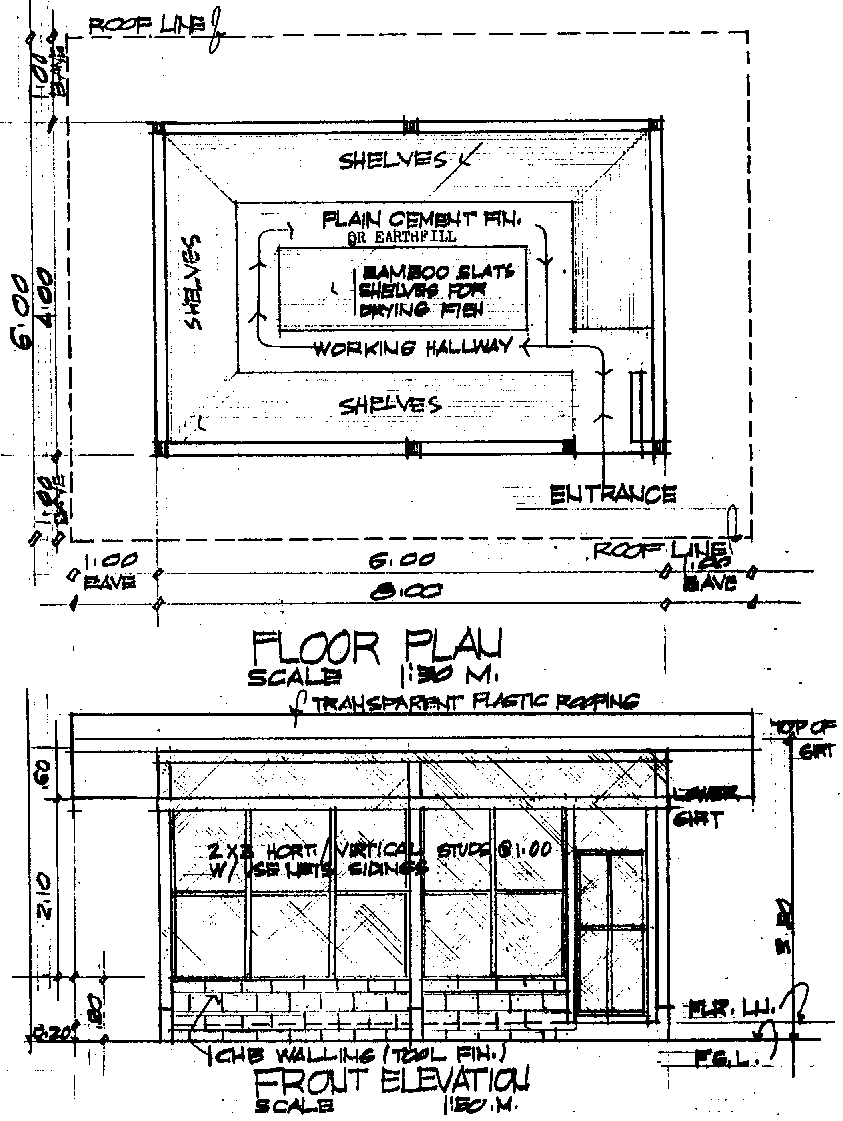
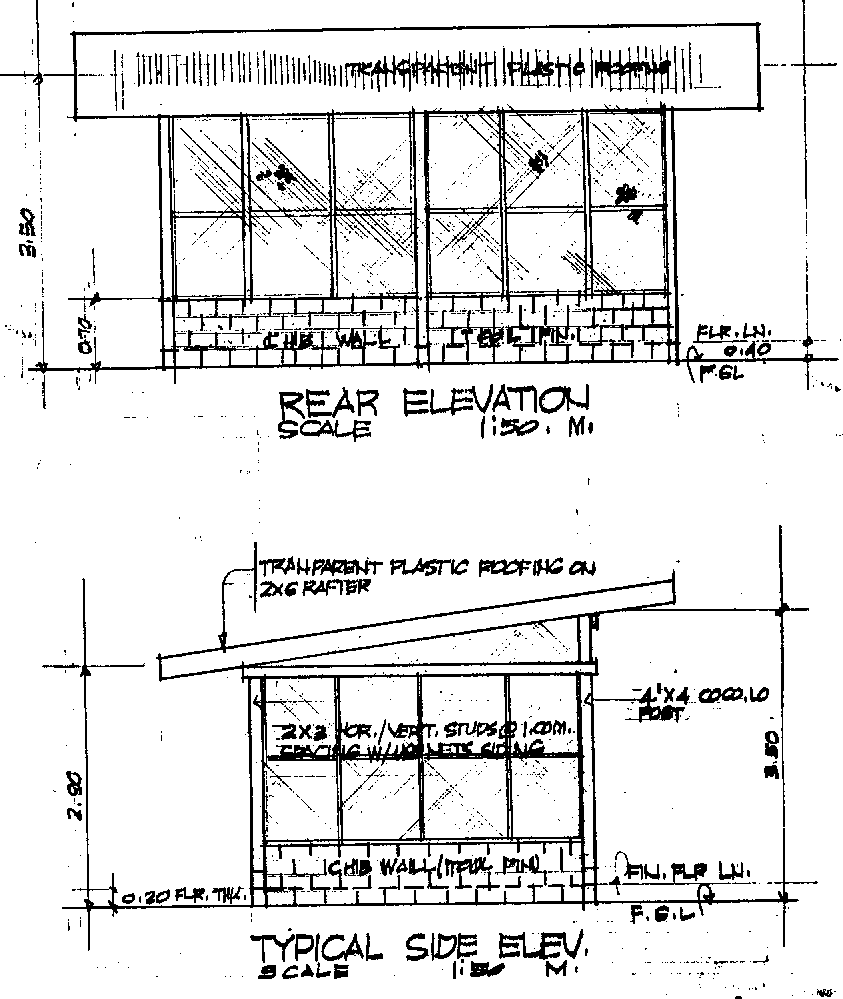
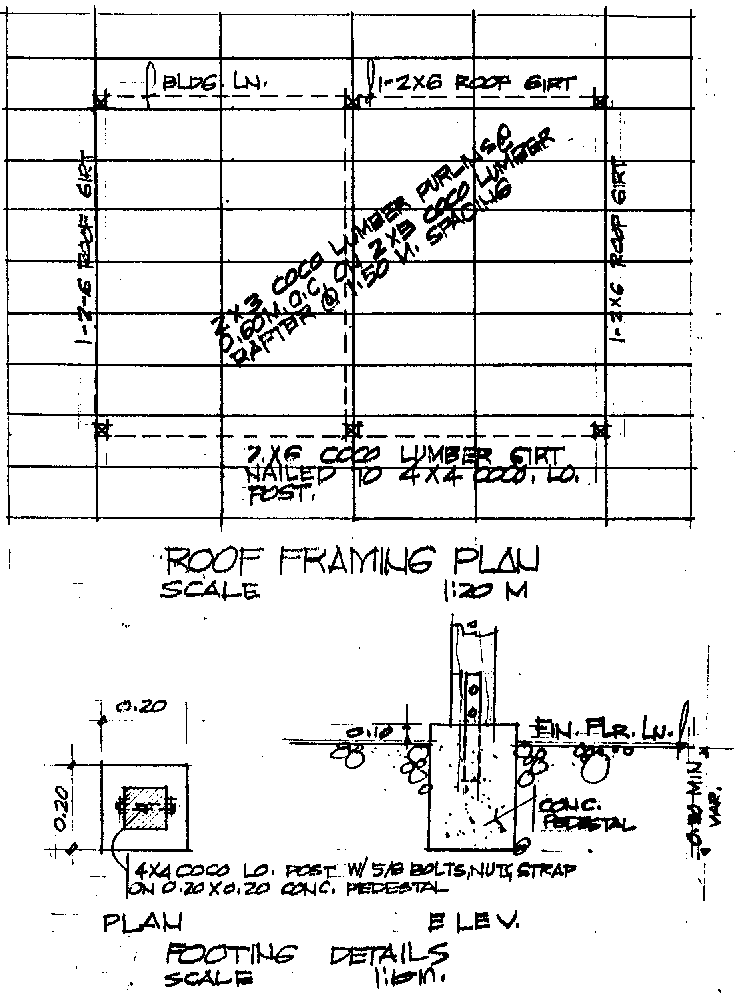
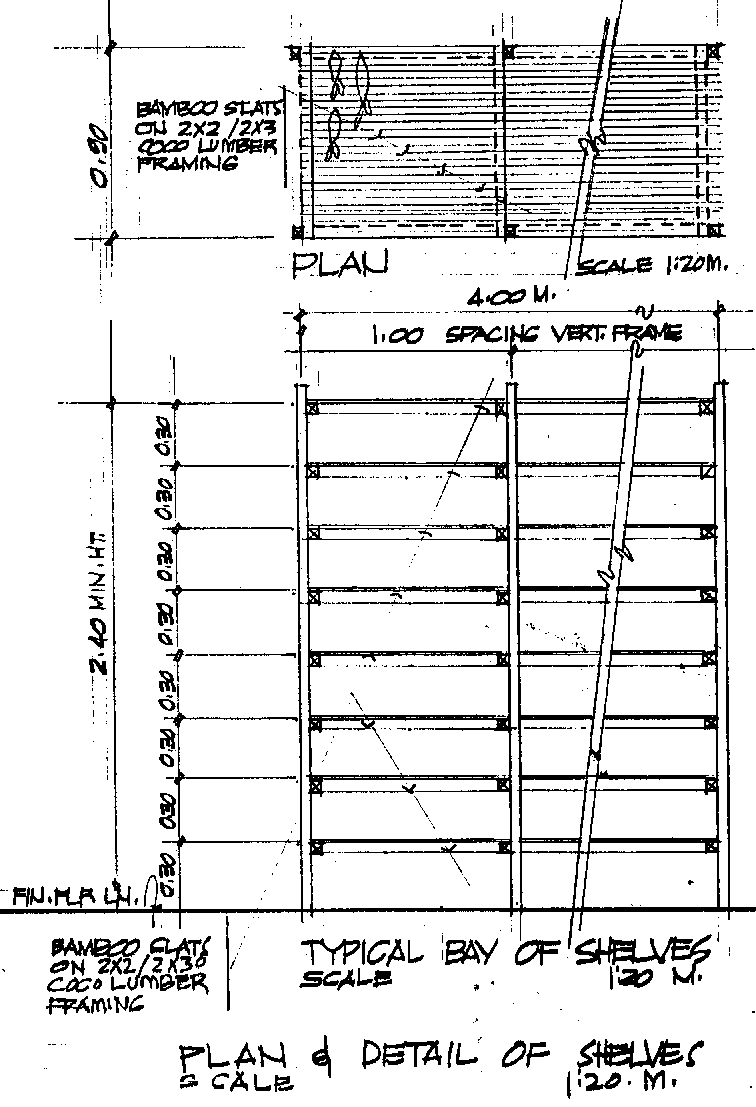
The drying process can be improved by setting up a bunkhouse for drying fish. This structure (Schematic Diagrams are presented in Figure 2) can serve dual purposes: working area for splitting and cleaning of fish and drying area. It utilizes indigenous materials and may be constructed by modules of 6 meters by 4 meters per unit depending on the target production volume.
Other technical specifications are as follows:
- 31.50 m. in height
- 0.5 concrete sidings
- Concrete flooring (or natural earthfill flooring)
- Transparent roofing
- Fully screened
- With movable drying shelves/trays
The bunkhouse for drying has a maximum capacity of one ton and reduces drying time by 35%. Moisture content can be controlled, unlike in sundrying where there is a tendency to overdry.
b) Advantages
i) Duration of drying-during sunny days is reduced from 1-1/2 to one day and during rainy days from 2 days to I-1/2 days;
ii) The operation from fish splitting to cleaning and sundrying is completely free from flies and other insects;
iii) Pat infestation is avoided;
iv) Higher quality is achieved since moisture is controlled and overdrying due to direct sunlight is avoided;
v) Manpower utilization during drying time is kept to a minimum since there is no need to cover the fish when rain falls; and
vi) As a result, production increases by 30 to 35% quality is improved.
Schematic Diagrams - Bunkhouse for Fish Drying, A
Schematic Diagrams - Bunkhouse for Fish Drying, B
Schematic Diagrams - Bunkhouse for Fish Drying, C
Schematic Diagrams - Bunkhouse for Fish Drying, D
1.7 Results of Financial Study
Based on the financial profitability analysis (the results of which are presented in Annex 1), the adoption of the proposed bunkhouse for drying will increase production per month by approximately 35% and, correspondingly, monthly sales revenues will increase by 35% and month net profit by 65%.
1.8 . Recommendations
In view of the favorable result of the financial study, the proposed technology may be considered for further refinement/improvement of design and, subsequently, for pilot testing possibly using a fund to be set up for purposes of technology testing, among others, as proposed in item 4.4 of the overall recommendations.
2.1 Introduction
With the presence of abundant and very cheap fishery resources in various project sites in Pangasinan, the Office of the National Project Coordinator has initiated the development of fish processing technologies that will enhance not only the marketability but likewise add more economic value to the fishery raw materials available in the areas. At the same time, introduction of improved technologies will also promote the income-generating capability and sustainability of the various women's associations in the province.
Determining the technical feasibility of improved technologies as well as the market acceptability of the end products does not guarantee the financial viability of undertaking the projects; thus, the need for a financial study.
The objective of the present study is, therefore, to assess the projects financial profitability and capability to service loan obligations.
2.2 Basic Assumptions
The appraisal of the projects profitability and debt-service capacity is based on the following assumptions:
a) Production processes to be utilized are technologically sound;
b) Market acceptability of final products has been clearly established;
c) Each project will be implemented by a women's association as a group;
d) The project duration is six months;
e) The loan conditions are as follows:
i) The women's association will provide as equity contribution at least 5/. of the total project cost;
ii) The loan proceeds will be utilized only for the intended purpose; and
iii) The loan is payable within a six-month period at 14% interest per annum.
f) The project is financially feasible if it meets the following criteria:
i) The project is commercially profitable, i.e., it generates a rate of return of at least 15%; and
ii) The project can meet its debt-service obligations.
2.3 Results of Financial Studies
Included in this section are the results of the financial profitability analysis (Annex 2) of two fish processing technologies applicable/appropriate to Pangasinan, namely: fish smoking and oyster sauce making.
Smoked fish preparation was prepared particularly for Pangasinan, while the latter, although designed for women's associations in Capiz, can be looked into for possible adoption in Pangasinan when oyster farming is pursued by women's groups so that the prices of the raw materials could be reduced.
The financial feasibility studies conducted by the IGP Consultant for other fish processing technologies in Capiz are likewise included in Annex 2 for information and reference.
a) Fish Smoking
The study looked into the financial viability of three options based on the type of smoked fish products, namely:
Option 1: Smoking of Milkfish - Traditional Way
Option 2: Smoking of Boneless Milkfish
Option 3: Smoking of Small Fish (Herring and Scads)
The project cost consisting of loan component and equity contribution and selected financial indicators for each option are presented below:
Option 1 |
Option 2 |
Option 3 | ||
Project Cost |
(P) |
8,810 |
8,990 |
9,522 |
Loan Component |
(P) |
7,260 |
7,440 |
7,972 |
Equity Contrbn. |
(P) |
1,550 |
1,550 |
1,550 |
Total Monthly Sales |
(P) |
8,400 |
9,600 |
11,520 |
Gross Profit on Sales |
(P) |
2,960 |
3,440 |
3,232 |
Ave. Monthly Net Profit |
(P) |
1,426 |
1,905 |
1,693 |
Return on Investment |
(%) |
16.2 |
21.2 |
17.8 |
Payback Period |
(Mos.) |
6.2 |
4.7 |
5.6 |
Profit Margin |
(%) |
48.2 |
55.4 |
52.4 |
Break-Even Sales Vol. Per Month |
(Packs) |
228 |
175 |
242 |
Break-Even Selling Price Per Unit |
(P/Pack) |
34.68 |
37.68 |
38.99 |
On the basis of the above indicators, Option 2 is recommended for implementation with credit extension from the Land Bank. As shown in the projected cash flows, the project under Option 2 will be able to provide the daily cash requirements for its operation as well as the monthly loan amortizations.
b) Oyster Sauce Making
The project requires a total of P14,868.00 for implementation. This amount will be financed through a P2,995.00-loan from the bank and P1,870 will be contributed by the women's association as equity. These figures represent 87.4% and 12.6% respectively of the total project cost.
The project has been found to be financially profitable on the basis of the following indicators:
Monthly Sales Revenues: |
P17,920.00 |
Ave. Monthly Net Profit: |
P 4,645.00 |
Return on Investment: |
31.24% |
Payback Period: |
3.20 Months |
Profit Margin: |
61.7% |
Break-Even Sales Vol. Per Month: |
54 Bottles |
Break-Even Selling Price Per Unit: |
P10.37 |
In view of the foregoing, the project may be pilot tested in Pangasinan when oyster farming shall have been fully operationalized and prices have been brought down to acceptable level for purposes of processing.
The following projects have been identified by the Consultant as potentially viable and have forward and backward linkages to the existing IGPs. These projects may be the subject of detailed feasibility studies in the future.
3.1 Hog Breeding
About five women's groups are engaged in hog fattening projects of various production scales: 3, 4 and 6 heads. The financial profitability of this project has been proven by the participants and accepted by the Land Bank itself. However, one crucial factor to the continued success of the project is the availability of reliable and quality stocks of hybrid piglets.
Along this direction, the development and implementation of a hog breeding program may be explored as an income-generating activity of the Federations of Women's Groups at the provincial or municipal level, or as an inter-federation undertaking.
The hog breeding program should take into account the production requirements and scheduling of various women's associations engaged/to engage in hog fattening projects and will need a strong technical support through linkages with appropriate agencies/institutions, both government and private, within the province.
Capital assets in the form of hog breeding facilities and equipment as well as initial working capital may constitute the loan component of the project.
3.2 Meat Processing
Various meat processing/preservation methods can be taught to the women with the end in view of increasing the value-added to fattened hogs. Such methods include the preparation of the following processed meat products:
Tocino |
Fork Hamonado |
Longaniza |
Bola-Bola (Meat Balls) |
Embutido |
Pork Nuggets |
Pork Ham |
Corned Pork |
Capital assets that may have to be put up for this project include:
Pressure Cooker |
Kitchen Tools/Utensils |
Gas Stove |
Weighing Scales |
Cooking Kettles |
Plastic Sealing Machines |
Working Tables |
Comparative cost and income per unit as well as break-even volume and selling price should be established through detailed financial feasibility study.
3.3 Catering Services
Two participants from Mabilao's (San Fabian, Pangasinan) Rang-Ay Women's Association have embarked on their respective projects involving canteen operation. As their capability is developed, they and other participants could expand into larger-scale operation as canteen concessionaire and/or catering service outfit.
Facilities and equipment for large volume food preparation, dining/food service, catering and other paraphernalia are the capital assets that are needed.
A detailed feasibility study is again called for as basis for financial assistance and as a guide to project management operation.
