GCP/INT/539/ITA
Forestry and food security in the Mediterranean and Near East Region
International consultancy on: Development of income generating activities for women communities in Jordan and Syria
Terms of reference:
Under the supervision of the Director, Field Operations Division and the Chief, Forestry Operations Service (TCO 5), the direct supervision of designated technical support and operations officers at FAO HQ, and of the Chief Technical Advisor, the consultant will carry out the following tasks, in close collaboration with the concerned staff of the Ministry of Agriculture and with the Project experts as well as with WFP consultant undertaking during the same period a consultancy on the same subject:
• review women's role in forestry and range resources management in areas covered by the project in Syria and Jordan, and identify the target groups to be involved.
• assess the areas of support needed so that women involvement in forestry, agricultural and range resources development is strengthened.
• propose suitable mechanisms / modalities / approaches to promote women participation in forestry, agricultural and range resources development activities which will be or are carried out by the project.
• identify, through PRA meetings with local communities women's groups, potential income generating activities and provide advise / support for their implementation.
• assess training / extension needs for staff in charge of this component in both countries and identify appropriate training opportunities as required.
• formulate proposals for actions to be conducted to engage a wider involvement of local women groups in forestry activities in both countries Project's areas.
• prepare a final report in Word Perfect 5.1 or in Winword 6, with findings and recommendations covering the above topics and provide 3 hard copies and a 3.5 inch diskette to FAO HQ (within one month of leaving the country), and amend it in the light of comments received.
EOD : |
June 96 |
Duty station : |
Damascus and Amman with internal travel |
Duration : |
45 days |
Language : |
English - Arabic desirable |
(June 2- July 23 1996)
ROME
2 June
Travel from Paris to Rome
3 June
Briefing in World Food Programme (WFP) Headquarters Rome
JORDAN
4 June
Travel from Rome to Amman
5 June
Preliminary discussion at WFP Office
6 June
Courtesy visit to the UNDP Resident Representative
Meetings at Ministry of Agriculture and Forestry Department
8 June
Meetings at Ministry of Agriculture and WFP
9 June
Meetings at UNIFEM Jordanian Cooperative Organization and Queen Alia Fund
10 June
Meeting at Care International
Field visit to Deir Alla (Women Cooperative Society)
11 June
Field visit to Ma an Governorate
12 June
Field visit to Tafila Governorate
13 June
Field visit to Mafraq Governorate
15 June
Meetings at Ministry of Agriculture and WFP
16 June
Field visit to Salt (FAO Regional Project)
17 June
Field visit to Jerash (FAO Regional Project)
18 June
Field visit to Ajloun (FAO Regional Project)
19 June
Meetings with The General Federation of Jordan Women and The General Union of Voluntary Societies
20 June
Meeting with Noor Al-Hussein Foundation
21 - 23 June
Preparation of the mission findings conclusions and recommendations
24 June
Rap up meeting with Government Authorities
SYRIA
25 June
Travel Amman-Damascus by road
26 June
Meeting at State Planning Commission
27 June
Quneitra Governorate
Field visit to Trungi: meeting at Extension Unit meeting with women
28 June
Travel to Palmyre
29 June
Meeting at Rangeland Directorate at Palmyre
Visit of improved rangelands
30 June
Homs Governorate
Meeting at Agriculture Directorate
Meeting with nursery women workers close to Homs
Visit and meeting with women in Hadia village
1 July
Tartous Governorate
Meeting at Agriculture Directorate of Tartous
Meeting with nursery women workers in Amrit (close to Tartous)
Visit and meeting with women in Ayn Al-Kadib-Qadmous area
2 July,
Lattakia Governorate
Meeting at Agriculture Directorate
Meeting at Directorate of Social Affairs
Visit of Rabiha Social Development Center
3 July
Lattakia Governorate
Visit and meeting with women in Al Zeitounah village
Discussion with a milk processing woman in Dam Sarkho village
4 July
Tartous Governorate
Visit of Silkworm factory in Dreikish
Meeting with silkworm breeders in Dreikish area
5 July
Aleppo Governorate
Visit to Marasat Al-Khatib and meeting with villagers with WFP mission
Meeting with women in Marassat Al-Khatib
Meeting with MM. Dubreuil Cavalcaselle (FAO) and WFP staff
6 July
Aleppo Governorate
Meeting at Agriculture Directorate
Meeting with Women's Union
7 July
Hama Governorate
Meeting at General Directorate of Al-Ghap Utilization (As'Qeilbiyeh)
Visit to Ayn Jourin: meeting at Extension Union, meeting with women
8 July
Damascus
Meeting at FAO Office
9 July
Meeting with Women Union
Meeting at The Directorate of Agricultural Extension
10 July
Visit to Rural Damascus Women Union
Meeting with Mrs Rasam (FAO consultant/lFAD project)
11 July
Hama Governorate
Visit of Community Development Project of Al Faradis (UNDP-ESCWA)
13 July
Quneitra Governorate
Visit to Haddar village: visit of Social Affairs Center and meeting will' women
14-19 July
Damascus
Discussions with CTA/FAO Project
Writing draft report
Meetings with WFP consultants. FAO and WFP staff
Meeting with the Minister of Agriculture (WFP mission)
Meeting at State Planning Commission
Preparation of the mission findings, conclusions and recommendations
21 July
Travel to Rome
ROME
22-23 July
Debriefing in Rome (M.Chikhaoui)
Travel to Paris
A - ROME
1 - FAO HEADQUARTERS | |
Mr A. CHIKHAOUI |
Chief of Forestry Operations Service (TCO) |
Mr Luc DUBREUIL |
WFP Liaison Officer |
2 - WFP HEADQUARTERS | |
Mrs Mona Hamman |
Regional Manager (OMM) |
Mrs Darleen BISSON |
Monitoring Evaluation |
Mrs Deborah HINES |
Senior Programme Adviser (OPS) |
Mrs Els KOCKEN |
Senior Adviser (OPS) |
Mr Bruce CRAWSHAW |
Policy Analyst (OPS) |
Mrs Lucie ECHECOPAR |
Senior Desk Officer |
B - JORDAN
1 - WFP AMMAN | |
Mr Mustapha MILED |
Country Director |
Mr Mahmoud ABU AL-RUZZ |
National Officer |
Mr Abed EL-RAOUF GHOSHEH |
Programme Assistant |
2 - UNITED NATIONS AGENCIES | |
Mr Jorgen LISSNER |
UNDP Resident Representative |
Mrs Zohra MERABET |
UNIFEM Regional Programme Adviser |
Mrs Maha KHATIB |
UNIFEM National project Director |
Mr Abdel-Hamid SOUKEHAL |
FAO Consultant (Mill; Technology) |
3 - MINISTRY OF AGRICULTURE | |
Mr Ghaleb ABU ORABI |
Secretary General |
Mr Jihad ABU MISHRIF |
Director of Highland project 2108 |
Mr Salem A. OKOUR |
Director Department of Projects |
Mr Mahmoud ABU SETTA |
Deputy Director of Forestry Department |
Mr Ahmad ABBADI |
National Coordinator GCP/INT/539/lTA FAO Project Forestry Department |
Mrs Maha AL SHAER |
Researcher and Field Coordinator |
Mrs Najwa NAJJAB |
Consultant |
4 - NGOs | |
Dr Awni AL BASHEER |
Queen Alia Fund Executive Director |
Mrs Hind ABDEL JABER |
Noor Al Hussein Foundation Women and Development Department Director |
Mr Mahmoud AL-HAHASNEH |
Princess Basma Centre for Social Services, Tafileh, Director |
Mrs Nujoud Fawzi AL-SALEM |
General Federation of Jordanian Women President |
C - SYRIA
DAMASCUS
1 - MINISTRY OF AGRICULTURE AND AGRARIAN REFORM | |
Mr Assad MUSTAFA |
Minister |
Mr Rajab ALI |
Deputy Minister |
Mr Farouk AL-AHMED |
General Director of Forests |
Mr Ziad AL-JEBAWI |
National Coordinator GCP/INT/539/ITA FAO Project, Forest Department |
Mr Mohamad Zouhair DARWISH |
Director of Extension Department |
Ms Raida AYOUD |
Extension Department- Rural Women |
2 - STATE PLANNING COMMISSION | |
Mr Kassem MUQDAD |
Deputy Minister of State for Planning Affairs |
Mr Myassar AL-JAMMAS |
Director of Food Aid |
Ms Faten AL-BARAZY |
Accountant |
Ms Roula ZIADEH |
|
Ms Maissa MIDANI |
|
3 - FAO | |
Mr Moustapha SINACEUR |
Representative |
Mr Benedetto CAVALCASELLE |
Chief Technical Adviser, GCP/INT/539/lTA |
Mr Piero DEL LUNGO |
Forest Management Expert, |
Mr Toni ETTEL |
Extensionist Officer, |
Mr Salim ZAHOUE |
Programme Officer |
Mrs Andree RASSAM |
FAO Consultant (IFAD Project) |
4 - WFP | |
Mr Sadek KOUNIALI |
Country Director |
Mr Tarek SHAYYA |
Programme Officer |
Mr Muzaffar JABAKHANJI |
Deputy Project Manager Syr 2418 |
Mr Omar ABDOULABBES |
Consultant |
5 - GENERAL UNION OF WOMEN |
|
Ms Raghda AL-AHMAD |
Executive Office Women Union Branch in Rural Damascus |
6 - ALEPPO GOVERNORATE | |
Mr G. IMISH |
Director of Aleppo Agricultural Directorate |
Mr M. DORMOSH |
Director of Aleppo Forestry Department |
Mr M. HARBA |
Assistant Director of Forestry Department |
Mr Mamdouh TOUBAL |
Extensionist in Marassat Al-Khatib |
Women Union in Aleppo |
|
Women in Marassat Al Khatib |
|
7 - HAMA GOVERNORATE | |
Mr Ibrahim AYOUD |
Director of the Forest District of Hama (General Directorate of Al-Ghap utilization) |
Ms Haiffa HILAL |
UN Volunteer, Al Faradis Project |
Ayn Jourin Extension Unit |
|
Women in Ayn Jourin |
|
8 - TARTOUS GOVERNORATE | |
Mr Ahmad ZAGHBOUR |
Director of the Forest District of Tartous |
Ms Inaam AL-MASR1 |
Forestry Officer |
Mr Mohamad Salim MOHAMAD |
Head of Forestry Section of Qadmos area |
Silkworm breeders in Dreikish area |
|
Women in Ayn Al-Khatib |
|
9 - HOMS GOVERNORATE | |
Mr Ali AL-AKKARI |
Director of the Agriculture District of Homs |
Mr Abdul Illah AL-ABBANI |
Director of the Forest District of Homs |
Mr Bader ISSA |
Forestry, Officer |
Women in Hadia |
|
10 - LATTAKIA GOVERNORATE | |
Mr Adel KID |
Director of Lattakia Agricultural Directorate |
Mr Mohamad SULEIMAN |
Director of Lattakia Forestry Department |
Mr Mohamad HAMAOUI |
Assistant Director of Forestry Department |
Mr Abdallah JABOUR |
Extensionist in Al -Zeitounah |
Mr Riad CHABABIBI |
Directorate of Social Affairs in Lattakia |
Women in Rabiha Centre |
|
Women in Al-Zeitounah |
|
11 - QUNEITRA GOVERNORATE | |
Mr Jamal AKKASH |
Director of Quneitra Agricultural Directorate |
Mr Ziad MOHAMAD NOUH |
Head of Extensionist Division |
Mr Sami AL-BASSAR |
Head of the Extension Unit in Trungi |
Chief of Social Affairs Centre |
Haddar |
Women in Trungi |
|
Women in Haddar |
|
A - JORDAN
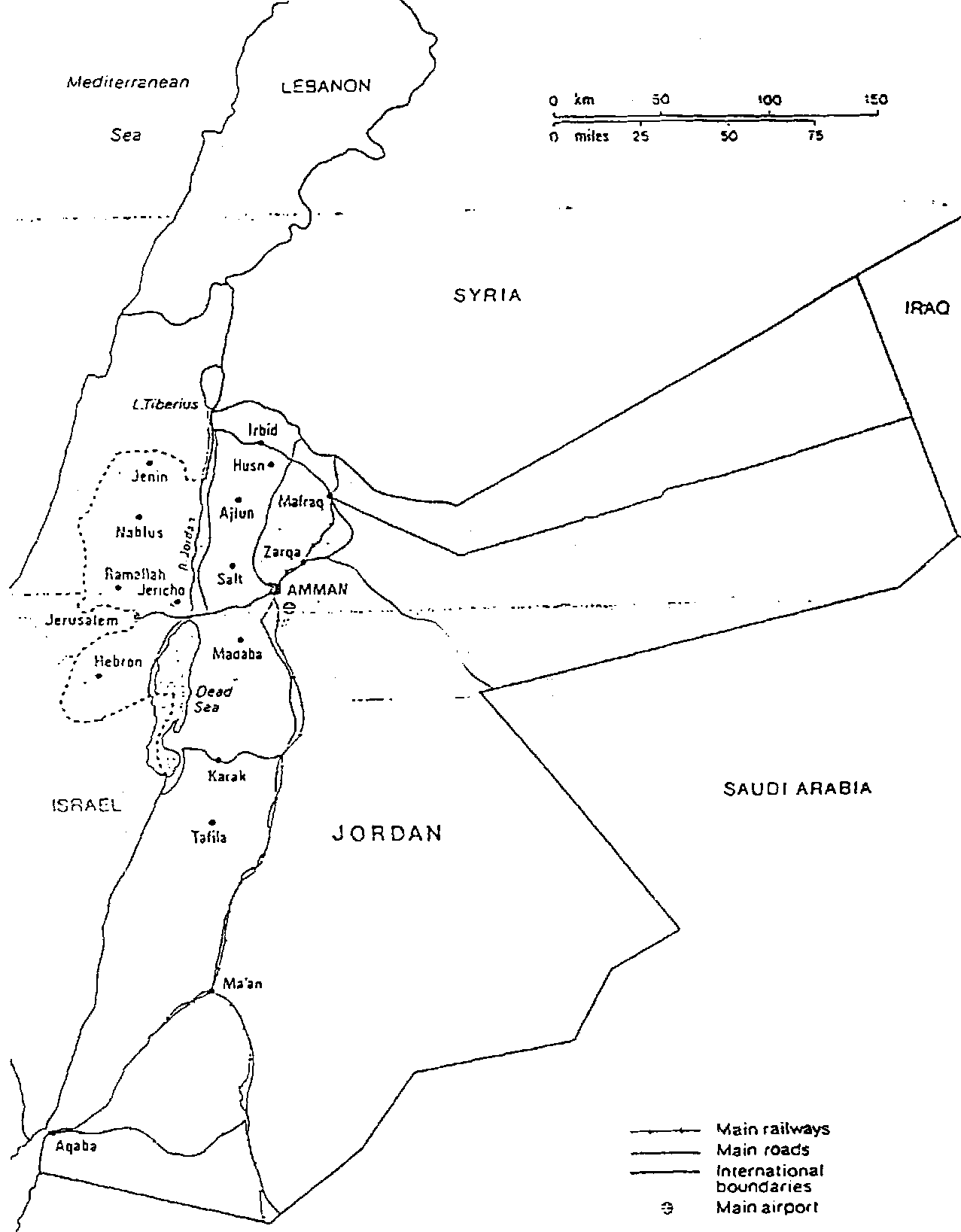
1 - Rasoon (Ajloun district, Jordan)
No interest in forestry and range lands activities
No income generating activities at women level
Most of women have no income, even if some of them sell fruit
Women participate in all agricultural activities with men, specially those concerning fruit trees. The plants are bought at low price in government nurseries. A private nursery (fruit trees, ornamental and aromatic plants) exists at the village level but has not yet received the official license.
Interest for IGA: sewing; flower arrangement (women have not expressed food processing spontaneously)
Need of a kindergarten
Need of agricultural extension (specially for fruit trees)
B - SYRIA
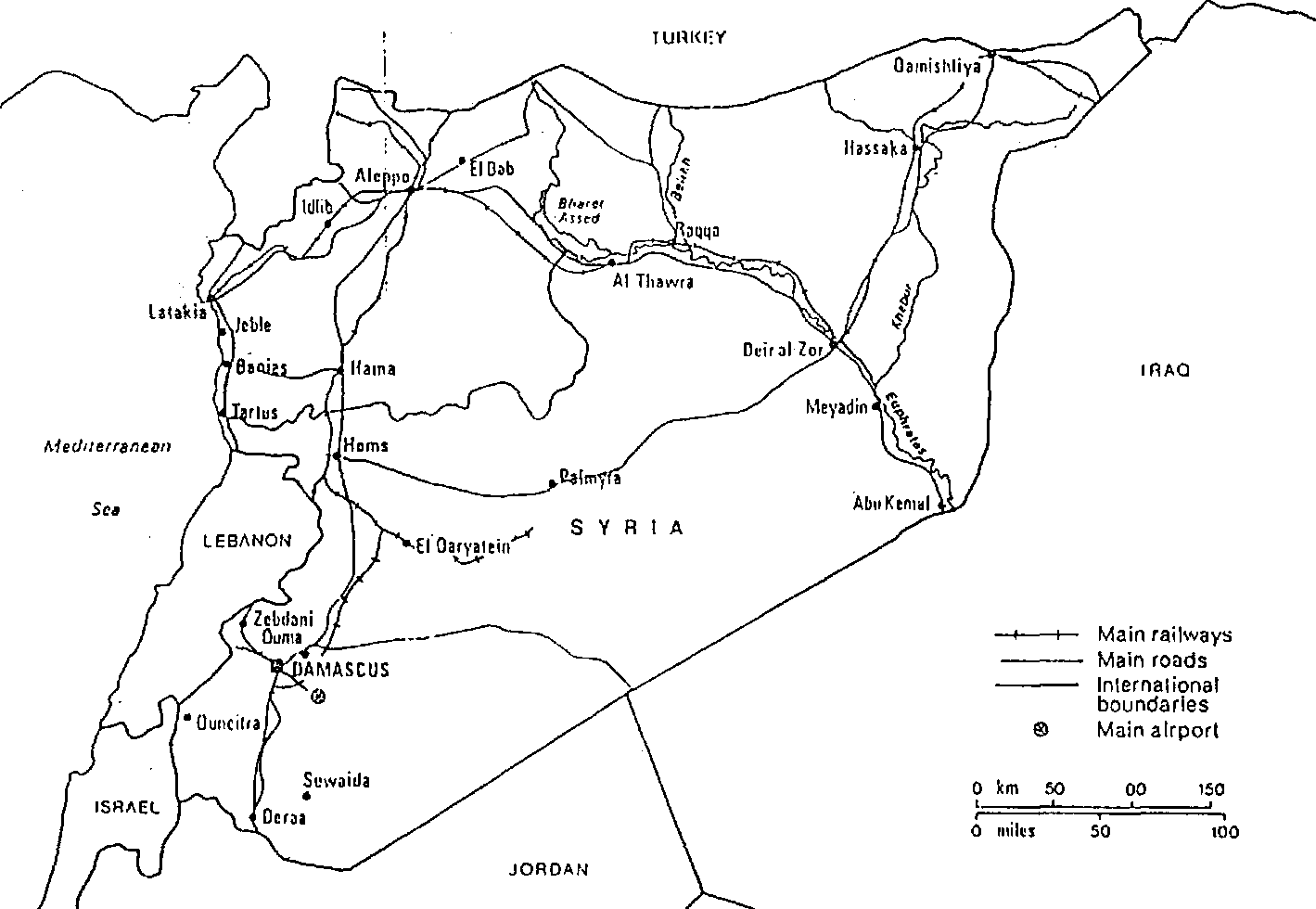
1- Ayn Al-Khatib (Tartous, Syria)
Far location, close to forest. rocky and mountainous, lack of land, agriculture in terraces (specially tobacco), non farm activities necessary
About 50% of households do not have cattle
Average a few goats per household. Women are general!! responsible for livestock. particularly feeding
Dead wood gathering for bread making (once a week)
About 50 women participate in the afforestation programme which began 5 years ago (250 ha afforestated)
Social Center located far of the village (50 km), where training courses were given for knitting and sewing, followed by a few women. Only one of them has found an employment in city at very small income (1500 SP a month)1
11 USD = 42 Syrian Pounds (normal rate)
Much free time during winter
Although there is an extension unit in the village, women do not have contact with the extensionists
About 50 young women in the village do not have job. Most of them want to stay at the village and seem interested by creating an activity, including at group level
Main interests:
- young women: carpet making, knitting, sewing
- older women: agricultural activities, livestock raising (specially poultry)
2 - Social Affairs Center of Rabiha (Lattakia)/ Carpet making Unit
36 Women work in the factory, all of them are single, 13-25 years and will leave this activity when they get married. In general they come from poor households and have not chosen this job. Several of them live far and spend one to two hours for coming to the center. In addition to their job most of them help their families for agricultural activities (wheat, barley and fruit tree plantation).
During the six months training, young women receive food ration (WFP) and 200 SP per month. Then they receive an income according to the achieved work (area of carpet), the average income being 300-400 SP a month during the first one year and half, then 1000 SP. In general the maximum salary does not exceed 1500 SP for a skilled woman.
One good quality medium size carpet needing 2 months work and three women is approximately bought 30.000 SP.
Carpet making is the only possibility of employment in the area and there is no alternative. Young women complain about their conditions and low salary and hope, as they say, their daughters will not have not to work in a carpet factory.
3 - Al Zeitounah (Lattakia)
Meeting with several young women, who seem little motivated by the subject of the conversation. They have a quite good level of education (secondary) and several of them followed training courses in Lattakia (sewing, typing, nurse) but did not get any job.
Most of the households have non farm activities. The forestry service is employing about the third of the active village male population (natural forest land surrounding Zeitounah is about 3000 ha).
In fact it seems that the young women would prefer to find a job in Lattakia rather to create an activity in the village Nevertheless one of them participated to mushroom cultivation Marketing was a lime difficult, needed an important prospecting but in the end she succeeded in selling mushrooms to a restaurant in Lattakia (27 kg at 250 SP a kg)
4 - Hadia (Homs)
Extremely poverty apparent, lack of infrastructures (no electricity) and social services.
Landless people, no land distribution after the Agrarian Reform Land tenure is sharecropping. Hadia villagers work on fruit tree plantations (specially apple trees and plum trees) and receive a certain quantity of crop ( l/3 to 1/2) according to the inputs and carried out works. They also cultivate wheat and barley in small rent areas and raise little livestock (average: one cow per household) and poultry
Women take part in agricultural activities more than men in this village
Needs expressed by women: establishment of a village pharmacy, development of livestock (purchase of calf) and poultry raising, food processing (apple and plum jam...), sewing and knitting.
5 - Ayn Jourin (Hama)
Poor and isolated village, far from working' areas, surrounded by forest. Forestry Services have taken part in a road building permitting, the disclosing of the area.
There is an extension unit close to the village with extensionist women recently recruited
Landless people, low income, temporary work (men and women) in private and public sectors. There is a forestry programme in the area and about 6 women were employed for pruning and thinning activities. Several women find a temporary -sometimes daily-agricultural job during the high season job at the Al Ghab plain farmers (sugar beet, cotton...). The incomes are very low (about 75 SP a day). On average women spend one or two months on these temporary activities.
As result of its isolation and difficulties in connections Gas is not used and the only source of fuel is wood (used for cooking and heating during winter) Collecting fuel wood is an exhausting task for women who say that they spend an average of 3-4 hours a day to collect dead wood
The household have on average one cow which is under the responsibility of woman The grazing is limited during a few months in springtime and fodder is bought (generally straw, consequently the mill: production is very low, with an average of I kg of milk per day)
Needs of support: carpet making, sewing, embroidery, knitting, poultry raising
Young women seem very interested, motivated to create an activity at village level. specially at group level.
6- Trungi and Haddar (Quneitra)
Most of the villagers are employees at the nearest cities.
Characteristics of these villages: they benefit from IFAD Project support in southern provinces in which women are targeted in specific areas such literacy, agricultural extension and income generating activities Credit lines are available specifically, for rural women through banks' normal channels for the purchase of cattle, sewing and knitting machines, food processing, equipment. Necessary guarantees and deposit at the time of the credit application limit the number of women beneficiaries
There is an extension unit in Trungi which has begun training courses for women according
to IFAD programme
Training courses began in 1994 and several courses have been achieved:
- short term, training courses (6 days) such food processing, bee-keeping, fruit tree plantation, poultry raising;
- middle term training courses ( I month) for handicrafts such basketwork, artificial decorative objects making and basic medical practices;
- long term training courses (2-6 months): literacy, knitting, sewing.
Women Union is well represented in the area, active and lead different training courses (literacy, handicrafts such basketwork, artificial flowers making, sewing, knitting). Unfortunately training does not lead up to the implementation of any profitable activity.
The main agricultural activity of women concerns fruit tree plantations (fig, apple, grape fruit and olive). Fresh fruit are sold at low prices directly in Damascus or to intermediaries.
Animal breeding is also an important activity (sheep and goats). There is no pasture land in the village and grazing land consists in unproductive lands in summer (barley and straw are the main fodder in winter). Cheese is traditionally made.
Fields of possible support of the Project (expressed by women): informal groups promotion for the establishment of handicraft workshops (knitting), food processing (dying figs, jams, grape fruit juice, milk processing), support to the female group organization for marketing.
7 - Marassat Al-Khatib (Aleppo)
The population of this village can be qualified as semi-urban according to the fact that most of the families (about 35 on a total of 50 ~ spend the schooling period in Aleppo (9 months) and have a double residence. The importance of the rural exodus has been increasing during these last years.
There is an extension unit at Sharran and a Social Affairs Center in Affrine which give training courses (literacy, typing, various handicrafts, basic health).
The average area is about 6 ha per household and there is no sign of real poverty in this village. Women take part in all agricultural activities, the main being fruit tree plantation (olive trees and a small area of apple trees), following by cereal, chickpeas and garden crops. They have an important role in harvesting and collecting olives and apples. They participate in irrigation works. They also have home gardens and cultivate medicinal plants. Women who stay all over the year in the village are responsible for livestock raising (small ruminants). Animals are fed with crop residues after harvesting and in opening grazing land and with barley and straw during winter. Olive tree leaves (after pruning) are also used as animal fodder. There is a public pasture area (about 25 ha).
Some traditionally female activities have been on the decline in the village as sheep and poultry raising and bread making. This should be related to the increase of the temporary emigration.
The level of education is quite good (more than 50% of young, women have a secondary school degree) and several women have high level professions (one doctor, one attorney one agronomist, two teachers).
There is no Women Union Unit in the village (only the extensionist's wife belongs to Women Union ) but many women have followed training courses given by the Union in Aleppo in collaboration with Social Affairs centres.
Three training courses were also given in the village concerning' typing, literacy and sewing. The main criticism addressed to the sewing course is that it is basic and improvement is necessary to develop the ability.
Women are complaining about the lack of adequate agricultural extension services.
Support of the Project interesting women: technical and material support for poultry raising, sheep raising, ornamental plants, decorative objects making.
Women seem interested by informal group organization at village level.
FAO. 1992. People's Participation in Rural development. The FAO Plan of Action. Rome.
FAO. 1992. Strategies for the Promotion of Self-Help Organizations of the Rural Poor. Rome
FAO. 1993. Mission Report on Forestry Legislation in Jordan, by Mohamed Ali MEKOUAR. December 1993.
FAO. 1993. Mission Report on forestry legislation in Syria, by Mohamed Ali Mekouar. December 1993.
FAO. 1993. Forestry and Food security in tile Mediterranean and Near East region. Agroforestry Mission, by Jean Daniel SPAAK. November ]993
FAO. 1993. GCP/INT/539/lTA Mission Report on Forestry Pastures and Fodder Shrubs Management in Syria, Jordan and Turkey, by Tahar TELAHIGUE . April 1993.
FAO. 1994. Etude socio-économique des zones pilotes du Projet (Syrie et Jordanie). Khalifa ALAYA.
FAO/GOVERNMENT OF ITALY COOPERATIVE PROGRAMME. Project Document GCP/INT/539/lTA- Forestry and Food Security in the Mediterranean and Near East Region. Phase 11.
FAO. 1994. GCP/INT/539/lTA. Report of the final evaluation mission .
FAO/ MINISTRY OF AGRICULTURE. 1995. Socio-economic survey in Ajloun and Jerash districts, by Najat ARIDI. June-September 1995.
FAO. 1994. The group promoter's resource boor;. Rome.
FAO. 1994. Rapport sur les produits forestiers non ligneux dans les forêts syriennes, by Wassim AL-HAKIM. Juin 1994.
FAO. 1994. GCP/INT/539/ITA. Mission Report. Development of Community Forestry Through Intensive Participatory Approach in Syria, by Raif Ergin DONMEZ. April 1994.
FAO. 1994. Field Document No 14. Information note on GCP/INT/539/ITA Project "Forestry and Food Security in the Mediterranean and Near East Region", prepared by Mr B. CAVALCASELLE. September 1994.
FAO. 1994. Managing rural income generating activities. Rome.
FAO. 1994. GCP/INT/539/lTA. Terminal Report, by Franco PAOLINELLI, Damascus, November 1994.
FAO and Ministry of Agriculture (Jordan). 1995. GCP/INT/539/ITA. Socio-economic survey in Ajloun and Jerash Districts, by Najat ARIDI. June-September 1995.
FAO. GCP/INT/539/ITA. Phase 2. Workplan No 2 Jordan, Syria and Turkey.
FAO. 1995. The group enterprise resource book. Rome.
FAO. 1996. GCP/INT/539/lTA. Consultation nationale-Syrie/Rapport No 4. Aménagement Intégré du Territoire en Collaboration avec la Population Locale dans la Province d'Alep, par Dr. Salim ZAHOUEH. Damascus, Février 1996.
FAD/ITALY. 1996. GCP/INT/539/lTA. Project Newsletters. Damascus, February-May 1996.
FAO. 1996. Objectives of GCP/INT/539/lTA and the extensionists role for improving communication on forest/environment protection, prepared by B CAVALCASELLE, for the workshop on "Planning and evaluation of the extension programmes", Damascus 21 -26 April 1996.
IFAD. 1994. Report and recommendation of the President to the Executive Board on a proposed loan to the Syrian Arab Republic for the Jebel Al Hoss Agricultural Development Project. Rome, 6-7 September 1994.
IFAD. 1995 Report and recommendation to the President to the Executive Board on proposed loan to the Syrian Arab republic for the Coastal/Midlands Agricultural Development Project Rome, 6-7 December 1995
IFAD.1996. WORKPLAN No 2. Jordan. Agricultural Resource Management Program m e. Phase 1. Pre-Appraisal Report.
NAHAL I. 1995. Resource Conservation Strategy and Policies for Syria. May 1995.
ROYAL SOCIETY- UNIVERSITY OF JORDAN. 1992. Employment opportunities for women in the labour market.
UNFPA. 1996. UN Programme for Women Development in Syria. June, 1996.
UNICEF. 1995. Ending Gender disparities in the Arab World. July 1995
UNIFEM. 1996. Program Support for Women's Economic Empowerment in Jordan, presented by UNIFEM Western Asia Regional Program. June 1996
WFP. 1996. Pre-Appraisal Mission. Syria 2418/4. Assistance to Reforestation and Rangeland Management. Damascus, Maech 1996.
WFP. 1996. Conclusions and Recommendations WFP Identification Mission. Jordan
WFP. 1996. Poverty Identification Study. Main findings from women interviews. First draft, by Nadia TAKRITI, June 1st, 1996.
Asia Pacific Regional Report on Advancement of Rural Women- 1994-1996.
The 1996 Meeting of The international Steering Committee on the Economic Advancement of Rural Women. Amman, Jordan. 14-16 May 1996