


ANNEX 2: BACKGROUND INFORMATION ON INDIVIDUAL COUNTRIES AND TERRITORIES
A2.1 Advanced Industrial Economies (AIEs)
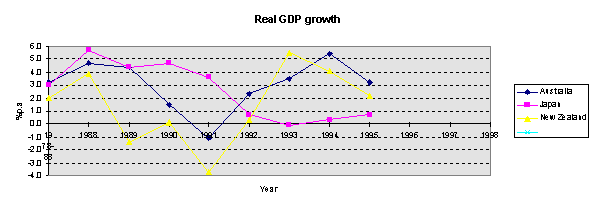
This group includes Japan, Australia and New Zealand. In 1994, the group's total GDP at 1987 prices was US$3255.3 billions, equivalent to about 63% of the Asia-Pacific total. Figure 8 shows the real GDP growth rates observed for the period since 1978, with the AsDB projection for 2005.
Figure A1: AIEs real GDP growth
Source: See Table 1.
Japan, the world's second largest economy, led the group by a very wide margin, the descending order of gross GDP being as follows:
Japan (US$2964.1 billion) |
91% | |
Australia ($249.6 billion) |
8% | |
New Zealand ($41.6 billion) |
1% |
Japan alone accounts for about 58% of the Asia-Pacific GDP. According to the International Monetary Fund (1995) Japan has recently gone through one of its most serious economic post-war slowdowns due to successive financial shocks such as the collapse of real estate prices in the late 1980s and the sharp appreciation of the yen. There has since been some decline to more realistic levels. The economy is said to need structural reforms and significant deregulation to achieve greater responsiveness to world competitive forces.
The OECD (1996) considers Japan's growth important for the whole region because it affects Japan's capacity to import from Asia and its capacity to invest in the region. Output from overseas Japanese firms now represents 10% of their total production compared with 4% in 1986. "Reverse imports" from Japanese affiliates abroad now account for 14% of total imports compared with 4% in 1992. Most of new Japanese FDI has been in Asia (which now accounts for 16% of Japan's total outstanding FDI abroad), and sales to Japan by Japanese affiliates located in Asia represented 32% of Japan's total overseas production in 1992 - about the same share as for affiliates located in the United States.
High rates of Japanese FDI in Asia will continue to influence Japan's trade patterns over the medium term, with consumer goods dominating exports to Japan and capital equipment and expertise in reverse.
As an already very large and mature industrial economy, Japan can no longer achieve its earlier spectacular growth rates of the post-war period. Growth in the range 2-3% annually may be the new norm. Before the 1997 economic crisis, the OECD (1996) indicated that following the prolonged recent slowdown and subsequent mild turnaround in 1996, growth should start accelerating again and from 1998, the economy may regain autonomous expansion, provided that interest rates remain low during 1997. Things have since got worse. Li (1997) reports that among the areas of concern for Japan must be the country's heavy debt - Japan reportedly has one of the largest debt-to-GDP ratios in the world.
A depreciating Yen continues to make importing from the weakened Asian economies difficult and reinforces the regional depression.
Australia has a mature economy. Like other mature OECD economies, its growth rate is modest. According to official statistics from the government website, GDP in 1995/96 grew 6.7% at nominal rates but 2.7% at 1989/90 prices. In 1996, the OECD (1996) projected that output growth would ease from 4% pace to 3-3¼% over the next two years and growth and then slow to about 3% by 199813.
The economy is reported to be working at close to capacity and rising profits and strong business confidence are expected to attract further large increases in investment. Australia has a significant public debt but this is expected to fall from 85 to about 70% of GDP by 1998. Net foreign debt in 1995/96 was significant at 38.6% of GDP.
With a significant part of exports dependent on emerging Asia, prospects will remain poor if these economies remain dislocated.
New Zealand has become a byword for comprehensive structural economic reform. It has become one of the most liberalised economies and regained some competitiveness although not on the scale once achieved by the dynamic emerging economies in the Asia region. However, following initial sharp recovery as a result of the reforms, recent growth has not been satisfactory. The OECD (1996) reports 1995 real GDP growth at a four-year low of 1% annually with fixed investment also slowed. New Zealand has a very high debt to GDP ratio (76% according to the OECD). The country is reported to have an adverse foreign balance and currency appreciation is a problem. The IMF (1995) reports that the economy is working close to capacity and unemployment has fallen considerably but so far with little pressures for higher wages although OECD (1996) expects these to rise.
Expected to be significantly affected by Asian economic dislocation because important markets are there.
A2.2 Newly Industrialising Economies (NIEs)
Apart from Singapore, all countries and territories in this category are in East Asia; they are Republic of Korea, Taiwan Province of China and Hong Kong SAR, China. They are located in the world's most economically dynamic region. Before the 1997 turmoil, the World Bank has predicted a continued growth rate of 8-9% per annum.
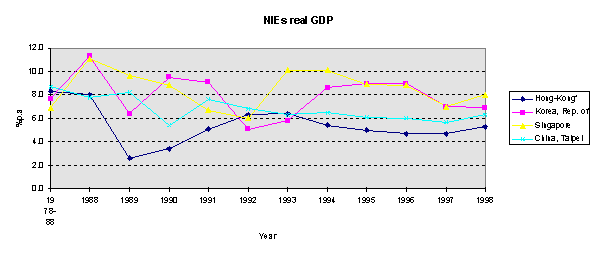
In 1994, the total GDP at 1987 prices for the Newly Industrialising Economies of Asia (the "four tigers") was US$532.7 billions, which represents around 10% of the Asia-Pacific total. Figure A2 shows historical real GDP growth rates, with AsDB projections to 2005.
Figure A2: Real GDP growth rates for Asia-Pacific newly industrializing economies
Source: See Table 4; 1997 and later figures are pre-crisis estimates in this and later subregional charts.
Republic of Korea leads the group, the descending order of which in 1994 was as follows in gross GDP terms:
Korea Rep. (US$231.6 billion) |
43% | |
Taiwan Province of China ($194.0 billion) |
36% | |
Hong Kong SAR, China ($70.4 billion) |
13% | |
Singapore ($36.8 billion) |
7% |
For decades now, the four have maintained rapid growth; during 1995, the Asian Development Bank (1996a) reported exceptionally good performance for the Republic of Korea and Singapore. The average GDP growth rate in 1995 was 7.6% compared to 7.5% in 1994 although Hong Kong SAR, China's GDP growth weakened to 4.6% from 5.4% due mainly to weaker domestic demand. Inflation in the NIEs moderated to 4.8% from 5.7%.
An important feature of the NIEs is that due to their high savings rates combined with high rates of FDI, they have for long been capital-surplus countries. This distinction has remained after the economic crisis mainly for Taiwan Province of China and for Singapore.
In October 1996, the Republic of Korea became a member of the OECD, the second Asian country after Japan in that Organization. Republic of Korea has been transformed from a poor, rural agrarian society into an industrialised modern economy in only a generation. During the past 30 years, there has been a twelvefold rise in output, with economic growth averaging 8.5% annually. By 1995, Republic of Korea's share of world exports was almost 2.5% and the country ranked eleventh among OECD exporters.
Republic of Korea's development has been driven by exports supported by massive investment of both local savings and external capital. Government intervention has permitted focus on key sectors, sometimes in areas where comparative advantage has had to be created. Earlier protectionism is, however eroding and Republic of Korea has, according to the OECD (1996) cut average tariff rates from 18% in 1986 to 6% in 1994 and plans to abolish all but eight import quotas by July 1997.
According to the AsDB, Republic of Korea grew by 9.2% in 1995, its fastest growth rate since 1990 and its unemployment fell to a record low of under 2% of the labour force. Since then there was first a slowdown to near 7% due mainly to a weak semi-conductor market in 1997 the currency collapsed exports were in disarray and the over-extended banking sector was unable to effectively support export growth to take advantage of devaluation. High exposure to international short-term commercial debt threatens creditworthiness and hardly any growth in the economy is expected in 1998; many analysts expect contraction instead.
A2.2.3 Taiwan Province of China
According to Myers (1997), the economy has grown rapidly after the second World War primarily due to good infrastructure inherited from 50 years of Japanese colonial rule and government commitment reflected in the promotion of exports and abandonment of import-substitution industrialization policies. US economic and military assistance is an additional factor which aided rapid capital formation. In spite of rapid population growth of 3.5% per year in the 1950s, income per capita grew 3.6%, 7% and 6.5% respectively during the 1950s, 1960s and 1970s. After 1964 unemployment rarely exceeded 2% of the work-force and in 1995, this ratio was about 1.8%. Between 1990 and 1995, real income per capita grew by an average of 6.6% per year and its distribution became more equal; the richest 20% of households had only about 5.39 as much as the poorest 20% in 1993.
Economic growth in 1995 declined to 6.3% from 6.5% in 1994; according to the AsDB (1996a), the economy was expected to grow by close to 6.4% in 1996 and at 6.3% in 1997. The AsDB revised estimates downwards to 5.7% in 1996 and 6.2% in 1997 with projection of 6.3% for 1998. The driving forces are mainly exports and investment of both domestic and foreign capital. Exports rose by close to 21% during 1995 and they increasingly go to developing Asian destinations; exports have recently faltered as in other Asian high-performers. Hong Kong SAR, China is the main destination - between 1987 and 1995 this destination's share grew from 7.7% to 23.4% of Taiwan Province of China's total exports; in 1995 Hong Kong SAR, China replaced the US as the largest trading partner.
Domestic investment was 24.5% of GDP in 1995 and savings rates are around 26% of GDP. The surplus of savings over investment was 1.9% of GDP in 1995 (down from 7.5% of GDP in the late 1980s). This capital surplus status permits the territory to invest abroad, reportedly principally in the south-east of mainland China (via Hong Kong SAR, China) but also elsewhere in Southeast Asia.
Prudent borrowing and a sound banking sector have enabled Taiwan Province of China to weather the economic turmoil better than perhaps all the "tiger" economies. An area of uncertainty for the future is mainland China's policies towards Taiwan Province of China and the possible effect of Hong Kong SAR, China's reabsorption on its gateway function for trade and investment on the mainland. Until this latter uncertainty is resolved, estimation of long-term future growth rates is difficult.
On July 1, 1997 Hong Kong SAR, China was reabsorbed as a Special Administrative region into mainland China. Hong Kong SAR, China has a mature and almost post-industrial economy, with services being a strong complement to manufacturing. Its major comparative advantage is location at a gateway to the enormous hinterland - it channels trade and investment in both directions between PR China and third parties and is a major re-export territory.
For a long period, Hong Kong SAR, China has achieved economic growth at or close to double digits. The AsDB reports (1996) that growth has become more moderate - since the 6.3% of 1993, it has declined steadily and was only 4.6% in 1995; the AsDB (1997) revised these estimates marginally but growth remains below 6%. The re-integration into PR China in 1997 is a milestone event; it was followed early on by currency speculation which heavily drew down its reserves and it facing some economic slowdown. For example, unemployment reached a ten-year high in 1995. Based mostly on savings, investment has continued to be high and surplus have been invested abroad, much in PR China but also further afield in the region. There is a permanent worry about Hong Kong SAR, China's overvalued real estate which if it were to come under attack, could undermine economic growth prospects further.
Future growth will depend on how Hong Kong SAR, China manages its transition into PR China - whether it will retain a highly liberalised market-driven economy able to facilitate as in the past two-way interaction with many countries on behalf of PR China. Many investors are waiting to see how well PR China will fulfil its intention to have a "one country, two systems" approach, with Hong Kong SAR, China retaining its highly liberal economic system after re-integration. Depending on this, the closer integration into PR China may well enhance the economic performance of the territory, given the rapid development of the immediate hinterland.
Singapore has a well-earned reputation for remaining on the front line in development, continuously renewing its economy and moving seamlessly from basic manufacturing to high technology and services. It has maintained GDP growth at or little below double digits since independence and has exploited to the full its location at a shipping cross-roads. It has complemented this with becoming a telecommunications and air-routes hub in the region.
Trade in both goods and services remains Singapore's lifeblood. According to the AsDB (1996a) Singapore's economic vigour remained unabated, but at 8.9% GDP growth in 1995 was slower than the 10% average for the previous two years. While the 1996 and subsequent slump in Asian electronics exports hit many countries hard, Singapore's performance was cushioned somewhat because it manufactures disc drives which proved more stable. Singapore remains a capital-surplus country even after the Asian financial crisis; it is a major investor in ASEAN, PR China and further afield. Its economic health therefore has implications well beyond its borders while its earnings from overseas investments are a factor in its future prosperity.
In the medium term, Singapore is expected to maintain its place as one of the world's most competitive economies.
A.2.3 North Asia14
In 1995, the combined GDP (at 1987 prices) for PR China and Mongolia was US$488.73 billion, which is some 10% of the total Asia-Pacific GDP; 99% is accounted for by the People's Republic of China. For a number of years now, the economy of Mongolia has, in fact been shrinking and only from 1994 did it start recovering as it started reaping the benefits of painful structural reform and economic liberalisation. Figure A3 shows how closely (but time lagged) the Mongolian economy follows that of PR China in growth pattern cycle.
Figure A3: GDP growth in North Asia
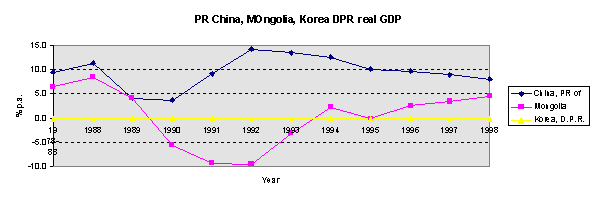
Source: See Table 11; the "zero" readings for Korea DPR indicate non-available information. 1997 and later figures are pre-crisis estimates.
PR China is a dominant factor in the overall North-East Asia context. According to the World Bank (1995a), and average economic growth in North Asia (which includes PR China and three "tiger" economies - Republic of Korea, Taiwan Province of China and Hong Kong SAR, China) rose to 9% in 1991-94 from 7.4% in the preceding decade. Sub-regional growth is expected to ease to 7.7% in 1995-2004 as PR China deliberately slows down to avoid overheating, capital inflows slow to more sustainable levels and infrastructure gets strained from recent rapid growth.
A.2.3.1 People's Republic of China
PR China is the world's most populous country; it has always been an important factor in international development. It's role has become even more important after the recent sharp acceleration of its economic development following adoption of "socialist market economy". So rapidly has the economy grown that the country's development is beginning to significantly contribute to reshaping the pattern of regional and world trade.
Despite its low per capita income, PR China's investment rate is almost 40% and domestic savings rate is over 42%, according to the AsDB, which also reported for 1995 that PR China's economy experienced its fourth year of double-digit growth; achieved record surplus on trade15; increased gross domestic saving to 42.2% of GDP; raised the resource surplus from 1.4 to 2.7% of GDP; increased external reserves by more than 42%; achieved official unemployment rate of only 2.9%; and reduced debt ratio by over 3% to 16% of GDP in the year. Economic growth had been 11.8% in 1994 and was reduced to 10.2% in 1995 through deliberate efforts to avoid overheating and to dampen inflation which had reached double digits. The OECD (1996) reported a fall in inflation to an annual rate of 5.5% in September 1996 from 14% one year earlier.
Early in 1996, the OECD organised a conference to consider the implications of PR China's development over the coming 15-20 years. 16 At that meeting, Michalski et al17 reported that in a decade and a half after 1978, PR China's annual output growth averaged 10% annually and its exports 17%. PR China now accounts for about 4% of world merchandise trade. At the same meeting, Perkins18 repaid highly accelerated investment growth, with 1994 domestic investment estimated at $175 billion ($700 billion at purchasing power parity) supplemented by $33.8 billion of FDI ( $37 billion in 1995, a growth of 11% over 1994). With the FDI has come technology and organisational skills which create a foundation for further progress.
Despite the fundamental strengths revealed by the above parameters, Perkins raised the question of whether the very high export growth, a major factor in development, can be sustained - the perspective being that the world may not willingly continue to purchase PR China's labour-intensive and low-cost manufactures if their current growth were maintained. The fear was that major markets would resort to protectionism upon observing PR China's inability to reciprocate trade.19 At the 15% rate observed to date, PR China's 1995 exports of $150 billion would reach $600 billion in 2005 and $2400 billion only 10 years later in 2015. Protectionist restrictions in major markets could then become a real possibility. Maintenance of the present export growth rates is therefore likely only for some period into the future.
Perkins gave three scenarios for PR China's economic growth: under the most liberalised and open scenario, future growth is estimated at 8-9% annually; should the external trade environment become hostile the growth rate could fall even to 4.5% annually; resumption of a centrally-controlled economy could reduce growth to somewhere around 4.5% annually.
At the same OECD meeting, Michalski et al raised a number of current challenges in looking at future prospects. These include infrastructure bottlenecks (transport, financial services etc); inadequately adapted institutional and legal framework for a market economy; inadequacy of skills for technologically higher industrialisation; incomplete reform process and a tendency to resort to "command-economy" approaches; considerable internal socio-economic disparities in society and among regions; and land inadequacy to meet future agricultural needs. A number of scenarios developed for the future all foresaw continuation of growth. However, should the reform process not fully succeed, growth rates could be down to 5-6% annually; if there was an external market slump combined with stalled reforms, annual growth would fall to only about 4-5%. Box A1 reports on the gradualist reform process which is more likely to be maintained by PR China (and other formerly centrally-planned Asian countries) than a reversion to central planning.
Box A1: Gradualist transition of Asian centrally planned economies According to the Asian Development Bank (1995), the distinctive "model" in the Asian transitional economies is the gradualist approach pioneered by mainland PR China and also adopted by Lao PDR and Vietnam. Through step-by-step reduction of state control, PR China has "successfully built fairly competitive product markets and turned most of the economy over to market allocation. By the mid-1990s, the share of GDP produced by the state sector had fallen to less than 20%, with state-owned enterprises accounting for less than 45% of gross industrial output. In the process, the PRC economy has enjoyed unprecedented growth and structural change, with an annual growth of 9.5% in real GDP during 1978-1994, a decline in the proportion of the labour force in agriculture from 71% to 56% in 1993, and exports rising to more than 20% of GDP. The most notable feature of the gradualist model is the creation of a dualistic economy in the short to medium term, where a market segment is permitted to emerge and grow while the planned segment is gradually allowed to shrink. " The process permits transition countries to "carry" the inefficient state sector on the strength of growth in the non-state economy. Source: Asian Development Bank, (1995), Part III "Lessons from the transitional economies of Asia". |
There have been alternatives to the Michalski et al and Perkins futures: in assessing energy sector development prospects, Priddle20 has clearly assumed a compromise set of assumptions - he records the 1983-94 GDP growth rate of 9.4% annually and projects an average 8.5% for 1993-2000. The AsDB (1996a) expects real GDP growth to stabilize in a non-inflationary, sustainable range of 8% to 9%. According to the AsDB, however, challenges notwithstanding, PR China's economy is projected to grow annually at about 9% over the next two to three years, while inflation is expected to decline further to around 12% on average. The AsDB (1997) has mildly revised its outlook towards an 8% GDP growth in 1998, with inflation also at 8%.
Box A2: Mid-21st Century PR China??
David Li recently wrote of his vision of PR China in year 2046, a vision based on continuation of growth in the region of 7-9% appears quite feasible. Highlights are:
· PR China will have been overtaken by India as the world's most populous nation;
· the economy will be by far the world's largest and PR China will export and import as well as produce and consume more of most goods and services than any other country;
· coastal PR China will be as prosperous as North America and Europe and will be a larger market than either of them. The hinterland will be poorer but its disadvantages will be no greater than those of southern to northern Europe;
· PR China will depend on imports for food and many other commodities based on an open trading environment and cooperative development;
· PR China will be the world's leading aid donor;
· Hong Kong SAR, China will have become the world's leading financial centre.
Source: Li, D.K.P., "PR China in 2046' (1996).
PR China's fundamentals, as reflected in high savings, low debt levels, investment, highly positive trade balance and overall willingness to reform policy give reason to expect continued growth. There are, however, concerns about a major state industry sector not yet liberalized and an inadequate regulatory framework, including for the financial services/banking sector.
The World Bank (1995a) reports that in 1995 Mongolia's GDP grew 6.3%, against 2.3% in 1994. Mongolia was succeeding in controlling inflation (56.8% in 1995, against 87.6% in 1994). Investment is gaining : from 19% of GDP in 1993, it reached nearly 24% in 1995 but savings are very low at only 17% of GDP in the latter year. This makes the country externally dependent for capital; in a region where alternative investment opportunities are particularly attractive, Mongolia faces relative difficulty in attracting its share. It also faces two other development challenges: a negative merchandise trade balance and a significant but not yet alarming external debt - 14% of export earnings went to debt servicing in 1995.
According to the AsDB (1995) short-term prospects initially suggested GDP growth at 4.5% in 1996 and 1997, much gain being from industry. AsDB (1997) later revised 1996 growth to only 2.6% with 3.5% being estimated for 1997 and 4.5% for 1998; even lower rates may apply in the present post-crisis situation. Efforts continue, aimed at diversification of export destinations beyond Russia and PR China which currently dominate. Reforms continue but recent election results may result in some slowing in the pace of liberalisation, the effect of which cannot yet be ascertained.
This economy is poorly documented. There are major shortages of food and evidence of severe under-performance of the economy - the last in the region to remain strongly centrally planned. In the absence of alternative information, a nominal growth rate averaging 1.0% pa can be assumed.
This group of nine countries in south-east Asia21 has the greatest concentration of economies which until mid-1997 were the most rapidly growing in the world. Total 1994 GDP at 1987 prices was US$389.6 billion which was 8% of the regional total. Figure A4 gives GDP growth rates, many averaging well above 6% annually. In descending order, the economies and their 1994 GDP are:
Indonesia (US$119.3 billion) |
31% | |
Thailand ($98.7 billion) |
25% | |
Malaysia ($56.9 billion) |
15% | |
Vietnam ($54.7 billion) |
14% | |
Philippines ($41.2 billion) |
11% | |
Myanmar ($12.1 billion) |
3% | |
Brunei ($3.5 billion) |
0.9% | |
Laos ($1.7 billion) |
0.4% | |
Cambodia ($1.5 billion) |
0.4% |
Figure A4: Real GDP growth - SE Asia
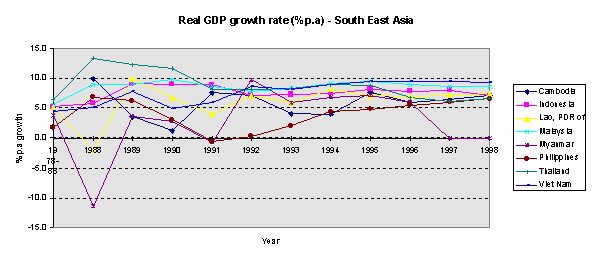
Source: See Table 11.
There is significant spread of economic power in this sub-group, with each of five countries of the nine accounting for at least 10% of the subregional GDP, although the largest economy (Indonesia) alone has 31%, a share which (like that of Thailand) will have diminished considerably since the particularly severe financial disruption these two countries suffered from mid 1997.
AsDB estimates (1996a) show that overall, Southeast Asia's economy grew 7.9% in 1995, against 7.8% in 1994; during 1995 Indonesia, Malaysia, Thailand and Vietnam achieved 7.5%-9.5% growth rates. Brisk domestic demand and strong exports, bolstered by large inflows of foreign investment, continued to support strong economic performance in almost all Southeast Asian countries. Southeast Asia was expected to sustain the fast tempo of economic growth in 1996, with continued strong inflow of foreign investment.
According to the Asian Development Bank (1996a), the three largest economies of Southeast Asia (Indonesia, Thailand, Malaysia) have high savings rates, which exceed a third of their respective GDPs. However, their need for investment is even larger and therefore they face resource gaps and current account deficits almost 9% of GDP in Malaysia and 3.8% of GDP in Indonesia. In the latter case, external debt has risen rapidly and has pushed the debt-service ratio to almost 34%. In Thailand, the debt-service ratio is still under 12% but the share of FDI has fallen, while that of external borrowing has gone up including short-term commercial debt. Much borrowing is for further investment, particularly in infrastructure but in the case of Thailand, at the time of the first symptoms of financial turmoil, it was revealed that much investment went into non-remunerative real estate. Many Banks were over-extended and loan portfolios were largely non-performing.
Thus, while according to the World Bank (1995a) of all developing regions, East Asia is likely to be the one that will continue to exploit rapidly expanding global trade and investment opportunities to the fullest, failures have occurred in key financial institutions which are hindering further growth. What appeared to be adequate institutional capacity to exploit heavy investment and trade opportunities or infrastructure to operate in a global environment has proved vulnerable. Philippines and Vietnam are also rapidly improving their capacities and environments for global operations. Other hitherto less successful economies were on the mend but have been set back by the 1997 turmoil: the Philippines, Cambodia, Laos were undergoing rapid transition - the latter two toward market economies. ASEAN has recently decided to include both Cambodia and Laos (alongside Myanmar) into association with effect from July 199722 but this no longer offers to the transition economies guarantees of expanded opportunities for future regional trade, investment and growth.
The speed with which this sub-region can regain healthy growth may be the key to overall Asia-Pacific renewal (other than the overwhelming importance of Japan regaining vigour and the Republic of Korea also).
With an estimated population of over 195 million in 1995, Indonesia is the world's fourth most populous country. It's economy has grown consistently fast over some decades and GDP per capita reached an estimated US$1,020 in 1995 according to Demaine (1997). Even after the severe devaluation and dislocation of the economy, Indonesia may well still be South East Asia's largest economy. Among it's successes has been rapid reduction of poverty - the population living below the poverty line decreased to only about 26 million in 1995 from 70 million in 1970. Income concentration was modest, with 20% of the population accounting for 40.7% of the total income.
As in the other high-performance economies, rapid Indonesian development benefited from a combination of deliberate planning and policy while permitting freedom to market forces. Hobohm (1993) reviews focus of and progress under Indonesia's 5-year development plan. Under the series of five-year Development Plans (called "Repelita") initiated in April 1969, government has guided development. From Repelita I (1969-70/1973-74) which was 66% aid-financed, Indonesia has moved to Repelita VI (1994/95-98/99), only 6.7% of funding for which was from foreign aid.
Repelita I emphasized agriculture and infrastructural development and real annual GDP growth rate was 8.6%. Repelita II focused on employment and more geographically even distribution of economic development - average annual real GDP growth rate was 7.7%. Repelita III achieved an average of 5.7% per year while Repelita IV sought to consolidate manufacturing, upgrade industry towards higher technology and diversify beyond petroleum exports - it led to annual real average growth of 5.2%. Repelita V re-focused on infrastructure but also on human capacity development - and achieved an average of about 8.3% per year and manufacturing overtook agriculture in 1991 as the leading sector of Indonesia's economy. Repelita VI (from 1994) has so far achieved real GDP growth of over 7.5% since 1994.
The AsDB (1995) projected that the Indonesian economy could maintain its momentum of 1995 (8.1% growth) over another two years. In 1997, it reported a 1996 growth of 7.8% after the 8.2% achieved in 1995. The continuing high rate of gross domestic investment (over 38% of GDP) and domestic saving (increased to 36% of GDP) were expected to can assure continuing growth. For example, the year 1995 saw record foreign investment approvals at $39.9 billion, a 68% increase over 1994; the net capital inflow was sufficient to offset the current account deficit and add to reserves.
The Economist Intelligence Unit (1996a) reports, however, that the first eight months of 1996 witnessed a 25.3% fall in value of approved foreign investment projects to $22.2 bn relative to the same period a year-earlier. The likelihood of further downturn was confirmed by the results of a poll of 300 executives from ten Asian countries commissioned in the aftermath of the July 1995 riots, which showed that 43% of the respondents were reconsidering their investment plans in Indonesia. With its high pace of investment, even the rates of domestic saving (36.0% of GDP in 1995) were inadequate. The country had started to have significant debt and debt servicing became a significant factor in the economy with the ratio to exports at about 33%. With the coming of uncertainty about Asia, external funding flows ceased and credit worthiness was lost; repayments due became more costly in devalued currency terms and a major crisis (which also had political dimensions) arose which the country is having difficulty exiting from.
During pre-crisis days, Thailand well illustrated the importance of Asia's domestic and sub-regional markets to contribute significantly to support sustained economic growth. Thailand was increasingly trading with other developing countries in the region as their economies prospered. According to the AsDB (1995), other members of ASEAN have become collectively the most important trading partners for Thailand, followed by the US, Japan and the European Union. For the past decade, real GDP growth averaged 9% per annum while inflation was only around 4%. Overall GDP growth was projected at 8.3% for 1996 and 8% in 1997; the AsDB (1997) reports actual 1996 GDP growth at 6.7% with projections of 6.1% and 6.6% for 1997 and 1998 respectively. The projections take account of current problems facing the Baht as a result of exports decline and financial system insolvency from over-exposure on a property market that has many non-performing loans23. Export growth, which was very buoyant at nearly 25% in 1995 after growth of 22% in 1994, has since dipped partly due to it's reportedly over-valued dollar-linked currency relative to the currency of a major export destination (Japan). The combination of these developments with an increasingly significant external debt precipitated the major crisis in Thailand which was the first in the region but soon triggered collapses in other countries.
Despite its current dislocation, Thailand has shown its potential for strong performance. Gross domestic saving rose from 24% of GDP in 1985 to over 34% in 1995 and helped to support gross domestic investment which rose from 28% of GDP in 1985 to 40% of GDP in 1995. The high appetite for investment explains the savings-investment gap in spite of high savings; the gap has led to a current account deficit of more than 7% of GDP in 1995.
The future holds some challenges, among which the labour shortage threatens competitiveness as wage costs rise. More serious may be acute shortage of skills required to move Thai industries into more technologically sophisticated industries - school attendance is reported to be significantly lower in Thailand than neighbouring Malaysia.24 Loss of former comparative advantage and consequently of competitiveness is said to be the most important issue (AsDB, 1997). Lack of equitable distribution of development among income groups and regions of the country is another issue. The current development plan emphasizes efforts to discourage concentration of industry around Bangkok, which faces severe infrastructure challenges; the plan cannot be significantly implemented due to economic problems facing the country.
The continuing gap between gross domestic investment (about 41% of GDP in 1996) relative to domestic saving (about 35% of GDP) is also a problem and could become serious if FDI were to fall. This heavy reliance on foreign saving is a source of some concern. In Thailand, more than Indonesia, outstanding external debt became quite significant, being equivalent to about 41% of GDP. As soon as export performance faltered, the threat of default loomed.
Malaysia has is an investment-led high-performance economy like Thailand's. It has a high savings ratio but still invests even more and so resorts (again partly like Thailand) to current account deficit financing. The attractiveness of the country to foreign investors, however, ensured minimal strains till the 1997 crisis. Malaysia's currency, its banking system and the economy in general came through better than both Indonesia and Thailand despite the country's particularly heavy dependence on exports.
Growth has consistently been in double digits or not much below. According to the AsDB, since 1993, annual GDP growth has fluctuated between 8.3 and 9.3%; gross domestic savings between 35.4 and 37.6 % of GDP; and domestic investment between 35.1 and 40.6% of GDP. In 1995, merchandise exports grew 26.6% and imports 30.6% - the latter dominated by investment goods. In pre-crisis days, inflation remained below 4%, unemployment under 3% (the country faced manpower shortages at all levels of skill) and incidence of poverty went below 10%. Although a net capital importer, Malaysia also invests significantly abroad, particularly in ASEAN and East Asia.
In considering the future, a factor to consider is that Malaysia has probably got one of the world's most privatised economies with even major infrastructural services in the market sector. Its growth rate has been higher than for many countries in the region; it has diversified resource and export base, and much of its growth potential could be regained with reasonable ease.
Until about two years ago, Vietnam was on a rapidly accelerating phase of GDP growth. The AsDB (1995) reported GDP growth at 8% in 1993 rising to 9.5% in 1995; AsDB (1997) projections suggested 9.5% for 1997 and 9.3% for 1998. The regional economic turmoil started in mid 1995 has mad these expectations unachievable. Both domestic savings and investment are lower as a share of GDP than in the other high-performance SE Asian economies so the country depended on its attractiveness for FDI. Vietnam still has a relatively light debt burden and its debt-service ratio has just passed 10%; its comparative advantage in labour-intensive manufacturing remains strong.
The issue is loss of export markets due to main destination countries having become economically weakened. Also, the process of reform from central planning is far from complete and some concern is being expressed by external investors. The adaptation of institutions and legal frameworks may prove a hindrance if their liberalisation is delayed significantly; for example, the still rather centralised ownership of the banking sector seems to offer easier access to credit for the still significant state enterprises sector. The heavy dependency on FDI is a source of potential vulnerability.
At one time, the Philippines had a more advanced economy than many of the other countries in the region which have since surpassed it. Policy difficulties created distortions and slowed down growth. According to the AsDB (1995) the Philippine economy has now regained growth potential from a decade of structural reforms. Manufactured products now account for about 80% of exports compared to less than 50% about a decade ago, so buffering earnings from volatile commodity exports. The country is making progress in reducing its debt-service which used to consume a quarter of export earnings as lately as 1993. The percentage of families living below the official poverty line has also declined from 39% in 1991 to 36% in 1994, an improvement which the current regional economic crisis may cause to stall.
Before the crisis, although the country's performance had improved, the Philippines GDP growth was generally significantly lower than in neighbouring countries - 4.8% in 1995. Philippines domestic savings and investment were both significantly lower than in neighbouring high-performance economies and, moreover, the savings ratio was less than two-thirds of investment levels so revealing a major funding gap. Due to investment driven imports, merchandise imports are over half again as large as exports for which some compensation is derived from services (e.g. tourism) and from FDI. This dependency is an area of vulnerability.
Economic growth in the Philippines in the past has often been hampered by infrastructural constraints, particularly power shortages but there have been major improvements in the power supply in the recent past.
Growth prospects over the medium term appear reasonably bright and growth of the economy generally will be driven largely by investment and exports - ignoring the current Asia-wide slowdown, the latter will benefit from increasingly liberal ASEAN and APEC markets.
With its rich endowment of natural resources, large population and location at the doorstep of some of Asia's most dynamic economies (to the South and East) and the rapidly reviving Indian economy (to the west), Myanmar has potential to achieve very rapid sustained growth once the other economies revive and if it makes the necessary political adjustments that can promote investment and trade. Notwithstanding its relative international isolation so far and consequent inability to capture external investment, the economy is reported by the AsDB to have grown at 7.5% in 1995, which represented significant acceleration. Mining was the lead growth sector, particularly oil and gas - commodities which the other growing SE Asian economies can only continue to need more in future when they revive.
However, Myanmar's savings rate is only around 12% of GDP and there is very limited FDI to supplement domestic investment resources. There is a deficit on merchandise trade but as the country is very lightly indebted, if it opened up to private sector and official capital flows, it could take off relatively fast.
Brunei has a small but very prosperous economy (GDP around US$4 billion at 1987 prices) based largely on oil and associated activities. It is not extensively written about. Endowed with a resource essential to modern commerce, located as it is in the midst of South East Asia's most rapidly growing economies and with easy access to the main sea lanes, the country can only prosper once its neighbours resume growth. The main issue is heavy dependence on oil so that economic performance is open to fluctuation according to international market prices.
Although incomes are high, GDP growth is unstable due to heavy dependence on one commodity (oil) - it grew 5% in 1990, 1% a year later, and at an estimated 2% in 1995.25
In South East Asia, only the economy of Cambodia is smaller than that of Laos. In 1995 the GDP was US$1.6 billion at 1987 prices. From under 6% in 1993, the GDP annual growth exceeded 8% in 1994 but since then slowed down. According to the AsDB, growth is highly responsive to performance of agriculture as the economy is still very rural-based.
Laos is just emerging from strongly centralised planning and inadequately liberalised policies are expected to in the short term continue constraining growth. Manufacturing sector development is hampered by infrastructure bottlenecks and slow progress in privatization. At present, importing manufactures from neighbouring countries is easier that investing in local manufacturing. This could change rapidly as reform progresses but inadequate human skills could then become a significant constraint to rapid development.
Until potential demand for Thailand slumped due to the recent crisis, Laos was planning to invest heavily in hydro-power generation largely for export but these plans will have to be delayed. Improved power supplies would have helped to attract industry to Laos. Laos has a low debt-service (although debt is 37.5% of GDP, most is concessionary). Possibly most important is the admission into membership of ASEAN in July 1997.
The AsDB reported 1996 GDP growth at 7.9%; yet, the economy faces the significant challenges mentioned earlier apart from the loss of opportunities caused by the regional economic turmoil.
It is till early days after achievement of peace and the Cambodian economy has not yet reached steady state or established a reliable trend. GDP growth rate has fluctuated but in 1995 was 7.5%, a rate the AsDB expected to be retained till 1997. Investment has, however risen sharply - from being 14.3% of GDP in 1993 it reached 21.5% in 1995, a trend the AsDB (1995) expected to continue. Domestic savings, are, however very low (little over 8% of GDP in 1995) but rising. Although exports are rising, imports are also increasing rapidly due to investment. Membership of ASEAN starts from 1997 was expected to increase investment and improve trade outlets but coincided with start of the regional economic turmoil.
At this early stage after restoration of peace, it is not easy to project future growth but advantageous location near to potentially lucrative ASEAN markets may support eventual rapid growth.
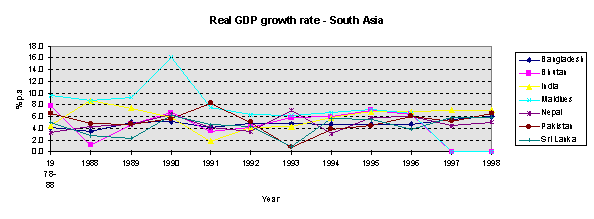
This group of seven countries includes India, the world's second most populous country and Asia's third largest economy after Japan and PR China. It also includes Pakistan, which is Asia-Pacific's fourth most populous nation and thirteenth largest economy. The region has in the past not performed particularly well but reforms underway have yielded some improvements in economic performance, first results being the major spurt in trade and investment. The group's total 1994 GDP at 1987 prices was US$448.5 billion (including an assumed $0.2 billion for the Maldives). Figure A5 shows the real GDP growth rates for South Asia; a notable feature is growing convergence in growth rates of the various countries and apparent greater stability from annual fluctuations. In descending size order, the economies and their 1994 GDP are:
India (US$364.3 billion) |
81% | |
Pakistan ($47.0 billion) |
10% | |
Bangladesh ($23.2 billion) |
5% | |
Sri Lanka ($9.2 billion) |
2% | |
Nepal ($4.2 billion) |
1% | |
Bhutan ($0.4 billion) |
0.1% | |
Maldives ($0.2 billion) |
0.0% |
Figure A5: Real GDP growth rates for South Asia
Source: See Table 11.
The AsDB (1996a) reports that in 1995 South Asia's average economic growth remained at the 5.8% rate of 1994. Economic liberalization started in the early 1990s is leading to rapid growth in manufacturing and exports.
Before the Asian economic crisis started in mid 1997, the World Bank (1995a) believed that South Asia was likely to see improved economic performance if reforms quickened, opportunities were seized and economic ties to the fast-growing East Asian region expanded. Following the start of reform, private capital flows to South Asia nearly doubled from $5.7 billion in 1993 to $10.4 billion in 1994. The World Bank reported GATT Secretariat expectations that several sectors of South Asian comparative advantage should gain from the Uruguay Round including clothing (up 60% after ten years relative to what it would be without the Round), textiles (34%), and agricultural, forestry, marine, processed food and beverage products (19 to 20%). It also expected increasing ties with East Asia to help: exports to East Asia in 1986-93 grew twice as fast as overall exports to the world but would, after the crisis, find little market.
AsDB pre-crisis assessment (1995) was that the outlook for South Asia was less promising than for Southeast Asia and that the average GDP growth may be around 5-6% till 1997. A major constraint was the low rate of saving compared to Southeast Asia which restrains investment. However, savings rates are rising in countries such as India. Prospects are also somewhat dampened by the relatively high debt-service ratios for the two dominant economies 27% of exports for India and 33% for Pakistan.
With a 1995 population of over 929 million, India is the world's second most populous country; it is set to overtake PR China in the next century, although not within the 2010 horizon of this sector study. On a purchasing power parity (PPP) basis (as estimated by the World Bank) - India had a GNP per capita equivalent to US$1,280 in 1994. On this basis, India has the sixth largest economy in the world, according to Baru (1996).
Economic development is challenged by population growth: since independence, India's economy has grown only slowly, barely faster than its population. India has wide inter-regional disparities and income-group disparities too; Baru (1996) considers the large inequalities as an important defining feature of the sub-continent.
India has for long had a highly administered economy with complex bureaucracy and a large government involvement in the economy at both federal and state levels. Until recent liberalization, both imports and exports have been highly controlled by quotas, bans or licensing requirements. In mid-1991 a series of policy reforms was announced, involving substantial deregulation of the industrial and trade sectors, delicensing of investment, liberalization of procedures, plans for the privatization of public enterprises, and the opening up of hitherto restricted areas to private investment. Changes have freed up foreign equity participation in Indian businesses and foreign direct investment and high technology and power sectors are now open to 100% foreign equity participation. To address the inadequacy of infrastructure, there has been recent opening up to private sector participation, including foreign investors. In practice, only partial reform or privatisation of public enterprises has occurred so far.
According to Baru (1996) the 1960-80 average annual GDP growth rate has been only 3.5% but rose to 5.0% for 1975-84 and 5.9% for 1985-90 at market exchange rate. GDP growth reached a peak of 7.0% in 1995/96; and about to be 6.6% in 1996/97 but the long-term (1960-80) average was only about 3.5%; 5.4% in 1980/81-1984/85; and 5.6% in 1985-90. According to the AsDB (1996a), GDP growth was expected to increase to 6.4% in 1996 but in fact the AsDB (1997) reports 6.8% achieved in 1996.
The economy has responded quickly to the limited reform effected so far: there has been a spurt in trade: in 1995, exports increased by more than 21% (although imports also rose sharply, by nearly 27%). External capital inflows are growing, mostly direct investment. However, gross domestic investment in 1995 declined slightly as a share of GDP and so did gross domestic saving for a few years following liberalization. In the long term perspective, however, domestic savings as a proportion of GDP doubled since the 1960s to 23.7% in 1990/91 and an estimated 24.4% in 1994/95. Government borrowing has, however, increased and combined with the debt burden, is one of the key problems facing the Indian economy. The external debt-service ratio was around 25% and the external debt to GDP ratio was about 29.4% in September 1995 but was 41.0% in 1991/92.
Baru (1996) reports that in July 1996, India became a "dialogue partner" in ASEAN and is a full member of the Asian Regional Forum (ARF). With its new "look East" policy, India may reap the benefits of those links once the formerly fast-growing Asian economies regain healthy performance. It is also pursuing a South Asian Preferential Trade Agreement. In its links with both developed and newly industrializing economies, India has potential to greatly increase trade in services. Intellectual services are an area of comparative advantage, given the high levels of human skills in the country.26
The IMF assessment (1995) is that India's recovery is now well established. However, for the future how steadily and rapidly a large economy for so long heavily administered and with a diversity of state-level policies and controls will turn itself round for take-off depends on whether he frequent change of governments will leave commitment to reforms undiminished. Growth rates are much higher than before but remain significantly lower than those achieved by South East Asia in the pre-crisis era. The savings ratio is still low; many states are too financially squeezed by high recurrent-costs budgets to be able to invest in the infrastructure development India urgently needs; the country has significant debt; its real interest rates are high and the IMF (1996) considers this a factor which could slow long-term growth. Although India is becoming more attractive to foreign investors, it still gets far less FDI than Singapore, for example.
Pakistan is the region's fourth most populous country and, if it becomes prosperous, has potential to become a significant economic power. However, it faces a very high population growth rate (around 2.5%) which has caused it to quickly overtake Japan as the fourth most populous country in Asia. According to UN projections, Pakistan will also overtake Indonesia and become third in Asia before year 2010. Given that the pace of economic growth has in the past not been remarkable and that even following the ongoing reforms, GDP increased only at 4.7% in 1995 (having been only 2.3% in 1993) the high rates of population growth suggest potential stagnation or only slow growth in prosperity. The AsDB projected growth of 5.5% in 1996 and 5.8% in 1997 - rates which can only stagnate or go lower due to dislocation of the region's dynamic economies.
Domestic savings rates are in the region of 20% of GDP with investment nearly the same. Pakistan has a significant debt and debt servicing already takes a third of export earnings. The AsDB also reports high defence spending. With merchandise exports regularly earning less than imports cost, the country needs foreign inflows, an important element of which is income repatriations form its nationals abroad. These supplement FDI, the levels of which are not yet very high relative to the country's needs. Inflation, currently at about 13%, is also a problem.
Analysts believe that Pakistan needs to reduce the dominance of commodities in its exports, upgrade human capacities and infrastructure, control inflation, bring debt under control and to boost savings so as to support higher domestic investment - these will all take some time.
Bangladesh is the sixth most populous country in the region, one of the most crowded and among the poorest. Although very short of land, Bangladesh remains highly dependent on agriculture (33% of GDP). With average farm size very small and is declining further: the challenge is how to achieve adequate capital accumulation for take off under these circumstances. Economic prospects are modest at best. Efforts are now focused on creating a manufacturing and services sector to reduce dependence on the limited land resources - yet as of now, formal sector employment absorbs only 10% of the labour force.
Reforms are working but progress is slow given the limited capacity to save (6.8% of GDP in 1995) and consequently low investment capacity (14.8% of GDP in 1995) much of which is externally dependent. Certain sectors have done well and the AsDB reports (1996a) record 1995 exports growth of 37% (but from a low base) due to the ready-made garments sector. Annual GDP growth now hovers around 4.0-4.5%.
The World Bank reports that Sri Lanka was an early reformer in South Asia and its growth has been consistently above 5% in the past few years. Sri Lanka's economy grew by 5.6% in both 1994 and 1995 with the industry sector buoyant according to the AsDB (1996a). Sri Lankan exports increased 20.3% in 1995 its while imports grew by 18.6%. Merchandise imports have, for some years now, remained below exports. Sri Lanka has fairly high investment rates - over 25% of GDP in 1995 but domestic savings are only around 16% of GDP so indicating high reliance on FDI. Given that Asian investors were significant, the current regional economic crisis has potential to significantly slow down the pace of growth.
The country's strengths include human capacities (but the labour market is highly administered and inflexible), an open economy, and limited debt obligations. Sri Lanka also has considerable tourism resources. Weaknesses include the poor security situation which undermines focus on development; the low savings rate mentioned earlier; and an inflation rate which approaches 10%.
Nepal has a highly agriculture-based economy (42% of GDP) with services, largely tourism, next. Being landlocked it faces disadvantages in access to international markets for its relatively low-value exports of basic commodities and of carpets and garments, the country's two staple export items. Nepal, with a population just exceeding 20 million and an economy of over US$4 billion, is significant but is dwarfed by other economies in the South Asia sub-region.
Nepal has low domestic savings, like other economies in the sub-region (half of investment in recent years) and is therefore dependent on net external inflows. Merchandise imports exceed exports by a large margin - in 1995 by a factor of 3.7; furthermore, exports are growing much slower than imports and it is services that may hold the key to bridging the gap in an otherwise unsustainable situation. The external debt is equivalent to about half the GDP and is therefore heavy relative to GDP but much is concessional and thus debt service remains below 8% of exports.
With its rural-based economy facing an adverse trade balance and significant population pressure, Nepal faces challenges in boosting domestic accumulation and reaching economic take-off. Due to heavy dependence on agriculture and on volatile commodity and low-value artisanal products exports, GDP growth rate fluctuates - from a 1993 level of 3.3% it reached 7.3% in 1994 only to drop to 2.3% a year later - this is less than the population growth rate.
Future growth, even assuming further economic liberalisation and privatisation is unlikely to be consistently faster than in the past.
Bhutan's economy is less than $0.5 billion and is largely rural based (agriculture, livestock and forestry). The savings rates are very low but investment has been relatively high - met largely from official aid. It has poorly-developed infrastructure, including financial infrastructure necessary for a liberalised economy. According to the AsDB (1996a), Bhutan had a GDP growth of 5.5% against 6.5% in 1994. GDP growth for 1996 was originally estimated at 7% but has been revised downwards by AsDB (1997) to 6.4%. Bhutan relies on a narrow range of economic activities; its land-locked status and difficult accessibility add further hurdles to economic growth. Future performance cannot be estimated with confidence.
This country has a fishing and tourism-dominated economy. GDP growth depends on prosperity elsewhere encouraging international tourism-related travel. The improvements in neighbouring economies therefore augur well for the Maldives and may help to diversify beyond dependence on long-haul tourists. Recent GDP growth has been around 6% annually. The slowdown in the region's dynamic economies is likely to have some adverse effects on this even though most tourists still come from elsewhere.
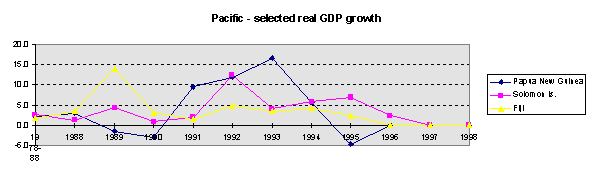
Other than for a few cases, many countries and territories in this subregion are very small and information on them is often incomplete on any economic or social parameters. The entire economy of the Pacific Islands accounts for about 0.1% of the Asia-Pacific regional GDP; for the countries where information was available, the 1994 GDP at 1987 prices was US$7.32 billion which is somewhat less than the GDP of Sri Lanka. Figure A6 gives GDP growth rates for three countries in the subregion, including Papua New Guinea, the dominant economy.
The group's 1995 population totalled about 6.2 million, a little higher than that of Hong Kong SAR, China. The approximate sub-regional 1994 GDP breaks down as follows:
Papua New Guinea (US$4.62 billion) |
63% | |
Fiji ($1.57 billion) |
21% | |
New Caledonia ($0.57 billion) |
8% | |
Solomon Islands ($0.23 billion) |
3% | |
Vanuatu ($0.14 billion) |
2% | |
Western Samoa ($0.01 billion) |
1% | |
Tonga ($0.01 billion) |
1% | |
Kiribati ($0.00 billion) |
0.4% |
Figure A6: Real GDP growth rates for selected Pacific Countries
Source: See Table 11.
According to the AsDB, the Pacific sub-region is characterised by smallness of economies and narrow production and export base. It is vulnerable to external developments and has no meaningful influence either on production or trade trends at international scale. All sub-regional totals are dominated by Papua-New Guinea, followed by Fiji, New Caledonia and the Solomon Islands. As an example, although the 1995 GDP growth was quite high for some islands (W. Samoa for example achieved 9.6% according to the AsDB (1997)), the collective GDP fell 1.0% in reflection of a 2.9% decline for Papua New Guinea, the dominant economy. The Papua New Guinea economy grew only 2.3% in 1996; with its exports heavily directed towards Japan, Republic of Korea and Asia in general, the Papua New Guinea economy is severely exposed during the Asian economic crisis.
The Pacific countries are mainly raw-commodity dependent for exports. According to the World Bank, the long-term outlook for commodity prices remains unfavourable - the Bank expects real commodity prices to be no higher in 2004 than in 1990. Countries dependent on these may therefore have difficulties achieving or maintaining prosperity.
The AsDB estimated average economic growth over 1996/97 at only 2-4%. The Pacific outlook is not bright in the medium term. The need is recognised to diversify the economies sufficiently to minimise instability.
13 The Australia national profile for this Asia-Pacific outlook study quotes Woffenden et al (1997) that the economy "grew by 4.3% in 1995-96 ... and is expected to show 3.2% in 1996-97 before strengthening to 3.7% in 1997-98". It is then assumed to grow at 3.5% to year 2000.
14 Korea D.P.R., about which relatively little is known or publicized, is not normally grouped with any other country and is, in this case, placed in this group for convenience. Its GDP estimate for 1994 was $6.5 billion or 0.1% of the Asia-Pacific regional total.
15 Exports rose by 23% and imports by only 14%; the merchandise trade surplus jumped from $7.3 billion in 1994 to $17.5 billion in 1995. Japan is China's biggest trading partner.
16 The report of that conference is "China in the 21st century. Long-term global implications". OECD, Paris. 1996
17 "China in the twenty-first century: an overview of the long-term issues." Wolfgang Michalski, Riel Miller and Barrie Stevens. In: "China in the 21st century. Long-term global implications". OECD, Paris. 1996
18 "China's future: economic and social development for the twenty-first century." Dwight H. Perkins. In: "China in the 21st century. Long-term global implications". OECD, Paris. 1996
19 China has a large domestic market which, at its present income levels, does not come close to being able either to consume the volume of products it exports or to import their near-equivalent from abroad. Failure to reciprocate exports thus results from incapacity rather than unwillingness to import.
20 China's long-term energy outlook. Robert Priddle. In: "China in the 21st century. Long-term global implications". OECD, Paris. 1996
21 Singapore is geographically part of this group although it is treated above under the NIEs.
22 "Partners should nudge Burma" by Jusuf Wanandi. International Herald Tribune, June 5, 1997.
23 A panel of investors assessing the Asia prospects generally felt that the slowdown in exports was temporary and reflects need for adaptation to more sophisticated manufacture as well as reduced reliance on only the US dollar. For Thailand, the "crisis" was ascribed to unwise lending into an over-supplied property market. This problem may be shared by Malaysia. For details see "Investing in Asia Now!" Panel discussion of moderator R. Holman with D. Krueger, J. Aver, C. Thompson and B. Shi in "Diplomatic World Bulletin", April/May 1997.
24 For a fuller review of Thailand's current malaise, see "The fall of Thailand?" and "The baht spills over". The Economist, May 24, 1997.
25 Sources: Websites of US Government statistics office (www.stat.usa.gov) and CIA (www.ocdi.gov). April/May 1997.
26 According to the World Bank (1995a), services exports are growing rapidly in the field of software development, for example. The Indian software industry has an annual growth rate of 70% and its 600-odd companies generated revenues totalling more than $500 million in 1993-94, two-thirds from exports.
