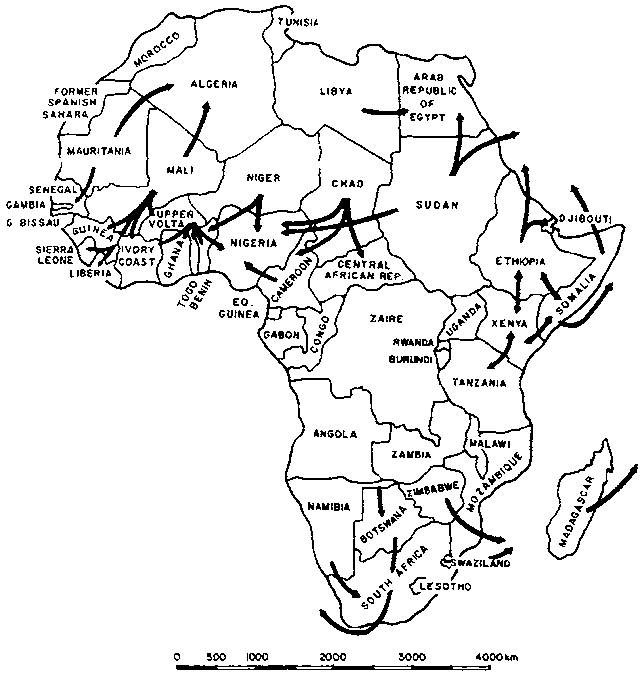
4. For most African countries the cheapest method of transporting livestock is trekking, and consequently it remains the method which is most widely used. Moving of livestock by rail and truck is limited by both the availability of adequate infrastructure and the high relative costs. Many African countries do not have a clear trek route policy. Trek routes have by and large been established by customs, not by law; nor are they sufficiently marked. Conflicts over rights of way arise between drovers and agriculturalists during the growing season when trek cattle damage crops (Ariza-Nino et al, 1980). The ensuing controversy and litigation cause considerable delays which increase the cost of marketing. An exception to this is Togo where the traditional trek routes were officially confirmed by a decree in 1937 which is still in force (Sullivan and Josserand, 1979). In Botswana trek routes are not gazetted. However, there is a deliberate policy at both district and central planning levels to leave a corridor of at least I km wide along the trek routes within which no permanent settlement is allowed. Where trek routes have to pass through densely populated and cultivated areas before reaching the Botswana Meat Commission (BMC) abattoirs, the policy has been to provide holding grounds with facilities for moving cattle by trucks.
5. A clear government policy establishing well defined and demarcated trek routes, within which livestock have the right of way, will facilitate and hence increase the efficiency of moving livestock to markets.
6. Another problem of moving livestock on the hoof is the inadequate provision of grazing and water along established trek routes. These can be severely limiting during dry seasons and result in severe loss of condition by the time animals reach their destination. The problem is being gradually relaxed via development projects, particularly those financed by the World Bank (e.g. in Botswana, Kenya, Mali etc.) in the 1970s. However, there is still considerable room for improvement, especially in West Africa, in providing holding grounds at the end of trek routes (Ariza-Nino et al, 1980).
Figure 1: Main livestock movements in Africa