TAC notes that relevant data and techniques are available to make it possible to assign more refined and still meaningful weights to poverty. What is needed in order to capture latent gains from such information is a point of view on the poverty variable. As TAC understands, the following statements describe the Group's stance with respect to poverty. Other things being equal, in particular alternative sources of supply and probabilities of success:
1. The Group favours giving relatively more weight to the needs of the poorest than to those of the less poor.2. The Group favours giving the same weight to the needs of rural and urban poor at similar levels of poverty.
3. The Group favours giving the same weight to those with similar levels of poverty whatever their geographic region or agro-ecological environment.
Discussion of these themes and a further clarification of the Group's preferences will reinforce TAC's efforts in priority setting. This is especially true in the case of poverty because of its central role among CGIAR goals.
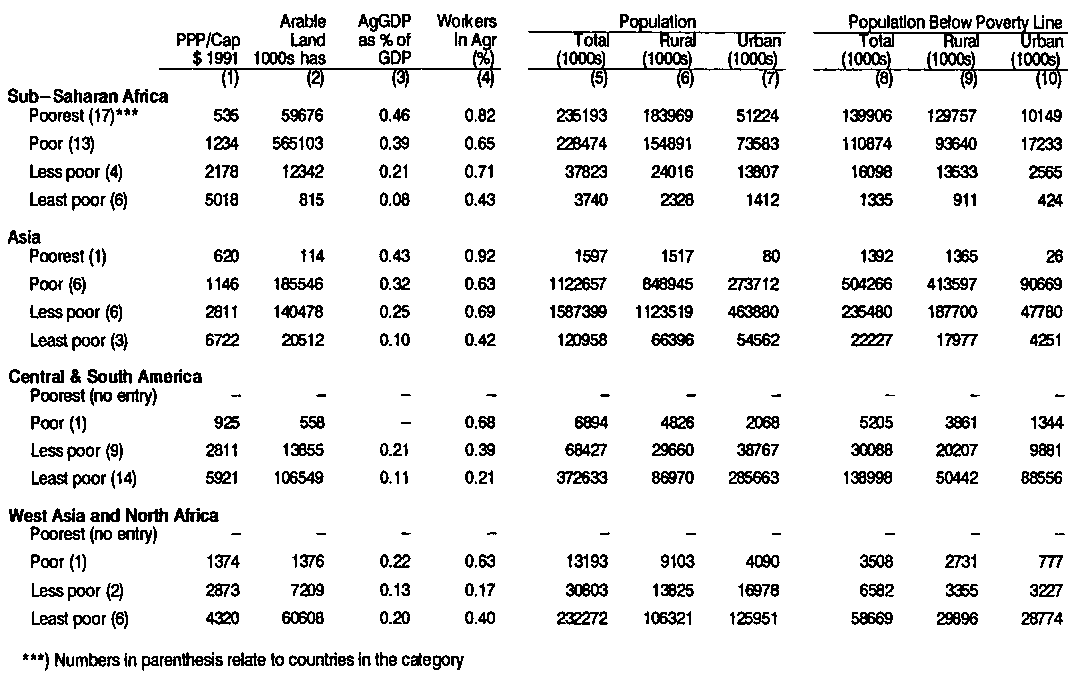
Table 1: Incomes in 1991 PPP*, agriculture and population by region and income class**
Notes:*) Purchasing Power Parity, 1991 dollars, World Bank quoted in UNDP, 1994**) Poorest countries = under $800 PPP; poor = $800 - $1600; less poor = $1600 - $3200; least poor = $3200 - $9000; 8 countries with PPPs over $9000 not included
Data Sources:
Columns 2 and 5: FAO-AgrostatColumns 1, 3, 4, and 6: Data compiled by UNDP in the Human Development Report (1994) from several sources
Columns 7, 8, 9, and 10: TAG Secretariat estimates based on data referred in the Human Development Report (UNDP, 1994)