1 This discussion is adapted from the following sources: 1) Brooks, K., P.F. Ffolliott, H. Gregersen, and K. Wm. Easter. Forthcoming. Policies for sustainable development: The role of watershed management. EPAT Policy Brief. Environment and Natural Resources Policy and Training Program. Midwestern Universities Consortium for International Programs; 2) Gregersen, H., K. Brooks, J. Dixon, and L. Hamilton (1987). Guidelines for economic appraisal of watershed management programmes. FAO Conservation Guide 16. Rome: FAO of the United Nations; and 3) Brooks, K. N., H. M. Gregersen, P.F. Ffolliott, and K.G. Tejwani (1992). Watershed management: A key to Sustainability. In Managing the world's forests, ed. N.P. Sharma, 455-87. Dubuque, IA: Kendal/Hunt Publishing Company for the World Bank.
Development activities in most cases are confined within political boundaries, with little regard for natural system boundaries. However, the forces of nature ignore political boundaries. Water flow, landslides, erosion, fish migration, and water pollution take place within watershed boundaries. Hydropower, irrigation, and transportation systems influence, and are influenced by, the natural processes of watersheds. Most upland activities in a watershed eventually have some impact downstream, often affecting different political units and different countries.
Watershed management has evolved as an organizing framework within which political units can deal with the various biophysical issues involved (see Table 1 for an overview of watershed management objectives and measures). With knowledge of the interactions and the costs and benefits from alternative practices in hand, political forces have an easier (although generally not easy) time negotiating with each other and developing the policies that assure a more productive and sustainable use of the resources in major watersheds.
Table 1: Watershed management objectives and measures
|
Objectives |
Measures |
|
|
Vegetative Measures/Land Use Management |
Structural Measures |
|
|
Maintain or increase land productivity |
* encourage appropriate agroforestry and soil conservation practices * afforest and reforest on a sustainable basis to meet fuel, fodder and fiber needs * control grazing to sustainable levels * stabilize slopes and terraces * control salinity buildup and waterlogging * encourage appropriate forage species * choose appropriate crop species |
* contour terraces * erosion control structures * install and maintain irrigation facilities * water harvesting measures * water spreading |
|
Assure adequate quantity of usable water |
* encourage or require low water consuming species * use appropriate land use measures to protect reservoirs and channels |
* water harvesting systems * reservoir and water diversion structures * wells * irrigation facilities * encourage new, water saving technologies * desalinization |
|
Reduce flooding and flood damage |
* revegetate or maintain vegetative cover to enhance infiltration and water co consumption by plants * zone/regulate flood plain use * protect and maintain wetlands |
* reservoir flood control storage * water diversion structures * levees * gully control structures * clearing channels for better water flow (channelization) |
|
Assure water quality |
* maintain or establish vegetative cover in key areas and protect streambanks * protect groundwater and water catchments from contamination by controlling waste disposal * use natural forests and wetlands as secondary treatment systems of wastewater * control grazing and develop guidelines for riparian systems * control human and livestock waste |
* water treatment facilities * develop alternative supplies |
Watersheds are logical planning and management units from an environmental viewpoint. However, political boundaries are logical from a political viewpoint. To achieve sustainable development, the two have to be harmonized. This requires integrating the two viewpoints by adapting watershed management and upland conservation to economic and political realities, since ultimately the latter will dominate decisions (Box 1).
Managing Watersheds: An Integrated Approach
Thus, the policy challenge in developing any type of Integrated Natural Resources Management (INRM) Framework is to 1) understand and plan for the biophysical interactions among resources and their uses, and 2) integrate these biophysical realities with the reality of the political/economic world that determines their uses and misuses. The basic principles of integrated watershed management provide one such attempt.
|
Box 1. The Polynesians who settled the Hawaiian Islands organized their political and economic systems on the basis of watersheds. They defined these watersheds as areas extending from the highest mountain peaks to the coast and into the coral reefs below the watershed outlet. Chiefs had full responsibility for their watershed. They considered each an economic, political, and environmental unit that provided food, water, and natural resources. They managed uplands for forests, used moderate slopes for upland crops, and planted lowlands in taro. They used streams to irrigate taro without polluting the fish-rearing coral reefs. They recognized that wise resource management and land use that avoided erosion and water pollution meant greater wealth for the political unit. (From J. R. Morgan. 1986. Watersheds in Hawaii: An historical example of integrated management. In Watershed resources management: An integrated framework with studies from Asia and the Pacific, eds. K. W. Easter, J. A. Dixon, and M. M. Hufschmidt, 133-44. Boulder: Westview Press). |
Policies for INRM should promote land use practices that prevent land and water degradation in the first place. Rehabilitation costs more than protection and prevention.
The objectives and principles of watershed management provide a framework for organizing development activities involving land and water resources. This framework helps integrate the biophysical and socioeconomic aspects of natural resources management that also helps avoid environmental problems. Thus, it can provide an organizing framework for some of the CGIAR's research within the broader Ecoregional Approach adopted by the System.
Land use management and soil and water conservation practices provide the tools for activity within a watershed management framework. These practices include nonstructural actions (changes in land use and vegetative cover) and structural measures that can achieve objectives such as:
· Maintain or increase land productivity- encourage appropriate agroforestry and soil conservation practices
- afforest and reforest to meet fuel, fodder, and fiber needs
- stabilize slopes and terraces
- control salinity buildup and waterlogging
- encourage appropriate forage species
- build terraces
- construct gully control structures
- install and maintain irrigation facilities
- develop water spreading systems· Assure adequate quantity of usable water
- encourage or require low water consuming species
- use appropriate land use measures to protect reservoirs and channels
- develop water harvesting systems
- construct dams for reservoir and water diversion
- develop wells
- construct irrigation facilities· Reduce flooding and flood damage
- revegetate or maintain vegetative cover to enhance infiltration and reduce surface runoff
- zone/regulate flood plain use
- protect and maintain wetlands
- construct flood control dams
- develop water diversion schemes
- construct levees
- construct gully control structures
- develop/encourage flood-proof structures· Assure water quality
- maintain or establish vegetative cover along stream channels and protect streambanks
- treat/control disposal of wastewater
- control grazing and develop guidelines for riparian systems
- control human and livestock waste
- develop water treatment facilities
- develop alternative supplies
These practices also provide the basic applied and adaptive elements towards which much of the research should be aimed within this particular type of INRM organizing framework. The integration will take place mainly through the policy and socioeconomics research that needs to be incorporated in the framework, i.e., the policy context provides the basis for integrating the practices to accomplish basic land and water management and conservation objectives.
Integrated Watershed Management Components of Relevance to the CGIAR
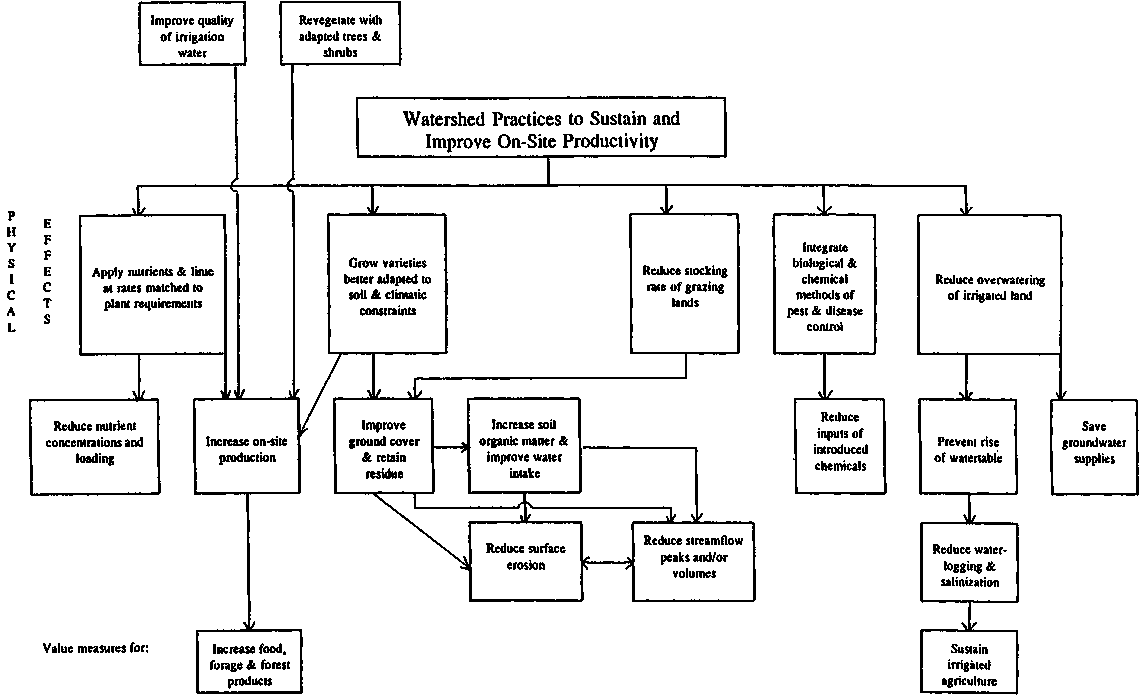
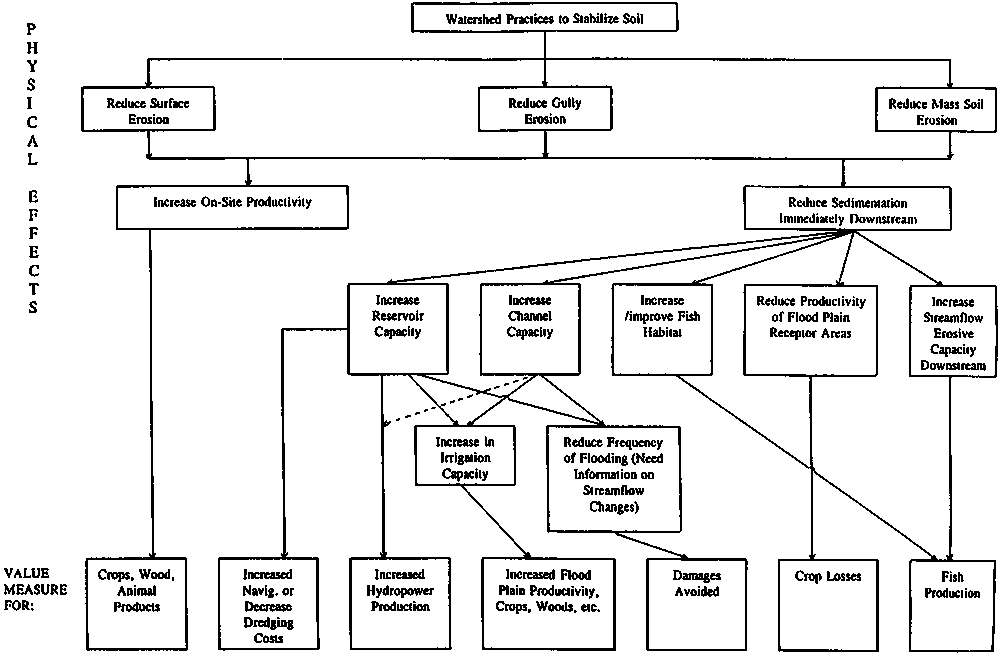
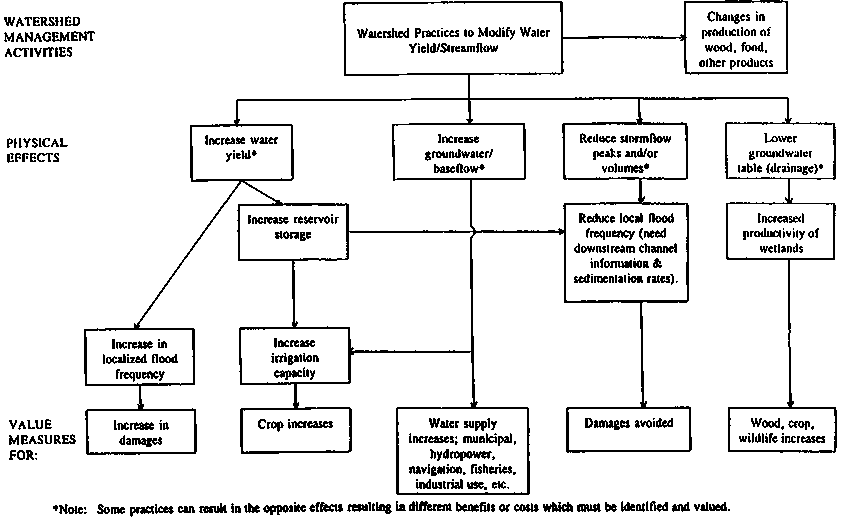
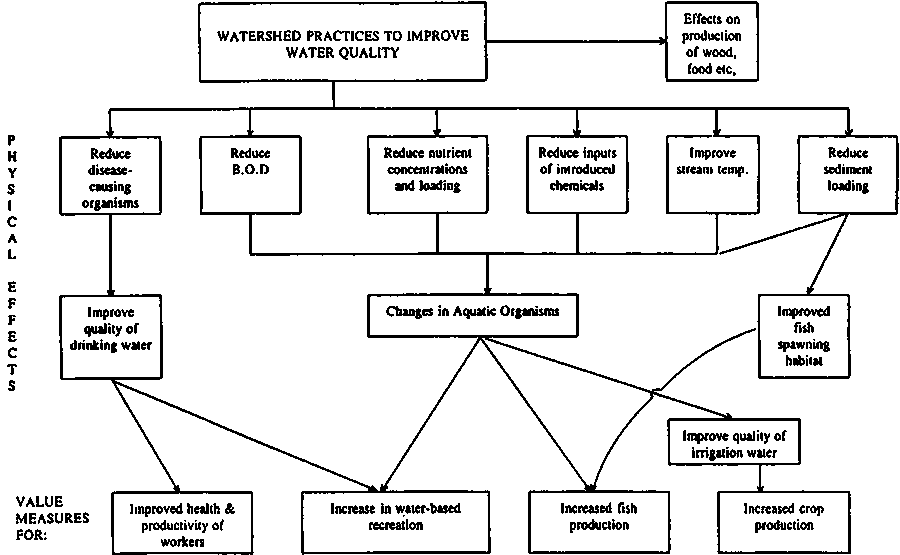
Figure 1 in the text provides an overview of a watershed management model of relevance to the CGIAR with its focus on land and water use. As noted, upstream activities impact land use units downstream, which in turn have their own impacts not only on-site, but also further downstream. Annex Figures 1, 2, 3 and 4 provide the details of the potential on-site and downstream impacts of the application of watershed management practices. Together with Figure 1 in the text, these four annex figures provide the basic building blocks for an integrated watershed management framework of relevance to the CGIAR.
Figure 1: Priorities related to sustaining or increasing on-site productivity
Figure 2: Priorities related to increasing soil stability (from Gregersen et. al. 1987).
Figure 4: Priorities related to maintaining or improving water quality (from Gregersen et. al. 1987)
Modifying land use can achieve benefits in both uplands and downstream areas that translate into economic benefits to society (Box 2). 2 Indirect benefits of environmental quality also can occur through protection and enhancement of biological diversity, wildlife and fish habitat, and water quality.
2 Brooks, K. N., H. M. Gregersen, E. R. Berglund, and M. Tayaa (1982). Economic evaluation of watershed projects - an overview methodology and application. Water Resources Bulletin 18(2):245-50; and World Bank (1984). Annual report on FY84 Bank and IDA lending for agriculture and rural development. Washington, D.C.: The World Bank.
|
Box 2. Improved management of a watershed in northern Morocco that drained into a major irrigation reservoir showed an economic rate of return of 15.9 %. Economic rates of return on investment in watershed management and soil conservation-related projects financed by the World Bank have been calculated between 15 to 21 %. |
In sum, long-term goals of upland conservation and watershed management can be achieved if societies develop appropriate INRM technology packages and the complementary policies that:
· Recognize the fundamental need to protect the environment and natural resource base on which all production ultimately depends.· Incorporate in decisions the values of environmental services not presently traded in the marketplace,
· Reconcile the conflicts between natural and political boundaries.
· Provide for public investments, regulations, incentives, and taxes that recognize the links between upstream and downstream water and land use activities.
· Equitably distribute costs and benefits among political units, communities, and individuals according to who pays for and benefits from watershed management policies and the resulting actions.
Research - from strategic to adaptive - is required to accomplish the objectives incorporated in an INRM framework.