The Panel took a forward looking approach, and our overall message is a positive one. ICLARM has gone a long way in implementing almost all of the external review recommendations. The only recommendation where little progress appears to have been made, for reasons beyond ICLARM's control, is in the finalization of the Headquarters Agreement with the Philippine Government.
We are confident that ICLARM has a bright future. The Center has a dynamic new Director General, Dr. Meryl Williams, who inspires confidence and brings strong scientific as well as management leadership. Thanks to its current Chair, Dr. John Dillon, who is an experienced "old hand" of the CGIAR, the Board of Trustees has been turned into an effective force in providing policy guidance and oversight to Management. ICLARM has capable and hard working staff who are very dedicated to the Center's mission.
Progress remains to be made. Dr. Williams took office only ten months ago, and more time is needed for several reforms, which she and the Board have initiated, to take effect. Further changes are required, particularly the strengthening of ICLARM's administration and financial management.
The Panel believes that ICLARM has the basic capacity to implement an effective research program and has made good progress in carrying out its 1994-1998 Medium-Term Plan. The Center is constrained by a lack of capital facilities and infrastructure and a lack of funds, particularly of unrestricted core resources.
In this respect, we would encourage the Management and Board of ICLARM to proceed in considering the offer of the Egyptian Government for the use of existing research facilities under the conditions the Board has outlined, recognizing that the financial implications for ICLARM's budget would be substantial. At the same time, the Panel has encouraged ICLARM to proceed in negotiations with the Philippine Government regarding a headquarters site and agreement.
During the course of its review, the Panel was made aware of several concerns about administrative policies, regulations and procedures. Examples include allegations of deficiencies in the management of cash flow, perceived inequities on personnel and compensation matters, lack of due process procedures, delays in financial reporting and the appropriateness of some decisions such as writing ICLARM's own computer programs rather than seeking off-the-shelf software.
These perceptions require attention from Management whether or not they are valid, but the Panel feels compelled to note here two factors that lead it to withhold judgement: 1) the residue of the 1993 crisis which caused a split between Program Directors and the Director of Management Services, and 2) the fact that the latter has had to introduce systems and procedures into a culture that has valued independence and freedom from what some see as bureaucratic intrusions into their research work.
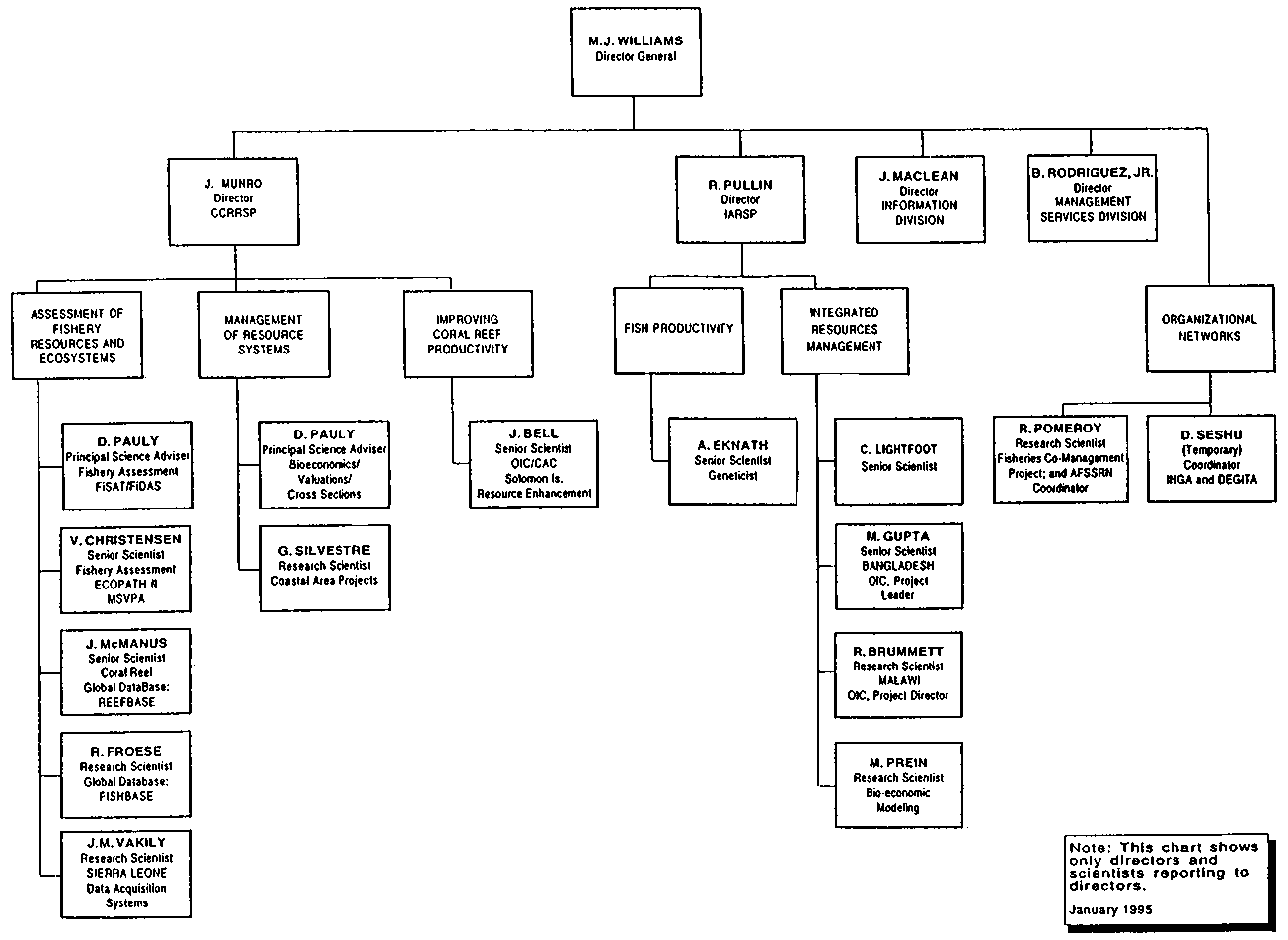
There is a perception by the Panel that the three Program Directors are not yet fully committed to being an integral part of a cohesive management team, dedicated to assisting the Director General in her efforts to lead the Center to new levels of effectiveness and achievements. If a smoothly functioning, mutually-supportive management team can develop, the Director General's task will be made easier and much more pleasant, and the Center's accomplishments will be greater.
The Panel concludes, however, that although there are remaining vestiges of the 1992-1993 internal strife, especially among the Program Directors, attitudes and conditions among most of the staff are steadily improving. The Panel further concludes that, with the excellent leadership of the Director General and Board Chair, ICLARM is poised to move significantly forward.
In view of the progress achieved by ICLARM and the positive developments in pursuing effective governance and management, the Panel strongly recommends that TAC release the reserve fund of US$1 million to ICLARM, starting with its 1995 budget. The Panel has no hesitation in stating that the resources will be used effectively and that ICLARM's potential for impact is substantial. The Management and staff of ICLARM merit full support in this critical period. The Panel is confident that they have put ICLARM on a solid track leading to success. The Panel is also grateful to them for the positive attitude in which this review could be conducted, for the arrangements made and for the excellent documentation that was provided.
The Panel also concludes that even with the extra US$1 million proposed to be added to the Center budget, the level of overall resources, and especially of unrestricted core, will still be very inadequate. This is especially true, given the fact that ICLARM is the only Center in the CGIAR System with responsibility for research on living aquatic resources, which contribute so vitally to food production/security in the developing world.
Following is a list of Panel recommendations:
· that the Director General give urgent attention to the issue of cash flow management. (3.4)· that the Director General investigate the validity of concerns expressed about ICLARM's management services and take appropriate action, and that the team participating in the next full-scale external review investigate more fully progress in implementing and gaining acceptance of an orderly administrative system. (3.4)
· that, in considering the Egyptian facilities, due consideration be given not only to administrative, financial and logistical aspects but also to the technical issues surrounding the feasibility of the proposed sites for ICLARM's research activities, against the framework of ICLARM's strategic plan and the implications for ICLARM's priorities. (5.)
· that ICLARM's Board and Management continue to investigate the opportunities for a headquarters site and capital facilities in the Philippines. (5.)
· that the Director General give urgent attention to the further strengthening of scientific and management capacity within ICLARM programs to ensure a sustainable long term effort by the Center. (6.3)
· that ICLARM should make every possible attempt to turn the challenge of competition for declining overall funds from capable NARS and the more internationally assertive advanced science institutes into opportunities for positive strategic alliances. (6.8)
· That ICLARM be allocated the additional US$1 million which TAC conditionally recommended based on the outcome of the Mid-Term Review. (6.9)
· that consideration of the issue of inadequate resources be given high priority by TAC and the development assistance community. (7.0)