APPENDIX 1
Training exercise of matrix scoring
Group #1. Group consisted of head of governor’s office, population inspector, doctor and bag herders
Best institution for supporting poor in Chuluut sum
|
Criteria |
Institution |
|||||||
|
Relatives |
Social assistance fund |
Collective of poor |
Company |
International agency |
Khot ail |
Bank |
Red cross |
|
|
Good understanding |
5 |
3 |
3 |
1 |
2 |
4 |
1 |
2 |
|
High trust |
5 |
3 |
3 |
2 |
3 |
4 |
1 |
2 |
|
Financial capacity |
1 |
4 |
1 |
1 |
4 |
3 |
5 |
3 |
|
High capacity to provide needs |
5 |
4 |
1 |
1 |
4 |
3 |
5 |
3 |
|
Capacity for long-term support |
5 |
2 |
2 |
1 |
1 |
3 |
1 |
2 |
|
Total |
21 |
16 |
10 |
6 |
12 |
16 |
9 |
12 |
Note: These participants concluded that the best institution for supporting the poor is relatives”. Next were the social assistance fund and khot ail. During the discussion they identified one new institution, this was groups or collectives of poor people. It was felt that if poor people built their own groups or collectives, this would provide useful support When asked why, they answered that the poor can understand each other and their own situation more clearly than others. In future, if people combine the supportive activities of khot ail and relatives with groups they will be successful. In their opinion, support to the poor should be given directly and not through intermediate levels.
APPENDIX 2
Group #2. Group consisted of governor, deputy governor, accountant, tax inspector and herder.
Source of income generating in Chuluut sum
Note: Participants in this group were mostly sum officials. They identified the general resources of income generating in the sum and concluded that livestock and natural resources had the highest potentials for income generating activities. Before doing the matrix analysis they felt that tourism had a lot of potential, but after identifying important criteria, they found that livestock, natural resources and hunting were preferable.
APPENDIX 3
Group #3. The group consisted of: 3 bag governors and 3 herders
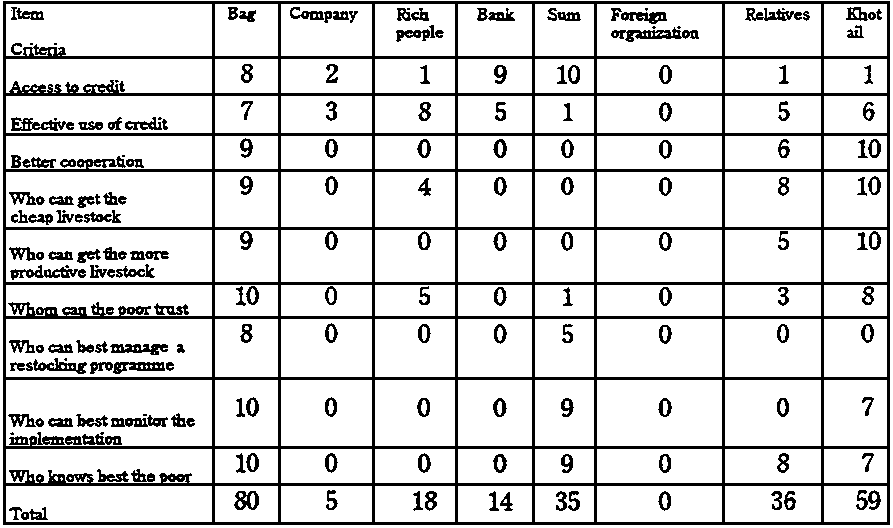
What institution can best facilitate restocking
Note: Other workshop participants stated that most of the participants in this group were bag governors and herders, and for this reason they gave importance to the bag level. The sum governor summarised, “Previously, we restocked the poor twice through the company, using the capital of the negdel. But now the government is responsible for the poor not the company, and for this reason the restocking must be organised by government Sum and bag are both local institutions of government, but the sum has more potential for organising, monitoring, and managing. The best institution is sum level”.
APPENDIX 4
Household income generating activities identified by poor household in bag # 5 of Chuluut sum
|
Criteria |
Activities |
|||||||
|
Rope making |
Broom making |
Dairy products selling |
Cashmere selling |
Sewing |
Making Mongolian boots |
Berries |
Selling skin |
|
|
Low price of raw material |
10 |
9 |
10 |
14 |
8 |
4 |
8 |
10 |
|
Easier to make |
1 |
5 |
1 |
4 |
1 |
1 |
5 |
6 |
|
More benefit |
3 |
3 |
1 |
4 |
5 |
5 |
1 |
5 |
|
Have good market |
8 |
4 |
2 |
9 |
4 |
7 |
3 |
6 |
|
Less labour required |
3 |
8 |
2 |
3 |
8 |
2 |
2 |
8 |
|
Total |
25 |
29 |
16 |
34 |
26 |
19 |
19 |
35 |
Note: This matrix, drawn by a poor but skilled and active family, clearly shows the importance of supplementary skills to the income of poor herders. Rope, broom and boot-making, sewing and berry picking, can all be undertaken by rural families without substantial technical or material inputs. In contrast, a second level of income-generating activity covering carpentry, blacksmithing and hunting require higher inputs and are therefore practiced by better-off households.
APPENDIX 5
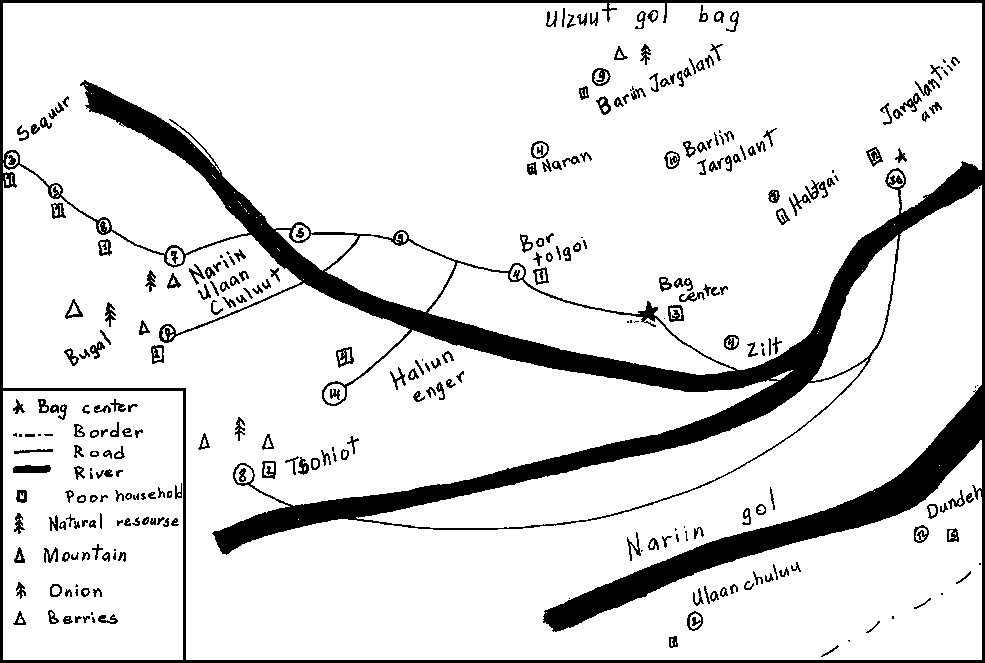
Workshop exercise: Mapping Poverty in Ulziit bag
APPENDIX 6
Workshops participants Arkhangai aimag. Chuluut sum from 28 to 30 august.
|
1. |
Dashzeveg |
governor |
|
2. |
Balgansuren |
head of governor’s office |
|
3. |
Baljinnyam |
deputy governor |
|
4. |
Machgalsuren |
bag 1 governor |
|
5. |
Mijiddorj |
bag 3 governor |
|
6. |
Biziadorj |
bag 2 governor |
|
7. |
Ganbaatar |
bag 4 governor |
|
8. |
Tsetsejmaa |
doctor |
|
9. |
Batdorj |
nature protection inspector |
|
10. |
Byambasuren |
social insurance inspector |
|
11. |
Selenge |
representative of poor in sum centre |
|
12. |
Davaasuren |
herder |
|
13. |
Zul-Ochir |
herder |
|
14. |
Mijiddorj. O |
tractor driver |
|
15. |
Batjargal |
accountant |
|
16. |
Tsetsgee |
tax inspector |
|
17. |
Dulmaa |
population inspector |
|
18. |
Khandsuren |
herder |
|
19. |
Batbaatar. C |
herder |
|
20. |
Danzansambuu |
herder |
APPENDIX 7
PRA Workshop Agenda (2 1/2 days)
Day 1
· Introductions - Sum Governor; participantsDay 2
· Objectives and context of workshop
· Introduction to PRA:history· Practical Session: Attitudes and Behaviour
features
principles
methods
context of PRA in Mongolia
· Practical Session: Semi-structured Interviewing skills
· Review of previous dayDay 3
· Practical Session: Mapping
· Practical Session: Matrix scoring
· Session: Seasonal calendar and daily routine on gender
· Practical Session: SWOT analysis group exercise
· Final discussion and summary