


MERLE D. FAMINOWa, STEPHEN A. VOSTIb
a Professor of Agricultural Economics, University of Manitoba, Canada
b Research Fellow, International Food Policy Research Institute, U. S. A.
Cattle production in the Brazilian Amazon has ignited one of the most visible and vocal environmental debates of the past decade, amid fears that the Amazon could swiftly disappear unless there was rapid change in attitudes and policies. The high rates of deforestation have been linked to environmental problems ranging from localized degradation of land through to global implications such as climate change. Although there are quite a few land uses in the Amazon, the predominance of pasture has drawn the ire of many environmentalists who say that cattle production is a bad deal; that the destruction of the largest remaining tropical rain forest to produce beef is not warranted by low productivity and questionable sustainability.
In the case of the Amazon, deforestation itself is often taken as prima facie evidence of poor land use, partly from the viewpoint that preservation of tropical forest is fundamental to the prevention of global climate change but also from a feeling that any agricultural use of the Amazon is doomed to eventual failure (Fearnside, 1997). A growing literature tries to identify the external and internal drivers of deforestation, with most attention focussed on the role played by external factors such as regional development subsidies and macroeconomic policies. However, less well recognized is that production systems themselves might be important factors in forest clearing. In this paper we try to emphasize both internal and external drivers. We do not accept the notion that deforestation itself is, prima facie, necessarily bad because of the role that agricultural production can play in economic growth and poverty alleviation, and the potential for production-system modifications that are environmentally-friendly.
Widespread poverty and economic stagnation over the past several decades, in Brazil and in neighbouring countries that share the Amazon, are pressing concerns that must be juxtaposed against the environmental consequences of Amazon exploitation (Psacharopoulos et al., 1995). The limited empirical evidence from colonization of the Brazilian Amazon suggests that human development indicators in the region have generally improved over time and that hard work by colonists is often, but not always, rewarded with increased wealth (Haller et al., 1996; Schneider, 1995). For many of the Amazon's rural colonists, the alternative is landless misery in rural areas elsewhere or deprivation in the slums on the margins of cities.
Therefore, we think it helpful to frame the main issues of Amazon development in terms of a “critical triangle” of goals: sustainability, growth and poverty alleviation (Vosti and Reardon, 1997). Trade-offs clearly exist, which underlie some of the policy choices taken or not taken in Amazon development. For example, poverty alleviation through Amazon migration was an explicit goal of the Brazilian Government during the 1970s (Schmink and Wood, 1992).
The objective of this paper is to stand back and highlight critical policy links for cattle production in the tropical forests of Western Amazonia. We take the perspective that the conversion of forest to pasture in the Brazilian Amazon is the result of a wide range of internal and external factors, and that indignation about subsidies and land speculation among large-scale ranchers has diverted too much attention away from other important issues of land use in the Amazon. Without diminishing the importance of the many environmental issues that have received widespread attention, we also suggest that the human consequences of Amazon development (economic growth and poverty alleviation) and their links to environmental sustainability have not enjoyed adequate consideration. Potential micro and macro policy levers, that might improve the performance of the livestock sector in the Amazon, have received scant attention outside the research activities of a few agricultural research bodies.
Extent of deforestation
Due to its sheer size and importance in terms of remaining primary forest a great deal of attention has been focussed on the amount and rate of deforestation in the Brazilian Amazon by the public media, scientists, environmentalists and government organizations. The best available deforestation data for the Brazilian Amazon come from the Brazilian Space Research Institute (INPE) remote sensing census.
In order to be clear about deforestation measurements it is necessary to establish a consistent base. Comparison across various studies is complicated because different authors use different definitions of the Amazon area and there is confusion about the amount of forest, savanna and water in those areas (Skole and Tucker, 1993). The Amazon drainage basin contains about 6 million km2 of rain forest, most in Brazil, and the remainder in the bordering countries along the Venezuelan/Guiana Highlands to the north and the Andes to the west (Colinvaux, 1989; Moran, 1993). Brazil defined the Legal Amazon as an economic and political planning region to administer economic development incentives in 1953, a region that covers the North Region states of Acre, Amapá, Amazonas, Pará, Rondônia, and Roraima, plus parts of Tocantins, Mato Grosso and Maranhão (Figure 1). The Legal Amazon contains a total area of about 5 million km2, of which about 4.2 million km2 was originally rain forest. INPE calculates deforestation on the basis of the Legal Amazon.
Figure 1: Brazil by State
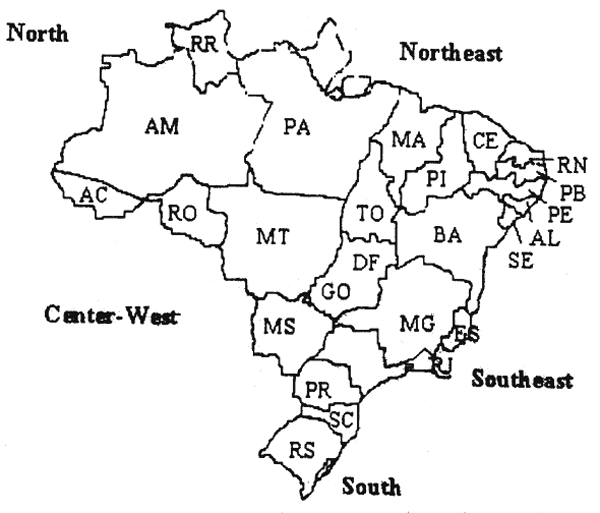 | AC - Acre |
| AL - Alagoas | |
| AP - Amapá | |
| AM - Amazonas | |
| BA - Bahra | |
| CE - Ceará | |
| DF - Distrito Federal (Brasîlia) | |
| ES - Espírto Santo | |
| GO - Goiás | |
| MA - Maranhao | |
| MT - Mato Grosso | |
| MS - Mato Grosso do Sul | |
| MG - Minas Gerais | |
| PA - Pará | |
| PB - Paraíba | |
| PE - Pernambuco | |
| PI - Piauí | |
| RN - Rio Grande do Norte | |
| RS - Rio Grande do Sul | |
| RJ - Rio de Janeiro | |
| RO - Rondônia | |
| RR - Roraima | |
| SC - Santa Catanna | |
| SP - Sao Paulo | |
| SE - Sergipe | |
| TO - Tocantins |
The Latest Deforestation News
Figure 2 shows the most recent estimates of deforestation for years in which INPE conducted a complete census of the Legal Amazon: 1978, 1988 through 1992 and 1994. Care should be taken in interpreting year-to-year changes in deforestation due to problems from cloud cover and the need to use images taken over an extended range of time.
Note also that a 1994 deforestation estimate for Amapá was not yet available at the time of writing so a value of 2,000 km2 was used as a crude 1994 estimate (the 1992 level was 1,736 km2). The data in Figure 2 include all land that has been identified as deforested through inspection of LANDSAT images, plus land in mature secondary forest known to have been deforested in earlier periods. The latest estimate is that roughly 471 thousand km2 or 11.2% of the Legal Amazon forest area had been cleared at least once by 1994. These data suggest annual deforestation rates in the 15,000–20,000 km2 range, a considerable rate of forest loss but well below the ad hoc guesses of 50,000–80,000 km2 (e.g., Myers, 1993; Repetto, 1990) that are frequently cited. Of that total at least 100 thousand km2, and perhaps more, had regrown to mature secondary forest.
INPE deforestation totals by state are shown in Figure 3 for 1978, 1988 and 1994. These graphs suggest that the annual rate of deforestation for most states was higher between 1978 and 1988 than between 1988 and 1994. In the latter period, official colonization programs, ranching subsidies and road construction were discontinued (or allowed to lie dormant). However, the rate and overall level of deforestation has remained very high in two states (Mato Grosso and Pará) that have substantial large-scale cattle sectors. More than half (53,000 km2) of the forest cleared between 1988 and 1994 occurred in these two states alone, with an additional 12,000 km2 of forest clearing in Rondônia.
Figure 2: Total deforested area - INPE Estimates

Source: INPE data on the World Web (http://www.inpe.br)
Figure 3: Latest estimates
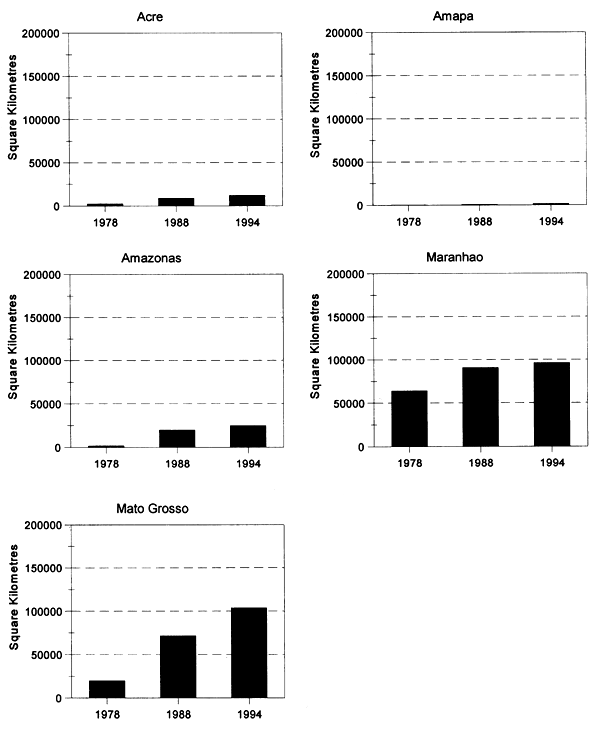
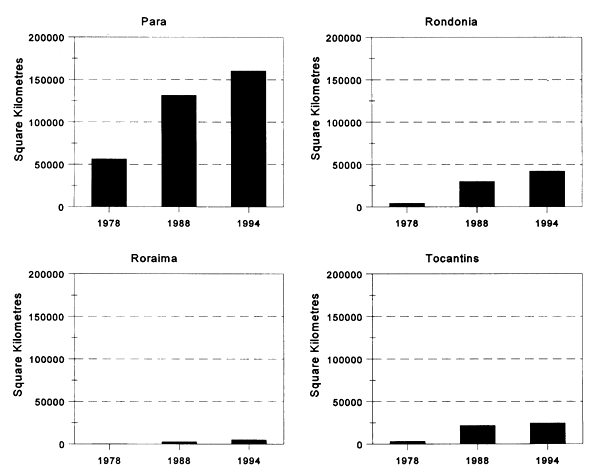
Source: INPE data on the World Wide Web (http://www.inpe.br)
The “shifted cultivator” is frequently blamed for deforestation (e.g., Myers, 1993), but the significant role of large-scale cattle ranches in the Brazilian Amazon is the key difference between deforestation processes in Brazil relative to other areas. A wide range of farm sizes and production systems involving beef cattle, dairy cattle, annual food crops and perennial products can be found in the Brazilian Amazon (Mattos and Uhl, 1994; Villachica et al., 1990; Fearnside, 1983, 1989). Unfortunately, estimates of the amount of deforestation by farm size and type are hampered by a general lack of hard data and a careful evaluation of land use utilizing a statistically valid sample drawn from across the Amazon has not yet been done. Estimates range from a high extreme of 70 percent of deforestation being caused by large-scale ranchers to under 21 percent (Fearnside, 1993; Yokomizo, 1989; Reis and Margulis, 1991; Homma et al., 1995).
Cattle and amazon deforestation
Critics of Amazon development have highlighted government subsidies for large-scale cattle ranching and land speculation in colonization projects as particularly insidious causes of deforestation. Ultimately, most land that is cleared in the Brazilian Amazon ends up as pasture. Large-scale ranchers, of course, clear and plant vast tracts directly into pasture. But most land held by small-scale slash-and-burn farmers also ends up as pasture, first as a way to stretch out the productive life of land cleared for annual crops and later as a form of direct forest conversion. Largely overlooked as an explanation for the predominant place of pasture is the role played by rapid beef and dairy demand growth from occupation of the Amazon (Faminow, 1997a).
The role of cattle in deforestation varies, depending upon the type of production system. For example, large-scale “investment ranchers” (urban entrepreneurs with little tradition in cattle ranching) utilize cattle as a financial investment selected from their available alternatives (Kaimowitz, 1995a). A generic list of factors underlying the role of cattle in deforestation includes (Vosti and Witcover, 1996; Reardon and Vosti, 1995; Kaimowitz, 1995a, b; Hecht, 1993):
Financial incentives
Government subsidies provided to large-scale ranchers are usually identified as the primary ‘culprit’ underlying the rapid increase in the cattle herd of the Amazon (Fearnside, 1987, 1989; Hecht et al., 1988). Beginning in 1966, SUDAM (the Brazilian Superintendent for the Development of the Amazon) provided investment funds and tax benefits to ranchers. Normally, projects were organized as shareholding societies in which the participants were entitled to direct financial support, exemptions or reductions on international duties, exemptions and/or reductions on income taxes, and tax reinvestment benefits (Yokomizo, 1989). As of March 1989, cattle ranching accounted for 58 percent of the total number of approved projects, mostly in Mato Grosso and Pará.
SUDAM classifies approved projects into different categories: (1) implemented, (2) cancelled, (3) forfeit and (4) being implemented. As of 1988, only 15 percent of all cattle ranching projects approved in Legal Amazon had been fully implemented even though close to half of them (312 projects) were approved prior to 1973. Most projects (73 percent) were listed as ‘being implemented’ in 1988. Many of the ranching projects ‘being implemented’ had been in this category for over 10 years. In the 1980s a renewal of public efforts to stimulate cattle production in the Amazon caused almost 400 projects to be approved, including 229 in 1982 – 1984 alone. It is in this period that the mad rush to promote investment in the Amazon led to wide scale project approvals, even when the ranching projects had little chance of economic viability or when resources were not sufficient to fulfil commitments (Yokomizo, 1989; Hecht, 1985).
Financial incentives were expanded, supervision and control were relaxed and a carnival atmosphere emerged, where the chances of windfall gains of huge tracts of land and public subsidies caused investors to ignore the limited economic potential of many of the projects. The rapid expansion of project approvals in the early 1980s was matched by a decline in available resources. This can be seen in Figure 4 which shows cattle ranching project approvals on the right-hand axis and the index of available fiscal resources (in constant terms) on the left-hand axis, both from 1975 to 1985. The rapid growth in project approvals between 1982 and 1984 is matched by a significant decrease in resources for fiscal incentives. Not only was less money being spread among more projects, but serious and widespread administrative problems further reduced the effectiveness of the subsidy packages (Yokomizo, 1989). In the late 1980s subsidies for new projects were suspended, a moratorium which has continued until today.
Figure 4: SUDAM Supported Ranches - Number Approved and Resources

Source: Yokomizo (1989).
Land speculation
The spread of cattle ranching in the Amazon is usually tied to land speculation (Fearnside, 1989; Hecht, 1985, 1993; Browder, 1988; Barbier et al., 1991). The primary body of empirical evidence used to support this notion boils down to one set of data taken from Mahar (1979) and reproduced in graphical form by Hecht (1985), showing nominal land prices and the general consumer price index between 1966 and 1975. Combined with anecdotes (see review in Schneider, 1995), this one sample of data is essentially the sole empirical base used to support the claims of land speculation (e.g., see Schmink and Wood, 1992, p.2; Fearnside, 1990).
Other available data regarding Amazon land prices reveals that the potential for speculatory profits through the 1970s and 1980s was limited (Homma et al., 1991; Reydon and Herbers, 1989; Faminow, forthcoming). Relative to the rest of Brazil, real farmland and pasture prices in the Amazon were stagnant, reducing the returns from speculation. Actual rates of return that could be earned from general Amazon land price changes were quite low over the 1970 to 1988 period. The idea that broad and consistent land price increases have generally provided large speculative earnings to anyone who could buy land and hold on to is mostly a myth. Some investors/speculators earned handsome rates of return from buying and selling land, but this is not the widespread and pervasive phenomena that is commonly believed.
Property rights
In the Brazilian Amazon, serious property rights problems have been linked to deforestation (Alston et al., 1994). The Brazilian Government, along with individual state governments, owns most of the Amazon and has been the primary actor in land allocation. There are three primary categories of private property in Brazil. Individuals may hold definitive titles that are issued by Federal Government agencies. These titles can be defended in court, freely transferred and are recognized nationwide. An alternative ‘semi-official’ form of title is an authorization to occupy land, which is issued by the government and formally allows an individual to occupy land while waiting for the processing of a definitive title. Finally, squatters occupy public or private land without any formal documentation. Squatters have played a very significant role in the occupation of the Amazon because the assignment and transfer of property rights in Brazil is complex and the bureaucratic process unacceptably slow (Schmink and Wood, 1992).
Because of the slow-moving legal process, informal measures have been devised to allow farmers access to certain benefits normally associated with legal property rights. For example, a letter from an extension agent identifying an individual as a land occupant is accepted by banks when allocating official farm credit.
Brazilian law favours squatters who can demonstrate that they have occupied and improved land (Uhl et al., 1994). Because forested land has long been considered idle under Brazilian law, squatters have a clear incentive to deforest land quickly in order to demonstrate use and improvement, and thereby gain informal land rights and eventually a definitive title to the land. Definitive titles increase wealth through a rise in the value of the land caused by the ease of transferability and state-guaranteed property security that ensues. Note that large and small land owners may face the same incentive. By clearing forests they can assert their property rights and pre-empt squatters who might be tempted to settle on ‘idle’ forest land and make claims that could be granted under Brazilian law. Even in cases where land owners have secure title, there may be additional tax incentives to deforest land (Almedia and Uhl, 1995a).
The regional demand for cattle products
The role that regional demand for beef and dairy products has played in explaining the explosive growth of the cattle herd in the Amazon is overlooked in the literature. Population growth is generally seen as an influence upon deforestation rates, through supply-side influences such as clearance for agriculture production and the critical link to product consumption is generally not made. Anecdotal evidence suggests that much of the increase in the cattle herd in the Amazon region was demand driven (Homma et al., 1983; Resende and Gonçalves, 1985; Roberts, 1996). Colonization and resulting rapid population growth created expanding markets for livestock products that were imperfectly integrated to the rest of Brazil through a costly and overstressed land transportation network and also poorly integrated to external markets by trade policies that promoted self-reliance. The increase in the cattle herd closely followed the increase in beef demand from 1960 to 1980, but then grew much more quickly between 1980 and 1991. Population growth in the Amazon depended heavily upon the construction of highways that provide links and access to the rest of Brazil: (1) the Belém to Brasilia highway (north-south); (2) the Transamazonia highway (east-west) through the heart of the Amazon; and (3) the construction of BR-364 (north-south) linking Acre and Rondônia to the south. The long and costly transportation links provided a spatial market niche for cattle production at the fringe of service areas from other regions in Brazil (Faminow, 1997a).
Table 1 provides rough estimates of beef production for three years (1960, 1980 and 1991) and puts these data into perspective by showing the self-reliance percentage, calculated as beef production using off-take rates relative to beef consumption. Self-reliance calculations provide a very general view of production and consumption by abstracting away from regional trade possibilities, which can be problematic for a region the size of Legal Amazon, so care should be exercised in interpreting these data. By 1991, substantial changes had occurred. The cattle herd in Rondônia grew from trivial levels to the second largest in the region and was producing almost twice as much beef as was needed for consumption within the state. The cattle herd in Pará grew dramatically, but so did consumption so that the state has a relatively small surplus available for export to other states. Despite a huge increase in beef consumption, Amazonas had only a small increase in beef production and it remained a major deficit region, providing only a quarter of the beef consumed. Overall, the North Region was roughly self-sufficient by 1991 after having a self-reliance rate of 50-60% through the 1960 to 1980 period. Trade within the Amazon and also with other regions has increased over time.
Table 1: Beef Production and Self-Reliance in Brazilian Amazon states
| Beef Production (MT) | Percent Self-Reliance(%) | |||||
|---|---|---|---|---|---|---|
| State | 1960 | 1980 | 1991 | 1960 | 1980 | 1991 |
| Rondônia | 181 | 10,000 | 135,347 | 6 | 42 | 190 |
| Acre | 1,691 | 11,920 | 22,635 | 26 | 82 | 86 |
| Amazonas | 7,354 | 14,000 | 32,184 | 25 | 20 | 24 |
| Roraima | 8,698 | 13,040 | 20,674 | 744 | 342 | 152 |
| Pará | 43,927 | 96,440 | 364,410 | 70 | 59 | 112 |
| Amapá | 2,365 | 2,080 | 3,817 | 85 | 25 | 21 |
| Total | 64,214 | 147,480 | 579,067 | 61 | 52 | 98 |
Note: Estimates of beef production are made assuming different off-take rates from herd inventories for the three years. In 1960 it was assumed that the herds were reasonably stable but with the low off-take rate of 13%. Because 1980 was in the period of rapid herd expansion when a large proportion of heifers were being retained the very low off-take rate of 10% is used. Finally, the estimated off-take rate for 1991 of 15% was used.
Cattle management for better outcomes
Cattle production in the Amazon is decried as a low-productivity enterprise that is not capable of generating positive returns without subsidies and profits from land speculation. Yet, only about 500 of the over 50,000 medium to large-scale ranchers in the Brazilian Amazon ever received a generous incentive package from SUDAM. Cost engineering data from the mid-1980s support the nation that cattle ranching is unprofitable (Hecht et al., 1988; Browder, 1988), but data from the early 1990s suggest otherwise (Mattos and Uhl, 1994; Arima and Uhl, 1995; Vosti et al., 1997). Overall, revealed preferences and the extensive experience with cattle by large and small producers across the entire Amazon suggest that cattle can be a profitable enterprise (Faminow, 1997b).
What opportunities exist to improve cattle management (micro and macro level) in the agroecosystems being created in the Amazon? As a conceptual basis for assessing agroecosystem performance and choosing better management systems we suggest using the concept of the “critical triangle” linking sustainability, growth and poverty alleviation (Vosti and Reardon, 1997). By micro level we mean decisions which may be taken at the level of the household livelihood system or below. Macro-level decisions are taken at higher levels in the hierarchy through policy levers which influence cattle decisions in household livelihood systems.
Micro-level decisions
Productivity targets based upon intensive systems developed from agricultural research may be unrealistic for large-scale production in tropical regions because experiment station results do not usually reflect actual production levels in commercially-run farms (Nicholson et al., 1995; Preston and Leng, 1987). Farmers often resist adoption of animal and plant varieties or management systems that are developed in agricultural experiment stations (Reátegui et al., 1995). For example, annual beef production under experiment station conditions can range between 438 and 657 kilogram per hectare, four to six times above typical beef production rates in the region (da Costa et al., 1995; Mattos and Uhl, 1994; Almeida and Uhl, 1995b). Typical on-ranch beef production rates are usually under 150 kg/ha, and often a low as 50 kg/ha, when all deforested land (active pasture and fallow) is included in the denominator (Mattos and Uhl, 1994).
Achievement of productivity levels similar to the experiment station results usually requires that an entire technological package be adopted (good cattle genotype, proper nutrition, appropriate health management and reproductive control and management). However, because of scarce capital, risk considerations, and other economic criteria cattle producers might follow a step-wise adoption process and technology does not always “trickle down” (Nagy and Sanders, 1990; Wadsworth, 1990). Also, livestock production technologies may not match up with the objectives of producers (Preston and Leng, 1987; Nicholson et al., 1995). For example, smallholders who specialize in dual-purpose milk and beef production will need to trade off some desired characteristics (e.g., milk production) in order to get other characteristics (e.g., high beef production).
It is now widely agreed that, in order to be successful, agricultural technology must fit within the family farm livelihood system (Reardon and Vosti, 1995). Because the objectives for a farm family will necessarily be broader than those for the livestock system, application of narrow herd performance indicators will not always be an accurate indicator of whether a technology package will be adopted. Cattle represent one of the few viable alternatives for diversification and asset growth in the Amazon (Mattos and Uhl, 1994). Family wealth increases from growth in herd size and from increases in animal values can be a very important factor in farm decisions. For example, Léna (1991) provides data showing that accumulation of wealth through cattle herd ownership provides a vehicle by which departing family members can be rewarded for their contributions to the farm. A related objective is financial liquidity. For households without access to other financial investment instruments and formal insurance programs, cattle provide a means for liquidity for contingencies such as illness. Finally, cattle production may provide non-consumptive benefits such as work satisfaction and prestige, while oxen may be utilized for draft purposes and cattle integrated into crop production by using manure to fertilize soil (Arima and Uhl. 1995).
Macro-level decisions
Macro policy changes affect agricultural and non-agricultural sector activities, although in some cases pulling a macro/sectoral policy lever might have greater/less impact on livestock production systems than other forms of production. Product and production system characteristics offer clues as to the direction and relative magnitude of the impacts of policy change on cattle and other sub-sectoral activities. For example, for smallholder dairy herds without access to milk pick-up by dairy processors (a common case), many policies will have minimal effects because production is weakly integrated into the cash economy. Some factors influencing technology adoption are quite ‘macro’ in nature (e.g., exchange rates, interest rates, relative prices of broadly traded commodities, etc.) and are by definition beyond the control of local, state and sometimes even national policymakers, at least in the long term.
In our view, the most important macroeconomic process in the western Amazon has been and will continue to be regional integration. This regional integration is driven by investments in physical infrastructure and reductions in obstacles to trade, which decrease transactions costs and increase trade flows-with both existing trading partners and new trading partners, and for products currently traded and new ones. Several examples currently exist in the western Amazon of this phenomenon. First, within-state integration is already underway. For example, the state of Rondônia is investing heavily in rural infrastructure in order to link forest margin areas with the major market center of Porto Velho, and with secondary cities such as Ji-Paraná. Second, inter-state integration is increasing from infrastructure investments such as the paving of the Acre/ Rondônia segment of BR-364 which facilitated flows of inputs and outputs between these states. Finally, and perhaps most importantly, are the intra-regional integration efforts. Currently six “avenues to the Pacific” are on the drawing board or in the process of being constructed, including two which link Acre/Rondônia with Bolivia/Peru. Another example is the massive grain (and other products) transfer/transport facility recently inaugurated in Rondônia, which will integrate the major soyabean production region of the northern savannah in Brazil with regional and global markets. Given the northward migration of the Brazilian soyabean complex over time, it is an open question whether the opening of this facility will encourage the continued expansion of soybean into the southern fringes of the Amazon, possibly displacing pasture and shifting the cattle sector northward also. Moreover, the methods used to promote regional integration and the geographic areas included in the process can have major implications for production/consumption patterns. For example, recent investments in river transport signal a departure from the focus on (and massive investments in) overland transportation, especially more traditional routes linking north and south. This geographic reshuffling and route refocusing may have large implications for the geographic distribution of cattle production and transport.
The pace and direction of regional integration will by guided by comparative advantage in production and intra-regional differences in levels and patterns of consumption. Most important, with regional integration the boundaries of private profitability of production and trade will expand dramatically, jumping beyond state and national boundaries to incorporate new lands and consumers, thereby eliminating the rough supply-demand balance described in the earlier section of this paper. Similarly, north-south links within Brazil continue to improve. In light of MERCOSUL, the free trade agreement linking Brazil, Argentina, Paraguay, Uruguay and Chile (with probable expansion to other countries such as Bolivia, Peru and Columbia) increased regional integration is a virtual certainty.
Very imperfect financial markets and macro-economic instability have contributed to the use of cattle as an inflation hedge. The annual inflation levels experienced in Brazil over the past several decades are mind boggling, ranging from a low of about 15% in 1995 to a high of over 2,700% in 1993 (an average of over 500% over the entire period). For smallholders, cattle have offered one of the few viable alternative uses of surplus funds for protection from inflation and investment potential (Hecht, 1993; Mattos and Uhl, 1994). Improvements in financial markets and reductions in inflation (the two may be linked and, perhaps, linked in different ways in urban versus rural areas) will have an impact on the demand for cattle at the level of small rural households. The appearance of more efficient capital markets in rural areas should reduce the demand for cattle (on the hoof) as stores of wealth and as a medium of exchange—at a minimum because some portfolio shifting out of cattle and into cash balances will occur for pure risk-spreading reasons, and probably also because cattle might not be an efficient mechanism for doing so.
In Brazil, production taxes are levied at points of sale through the marketing chain and affixed to the sales price. Cattle producers can avoid paying the tax by selling cattle to small uninspected slaughtering plants. Official estimates of national slaughter are badly distorted because of the large clandestine slaughter market. For example, sources such as hide tanning receipts suggest that clandestine slaughter typically accounts for about 45% of all slaughter in Brazil and best guesses are that, currently, over 50% of all slaughtering (in Acre/Rondônia) is done illegally. The Brazilian government is making a concerted effort to reign-in this clandestine market with measures such as the strict enforcement of meat inspection regulations(e.g., by requiring all sales of meat to supermarkets to be in vacuum packages, a move which could curtail some output of the small clandestine packing facilities). If this initiative is successful, it should shift supply curves for beef inward by the amount of the tax levy.
Finally, serious efforts are being made to eradicate foot and mouth disease in Brazil through a nation-wide and highly visible campaign organized by the federal government in conjunction with individual state governments. Some major cattle producing states in the south and centre-west of Brazil(such as Rio Grande do Sul and Mato Grosso) have been free of foot and mouth disease for more than two years. This awareness and vaccination campaign has even spread to smallholder cattle producers in remote regions in Acre and Rondônia, where vaccination of herds against foot and mouth disease is an increasingly widespread and regular management practice because of extension efforts and more stringent testing by commercial dairies in the region.
A final word
Ultimately, one must question whether the best use of the Amazon rainforest is pasture for the production of beef and milk. The revealed preferences of large and small farmers and ranchers in the Amazon, along with on-the-shelf cattle production technologies and limited current markets for alternative crops, support the notion that cattle will continue to be the most widespread agricultural use of the region, at least over the next several decades.
From an environmental perspective expansion of this land use is not appealing. The rainforest provides a range of ecological services and potential economic products that are lost when converted to pasture. Protection of the remaining forest will depend upon four primary factors: (1) identifying and promoting alternative income-generating activities for rural households, especially those making use of already-deforested and, possibly, degraded lands; (2) the adoption of improved technologies for raising cattle by the large, medium and small landholders already in the Amazon; (3) the extent to which population and income growth in the Amazon continues; and (4) the capacity of governments as owners and managers of vast tracts of the Amazon to preserve the forest. The current trends to enhanced regional integration, along with increased international links, means that serious efforts along all four of these factors will be necessary for forest preservation.
Ultimately, it is the land-use decisions of the hundreds of thousands of households that currently occupy and raise cattle in the rural areas of the Amazon that will decide the fate of the forest. Policies can be taken at the micro and macro level to influence these decisions. The need to achieve growth and poverty objectives while eventually translating environmental trade-offs into complementarities suggests an important role for agricultural research. Adoption of improved technologies to intensify production and increase the effective carrying capacity of pastures would help provide a means for limiting future use of the forest for new pasture, relative to the extensive and, often, extractive systems widely used. The intensification option is not often supported by environmentalists but is one that surely deserves serious consideration.
References
Almeida, O.T. de and C. Uhl. 1995a. “Brazil's Rural Land Tax.” Land Use Policy 12 (No.2): 105–114.
Almeida, O.T. de and C. Uhl. 1995b. “Developing a Quantitative Framework to Sustainable Resource-Use Planning in the Brazilian Amazon.” World Development 23 (No. 10): 1745–1764.
Alston, L.J., G.D. Libecap and R. Schneider. 1996. The Determinants and Impacts of Property Rights: Land Titles on the Brazilian Frontier. NBER Working Paper Series 5405. Cambridge, MA. June.
Arima, E.Y. and C. Uhl. 1995. “Ranching in the Brazilian Amazon in a National Context: Economics, Policy and Practice.” Mimo. IMAZON. Belém.
Barbier, E.B., J.C. Burgess and A. Markandya. 1991. “The Economics of Tropical Deforestation”. Ambio 20 (No. 2, Apr.): 55–58.
Browder, J.O. 1988. “Public Policy and Deforestation in the Brazilian Amazon.” IN: Repetto, R. and M. Gillis. Public Policies and the Misuse of Forest Resources. Cambridge University Press. pp. 247–297.
Colinvaux, P.A. 1989. “The Past and Future Amazon.” Scientific American 260 (No. 5, May): 68–74.
Costa, N.A. da, L.O.D. de Moura Carvalho, J.F.T. Neto, J.B. da Veiga and W.S. Couto. 1995. “Sistemas de Pastejo Intensivo Rotacionado.” Pamphlet: Dia de Campo. Centro de Pesquisa Agroflorestal de Amazônia Oriental. EMBRAPA. Belém, Pará.
Faminow, M.D. 1997a. “Spatial Economics of Local Demand for Cattle Products in Amazon Development” Agriculture, Ecosystems and Environment 62 (March): 1–11.
Faminow, M.D. 1997b. “The Brazilian Cattle Sector: Status, Prospects and Controversies” Canadian Journal of Agriculture, Ecosystems and Environment 62 (March): 1–11.
Faminow, M.D. Forthcoming. Cattle, Deforestation and Development of the Amazon: An Agronomic, Economic and Environmental Perspective. Wallingford: CAB International.
Fearnside, P.M. 1983. “Land-use Trends in the Brazilian Amazon Region as Factors in Accelerating Deforestation.” Environmental Conservation 10 (No. 2, Summer): 141–148.
Fearnside, P.M. 1987. “Causes of Deforestation in the Brazilian Amazon.” In: Dickinson, R.E. (Ed.), The Geophysiology of Amazomia: Vegetation and Climatic Interactions. John Wiley and Sons: New York: pp. 37–53.
Fearnside, P.M. 1989. “Deforestation and Agricultural Development in Brazilian Amazonia.” Interciencia 14(No. 6, Nov./Dec.): 291–297.
Fearnside, P.M. 1990. “Predominant Land Uses in Brazilian Amazonia.” In: Anderson, A.B. (ed.) Alternatives to Deforestation: Steps Toward Sustainable Uses of the Amazon Rain Forest. New York: Oxford University Press: pp. 233–251.
Fearnside, P.M. 1993. “Deforestation in Brazilian Amazonia: The Effect of Population and Land Tenure.” Ambio 22 (No.8, December): 537–545.
Fearnside, P.M. 1997. “Environmental Services as a Strategy for Sustainable Development in Rural Amazonia.” Ecological Economics 20 (No. 1, January): 53–70.
Haller, A., R.S. Torrecilha, M.C. del P. da Haller and M.M. Tourinho. 1996. “The Socioeconomic Development Levels of the People of Amazonia Brazil - 1970 and 1980.” Journal of Developing Areas 30 (April): 293–316.
Hecht, S. B. 1985. “Environment, Development and Politics: Capital Accumulation and the Livestock Sector in Eastern Amazonia”. World Development 13 (No.6): 663–684.
Hecht, S. B., R.B. Norgaard and G. Possio.1988. “The Economics of Cattle Ranching in Eastern Amazonia.” Interciencia 13 (No. 5, Sep./Oct.): 233–240.
Hecht, S. B. 1993. “The Logic of Livestock and Deforestation in Amazonia.” BioScience 43 (No. 10): 687–695.
Homma, A. K. O., P. C. Kitamura and G. H. H. Flohrshütz. 1983. Análise do Complexo Pecuária no Nordeste Paranense EMBRAPA-CPATU. Documentos, 18. Belém, Brazil.
Homma, A. K. O., A. R. T. Filho and E. P. Magalhães.1991. “Análise do Preço da Terra como Recurso Natural Durável: O Caso da Amazônia.” Revista de Economia e Sociologia Rural 29 (No. 2, April/June): 95–102.
Homma, A. K. O., R. T. Walker, F.N.Scatena, A.J.de Conto, R. de A. Carvalho, C.A.P. Ferreira and A. I. M. dos Santos. 1995. “Redução dos Desmatamentos na Amazônia: Política Agrícola ou Ambiental?” Paper presented at the XXXIII Congresso Brasileiro de Economia e Sociologia Rural. July 31 - August 3.Curitiba, Paraná.
Kaimowitz, D. 1995a. “Livestock and Deforestation in Central America in the 1980s and 1990s: A Policy Perspective.” EPTD Disscussion Paper No. 9 (June). International Food Policy Research Institute and Interamerican Institute for Cooperation on Agriculture: San Jose, Costa Rica.
Kaimowitz, D. 1995b. “Land, Tenure, Land Markets and Natural Resource Management by Large Landowners in the Petén and the Northern Transversal of Guatemala.” Paper Presented at the 1995 Meeting of the Latin American Studies Association, The Sheraton, Washington, September 28–30.
Léna, P.1991. “Ritimos e Estratégias de Acumulação Camponesa em Áreas de Colonização: Um Exemplo em Rndônia.” Boletim Museu Paraense Emílio Goeldi, Sér Antropologia 7 (No. 1): 37–70.
Mahar, D. 1979. Frontier Policy in Brazil: A Study of Amazonia. New York: Praeger.
Mattos, M.M. and C.Uhl. 1994. “Economic and Ecological perspectives on Ranching in Eastern Amazon.” World Development 22 (No.2): 145–158.
Moran, E. 1993. Through Amazon Eyes: The Human Ecology of Amazonian Populations. lowa City:University of lowa Press.
Myers, N. 1993. “Tropical Forests: the Main Deforestation Fronts.” Environmental Conservation 20 (No.1, Spring): 9–16.
Nagy, J.G. and J.H. Sanders. 1990. “Agricultural Technology Development and Dissemination Within a Farming System Perspective.” Agricultural Systems 32 (No. 4): 305–320.
Nicholson, C. F., R. W. Blake, C. I. Urbina and D. R. Lee. 1995. “Livestock, Deforestation and Policy Making: Intensification of Cattle Production Systems in Central America Revisited.” Journal of Dairy Science 78 (No.3, March): 719–734.
Preston, T. R. and R. A. Leng. 1987. Matching Ruminant Production Systems With Available Resources in the Tropics and Sub-Tropics. Armidale: Penambul Books.
Psacharopoulos, G., S. Morley, A. Fiszbein, H. Lee and W. C. Ward. 1995. “Poverty and Income Inequality in Latin America During the 1980s.” Review of Income and Wealth 41 (No.3, September): 245–264.
Reardon, T. and S. A. Vosti. 1995. “Links Between Rural Poverty and the Environment in Developing Countries: Asset Categories and the Investment Poverty.” World Development 23 (No.9, September): 1495–1506.
Reátegui, K., R. R. Vera, W. L. Loker and M. Vásquez. 1995. “On Farm Grass-Legume Pasture Performance in the Peruvian Rainforest.” Experimental Agriculture 31: 227–239.
Resi, E. J. and S. Margulis. 1991. “Options for Slowing Amazon Jungle Clearing.” In: Dornbusch, R. and J. Poterbar (eds.) Economic Policy Response to Global Warming. Cambridge: MIT Press.
Repetto, R. 1990. “Deforestation in the Tropics.” Scientific American 262 (No.4, April): 36–42.
Resende, J. C. de and C. A. Gonçalves. 1985. Pecuária Bovina no Estado do Rondônia: Dagnostico e Aspectos Econômicas. EMBRAPA-UEPAE.Documentos, 15. Porto Velho, Brazil.
Reydon, B. P. and R. G. Herbers. 1989. “Politica Governmental Para a Agropecuária e Degredaçã do Meio Ambiente.” Reforma Agrária (April/June): 42–51.
Roberts, J. J. 1995. “Trickling Down and Scrambling Up: The Informal Sector, Food Provisioning and Local Benefits of the Carajas Mining Growth Pole.” World Development 23 (No. 3): 385–400.
Schmink, M. and C. H. Wood. 1992. Contested Frontiers in Amazonia. New York: Columbia University Press.
Schneider, R. R. 1995. Government and the Economy on the Amazon Frontier. World Bank Environment Paper No. 11. Washington.
Skole, D. and C. Tucker. 1993. “Tropical Deforestation and Habitat Fragmentation in the Amazon: Satellite Data from 1978 to 1988.” Science 260 (June 25): 1905–1910.
Uhl, C., A. Verissimo, P. Barreto, M. Mattos and R. Tanita. 1994. “Lessons from the Aging Amazon Frontier: Opportunities for Genuine Development. In: Kim, K. C. and R. D. Weaver (eds.) Biodiversity and Landscape: A Paradox of Humanity. Cambridge: Cambridge University Press.pp. 287–303.
Villachica, H., J. E. Silva, J. R. Peres and C. M. C. da Rocha. 1990. “Sustainable Agricultural Systems in the Humid Tropics of South America.” In: Edwards, C. A., R. Lal, P. Madden, R.H. Miller and G. House (eds.). Sustainable Agricultural Systems. lowa: Soil and Water Conservation Society: p. 391–437.
Vosti, S. A. and J. Witcover. 1996. “Slash and Burn Agriculture -- Household Perspectives.” Agriculture, Ecosystems and Environment 58: 23–38.
Vosti, S. A., and T. Reardon. 1997. “1. Introduction: The Critical Triangle of Links among Sustainability, Growth. and Poverty Alleviation.” In: Vosti., S. and T. Reardon (eds.). Sustainability, Growth, and Poverty Alleviation: A Policy and Agroecological Perspective. Baltimore, MD: John Hopkins University Press for the International Food Policy Research Institute.
Vosti, S.A., S. Oliveira and M. Faminow. 1997. “Policy Issues In Agroforestry: Technological Adoption and Regional Integration in the Western Brazilian Amazon. Paper presented at the 88th Tri-Societies Meeting. February. Indianapolis.
Wadsworth, J. 1990. “Developing Efficient Extension Strategies: Results of an Experiment Involving Costa Rican Livestock Producers.” Agricultural Systems 32 (No.3): 259–275.
Yokomizo, C. 1989. “Financial and Fiscal Incentives in the Amazon.” In: Universidade de São Paulo. Amazônia Facts Problems and Solutions. São José dos Campos, São Paulo: pp. 93–136.
R. AVELING, E. BARRON, P. BERGIN, M. INFIELD
African Wildlife Foundation, P.O.Box 48177, Nairobi, Kenya
Introduction
In this presentation we have chosen to refer to ‘livestock IN the environment’ rather than ‘livestock AND the environment’, emphasising that livestock is not separate from, and dichotomous to, the environment, but rather one intrinsic component, and a tool for its management. Our paper presents a perspective on livestock and wildlife as components of environment in pastoral areas of East Africa. Using examples from Tanzania, Kenya and Uganda, it describes how the livestock component interacts, both positively and negatively, with other important elements of this environment, and especially with wildlife.
By ‘wildlife’ we mean the spectrum of living, non-domesticated species, both plant and animal, now commonly referred to as biodiversity. Yet despite this modern and comprehensive definition of wildlife, issues and conflicts between livestock and wildlife as land uses are frequently centered on ungulates and other large mammals, which share ecological niches with livestock species, and access to the range and vegetation which support all of them.
Some recent publications, and advocacy groups, stress that wildlife conservation has robbed pastoralists of a significant part of their traditional range. But with the pressures of various other forms of land use increasing, particularly settled agriculture and subdivision of pastoral lands, pastoralists and wildlife managers in East Africa find themselves forced into an uneasy alliance. In general, it could be said that pastoralism and wildlife both have first-order conflicts (fundamental incompatibility) with intensive agriculture, whereas they only have second-order conflicts (some constraints to compatibility) with each other. Given these conditions, a strategy of some pastoralist and conservation groups is to:
combine the political and economic forces of pastoralism and wildlife conservation to restrict the expansion of agriculture into certain areas (including tracking the use of subsidies and land use policies leading to conversion of inappropriate lands from pastoral to agricultural use);
try to minimize and mitigate the second-order conflicts which exist between pastoralism and wildlife management, such as predation, disease and grazing competition;
try to maximize the positive and complementary aspects of pastoralism and conservation such as spreading economic risk and maintaining opportunities for ecological and cultural diversity.
The African Wildlife Foundation (AWF) has been working in the major wildlife areas of East Africa for 35 years. During this time, and especially in the last decade, we have found it impossible to address wildlife issues without being closely associated with, and informed by, the livestock economy, for it is primarily in pastoral areas that large African wildlife species remain. Many observers have noted that the fate of African wildlife and African pastoralists seem to be inextricably linked. As a result, a number of our projects employ pastoralists, and work specifically with pastoralist groups, to look at options for managing land, vegetation, livestock and wildlife resources. As this process evolves, and conditions change, many of the old, technical distinctions between different types of resources change also.
In areas where wildlife management has been integrated with pastoralism, pastoral communities have been heard to refer to wildlife by such euphemisms as “our other cattle” and “cattle that give milk when it is very dry”. Functionally, wildlife and livestock are integrated into their land use production system. While this is encouraging, the political and sociological environment is complex, many issues providing a challenge to planners, policymakers and stakeholders alike.
The examples in this paper focus on areas that have considerable opportunities for integrated planning - the arid and semi-arid lands (ASALS) of East Africa. We need to acknowledge, however, constraints to such integration, and recognise the influence of historical decisions on land use (such as creation of National Parks) as well as current development pressures.
Some key issues
Tradition and culture. East African pastoralists are not locked into the destructive land and livestock relationships that many people assume. Nor are they romantic independents, living in perfect harmony with nature. They are skilled and knowledgeable herdsmen with a long tradition of making the best of a harsh environment, increasingly forced by economic and environmental pressures to modify their traditional management systems.
Development. Wildlife and livestock systems are subject to ever-increasing pressure from growing human populations and levels of consumption. In order to cope with these changes, it is essential to recognize what is valuable in traditional natural resource management systems and yet assist pastoral people to adapt to changing socio-economic and environmental conditions.
Production. In the ASALs of East Africa, livestock and wildlife are the primary ‘mediators’ through which humans derive usable resources from an uncertain environment, one that is characterised by dramatic changes in productivity due to patchy rainfall and resource distribution. If the goal is to maximise production from this environment while, at the same time, supporting biological and cultural diversity, wildlife and livestock can play complementary roles.
Cooperative resource management. Both pastoral and wildlife management in ASALS require an area large enough for wet and dry season grazing, and range areas for viable populations of the wildlife species concerned. Such large areas are necessary to enable movement between “good” and “bad” patches over time, and to incorporate the unevenly distributed range of resources needed for both survival and production. Achieving access to such large areas normally implies some form of cooperative or common pool resources management.
Differential values. In looking at production systems that combine livestock and wildlife, it is important to be aware of the different values and uses associated with such resources by women and men. In many cases men may focus on the cash and status value of livestock and women may recognize a broader set of needs related to daily family requirements and risk reduction.
Examples of mixed wildlife/livestock systems from East Africa
The examples in this section describe production systems in East Africa where traditional patterns of co-existence between pastoralists and wildlife have been disrupted or challenged. AWF is examining opportunities for interventions which could lead to the establishment of a new balance, and some of this ongoing work is discussed briefly.
1. Uganda: Ankole Long-horned Cows and the Lake Mburo Ecosystem
The Ankole Region of south western Uganda is the home of the traditionally nomadic Bahima people. The management of Lake Mburo National Park, which lies at the heart of the region, has long recognized the critical nature of the relationship between the core area of the park, with its extensive wetland system, and the surrounding privately-owned rangelands. Historically, in dry years, the Bahima would follow the wildlife, driving their famous long-horned Ankole cattle south from the rapidly desiccating hinterland. When the rains fell, the movements were reversed, and wildlife and cattle dispersed to the fresh grazing and replenished water sources to the north, allowing the vegetation to recover. As a result of this pattern, during the dry season there is local political pressure to admit livestock into the park. During the rainy season large numbers of impala, zebra, eland and topi are outside the park. where they are vulnerable to illegal hunting, compete for grazing with wildlife, consume salt purchased for cattle, break fences and damage watering facilities. Research has shown that the pastoralists around Lake Mburo National Park are more negative to the existence of the park than any other population group.
In an effort to resolve this complex of problems, the conservation authorities, with donor and NGO support, are beginning to look at innovative strategies for managing the broader ecosystem. A number of interesting opportunities have been identified and are currently being researched. It is believed that they will help reduce the general trend towards conversion of rangeland outside the park to farmland, which is a threat to both biological diversity and to the lifestyle of the Bahima people. Incorporating wildlife into the economics of mixed land use that the Bahima people are developing around the park could combat this pressure, and retain a greater diversity of options for pastoralists as they adapt to a more settled lifestyle, in smaller areas of land.
It has been estimated that at existing population levels, an impala (Aepyceros melampus) cropping scheme would provide revenue to the average pastoralist settler sufficient to pay the school fees of two children, and it has been indicated that this would be sufficient to encourage the protection of impala by more than balancing the costs of having them on their land. In addition, the park management have been experimenting with living fences that would enable crops to be protected from damage by wild animals, thus removing a major area of conflict.
Research has also been initiated to determine whether Ankole Long-horn cattle could be integrated into the management of the national park. Existing information suggests that the breed is unique and represents important biodiversity which should be conserved. The changing land use and lifestyle of the Bahima suggest that the cattle breed itself will come under threat. This value is one which might find integration into the role and function of a national park. The striking appearance of the cows, with their giant horns and deep red coloration could have value as a tourist attraction, and hence revenue source, if an appropriate interpretation programme was undertaken to educate park visitors as to their role.
Finally, an examination of the non-economic (cultural or spiritual) values of the Ankole people is being carried out to determine whether the integration of the cow into the park would alter the nature of the relationship between the park and the people. The existence of the Ankole cow within the natural environment (the color and shape of the horns, for example, mimics the color and shape of a dominant species of acacia, Acacia sibiriana, may also be integral to the definition of the Ankole cow. Concerns are being expressed among the Bahima that confining Ankole cows to small, enclosed, heavily modified spaces outside the park will destroy, or alter, the essence of the cow. This is important to the Bahima as the Ankole cow forms the central focus of their cultural and spiritual, as well as economic, existence.
There remain many difficulties, however, inherent in blurring the lines between conservation and production practices. The very question of introducing consumptive values to wildlife can be controversial and there is no guarantee that, in this case, the Government of Uganda will make this decision. Likewise the idea of integrating livestock into a national park can spark heated debate. It seems clear that integrating a broadened set of values into land uses that includes both wildlife and cattle can be beneficial for conservation, production and diversity. To guide the debate, further experimentation (with rigorous analysis and monitoring) is required to tease out the dynamics.
2. Tanzania
2.1 The Ngorongoro Conservation Area (NCA)
The NCA is perhaps the most significant single example of an attempt to reconcile pastoralism and conservation in the world. The NCA, adjacent to Serengeti National Park, was formed as a multiple land-use area which combined Maasai pastoralism and wildlife conservation. It is widely acknowledged that the great herds of wildlife that remain in the Serengeti ecosystem are present today mainly because of the Maasai tradition of pastoralism rather than agriculture as a primary economic activity, as well as the Maasai tradition of not eating wild meat under most circumstances. It is less widely acknowledged that without the modern conservation provisions of the Ngorongoro Ordinance, much of the Ngorongoro highlands could by now have been lost to both conservation and pastoralism, by the extremely aggressive spread of agriculture that characterizes the surrounding district.
Despite the remarkable innovativeness of the compromise between conservation and pastoralist at the time, the alliance has in recent years been eroded and actions have been taken which threaten the well-being of both.
The Ngorongoro Conservation Area Authority (NCAA) has been collecting significant revenue in recent years due to an upswing in tourism. However there have been problems with the mechanisms by which part of this revenue is used to improve the well-being resident pastoralists, to strengthen and support the pastoral economy, and to provide some of the essential services which the Maasai community now expects. With cattle dips and vaccines not regularly available, livestock have also been at greater risk of disease, and transmission between wildlife and livestock has become more of an issue. In this situation, Maasai political support for the NCAA has been reduced, many Maasai have supported proposals for change which could be detrimental to the conservation status of the area, and in real terms, vulnerable species such as the black rhino have been poached with impunity.
In recent years, with decreasing per-capita income and holdings, the Maasai community successfully lobbied Government for permission to practice limited agriculture in the area. While this concession was a political achievement for the community, and has had a beneficial impact on their food security (and probably nutritional status) this break with the conservation ethic of the area may eventually come with a very high price tag attached. Already many non-Maasai are using Maasai ‘fronts’ to gain access to land for farming within the area, thus effectively alienating those lands from Maasai use.
A number of promising initiatives are currently being negotiated to reinvigorate synergy between conservation and pastoralism at NCA. A new General Management Plan (GMP) has been prepared and approved with extensive participation from both pastoralists and conservationists. The GMP makes the areas in which conservation and pastoralism can complement each other more explicit. Scandinavian donors working with the NCAA and the Maasai community are strengthening the economic basis of the livestock economy of the residents, while the NCAA itself is working on a strategy to revitalize its Community Development Department and basic social services.
2.2 Lands adjacent to national parks in northern Tanzania
Maasai lands surround many of Tanzania's most famous and economically important parks including Serengeti, Lake Manyara, Tarangire and Kilimanjaro. In these areas, the lands still held and grazed by the Maasai frequently provide the last remaining corridor and dispersal areas for wildlife from, and between, National Parks and are considered essential for the long term viability of large wildlife populations. Maintaining the Maasai preference for livestock keeping rather than farming in these areas is essential for the maintenance of biological diversity, as well as to build tourism as part of a broader economic base.
On these Maasai lands outside parks, both pastoralism and conservation operate in a tenurial vacuum. While in a few cases the Maasai have acquired title deed to their lands, elsewhere the traditional tenure of pastoralists is not formalized, but the land is referred to as ‘open’ area. leaving it free to be claimed and exploited by charcoal burners and farmers. Likewise although these areas may be gazetted as “Game Controlled Areas”, a farmer who has settled a piece of land has the right to shoot animals crossing it as a crop protection measure.
Safari hunting occurs in most of these areas, but there are problems in its regulation, and quotas are not set or monitored on a scientific basis. Virtually all of the revenue from hunting accrues to the central government. Thus wildlife does not generally add to the local economic base.
In a few areas, National Parks have assisted pastoral communities with water, health and education projects as part of a park outreach program. Private sector eco-tourism initiatives have also benefitted pastoralists. In one such scheme near Tarangire National Park, pastoralists are now using revenues from a campsite, rather than the traditional ‘tax’ of one cow per household, to maintain their borehole.
Very significant potential exists to strengthen both the ecological and economic benefits of a wildlife/livestock alliance in these areas by putting in place community-based management regimes using sound, but simple, management plans for land and resource use. AWF is promoting such management regimes through its Community Conservation Service Centre (CCSC) in Arusha.
3. Kenya
3.1 Pastoralism and reforestation in Turkana
In the case studies above, ‘wildlife has largely meant the game animals of the African plain. However planners and policy advisors frequently overlook the important relationship between pastoralism and the conservation of woody vegetation. Trees are essential in dry-land sylvo-pastoral systems. Woody vegetation survives better, for longer periods of time, than non-woody vegetation, and often yields more, with a higher nutritional value, at critical periods. Pastoralist management recognises this value and works to retain woody vegetation as a resource.
Dramatic revegetation of formerly bare ground occurred at Lorugum, Turkana, Kenya where there was a large famine relief camp in the late 1960s and early 1970s. People had cut down most of the existing vegetation, except for some riverine forest, for making houses, fences or fuel. As the effects of the famine receded, the people gradually acquired livestock, mainly goats. The goats fed in the riverine forest and consumed Acacia tortilis pods which were then deposited in their droppings. With the onset of good rains these pods germinated, and the chief of the area, together with the elders, decided to conserve the natural regeneration of Acacia tortilis.
Livestock management cannot be considered purely in terms of animal science as there are linkages to many other disciplines and systems that concern water, fodder and cultural values. If an area becomes dry, it is normally power of access to water and fodder that is central to pastoralism. In Turkana, herd owners depend on pods from Acacia tortilis and other trees along the major water courses to provide fodder during the dry season.
Given the vital importance which riverine forest plays in this livestock production system, the Turkana have developed usufruct rights to crucial areas of trees, or Ekwar. People own their ekwar for long periods of time, often in excess of two generations, and a number of important species are particularly protected by custom. The key issue here is that the complex pastoralist community use rights over wildlife resources are employed to maintain their function in decreasing risk, and increasing resilience of the system.
Acknowledging and supporting the conservation and regeneration of trees in this area is essential to the maintenance of the livestock production system. Likewise any disturbance in the flow of the river on which the riverine forest depends, such as that for irrigated agriculture schemes and dams, would have profound impacts on both the environment and livestock.
3.2 Livestock and wildlife use on privately-owned ranches and community lands
A case-study currently being undertaken by the African Wildlife Foundation is investigating the conditions under which wildlife management offers a competetive commercial rate of return compared with other land-use options, on private and communal lands. While not ignoring the non-commercial factors affecting landholder decision-making about wildlife resources, the study takes the underlying hypothesis that wildlife must yield acceptable financial returns when compared with alternative uses and investments, if it is to be conserved.
Initial results from a rangeland area of privately-owned ranches surrounded by community lands, indicate the potential for combining commercial returns from wildlife (consumptive and non-consumptive) and livestock in the same area. Preliminary study findings show that, under current management, commercial returns from combining livestock and wildlife land uses can exceed livestock alone by a factor of four to one. An indication of the ranch owners commercial decision-making in favour of wildlife is that they are prepared to accept fairly heavy livestock losses to predation, in order to maintain predators as part of the package for lucrative wildlife tourism.
To put this in perspective, these figures concern lower potential lands. Economic and commercial analyses for higher potential lands adjacent to rangeland areas, indicate that for purely commercial returns and given favourable climatic conditions, intensive agriculture can out-compete livestock-wildlife combinations in the shortterm. This highlights the importance of tenure issues, to include rich patch areas within a lower potential system, where a longer-term approach to productivity and sustainability are desirable.
Conclusions and recommendations
The examples above highlight several pervasive issues-centering on land use, with elements of conflict, cooperation, scale and process. If the thesis is accepted that livestock production and wildlife conservation can be combined to their mutual benefit, we have to look for practical ways to shift the balance of land use in their favour, in key areas. Targeted research should be closely linked in to practice and implementation to be of value in influencing land-use decisions and management. The following are points which combine research and practice, and which require follow-up and support.
Innovative management systems for livestock and wildlife. Agricultural science shifted focus from single, specific crops to trying to understand and improve “farming systems”. In many of the semi-arid areas of Africa, livestock ‘crops’ are also better viewed as part of a system of natural resource use. It is important both to have an understanding of the indigenous knowledge of these systems, and to add to them through better management systems which combine livestock and wildlife. It is important for scientists with sectoral specializations to be aware of the need not just to maximize one type of production, but rather to balance the productivity and risk in a system. Livestock management is not just a sectoral technical issue, but also a social mechanism.
Thresholds of use. Research is required to help determine some of the thresholds of economic and ecological productivity under different conditions. This research needs to combine modern knowledge about animal nutrition and markets, as well as indigenous knowledge about risk management, resilience and long-term changes in the conditions of savannah ecosystems.
Pastoral reserves / wildlife corridors. In order for an overall sustainable land use system, including wildlife conservation and pastoralism, to work, there is a need to be concerned about encroachment on any part of the overall pastoral resource-use system. Agricultural encroachment tends to target key resource areas, such as riverine forests and seasonal flood plains. This conversion of use breaks the integration of use over space with time, resulting in large parts of the system becoming largely valueless in production terms. Land and resource tenure rights, or cooperative land use, are essential to both pastoral and wildlife management regimes. For this reason, AWF is working with pastoral groups to promote identification and acceptance of controlled, open areas which are critical for sustaining seasonal movements of both livestock and wildlife. In these pastoral reserve or wildlife corridor areas, agriculture would be controlled in favour of livestock and wildlife.
Impact indicators and monitoring systems. The integration of conservation and livestock production requires monitoring systems that are designed to track conservation, production, economic and social indicators. Collaboration between different disciplines, and links between scientists and field practitioners, are needed to develop appropriate indicators and test their application.
Disease issues. An increasingly important aspect of livestock and wildlife interactions is that of disease. In recent years, Maasai dogs have been suspected of introducing canine distemper into the Serengeti ecosystem causing an epidemic and the loss of many lions. The resurgence of rinderpest in East Africa, and its control, brings up many issues of wildlife-livestock interaction. Wildlife, as a non-vaccinated control, is providing vital information on the pattern and spread of the disease. Malignant catarrhal fever, which remains contagious in the afterbirth of wildebeest, is a constraint to cattle grazing in the Simanjiro plains of Tanzania. More resources need to be invested into understanding and minimizing the negative aspects of disease transmission between wildlife and livestock, for their mutual benefit.
Economic and cultural incentives. In order for wildlife conservation to fully complement pastoralism and to reduce the risk of pastoralism as a single economic activity, it is necessary for wildlife benefits to pass through monetary mechanisms and to be transferred into food, medicines or livestock services. Thus the success of this partnership between pastoralism and conservation may depend upon the efficiency and accountability of these conversion systems. Further work is necessary on the incentives which determine land and resource-use decisions, and effort must also be applied to enhancing the incorporation of such data into governmental planning, as well as local decision-making processes.
Partnerships and collaboration are essential for tackling the challenges inherent in the above. To do so, we will need to overcome narrowly focused agendas, and defensive attitudes that were apparent in some of the contributions to the electronic conference that preceded this gathering.
I leave the last word to Gary Meffe (1997), concluding a discussion of biodiversity and “base values” - a broader definition of human needs than consumption alone:
“Cross-fertilization among different perspectives seems a fertile area for conservation, for there is much to be learned about the human mind and spirit that remains to be incorporated into our collective efforts. The more we can glean from fields such as the policy sciences, sociology, economics, anthropology, law and others, the better equipped we will be to mount the global efforts necessary to incorporate species diversity and human needs into a compatible package. If we ignore the latter, if we choose to remain within the narrow constraints of our particular disciplines, then I fear we not only have neglected an important tool, but surrendered much of biodiversity to base values that we failed to comprehend and may also begin to exhibit the signs of inbreeding depression that we know so much about”.
References
African Wildlife Foundation Discussion Papers, 1997: ACEDP-Series on Applied Conservation Economics.
African Wildlife Foundation Discussion Papers, 1997: CCDP-Series on Community Conservation.
African Wildlife Foundation: Conservation, Economics and Commerce Programme. Unpublished material-pers. comm.
Anderson, C., 1992. A gene library that goes “moo”.Nature 355 (January, 1992): 382.
Barrow, E.G.C., 1996. The Drylands of Africa-Local Participation in Tree Management. Initiatives Publishers Ltd., Kenya.
Bergin, P. 1996. The Institutionalization of Community Conservation in Tanzania National Parks. Unpublished Ph.D Thesis.University of East Anglia.
Doornbos, M. R., 1978. Not All the King's Men: Inequality as a Political Instrument in Ankole, Uganda. The Hague, Paris, New York. Mouton Publishers.
Ghimire, K. B.,and Pimbert, M. P., 1997. Social Change and Conservation. Earthscan Publications Ltd. ISBN: 1 85383 4157.
Hall, S. J. G. and Ruane, J., 1995. Livestock Breeds and their Conservation: A Global Overview. Readings from Conservation Biology: the Social Dimension. D. Ehrenfeld. New York, Society for Conservation Biology and Blackwell Science Inc: 172–182.
Homewood, K. M & Rodgers, W. A., 1991. Maasailand Ecology: pastoralist development and wildlife conservation in Ngorongoro, Tanzania. Cambridge Studies in Applied Ecology and Resource Management - Cambridge University Press. ISBN 0 521 400023.
Ingold, T., 1992. Culture and the perception of the environment. Bush Base: Forest Farm: Culture, Environment and Development. E. Croll and D. Parkin. London New York. Routledge: 39–56.
Mace, R., 1991. Overgrazing overstated. Nature 349(24 January): 280–281.
Mackintosh, W. L. S., 1938. Some notes on the Abahima and the Cattle Industry in Ankole. Entebbe. Government printers.
Meffe, G. K., 1997. Biodiversity and base values. In Oryx, 31 (2), April, 1997.
Muhweezi, A. B., 1994. The Lake Mburo National Park Management Plan: 1994–1998. Kampala, Uganda National Parks.
Ngorongoro Conservation Area Authority General Management Plan, 1996.
Ottichilo, W. K., 1997. Wildlife-Livestock Interactions in Kenya. Kenya Wildlife Service. Mimeo.
Reid, R. S., and Ellis, J. E., 1995. Impacts of Pastoralists on Woodlands in South Turkana, Kenya: Livestock-mediated tree recruitment. In.Ecological Applications, 5(4), pp 978–992.
Rural Extension Bulletin, August 1996: Number 10 - Theme issue on community conservation. ISBN 0969 6350.
Sustainability of competing land use systems in the semi-arid regions in Northern Tanzania. April 1997. Arusha Workshop proceedings - Department of Regional Geography of Africa, University of Bayreuth, 95440 Bayreuth, Germany.
Walter, B. H., 1993. Rangeland Ecology: Understanding and Managing Change. Ambio 22(2–3): 80–87.
Young, T. P., Partridge, N., and Macrae, A. 1995. Long-term glades in Acacia Bushland and their edge effects in Liakipia, Kenya. In Ecological Applications 5(1). pp 97–108.
