


WULF KILLMANN
Food and Agriculture
Organization of the United Nations
The United Nations Framework Convention on Climate Change (UNFCCC) was adopted in 1992 as a consequence of worldwide concern over global warming. It aims at stabilizing the concentration of greenhouse gases (GHGs) in the atmosphere in an effort to prevent human-induced disturbances to the global climate system. The Convention commits the Parties to carry out national inventories of greenhouse gas emissions and sinks, and to work towards meeting voluntary goals in the reduction of emissions. A Conference of Parties (CoP) was established to promote the effective implementation of the Convention.
Under the UNFCCC, a pilot phase of `activities implemented jointly' (AIJ) was started to test and evaluate the feasibility of achieving the Convention's objectives. The AIJs are co-operative projects between the Parties designed to avoid, sequester or reduce GHG emissions. Forests play a significant role in moderating the net flux of some GHGs between land and atmosphere. Forests act as reservoirs by storing carbon in biomass and soils. They act as carbon sinks when their area or productivity is increased, resulting in greater uptake of atmospheric CO2, the most important of the GHGs. Conversely, they act as a source of GHGs when burning and decay of biomass or disturbances to soil result in emissions of CO2 and other GHGs. Changes in land use (primarily deforestation in tropical areas) currently constitute about 20 percent of global anthropogenic CO2 emissions. Appropriate forest management decisions can result in cost-effective net reductions in GHG emissions, either by diminishing the contribution of forests to global net emissions, or by enhancing their importance as carbon sinks. By providing renewable materials and fuels - thereby reducing reliance on fossil fuels - and still maintaining their role as carbon reservoirs, forests can make a long-term contribution to mitigating climate change.
The magnitude of benefits available through the activities of the forestry sector will depend upon the amount of land available, improvements in forest productivity, and technical developments that allow more efficient harvesting and use of forest products.
Various forestry practices play a significant role in helping to slow down the accumulation of CO2 in the atmosphere:
– Conservation management: maintaining existing stocks of carbon in forests through forest protection, conservation and sustainable harvesting; and activities to reduce the rate of deforestation and forest degradation, and prevent associated CO2 emissions.
– Storage management: increasing net uptake of CO2 from the atmosphere through carbon storage in forests and forest products, by enlarging the forest area, increasing the forest carbon stored per unit area through silvicultural measures (e.g. longer rotations, greater tree stocking densities, reduced impact logging), and extending the time over which the harvested wood remains in use.
– Substitution management: substituting fossil fuels with biomass energy from sustainably managed forests, and using wood products instead of energy-intensive alternatives (such as steel and concrete). The use of sustainably harvested biofuels produces a CO2 benefit when the emissions from biomass combustion are offset by biomass growth, and emissions from fossil fuel combustion are avoided.
The contribution of forests to the limitation of CO2 emissions will require a comprehensive accounting of the associated carbon sources and sinks over time, and a comprehensive analysis of other environmental and socio-economic criteria that influence forest management choices.
The Intergovernmental Panel on Climate Change (IPCC) estimates that between 1995 and 2050, global carbon sequestration from reduced deforestation, forest regeneration, and increased development of plantations and agroforestry could correspond to 12-15 percent of the amount of carbon emissions from fossil fuels.
Some 10 000 delegates, observers and journalists participated in the CoP3 event hosted in Kyoto, Japan, in December 1997. The CoP adopted by consensus a legally-binding instrument, the so-called `Kyoto Protocol' (KP). Its salient points are:
– Thirty-nine developed countries and countries with economies in transition (Annex B countries) commit themselves to reduce their GHG emissions between 2008 and 2012 by an overall 5.2 percent compared to the 1990 levels.
– Three `flexibility mechanisms' for the mitigation of climate change were agreed upon, flexibility meaning that they permit to achieve a certain amount of emission reduction outside their own company or country:
· Trading with quantified emission limitations and reduction obligations (QUELRO) between industrialized countries. A party can bank, sell or buy these certified emission reductions (CER) from 2000 up to the beginning of the first reporting period (2008-2012), i.e. for eight years. The CER purchased would reduce the amount of reduction to be achieved by the party itself accordingly.
· Joint Implementation (JI) of emission-reduction projects between industrialized countries.
· The Clean Development Mechanism (CDM, art. 12 of KP), implementation of emission-reduction projects between industrialized and developing countries. This is the only mechanism of relevance for developing countries. It permits Annex B countries to buy emission-reduction units from non-Annex B (developing) countries and thus meet industrial emissions commitments through reductions achieved elsewhere.
The CDM also intends to assist countries not listed in Annex B in implementing sustainable development and in obtaining funds to carry out project activities resulting in CER of GHG.
Participation in the flexible mechanisms is voluntary, the benefits related to the mitigation of climate change have to be real, measurable and of a long-term nature. The reduction in emissions will only be certified if they were additional to any that would occur in absence of the project activity.
The validity of KP will depend on its ratification by at least 55 signatory countries, accounting together for at least 55 percent of total 1990 carbon dioxide emissions by developed countries and countries in transition. As of 13 January 2000, 84 Parties had signed and 22 had ratified the KP.
Many uncertainties of the KP still have to be clarified, such as:
– Time frame
– Carbon sinks are only taken into account for the period 2008-2012. It is unclear how the impact of forestry activities during the period between 1990 and 2008 will be handled. Similarly, setting 1990 as an arbitrary baseline for measurement of GHG emissions may confer an advantage to countries that had cleared substantial tracts of forests prior to 1990.
– The time frame for the measurement of carbon sequestration in forestry projects is not yet clear. Different measurement times will lead to different results.
– Carbon accounting
– No internationally accepted guidelines and standards for measurement and accounting systems have been adopted by the IPCC.
– It is not clear which changes in carbon stocks are referred to in art. 3.3.
– The inclusion of additional human-induced activities (art. 3.4) will make it more difficult to verify carbon accounting.
– Since the IPCC rules do not specify minimum values, it will be difficult to apply them from a legal point of view (art. 5).
– Definitions and guidelines
– Many of the terms applied are not defined with sufficient accuracy; e.g. additionality, leakage, forests, carbon sinks, etc.;
– No guidelines exist on how to apply the mechanisms;
– No guidelines exist on validation, verification, certification, monitoring and evaluation;
– Who has the right to the carbon sequestered, and to whom are the benefits of the investment in sequestration projects assigned?
– What legal tools for sanctions and enforcement exist?
– Inclusion of forestry
Consideration of forestry has, until now, been limited to afforestation, reforestation and deforestation (art. 3.3). Also the extent to which it is included in the CDM is still unclear, since it is not expressly mentioned in art. 12. Furthermore,
– Reforestation in relation to forest management and practices is not defined;
– The use of forests (tree harvesting, conversion to different land uses) is not accounted for;
– The protection of natural forests, wetlands and soils in general as natural carbon sinks is not actively promoted;
– Degradation of forests is not accounted for;
– It is as yet unclear, in how far domestic carbon sinks could be included;
– The issue of carbon storage in forest products is not considered.
– Forest plantations
– The establishment of plantations to serve as carbon sinks could promote the conversion of secondary or primary forests to plantations.
– The short commitment periods of five years could promote the establishment of fast-growing plantation trees which would not necessarily guarantee sustainable carbon stocks.
– No linkage to other initiatives in the context of the international forestry debate
For example, criteria and indicator initiatives or other relevant conventions are not considered.
– Different positions of industrialized countries
– While some countries want an open market for trading certificates, others prefer limiting purchases by Annex B countries to 50 percent of their agreed-upon reductions in emissions, so that each country would have to limit its own emissions by the remaining 50 percent.
– A fear was expressed by some parties that JI and CDM could be an incentive to continue polluting the atmosphere, rather than a motivation to reduce industrial emissions.
– Other parties insist that developing countries participate in the emission reduction scheme to avoid market imbalances.
To clarify some of these issues, IPCC is preparing a `Special Report', which will be submitted in May 2000 to UNFCCC. It can be assumed that at the next CoP in November 2000 some of these uncertainties will be addressed.
The implementation of KP provides challenges, there are also opportunities for the forest products industry.
Challenges: Industry may be faced with higher costs for emission reduction measures, and greater uncertainty due to the different degree of participation of Annex B and Non-Annex B countries
Opportunities: The industry is based on a naturally renewable resource, unlike the metal or plastic industry, and therefore is able to address its emissions with its own carbon sinks.
Industry can contribute in two areas towards a reduction or substitution of GHG7 emissions:
1. Resource: The raw material, be it wood or non-wood fibre itself, comes from forests which are carbon sinks. Usually, the removal of this raw material for the manufacturing process is followed by regeneration or replanting of the resource, thus sequestering carbon.
If CoP agrees on the inclusion of forestry in KP scheme, industry can invest in the growing of carbon sinks in other industrialized (JI) or developing (CDM) countries and thus achieve `carbon certificates' which may offset some of the emissions at home.
The increased use of recovered paper reduces household or industrial waste and landfills and thus contributes towards an emission reduction (especially of methane).
Long-living wood products (e.g. in construction, furniture, books) are also carbon sinks and could be included in an overall emission balance.
2. Manufacturing process and energy utilization: The production and distribution of paper is very energy intensive, both in the manufacturing process as well as in the transportation of raw materials and end products. While the burning of fossil fuels accounts for GHG emissions, burning of (waste) biomass is recognized to be emission-neutral.
Emission reduction can be achieved through:
– more energy efficiency (energy saving);
– increased use of renewable energies;
– increased use of biofuels;
– increased sale of bioenergy.
For the inclusion of the forest sector in the flexible mechanisms, there are substantial political, economic, technical, and institutional issues still to be settled. Despite the uncertainty, there are some noteworthy trends:
– It is estimated that the potential annual value of CDM carbon sinks until 2020 is between US$20 billion and US$100 billion. Thus, even if the process of clarification and legalization takes a considerable time, carbon offset trading will surely become one of the tools for financing certain forest operations. A number of developments in this direction can already be witnessed.
– The World Business Council for Sustainable Development set up a clearing-house for companies interested in carbon offset ventures.
– In September 1999, the Global Environment Facility (GEF) submitted its operational programme on carbon sequestration, which considers the requirements of the Convention on Biodiversity, as well as sound forest management principles, as prerequisites for assisting carbon offset projects.
– In October 1999, the World Bank set up a Prototype Carbon Fund (PCF) for governments and private companies to invest in renewable energy projects in developing countries under its Private-Public-Partnership scheme. Contributors to the PCF will receive a pro rata share of the emission reduction, verified and certified in accordance with the host countries. The World Bank has set aside for this Fund US$150 million at US$20-25 per ton of carbon.
– Up to now, about 4 million ha of forests worldwide are managed with GHG mitigation funding and, after Kyoto, investments in carbon offset projects have increased from previously about US$100 million to US$350 million annually.
An important issue, particularly for forestry projects, will be to make sure that CDM and JI are implemented in harmony with the concepts of Sustainable Forest Management and other forestry-related, international instruments and conventions such as those on Biodiversity (CBD), Wetlands (RAMSAR), and Desertification.
Forest and paper industry's investment in forest conservation, reforestation and management may not only buy them emission certificates, but also a `greener image', a concept, some major oil companies adopted already more than ten years ago.
For the forest and paper industry, it is in their interest to include forest management and conservation as well as forest products in the flexible mechanisms proposed by the Protocol, and to influence their governments accordingly.
KIRSTEN
VICE
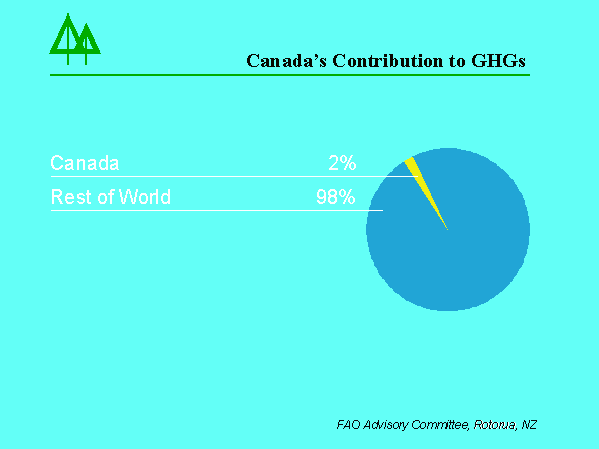
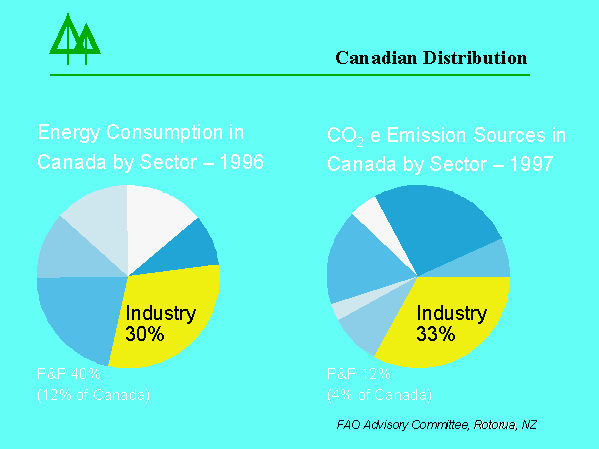
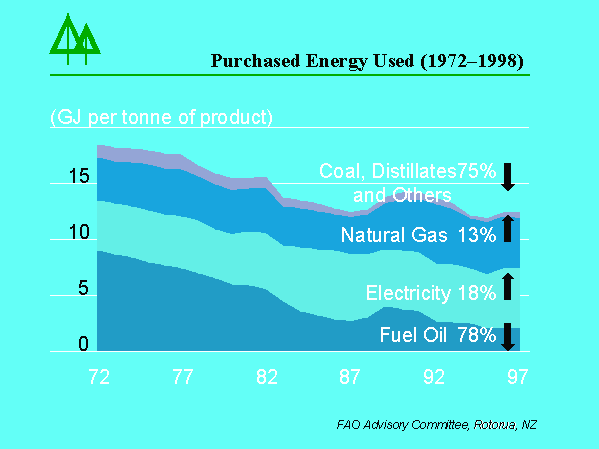
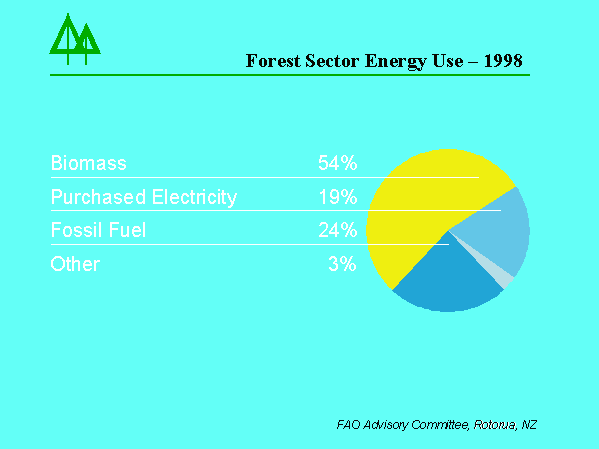
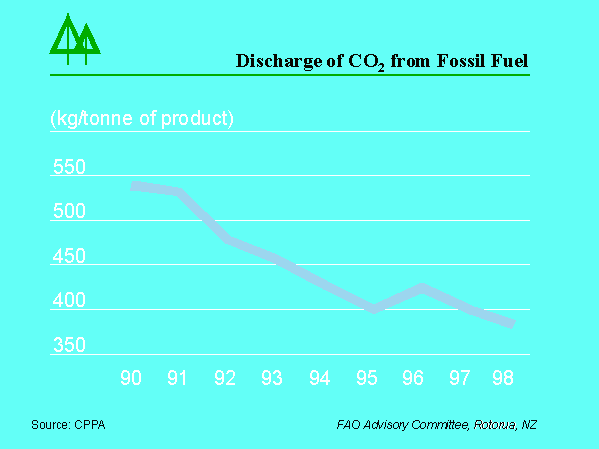
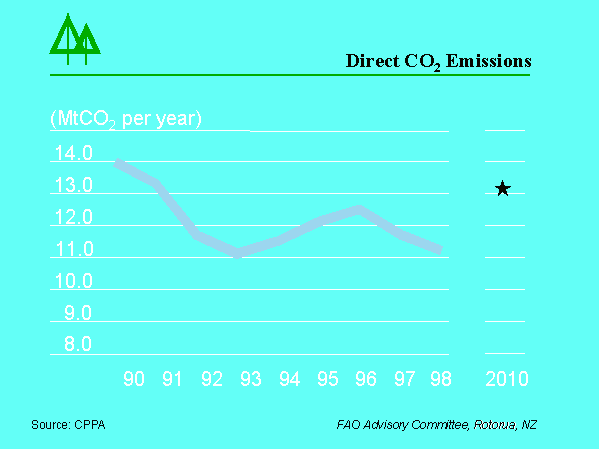
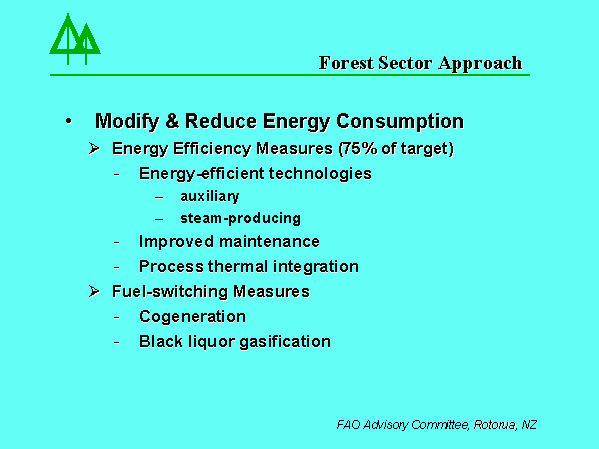
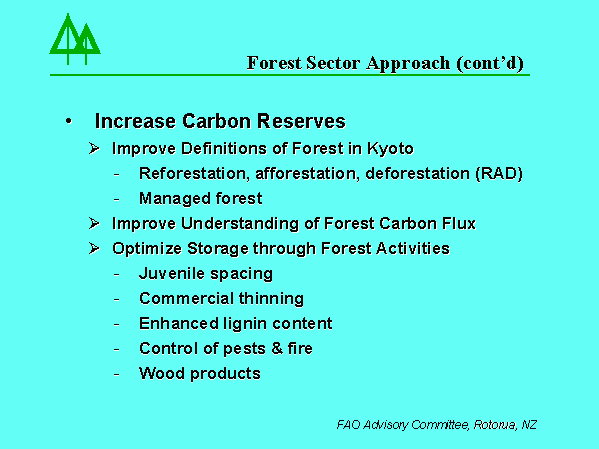
Vice-President, Canadian Pulp and Paper
Association
ANNICK
CARPENTIER
Director, Environment, Confederation of
European Paper Industry
Under the Kyoto Protocol, the European Union (EU) committed itself to reducing its emissions of greenhouse gases (GHG) by 8 percent during the period 2008-2012 in comparison with their levels in 1990.
Member states of EU agreed to a `burden sharing' agreement in 1998, which implies that the overall -8 percent target is shared among the member States so as to allow for different economic development patterns. The burden sharing agreement is as follows: Austria -13 percent, Belgium -7.5 percent, Denmark -21 percent, Germany -21 percent, Greece +25 percent, Spain +15 percent, Finland 0 percent, France 0 percent, Ireland +13 percent, Italy -6.5 percent, Luxembourg -28 percent, Netherlands -6 percent, Portugal +27 percent, Sweden +4 percent, and United Kingdom -12.5 percent.
After falling in the early 1990s, GHG emissions in the EU have been increasing over the past few years, which implies that without a reinforcement of current policies and measures the `business-as-usual' scenario is likely to end up with an increase of between 6 and 8 percent instead of a reduction of 8 percent compared to 1990 levels. In practice, this will require an estimated reduction of 14 percent compared to `business-as-usual' forecasts, which corresponds to some 600 mt of CO2 equivalent.
Energy and transport are the main contributors to CO2 emissions; these emissions are expected to grow by 39 percent by 2010, while industrial emissions are expected to decrease by 12 percent over the same period.
In its March 2000 Communication, the European Commission confirmed that it is determined to ratify the Kyoto Protocol by Rio+10, that is by 2002, and that it shall start the ratification process immediately after CoP6.
The Council asked the Commission to prepare a proposal for a long-term strategy to be presented to the Council in June 2001.
Most member States find it increasingly difficult to control their GHG emissions, either because actions have already been taken so that additional actions will be more costly, or because emissions continue to rise despite the efforts undertaken.
In this context, there seems to be a political will at both member State and Commission level to reinforce co-ordinated policies and measures so as to reach the Kyoto targets and possibly the target set by article 3(2) of the Kyoto Protocol to show `demonstrable progress' by 2005.
The Commission's proposed list of common and co-ordinated policies and measures focuses on energy, transport and industry, and has just set up "The European Climate Change Programme" through which a series of working groups will be asked to come up with proposed policies and measures for different areas, e.g. renewable material, energy, etc.
Both EU and member States are in favour of energy taxation, which is now in place in a large number of member States and is, of course, closely linked to the climate change issue, be it through negotiations at EU level or through the necessary link to be established with emission trading.
In May 1999, the Commission was still convinced that domestic action within EU could be sufficient to meet the Kyoto commitment. For the first time, however, it took a positive view on the use of negotiated agreements at industry level as cost-effective instruments to reduce GHG emissions, and called on industries to express their interest in such agreements at EU level. Several sectors have started discussions with the Commission, including the pulp and paper industry, but due to the practical and legal difficulties of such agreements, negotiations are unlikely to lead to a signed agreement at EU level in the short term.
The Commission's Communication on Climate Change and Green Paper on Emission Trading of March 2000 slightly differ from the previous position in that they recognize that emission trading could ensure a cost-effective reduction in GHG emissions, which is likely to save a significant amount of money to EU as a whole.
The Green Paper is meant to be the starting point of the consultation of all stakeholders and does not, as such, provide solutions. It pinpoints issues to be addressed.
Generally, the Commission seems to favour an emission trading scheme that would be:
– organized at EU level rather than at member State level;
– open to companies so as to ensure a cost-effective implementation;
– as wide as possible since the greater the variation in the costs of compliance for individual companies, the greater the potential for lowering costs;
– limited, however, to large point sources of CO2 (CO2 = 80 percent of all EU emissions); the Large Combustion Plant Directive and the Integrated Pollution Prevention and Control Directive would serve as a basis for the scope of the emission trading scheme;
– linked to other policies and measures that would apply to non-trading companies so as to avoid distortion of competition;
– started at EU level by 2005 so as to gain experience before the international emission trading starts in 2008;
– based on an auctioning system rather than on the grandfathering system.
The industry is energy intensive - energy represents up to 30 percent of manufacturing costs - but:
– production of paper is based on a renewable material, in other words, wood which comes from sustainably managed forests;
– over 50 percent of the energy consumed by the industry is based on biofuels, emissions of which are carbon dioxide neutral;
– industry's energy efficiency has significantly improved over time; and
– through the use of recovered paper, the production of paper and board contributes to a significant reduction in the amount of household and commercial waste going into landfill and, hence, in methane emissions from landfill sites.
Three stages of the paper cycle have a significant effect on the GWP impact of the cycle, namely:
– the net carbon sequestration in forests available for wood production;
– paper-based methane emissions from the final disposal of paper products in landfills;
– fossil fuel-based GHG emissions from the production process.
The earth's forests capture roughly the same amount of carbon as that stored in the atmosphere in the form of carbon dioxide. Forestry, therefore, offers a large potential for the reduction of GHG emissions, which can be enhanced by forest management and afforestation of new lands.
The Kyoto Protocol recognizes the positive role of carbon sinks by allowing the parties to meet their commitments by reducing GHG emissions or by increasing net carbon sequestration in terrestrial carbon sinks. However, at the same time, the current accounting rules mean that only the changes in carbon stocks attributable to the growth of forests planted since 1990, and to deforestation activities since 1990, shall be included in the accounting.
This implies that most of the 100.6 million ha of public and private forests available for wood supply in the CEPI member countries will not be taken into account as an offset to GHG emissions.
On average, the net sequestration in forests available for wood supply is 3.1 t of carbon dioxide per hectare per year (the GWP impact is negative, meaning GHG emissions are reduced). This represented over 310 million t of carbon dioxide in 1997, in other words -3 116 kg of CO2 per hectare, which is almost six times the amount of carbon dioxide emitted from the production of pulp and paper in CEPI countries.
The GHG emissions from the production of pulp and paper arise:
– directly from the production process;
– from the combustion of fuels;
– from purchased electricity (indirect); and
– from the treatment of waste.
From 1990 to 1997, specific CO2 emissions have decreased by 16.8 percent thanks to:
– the use of less polluting fossil fuels: in some cases the industry has already switched to gas;
– increased process technology efficiency: combined heat and power plants operated by pulp and paper mills produced roughly one-third of the total electricity needs for the process in 1994 and, linked with other energy efficiency measures this has generated a significant reduction in emissions, with sometimes a limited remaining potential;
– an increased use of CO2 neutral biofuels: the industry is one of the largest producers and consumers of renewable energy sources.
As a result, the GWP impact per tonne of paper produced decreased by roughly 18 percent over the same period (from 788 kg to 57 kg of CO2). But the increase in the production and consumption of pulp and paper has led to a 7 percent increase in absolute GWP impact of pulp and paper production.
Paper demand worldwide can be taken as an independent variable.
The paper industry recycles an increasing amount of used paper - now close to 50 percent in CEPI countries. In doing so, it prevents recovered paper that can be recycled from entering the waste stream, and thus prevents considerable emissions of methane from landfill sites. As a matter of fact, even with the best technologies for collecting and using biogas from landfills, currently a maximum of 50 percent of the biogas produced in landfills can be collected.
The GWP impact of waste paper can be improved through increased incineration of waste paper that cannot be recycled, with consequent energy recovery and an increased recycling of waste paper, provided of course that it remains technically and economically viable as part of the pulp and paper cycle. These operations should be encouraged through the recognition of their positive impact.
The Kyoto Protocol recognizes that managed forests are an important element of carbon dioxide mitigation. The Intergovernmental Panel for Climate Change (IPCC) estimates that 12-15 percent of the projected emissions from fossil fuels until 2050 could be offset by forestry measures.
A number of forest-based options are available to mitigate atmospheric carbon build-up, as for example, the slowing down of tropical deforestation, increased productivity and management of existing forests, and increased afforestation.
Forest management is closely linked to the use of forest products, which implies that a holistic or cycle approach should be adopted in assessing the sector's carbon relevance. The IPCC accounting practice of treating forest harvesting operations as immediate carbon emissions is unscientific and illogical. But, apart from the problem of the accounting method, which takes 1990 as a base year, and which, if wrongly interpreted, could provide an incentive for deforestation of forests planted before 1990, the industry faces other problems.
One of these is related to the fact that in CEPI countries only 7 percent of the forests belong to the industry. The rest belongs to forest owners - most of the time small operators. According to the Kyoto Protocol, the latter will own any credit related to the management of forests while the pulp and paper industry is largely contributing to this sustainable management.
Another problem relates to the very likely pressure on the industry's raw material supply from the increased use of renewable energy sources - among which biomass has by far the largest potential - which is encouraged by all governments and from the likely desire of non-wood based industries to offset their emissions by storing carbon in forests. The European pulp and paper industry is very concerned that wood may be increasingly used for producing energy rather than for producing goods, and that static management of forests may prevail. In both cases this will lead to a significant distortion of the wood market and the industry's raw material supply.
Similarly, if carbon sinks are recognized as tradable under the Kyoto flexible mechanisms (emission trading, clean development and joint implementation mechanisms), forests may be bought to be traded as carbon units, which will add to the pressure on the industry's raw material.
It would, without any doubt, be very detrimental to both society and the industry if forests became either static land or sources of energy. A dynamic management of forests must prevail.
Paper products also offer a significant option for offsetting GHG emissions from the paper cycle. As a matter of fact, any paper product stores non-fossil carbon. On average, without taking paper grade into consideration, one tonne of paper contains some 380 kg of carbon, that is 1.4 tonnes of carbon equivalent CO2.
CEPI has commissioned a study to assess carbon storage in paper products and likely developments to the year 2010. The study will take into account the different activities influencing carbon storage in paper products such as recycling, re-use, archiving, etc., and, the lifetime of the different paper grades and the increase in paper production. The two latter elements imply that there is a continuous carbon storage increase in paper products.
It is felt that the expected significant results - in France assessments show that on average carbon storage in paper products represents 25 percent of the French paper industry's total emissions - should lead to a recognition of this positive element, for example, by allowing trading and by encouraging the substitution of less CO2-friendly products by paper products.
At the moment, this aspect of the paper cycle seems to be completely ignored by authorities.
A number of uncertainties still remain as to how a worldwide emission trading scheme may function, on what basis, with which actors, etc.
In general, the European pulp and paper industry tends to believe that emission trading, and other flexible mechanisms offer a potential for cost-efficient measures to reduce CO2 emissions. The validity of this statement, however, will very much depend on the rules to be adopted.
At the moment, EU seems to wish to limit any EU emission trading scheme to large point sources, which would imply that the other elements of the industry's production cycle, be it forestry or recycling, would not be considered. This approach would be unsatisfactory because it would be artificial. The industry uses wood, but its activity can only be truly addressed when looking at the whole paper cycle, which starts in the forest and ends with the finished product and the management of recovered paper.
Another danger linked to flexible mechanisms is that different rules may be applicable in different parts of the world. For example, if forests and paper products are not covered by an EU emission trading scheme or even by an accounting scheme, they would be covered for CDM projects and this would lead companies to invest in non-Annex I countries, which would imply that fewer investments would be made in Europe and that no credits would be available to the industry inside the EU territory. This could also distort non-Annex I countries wood markets.
The three main possibilities for the industry to contribute to the achievement of the goals of the Kyoto Protocol are:
The pulp and paper industry's key role in sustainable forest management can be further exploited to favour the increased use of renewable energy sources. A sound approach needs to ensure that there are no distorting effects on the European wood market and wood balance. The production of renewable energy should only be made with raw material fractions that cannot be used for other purposes.
Short rotation forestry on marginal and former agricultural land could also significantly increase the production of wood energy in the short term.
Between 1990 and 1997, the CEPI members have significantly switched their source of energy from coal to gas and biomass. This has resulted in a considerable reduction in emissions from fossil fuels, but also implies that the potential for further improvements varies according to the different countries.
The already substantial decrease in emissions over the last decades implies that the potential for further reductions is sometimes limited or very costly. All existing energy-saving technologies are known to the industry, and many mills have already installed them.
Past achievements by the industry whether related to energy efficiency or diversification of fuels clearly need to be taken into account.
The European industry is facing the crucial problem of energy taxation, which is jeopardizing its competitiveness towards its main competitors. Although there is still no EU-wide taxation scheme, it is likely to come; some member States have either extended their energy taxation schemes or adopted new schemes. In these countries, the industry has tried to obtain either exemption from taxation or rebates through commitments to increase their energy efficiency.
The latest example is the United Kingdom where the government initiated a debate on a UK energy taxation scheme, which did not consider domestic consumption and was thus focused on industrial uses. The tax would have cost the pulp and paper industry between 60 and 100 million pounds. A number of energy-intensive industries have therefore negotiated with the government to obtain a tax rebate in exchange for negotiated agreements on energy efficiency. In the case of the pulp and paper industry, the agreement foresees a reduction of the industry's energy consumption by 40 percent between 1990 and 2010. In return, 80 percent discounts from the levy will be available for companies that are prepared to meet the required targets, and there will be conditional exemptions for users of combined heat and power systems.
In Germany, in 1995, industry committed to a 20 percent improvement of its energy efficiency in exchange for a tacit agreement that no energy tax would be imposed on industry. However, the new German government led by Schrφder has ignored that agreement and imposed an energy tax. Industry is, however, largely exempted. The German negotiated agreement is in fact the only one in place at the moment. The EU Commission has approved the scheme, including the exemption system until 2002.
It increasingly appears likely that in EU, industry will have to contribute to the Kyoto targets either through a voluntary agreement or through energy taxation, both being somehow linked to emission trading. The links between these three instruments remain to be clarified. As does their relationship to regulatory policies and measures. One could imagine that a company participating in a sectoral negotiated agreement could be exempted from taxation, provided it meets its targets. The company covered by an agreement could be given the possibility to trade its extra reductions or emissions.
But the key problem of course is how to define the allocation of carbon units or targets by industry and/or site. It must be effective, avoid unnecessary bureaucratic burden, be fair and not jeopardize EU competitiveness.
KIYOSHI
SAKAI
President, Japan Paper Association
In accordance with the Kyoto Protocol (December 1997), Japan has to reduce its emissions of greenhouse gases by 6 percent from the level registered in 1990 until 2001. Taking into account the increase since 1990, it must reduce by 13.4 percent compared to the 1997 level in order to meet the commitment.
Approximately 90 percent of CO2 emissions are caused by energy combustion, and the reduction is most urgently required in transport and commercial/residential sectors.
Table 1: CO2 emissions from fuel combustion in Japan (by sector) (106 t-C)
1990 |
1997 |
Changes (%) | |
Energy and converting Industry Transport Commercial/residential Others |
21.1 124.2 58.3 81.0 2.4 |
22.8 125.2 70.4 90.4 4.8 |
7.9 0.9 20.8 11.6 100.1 |
Total |
286.9 |
313.5 |
9.3 |
Source: Environment Agency
Guideline of measures to achieve the target set at Kyoto (June 1998):
– promote the reduction of CO2 emissions on both supply and demand sides of energy;
– increase CO2 sinks such as forest;
– develop innovative technologies that deal with environment and energy.
Legislation:
– Law for the promotion of measures to cope with global warming (specification of the roles and responsibilities of national and local governments, businesses, and citizens);
– Amendments of law for the rational use of energy (adoption of `top runners approach' - the most energy-efficient products available be made the minimum line for all manufacturers);
– Keidanren (Japan Federation of Economic Organizations) called on its members to draw up action plans to prevent global warming;
– Some 40 industrial groups formulated their plans and are endeavouring to achieve the goals;
– Keidanren undertakes a review of efforts by these groups every year.
The Japan Paper Association (JPA) adopted a "Voluntary Action Plan on Environment" in January 1997, nearly one year before the Kyoto Conference. The following three items are listed in the plan regarding the prevention of global warming.
– Promotion of energy saving: The purchased-energy consumption per product unit (such as electricity and fossil fuels) is to be reduced by 10 percent from the 1997 level by 2010.
– Expansion of plantation: Plantation is to be expanded to 550 000 ha by 2010, from 330 000 ha owned or managed by the member companies as of 1996.
– Promotion of recovered paper utilization: The utilization rate for recovered paper is to be improved to 56 percent by 2000.
Results and outlook:
a) Energy saving: Biomass such as recovered black liquor provides more than 30 percent of the necessary energy.
By adopting large-scale co-generation, 75 percent of the required energy is furnished from sources that have an energy-converting efficiency rate of 65 percent or better.
The purchased-energy consumption per product unit was reduced by 5 percent over the period 1990-1998.
Table 2: CO2 emissions by the members of the Japan Paper Association (JPA estimate)
Product (103 t) |
Purchased energy (1010 kcal) |
CO2 (103 t-C) | |
1990 |
28 086 (100.0) |
10 074 (100.0) |
7 668 (100.0) |
1998 |
29 886 (106.4) |
10 236 (101.6) |
7 887 (102.0) |
2010 (Estimated) |
36 900 (131.4) |
11 912 (118.2) |
9 045 (118.0) |
Note: Figures in brackets are indexes
b) Plantation: In 2010, the man-made forests owned or managed by JPA member companies, both domestic and overseas, will sequester 2.4 million t of carbon annually.
Table 3: Plantation by members of the Japan Paper Association (103 ha)
Domestic |
Overseas |
Total | |
1996 |
140 |
190 |
330 |
1998 |
142 |
230 |
372 |
2010 (Estimated) |
150 |
400 |
550 |
c) Utilization of recovered paper: The utilization rate of 56 percent was achieved in 1999, one year ahead of schedule.
The JPA is now studying the issues and looking for ways to reach even higher target in the future.
Table 4: Utilization rate of recovered paper (%)
Paper |
Paperboard |
Total | |
1990 |
25.2 |
85.8 |
51.5 |
1995 |
26.7 |
87.7 |
53.4 |
1998 |
29.2 |
89.0 |
54.9 |
1999 |
30.7 |
89.3 |
56.1 |
Source: Japan Paper Association
W. HENSON MOORE
President and CEO, American Forest & Paper Association
The Kyoto Protocol of the United Nations Framework Convention on Climate Change is the most far-reaching international environmental experiment in history. As such, it is expensive and divisive, and its ultimate fate is questionable, at best. In the Protocol, the Government of the United States is committed to reduce by 2010 its emissions of a basket of six greenhouse gasses by 7 percent below the 1990 level.
You no doubt are aware of the split it has caused in Washington. While the United States signed the treaty at CoP-4 in November 1998, the Clinton Administration has not forwarded it to Congress for ratification.
The reason for the Administration's reluctance is quite simple. In 1997, the United States Senate unanimously passed a resolution which basically stated that it has no intention of ratifying the Kyoto Protocol in its present form. The Senate resolution focused on two shortcomings - the expected economic cost of meeting Kyoto commitments and lack of meaningful participation by developing countries. Nothing has changed since then to suggest that the outcome of a Senate vote would be any different.
The United States forest products industry believes the Kyoto Protocol is flawed and should not be ratified in its present state. Nevertheless, we take the issue of climate change very seriously and have initiated several studies and research projects to prepare ourselves for inevitable requirement to reduce greenhouse gases, whether under Kyoto or some other climate change regime.
The United States Government believes that technology is the silver bullet to achieve Kyoto targets and timetables. However, the technology that exists today will not help much in meeting the Kyoto goals. In the case of the pulp and paper industry, the protocol completely fails to recognize the investment cycle of our industry, which is one of the lengthiest among basic industries - about 30 years. Without appropriate recognition of this cycle, the potential for destroying the value of prior capital investment is enormous.
Nevertheless, we have not been sitting on our hands. The industry's concern with the need for long-term improvement of energy efficiency and improving productivity pre-dates the Kyoto Protocol. In 1994, the Board of Directors of the American Forest & Paper Association approved a vision for the industry in the year 2020. Known as Agenda 2020, the vision established a long-range research programme which articulates where the industry stands, where it wanted to be in 2020, and the technology-related issues that bridge the gap. The industry, in partnership with the United States Department of Energy, is funding precompetitive research in six areas:
– Sustainable forest management;
– Environmental performance;
– Energy performance;
– Improved capital effectiveness;
– Recycling; and
– Sensors and control.
Combined cycle black liquor gasification was identified as the top research priority in the energy performance area. Gasification has the potential to produce much more energy than a conventional liquor recovery steam cycle, and it does so from a CO2 neutral biomass fuel. Implementation of gasification will not simply lead to incremental improvements. It is a high impact technology that would result in dramatic changes in operational efficiency. At the same relative cost, combined cycle systems generate two or three times the electrical power of the conventional recovery steam cycle.
The pulp and paper industry could become a substantial net generator of renewable electricity, which will have a beneficial effect in terms of CO2 emissions. For example, reducing fossil fuel use for a 1 300 mt-per-day kraft line would offset roughly 60 000 t of carbon per year. However, only part of the industry would be able to take advantage of the new black liquor gasification technology because there is significant variability in the structure of the United States pulp and paper industry, types and amounts of fossil fuels being used, and the site-specific conditions for selling excess power to the grid.
The Kyoto Protocol does not adequately take into account the unique role that forests play in offsetting greenhouse gas emissions. The prevailing interpretation of the protocol is that it would exclude forests existing prior to 1990, and reforestation of those previously existing forestlands, from being considered carbon sinks. In other words, the massive amount of carbon sequestration taking place in the existing forests, both public and private, could not be used to offset greenhouse gas emissions.
The so-called `Kyoto forest', or one that would receive credit for carbon storage under the Protocol, would consist only of trees planted after 1990 on land not previously in forest cover, or just 1 percent of the world's total forest cover. Similarly, the Kyoto Protocol does not now recognize wood and paper products' capacity to serve as long-term carbon reservoirs.
We have been very active on several fronts promoting recognition of the role active forestry management and products play in carbon sequestration. The AF&PA and member company representatives have:
– Briefed State Department negotiators and other government officials about the potential impact of climate change policies and measures on the United States forest products industry;
– Testified before Congressional committees and prepared draft forest carbon sequestration legislation;
– Participated at Intergovernmental Panel on Climate Change (IPCC) discussions on forestry issues and provided extensive technical comments on the IPCC special report on Land Use Change and Forestry;
– Attended the United Nations Framework Convention on Climate Change (UNFCCC) meetings;
– Worked with other forest products industries in the International Forest Industry Round-table (IFIR) to develop a set of common principles for communicating nationally and internationally; and
– Cooperated with the United States Forest Service on several projects intended to improve national carbon stock estimates.
The most important carbon sequestration recommendations we have made regarding changes in the Kyoto Protocol are:
– Adoption of definitions for the terms reforestation, afforestation, and deforestation in Section 3.3 of the Protocol that reflect professional international practice;
– Adoption of the `carbon stock' methodological approach to calculating changes in the carbon sink;
– Recognition that active forest management qualifies as a carbon sink activity; and
– Recognition that solid wood and paper products represent long-term carbon sinks.
In spite of the fact that our companies are in the tree growing and forest management business, our views are not automatically accepted in the carbon sequestration debate. Instead, we see utilities, energy companies and others receiving recognition and credit for carbon sequestration activities, such as fencing off parcels of forest in tropical regions. With this in mind, AF&PA member companies are considering the initiation of a pilot forestry carbon sequestration project. The main objectives of the pilot project would be to:
– Build support for the AF&PA position that carbon sequestration is enhanced by active forest management;
– Increase the forest products industry's visibility and authority in technical and policy discussions of carbon sequestration issues; and
– Evaluate the implications of alternative approaches to accounting carbon sequestration in managed forests.
The National Council for Air and Stream Improvement (NCASI), the environmental research arm of our industry, is preparing a scoping document that will include a description of the level of effort needed (size of project, costs, etc.), potential forest management scenarios that could be applied, and a carbon accounting system that could be used to estimate carbon stocks in the soils, vegetation, trees and products. Our thinking is that once the carbon sequestration project proposal is developed and approved, we will consider getting participation by environmental groups who have expressed support for recognition for the important role forests play in carbon sequestration.
One of the major problems with the Kyoto Protocol is that it does not recognize the significant strides our industry has already made in energy efficiency. In fact, the artificial compliance schedule penalizes a significantly energy intensive industry. Our record of accomplishment is worth noting:
– We account for nearly one-half of the nation's biomass energy generation (1.5 quadrillion BTUs of energy);
– We are the largest consumer of co-generated energy (1.6 quadrillion BTUs);
– We increased use of self-generated and biomass sources energy in pulp and paper production from 40 percent of total energy use in 1972 to 56 percent in the mid-1990s; and
– We reduced total oil consumption by 61 percent.
We have achieved these improvements while increasing production over this period by two-thirds. This means that the industry has reduced energy consumption per ton of product by 40 percent, from 19.1 BTUs in 1972 to 11.5 million BTUs in 1997.
At the beginning of the presentation, it has been mentioned that the costs of Kyoto would be enormous. More than two years ago, we asked NCASI to take a look at how much it would cost the United States forest products industry to reduce its CO2 emissions to 7 percent below 1990 levels by 2010 - the same target that the Kyoto Protocol establishes for the United States at large. For our industry, it means that we would have to cut CO2 emissions by 31 percent from a business-as-usual scenario by 2010.
While there is significant uncertainty associated with estimating the true cost of attaining the Kyoto reductions for the United States forest products industry, the study projected capital costs to the industry at between US$6 billion and US$8 billion, and annual costs (i.e., debt service, depreciation and purchase of energy) could range up to US$1 billion a year. It is also possible that the industry can reduce its net annual costs by up to US$250 million. However, this will require a restructured electricity market that allows the industry to sell excess electricity back to the grid for reasonable prices.
At the same time that the industry must anticipate very high expenditures to meet Kyoto targets, it faces other massive environment-related capital expenditures. The United States Government, led by the Environmental Protection Agency, has required numerous manufacturing process and technical changes that will add more than US$11 billion to industry costs over the next 10 years and, paradoxically, increase emissions of CO2 by 9.7 million mt per year.
Given the industry's already high debt levels, additional capital expenditures of this magnitude would crowd out investments in productivity, quality improvements and capacity expansion. This would come at a time when the United States forest products industry, which ranks among the best in the world in terms of environmentally sound forestry and manufacturing practices, is already experiencing a sharp deterioration in its trade balance.
In summary, the United States forest products industry has a substantial economic and environmental stake in the implementation of any global climate change treaty. Our industry is an international leader in sustainable forest management and pollution prevention. As such, we are already contributing solutions to climate change issues. At the same time, we remain concerned about preserving the industry's economic health and vitality. For this reason, we believe that a global issue by definition needs to apply globally. So, a global climate change treaty that does not apply to manufacturing facilities in all countries would give only the illusion of true greenhouse gas reductions and benefits.
ELIZABETH REMEDIO
AND MIGUEL A. TROSSERO
Food and Agriculture Organization
of the United Nations
presented by
JOHN R.
TUSTIN
Secretary, International Energy
Agency, Bioenergy Agreement
Bio-energy (or biomass energy), the inexhaustible renewable energy still in abundance, refers to all energy forms derived from organic fuels (biofuels) of biological origin used for energy production. It comprises both purposely-grown energy crops, as well as multi-purpose plantations and their by-products (residues and wastes). The term `by-products' includes solid, liquid, and gaseous by-products derived from human activities. Biomass may be considered one form of solar energy.
Bio-fuels, on the other hand, are organic primary and/or secondary forms from biomass which can be used for the generation of thermal energy by combustion or by using other technologies. Purposely-grown energy crops and multi-purpose plantations and their by-products (residues and wastes) may be used for this intention.
The term `by-products' includes what is commonly referred to as solid, liquid, and gaseous residues and wastes resulting from biomass processing activities. Under the Unified Wood Energy Terminology (UWET) system, there are three types of bio-fuels: woodfuel, agrofuels, and municipal by-products. The UWET is one of the major activities in bio-energy well under way. It proposes to provide a standard classification, definition, parameters and units, and conversion factors of the various terminology and concepts contained in the bio-energy vocabulary. The UWET intends to shed light on the long-standing issue of use and misuse of a number of bio-energy terminologies. An example is found in the following table. Several other activities are ongoing and will be reviewed in the sections that follow.
Woodfuel classification and examples
Woodfuels |
Brief definition |
Examples |
Direct woodfuels |
Wood used directly or indirectly as fuel, produced for energy purposes |
Woodfuel, charcoal |
Indirect woodfuels |
Mainly solid biofuels produced from wood processing activities |
Bark and sawdust from wood mills |
Recovered woodfuels |
Wood used directly or indirectly as fuel, derived from socio-economic activities outside the forest sector |
Used wooden containers |
Wood-derived fuels |
Mainly liquid and gaseous biofuels produced in forest activities and the wood industry |
Black liquor from cellulose plants |
Milestones were placed to focus and re-focus attention to the sphere of bio-energy in recent decades that caught global attention:
– The Threat of Supply Crisis and the 1981 UN Conference on New and Renewable Sources of Energy, Nairobi Programme of Action (NPA).
– Global Warming vis-ΰ-vis Sustainable Development Agenda and the 1992 UN Conference on Environment and Development, Rio de Janeiro, establishing the UN Framework Convention on Climate Change (UNFCC).
– Measures to Mitigate Climate Change and the 1997 Conference of Parties committing to Kyoto Protocol (KP).
Due to the feared `fuelwood crisis' during the 1970s and the 1980s, the Nairobi programme of action addressed, among other things, new monitoring and assessment efforts to gauge the use of `traditional' energy sources such as fuelwood and charcoal. It also recommended that global steps be taken to develop new and renewable sources of energy to replace fossil fuels, which were also thought at that time to be under serious threat of a supply crisis. In reality, many speculations did not materialize, but it led to a better and more comprehensive understanding of energy production and use, particularly in the area of wood energy.
The threat of global warming is brought about by greenhouse gas (GHG) emissions generally known today as global climate change. This situation led to the approval of the UN framework on climate change by a majority of UN members. The UNFCC pledged itself to a worldwide stabilization of GHG emissions at levels no higher than current levels. Other agreements and guidelines were adopted, including an instrument for the conservation of biodiversity known as the Rio Declaration, spelling out links between environment and development, an advisory code of Forestry Principles and an overall summary of sustainable development targets for the twenty-first century, Earth Summit's Agenda 21.
In setting emission quotas, the UNFCC allowed countries with less industry but abundant forest vegetation additional credit for the function their forests serve as GHG `sinks' or carbon fixation assets. All countries undertook to reduce their use of fossil fuels under self-imposed emission controls assessed in proportion to ongoing production. Among measures contemplated after Rio was a greater use of biomass fuels derived from plants. Carbon dioxide emissions from combustion of such fuels are, in effect, cancelled out, at least partly, by the carbon fixation function of any energy crop during growth and the further storage or sequestration of carbon as wood.
Trees perform these parallel functions in greater measure than field crops. The new imperative towards climate regulation promised to set wood energy production and use to the fore of future energy development scenarios, and strengthened a general case for developing forests sustainable for many uses. Putting land to `energy farming' use under tree cover can deliver other environmental benefits such as soil, water and habitat conservation and - in some situations - reclamation of wastelands. Moreover, using wood as a fuel usually creates less chemical air pollution than burning coal, diesel, or gasoline.
With the aim to strengthen participating countries' commitment to reduce/mitigate GHG emissions, the Kyoto Protocol was concluded in December of 1997 (CoP3, Kyoto). It established legally-binding commitments from Annex 1 countries (developed countries and countries in transition) to reduce their overall emissions of six GHGs to at least 5% below 1990 levels between 2008 and 2012 (first commitment period) and by making provisions for the use of man-made land-use change and forestry activities to define and meet national emission reduction targets.
Forestry and forest activities play important roles in the process of carbon sequestration and carbon substitution. Carbon sequestration and substitution contribute considerably towards the mitigation of global warming and, thus, climate change. "Long-term and sustainable reductions of CO2 emissions through land-based activities will, to a large extent, have to come from the use of wood for bio-energy and products."
In many respects, the Kyoto Protocol may prove to be the most profound and important global agreement of the late twentieth century. It represents a pinnacle of trends towards globalization in economic and environmental policy, and defines the basic structural elements upon which global efforts to tackle climate change in the twenty-first century will rest.
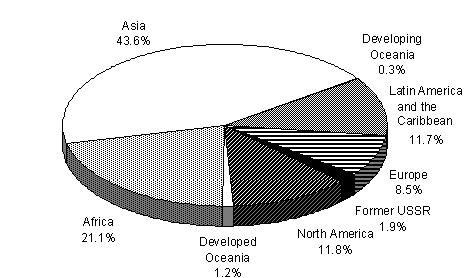
World production of bio-energy, or wood for energy use, particularly in 1996, is estimated to be about 1.9 billion m3 (FAO 1998) or 1.4 billion t. An estimated additional amount, equivalent to some 0.3 billion t of wood, is recovered and recycled for energy use. The total of some 1.7 billion t is equivalent to abut 550 million t of oil. Wood contributes 6-7 percent of the global primary energy supply (excluding biomass other than wood). It is substantially the largest source of renewable energy, providing more than twice the contribution of hydro-electricity worldwide.
However, the importance of wood in total energy supply varies between regions. Reliance on wood is greater in countries with low income and with unequal income distribution. In these regions, bio-energy is a major component of the energy supply, essential to the satisfaction of the basic nutritional and health needs of some two billion of the world's population. Most users are from relatively poor rural households. As a whole, the bio-energy-economics nexus is a complicated one and closely linked with socio-economic, environmental and institutional patterns. And yet they can be very site specific. The following table and graph show some global figures.
Total woodfuel consumption by region (1995)
Region |
Total woodfuel demand |
Woodfuel share of |
Woodfuel share of | ||||
|
|
Thousand m3 |
pj |
% |
% | |||
Developing countries total |
1 763 262 |
17 633 |
15 |
80 | |||
Total tropical |
1 368 439 |
13 684 |
26 |
84 | |||
Total non-tropical |
394 822 |
3 952 |
6 |
65 | |||
Africa |
486 248 |
4 862 |
35 |
89 | |||
Tropical |
464 077 |
4 641 |
75 |
91 | |||
Non-tropical |
22 171 |
222 |
3 |
53 | |||
Asia |
1 002 846 |
10 028 |
12 |
81 | |||
Tropical |
654 221 |
6 542 |
23 |
85 | |||
Non-tropical |
348 625 |
3 486 |
7 |
70 | |||
Oceania |
5 804 |
58 |
52 |
56 | |||
Latin America and the Caribbean |
268 364 |
2 684 |
12 |
66 | |||
Tropical |
244 338 |
2 443 |
13 |
69 | |||
Non-tropical |
24 027 |
240 |
7 |
48 | |||
Developed countries total |
536 754 |
5 368 |
2 |
31 | |||
Europe, Israel and Turkey |
194 653 |
1 947 |
3 |
33 | |||
Former USSR |
42 585 |
426 |
1 |
27 | |||
Canada and USA |
272 438 |
2 724 |
3 |
29 | |||
Australia, New Zealand and Japan |
27 079 |
271 |
1 |
36 | |||
World |
2 300 016 |
23 000 |
7 |
59 | |||
Source: FAOSTAT, United Nations Energy Yearbook 1997 and Wood Energy Today for Tomorrow studies (FAO, 1997c and FAO, 1997d)
Distribution of wood energy, consumption by regions, 1995
Bio-energy, then, is here to stay, for a long time to come. Over the years, despite recent developments, the following new emerging issues and concerns must be overcome:
– There are many misconceptions about bio-energy.
– The role of bio-energy as a major contributor to the total energy balance has not been sufficiently understood by many governments, non-governmental organizations and international organizations for them to consider bio-energy with the same serious importance as fossil fuels.
– The challenges, options and opportunities for bio-energy in the implementation of the commitments in the Kyoto Protocol for mitigating climate change and conserving biodiversity continue to be a global concern; at the regional and national levels, however, the situation is not as simple, as many issues are yet to be addressed and resolved.
– Lack of technical and financial resources among governments and institutions hinder the collection and interpretation of bio-energy data strong enough to be translated into meaningful, effective policies.
– Concepts, terminologies, parameters and units of measurement pertaining to bio-energy may vary from region to region, from country to country and even from organization to organization.
In order to assist member countries to overcome the main concerns mentioned above, FAO has launched a number of activities as part of its Regular Programme and other programmes in relation to bio-energy. To name a few:
– The Unified Wood Energy Terminology (UWET): A recent approach used by the FAO Wood Energy Programme for the classification and differentiation of the various types of woodfuel. With the use of UWET, it is hoped that it will be easier to collect, present, interpret and exchange bio-energy information and statistics which are currently available from different national and international organizations.
– The Wood Energy Information System (WEIS): A qualitative and quantitative study of the past and present consumption of woodfuel at the national level for relevant regions. The ongoing study is based on data in various sources like FAOSTAT database, IEA, ENDA/IEPE, OLADE and other institutions of site-specific countries which were contacted and subsequently collaborated willingly with the study. So far, statistical data for more than 100 countries from different regions, i.e. OECD, Latin America and the Caribbean, Asia and Africa have been systematically collected and presented. This has improved the quality of woodfuel data in general.
– The Wood Energy Today for Tomorrow (WETT): These are regional studies aimed at revising data on woodfuel utilization, and assessing actual contribution of forests, woodlands, and trees to the energy sector. The entire study intends to compare and identify data gaps, inaccuracies and inconsistencies of the present statistical databases obtained from the different sources, i.e. OLADE, ENDA, AIT and others.
– The Forest Energy Forum (FEF) is the bi-annual newsletter publication of the Wood Energy Programme, FAO Forest Division. Recently launched with the intention to provide new information and to stimulate discussion on activities related to wood energy. With this Forum, readers from different disciplines, from different parts of the world can express their views, share their experiences, and benefit from such a process.
– The Regional Wood Energy Development Programme (RWEDP): A long-term programme implemented by FAO and funded by the Government of the Netherlands. The present phase of the programme links 16 countries in Asia, all of which are major bio-energy users. In fact, consumption of bio-energy is still increasing in Asia, as it is elsewhere in the world. The RWEDP collaborates with governments, national institutes, and (other) international organizations in member countries. A variety of activities are undertaken, ranging from case studies, training in wood energy data collection, planning courses in woodfuel management, reviewing woodfuel markets and many others.
Forestry thus continues to play a lead role in providing for the needs of the pulp and paper industry, as well as bio-energy. In the context of the `Kyoto Forest', both sectors complement each other as pulp and paper processes results to by-products with bio-energy uses and features.
Indeed, the FAO Forestry Programme addresses one of the most important, complex and controversial issues of modern times - how to use trees and related forests resources to improve the lives of billions of people all over the world - including their economic, environmental, social and cultural conditions. Hence, the challenge of sustainable development is to ensure the conservation of such resources for the future generations. The future then holds promise, challenges and opportunities for bio-energy.
7 Of the GHGs under consideration in KP, three are of relevance to the pulp and paper industry: carbon dioxide (CO2), methane (CH4 ), and nitrous oxide (N2O).