


The Review of Systemwide Programmes with an Ecoregional approach (CGIAR 1999) has suggested three criteria that would have to be met if activities should be handled in the context of systemwide programmes rather than by individual centres: (1) the problem or opportunity is of major relevance; (2) no single Centre has a natural advantage in terms of its mandate; and (3) there exists a high potential for efficiency gains from combined efforts. In the following, an analysis of the needs and continuing relevance of SP-IPM implicitly considering these criteria is presented.
Is there a need and continued relevance for SP-IPM in the future? To answer this question in greater detail requires us to re-visit (a) the global crop protection situation described in Chapter 1 and, (b) to look at the IARC's guiding principles for IPM presented under TOR 2.
With respect to (a), a number of developments can be identified that strongly indicate that international IPM research requires more co-ordination. Firstly, trade liberalisation and globalisation is fuelling increased cross boarder movement of pests. The whitefly problem described in Chapter 1 is such an example. Hence, although international quarantine efforts may be stepped up, the overall pest damage potential can be expected to rise as the interchange of plants and plant products increase. Secondly, further specialisation and intensification of the world's cropping systems will foster the need for better pest damage abatement measures. As shown in Chapter 1 the reliance on pesticides is on the whole causing additional costs and is not likely to be a sustainable choice for the future, especially in developing areas. Increased application of modern biotechnology, which may finally happen in developing countries on the one hand may increase potential pest pressure because of more uniform cropping systems while on the other pest resistant transgenic seeds are crop protection products that may widen IPM options but may also introduce new problems. Here, again, better international co-ordination may avoid the repetition of the mistakes that have occurred with chemical pesticides. Thirdly, in the future the food industry is likely to become a strong driving force for global IPM. Consumers in developed countries increasingly demand environmental quality and high health standards for food products imported from developing countries. Hence, as exporters of food products developing countries can only compete with richer countries if they adhere to these standards and effectively communicate a positive image with regards to environment and health. Here, IPM may well become an increasingly important marketing argument.
While it is clear that these changes warrant more international collaboration, the question of SP-IPM's role and comparative advantage in these co-ordination tasks remains open. The answer to this question is closely linked to the role and importance of the CGIAR in international agricultural development. The CGIAR system is presently engaged in serious discussions on its future directions because it has realised that some aspects of the system limit its effectiveness as an instrument for the resolution of major development issues. As outlined, for example, in the document “Designing and Managing Change in the CGIAR” presented at MTM 2001,[20] “there is an urgent need within the CGIAR to elevate the game by demonstrating the salience of its work in relation to key interests and concerns of the international community. The goal is to harness systemwide synergies to create a sum of activity that is greater than the parts working separately”.
Hence, depending on how effectively the CGIAR will be able to overcome its internal problems and to what degree it will be able to generate a more coherent and globally relevant research strategy, will determine whether systemwide programmes can meet the expectations inherent in their charges. Until now, the CGIAR's research agenda is, in effect, the aggregation of 16 separate independent IARC research agendas. Currently, systemwide initiatives or programmes, of which the SP-IPM is one (see A-Table 2 in Appendix V), account for only 6% of CGIAR system resources. In the past, the Centres have tended to take from the “common good” of the CGIAR when there was something to gain, but market the results under the banner of the individual Centre. This is shown, for example, by the absence of joint SP-IPM publications. Hence, unless the rules for co-operation are clearly outlined and adherence to them monitored either through social pressure or financial penalties or incentives, there is a danger that the leadership of individual Centres will view systemwide programmes as a means to take rather than to give.
The Panel views advancements in the internal coherence of the CGIAR research portfolio as an important pre-condition for SP-IPM to perform its role effectively.
With respect to (b), the Panel submits that SP-IPM can only be successful in the future if it widens its scope and goes beyond its present focus on improving co-operation among Centres. In other words, it must adopt a more outward looking approach than it has taken in the past. While it may have been a necessary first step to find and test mechanisms of inter-centre co-operation in the area of pest management research and thus reduce transactions costs, this is not enough if the “game is to be elevated”. One of the guiding principles adopted by the International Agricultural Research Centres (IARCs) is: “success in implementing IPM is contingent on a favourable public policy environment”. In the past, SP-IPM has treated this principle as an assumption relying on others to work towards that end. However, as discussed under TOR 2 in Chapter 1 this did not really happen. For example, the divergence in opinion that exists among some of the major development organizations as regards effective mechanisms for IPM implementation (see Chapter 1), the neglect of the role of pests in assessments of food supply and food security are examples that call for internationally co-ordinated research and assessment. Another issue that needs attention from international SP-IPM is in the area of policy distortions that hampers the diffusion of IPM. For example, the various types of pesticide subsidies that exist in most developing countries (and in many developed countries as well) (e.g. Repetto 1985; Farah 1993; Agne et al. 1995; Fleischer and Waibel 1997; Poapongpasorng 1999) undermine efforts of IPM training and reduce the rate of return of investments in IPM. The rising level of pesticide use world-wide (see Chapter 1), its cause and its effects provide the basis for a broad research portfolio that SP-IPM, through linking with relevant CGIAR Centres and specific ARIs, should address in the future in order to be able to make major contributions to the efforts of implementing sustainable agricultural development.
The Panel recommends that in view of the global challenges from pests and pest management issues there exists a strong need and a high relevance for SP-IPM in the future. In view of the changes that the CGIAR is currently undergoing, the Panel views advancements in the internal coherence of the CGIAR research portfolio as an important pre-condition for SP-IPM to perform its role effectively. The Panel recommends that in order to be successful in the future, SP-IPM should go beyond its present focus of improving co-operation among Centres and should widen its scope and take a more outward-looking approach in seeking international assistance and co-operation.
Given the challenges that emanate from the global trends in agriculture for pest management the Panel sees a strong need for an independent and a strong global research network on IPM. Hence, in as much as the CGIAR lives up to its own goal of significantly contributing to “sustainable improvements in the productivity of agriculture, forestry and fisheries in developing countries in ways that enhance nutrition and well-being, especially of low-income people”, the SP-IPM must become a major component of the CGIAR's strategy towards achieving this goal.
At present the formulation of Challenge Programmes (CP) is shaping up as an effort for the CGIAR to play a more significant role in international agricultural development the aspects of efficient and sustainable pest management in principle fits well into all of the ten programmes listed as proposals[21]. Given the rising levels of pests, diseases and weeds in the course of crop intensification and in view of the increasing complexity of pest control interventions, CPs that do not include IPM components in a holistic manner may run the risk of failing to make significant contributions to poverty alleviation and improved food security in at-risk areas. Regardless of whether CPs are dealing with “climate”, “water” or “mountainous regions”, pests and the current methods to control them will be a significant part of the equation. For example, climate change will generate uncertainty with regards to the ecology of pests, pesticides are frequently major pollutants in the environment and agriculture in the cooler climates of tropical highlands is often characterised by pesticide-intensive horticultural crops. These examples suggest that perhaps IPM itself should be a CP that would service other CPs. We will address this question in the last chapter of the report. At this stage, we will briefly look at the global relevance of two of the currently existing and active SP-IPM taskforces and offer a few suggestions of how their role could be enhanced.
For example, the SP/WF-IPM taskforce, if put in the context of food security, sustainable management of natural resources and rural health, meets the CGIAR's new criteria of applying a programmatic approach. The projects of WF-IPM are building blocks that together respond to a major global challenge and which most likely are synergistically greater than the sum of the parts. Whiteflies are pests of global significance that cause direct damage and vector plant viruses to a wide range of high value crops in both developing and developed countries. To increase its effectiveness and relevance, the SP/WF-IPM should continue to further improve the scientific basis that can effectively buttress control interventions[22]. There is, however, a compelling need to strengthen the socio-economic component of the project. This should include the analysis of the economic and political factors that pre-condition the growing whitefly problem and an assessment of the costs and benefits of alternative intervention strategies including those co-ordinated internationally. Biological control of whiteflies is an example requiring international co-operation.
The Parasitic Plant Management project (SP/PPM-IPM) is largely a regional project and therefore would not necessarily qualify for a systemwide project. On the other hand, the need for enhancing agricultural development in Africa and the lessons that can be learned from the consequences of agricultural intensification in other regions suggests that here too exist global implications. For example, the proposed CP on Global Genetic Resources states “effective solutions to previously intractable problems like Striga could be expected through genetic engineering”[23]. Note, that the SP-IPM has developed an indigenous solution using the legumes that cause suicidal mergence of Striga and the use of native grasses such as Napier grass technology for the control of stem borers. Such IPM solutions could be compared to an externally provided technology like transgenic seeds. Furthermore, current efforts by major development organizations to intensify agriculture in Africa, the PPM-IPM project in the future, may be confronted with the ecological consequences of agricultural intensification. In fact, such developments may provide a major test case for a CGIAR programme on how negative externalities of agriculture could be prevented through a pro-active strategy. Again, in order to meet the challenge, a project which at first glance would seem to be of limited scope, shows a global dimension when put in a larger context. In view of this prospect, the Panel feels that in the future, the overall SP/PPM-IPM project must concern itself with an analysis of the success of IPM implementation in the context of other pest management options.
Similar conclusions could be reached for some of the other taskforces, in particular crop loss assessment and biotechnology. However, the two taskforces described above were chosen to demonstrate that if their scope were broadened and put into the context of a larger problem they could have significant global relevance. In the next section, we explore how to enhance SP-IPM's relevance and effectiveness by addressing issues jointly with other systemwide initiatives.
The Panel recommends that SP-IPM should more thoroughly analyse its taskforces with regards to scope and extended problem definition in order to expand their potential global relevance. In order to carry out this task, the Panel sees a strong need for an independent and strong global research network on IPM and recommends that the CGIAR make the SP-IPM a more visible part of its strategy for achieving its stated objectives.
Sixteen systemwide initiatives (A-Table 2 in Appendix V) including SP-IPM are currently underway, eight of them to implement the so-called “ecoregional approach” and to strengthen specific areas of CGIAR research. The previous TAC review[24] (CGIAR 1999) of eight systemwide programmes (not including IPM) mentions two issues that seem to be of high relevance for SP-IPM. The complimentarity among programmes, including different systemwide programmes and relevant Centres not included in the systemwide programme as well as outside research institutes and advanced NARS or ARIs, need to be explored. Secondly, recent advances in computer modelling and GIS offer new potentials for the transfer of site-specific research results. These observations, especially the second one, very much apply to SP-IPM.
For example, the affiliation of SP-IPM with the Consortium for Spatial Information (CSI)[25], which emphasises GIS, would appear to have the most immediate impact, in the context of food security issues, on up-scaling SP-IPM results that have produced identified ecological principles from site-specific research. In a similar way, SP-IPM could have a significant impact on at least four inter-centre initiatives: Integrated Natural Resources Management, Systemwide Initiative on Malaria and Agriculture, Rice-Wheat Consortium for the Indo-Gangetic Plains and the Systemwide Livestock Programme. The mechanism for the linkage to these areas is through the use of modelling and ecosystem analysis in the context of GIS. It must be recognised that relevant IPM analyses can be done effectively only using approaches that provide a thorough understanding of the biological and ecological dynamics of the cropping systems and hence methods must be used that are flexible and can incorporate the biotic and abiotic complexity observed in the field. Unfortunately and as observed by the Panel chair, IPM scientists in the CGIAR do not always have good notions of how to evaluate complex systems using methods that fall under the ambit of modelling and agroecosystem analysis. However, these methods provide the basis for achieving the holistic sustainable crop production/protection goals of SP-IPM. The models must be systems-oriented, comprehensive and be developed from solid field and laboratory research. The models must allow new accrued knowledge to be easily incorporated so that they become growing dynamic libraries of knowledge about the agro-ecosystem. The models must be driven by weather and abiotic factors and have the capacity to be implemented in real time and be independent of time and place. Members of IITA's PHMD and affiliated ARI scientists have made considerable progress in this area. Physiologically based plant models of growth and development of cassava (Gutierrez et al. 1988, 1999), maize (Bonato et al. 1999), stored products (Meikle et al. 1999) and cowpea (Tamo et al. 1993) have been developed that capture the effects of weather and edaphic factors on plant growth dynamics. Some similar plant modelling work is ongoing at ICRISAT and IRRI, but that work is beyond the focus of this review but has considerable relevance to SP-IPM. The cassava and cowpea models include the effects of pests and natural enemies. Other models are also available at other ARIs (alfalfa, apple, coffee, cotton, grape, rice, common bean and tomato) and still others could be developed that could be used to help the IARCs move beyond mandated crops. Modelling systems have an increasingly important role to play in assessing economic impact of pests, the efficacy of biological control agents and the role of transgenic crops in pest control. Physiologically based models have the capacity to extrapolate across ecological zone[26] and may be used as production functions in economic models for analyses across wide geographic areas. Approaching problems from this perspective may require some Centres to recruit new scientists with appropriate integrative skills and of course there needs to be a greater degree of interdisciplinary research. Once developed, the models provide the capacity for rapid strategic responses to biological, ecological and sociological problems in agriculture in a time varying environment - for assessing the impact of IPM programmes. Such models would also position IARC scientists to examine the threat of unforeseen pest-climate-technology interactions, to run possible climate change scenarios concerning the effects of climate on crop growth rates and productivity and examine the frequency and seriousness of pest outbreaks (Rochat and Gutierrez 2001). To do this, the technological bases of IARC research and implementation in IPM must grow in sophistication.
3.2.2.1 IPM systems modelling
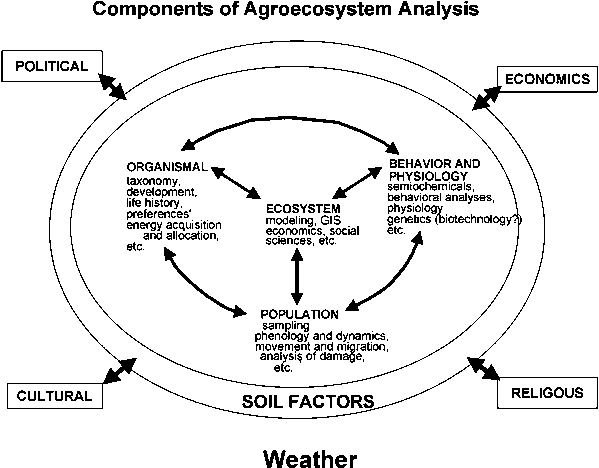
To further illustrate the previous points on the possibilities of systems modelling in IPM some additional explanation is provided. The research components of a typical IPM modelling application are found in Figure 6.
At the ecosystem level, the integrating technologies are modelling and GIS. Population models must be built up from the individual physiological and behavioural level and be driven by soil factors and weather. Policy issues must include social science components impinging on the agroecosystem structure and function.
Figure 6: Components of Agroecosystem Analysis
Source: CASA (2000) consultancy document.
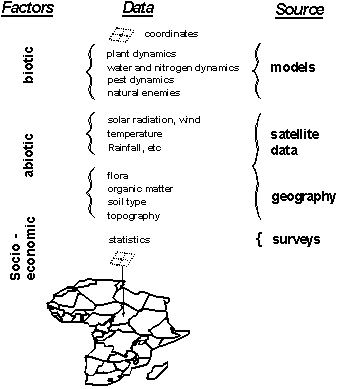
The systems models described above can be implemented in GIS and used for site specific or regional analyses. Some of the components of a linked GIS/modelling system are illustrated in Figure 7. For example, the GIS system developed for the FAO Locust group using UNDP funds incorporates components dealing with weather from various sources (e.g. satellites, ground, etc.) that are essential components for implementing IPM models regionally. Several of the IARCs co-operating in SP-IPM are engaged in GIS development and some are part of the new CGIAR CSI initiative. Of these, CIAT, ICRISAT and CIMMYT appear to have the greatest experience and infrastructure for GIS work. Early CGIAR GIS applications in IPM include climate matching of different regions in the Americas and Africa to determine ecological homologues where natural enemies of the cassava mealy bug (CM) and cassava greenmite (CGM) might be found in the Americas. This exercise proved especially useful in the successful biological control of CM and in the ongoing efforts on CGM. GIS applications also have importance to studies on the effects of climate change on various aspects crop production and protection, biological control, IPM and regional economic analyses. SP/WF-IPM, SP/PPM-IPM's stem borer project and IITA's larger grain borer projects have ongoing GIS activities, but they are of a preliminary nature and need further development.
IPM applications across crop systems have many aspects in common; hence system-wide effort to develop a GIS should be co-ordinated among Centres and include planning for potential biological and economic applications early in the design stage.
Figure 7: GIS & Modelling
Source: Gutierrez 1996.
The Panel recommends that in order to make full use of relevant disciplinary expertise, SP-IPM should more seriously explore the complementarities among programmes including different systemwide programmes and relevant Centres not included in the systemwide programme as well as outside research institutes be they advanced NARS or ARIs. To fully utilise recent advances in computer modelling and GIS that offer new potentials for the transfer of site-specific research results SP-IPM should adopt these concepts as a unifying part of its research strategies.
Distinguished researchers of pest management have come to realise that in future much of the advances in IPM will have to come from social science research (e.g. van den Bosch 1967; Zadoks 2000). The review of IPM in the IARCs (CGIAR 2000) has reached a similar conclusion. As described in Chapter 1 the SP-IPM did not yet internalise these recommendations. By and large it is still a natural science-driven research programme that leaves the pre-conditions and the incentive structure that invariably affects the adoption of IPM by farmers in the realm of external assumptions. This, of course, ignores that reality paints a different picture. Adoption rates of IPM even in a crop like irrigated rice in Asia - where significant investments and efforts did take place - is apparently still very low (Heong et al. 1998; Oudejans 1999; CGIAR 2000). This is perhaps not a unique situation for IPM alone. For instance, the Review of Systemwide Programmes with an Ecoregional approach (CGIAR 1999) has found a similar situation for Natural Resource Management (NRM) research in the CGIAR. Therefore, the recommendation of the Panel was that Centres undertake a special effort to strengthen the social science and policy aspects of NRM. As regards IPM, this Panel concludes that SP-IPM in the past has not been effective in contributing to an enabling policy environment for IPM, a guiding principle whose realisation is conditional to a successful implementation of IPM programmes at the field level.
Without establishing effective links to institutions involved in policy analysis and with experience in managing policy change, the natural scientists involved in IPM research will likely be unable to progress much on this front. Natural partners within the CGIAR are IFPRI for policy analysis and ISNAR for managing policy change through partner institutions in developing countries. However, involvement of advanced NARS and ARIs is also an option in case existing priorities of the CGIAR policy Centres[27] do not provide much room for IPM.
Regardless of the institutional arrangements the list of possible research topics on the socio-economic and policy aspects of IPM could be long but for brevity only a few shall be mentioned. First of all, clarification of the crop loss question could produce significant benefits in terms of global public goods provision. While SP-IPM has improved the concept of crop loss assessment beyond experiment station field trials and has included a farmer perspective, it has not made the connection to aggregate production, product quality, prices and costs, i.e. interpreting physical loss in terms of economic loss. Likewise the notion of conducting crop loss research in context of generating a better understanding of the factors that affect yield and yield variability has not yet been encompassed by SP-IPM. If the hypothesis of rising levels of crop loss in relative terms put forward in the studies cited in Chapter 1 can be confirmed, then the existing research priorities deserve re-assessment. In the opposite case, a re-thinking of existing pest management strategies is necessary.
Furthermore, to assess the impact of pre-and post harvest crop loss on household level food security, taking into account effective coping strategies has not been addressed and requires new and innovative social science research. Validated crop loss information can become an important input in forecasting world food supply. Here, the concept of incorporating pests in aggregate production functions by applying the damage function approaCh (Lichtenberg and Zilberman 1986) could produce valuable information.
Secondly, the analysis of the effects of distortions in crop protection policy is a necessary input for governments who want to implement national IPM programmes. As established in a World Bank study (Farah 1993) very often there various forms of price-based and institutional-types of pesticide subsidies exist that can discourage farmers to adopt IPM. Developing countries that want to compete in the agricultural markets of the OECD countries have to respond to changes taking place in international trade. Globalisation accompanied by international regulation pose challenges and opportunities for the agricultural sectors of exporting developing countries, e.g. for fruits, flowers, processed or specialised foods and fibre products. At the same time, national regulatory agencies in importing countries are imposing stricter standards on allowable product quality and lower tolerances for residue levels of pesticides in agricultural products. For example, the European Union in July 2001 has affected lower maximum residue levels for all imported commodities. From this, stricter basis in government regulations which are protected by WTO, more and more food processing companies and food retailers are developing new product lines that demand even stricter standards of production, including organic foods and fibres and products that are certified as being produced with minimum environmental impact and improved sustainability of agricultural resources.
It is in this area of policy research where SP-IPM can make an important contribution. In this connection it is also important that effective linkages are established to the Global IPM Facility (GIPMF) at FAO Rome. GIPMF as a multi-donor undertaking has been charged with implementing a farmer-driven and ecologically-based IPM approach. Its recently completed mid-term review has urged GIPMF to play a more pro-active policy role. GIPMF's Governing Board in its recent annual meeting[28] strongly endorsed this recommendation and hence, this is likely to stimulate demand for policy research in this field. A third research theme of social science research and IPM is in the area of impact assessment. Up until now only few analyses have been conducted that demonstrate the impacts of IPM in large-scale programmes. One of the exceptions probably is the project on biological control of the cassava mealy bug (Norgaard 1988; Zeddies et al. 2001).
One of the problems with impact assessment of IPM is that the realisation of its benefits depends on a number of conditions such as effective extension tools, the marketing activities of the pesticide companies and policy conditions like pesticide prices. Also, it has been demonstrated in crops world-wide (e.g. cotton, rice) that many pests are often man-induced due to misguided control interventions that can cause considerable negative externalities. Therefore, the benefits of IPM may much depend on the ecological conditions created by prior pest control interventions raising the question of defining benefits and costs. (One such problem may well be the global whitefly problem currently being addressed by SP-IPM.). Economists outside the realm of agricultural development in an article in the Economic Journal (Cowan and Gunby 1996) have identified IPM as a typical case for path dependence, explaining why IPM was not yet adopted widely despite of its economic advantage against unilateral chemical control.
The questions raised in relation to IPM impact assessment (see also Chapter 1) show the need for developing a methodology that is based on advanced methods of social science and, where links to say, Natural Resource Management programmes that face similar problems may be useful.
The Panel recommends that socio-economic and policy research be added as a major component of SP-IPM. There are at least three broad themes that deserve to be given more attention if SP-IPM wants to make relevant and significant contributions to international agricultural developments, namely (1) economically defined crop loss assessment, (2) policy research in response to national crop protection policies and international trade issues, i.e. IPM and globalisation and (3) impact assessment that incorporates natural resource management aspects into social science research.
The ultimate question that needs to be answered with all systemwide programmes is whether the costs are commensurate with the benefits that are expected to emanate from planned and co-ordinated inter-centre activities? There needs to be a comparison to a situation where Centres continue to perform IPM research activities in isolation and through occasional exchanges largely on the basis of personal contacts. Undoubtedly, this is a difficult question and until now all systemwide reviews basically have failed to answer this question. The report of the recent review of the systemwide livestock programme (SLP) stated: “...the answer in the case of SLP is highly judgmental as the full costs are tricky to measure and the benefits are impossible to assess well at this still early juncture. The Panel feels, however, that, overall the benefits will be commensurate with and will probably well exceed the costs”[29]. Similarly, the review of Systemwide Programmes with an Ecoregional Approach (CGIAR 1999) concluded on the cost-effectiveness/value added question: “the Review Panel was unable to address this part of the Terms of Reference satisfactorily due to lack of hard data on both the costs and benefits”.
Much the same can be said about the SP-IPM. Especially, the benefits in terms of global public goods provision largely remain unknown at this stage while the benefits of individual Centres participating in the programme are easier to identify. In an attempt to provide at least a partial and qualitative answer to this question we first describe the counterfactual situation without SP-IPM.
Needless to say, that if SP-IPM will be discontinued there will still be IPM research in the Centres. The question however is what level of significance this research is likely to have. The results of the evaluation study that tried to assess the status of IPM at the IARCs (CGIAR 2000) may be helpful to describe the situation without SP-IPM:
IPM in most cases is almost as old as the Centres themselves. The definition and meaning of IPM differs widely among Centres. Dominant among the Centres is the technological paradigm of IPM, i.e. the technology transfer model. Only in some cases, this paradigm seems to be changing with and emergence of the participatory concept in IPM implementation, as well as in the development of component technologies:
through IPM, research programmes in the Centres were made aware of the danger of relying on chemical pesticides as the only means of pest control. This is reflected in the high priority given to resistance breeding although initially this was not formally treated as a component of IPM in Centre programmes;
for integration of IPM in the Centres' activities, it was found that little funding for IPM seems to come from the core budget. Probably because of its outreach character, IPM is largely a donor-driven programme;
there is little evidence that IPM in the Centres has become the overall research philosophy in crop science. Yet, there seem to be some exceptions to this, notably among the Centres that do not have crop mandates;
as regards the future of IPM, Centres generally seem to place much hope in the potential of biotechnology as the novel approach to IPM. However, a strategy of how biotechnology can be integrated in IPM does not seem to exist;
helping NARS partners design national crop protection plans is rarely on the agenda of Centres although many of them engage in joint implementation of IPM pilot projects and training activities; and
as regards research partnerships, overwhelmingly IPM in the Centres is still relying on 'backward linkages' with the input supply industry. Rarely do Centres establish co-operation with crop marketing institutions and the food industry.
These seven points indicate that in a situation without SP-IPM crop protection research in the IARCs will continue to be carried out following IPM concepts. On the other hand, it is likely that these isolated and routine research activities will perhaps just produce “more of the same”. Relative to some ARIs, some of the larger NARs (e.g. Brazil and China) and especially relative to the private sector, individual Centres will be just too marginal to be a “force” and may not even be a “factor” when it comes to who determines the path of modern crop protection research. If SP-IPM is abandoned, the risk will increase that IPM research in the IARCs will become marginalised in the international scientific community. As a consequence, a brain drain will take place from the IARCs to other institutions engaged in the provision of pest management technology. Presumably it will be the private sector that will harbour the best brains of IPM. As mentioned elsewhere (CGIAR 2000) this process has begun already. Therefore, the Panel views the question on benefits of the SP-IPM not so much as a question of “the value added” but much more as question of “survival” in a rapidly changing scientific community.
To provide a final assessment on the future role of SP-IPM, the Panel submits that one cannot base this judgement on past programme performance alone. In its initial phase, SP-IPM had to struggle largely with “domestic problems” (from the CGIAR viewpoint) of developing effective mechanisms for inter-centre collaboration.
At this level, the benefits of SP-IPM occur as gains to policy makers of unified approaches to problem solving and to donors that get greater returns for their investments and at the same time a decrease in the numbers of solicitations and proposals to review. Individual scientists gain professionally from collaboration on significant large-scale problems and become part of a global science team that also gives them protection should their findings threaten vested interests. Furthermore, NARSs/NGOs get a clearer path for scientific collaboration and implementation of IPM research results.
However, the future SP-IPM must reach beyond this level. The Panel wants to make it very clear, that it views the existing structure, conduct and performance of the SP-IPM no longer adequate if the challenges that lie ahead are to be met and if the CGIAR wants to continue to be a major player in the international scientific community that deals with crop protection.
Hence, there is no point to continue the SP-IPM in the way it was structured and in the way it has operated in the past. The situation is comparable to the one of a speeding airplane on a runway shortly before take-off: when the point of no-return is approaching, pilots either have to exert a full brake or take-off. The Panel thinks that the SP-IPM should fly and that the opportunity costs of not taking-off would be high. Of course, before take-off the destination should already be known.
In the previous chapters of the report we have given some indications what the scope of the “new SP-IPM” could be but we did not yet elaborate much on its operating principles. In the following the Panel offers its “vision” for an optimised IPM followed by suggestions for a non-conventional organizational structure. As a major guiding principle, an optimised SP-IPM must take a trans-disciplinary and an institutionally outward looking stand. Its main goal should be to identify and fill significant gaps in research that exist with regards to the underlying principles which need to be understood in order to identify and implement socially optimal combinations of pest management technologies in the spirit of the IPM definition adopted by the SP-IPM before (see Chapter 2). In more concrete terms, this means that SP-IPM should focus on pest problems and other pest control related questions with a global or at least a regional dimension. As regards global/regional pests, the obvious example is whitefly but the Panel could imagine other candidates such as weeds, bollworms in corn and cotton and diamond back moth in vegetables could be added to this list. Here, the ecological modelling concepts described in the previous chapter could become a more intensively applied tool to be developed further as a result of these efforts.
As regards global issues of pest management technologies the SP-IPM must deal with the problem of the pesticide spiral (threadmill) and make sure that the lessons learned from chemical pesticides are being applied in the implementation of modern biotechnology, especially transgenic seeds for pest control. This means that a social science component has to be added to SP-IPM. Ultimately, SP-IPM could adopt the role of an “honest broker” in assisting international and national programmes to implement IPM at the farm level. Possible research topics were listed in the previous chapter. However, a “liaison function” would have to be added in order to effectively communicate research results and to make sure that its research at least will stimulate discussion if not induce change. In this regard, SP-IPM should liaise closely with the Global IPM Facility, especially in the field of designing IPM policies and in developing and evaluating adequate extension strategies for up-scaling IPM globally.
As regards its operational principles, the SP-IPM must explore new ways of effectively implementing rules for co-operation among participating Centres. Because of the unique role IPM plays among the IARCs, i.e. every Centre regardless of whether its main focus is on germplasm improvement, natural resources management or socio-economic and policy research does have IPM activities, there is no natural lead Centre for IPM. While IITA has played that role in the past (and other Centres have agreed to this[30]) the Panel suggests adoption of an alternative organizational arrangement for the future SP-IPM. If the objectives of SP-IPM are broadened in their scope expertise is requires that is outside the crop protection disciplines. Hence, the option of placing the Management and the Secretariat of the SP-IPM outside the jurisdiction of an individual Centre, i.e. creating a kind of virtual IPM Centre should be given serious considerations. The Panel sees two options for identifying a “home” for an “upgraded” SP-IPM secretariat:
1. the first option is to link the co-ordinator position to TAC (or Science Council in the future) with its base at FAO Rome. The rationale for the choice of location is the close vicinity of the GIPMF based at FAO's Crop Production and Crop Protection Division. Hence, there could be significant efficiency gains from bringing together global IPM research co-ordinated by the CGIAR and global IPM implementation convened by GIPMF at the same location. Both institutions, the SP-IPM and the GIPMF could benefit from such an arrangement also allowing donors to undertake better targeted investments in IPM; and
2. the second option would be to place the SP-IPM programme for bidding open to any research organization with sufficient competence in IPM. This would leave the question of where the secretariat will be based to the market. Bidders could be IARCs, ARIs or advanced NARS. Selection of offers should be done by TAC/SC based on specified criteria.
In both options the “virtual IPM Centre” should be responsible to the Science Council and the new Executive Council. To be able to work effectively the co-ordinator position should be synonymous with the former programme leader and be given the status of a Centre Director supported by a small staff. The Panel submits that such arrangement could serve as a model for selected other global issues of the CGIAR such as for example a common policy for Intellectual Property Rights (IPR). However, such arrangement would be different from other systemwide programmes or the new global challenge programmes. While the latter will address long-term global research problems, an upgraded SP-IPM programme in the form of a “virtual IPM Centre” would deal with global research questions in the natural and the social sciences and engage itself in communicating research results in order to influence policy. The Panel strongly believes that the issues of pests and pest management have scope that goes far beyond the range of other systemwide programmes. The co-ordinating role of a virtual IPM Centre is of increasing importance in identifying regional and global IPM issues, enhancing research quality and productivity of the existing SP-IPM taskforces, facilitating rapid implementation of IPM best-bet options through other IPM institutions and in creating a conducive policy environment for IPM.
The co-ordinator position must provide intellectual leadership and this requires a person of excellent technical skills in ecosystem analysis, ecology and economics, with persuasive management and interpersonal skills and with physical and mental stamina. The virtual IPM Centre needs to play the role of a strong proactive advocate of the sciences that underpins IPM and the technologies that increase IPM research and implementation efficiency. Funding for the co-ordinator position should come from CGIAR core funds. The focus of the co-ordinating unit must be on systemwide issues if it is to foster rapid solutions to regional and global pest problems and hence it must be shielded from parochial Centre views. It also must have sufficient authority to work effectively across Centre mandate boundaries and to assemble taskforces of the best scientific talent across Centres and among IARCs when the high-level expertise is not available within the CGIAR. It should be able to establish co-operative research effort with IARCs via joint funding and binding research agreements. Such outsourcing arrangements have been used in the past, but greater emphasis on equal partnership mechanism is recommended to assure greater research efficiency, greater accountability, potentially lower donor costs and more rapid implementation of IPM technologies.
If there are perceived losers of the concept of a “virtual IPM Centre”, it is the Centres and their Boards, which will loose influence in their handling of systemwide issues. However, the Panel thinks that such re-direction is in the interest of the common good and is largely in line with the restructuring efforts currently undertaken by the CGIAR. To put this arrangement into practise requires “political will” from the CGIAR leadership and a clear demonstration that co-operation means greater institutional stability through increased funding and reduced risk from loosing out in competition for the same resources.
In summary, the Panel observes that within the CGIAR the potential contribution of IPM to sustainable agricultural development has not been fully recognised. Such neglect bears a significant risk that the “pest-pesticide spiral” will continue to accelerate, negating the potential contributions of relevant advancements in biotechnology and information technology for an effective, efficient and sustainable management of pests. The fact that in the past IPM has not made it to the “upper echelons” of the agenda of study and analysis of food policy and food security (in the realm of socio-economic research) does not mean that it is a factor of secondary importance. The Panel points out that this may as well be due to the complexity that the incorporation of longer-term ecological processes on the one hand and of human behaviour in the context of community action into economic models will entail. However, the need for sustainable management of the natural resource base that underpins the long-term productivity of agriculture, issues that deserve more attention. For example, to clarify the relative roles of genetic improvement of crops (including traditional host plant resistance and biotechnology) in the sustainable management of pests requires economic models that include ecological processes so that the costs and benefits of new technologies are to be assessed correctly. Failure to recognise the connection between ecology and economy in the management of pests will lead to the development of unbalanced and unsustainable crop production technologies. In the Panel's view, the importance of plant breeding for increasing crop productivity is widely acknowledged within the CGIAR, but the role of IPM in enabling the potential to be met has not yet been sufficiently analysed. However, with increasing intensification of agriculture in developing areas, the need for IPM in crop production and protection must increase if the goal of food security and sustainable management of natural resources is to be met. One needs to look no further than the pesticide induced outbreaks of rice brown plant hoppers in Asia during the green revolution and pests in cotton world-wide to appreciate the benefits of sound IPM. The recent solutions of the cassava mealy bug (CM), cassava green mite (CGM) and other pests in Africa are further positive IPM/biological control examples. Policy makers should be informed that natural and biological control are the backstopping mechanisms of sustainable crop protection and can increase the effectiveness of IPM.
The SP-IPM Review Panel recommends that the status of IPM be greatly elevated within the CGIAR and to be upgraded beyond the focus of the current systemwide programme. That SP-IPM in the future should be organized as a “virtual Centre” with minimal infrastructure but maximum linkages. The Panel views this as the best way to develop a global structure that has a fair chance to overcome the problem of rising crop losses from pests and the growing level of pesticide use world-wide. The co-ordinator position should serve as a liaison and “honest broker” between the Centres and other IARCs, donors, development organizations and the GIPMF on IPM issues. The co-ordinator position should be at the level of a Centre Director. Funding for the SP-IPM programme co-ordinator position should come from CGIAR core funds. The Panel recommends to establish the virtual IPM Centre either directly under TAC/SC or alternatively with any other research organization of international status in IPM to be determined through an open bidding process and to be coupled contractually to the CGIAR.
|
[20] Cately-Carson, M. et al.
2001. Designing and Managing Change in the CGIAR. Report presented by the CDMT
to the CGIAR at MTM 2001 in Durban, South Africa, May 2001. [21] In December 2001 ten proposals for Challenge programs were listed on the CGIAR homepage www.cgiar.org/... [22] For example, from its preliminary molecular studies with gemini viruses on tomato on the Indian subcontinent, AVRDC has established that almost each gemini virus isolated - even from closely adjacent geographic regions - is a distinct virus and that recombination among viruses is a common phenomenon (AVRDC 2001). [23] www.cgiar.org/..../cpgene.pdf; traced December 2001. [24] Review of System-Wide Programmes with an Ecoregional Approach, TAC Secretariat, Rome, August 1999. [25] CSI is not a System-Wide Programme. [26] The concept of ecological zones has heuristic value, but it is more appropriate to view these zones as gradients. This is especially true in East Africa where rapid changes in elevation create micro-ecological zones. [27] It should be noted however that ISNAR has been involved in SP-IPM in the area of impact assessment of Farmer Field School approaches to IPM. [28] This took place on 10-11 December 2001, at FAO /Rome. [29] The system-wide Livestock Program Centre-and TAC commissioned External Review, Rome 2001. [30] Letter of Dr. Brader to participating Centres. 19 December 2000. |
