| April 1997 | FO: ACPWP 97/2 |

|
|
|
|
|
|
|
|
|
|
Paper Industry Structure
The proprietary structure, capacities, and paper
and board production in 1995 are shown in Table 1.
In comparison with the capacity in 1989, the production
of large mills in 1995 was higher almost by 19 percent. Their
total participation in the domestic production was 67 percent.
Within the same period of time medium and small mills reached
a production amounting to about 60 percent of their capacity.
The participation of medium and small mills in the total domestic
production is 19.5 percent and 13.5 percent, respectively.
Such a situation in medium and small mills was mainly caused by
the liquidation of uneconomic technological lines and their high
debts, long and difficult debt liquidation procedures, and privatisation
processes. Despite the lapse of seven years since the beginning
of economic reforms in Poland, the privatisation of small and
medium paper mills is still a live issue. At the end of 1996,
the proprietary status of the paper industry and paper converting
was as follows:
The participation of the particular mills by their
ownership status in the domestic paper and board production is
as follows:
Production, Exports and Imports
At present the market
situation of the paper industry in Poland is affected by the same
fluctuations that occur in developed countries. In 1996, considerable
paper price decreases took place causing dissatisfaction among
both the manufacturers and distributors. This brought about a
limitation of production and deterioration of profitability. The
most important information about the paper industry in Poland
in 1994 and 1995 is given in Tables 2 and 3. As can be seen from
these figures, the Polish paper industry reached good production
and economic parameters in 1995. The utilisation of capacity was
high, which resulted in an increase in production as compared
with that of 1994.
The increase in wastepaper use and the indicators
of wastepaper collection and utilisation are given in Table 4.
From the comparison of data given in Tables 3 and 4, it can
be noted that the consumption structure of fibre raw materials
by the paper industry has been improving for several years due
to the increase in wastepaper use. For instance, in 1995
the use of virgin fibres in the paper and board production was
59 percent and that of secondary fibres 41 percent.
In 1995, the Polish paper industry used about 4.1
million m 3 of wood, including about 2.87 million m 3
of soft wood, gaining about 3.9 million m 3
of this raw material from the State-owned woodlands and the remaining
being imported. This amount of raw material allowed manufactures
to produce 671.2 thousand tons of chemical pulps, including 625.6 thousand
tons of paper grade pulp, 45.6 thousand tons of cellulose
for viscose fibres, 96.3 thousand tons of semi-chemical pulp and
112.2 thousand tons of mechanical and thermomechanical pulps.
Taking into account the production, exports and imports balance,
the use of virgin pulps last year in Poland was: 655 thousand
tons of chemical pulps, 105.9 thousand tons of semi-chemical
pulps and 118.3 thousand tons of groundwood pulps. The paper industry
used 20.7 percent of the total amount of wood being on the
market in Poland which was 18.8 million tons (large timber). In Poland,
the grade composition of wood is dominated by pine: 69.4 percent,
while the other grades include: spruce 6 percent, oak 6 percent,
beech 4.1 percent, birch 5.8 percent, alder 5.3 percent,
fir 2.5 percent; hence soft pulpwood amounted to 66.5 percent
of the total acquisition of woodpulp.
The results of foreign trade in 1995 are given in
Table 5. It can be seen that in 1995 the increase in imports,
compared to 1994, was as follows: chemical woodpulp by 44.4 percent,
paper by 26.7 percent, paper products by 29.1 percent,
books and newspapers by 6 percent. In the case of exports,
the increase was as follows: paper by 13.8 percent, paper
products by 74.7 percent, books and newspapers by 51.3 percent;
there was a drop in exported cellulose by 9.2 percent. Generally,
imports exceed exports by 147.7 thousand tons in 1994 and by 205.6
thousand tons in 1995.
The paper consumption in Poland in recent years is
shown in Table 6. It can be seen that, starting from 1992, there
has been a systematic high increase in paper consumption. However,
the paper consumption per caput index in Poland is still several
times lower than those in developed European countries (see Figure 1).
By the end of the year 2000 the increase in GDP in
Poland is foreseen to be still high (56 percent) and
therefore the paper and board consumption is likely to grow also
at a high rate.
Table 7 shows data on the production of the paper
industry in 1996 compared to that in 1995. It can be seen that
total paper production increased by 1.4 percent, for printing
and writing about 10 percent, but for board over 27 percent.
The most substantial drop took place in the manufacture of newsprint
and packaging paper. The increase in the board production
resulted from the starting up of the MPIV paperboard machine at
the International Paper Kwidzyn.
The results of foreign trade in the first half of
1996 are shown in TABLE 8. In comparison with the first
six months of 1995, imports in the first half of 1996 increased
by 53.8 thousand tons and exports by 27.4 thousand tons.
In the first half of 1996 considerable decreases
in pulp and paper prices were observed in Western Europe compared
to the first six months of 1995, namely: the drops in particular
grades were as follows: chemical pulps by 43 percent, uncoated
woodfree offset paper (80 g/m2), coated offset paper
by 6 percent, printing offset paper (81 g/m2)
by 19 percent, facing board (175 g/m2) by 31 percent,
fluting (114 g/m2) by 44 percent, boxboard GC2
by 11 percent and boxboard GD2 by 21 percent.
Such a considerable price drop and the limitation
of production have brought about a decrease in the profitability
of net pulp and paper production in Poland from on average 12.7 percent
in 1995 down to 2.2 percent in the first six months of 1996.
Development of the Paper Industry in Poland
The major difficulties in the Polish paper industry
include:
These difficulties, however, have no influence on
the year-by-year growing absorptive power of the Polish market
for paper goods. The increase in paper product consumption, being
faster than that of production capacity, causes imports to increase.
The import increase is also facilitated by the accelerated process
of tariff walls elimination in Poland, thus creating problems
in mills under restructuring. This makes Polish mills to look
for new markets and to increase exports. However, to succeed in
foreign markets, one has to offer a good paper quality at low
manufacturing costs, and this forces the Polish papermakers to
invest in paper quality.
Within the last five years the paper mills in Poland
have invested the following amounts in quality, production increase
and environmental protection:
Modernisation work was also carried out or still
is in progress in many other mills such as: Paper Factory "Szczecin-Skolwin"
S.A., Glucholazy Paper Mill, Bydgoszcz Paper Mill, Paper Factory
- Dabrowica, "Maltadecor" Paper Mill. The latter
factory has recently received ISO 9001 certificate as the second
paper mill in Poland.
The investments in the paper industry are very capital-intensive,
hence the paper mills urgently search for strategic investors
who would accelerate the modernisation processes by using an appropriate
capital, which in turn would make it possible for the paper mills
to adapt faster to the market economy. Taking into account the
currently performed modernisation processes, the production capacities
of the pulp and paper industry can be evaluated as follows:
Considering the capacity utilisation index in the
manufacture of paper and board, which amounts to 90 percent,
one has to expect a production at a level of 1.53 million tons,
which with the foreseen paper consumption in Poland amounting
to 1 700 thousand tons will force a credit balance (imports
minus exports) at a level of about 170 thousand tons of paper
and paper products. The results of the first half of 1996 seem
to confirm this prognosis.
From the balance of pulps given above it can be foreseen
that in the near future, to produce 1.7 million tons of paper
with a 54.4 percent consumption of virgin pulps, there will
be a lack of 145 thousand tons of pulp.
In order to maintain a proper proportion between
virgin pulps and wastepaper pulps, the missing amount of pulp
should be looked for in an increased recovery and processing of
domestic wastepaper.
The Association of the Polish Papermakers, in the
past two years has brought to the attention of government bodies
the situation connected with the collection and processing of
wastepaper in Poland. On the one hand, the collection of wastepaper
in Poland is too low compared to those western countries leading
in the collection of wastepaper, and on the other hand, the processing
of wastepaper in the paper industry is insufficient, mainly due
to the lack of wastepaper deinking installations, allowing the
use of pulped wastepaper to produce white papers.
The efforts of the Association in this regard yielded
in the form of financial means granted by PHARE with the support
of the Ministry of Industry and Trade to develop a restructuring
programme of fibrous raw material consumption by the pulp and
paper industry in Poland, i.e., the "Waste Paper Programme".
It is hoped that in 1997 the selected consultant
will start to develop this program on the basis of experiences
of the countries where the collection of wastepaper is very high,
determining legal, organisational and technical conditions, as
well as an educational programme for the society, necessary to
increase the collection and processing of wastepaper. This should
bring about improvements in environmental protection and in the
structure of fibrous raw material consumption by the paper industry.
It is expected that the programme will result in:
Conclusions
References
a Oneman ownership of the State Treasury. b Without board production (modernisation of PM 4). c Current capacities should be higher, but the figures are not available from the mill. d National Investment Fund. e Leasing from the State Treasury.
f) Private
company Ltd.
Supplement
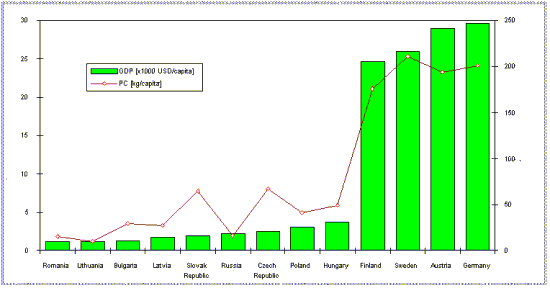
Fig.1. Gross Domestic Product (GDP) and Paper Consumption (PC) in
| ||||||||||||||||||||||||||||||||||||||||||||||||||||||||||||||||||||||||||||||||||||||||||||||||||||||||||||||||||||||||||||||||||||||||||||||||||||||||||||||||||||||||||||||||||||||||||||||||||||||||||||||||||||||||||||||||||||||||||||||||||||||||||||||||||||||||||||||||||||||||||||||||||||||||||||||||||||||||||||||||||||||||||||||||||||||||||||||||||||||||||||||||||||||||||||||||||||||||||||||||||||||||||||||||||||||||||||||||||||||||||||||||||||||||||||||||||||||||||||||||||||||||||||||||||||||||||||||||||||||||||||||||||||||||||||||||||||||||||||