| FAO/FIIT Fishing Gear Type Fact-Sheet |
|
| Purse seines [PS] | updated : 10-mai-2001 |
|
|
|
| Profile |
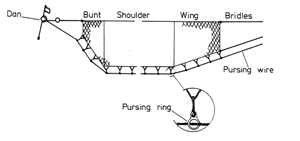
| General Description: A purse seine is made of a long wall of
netting framed with floatline and leadline (usually, of
equal or longer length than the former)and having purse
rings hanging from the lower edge of the gear, through which
runs a purse line made from steel wire or rope which allow
the pursing of the net. For most of the situation, it is the
most efficient gear for catching large and small pelagic
species that is shoaling. |
| Specific Handling Equipment: Small purse seines can be operated
entirely by hand in small scale fisheries. In artisanal or
semi-industrial fisheries, the purse seine handling
equipment may include: apurse seine
winch or acapstan,
a purse line reel, a brailer and a power block and in some
fisheries, a net drum. In industrial purse seine fishery,
the basic equipment include, in general: a
hydraulicpower block
orTriplex roller, a powerful
purse seine winch, a number of derricks, including
abrailer or afish
pump, and small winches, an auxiliary boat
"skiff" and sometimes,
an helicopter. |
| Fishing Vessels using this gear: The purse seine can be used by a large
range of vessel sizes, ranging from open boats and canoes up
to large ocean going vessels. The purse seines can be
operated by one or two boats. Most usual is a purse seine
operated by a single boat, purse seiner, with or without
an auxiliary skiff. |
| Fishing Operations: Searching for fish aggregation, then
checking (when possible) the fish species and evaluating
school sizes and its catchability, prior to surrounding it
is the major part of a purse seine operation. The purse
seine is set around a detected school of fish. After that,
the net is closed underneath the school by hauling the purse
line running through the rings (pursing). Hydroacoustic
instruments, likesonars are
important tools to locate fish aggregations. Also common is
the use of "natural" signs of fish aggregations
(often observed with binoculars) to start with the fishing
operation, like concentration of sea birds, ruffling of the
water surface and presence of groups of dolphins. Artificial
"Fish Aggregating Devices"
(FAD's) andlight
attractions are used in some fisheries to
concentrate the fish. |
|
| Features |
| Target Species: water Aggregated pelagic species
(schools) of all sizes from small sardines (to the large tunas). |
| The Gear and its Environment:
|
 | Deployment Area: In general the purse seines are
surface gears used in the marine coastal and high-sea
waters. Aggregated resources in the upper levels are
most common, but fish at depths up to 300 m can be
targeted. The purse seines are also used in inland areas
when there is enough room for the operation of a large net). |
| Impact on the Environment: Because of its characteristics there
is no impact on the bottom habitat (except when the
water depth is less than the height of the seine
during the fishing operations and that the lower
edge of the gear wipes the sea bottom). |
| Impact on Aquatic Species: The main negative impact is the
incidental capture of dolphins in certain fishing
areas. Special techniques have been developed to
reduce bycatch of dolphins; the Medina panel and
"back down" operation, which allow
encircleddolphins to escape alive. When
small pelagic purse seines are used with light
attraction, there may be incidental catch/bycatch
(including too small fish, juveniles or endangered
species). The increasingly used practice of
encircling floating objects, including man-made FADs
increases the capture of small sized and immature
aggregating around such devices. |
|
|