|
THE RAFR/SWIOP SEMINAR FOR FISHERIES STATISTICS AS A MEANS FOR IMPROVED FISHERIES MANAGEMENT |
December 1983
RAF/79/065/WP/10/83
Albion, Mauritius, 5-16 December 1983.
Honourable Ministers
Distinguished Representative of the FAO - Dr. Bazigos
Project Leader for the South West Indian Ocean
Project of the FAO - Mr. Ardill
Distinguished Delegates
Ladies and Gentlemen
It gives me great pleasure on behalf of the Government of Mauritius to extend to all of you a warm and fraternal welcome. Many of you have travelled long distances from the South West Indian Region and other states of the African Continent to join your Mauritian colleagues and to participate in this Workshop on Fishery Statistics organised by the FAO under its South West Indian Ocean Fisheries Developent and Management Project.
You may be aware that Mauritius hosted the First Session of the Committee for the Development and Management of Fisheries in the South West Indian Ocean in April 1981, the outcome of which was the setting up of the South West Indian Ocean Fisheries Development and Management Project. We believe that FAO has found a very effective mechanism for implementing aid programmes to developing countries through the setting up of such regional bodies and backing them with technical support units.
I wish also to mention that in the same spirit of promoting regional cooperation, the Government of Mauritius is planning to convert this Albion Fisheries Research Centre (where we are now assembled), into a Regional Centre for Fishing Research open permanently to all researchers coming from all countries in the South West Indian Ocean region. We hope that such a regional research centre, once it becomes operational, will give a new vitality and impetus to fishery research in general as well as to exchange research data amongst technicians of the region.
Turning to the topic of Fishery Statistics, one cannot overemphasize the vital role they play in the development and management of the fishing industry. In fact, the data collected can give a very good idea of the state of fishery resources and coupled with biological data, form the very nucleus around which decisions conveying the fishing industry can be taken by resource users, planners and policy makers.
The collection of fishery statistics has a relatively long history in Mauritius, although in the past these statistics were not always collected in the most scientific ways. Prior to the nineteen-fifties, data on the amount of fish caught were obtained through market surveys. With the creation of a Fisheries Protection Service, fish landings were recorded at selected fish landing stations and estimates for the total catch for the whole island were calculated by doubling the total landings recorded at those stations. Such a system for collection of statistics had certain shortcomings as it was not possible to cover the selected landing stations adequately. The way in which the total catch was estimated was also arbitrary. Furthermore, no fishing effort was recorded. Because of this lacuna, it was not possible to make an analysis of the reaction of the fishery in relation to the different gears used.
Thus the assistance of the FAO was sought for the setting up of a statistical system which would produce more reliable estimates of catch and effort so as to enable us to monitor and manage our marine fisheries more efficiently. We are very thankful to the FAO for having put at our disposal the services of Mr. S.K. Banergi in 1976. He made a number of recommendations for the setting up of a statistical system of marine fisheries in Mauritius which were implemented as from 1977. Fishery statistics are being collected on a frame survey basis for our lagoon fisheries. The original system of collection of statistics has been modified with the availability of new data, so as to improve on the estimates. As regards bank and tuna fishing industries data are collected by direct enumeration.
Our Mauritian technicians would be pleased to share with you the modest experience they have acquired in the field of fishery statistics and hope to improve on the existing system through your valuable contributions. Of course, Mauritius is a very small country compared to our continental neighbours and Madagascar, and we shall be glad to learn about the problems you have encountered in your respective countries and the ways you have tackled them.
I am sure it is the wish of all of us here to see that the exchange of ideas and knowledge provided will help to improve the existing system of data collection in the region. I, accordingly, wish you success in your deliberations and a happy stay among us here.
I would like to express my heartfelt thanks to the FAO for having taken the initiative of organising this Workshop in Mauritius. It now gives me great pleasure in declaring this Workshop open.
Distinguished Permanent Secretary
Distinguished Resident Representative of UNDP
Distinguished Participants
Ladies and Gentlemen
On behalf of the Director-General of FAO, Dr. Edouard SAOUMA, I wish to express our profound gratitude to the Government of Mauritius for having offered to host this Seminar.
It would be difficult to imagine more appropriate surroundings than the Albion Fisheries Research Centre, which allies the best possible facilities for such a meeting with beautiful surroundings. The preparation made by the Ministry of Agriculture, Fisheries and Natural Resources have been faultless from the greeting of participants at the airport, the organization of their transport, of the leisure activities, to the administrative arrangements and the preparation of background data on Mauritius and its fisheries.
This Seminar is in fact a result of many contributions. Apart from those of the host country and of the South West Indian Ocean Project which has had the role of organization and coordination, I would like to mention the Regional Office for Africa of FAO for having provided the nucleus of funding which initiated the seminar, the FAO/NORWAY cooperative programme which complemented the funding and not least, the FAO regular programme which provided the services of Dr. George Bazigos and Mr. Rino Coppola who have the technical responsibility for the seminar.
As you may know, the South West Indian Ocean Project, which is the technical support unit for the Committee for the Development and Management of Fisheries in the South West Indian Ocean serves the marine fisheries of Comoros, Kenya, Madagascar, Mauritius, Mozambique, Seychelles, Somalia and Tanzania. To this seminar, we also have the pleasure of welcoming participants from Ethiopia, Sudan and Uganda. France through its interests in Réunion, will participate not only as a full member of the Committee but an 'associate' member of the project.
This seminar should be seen in the context of the recent adoption of the provisions of the United Nations Conference on the Law of the Sea. Maritime countries are now responsible for fishery resources within 200 nautical miles of their coasts, not only for their own use, but also with the provision of allowing third countries to exploit the fish they do not themselves need. The importance accorded to this by the World Community and by FAO is reflected in the World Conference on Fisheries being held in Rome in 1984. Already, all the countries of this region have contributed to the technical phase: the Committee on Fisheries of FAO held in October, which resulted in the adoption of a substantive action programme.
At the basis of this programme; as of any decision-making process, we find statistics. Despite the popular belief that statistics can be made to say anything, no management decision can be taken without a data base. I am taking here, management in its broadest sense: not only the management of resources, but also the commitment of finance, and the technical operation of fisheries.
For this, however, statistics must be accurate, that is, with known limits of variance.
The purpose of this seminar, therefore, is to critically examine the statistical systems of participating countries. From this base, where possible, to de-bias historical data, to recommend possible improvements, and also to reach agreement on standards, as regard species, vessels, gear and fishing effort so that data from different countries may be comparable. Finally, we hope to agree on reporting forms. designed to meet national needs, but also to be merged to meet regional needs, and further to meet those of the FAO statistical yearbooks.
In doing this, we will keep an eye to the future, as computer technology will replace the drudgery of human manipulation of figures.
As you may see, Ladies and Gentlemen, an arduous task faces the participants of this seminar for the next two weeks. I am confident that, through the level of competence and dedication of those here present, the task will be met.
Albion Fisheries Research Centre, Mauritius 5 - 16 December, 1983
Ms. B.W. GIORGIS
Statistician
Min. Agri., Fish Pro. & Marketing Corp.
P.O. BOX 62308
ADDIS ABABA Ethiopia
Mr. Demeke KUCHU
Expert
Fisheries Devevelopment Department
P.O. Box 62308
ADDIS ABABA Ethiopia
M. Jacques BERTRAND
Chef de Laboratoire
I.S.T.P.M.
B.P. 60
97420 LE PORT Reunion
Mr. P.M. NZUNGI
Fisheries Officer (Statistics)
Fisheries Department
P.O. Box 58187
NAIROBI Kenya
Mr. L.N. THAIRU
Fisheries Assistant
Fisheries Department
P.O. Box 58187
NAIROBI Kenya
Mme. N. RAZAFINDRALAMBO
Collaborateur Technique/Economiste
des Peches
C.N.R.O. BP 68
NOSY-BE Madagascar
M. C. ANDRIANAIVOJAONA
Chef, Div. Etude et Documentation
Service Peche Maritime
BP 291
ANTANANARIVO (101)
Mr. P. KALLEE
Technical Officer
Min. Agri. Fisheries & N.R.
Registrar General's Bldg.
PORTLOUIS Mauritius
Mr. D. MAUREE
Technical Officer
Min. Agri. Fisheries & N.R.
Registrar General's Bldg.
PORTLOUIS Mauritius
Mr. M. MUNBODH
Ag. D.S.O.
Min. Agriculture, Fisheries & N.R.
A.F.R.C.
AL CN Mauritius
Mr. C.R. SAMBOO
Technical Officer
Min. Agriculture, Fisheries & N.R.
A.F.R.C.
ALBION Mauritius
Mr. M. NALLEE
Technical Officer
Min. Agri. Fisheries & N.R.
Registrar General's Bldg.
PORTLOUIS Mauritius
Ms. G. LABLACHE
Research Director (FIDECO)
Fishing Development Company
P.O. Box 71
MAHE Seychelles
Mr. E. DIAS
Statistician
Statistics Division
P.O. Box 206
MAHE Seychelles
Mr. A.S. MOHAMUD
Head, Resource Management Div.
Ministry of Fisheries
P.O. Box 438
MOGADISHU Somalia
Mr. H.A. AHMED
Planning & Liaison Officer
Ministry of Fisheries
P.O. Box 2264
MOGADISHU Somalia
Dr. S.Y. MISHRIGI
Director
Fisheries Administration
P.O. Box 4058
Central KHARTOUM Sudan
Mr. E.M. NUR
Scientific Officer (Statistics)
Fisheries Administration
PO Box 4058
Central KHARTOUM Sudan
Mr. S.S. KOMBO
Planning Officer
Fisheries Division
P.O. Box 774
ZANZIBAR Tanzania
Mr. M. MKISI
Fisheries Officer
Ministry of Natural Resources & Tourism
PO Box 2462
DAR ES SALAAM Tanzania
Mr. L. NHWANI
Snr. Research Officer
Tanzania Fisheries Research Institute
PO Box 9759
DAR ES SALAAM Tanzania
Mr. A.M. OTHMAN
Snr. Fisheries Officer
Min. of N.R.,Fisheries & Resources
P.O. Box 774
ZANZIBAR Tanzania
Mr. S. KATURAMU
Snr. Fisheries Officer
Fisheries Department
P.O. Box 4
ENTEBBE Uganda
Mr. J. WADANYA
Fisheries Officer
Fisheries Department
P.O. Box 4
ENTEBBE Uganda
Dr. G.P. BAZIGOS
Fishery Statistician, FIDI
F.A.O.
Via Delle Terme di Caracalla
00100 ROME Italy
Mr. R.S. COPPOLA
Statisical Asst., FIDI
F.A.O.
Via Delle Terme di Caracalla
00100 ROME Italy
Ms. G. BIANCHI-SCHMIDT
Fishery Resources Officer, FIRM
F.A.O.
Via Delle Terme di Caracalla
00100 ROME Italy
Mr. A. BADDOO
Snr. Technical Officer (Statistics)
Fishery Research Unit
P.O. Box B.62
TEMA Ghana
Mr. S. ELMER
Associate Expert
F.A.O.
c/o UNDP Office PO Box 24
MOGADISHU Somalia
Dr. P.J. HOOKER
Programme Director
I.P.T.P.
PO Box 2004
COLOMBO 10 Sri Lanka
Dr. W. Q.-B. WEST
Snr. Regional Fisheries Officer
FAO Reg. Office for Africa
P.O. Box 1628
ACCRA Ghana
Mr. J.D. ARDILL
Team Leader, RAF/79/065
FAO/SWIO Project
PO Box 487
MAHE Seychelles
Mr. T. JOHNSEN
A/E Statistician/FI Biologist
FAO/SWIO Project
P.O. Box 487
MAHE Seychelles
| Date | Item | Introduction |
|---|---|---|
| 5/12 | Registration | |
| (Monday) | Opening of the Seminar | |
| 6/12 | 1. Establishment of a schedule of work: | |
| (Tuesday) | ||
1.1 Working Group 1: Stastistical Standards |
||
in the region with respect to a) systems |
||
employed and b) lists used: |
||
a) fishing vessels (artisanal, industrial |
||
fisheries) |
||
b) fishing gear (artisanal, industrial |
||
fisheries) |
Leader: Ms.G.Lablache | |
c) fishing effort |
Rap: Mr.A.Baddoo | |
d) species |
||
1.2 Working Group 2: Survey Systems used, |
||
processing techniques and the quality, |
Leader: Mr.P.Mzungi | |
utility and suitability of the statistics |
Rap: Mr.R.Samboo | |
produced. |
||
| 2. Statistics to be collected, integrated | Dr.Bazigos | |
survey systems, measurable sampling |
||
designs. |
||
| 3. Working Groups in session. | ||
| 7/12 | 4. Working Groups in session. | |
| (Wednesday) | ||
| 8/12 | 5. Working Groups in session: Preparation | |
| (Thursday) | of draft reports. |
|
| 9/12 | 6. Full session: Discussions on the reports | |
| (Friday) | prepared by working groups 1 & 2. |
|
| 12/12 | 7. Operational aspects of a regional base by | Mr.Coppola |
| (Monday) | micro-computers. |
|
Case Study: A data base for species. |
||
| 13/12 | Morning | |
| (Tuesday) | ||
| 8. Frame Surveys: Analysis of the results by | Mr.Coppola | |
using micro-computers. |
||
Case Study: Kenya |
||
| Afternoon | ||
| 9. The national fisheries statistical system | Mr. Samboo | |
of Mauritius. |
||
| 10. Tuna Fisheries. | Mr. Hooker | |
| 14/12 | Morning | |
| (Wednesday) | ||
| 11. The quality of fisheries statistical data. | Dr. Bazigos | |
| Afternoon | ||
| 12. Species identification - the quality | Ms.Bianchi- | |
problem. |
Schmidt | |
| 15/12 | Morning | |
| (Thursday) | ||
| 13. Analysis and modelling of fisheries | Dr. Bazigos | |
statistical time series. |
||
| Afternoon | ||
| 14. (Cont.): discussion | Dr.Bazigos | |
| 16/12 | 15. Preparation and adoption of the report. | |
| (Friday) | ||
| 16. Closing of the Seminar. |
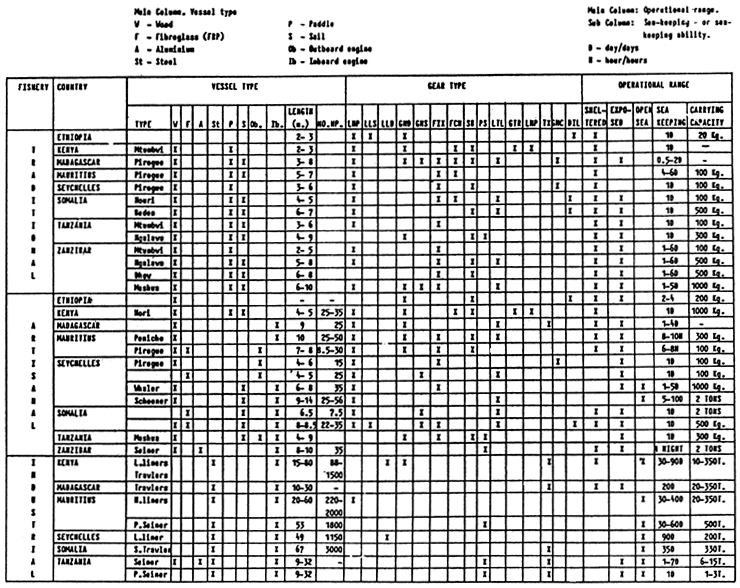
In the absence of any classified standards, the following definitions were adopted. A working sheet based on these definitions was completed by the participants to the Seminar, describing the situation in their respective countries (Appendix A).
Non-motorised wooden boats which operate in sheltered and unsheltered waters.
Motorised wooden or fibreglass boats which operate in sheltered, unsheltered and open waters.
Mechanised vessels needing specialised crew capable of operating in open waters.
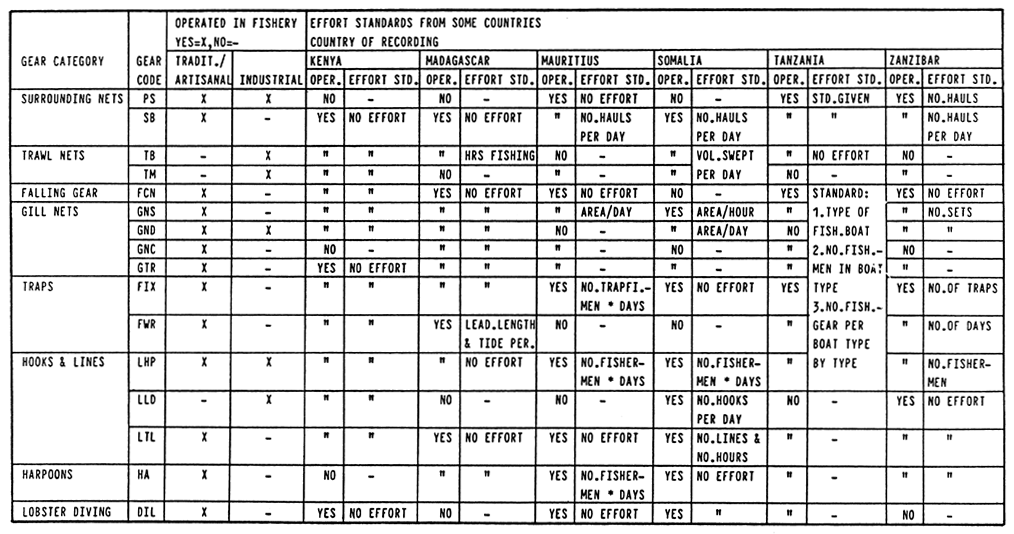
From the completed working sheets, Appendix 'B' was derived showing which gears are operated by the traditional and artisanal and the industrial fisheries.
Since regional standards are lacking, each country had to complete a working sheet showing which effort measurements are collected in respect of specific gears (Appendix B).
Only some countries collect such information, but not on all gears.
Trolling (often operated alongside a main gear) and 'Wiers'. are known to contribute significantly to the catch/landings, but have no effort recordings.
All countries with such operations are urged to collect the effort data, adopting the definitions recommended.
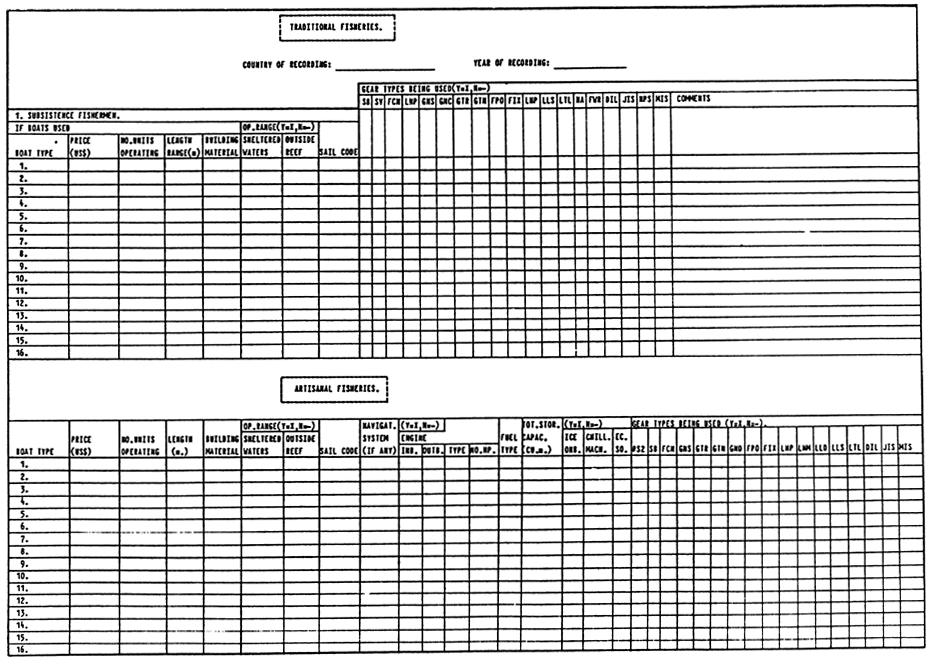
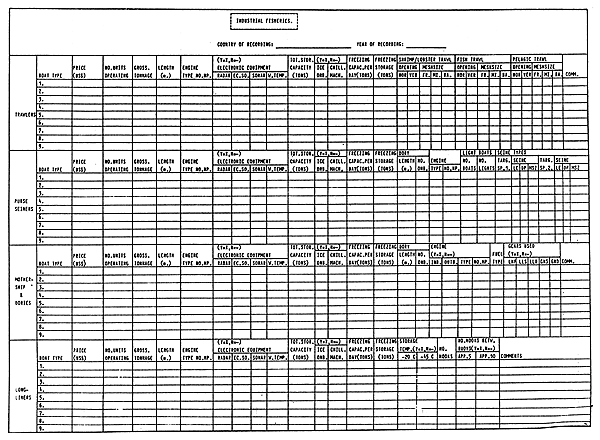
The current classification is based on operational range and sea keeping ability of fishing craft. There was uncertainty in certain cases regarding size range and carrying capacity, especially for traditional and artisanal craft.
It was recommended that forms F1 and F2, which give more detailed descriptions respectively of the traditional, artisanal and industrial boat types, be completed by all countries of the region and forwarded to SWIOP for further studies.
Each country will therefore have to carry out some studies before completing the forms, using the gear standard abbreviations (Appendix A).
Fishing gear are well known in all participating countries, and have thus been classified. Appendix 'B'.
The following effort measurements are being proposed for adoption throughout the region:
| GEAR | EFFORT |
|---|---|
| Purse Seine | No. hauls/day |
| Beach Seine | No. hauls/day |
| Bottom trawl | Speed of boat, net opening and |
| Midwater trawl | number hours trawling/day |
| Cast Net | Minor importance - effort data not needed |
| Gill Nets | Net dimensions, No. and duration of |
sets per day |
|
| Basket Traps | No. traps and time Interval between fish |
colection (assumed to be of |
|
comparable size) |
|
| Weirs | Length of leader and time interval |
between fish collection |
|
| Handline | No. man/days |
| Drifting longlines | No. hooks/day. |
| Harpoons | No. harpoon fisherman/days |
| Trolling | No. lines out and hours fishing/day |
| Lobster diving | No. man hours/day |
In the Seminar the species lists and means of species identification used in the region were discussed. Specifically, participants from each country prepared a list of commercial species represented in their landings, and of the problems encountered in the collection of data.
In most of the cases the lists consisted of broad categories of marine organisms for which only the common name was given. In these cases it is difficult to know to what species or groups these names really correspond.
Even where scientific names were provided there were some problems concerning the reliability of species identifications, largely as a result of the disparity of sources of reference used.
Table 1 summarises the information provided by the countries in the questionnaires. The first two columns give an indication of the quality of the existing lists of major groups (i.e. whether the list is inadequate or whether it only needs updating).
The remaining columns summarise the problems encountered in the process of data collection of catches on a species basis.
1. The forthcoming set of species identification sheets for the Western Indian Ocean should be adopted as the basic reference document for species identification.
2. Based on the taxonomic information contained in the FAO Species Identification Sheets, booklets containing the species or families most likely to occur in the catches could be prepared for each country to facilitate the identification work of the enumerators..
3. The lists of commercially important species/groups should be revised on the basis of a more correct identification and of a more meaningful species grouping.
| PROBLEMS ON DATA COLLECTION | ||||||||||
|---|---|---|---|---|---|---|---|---|---|---|
| GROUP/SPECIES | ACCESS TO LANDING | |||||||||
| LIST | SITES | FISHERMEN | CONFUSION | |||||||
| NEEDS | NO PERS. | NO QUAL. | LACK OF | NOT | ON LOCAL | |||||
| COUNTRY | INADEQ. | UPDATING | AVAILABLE | PERS. | TRANSP. | NO ROADS | COOPERATIVE | NOMENCL. | ||
| ETHIOPIA | X |
X |
X |
X |
X |
X |
||||
| KENYA | X |
X |
X |
X |
||||||
| MADAGASCAR | X |
X |
X |
X |
X |
|||||
| MAURITIUS | X |
X |
||||||||
| REUNION | X |
X |
||||||||
| SEYCHELLES | X |
X |
||||||||
| SOMALIA | X |
X |
X |
X |
X |
X |
||||
| SUDAN | X |
X |
||||||||
| TANZANIA | X |
X |
X |
X |
X |
|||||
| ZANZIBAR | X |
X |
X |
X |
X |
|||||
4. Standardisation of the vernacular names within each country would be desirable.
5. Short training courses on a country basis are needed for improving the quality of the statistics collected.
In the seminar, a critical review as made of the organisational and technical aspects of the national fisheries statistical systems in the region and of the level of quality, utility, completeness end suitability of the statistics produced. Also, the level of integration of the survey methods and statistics produced between the countries in the region was examined.
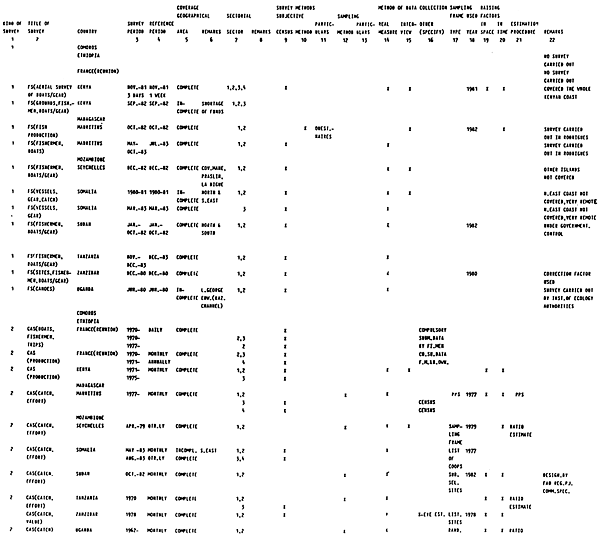
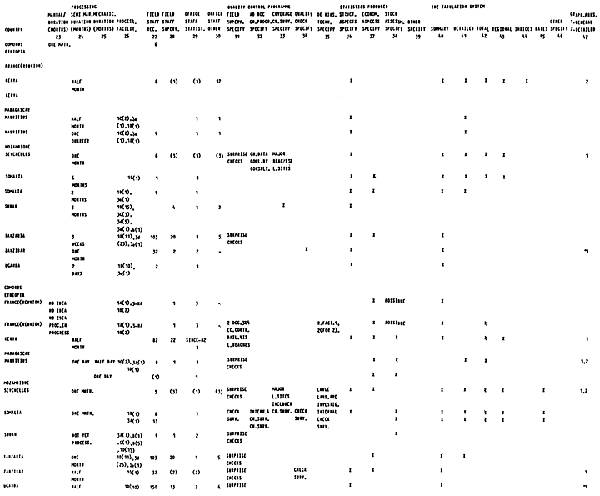
Statistics is a major tool used, among other things, for planning, management and other aspects of fisheries development. To assess the level of efficiency of the national fisheries statistical systems and their level of integration in the region, a series of working sheets (WS-S, 1-4) were prepared providing information on the operational and technical aspects of the national fisheries statistical systems:
Working Sheet - 1 (Col - 1 - 13 ): Geographical and Sectorial coverage of the survey systems. survey methods employed for static and current surveys.
Working Sheet - 2 (Col - 14 - 22 ): Methods of data collection and characteristics of sampling methods employed.
Working Sheet - 3 (Col - 23 - 26 ): Processing techniques and processing facilities.
Working Sheet - 4 (Col - 27 - 35 ): Office and field statistical personnel, and quality control programmes.
These working sheets have been integrated into Appendix 'C'.
For assessing the utility of statistics currently available, "utility charts" were produced for the individual national surveys. Working Sheet 5 provides information on the completeness and suitability of the statistics produced. Specifically, the items included in the working sheet are:
Cost functions were also estimated on a survey basis by using the compound variable (Labour x time).
A critical analysis of the matrix of parameters produced revealed the urgent need for better fishery data to be produced, which could be used for good management and planning end other aspects of fishery development at the regional. national and local levels:
The existing national fisheries statistical systems were evaluated by taking into account their efficiency:
It was pointed out that all the countries in the region have limited themselves to collection of fish production statistics by using frame surveys, and catch assessment surveys. The implementation of sound fisheries statistical systems is difficult because of lack of resources, of expertise and of proper processing facilities. This situation is due to a number of factors:
Inadequacy in the existing national fisheries statistical systems and of the statistics produced were assessed by considering:
It was pointed out that there is an urgent need to extend the coverage of statistics to cover the complete spectrum of characteristics required for assessing the economic performance of the industry and for stock assessment purposes, marketing and other aspects of fisheries development. Furthermore, efforts should always be made to complete surveys once they are initiated.
A serious attempt should also be made for the collection of the statistics required from foreign vessels operating within the Exclusive Economic Zones.
Finally, more supervision of surveys was called for. There yam an element of doubt as to the accurary of the data collected, since most countries have no field checking programmes.
It was pointed out that countries in the region do not use modern survey techniques and processing facilities, and that national statistical systems do not maximise use of results obtained for a given cost.
Most of the collection systems have not been designed for multipurpose surveys and vital socio-economic characteristics are not covered by the statistics produced.
In most of the cases examined, the method of collecting data does not alloy effective quality control and hence neither sampling nor non-sampling errors can be evaluated. The importance of introducing a quality control system was stressed:
Finally, it yam stressed that there is need for the calculation of simple "utility functions" for assessing the level of utility of the statistics produced.
The increasing quantity of fishery statistics collected in the region during the past few years generated a discussion on how to standardise data and improve the quality, utility and suitability of statistics required for the management of exploited resources in the region.
Participants from many of the countries in the region pointed out the need for designing and implementing healthy and complete fisheries statistical systems based on the principle of integration.
A major development within the region during the last few years has been the extension of national jurisdiction on marine resources, an issue which has made the sharing of information on exploited stocks more urgent. In the seminar, it was pointed out that there is the need for the creation of a Regional Data Base and production of a Regional Statistical Bulletin.
In the Seminar, a demonstration was given on the use of micro-computers for data processing and the establishment of a regional data base.
It was pointed out that there is an urgent need to improve the processing techniques of member countries and to establish the principle of integration required between them.
Tuna Statistics in the region were discussed, taking into account recent developments on the collection of more detailed and accurate tuna statistics and the establishment of an inter-regional data base (Indo-Pacific Tuna Development and Management Programme).
It was pointed out that statistics collected by the countries in the region are incomplete and their suitability for stock assessment studies, management and other aspects of fishery development is very limited.
Methodological points were discussed on requirements for reporting historical data on tuna fishing effort and catch statistics. As a case study the manual prepared by the Indo-Pacific Tuna Development and Management Programme was used.
The need for integration of the statistics collected by the countries in the region was emphasized. It was pointed out that the introduction of standard logbooks for the collection of Tuna Statistics in the region would simplify the task of obtaining complete and suitable statistics required for the fishery. A number of design and logistical considerations relating to logbooks were discussed.
The IPTP recommended to the group that, for tuna fishing logbooks, they adapt a standard version of the ICCAT/IATTC logbooks for purse seines, long lines and pole-and-line boats. As these logbooks are already in wide use, they should be familiar to the fishermen of many distant water fishing nations. The logbooks would need to include maps for the SWIO indicating desired reporting areas and EEZs. Beyond this, it was suggested that the forms be multi-lingual or, at least, bilingual, including instructions in English and at least the language of the distant water fishing nation involved.
A complete set of the forms used by ICCAT and IATTC are given in a separate pamphlet
It was recommended that SWIOP be strengthened in such a ray as to provide the following identified needs of member countries:
It was recommended that countries of the region make every effort to provide accurate data using the agreed standards, presented In a format permitting merging from national to regional and global needs.
| SB | - | beach seines |
| SV | - | boat or vessel seines |
| PS | - | purse seines (not specified) |
| PS2 | - | 2 boat operated purse seines |
| TX | - | trawls (not specified) |
| TB | - | bottom trawls (not specified) |
| TM | - | midwater trawls (not specified) |
| FCN | - | cast nets |
| LNP | - | portable liftnets |
| GNS | - | set gillnets (anchored) |
| GNC | - | encircling gillnets |
| GTR | - | trammel nets |
| GTN | - | combined gillnets/trammel nets |
| GND | - | drifting gillnets |
| FPO | - | pots |
| FIX | - | traps (not specified) |
| LHP | - | handlines and pole-lines (hand-operated) |
| LHM | - | handlines and pole-lines (mechanized) |
| LLD | - | drifting longlines |
| LLS | - | set longlines |
| LTL | - | trolling lines |
| HA | - | harpoons |
| FWR | - | barriers, fences, weirs, etc. |
| DIL | - | diving for lobsters |
| JIS | - | squid jigs |
| HPS | - | hand picking of shells |
| MIS | - | miscellaneous gear |
Explanation of the codes used in the sheets
| Column 2 | - | title of survey |
| Code | Category | |
| FS | - | frame survey |
| CAS | - | catch assessment survey |
| Column 17 & 21 | - | sampling frame type and estimation procedure |
| Code | Category | |
| PPS | - | stratified sampling system |
| Column 26 | - | processing facilities |
| Code | Category | |
| 1. A | - | main frame |
B |
- | mini computer |
C |
- | micro computer |
D |
- | desk calculator |
2.1 (a) |
- | type |
(b) |
- | specification |
(c) |
- | belonging |
| 2.2 | - | software |
a) |
- | type |
b) |
- | purpose |
| 3. | - | staff number |
a |
- | analyst |
b |
- | analyst/programmer |
c |
- | programmer |
d |
- | operator |