|
A PROPOSAL FOR STATISTICS RECORDING AND BIOLOGICAL SAMPLING FROM THE SARDINE FISHERY IN ZANZIBAR, TANZANIA |
February 1984
RAF/79/065/WP/12/84
by
T. JOHNSEN
The designations employed and the presentation of material in this publication do not imply the expression of any opinion whatsoever by the Food and Agriculture Organization of the United Nations concerning the legal status of any country, territory, city or area or of its authorities, or concerning the delimitation of its frontiers or boundaries. rise views expressed are those of the authors.
Ring net fishing for sardines is the most important commercial fishery in Zanzibar, and it is planned to be further developed. In this sense it is important to start recording statistics and to obtain biological data from this fishery. This information can be used for a first attempt of stock assessment of the principal species caught and also for obtaining the present and future economical state of the fishery if effort is increased.
This report is a proposal for a data collection system from this fishery. The forms presented will, when filled in, provide enough information for a detailed study of the fishery. Since the stocks are also exploited by the Tanzanian mainland fishing fleet, Tanzania is included in this proposal.
A further consequencence of such a detailed study is that the information provided gives an opportunity to model fleet structures and working schedules onboard boats.
Through simulations of fishing activity including different boat types and different effort, a future optimal fishing system can be synthesised. Such a system rill both concern profitability per boat and the optimal effort or number of boats suited for this fleet structure.
This set of forms should be filled in by a fisheries recorder and a biologist. The daily recording could be performed by the fisheries recorder but the monthly recording must be done by a biologist.
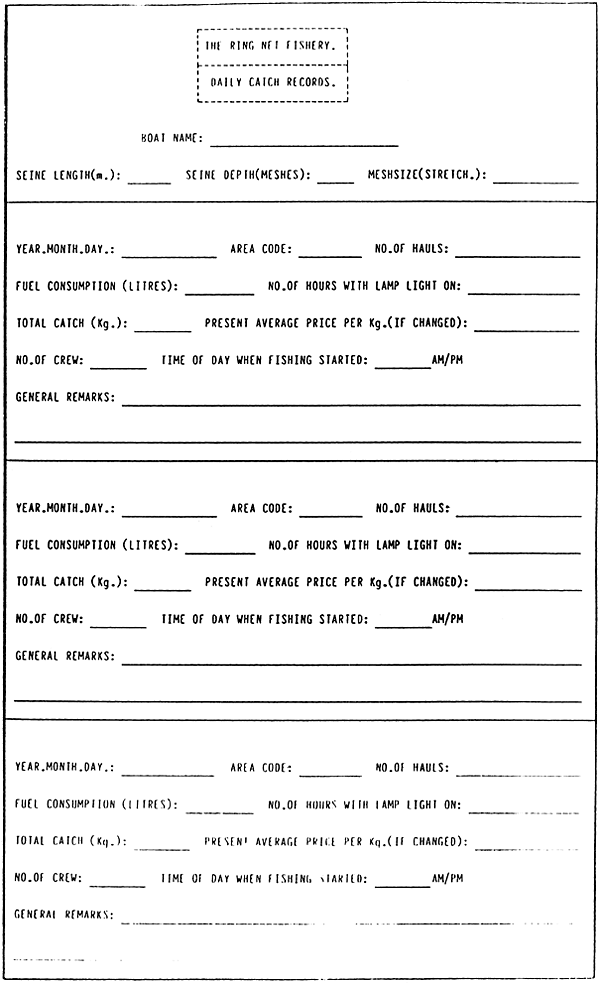
A daily catch record form is shown in Form 1.
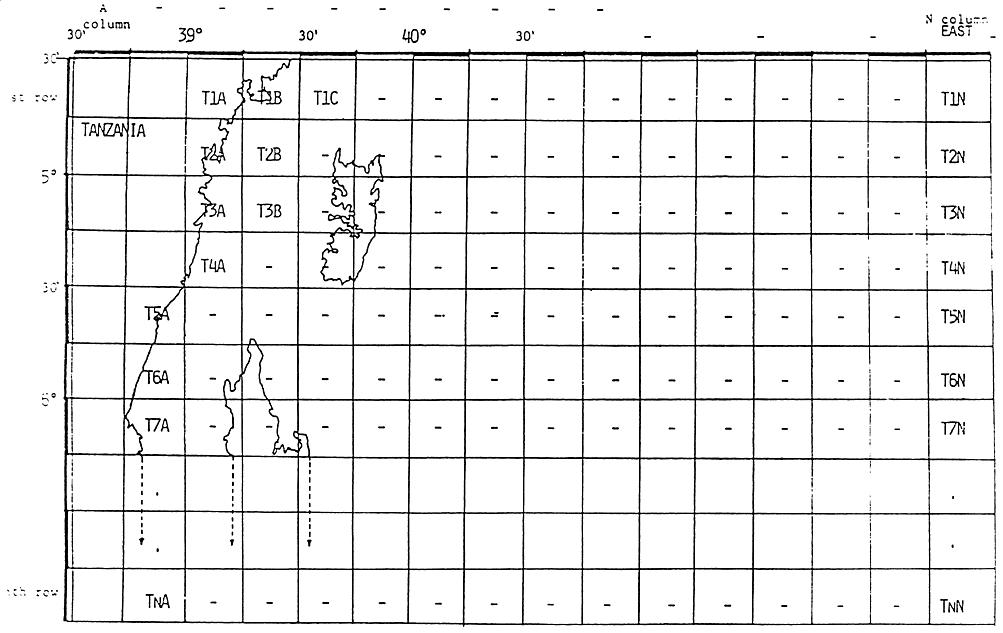
Each area is limited to 15 minutes both in latitude and longitude intervals. Since Tanzania/Zanzibar is situated near the equator, this gives a series of areas of about 15 miles square each, from T1A to TnN (Figure 1).
Figure 1. The area code system.
The results of the monthly biological studies are to be filled in forms 2 - 3.
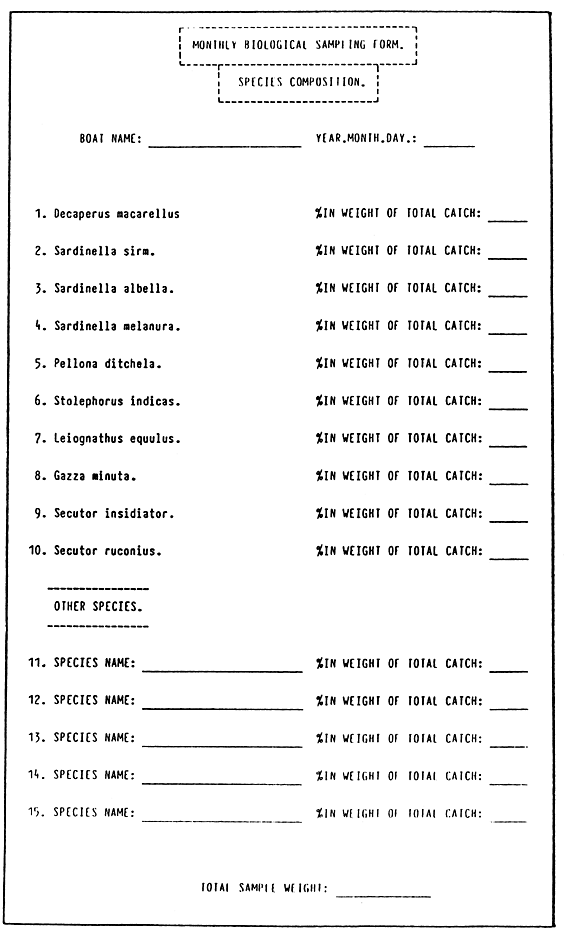
Form 2:
- is to be used as a standard for species composition in the total catches in the time interval between each monthly biological sampling. Each of the species present in the landings from all the para statal boats and from at least 3 of the private boats from each selected landing site already sampled by the statistics recorder is to be filled in. The samples are collected randomly.
Most probably the total catch is stored onboard in one of the following two ways:
A. The total catch is lying in a heap on deck or in the bottom of the boat.
B. The total catch is stored in several baskets.
If alternative A is the way of storing - the following technique for random sampling should be valid:
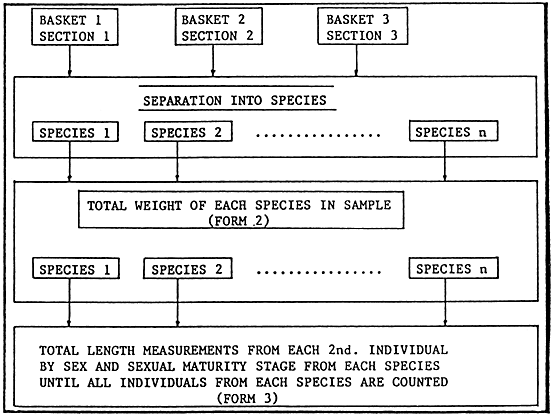
The heap of fish is divided into 3 sections; the top layer, the side section and the bottom layer. Three baskets are filled with fish, one from the middle of each section. All the individuals in the baskets are separated by species. The volumes of each species are weighed (Form 2). Each second individual from each species is measured for total length by sex and sexual maturity stage (Form 3).
If alternative B is the way of storing - any 3 full baskets are suitable. The rest of the procedure is as in alternative A. The proposed working schedule is shown in more detail in figure 2.
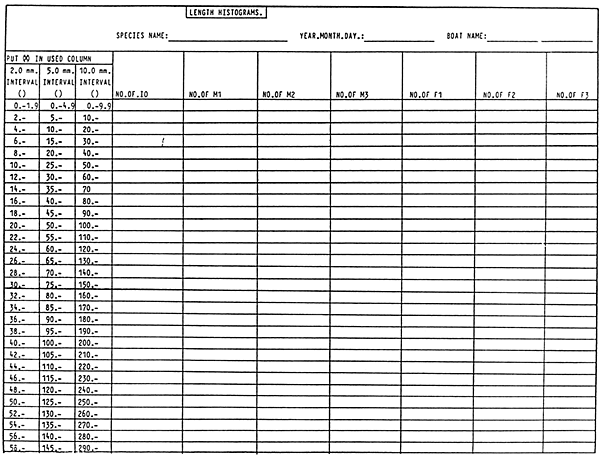
Form 3:
- is filled in to obtain growth parameters. The reason for making three alternative length intervals for the grouping is that a proper study of a species must give space for a least 20 length intervals. The species suited for 2 mm. intervals must have a Lmax greater than 20 x 2 mm., or 40 mm. The species suited for 5 mm. intervals must have a Lmax greater than 190 mm., and for 10 mm. interval the corresponding Lmax is 200 mm. All lengths measured are total lengths, from head tip to tail tip. Lmax is the largest total length in all the samples.
Figure 2: A block diagram of the proposed strategy for processing the biological samples.
The length histogram forms (form 3) give 7 categories of sexual maturity of fish.
Category code:
I0 - immature fish - both sexes have non-active gonads
M1 - maturing males - semen has a glue like consistency
M2 - ripe males - semen is flowing out like a liquid.
M3 - spent males - gonads look punctured
F1 - maturing females - eggs are visible in the gonads
F2 - ripe females - eggs are transparent and not attached to the gonadal tissue.
F3 - spent females - gonads look punctured.
Each species representing more than 10% of the total catch in the landing from each of all the. boats already covered by the statistics recorder is to the sampled. At least 100 individuals per boat from each species have to be measured. The sample is collected randomly.
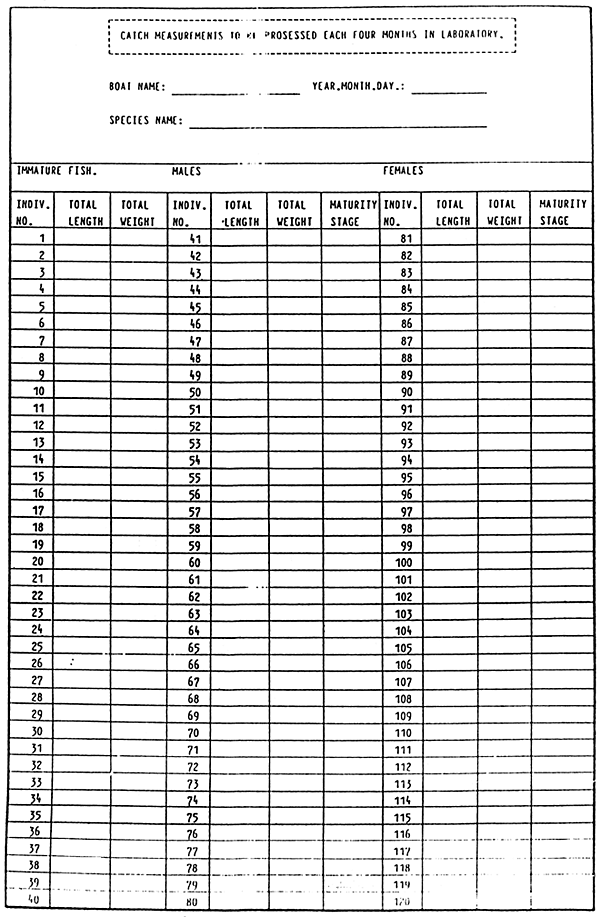
Form 4:
- is for studies of length/weight relationships. The total length is measured in millimetre - accuracy.0.5 mm and the total weight in grams - accuracy.0.5 g. The category code in forms 3 and 4 is to be used as a symbol for maturity stage. Each species representing more than 10% of the landings from each of all the boats already sampled by the statistics recorder is to be filled in. The sample is collected in a deterministic way. The total length range in the sample is divided into 5 length intervals where:
Lmax' - Lmin
-----------------
5
is the range of each interval. Lmax' is the largest total length in the sample and Lmin the smallest. Five individuals from each category present of sex and sexual maturity within each length interval are measured.
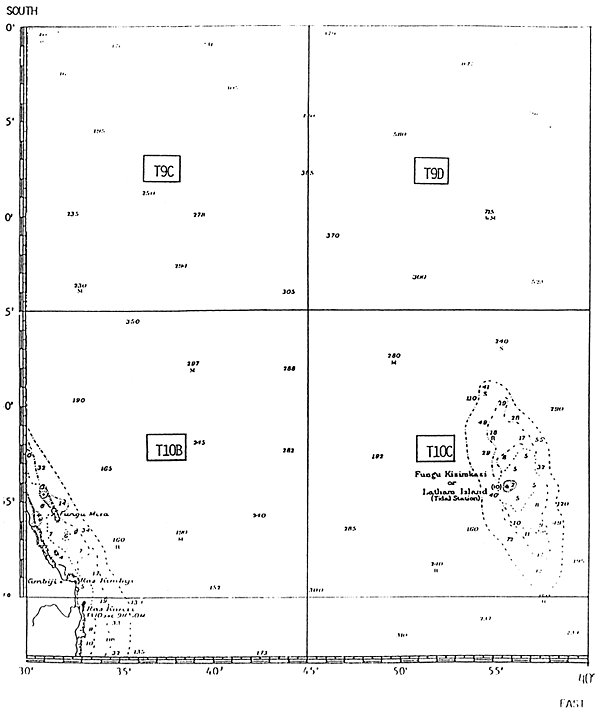
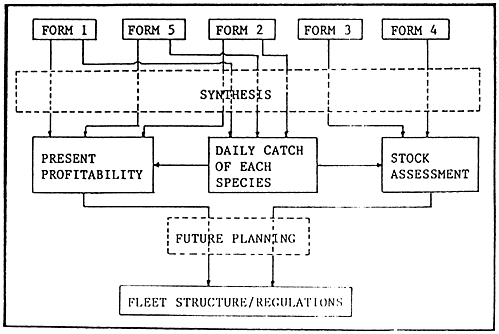
The system of synthesis from raw data is shown in figure 3. Figure 4-14 are maps showing the different areas near the coast from north to Dar-es-Salaam. These detailed maps can be used by the statistician to define the area in which each boat has been operating.
Figure 3: A block diagram of the synthesis from raw data to final conclusions.
There are most probably numerous small boats fising with scoop nets For sardines. The efficiency of this gear is most probably very low compared with the ring net for stock assessment purposes this fishery should be included in the data collection system. Form 5 is made as a proposal for statistical data collection from this fishery. This form should be filled in each three months. At least three boat units from each selected landing site should be sampled. If this fishery based on the first year of recording turns out to contribute with a large percentage of the total amount of sardines landed in the country, more detailed studies has to be performed. As a start, the species composition and the length distribution given from the recording from the ring net fishery could be used as by landing site/area standards for the scoop net fishery.
The raising factors will most probably only be a problem for the private part of the fisheries. As a start one could use figures already existing on boat/gear structure for the ring net and the scoop net fisheries of the country. One might consider a future updating of the existing figures for boat/gear structure in Tanzania/Zanzibar, as for example the performance of a frame survey.
Form 1.
Form 2.
Form 3.
Form 4.
Form 5.
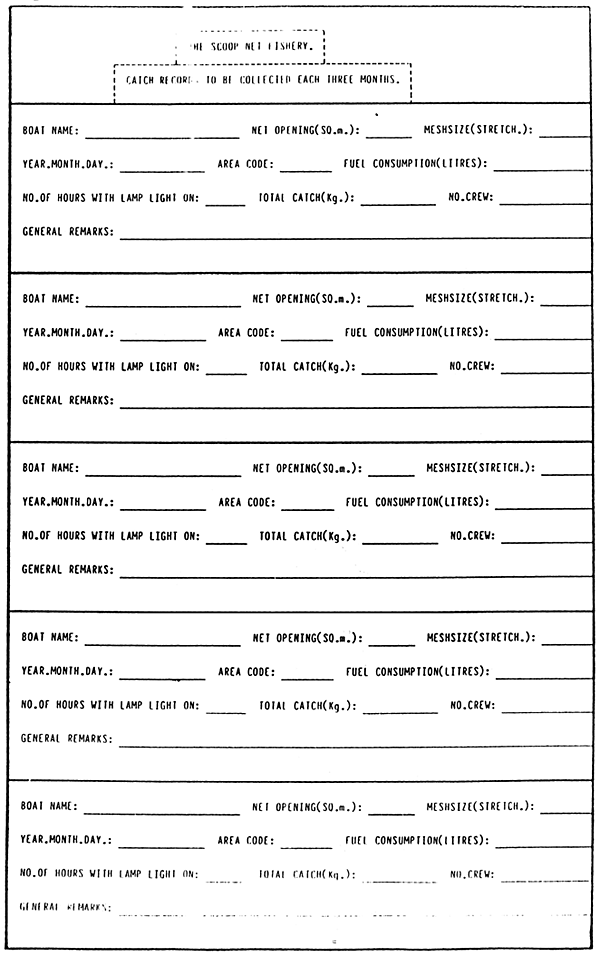
Figure 4-14. Detailed maps of the areas near the coast of Zanzibar.
Figure 4.
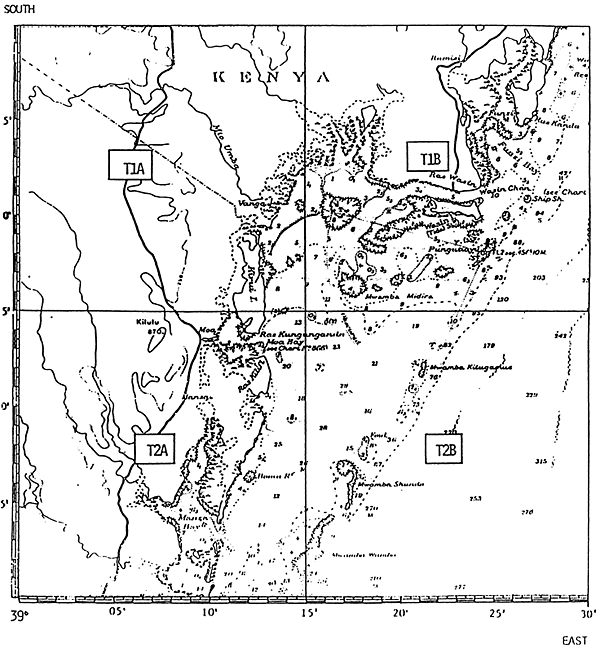
Figure 5.
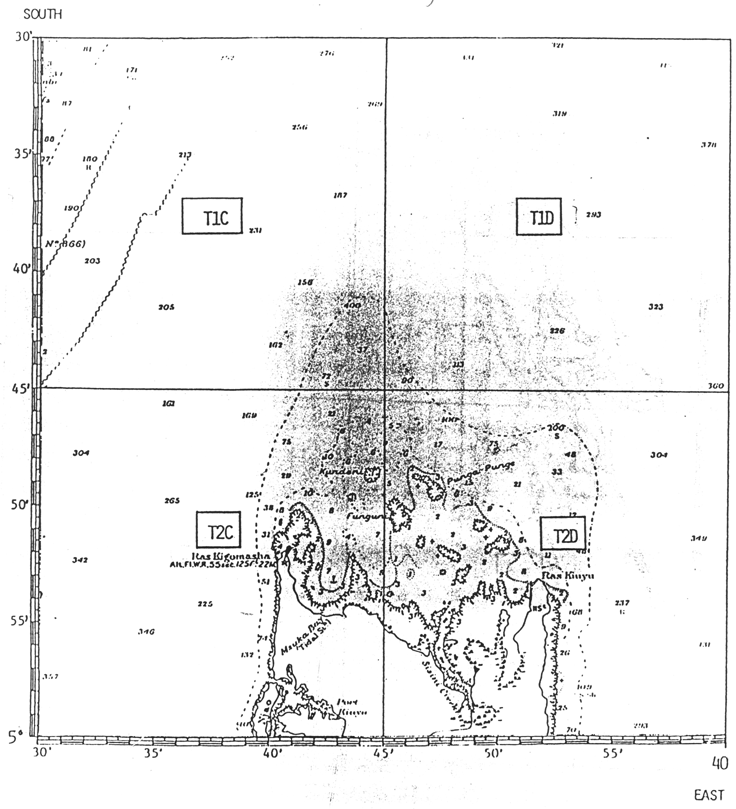
Figure 6.
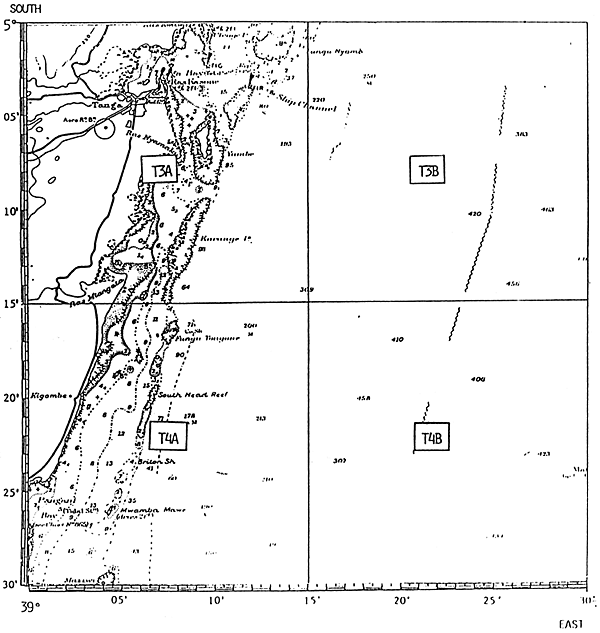
Figure 7.
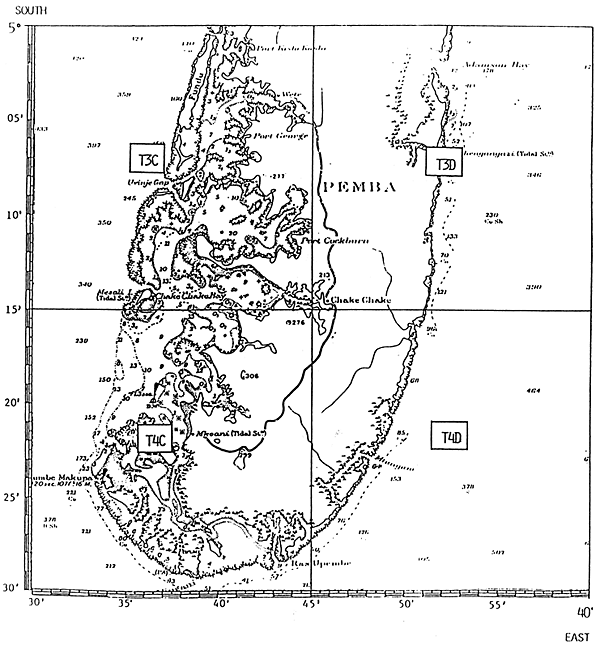
Figure 8.
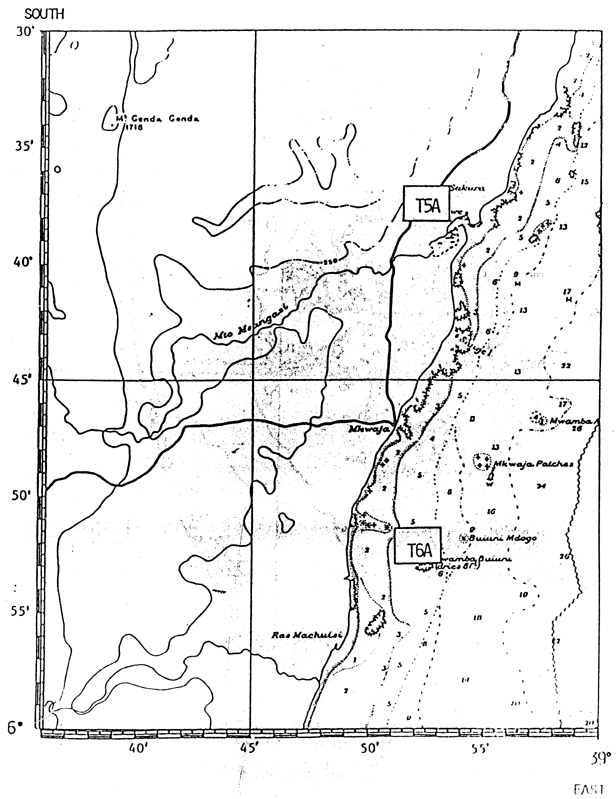
Figure 9.
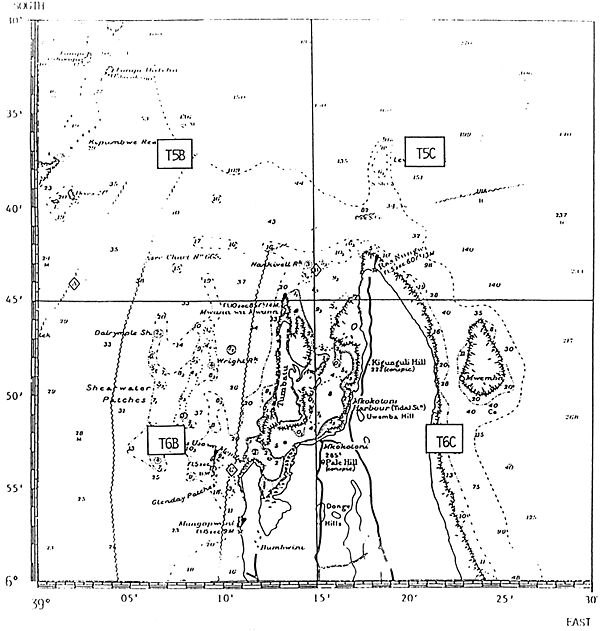
Figure 10.
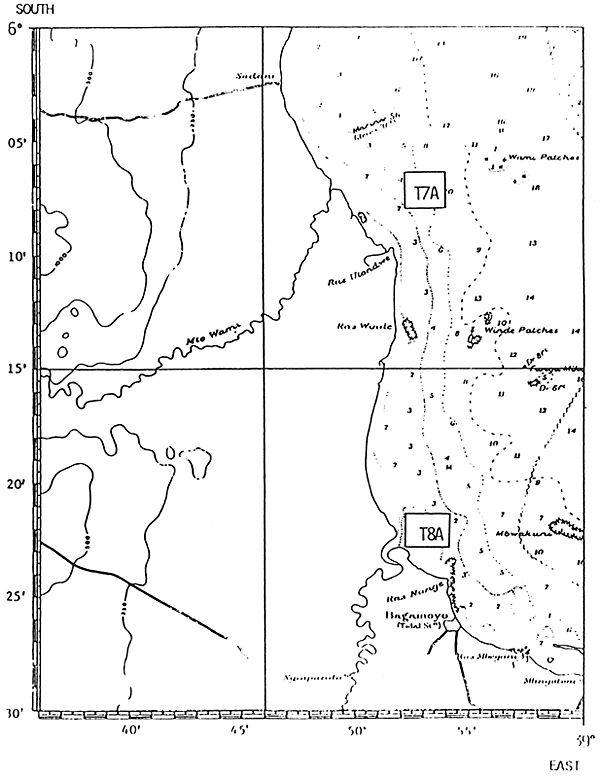
Figure 11.
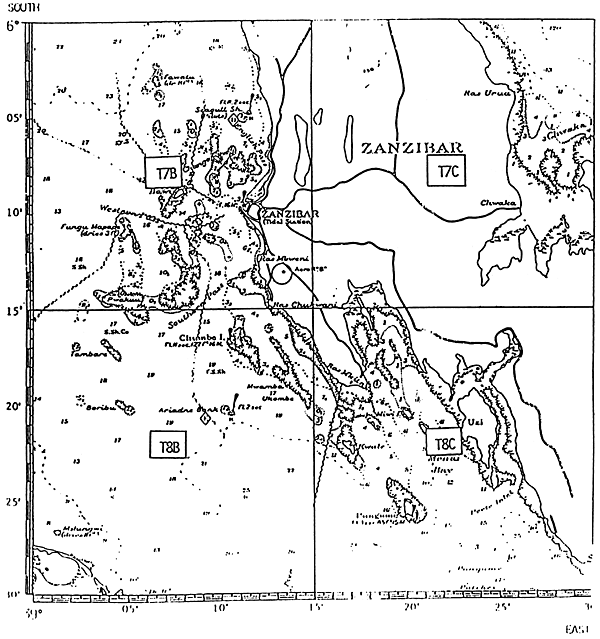
Figure 12.
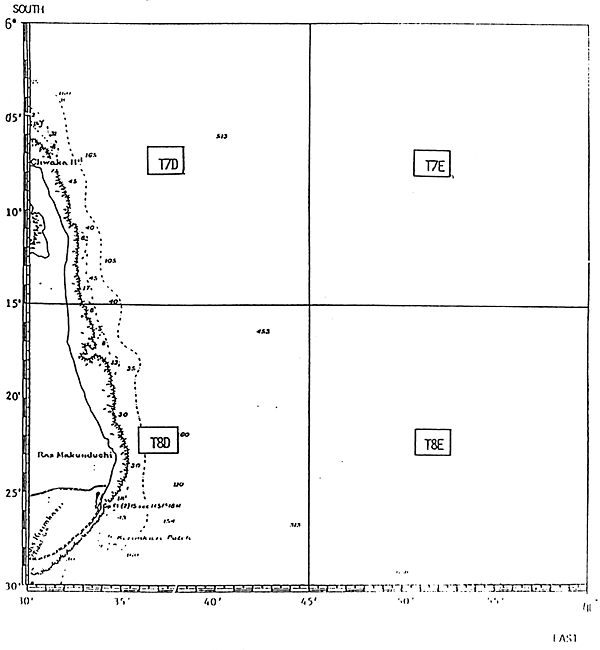
Figure 13.
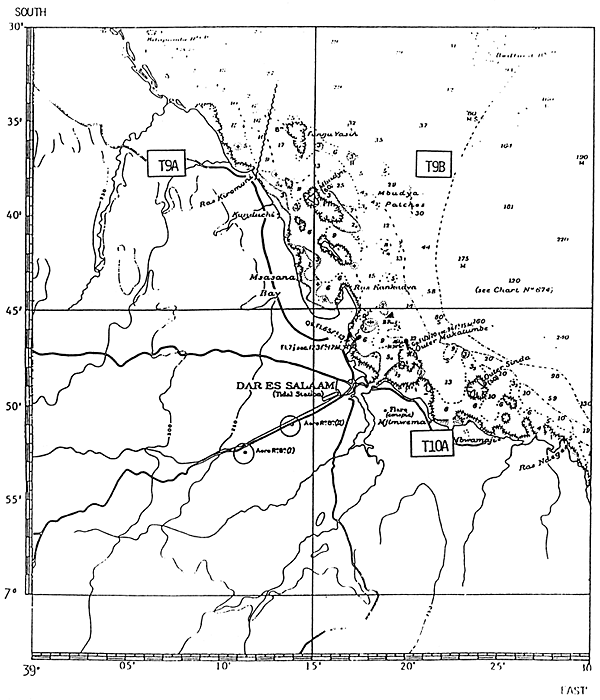
Figure 14.