
|
REPORT OF THE WORKSHOP ON CRUSTACEAN FISHERIES AND MANAGEMENT |
January 1986
RAF/79/065/WP/23/86
In view of the occurrence of important crustacean resources in the region, the SWIO Project organised a Workshop on Crustacean Management. The objectives were to provide a forum for reviewing the status of the resources and fisheries, for demonstrating both biological and economic analytical methods, and for discussing management measures appropriate for the region.
The Workshop took place in Mauritius at the Albion Fisheries Research Centre from 1-11 October, 1985. Twenty six participants from Comores, Kenya, Madagascar, Mauritius, Mozambique, Somalia and Tanzania were present including 5 from FAO and 1 observer from UNESCO. In addition, many of the sessions were attended by observers from the University of Mauritius and the local industry.
The list of participants is given as Appendix 1 and the Agenda in Appendix 2.
On the Opening Day, Mr. Munesh Mundbodh, Acting Divisional Scientific Officer (Albion Fisheries Research Centre) welcomed the participants and guests to the Centre. Mr. D. Ardill, Project Manager of the SWIO Project and convener of the meeting responded on behalf of FAO and the Project. H.E. Mr. K. Deerpalsingh, the Minister of Agriculture, Fisheries and Natural Resources officially opened the Workshop.
This Report contains mainly the abstracts of the papers presented at the Workshop, as well as summaries of the seminar discussions dealing with the management of the crustacean resources within the region. A full record of the papers is contained within a separate document 'The Proceedings of the Workshop on Crustacean Management'.
An Introduction to the Crustacean Resources and Fisheries of the South West Indian Ocean - M.J. SANDERS, Senior Fishery Biologist, FAO Rome.
The paper presents biomass and potential yield estimates available from previously published reports. Information for the countries serviced by the SWIO Project are included. These countries are Mozambique, Tanzania, Kenya, Somalia, Seychelles, Mauritius and Comores. Reference is also made to St. Paul and New Amsterdam Islands which are administered from Reunion.
The annual landings of crustacea within the region is suggested as about 25,000 tonnes (whole weight) with shallow water shrimp contributing 80 percent of this amount. The most productive countries are Mozambique and Madagascar, with 65 and 22 percent of the total landings respectively.
The potential yield is given as 30,000 tonnes (whole weight) or some 20 percent above the present landings. The additional yield from shallow water shrimps is put at 1000-1500 tonnes (not including production from aquaculture).
In most countries, the resources are reasonably well known. The shallow water shrimps of Mozambique and Madagascar are considered to be near or fully exploited. Management controls include limiting the number of vessels, complemented in both countries by the allocation of quotas.
Deep water lobster and shrimp are exploited off Mozambique and Somalia. These species are known to exist elsewhere. Shallow water lobster are exploited by artisanal fishermen throughout the region, wherever adequate infrastructure exists. In most countries these resources are under-utilised.
Introductory Note on the Biological Aspects of Shrimp Fisheries Management 1/ N.P. Van Zalinge
The biological problems which may arise in open-access fisheries can be termed as growth and recruitment overfishing.
Growth overfishing is the most common problem. It refers to harvesting most of the annual shrimp recruitment before it reaches its maximum in biomass (weight), i.e. the shrimps are caught too young. It is a commonly occurring situation particularly in those countries where an extensive un-checked artisanal fishery operates in the nursery areas and/or a large semi-industrial fleet competes for the small shrimp which have just migrated out to sea. High export earnings versus low investment and operational costs make these fisheries still profitable at low catch-per-unit-of-effort (CPUE) rates beyond the maximum sustainable yield level.
Severe growth overfishing can lead to recruitment overfishing when the spawning stock is decreased to such an extent that the production of offspring drops below the carrying capacity of the environment, leading to an even smaller stock of spawners. Under continued heavy fishing and/or adverse environmental circumstances the collapse of the stock and the fishery.
1/ There is no fuller version of this contribution*
A similar effect would occur if the carrying capacity of the environment itself is being impaired. In the short term, this is usually due to man-induced changes such as land reclamation in the nursery areas. There are at this time more examples of reduced recruitment due to this cause than to fishing.
In order to address these problems and to formulate management options, it is necessary to achieve a proper understanding of the life-cycle of the particular species involved and to assess the state of exploitation of the stock.
Shallow water penaeids are short lived and are believed to have annual life-cycles. Although a low level of spawning and recruitment occur throughout the year, there are often two rather distinct periods with a higher level, one being much more pronounced than the other.
The specific spawning patterns can be determined from data on the size and proportion of mature females in the catch and the fecundity-at-size relationship. The recruitment pattern can be detected in a pre-recruit survey of the nursery areas and/or from the appearance of modes of small shrimp in size-frequency distributions of the catch from the offshore trawl fishery.
Two widely applied models to assess the state of exploitation of the stocks are the production and the yield-per-recruit models. A good review of these and other stock assessment methods and models can be found in Garcia & Le Reste 1981.
Production or surplus yield models are commonly used, despite questionable basic assumptions, because the data required on catch and effort are usually among the first statistics to be collected. The model also seems to adequately reflect the actual situation in the fishery. Relevant environmental parameters such as rainfall, river outflow and temperature can be accommodated, when applying a formula of the following type:
CPUE = a + b, (Effort) + b2 (Environmental Parameter)
where a, b, and b2 are constants.
The yield per recruit models require an input of specific biological parameters such as the growth parameters K, L and to, and the mortality rate parameters F and M. Consequently these models are sensitive to the quality of these inputs which are particularly difficult to estimate for M, the coefficient of natural mortality.
The Thompson and Bell yield-per-recruit simulation method (in Ricker, 1975) is especially useful to study interactions between artisanal and industrial fisheries (Willmann & Garcia, 1985) or the effects of closed seasons of variable length and timing with respect to the lifecycle pattern (Garcia & Van Zalinge, 1982).
Many methods exist for estimating these parameters (see Ricker, 1975). Increasing use has been made of length-frequency distributions for this purpose in recent years. Apart from the ELEFAN methods of analysis (Pauly, Ingles & Neal, 1984), the Bhattacharya technique (Pauly & Caddy, 1985) can be used for separating size-frequency modes and subsequent growth rate estimation. Mortality rates can also be estimated using size-instead of age-composition data, such as in length cohort analyses and length-based catch curves, a review of which was made by Jones (1984). One of these methods, the cumulative catch curve for unequal time intervals (Jones & Van Zalinge, 1979) is briefly described in another section.
Adequate sampling is required for obtaining reasonable results when using these methods. The stratification provided by the commercial size-grading system may be used to improve sampling by species and sex.
The first objective of management must necessarily be the maintenance of the resource at a level not exceeding the maximum sustainable yield (M.S.Y.). Beyond this point, potentially harmful biological over-exploitation is taking place and the stock may collapse. Secondary objectives based on economic or social considerations should determine the "optimum" or social yield level, generally before attaining the M.S.Y.
To attain the fishing effort corresponding to this "optimum" yield level in a fishery that is already over-exploiting the resource, drastic measures are often required. In industrial or semi-industrial fisheries, entry should be restricted and the fleet should be reduced so as to produce the required level of effort. Several ways of doing this are discussed in other sections.
Limited entry may not be applicable in artisanal fisheries, and indirect measures and/or closures might be contemplated. Incentives to enter the fishery such as tax-holidays, fuel subsidies, low interest loans, etc. should be abolished and possibly replaced by certain forms of taxation.
Controls of the size-at-capture through nursery area and seasonal closures (or mesh size restrictions) are not primarily meant to reduce fishing effort but should particularly be used during the main recruitment period as an additional measure to curb growth overfishing or to optimize capture of larger sized and thus more valuable shrimp.
Quotas may be considered, as well as various combinations of measures to reduce effort. Effective enforcement of these management measures is, however, often problematic and it is therefore likely to be preferable to involve the industry in taking decisions on these issues.
Garcia, S. & L. Le Reste: 1981 Life cycles, dynamics, exploitation and management of coastal penaeid shrimp stocks. FAO Fish. Tech. Pap., (203): 215 p
Garcia, S. & N.P. van Zalinge: 1982 Shrimp fishing in Kuwait: methodology for a fisheries. In: Assessment of the shrimp stocks off the West coast of the Gulf between Iran and the Arabian peninsula. FAO/UNDP project for fisheries development in the Gulf. FI/DP/RAB/80/015: 119-142.
Jones, R.: 1984 Assessing the effect of changes in exploitation pattern using length composition data (with notes on VPA and cohort analysis). FAO Fish. Tech. Pap., (256) : 118 p.
Jones, R. & N.P. van Zalinge: 1979 Estimates of mortality rates and population size for shrimp in Kuwait waters. FAO shrimp stock evaluation and management project, Kuwait. Final report, Kuwait, TF/Kuw/6/R3:26p. Also published in Kuwait Bull. Mar. Sci., 1981, (2): 273-288.
Pauly, D. & J.F. Caddy: 1985 A modification of Bhattacharya's method for the analysis of mixtures of normal distributions. FAO Fish. Circ., (781): 16;
Pauly, D. J. Ingles & R. Neal: Application to shrimp stocks of objective methods for the estimation of growth, mortality and recruitment-related parameters from length-frequency data (Elefan I and II). In: Gulland, J.A. and B.J. Rothschild (Editors) Panaeid shrimps: their biology and management. Fishing News Books Ltd., England, pp. 220-234.
Ricker, W.E.: 1975 Computation and interpretation of biological statistics of fish populations. Bull.Fish.Res.Board Canada, (191): 382 p.
Willmann, R. & S.M. Garcia: 1985 A bio-economic model for the analysis of sequential artisanal and industrial fisheries for tropical shrimp (with a case study of Suriname's shrimp fisheries). FAO Fish. Tech. Pap., (270):49p.
An Introductory Note on Economic and Social Considerations in the Management of Crustacean Fisheries 1/ - R. Willmann, Fishery Planning Analyst, FAO Rome
An inter-disciplinary approach to the biological, economic and social problems associated with fishery management is necessary for the rational utilization of resources.
Management advice has often been based solely on biological considerations. This can result in over-emphasizing maximum sustainable yield (MSY) as the prime management objective rather than maximum benefit to the fishery or country concerned. As a consequence, fishery administrators may only envisage the introduction of fishery management measures when total catches are declining and a resource is already being over-exploited in a biological sense.
Based on a simple bio-economic model (involving the transformation of the catch-effort curve into a value-cost curve) it was demonstrated that the maximum economic yield (MEY) is usually realised at a level of fishing effort well below that required to obtain the maximum sustainable yield. In this context MEY is the maximum difference between total fishing costs and total catch value.
Owing to the open-access nature of unmanaged capture fisheries (in which no single operator can exclude others from entering a fishery) the fleet size and level of fishing effort will tend to increase until total fishing costs equal the total catch value. At this level of total fishing effort a fishery is considered to have reached its bio-economic open-access equilibrium. This can occur either before or beyond MSY, depending on the biological characteristics of the fishery resource (life span, growth and natural mortality parameters), on the average costs of one unit of fishing effort, and on the average value of one unit of catch. In cases where the equilibrium is reached beyond MSY, rarely encountered in shrimp fisheries, fishing effort will be so high that the fishery resource is in danger of complete collapse.
A fully developed but unmanaged fishery will tend to be at the bio-economic equilibrium. As long as the fishery realises profits above the opportunity cost of capital, it will attract additional investments in terms of new vessels or higher fishing power. The situation is often exacerbated when a good fishing season (resulting from above-average recruitment) results in high profits, encouraging investors to acquire new and frequently more powerful vessels. These vessels may have an economic lifetime of up to 20 years. If they cannot be utilized in other fisheries, the vessels will be operated as long as the catch value is higher than the operational costs, thereby recovering at least a part of the fixed capital costs. Such a condition of easy entry and difficult exit from a fishery may lead to a level of fishing effort beyond the open-access equilibrium, resulting in further waste of capital and labour. In fully exploited shrimp fisheries operating close to MSY, the fishing effort is frequently 30% to 100% higher than would be required to realize the maximum economic yield.
1/ There is no fuller version of this contribution.*
Vessel owners experiencing great losses often request the government for financial assistance in the form of subsidies or reductions in taxes and duties. Depending on their political influence (which may be quite high in the case of shrimp fisheries which are major contributors to foreign exchange earnings in developing countries) the government may feel compelled to agree to such requests. The consequent reduction in privately born costs may make it again profitable to invest in additional redundant fishing capacity. Therefore, in unmanaged fully-exploited fisheries, subsidies and other forms of financial assistance are commonly short-sighted measures which may do more damage than good to the health of a fishery.
In many fisheries, especially those in developing countries, management objectives other than economic efficiency are of great importance.
These may include:
It is not possible to achieve all these objectives simultaneously. The maximum contribution to the national income, for example, is usually attained at a lower level of fishing effort than that required to maximise food production. Therefore, the fishery manager will need to assign the relative importance of the various objectives.
In the shrimp fisheries of developing countries, maximising foreign exchange earnings often ranks highest among the management objectives. Part of the total fishing costs usually includes payments in local currencies (cost of local labour and supplies). As a consequence, the maximum net foreign exchange earnings may occur at a fishing effort higher than MEY, but below maximum catch value and MSY.
In countries where a heavy over-valuation of the local currency prevails and where a large difference between the buying and selling price of hard currencies exists (usually combined with exchange restrictions into hard currencies) the fishing cost expressed in local currency to the private vessel owner or fishing company may be higher than the real cost to the national economy. Furthermore, the catch value expressed in local currency may be lower than the real gross revenue to the national economy. These conditions apply particularly in export-oriented fisheries and allow the central bank to capture a part of the resource rent even though the fishing enterprises may not be commercially profitable. An assessment of the optimal fleet size based solely on cost and revenue data expressed in over-valued local currency may thus lead to wrong management advice. Fishery economists should try to obtain a realistic value of foreign exchange (hard currency) from the economic planning office or Central Bank and should attempt to separate costs and revenues into their foreign and local currency components.
As regards the employment objective, frequently, too little attention is given to the possible negative impact of a fleet reduction on the fish marketing, processing and supply sectors. The potential displacement of labour in these sectors may even sometimes exceed the number of crew displaced. Depending on the local employment situation, the social and political costs of a large reduction in work opportunities may outweigh the benefits resulting from greater fleet efficiency.
Similar considerations should be taken into account in respect of maximizing the contribution of the fishery sector to the national income (i.e. maximum domestic value added). The value added in the processing, marketing and supplies industries may justify a fleet size and catch level higher than that of MEY.
Growth and Mortality Rates of Penaeid Prawns of the Baie d'Ambaro, Northwest
Madagascar: Preliminary Results of Length Distribution Analyses - Dr. Hadrian P. Stirling, UNESCO Field Expert
(Project MAG/8/T.01) Nosy Be, Madagascar
A new approach to the analysis of length/frequency distributions of penaeid prawns (ELEFAN I of Pauly & David, 1981 - and Pauly et al 1984) has been applied to Penaeus indicus and Metapenaeus monoceros in the Baie d'Ambaro, NW Madagascar during May-September 1985. These populations have been studied in detail in 1970-72 by Marcille (1978) and Le Reste (1978), who used mark-recapture methods to derive estimates of Von Bertalanffy growth parameters and total and fishing mortality. These authors were, however, unable to derive such estimates from length-frequency distributions.
This paper demonstrates that a manual version of ELEFAN I, coupled with calculator programmes published by Pauly (1984), can be successfully applied to regular samples of the length frequency distribution of P. indicus and M. monoceros. Compared to the published data of Marcille and Le Reste, the new estimates of asymptotic length, L are significantly greater and the growth constant (K) smaller for both males and females of P. indicus. In males L = 33.7 mm (carapace length) and K = 0.227 per month, while for females L = 48.4 mm and K = 0.223. These growth estimates were subsequently used to convert length frequencies into the distribution of numbers at age, thus permitting the derivation of the total mortality rates (Z) of males and females on each sampling occasion. Z for males and females fluctuates from about 0.5 to peak levels in May of 1.3 and 1.8 respectively. The advantages of analytical models of prawn population dynamics based on regular sampling of the commercial catch are discussed, as well as certain problems of data collection and interpretation.
Estimation of Growth Parameters for the Deep Water Shrimp from Mozambique 1/ M.J. Sanders, Senior Fishery Biologist, FAO Rome.
Length frequency data for the deep water shrimp ( Hymenopenaeus triarthrus) were used in the estimation of the von Bertalanffy growth constants (L, K and to ). The data used are those plotted in Figures 6.3 and 6.5 of Brinca et al (1983).
The methods of Bhattacharya (1967) for separating mixtures of normal distributions was applied to the length frequency data. This was assisted by the availability of a programme for Hewlett Packard 97 calculators given in Pauly & Caddy (1985). The mean lengths of the individual cohorts were determined in this way, and the cohorts assigned an age relevant to arbitrarily chosen birthday dates of January 1 and July 1. Consecutive cohorts were assumed to differ in age by 6 months.
1/ There is no fuller version of this contribution.*
The mean lengths and assigned ages were then used for estimating the growth constants by applying a modification of the Von Bertalanffy Method described in Sanders (1984). Again, this was assisted by the availability of a programme for the Hewlett Packard 97 calculator. The results obtained were L = 50mm (carapace length), K = 0.95 and to = 0.35 yr for the females, and L = 41 mm, K = 1.16 and to = 0.23 yr for the males.
Although not tested, the difference in the K values between sexes is probably not significant. The values for L compare with the largest individuals found in the length distributions of 52mm and 48mm for the females and males respectively. Some results from the analyses are shown in the following Table.
The estimates obtained for the growth constants seem reasonable in the context of the values for L being quite close to the maximum observed lengths. This is less true for the males for which it was more dificult to seperate the cohorts (from the length frequency distributions), presumably because of their slower growth rate. Confirmation of the estimates for beth sexes is required. Also, the assumption that consecutive cohorts have an age difference of 6 months needs closer examination.
Bhattacharya, C.G.: (1967) A simple method of resolution of a distribution into Gaussain components. Biometrics, 23:115-35.
Brinca, et al: (1983) Camarao de Profundidade Relatio dos cruzieros realizados con o N/I Ernst Haekel. Revista de Investigacao Pesquera No. 5:48p (In Portugese)
Pauly, D & J.F. Caddy: (1985) A modification of Bhattacharyas Method for the analysis of mixtures of normal distributions. FAO Fisheries Circular No. 781:16p.
Sanders, M.J. (1984) Compilation of Hewlett Packard 97 programmes for fishery (1984) stock assessment application. FAO/UNDP RAB/83/MAN/01: 158 p.
Cumulative Catch Curve Analysis - N. Van Zalinge, Senior Fishery Biologist, FAO Karachi, PAKISTAN
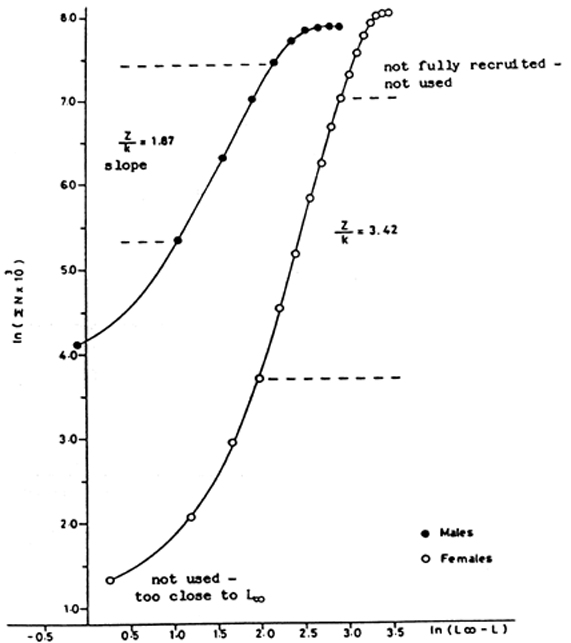
In the context of the determination of mortality estimates, the cumulative catch curve method (Jones and Van Zalinge 1981) was explained. The cumulative number of individuals in the catch equal or larger than some size L1 is determined and compared with the cumulative number equal or larger than some larger size, L2. The ratio of these two numbers provides a direct estimate of the survival rate between L1 and L2. The time involved is calculated from L and K.
Starting from a linearized catch curve equation and inserting the rearranged Von Bertalanffy growth equation, the cumulative catch curve equation is derived:

where
 N (L1, L ) stands for the cumulated catch of fish of length L1 and longer. The slope Z/K can be estimated by linear regression, and Z is then K multiplied by slope.
The assumptions are that mortality is constant with age and that individual growth curves follow the Yon Bertalanffy curve with the same values for L and K, but not necessarily for to.
The method was applied in Mozambique on Metapanaeus monoceros (Brinca & Palha de Sousa, 1984) and gave estimates of Z = 5.7 annually, which were in good agreement with values derived by other methods. In Mozambique, the sampling system makes use of the stratification in the commercial size-grading system. This facilitates and improves data collection of shrimp size frequencies.
Brinca, L and L. Palha de Sousa: 1984 Mortality rate estimates for Metapenaeus monoceros of Maputo Bay, Revista de Investagacao Pesqueira No. 11: 41-6
Jones, R and Van Zalinge N.P.: 1981 Estimates of Mortality rate and population size for shrimp in Kuwait waters. Kuwait Bulletin of Marine Science 1981, (2): 2 3-288
Estimation of Yield-per-recruit for Shallow Water Shrimp from Mozambique - M.J. Sanders, Senior Fishery Biologist, FAO Rome
A Thompson & Bell yield per recruit type model was used to demonstrate the effects of certain types of changes in fishery management. It was applied to growth and natural mortality parameter values thought to be relevant for Penaeus indicus exploited on the Sofala Bank. The analyses were assisted by the availability of a programme for Hewlett Packard 97 calculators given in Sanders (1984).
All calculations were based on the population number being 106 at January 1st. Starting from this month, the population number at the beginning (N1) and end (N2) of each subsequent month was determined using

where F and N are the fishing and natural mortality coefficients respectively.
The catch number (c) in each month was determined using

Catch weights were determined by multiplying the catch numbers by the mean weight of the individuals (in the cohort) for the same month.
The mean population number ( ) in each month was determined using
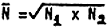
Biomass values were determined by multiplying these mean population numbers by the mean weight of the individuals for the month.
The mean individual weights (w) were determined from the estimated mean lengths (1) at the middle of the month using

where a and b are constants. The mean lengths were estimated on the basis of October 1 being the birthday for each cohort, and using

where lt is the length at age t, and L, K and to are constants.
The growth and natural mortality parameter values used were for the females only, and are as follows:-
| L |
= 48.2 cm | (carapace length) |
| K | = 0.21 | (monthly rate) |
| to | = 0.0 ) | when w is total weight (gm) |
| a | = 0.001548) | and L is carapace |
| b | = 2.77 ) | length (cm) |
| M | = 0.23 | (monthly rate) |
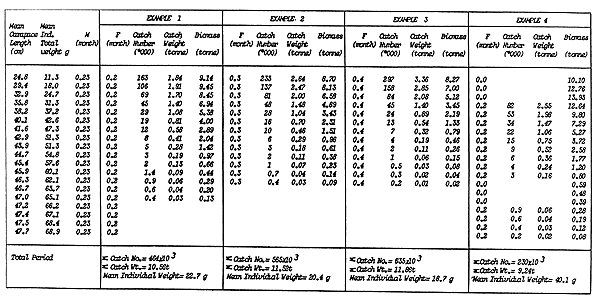
The estimates obtained for the catch numbers, catch weights and biomass are given in the attached Table for each of four alternative management strategies, In Examples 1, 2 and 3 fishing is applied equally during all months of the year, with the fishing mortality coefficient being F = 0.2 (monthly rate) F = 0.3 and F = 0.4 respectively. In example 4 the fishing mortality coefficient is F = 0.2, but is not applied during a closed season of January, February and March.
These results show that the management depicted by Example 3 provides the highest catch number (635 x 103) and the highest catch weight (11.86 tonne). The mean weight of the individual shrimps is lowest (which can be important as the larger shrimp are sold at higher prices).
The catch weight (10.56 tonne) from the management depicted in Example 1 is some 11 percent less. It is achieved from only half the effort (when F = 0.2 instead of F = 0.4). This management is likely to result in a more profitable fishery, not only because of a substantial reduction in fishing costs (for a small change in the catch weight), but also due to the catch comprising of larger shrimp (w = 22.7 gm).
It is possible that the adoption of a closed season as in Example 4 would be even more profitable. This could arise from the lower fishing costs (as there are no operating costs during three months), and from catching substantially larger shrimp (w = 40.1 gm).
This seasonal fishery management might even produce the highest gross revenue. Such a situation would arise if the price available for the larger shrimp more than compensated for the lower catch weight.
This management appears also to be beneficial in allowing greater numbers of shrimp to engage in reproduction, as reflected by the higher biomass values during the breeding season (spring) months.
The monthly biomass values are also interesting in highlighting the difficulties in interpreting biomass estimates obtained through trawl surveys. It is obvious that trawl surveys conducted in different months of the year can lead to very different biomass estimates.
Sanders, M.J. (1984) Compilation of Hewlett Packard 97 programmes for fishery stock assessment application. FAO/UNDP RAS/83/023/MAN/01: 158 p.
Basic Data on the Industrial Exploitation of Penaeid Shrimps off the Western
Coast of Madagascar (South of Cap St. Andre) - A. Ralison, Director, Centre National De Recherches
Océanographiques; B.P. 168, Nosy Bé, MADAGASCAR
Basic data are presented on the shrimp stocks of the West Coast, covering the period 1974-1983. The area is suitable only for larger trawlers on account of the lack of shelter and distance from harbours. The species composition of the catch is similar to that of the North-West Coast, with Penaeus indicus acounting for about 50% of the total catch, followed by Metapenaeus monoceros. For standardisation of fishing effort, a reference freezer-trawler was chosen of 500 Hp, 28-29m LOA and 127-238 tons. Effort was standardised for each vessel type in relation to the reference unit by a linear regression between mean yields per hour of fishing against horse-power. The equation obtained was: relative catch/h = 0.0085 x horsepower + 0.578. Fishing effort varied enormously, both between zones and between years, falling markedly during 1977-1979 but recovering thereafter. Over the period of exploitation there has been a redistribution of effort from the northernmost zone to more southerly ones.
Fox's production model was applied to the data of the southernmost zone alone during 1977-1983. MSY was estimated at 1755 tons at an optimal effort of 40,000 (h), corresponding to a catch rate of 43.8 kg/h. When the West coast as a whole was considered for the periods 1974-1979 and 1981-83, the MSYs were estimated as 1,277 tons and 3,750 tons and the optimal efforts at 50,000 (h) and 110,000 (h) respectively. In view of these very different estimates, it is considered prudent to adopt an intermediate MSY of 2,500 tons for an effort of 80,000 (h) unti1 more and better data become available as exploitation proceeds.
Commercial trawling for shallow water shrimps (Penaeidae) in Tanzania 1/ T. Johnsen, Associate Expert (RAF/79/065), FAO/SWIOP Seychelles
There is only one company involved in the trawl fisheries for shrimps in Tanzania: The Tanzanian Fisheries Corporation (TAFICO). Only one of the boats of this company is fully engaged in shrimp fishing ('Mama Tafico'), while the other boats are used mainly for fish trawling, in the Zanzibar Channel. 95% of the shrimp caught by trawl in Tanzania are caught by 'Mama Tafico'.
'Mama Tafico' is a 150 GRT double rig steel trawler powered by a 500 Hp diesel engine and has a cold storage capacity of 30 tons. She has a trawling speed of 3 knots and a cruising speed of about 11 knots. Each of the two trawls in use has a mesh size of 5mm (stretched), a horizontal opening of 10 metres and a vertical opening of 1 metre.
There were three dominant species in the trawl catches:
1/ Full paper is published in SWIOP Publication series.*
These contribute about 95% of the total catch from the trawl fishery. Approximately 40% of the shrimp landed in Tanzania are caught by trawl.
There are three areas utilized for trawling along the coast:
Catch records for a whole year period (March 1983 to Hatch 1984) from 'Mama Tafico' were provided for processing at the SWIOP headquarters in Seychelles, Each catch had been recorded and the number of 2 kg boxes of each commercial size group for each species noted. The position for each catch in 5 minute latitude intervals and start/stop times were recorded for each haul.
Mean catch per nautical mile square was estimated from these data for each exploitation period in the three areas, From a derived mean length for each commercial size group per nautical mile square, these values were transformed into histograms showing the catch numbers within each length/time interval.
The results from the calculation of the mean catch per mile square in the different periods of exploitation for each area indicated that recruitment to the trawlable area was varying throughout the year for all three species. Several peaks in catch per mile square indicated that there was also an emigration out of the area for all three species.
The length/frequencies showed that there is one mode for each exploitation period, but this mode is not moving with time for any of the species, The mean length of each of the species is quite constant throughout the year. This is another indication that all three areas are transit areas for shrimps migrating from the nursery to the spawning areas. This meant that no traditional methods seem to be applicable for a stock assessment from these results.
One way of solving this problem might be to assume an expected growth and an expected distribution over time for one cohort. The length distribution in one period of exploitation could then be transformed into an expected length distribution in the next period of exploitation through the use of a mean growth curve derived for the males and females combined. (The appropriate growth curve for males and females for each species has to be derived from results of other studies conducted on the three shrimp species).
When the expected length distribution is found in the next period of exploitation, there will most probably be an overlap between the expected and the measured length distribution. The overlap could be taken as those shrimp remaining in the area. The number of individuals which are not overlapping at the lower end of the measured length distribution might represent the flow of recruits into the area in the time period between the two exploitation periods. By summing up the flow of recruits into the trawl area throughout the year, one might get the total number of shrimps recruited to the trawlable area over a year, and thereby have enough information to estimate an approximate M.S.Y. for the three exploited areas.
Commercial trawling for fish and deep sea lobster (Puerulus spp) off Somalia 1/ T. Johnsen, Associate Expert (RAF/79/065), FAO SEYCHELLES
The information on which this report is based was collected on a 40-day cruise on the SOMITFISH Company trawler 'Cusmaan Geede Raage', from 5th March to 8th April 1983.
At this time there were 5 trawlers operating all the year off Somalia. Three of these boats, all sisterships, belonged to the SOMITFISH Company and the other two were Italian vessels licenced to fish in Somalian waters.
The trawler fleet in Somalia exploits a total of 20 grounds: 9 of these are grounds inhabitated mainly by deep sea spiny lobster, 9 are fish trawling grounds and 2 are inhabited by shallow water shrimps (Penaeidae).
Thirty days during this cruise were spent on trawling for deep sea spiny lobster and five on trawling for fish. The report includes a brief description of the different trawling grounds and the species/families dominating the catches from the different grounds. An estimate of the standing stocks of two species of deep sea spiny lobsters, Puerulus carinatus and Puerulus sewellii is also presented.
A proposal for a catch recording system which could be applied on all trawlers operating off Somalia is included in the report. The method used for estimating the standing stocks of P. carinatus and P. sewellii is in principle a modified version of the swept area method. A stratifiction of each ground swept on the cruise was undertaken and raised by the estimated mean catches per nautical mile square. The efficiency of the trawl net was assumed to be 100%.
Standing stock estimates for the total Somalian coast were determined as:
| P. carinatus | : 639 tonnes |
| P. sewellii | : 1,094 tonnes |
Incidental observations: the Northern waters from Eyl seem to be well populated with tuna, especially skipjack tuna ( Katsuwonus pelamis ). Big schools of tuna were observed near the surface in an area where the depth ranged 50 to 400 metres. Schools of tuna were following the vessel while she was trawling for deep sea spiny lobster, feeding on the small benthic species of fish by-catch being thrown overboard.
Some attempts were made to catch tuna using handlines Jade from nylon netting twine and hooks made from bent nails. One of the fish species ( Chlorophthalmus bicornis ), always numerous in the lobster catches, turned out to be an excellent bait. With this primitive fishing gear, six of the crew members caught 400 kg of tuna in half an hour's fishing.
Since the time spent on sorting and freezing lobster and other commercial species seldom exceeded an hour, most of the sailors had more than an hour off before the next catch came in. While fishing in one area, ten hauls were taken per 24 hours. The crew could therefore have fished for tuna for 5 one-hour periods.
This trial eight raise the question whether one could modify traditional stern trawlers to be suited also for a combined trawl and pole-and-line operation.
1/ Full paper published in SWIOP series, RAF/79/065/WP/15/84*
A Bio-economic Model for the Analysts of Sequential Artisanal and Industrial Fisheries for Tropical Shrimp with a case study of Suriname shrimp fisheries by R. Willmann and S.M. Garcia. 1/
This paper presents the design and the parameters of a bio-economic model of sequential artisanal and industrial fisheries for tropical shrimp. It consists of a biological part based on a yield per recruit (Y/R) Thompson and Bell model and an economic part based on a simple input-output model.
The model has been computerized to provide fishery administrators and researchers with an analytical tool which is relativeIy easy to understand and operate. It is also highly flexible as it can easily be adjusted to the amount of data available and all parameters can be changed to reflect the conditions of the particular fishery under investigation. Further, the use of a computer facilitates the conduction of sensitivity analyses. These are of particular relevance in developing countries where the lack of adequate data and reliable statistics frequently necessitates the assessment of the soundness of the results, and the related policy advice, in relation to likely errors in the parameters applied.
The model and the computer programme have been used to analyse the shrimp fisheries of Suriname. The analysis is based on a modest amount of biological and economic data available in Suriname and on data taken from similar but better studied species or fisheries in other parts of the world. The simulation results and the related policy advice have therefore to be interpreted with caution and have to be reviewed when more detailed and reliable data become available on Suriname's shrimp fisheries. Two important conclusions emerge from the analysis, namely:
These results are rather insensitive within reasonable limits to changes in the parameters applied and allow for the formulation of two recommendations. First, the shrimp nursery areas should be carefully protected from damaging human interventions, not only in regard to excessive fishing effort but also in respect to negative influences of competing users of coastal areas such as aquaculture, aqriculture or industry (use of pesticides, drainage of swampy areas, land reclamation, etc). Second, a gradual reduction in the number of shrimp trawlers allowed to fish in Suriname's EEZ leads to higher national income under the condition that the additional profits created by such a reduction can be extracted for the benefit of the national economy.
1/ FAO Fish. Tech. Pap., (270): 49p.*
A preliminary Note on the Economic and Financial Profitability of Shrimp Trawlers in Madagascar in 1983 - Ms Nicole Y. Razafindralambo, Centre National de Recherches Oceanographiques, Nosy Be, MADAGASCAR
The shrimp fishing industry is based on the operation of trawlers which comprise 70-75% of total investment costs. Since the birth of this industry, the trawlers have continued to increase in number, gross tonnage and power. In 1983, 48 vessels were licensed. These can be divided into two types, ice-boats and freezer-trawlers. This makes the choice of a new reference boat unit difficult.
In examining their economic and financial profitability, the trawlers have been classified into 5 groups according to power, ranging from 150 Hp. It appears that a 150 Hp ice-boat has the lowest operating costs, but its. hold capacity is limited as is its endurance at sea (3-5 days), which restricts its operation close to port. In terms of financial results, however, the 1250 Hp trawler seems to be the most profitable. These preliminary conclusions, corresponding to the exceptional year 1983, will have to be confirmed by additional biological data such as the fishing effort of each type of trawler and technological parameters.
Bioeconomic data on the 'VALAKIRA', artisanal shrimp fishery in Madagascar - N. Y. Razafindralambo, Nosy Be, MADAGASCAR
This economic study on 'Valakira' followed a biological study carried out in 1983 due to the conflict existing between the industrial fishery and artisanal exploitation of the valakira (tidal traps). The latter established in the estuaries of the Baie d'Ambaro, are assumed to catch a lot of juvenile shrimp, which reduces recruitment to the Industrial fishery. However, biological results have demonstrated that there is no interaction between these two sectors because they catch different species and cohorts.
Management measures concern only the size of the lattice mesh, which should be increased to minimise the capture of juveniles.
Economic estimates have been obtained of the different costs involved by questioning exporting companies which handle shrimp from valakira fishermen and by directly questioning the fishermen.
Preliminary Observations on the Potential for Developing Extensive culture of
Penaeid Shrimp in Madagascar - Mr. Handrian P. Stirling, UNESCO Field Expert, Project MAG/81/T.01, Centre
National de Recherches Oceanographiques, Nosy Be, MADAGASCAR
The prospects for culturing penaeid shrimp in Madagascar, especially on the NW Coast, and the characteristics of intensive and extensive systems are reviewed. The present socio-economic climate favours extensive systems which rely on natural tital exchange and food production in the mangrove zone which covers much of the NW coast. Basic techniques for manipulating the coastal ecosystem to produce shrimp are presented and the precautions necessary to conserve the mangrove as an important nursery around for wild fish and shrimp are emphasised. Preliminary observations indicate ideal soil characteristics and a mean tidal range of 2.3m at Nosy Be, with abundant seed supplies, at least of Penaeus indicus and Netapenaeus monoceros in the Baie d'Ambaro.
The development of shrimp culture presents an opportunity for artisanal fishermen to diversify from traditional barrage ('Valakira') trapping to husbandry, which should relieve the fishing pressure on juvenile wild shrimp, hence increasing the potential recruitment of the industrial fishery. Recommendations are made for the active participation of the Industrial shrimp companies in aquaculture development on account of their existing technological infrastructure, processing capacity and export marketing experience. There are also opportunities for recycling shrimp processing wastes and utilising the industrial by-catch for supplementary feeds. Specialist expertise will be required for site surveys and environmental and systems appraisal, which would be best provided by international development agencies working closely with C.N.R.O. to ensure adequate training of national counterparts, and for the preparation of an integrated management strategy for all shrimp production sectors.
Shrimp Culture in Kenya - Benson Thiga, Government of Kenya/UNDP/FAO, Pilot Project, 'Development of Coastal Aquaculture'
A pilot project was started in the Kenya in late seventies to test if coastal mariculture is practical in Kenya under local conditions. The project is jointly financed by the Kenyan Government and UNDP, while the executing agency is FAO. Up to nov 13 hectares have been put under production and these consist of 9 grow-out ponds ranging from 1.0 hectare to 1.7 hectare. The pond design facilitates the gravitational filling and emptying of water by the tide. Shrimp seed for stocking are collected from the wild and appear to be available throughout the year, but with seasonal flucations in abundance. Extensive production trials have indicated that it is possible to produce 200-900 kg/ha/year. Three crops per pond per year is the usual practice.
Breeding of Penaeus monodon and Metapenaeus monoceros and prospects for Marine Shrimp culture in Mauritius - Y. Enomoto, M.I. Jehangeer and M. Mundbodh, Albion Fisheries Research Centre (MAURITIUS)
Aspects of the breeding biology of the most important penaeid shrimp species occurring around Mauritius are described. Spawning in captivity, induced spawning by eye-stalk ablation of Penaeus monodon and Metapenaeus monoceros as well as the initial success obtained for the first time in Mauritius in larval rearing are reported. Finally the prospects for penaeid shrimp culture in Mauritius are discussed.
The Mass Production of Postlarvae of the Freshwater Prawn Macrobrachium rosenbergii (de Man) utilising the Greenwater and Clearwater Techniques: A comparative study - V. Chineah, B. Ramcharran and V. Chooramun, Albion Fisheries Research Centre (MAURITIUS)
This paper describes a preliminary experiment carried out on rearing of larvae and production of post-larvae of Macrobrachium rosenbergii (de Man) in a closed-water circulation system. Physico-chemical parameters of the medium were monitored and have been found to stay within acceptable levels for larval growth.
The Freshwater Prawn ( Macrobrachium rosenbergii ) Industry In Mauritius: Progress since 1980 - R. Thompson, Cameron Production Co. Ltd., Le Vallon, c/o Ferney S.E., Grand Port and J.M. Nuron, Camarons Natchery Co. Ltd., Mon Tresor Mon Desert S.E., Union Vale.
Since 1974 the private sector in Mauritius has invested in the development of freshwater prawn, or "camaron" aquaculture. Considerable progress has been achieved towards industrialization, particularly in the last five years.
The central hatchery can produce 4-6 million (M) juveniles per year. Predictable and stable supplies are achieved yearly with production paced to meet the local market demand of 2.3 M juveniles per year; over the last nine years nearly 20 M juveniles have been produced. Exportation of juveniles to the African region has been successful.
There are approximately 17 hectares of ponds in commercial production in 11 prawn farms located island-wide. All adult prawns are sold on the local market and the total yearly production has steadily increased from 2 to 25 tonnes between 1977 and 1984. Prawn culture can be economically viable in Mauritius, the technology exists, but yields per hectare are directly related to the quality of biological management.
In 1981-82 a local market survey indicated the demand for freshwater prawns to be greater than 100 tonnes per year. Export markets also exist in nearby countries.
Now under construction at Le Vallon on the East coast is a centralized prawn farm of nearly 20 hectares of grow-out ponds. Realization of this project will produce an additional 50-63 tonnes of prawns per year, bringing the island-wide total to approximately 100 tonnes. Utilization of 2.8 M juveniles per year by this farm will improve the viability of the prawn industry generally because the central hatchery will operate near maximum efficiency, reducing juvenile unit costs in consequence. Several existing prawn farms are also planning expansion, further contributing to the industrialization of freshwater prawn aquaculture in Mauritius.
A brief description of the crustacean fisheries in Mozambique was presented, giving emphasis to the shallow-water shrimp which is the most developed fishery. Total annual catch is dependent on the recruitment and was in the order of 8,000 tonnes during the last three years for the industrial fishery based on the Sofala Bank.
A relationship was found between catch rates during the period of recruitment and over the whole year. From the yield-per-recruit curve for Penaeus indicus, an index of recruitment was calculated and related to the catch rates for the period of recruitment.
Based on these relationships, the total allowable catch (TAC) for the year is predicted. Within this limit, catch quotas are given to the different companies (national, joint venture and licensed vessels) according to the potential effort of each type of vessel.
Madagascar has an approximate area of 596,000 km sq., a continental shelf of about 32,600 km sq. and a coastline of about 5,000 km including more than 30,000 ha of mangroves.
The shrimp fishery started around 1967 and is presently being exploited by four well organized companies whose fleet of about 40 trawlers (with deep-frezing and chilling facilities) captured 5,800t of shrimps in 1984. The fishing areas are located on the North West and West of Madagascar and the species in order of importance are, Penaeus indicus, Metapenaeus monoceros, P. semisulcatus, P. japonicus and P. monodon. The industry employs nearly 1400 persons for processing purpose.
V-shaped coastal barrier traps called "Valakira", set in the intertidal zone, are the main gear of the artisanal fishery. The catch does not exceed 200t annually and is sold to collecting societies.
In the Southeast region of Madagascar there is a reasonably well developed lobster industry (Panulirus penicillatus and P. homarus). The products are bought from fishermen and then sold either as lobster tails or fresh whole lobster on the local and foreign markets. In 1984, 131t were landed, out of which 40t were exported.
The framework of this analysis is the observation of four fishing companies that existed between 1967 and 1980.
These companies export 90% of their production and the 10% remaining are consumed locally. From their financial statements, the total investments of the companies reached 2,322 million Fmg of which 1,690 million was in fleet value. They met with difficulties leading to a deficit of about 1.5 thousand million at the end of 1979, with a negative value added.
Six zones having a well-known potential and where 80% of fishing effort are concentrated have been considered. Biological studies led to an estimate of 5,210 tons of M.S.Y. for the six zones together and showed that zones I, V and VI are not interesting in hourly yields. Economic studies gave three exploitation levels (M.S.Y., Break-even, M.E.Y.), on which management measures can be based. Reduction of fishing effort to 50,000 hours for the six zones, which will give a profit of 1.24 thousand million Fmg is proposed, the main objective being the maximisation of foreign currency net gains.
The present fishery situation shows an increase in the number of companies and hence the amount of capital and the size of the fleet. A slight progression in production has been noted from 1981 to 1984. The importance of fish by-catch (83% of the total catch of shrimp and fish) may make the construction of a fishmeal plant feasible. Presently there is no fishmeal plant in Madagascar.
Tanzania has a coastline of about 800 km. With the proposed declaration of a 200 mile EEZ, she will have a water body of the Indian Ocean of over 100,000 sq. km. This water body which is over 50% of the Tanzanian waters, inland and marine combined, contributed only 18% of the total national fish catch. It is therefore evident that the marine resources of Tanzania are very much under-exploited.
The crustacean resources are no exception. Conservative figures give the crustacean stock as 5,000 mt with a M.S.Y. of 1,000 mt. These figures are quite low as much of the coastline is yet to be surveyed and exploited. Exploitation figures stand as 456 mt (1983). Presently, the prawn trawl fishery which accounts for 40% of the annual prawn catches (1983 figures) are harvested only from an area of 340 sq. km by some 5-6 trawlers of various sizes, owned by the Tanzania Fisheries Corporation (TAFICO). Crustacean resources form only about 1.5% of the total fishery production, yet they contribute (especially the prawn fishery) over 80% of total fishery exports.
The major Prawn species of commercial importance are, Penaeus indicus (60%), Metapanaeus monoceros (20%), P. monodon (15%), P. semisulcatus (4%), and P. japonicus (1%), and the fishery is related to riverine conditions.
The Tanzania prawn trawl fishery is very underdeveloped. The resources are believed to be abundant. Hence, it is the right time for exploitation to run hand in hand with management of these precious resources. With the solving of the existing obstacles in this fishery, expecially establishing more trawlabIe grounds, shore backing facilities and developing the fishing technology, it is evident that with proper management measures on this fishery, it may prove quite beneficial to the nation as a major foreign currency earner.
Among the crustaceans, prawns and lobsters are the most important commercially in the Tanzanian Coastal waters. Five species of penaeid prawns have been established through taxonomic studies in commercial quantities. These are Penaeus indicus, P. monodon, P. semisulcatus, P. japonicus and Metapenaeus monoceros. The prawn grounds are scattered in highly localised patches, extending from Moa, north of Tanga (northern part of the Tanzanian coast) through Sadani, Ruvu to Souch, Rufiji down to Kilwa Kivinje (in the Southern part of Tanzania).
Traditional fishing methods include stake traps, cast nets, beach seines, lift nets and rectangular pieces of coarse cloth. Trawling operations are carried out by medium and fairly large vessels. The low potentia1 of prawns of the Tanzanian coastal waters may be attributed to the fact that the ideal habitat required by the prawns during their different stages of life history is not extensive along the coast.
As far as lobster fishery is concerned, five species are found viz. Panulirus ornatus, P. longipes, P. homarus, P. versicolor and P. penicillatus. Methods of fishing include hand net and octopus nets, speargun and traps.
Zanzibar and Pemba are autonomous Islands with a combined area of about 2450, square miles. The population was about 475,655 in the 1978 census. Geographically, Zanzibar and Pemba lie between 5° and 6° South and 29° and 40° West in the Indian Ocean within the coastline of East Africa. The islands are climatically affected by two monsoons from the South East between March and June and from Northwest between October and February.
Crustacean fisheries in Zanzibar are entirely at the small-scale level. Spiny lobster is the only crustacean commercially exploited in Zanzibar waters. Commercial fishing for spiny lobster started as long ago as 1958. Commercial lobster catches indicated the same species, namely P. ornatus, P. versicolor, P. longipes, P. homarus and P. penicillatus. P. ornatus comprises over 80% of the total catch.
Lobster fishing in Zanzibar is basically done by skin-diving and harpooning. Lobsters in Zanzibar do not readily enter traps. Only a few enter the local "Dema" traps set for fish. For this reason, fishing is done mostly when diving conditions are good.
In Kenya crustaceans are among the most profitable fisheries products.
The major groups landed in Kenya include the shrimps, Penaeus indicus, P. monodon, Metapanaeus monoceros, P. semiculcatus and P. Japonicus. Spiny lobsters are also landed and the major species are Panulirus ornatus, P. longipes, P. homarus, P. versicolor and P. penicillatus. The other crustacean exploited in Kenya are the crabs Scylla serrata and Portunus pelagicus. There is also a freshwater crustacean fishery which is mainly dominated by the crayfish Procambarus clarkii which was introduced in Lake Naivasha from N. America.
Apart from the crayfish, the others have been exploited from many years along the Kenyan coast. Fishing in Kenya generally comprises both an artisanal and an industrial sector, with the latter involving the use of trawlers.
Penaeus species and Metapenaeopsis species of shrimp occur in shallow waters along the Gulf of Aden and Indian Ocean coasts but only small quantities have been caught and the stocks appear to be highly localised. Stocks of deep water shrimp, Heterocarpus tricarinatus which have been caught with lobster trawling gear at depths of 500m on the Indian Ocean shelf, and appear to be similarly limited.
Lobster resources are comprised of shallow and deepwater forms. Local small-scale fisheries for the shallow water lobster (Panulirus ornatus, P. versicolor, P. penicillatus, P. homarus and P.japonicus) are fished at various locations along the Indian Ocean Coast. The lobsters are caught exclusively by diving (without use of a boat or air hose). The main fishing seasons are from February to May and October to December.
Sand lobster (Thenus orientalis) is mainly fished by industrial fishing fleets offshore (out to the 100m depth contour). It has constituted a very small by-catch for commercial trawling activities in the relatively recently established deep water lobster fishery (SOMALFISH trawlers and licensed trawlers). The main catch components are the lobsters Puerulus sewelii and P. carinatus caught at depths between 200-400m. The fishing grounds are on the continental slope (off the Indian Ocean coast) comprising two narrow belts lying between Mogadishu and the river Kiyamboni and a similar belt extending between Eil and Obbai. The mean catch rates have ranged between 0.4 - 0.7mt/Vessel/Day.
The potential annual catches are 500 tonnes for the shallow water lobster, 1500-1800 tonnes for the deep water lobster and 500 tonnes for the shrimps.
This paper describes the crustacean resources of Mauritius which include lobsters, crabs and shrimps. As existing stocks are heavily exploited, particular attention has been given to developing aquaculture of the giant freshwater prawn, Macrobrachium rosenbergii, and research is under way to develop marine shrimp culture. The development of a small fishery for deep water shrimps is being encouraged.
Fisheries are generally under-developed in the Comores. The only exploitation of crustacean is for freshwater prawns and marine lobster. All fishing is by artisanal methods.
| (Leader | : R. Willmann) |
| (Rapporteur | : J.D. Ardill) |
The development and management of fisheries should be planned to respond to clear national objectives. These generally include factors such as maximising food production, foreign exchange earnings and employment.
In many cases, although a hierarchy of objectives may be indicated, in line with the specific problems faring the country concerned, it is not sufficiently recognised that the realization of one objective may be to the detriment of another. Maximising food production, for example, may imply reducing the efficiency of a fleet fishing for export. Similarly, maximising foreign earnings may lead to reduced employment.
The role of management advisers is thus rendered difficult, and they should try to provide clear advice on the implications of various alternative management strategies. The final choice will often remain a political decision and may involve seeking a compromise among management objectives.
It was noted that often there can be a tendency to make political choices on the basis of short-term objectives, which might be incompatible with rational long-term management. In some instances this may arise from the need to attract the favour of an electorate in a forthcoming election or, more frequently, be the consequence of pressure from competitive lobbies. In other instances, frequent changes in economic conditions may preclude the establishment of a longer term hierachy in management objectives.
It was suggested as desirable that the important interest groups be encouraged to become involved in the decision-making process. In the case of the fisheries sectors this might be achieved through the formation of associations in which the views of the different interest groups could be consolidated.
The process of consultation is vital to achieving a rational political choice. This could be met through the creation of an independent authority which may include not only representatives from the various interest groups (artisanal fisheries, industrial fisheries, processing, distribution and marketing interests), but also representatives from other ministries.
It was noted that within the region policy-making has often originated from a central party organization and/or from the technical ministries concerned. In the decision-making process, with increasing pressure on resources, the research authorities have become more influential.
| (Leader | : M. Sanders ) |
| (Rapporteur | : R. Willmann) |
The introduction of an effective licence limitation scheme is difficult when the number of fishing enterprises is already excessive. In this case, it will be necessary to consider reducing the number of entreprises. This requires a decision as to which enterprises should leave the fishery. The approaches that might be adapted to achieve a reduction in fleet size include:
Once the right fleet size is achieved through one or a combination of the above-listed approaches, consideration must be given to the possible transfer of licences to ensure the maintenance of the correct number. This may become a complex task as the licences may realise a high value. Alternative approaches for the transfer of licences include:
Auction or free sale of licences may lead to the concentration of vessel ownership in the hands of a few financially strong companies. This may be socially and politically undesirable.
One of the objectives of licence limitation is to control the amount of fishing effort and fishing capacity. A licence limitation scheme needs complementary controls, as each enterprise may increase its fishing capacity, Attempts to avoid this may include controls on:
As an alternative to controls on fleet characteristics, the licence limitation scheme may be complemented by a quota scheme. This has the added advantage of allowing the enterprises to adopt more efficient technologies, while still meeting the management objectives.
Different types of licence limitation schemes were reported for the shrimp fisheries of Madagascar and Mozambique. In Madagascar, the shrimp trawlers are licenced to fish in particular zones, for which a limit on the total catch has been fixed close to the estimated MSY. In addition, a quota on the total horse-power by fishing company has been established. This leaves the companies themselves with the possibilities of optimizing their fleet structure within the horse-power limitations.
As regards the artisanal 'valakira' shrimp fishery, in Madagascar there exists legislation to control any installation in the sea. It appears that profitable valakira sites are only available in limited numbers. For this, as well as for social reasons, it was suggested that the introduction of licence limitation is not necessary.
In Mozambique's shallow water shrimp fishery, fishing licences and catch quotas are allocated to foreign fishing fleets when the assessed total allowable catch is in excess of the fishing capacity of the national fleets. In this conection attention should be given to the possible effect of the foreign fishing in lowering the profitability of the national fleets.
In general, it was noted that the countries of the region would first seek to lower the number of foreign fishing vessels when there is a need for a reduction in fishing effort. In regard to the national fleet, a re-direction of fishing effort to other fisheries was considered preferable over other methods of curtailing the fleet size. The scope for economic compensation such as a 'buy back' scheme was considered difficult to implement, owing to the limited finances available to many governments.
Licence limitation in artisanal fisheries was considered impractical in most instances, owing to their widely dispersed nature and the large numbers of individual operators. The recognition of traditional rights, such as those reported from Comores, may offer a more practical way of limiting fishing effort in the artisanal sector.