|
SIMULATIONS OF THE PROFIT POTENTIAL FOR DIFFERENT BOAT TYPES INTRODUCED AS A SUPPLEMENT TO OR REPLACEMENT FOR THE |
December 1985
RAF/79/065/WP/25/85
Torbjorn Johnsen
The schooner handline fishery of Seychelles is performed from boats, known as 'schooners', ranging from 8-14 metres L.O.A. The fishery has always been performed manually, the fish being kept on ice. The average duration of a fishing trip is 3-7 days.
The number of crew on each schooner is governed by its size and, in the case of larger boats, whether dories are carried for increased fishing capability. Living conditions on board are extremely uncomfortable, and this, together with the relatively low earnings, has resulted in poor recruitment of young fishermen to this sector.
There are presently twenty five schooners operating. A number of them are past their prime and in various stages of disrepair and a serious effort is being made to find suitable boat types for replacements in the fleet.
Four new fishing craft are being evaluated as possible replacements for the traditional schooners. This report describes computer simulations to assess the economic viability of these vessels, taking into account operating, maintenance and investment costs, together with crew renumeration and a minimum profit margin for the owner.
The end result of the evaluation is an assessment as to whether, in the handline, mechanized dropline and troll fisheries, the purchase price of the boat can be covered. The minimum period for the refund of the loan is also calculated.
In addition, from available knowledge on fish stocks, an assessment is made as to the maximum number of boats which can be used in each fishery and the number of fishermen which would be needed for the different options.
A prototype of this boat has recently arrived in Seychelles. It is powered by a Volvo Penta 22 Hp diesel engine. A Bermuda type sail is used, but is not likely to serve other than as a steadying sail or in an emergency. The total storage capacity for fish and ice is about 2 tons. There is sleeping accommodation for four people under the forecastle. This boat should be able to stay out fishing for several days, but the size of the boat and its loading capacity will most probably restrict the area of fishing to the Mahe Plateau.
It is planned to purchase two units of a prototype of this boat from Norway. It is powered by a Saab 30Hp diesel engine with a 4.5:1 reduction gear for fuel efficiency. The standard sail is a high aspect-ratio Bermuda rig and, given the deep keel of the boat, should give good sailing characteristics. The storage capacity for fish and ice is more than 5 tons. There is sleeping accommodation for four people in the cabin. This boat can fish on the Mahe and Amirante Plateaus.
A prototype of this boat is planned to be built at the Praslin Boatyard. It is powered by a Yanmar 3 Hp diesel engine. As this boat is still on the drawing board, the sail design has not yet been made. The storage capacity for fish and ice is about 5 tons. A boat of this size will normally have sleeping accommodation for a maximum of 5 crew members. This is the crew size that has been used in the economic evaluation of the boat. The boat could fish on the Mahe and Amirante Plateaus.
Five units of this boat type will be built at La Digue Boatyard. It is powered by a Thornycroft 160Hp diesel engine. The decision on sail type has not been made. The storage capacity for fish and ice is about 15 tons. There is sleeping accommodation for 14 people on board. This size of vessel should permit both dory fishing and shift operation. There could also be possibilities for installation of freezing facilities so as to enable the exploitation of fishing grounds such as the Cosmoledo and the Farquhar Plateaus.
The S-8.5 and the P-11 are the least comfortable of the four boats under consideration, with sleeping accomodation under shelter, but little else. This does however still compare favourably with the schooners used at present, where the crew even sleep on deck.
The N-10 is the by far most the comfortable of the small boats. Cooking, eating and washing facilities as well as sleeping quarters are under shelter.
The D-21 will both be comfortable and crowded with crew, particularly with two shifts or if dories are employed.
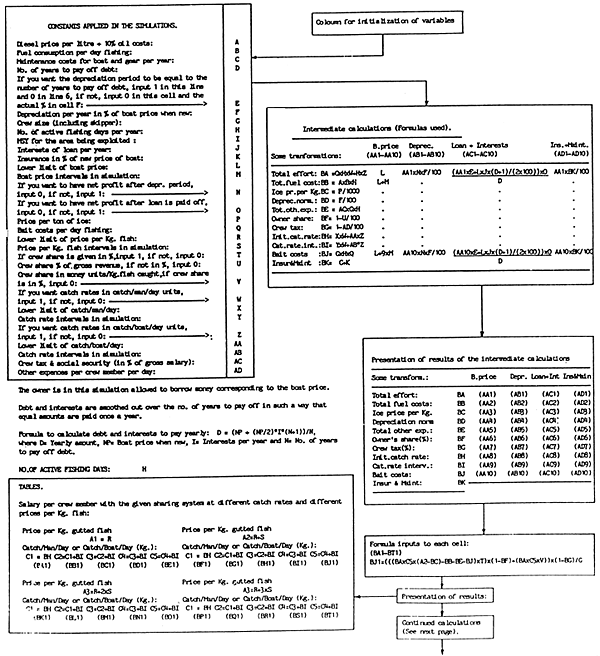
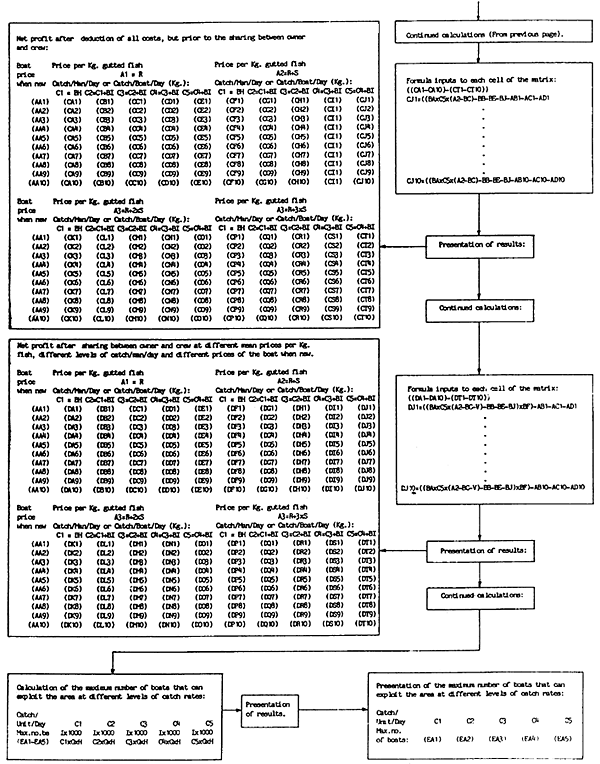
A model has been programmed for Apple III/Visicalc for the assessment of the economics of fishing boat operations (Appendix 1). This model, by interpolating data, permits the simulation of profitability of different craft and different fishing strategies.
Real data were used where possible in this model. These included cost elements: for the boats, fuel, ice, bait, selling price of fish, etc. The productivity of handlining with varying crew size, the number of fishing days, travelling time to fishing grounds and various operational parameters were for the most part derived from available data (Lablache & Carrara 1984).
The local weather conditions were taken into consideration in estimating the number of days of active fishing. The number of days at sea for each boat will be 224 in this situation. Since most of the banks exploited by the schooner fleet are situated near the edge of the Mahe Plateau, an average running time of 2 days is taken to and from the fishing banks. With 5 days of active fishing per trip (conditioned by the keeping time of fresh fish on ice, this is close to the average for the schooner fleet) 160 days fishing or 32 trips per year would be possible. This figure, applied in all simulations, is only slightly higher than the sea time achieved by the FIDECO schooners, which certainly lost operational time due to their poor state of repair.
The fuel consumption was based on the results of studies of the existing schooner fleet and on data provided by the builders of the new boats. For any boat which had not been tested in operation, the fuel consumption was derived from the standard formula applied for diesel engines: 0.2 litres per Hp per hour.
For the handline fishery on the Mahe Plateau, the average of the schooner fleet was taken to estimate fuel consumption: 5 hours steaming at full power per active fishing day. For the trolling simulations, the distance from the harbour at Victoria to the different areas for trolling has been measured. At a cruising speed of 8 knots, the running time to and from the fishing area was derived. This figure was then multiplied by the fuel consumption per hour under full power (5 litres). Over the expected 5 active fishing days, two levels of fuel consumption were taken, 12 daylight hours at full power (5 1/hr) or under sail (2 1/hr). The figures for consumption under full power apply both to the N-10 and to the S-8.5 while the lower figure applies to the former only.
When dories were included in the simulations, the fuel consumption of the mothership/dory unit was standardised to diesel consumption per day in order to facilitate further calculations. The dories are powered by a 25 Hp outboard petrol engine and the fuel cost per day fishing for a dory is estimated at SR 50.00. This corresponds in cost to about 12.5 litres of diesel fuel. The fuel consumption per dory is then added to the fuel consumption of the mothership.
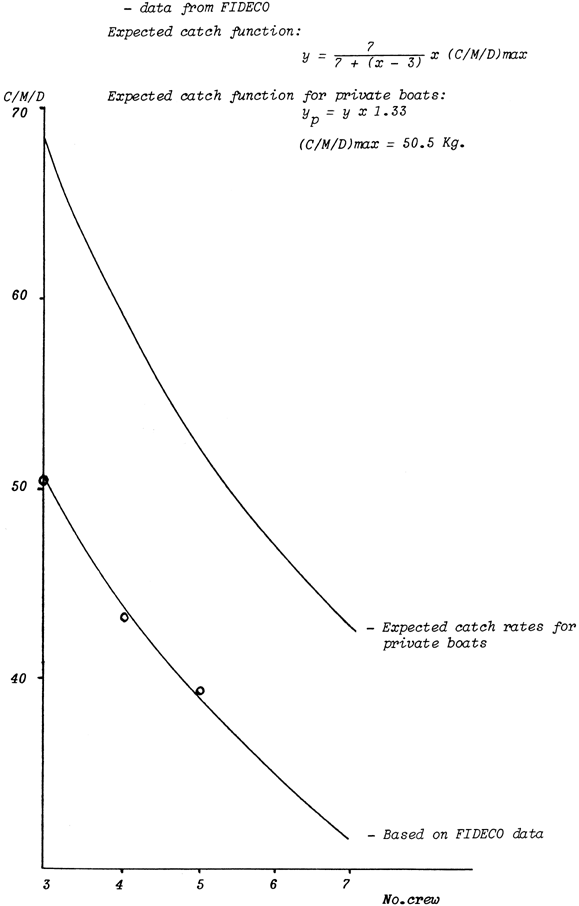
Figure 1. Expected catch rates with different crew size in the schooner handline fishery.
The price of ice, bait, food and charcoal are set at current levels.
The price of ice is SR 350.00 per ton. It is assumed that the ice/fish ratio is 1:1, so that the yearly ice requirement is set at the same tonnage as the catch.
The price of bait to the schooner fishery is SR 7.50 per day for each fisherman.
For food, charcoal etc. costs per man per day are at present SR 20.00.
Data collected from the former FIDECO schooners show a decrease in catch per man per day with increasing crew size. Through curve fitting, a function was derived for this relation (Figure 1). Since the privately owned schooners obtained a 33% higher daily catch per man, the relation between catch rates and crew size has been raised to this level (Figure 1) as it is the stated policy of Government to provide loans to fishermen to purchase their boats. New boats, properly maintained, should attain this productivity level.
For deep sea fishing on the slope at the edge of the Mahe Plateau with mechanical reels, the data provided show that a boat with 2 reels obtains a catch rate of 15 kg. per reel per hour (de San pers comm). Assuming 3 crew members on the boat and both reels operating 12 hours per day, the catch per man per day will be 120 kgs. This figure is then used as C/M/Dmax in Figure 1 and is used to estimate the expected catch rate with an increasing number of reels on board a boat unit.
Fishing the slope after dark does not appear feasible as the fish which are hooked are nearly all attacked by sharks when the lines are hauled. Night fishing is therefore feasible only on the Mahe Plateau.
When dories are included in the simulation, the recommended lower limit of catch rate per crew member fishing from dories per day is set at 60 kg (de San pers comm). This catch rate is constant as each dory carries only two fishermen.
The figures for catches from trolling are based on the mean species composition in all catches both at the edge of the Mahe Plateau and at the Amirante Plateau from trial fishing which took place over nine months in Seychelles in 1981 (Steinberg et al 1982). The mean catch rates over the year are derived for the edge of the Mahe and Amirante Plateaus separately.
The price for fish applied in the simulations was derived from the prices offered by the Seychelles Marketing Board (SMB) for different fish species, weighted by the proportion of each species represented in the catch. This was done respectively for the handline fishery, the slope fishery and the troll fishery. For the handline fishery on the banks, the price was set at SR 6.30 per kg, and for the deep sea electric reel fishing at the edge of the Mahe Plateau the corresponding figure was SR 7.00.
In the troll fishery, the catch was separated into two value components: the high priced yellowfin tuna ( Thunnus albacares ), skipjack tuna ( Katsuwonus pelamis ) and dogtooth tuna ( Gymnosarda unicolor ) which accounted for 62.9% of the catch, and the low value 'bonito' ( Euthynnus affinis ), 37.1%. The price given to fishermen by the SMB for the first group is SR 6.25 per kg, while bonito is purchased at SR 0.50. This species is caught in small quantities by the schooner fleet and is regarded by SMB as trash fish.
In the schooner fleet, after deduction of costs, the proceeds are shared between the owner and the crew: 33% for the owner and 67% for the crew. The owner has to refund debt and interest and to cover the expenses of boat maintenance and insurance out of his share.
In some of the simulations, an increase in the productivity per crew member due to the use of mechanization or improved fishing methods would lead to excessive earnings for the crew. An alternative sharing system is therefore presented so as to find a reasonable profit level for owner and crew.
The owner's share has no deduction for tax or social security. The crew share is divided by the number of crew and then reduced by 20% so as to provide an expected mean net annual salary per crew member.
On the principle that the owner will be a fisherman who has no other revenue or working capital at his disposal, a positive cash flow was kept for all simulations at 10% of the purchase price of the boat.
The maintenance costs for wooden boats was set at 10% of the price of the boat when new, or 10% of the initial total investment. For FRP boats the maintenance costs was reduced to 5%.
The insurance cost per boat unit was set at 6% of the price of the boat when new, which is the cost level of insurance charged by the State Assurance Corporation.
Interest on loans was set at 10% per year, at the level applied by the Development Bank of Seychelles (DBS). A flat payment scheme (Appendix 1) was adopted (the same refund and interest paid each year) in order to preserve a positive cash flow as of the first year.
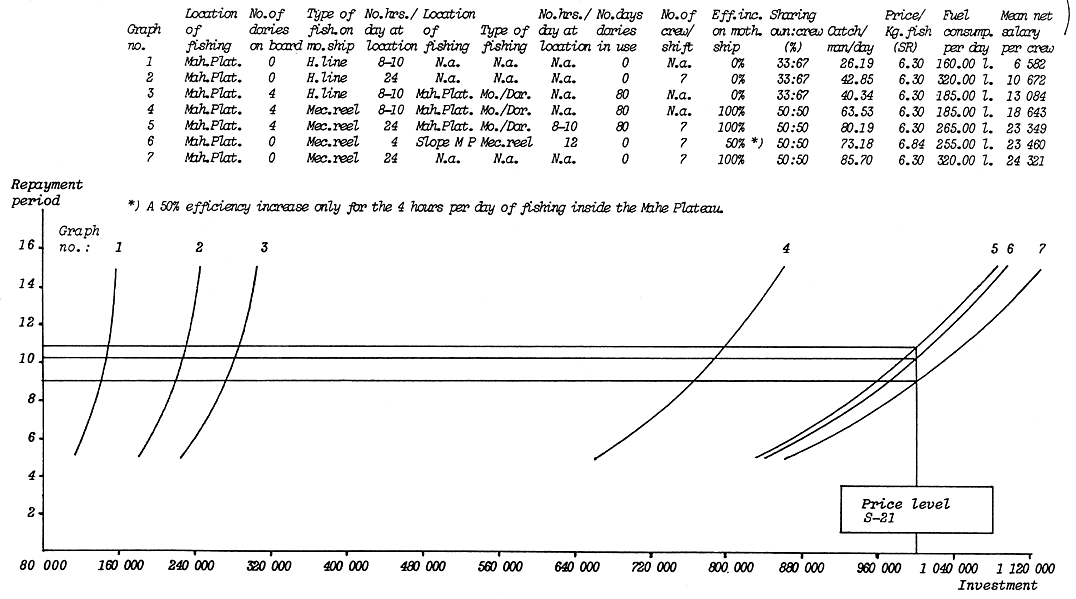
In the simulations, the number of years for the refund of a loan was varied from 5 to 15 years. The lower figure represents the maximum time given by the DBS for the refund of a loan for a fishing boat, while the upper one is a reasonable maximum depreciation period for a boat in this fishery. In ???Figure 2, Figure 3, Figure 4 and Figure 5, the equilibrium return for the assumptions listed above are presented for various fisheries in relation to the purchase price of the fishing boat. The latter element being known, it is possible to assess whether the boat can be operated profitably, and over which minimum period the refund can be effected.
A first rough unpublished estimate of the MSY of handline-caught fish for the major banks of the Mahe Plateau is 1050 tons (Lablache pers comm). These banks are mainly situated near the edge of the Plateau.
The continental shelf areas outside the Mahe Plateau can be grouped in terms of distance from Mahe into two groups:
The figures taken for MSY were derived from biomass estimates of these areas (Gulland, 1979), resectively 425 and 145 tonnes per year.
A comparative assessment was made of the level of labour intensity for each boat type and each system of operation by defining an employment potential index (E):
E = (Nc x 100)/P,
where Nc is the number of crew per boat unit and P is the required catch in % of the total MSY for an area to make the boat a profitable unit.
The yearly fuel costs for the S-8.5 and the N-10 will amount to approximately the same (F1):
F1 = (C2 x P1 x Nd) = (25 x 4.48 x 160) = SR 17,920.-
where C1 = fuel consumption per active fishing day (inclusive of cruising to and from the fishing ground), P1 = price per litre of diesel fuel and lubricating oil and Nd = total number of active fishing days per year.
For the trolling simulations the yearly fuel costs will amount to (F2):
F2 = (C2 x P1 x Nd),
which leads to a total fuel cost when trolling at the Mahe plateau, with and without sail:
| lower level : | (41.5 x 4.48 x 160) = SR 35,123.- |
| higher level: | (77.5 x 4.48 x 160) = SR 55,552.- |
and at the Amirante plateau:
| lower level : | (54 x 4.48 x 160) = SR 45,875.- |
| higher level: | (90 x 4.48 x 160) = SR 64,512.- |
The yearly cost for fuel for the P-11 will amount to approximately (F3):
F3 = (C3 x P1 x Nd) = (50 x 4.48 x 160) = SR 35,480.-
The yearly fuel costs for the D-21 will, when the boat is fishing only during daytime, amount to (F4):
F4 = (C4 x P1 x Nd) = (170 x 4.48 X 160) = SR 121,860.-
At times of the year when dories are in use, the fuel costs will increase by 7.4% per dory per day. When this boat is actively operating both night and day, the fuel consumption would be expected to be the double of F4. In the simulation where the boat is operating 16 hours per day, the fuel consumption should increase by 50% from F4 due to the running to and from the edge of the Plateau from fishing grounds inside the Plateau.
At an investment level of SR 160,000.-, which is the expected selling price both for the S-8.5 and the P-11, the difference in maintenance costs will be SR 8,000.- in favour of the GRP boat. As the N-10 is expected to cost SR 350 - 400,000.- the maintenance costs will be approximately the same as for the P-11.
The D-21 will probably cost around SR 1 000 000.-, and the expected maintenance costs per year will be about SR 100 000.-.
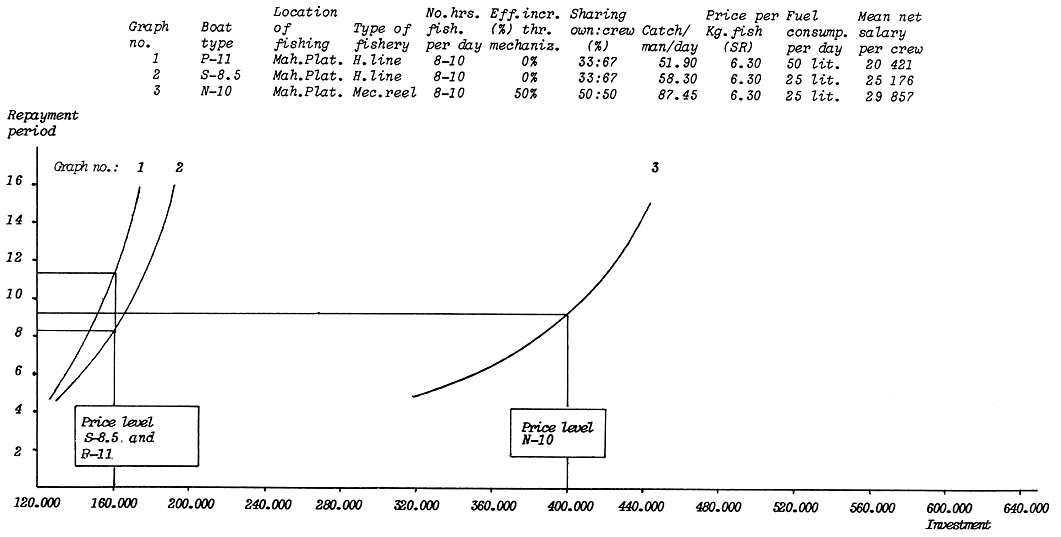
Figure 3. Results of profitability simulations for the S-8.5 and the N-10. The approximate price of each of the boats is marked in the figure.
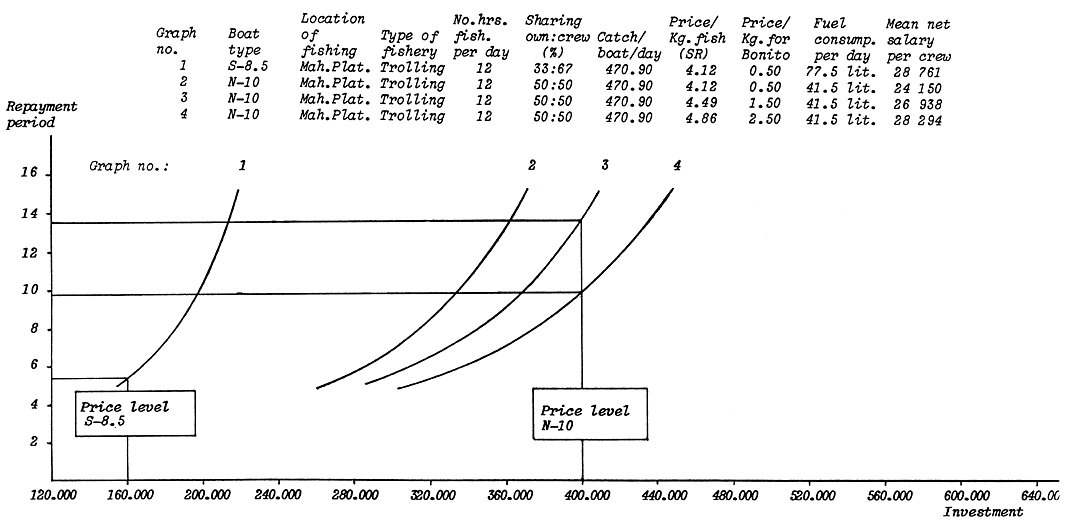
Figure 4. Results of profitability simulations for the N-10.0. The approximate price for the boat is marked in the figure.
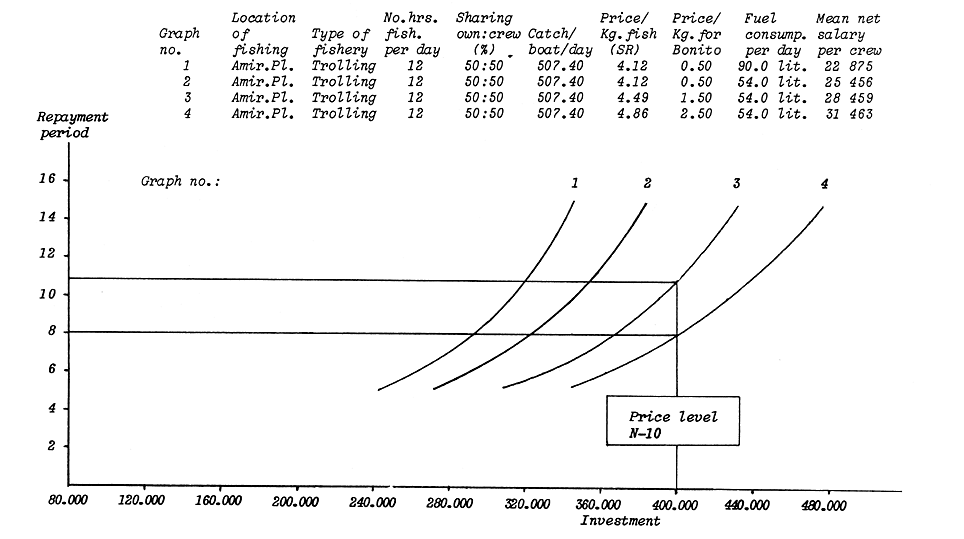
Figure 5. Results of profitability simulations for the S-21.0. The approximate price for the boat is marked in the figure.
As the insurance level is at present set at an equal percentage level irespective of the type or usage made of a boat, this cost item will increase in direct relation with investment costs:
For the P-11 and the S-8.5 approximately SR 9,600.- per year.
For the N-10 approximately SR 24,000.- per year.
For the D-21 approximately SR 60,000.- per year.
Only the P-11 and the S-8.5 can operate profitably in this fishery. The sharing system between owner and crew would remain at the present 33:67 ratio. The earnings of a fisherman on the S-8.5 would be 25% higher, due to the fact that this boat carries one man less (this gives a higher catch per man/day), uses less fuel and costs less to maintain. For a purchase cost of SR 160,000.-, the minimum time for refund of a loan would be respectively 12 and 9 years.
The N-10 would require mechanization to achieve a profit. The expected 50% increase in catch rates could be achieved through inproved location of fishing areas by echo-sounding and each man working several lines simultaneously, At a first cost of SR 400,000.-, the boat could be paid for in 10 years. It should be noted that this boat is far more comfortable than the others and, despite a 50:50 sharing ratio, the crew would earn more, compensating for a harder work schedule.
On the Mahe plateau, catch rates for all species combined are expected to attain 471kg/day at an aggregate price of SR 4.12/kg. Despite heavier fuel consumption, the S-8.5 could be paid for in 6 years, crew earnings being high at a 33:67 sharing system.
In the case of the N-10, however, the cost of the boat cannot be covered at current fish prices. Bonito is evidently underpriced at present, being considerably below that of mackerel ( R. kanagurta ) which is mostly used for bait At a minimum, the price of bonito would have to be increased to SR 1.50/kg for the boat to be profitable. If it is increased to SR 2.50/kg, bringing the global price to SR 4.86, the period of refund would be a more reasonable 10 years In all cases, the sharing system is 50:50, and crew earnings are good.
On the Amirante Plateau, catch rates by trolling should increase to 507 kg/day. This area is outside the range of the S-8.5, so that the only boat considered is the N-10. As in the previous case, a price increase for bonito is needed to make the operation profitable. At the lower level of SR 1.50, the repayment period is rather long, so that here also an aggregate price of SR 4.86 (bonito at SR 2.50) is needed.
The purchase price of this boat cannot be covered by handlining on the Mahe plateau, even with a 24-hour shift operation (Graphs 1 & 2). The addition of four dories only improves the picture marginally (Graph 3), and even a 100% improvement in efficiency, which appears highly problematical, does not raise income to the desired level (Graph 4).
Of the last three options which theoretically allow the refund of the boat over about 10 years, only Graph 6 - fishing with mechanical reels on the edge of the plateau - appears a realistic alternative, the others requiring 24 hour operation and a 100% increase in efficiency. Crew earnings in option 6 are reasonable, particularly when the improved living standards on board are taken into account.
In use at the Group 2 fishing grounds 360 to 00 miles from Mahe, the D-21 would have to spend on average 12.5 days fishing per trip to fill a 15 ton freezer. Annual running time to and from the grounds remains the same as in the Mahe Plateau fishery (64 days) despite the greater distance, as trips are longer and therefore fewer. A separate simulation is not required.
One unit of this type will catch about 36.7 5 tonnes of fish per year in the handline fishery (Figure 2, Graph 2), 3.5% of the total MSY for the Mahe plateau.
One unit of this type will catch about 42 tonnes per year, 4.0% of the total MSY for the Mahe plateau in the handline fishery (Figure 2, Graph 1). For the fishing grounds in Group 1 (Section III), one unit would probably catch about 10% of the MSY.
One unit of this type will catch about 55.7 tonnes of fish per year, fishing with electric reels, 5.3% of the total MSY at the Mahe Plateau (Figure 2, Graph 3). For the fishing grounds in Group 1 (section III), one unit would probably catch about 13% of the MSY (Figure 2, Graph 3).
For the troll fishery it is probably irrelevant to discuss any relation between catch and MSY due to the fact that the target species for this fishery are mainly highly migratory oceanic pelagics.
One unit of this boat type will catch about 179.5 tonnes of fish per year (Figure 5, Graph 5) where mechanical reels are used as well as dories for 80 days a year. This would correspond to 17.1% of the total MSY of the Mahe Plateau. If the D-21 were fishing 24 hours per day with mechanical reels (Graph 7), where an increase in efficiency of 100% over the traditional handline catch is postulated, the catch would increase to 192 tonnes.
In the case of a mechanized operation fishing partially on the slope at the edge of the Mahe Plateau, two unit of this boat type will catch the total MSY of the slope as well as 10% of the MSY of the Mahe Plateau during night fishing (Figure 5, Graph 6).
If one of these three fishing strategies are applied on the Group 1 fishing grounds (Section III), one unit would catch 45% of the MSY. If a boat unit were equipped with freezing facilities and were fishing on the Group 2 fishing grounds (Section III), this boat would catch around 100% of the MSY, including the slope fish.
In order to assess the consequence of a reduction in the number of fishing days for each boat type, the loss in profit to the owner and mean net salary loss per crew member for every 10 days reduction was calculated, as well as the minimum number of days fishing to avoid an operational loss. The loan refund time was set at 10 years for all boat types.
| Boat Type | Fishery | Figure /Graph | %Loss per 10 Days | Days fishing | |
|---|---|---|---|---|---|
| Owner | Crew | To break-even | |||
| S-8.5+ | Handline | 2/2 | 19.7 | 6.2 | 110 |
| P-11 | Handline | 2/1 | 31.1 | 6.2 | 138 |
| N-10 | Mechanized | 2/3 | 21.7 | 6.2 | 114 |
| Troll | 3/4 | 21.7 | 6.2 | 114 | |
| D-21 | Dory | 5/5 | 27.3 | 6.2 | 123 |
| Mechanized-24h. | 5/7 | 24.0 | 6.2 | 118 | |
| Slope | 5/6 | 27.0 | 6.2 | 123 | |
The S-8.5 and N-10 are the least affected by lost fishing time, the two wooden boats and in particular the P-11 being sensitive.
The efficiency of the P-11 could be improved through mechanization, and this leaves a margin. For the D-21 where a marked improvement in catch is needed to achieve profitability, no loss of sea time can be allowed, so that management and maintenance must be of high standard.
The comparison of potential labour intensity is derived by using the figures of catch required to make a profit per boat unit in % of the MSY for the Mahe Plateau (Section III).
| Boat Type | Fishery | Employment Index | Remarks |
|---|---|---|---|
| S-8.5 | Handline | 114 | |
| P-11 | Handline | 125 | |
| N-10 | Mechanized | 75 | |
| Troll | n.a. | ||
| D-21 | Dory | 82 | |
| Mech. 24h/day | 77 | ||
| Slope | 93 | Only 10% of Mahe Pl. MSY |
As might be expected, if used on the Mahe Plateau in competition with the simpler craft, the N-10 and D-21 would reduce employment for fishermen. Their use, however, does open up new fisheries which lead both to more catch, with some shore Job creation and to direct potential employment on the vessels.
From the simulations, it is immediately clear that none of the boats can be depreciated economically over less than 10 to 12 years. This will require a change in loan policy by the Seychelles Development Bank if the fleet is to be renewed.
For the FRP craft, this period of refund is entirely reasonable although extensive overhaul of the engines would be required after 5-6 years (10,000 hours). It would be preferable to use heavy-duty engines run at the continuous rating (75% of full power) which would bring the additional advantage of reducing fuel consumption. This is the case of the N-10, but not of the S-8.5.
If the P-11 is constructed by cross-ply lamination with epoxy adhesives as planned, the depreciation period is also safe, as the impregnation of glue preserves the wood from dry rot and borers. The economic performance of this boat would be somewhat better if a gearbox with a large reduction ratio were used. This would reduce fuel consumption which is one of the major cost items.
Conventionally built wooden craft are much more susceptible to rot and marine borers. While this is compensated for by a higher allowance for maintenance, great care would be needed with rot-proofing and anti fouling, and regular inspection of bilges and underbody essential in the case of a long depreciation period for the D-21.
The cheaper boats (S-8.5 and P-11) can be operated profitably with conventional methods and require no improvement in efficiency. These craft, in particular the P-11, also require more crew. Earnings for the crew are better on the S-8.5 which can be operated very profitably in the troll fishery. Conversely, it may not be able to, as can the P-11, fish the Group 1 grounds or the extreme South-East of the Mahe Plateau which is far from shelter.
The S-8.5 is the least and the P-11 the most sensitive to reduced fishing time. This feature would tip the balance in favour of the S-8.5 for operation on the Mahe Plateau.
The S-8.5 and P-11 are the obvious craft for the fishery on the Mahe and Amirante Plateaus if recruitment of fishermen improves. The total investment required for the production of a fleet of these boats is lower an for the N-10 and D-21.
If one excludes the activity of any other boats except for two D-21s fishing the slope of the Mahe Plateau, the maximum number of boats that could be produced for traditional handline fishing is around 26 S-8.5 or 23 P-11. If the catch rates are increased through mechanization, the maximum number of boats recommended for production will be decreased by the same percentage as the mean increase in catch rate per boat.
On the Group 1 grounds, 10 additional P-11 boats could be employed, giving a total potential market of 33 for this model when all the old schooners are phased out, if the S-8.5 is not produced. A more likely hypothesis, if this class of boat is acceptable to fishermen, is that both models would be produced, with an unspecified additional number of S-8.5s being used in the troll fishery. Series production generally requiring at least 10 units, this appears possible in both cases.
If crew comfort is a determining factor in recruitment to the fishery, the N-10, provided a 50% increase in catch per man day is achieved through the use of echo-sounders and powered reels, provides the most flexible alternative. The level of accomodation is excellent and, with a 50:50 sharing ratio between owner and crew, the earnings of the fishermen are high. The N-10 is not in these simulations very sensitive to reduced fishing time, having zero profit at 114 days per year.
The increased catch rate would result in a 40% reduction in manpower employed in fishing the Mahe Plateau. This would further ease a potential problem of recruitment.
In the troll fishery, economic operation of the N-10 cannot be achieved despite the fuel-efficiency of this boat unless there is an increase in the price of fish from SR 4.12 to SR 4.86. This could come from an increase in the price of bonito to SR 2.50.
In a mechanized operation, there will be space for a maximum of about 17 units fishing together with two D-21s at the Mahe Plateau. The corresponding figure for the Group 1 shelf areas (Section III) will be around 7, bringing the total to 24, plus an unspecified number of boats used for trolling.
The N-10, therefore, appears to meet a social rather than an economic objective, in a context where it is difficult to attract young men into the fishery. Total investment required to fish the estimated MSY would be the highest of all cases.
The D-21 cannot be paid for in a handline fishery even with the use of dories unless 24-hour operation is envisaged and a 100% increase in catch rates is achieved through mechanization, both unlikely hypotheses. In this case, only 5 boats could be used all other schooners being excluded from the fishery. The employment potential would be 75, at rather low wages, so that the social objectives are not maximised. Finally, investment is higher than for the S-8.5 and P-11.
At a purchase price of SR 1 000 000, the vessel could be operated economically fishing the slope with powered reels, provided an additional 4 hours fishing was done at night on the shelf. A minimum of 123 days fishing would be needed to avoid losses.
The only real jusification for the use of this vessel in a line fishery would be for the Group 2 grounds, which are out of range of the other craft. Only one D-21 could be used in this fishery, due to the small estimated MSY. In view of the poor economics even of this utilisation, part of the costs could possibly be covered by transporting goods and personnel to and from the islands.
Alternative use (deep-sea shrimp, tuna pole-and-line fishing...) should be sought for the other vessels in construction at La Digue.
Social conditions may lead to the final choice of boats. If the present trend in the schooner fishery continues, with virtually no recruitment of young fishermen, it is likely that the high income and good level of comfort offered by the N-10 will prove the only alternative. This is not unlikely in view of the employment potential the industrial tuna fishery should offer. Fish prices may have to rise somewhat. If, however, young fishermen are prepared to accept a marginal improvement in earnings and comfort, the S-8.5 together with some P-11s for longer range fishing, should be the choice.
Renewal of the fleet will in all cases be conditional on softer loan conditions. As a guarantee to the Bank, a serious effort should be made to manage the fishery through limited entry and fishing boat owners should be encouraged to maintain their boats properly through regular technical inspections. Enforcement of safety precautions may also help to reduce insurance levels.
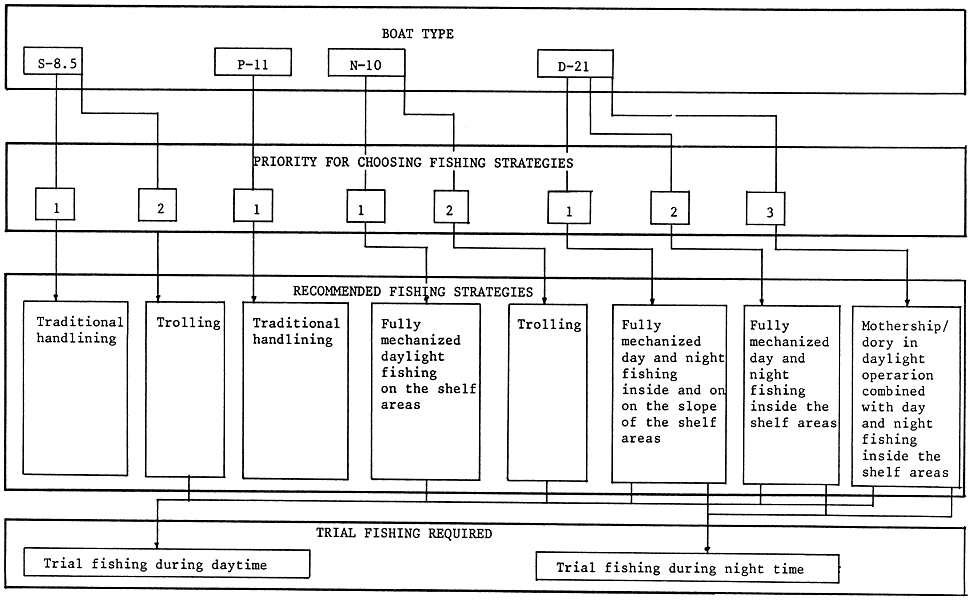
Trial fishing is needed with all boat types in order to confirm some of the hypotheses used in these simulations. Figure 6 and give indications of the measures of improved efficiency and the priority use of each boat type.
Figure 6. A brief description of how one could measure the efficiency increase followed by different levels of development of the traditional schooner handline fishery.
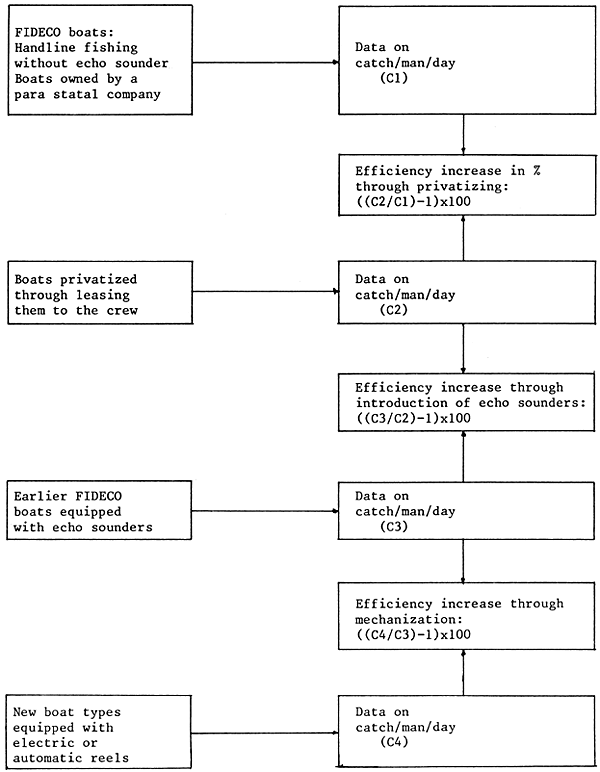
Figure 7. Priorities for recommended fishing strategies/techniques for the 4 boat types evaluated in this report.
de San M. pers comm, 1985. Fisheries Advisor at Seychelles Fishing Authority, Victoria, Seychelles.
Gulland J.A., 1979. Report of the FAO/IOP Workshop on the Resources of the Western Indian Ocean South of the Equator; IOFC/DEV/ 9/45.
Lablache G. pers comm, 1985. Director of the Research Unit at Seychelles Fishing Authority, Victoria, Seychelles.
Lablache G. & G. Carrara, 1984. Schooner handlining in Seychelles. FAO/SWIOP report; RAF/79/065/14/84.
Steinberg et al, 1982. Final report of the Joint Fisheries Project of the Government of the Republic of Seychelles and the Government of the Federal Republic of Germany. Federal Research Centre for Fisheries Hamburg in cooperation with Bremerhavener Fischversorgung, Heinrich Abelmann oHG Bremerhaven.
A flow chart of the boat profitability simulation system. The simulation system is fitted for Apple III, Visicalc.