APRIL 1987
RAF/79/065/WP/39/E
Report Prepared By
G. CARRARA
Biologist/Statistician
REGIONAL PROJECT FOR THE DEVELOPMENT & MANAGEMENT OF FISHERIES IN THE SOUTHWEST INDIAN OCEAN
PROJECT REGIONAL POUR LE DEVELOPPEMENT ET L'AMENAGEMENT DES PECHES DANS L'OCEAN INDIEN SUD-OCCIDENTAL
c/o UNITY HOUSE, P.O. BOX 487, VICTORIA, MAHE, SEYCHELLES
TELEPHONE: 23773
TELEX: 2254 SWIOPSZ
This electronic document has been scanned using optical character recognition (OCR) software and careful manual recorrection. Even if the quality of digitalisation is high, the FAO declines all responsibility for any discrepancies that may exist between the present document and its original printed version.
ARTISANAL FISHERY CATCH ASSESSMENT SURVEY PLAN ZANZIBAR
1. INTRODUCTION
2. SCOPE OF THE SURVEY
3. HIERARCHY OF UNITS IN THE POPULATION4. PRIMARY SAMPLING UNITS (PSUs)
5. ITEMS OF INFORMATION COLLECTED
6. SAMPLING IN THE PSU
7. DATA PROCESSING
8. THE ESTIMATOR
9. RECOMENDATIONS
APPENDIX
A MAIN RESULTS OF 1980 AND 1985 CENSUSES
APPENDIX
B SAMPLING FRAME (AS FROM CENSUS SURVEY 1985 BY Mr.V.M.PANDU)
APPENDIX C PRIMARY SAMPLING
UNITS
APPENDIX
D METHODOLOGICAL NOTES OF IMPLEMANTATION OF THE CAS
1. USE OF THE FORM CAS-ZAF 1
2. USE OF FORM CAS-ZAF 2
3. SPECIAL CASES
4. DATA PROCESSING
Form CAS-ZAF.1 Monthly Form
Form CAS-ZAF.2 Daily Form
Form CAS-ZAF.3 Working sheet
Form CAS-ZAF.4 Working sheet
Form CAS-ZAF.5 Catch Rates
APPENDIX F PROPOSED SPECIES LIST
1. INTRODUCTION
2. SCOPE OF THE SURVEY
3. HIERARCHY OF UNITS IN THE POPULATION
4. PRIMARY SAMPLING UNITS (PSUs)
5. ITEMS OF INFORMATION COLLECTED
6. SAMPLING IN THE PSU
7. DATA PROCESSING
8. THE ESTIMATOR
9. RECOMENDATIONS
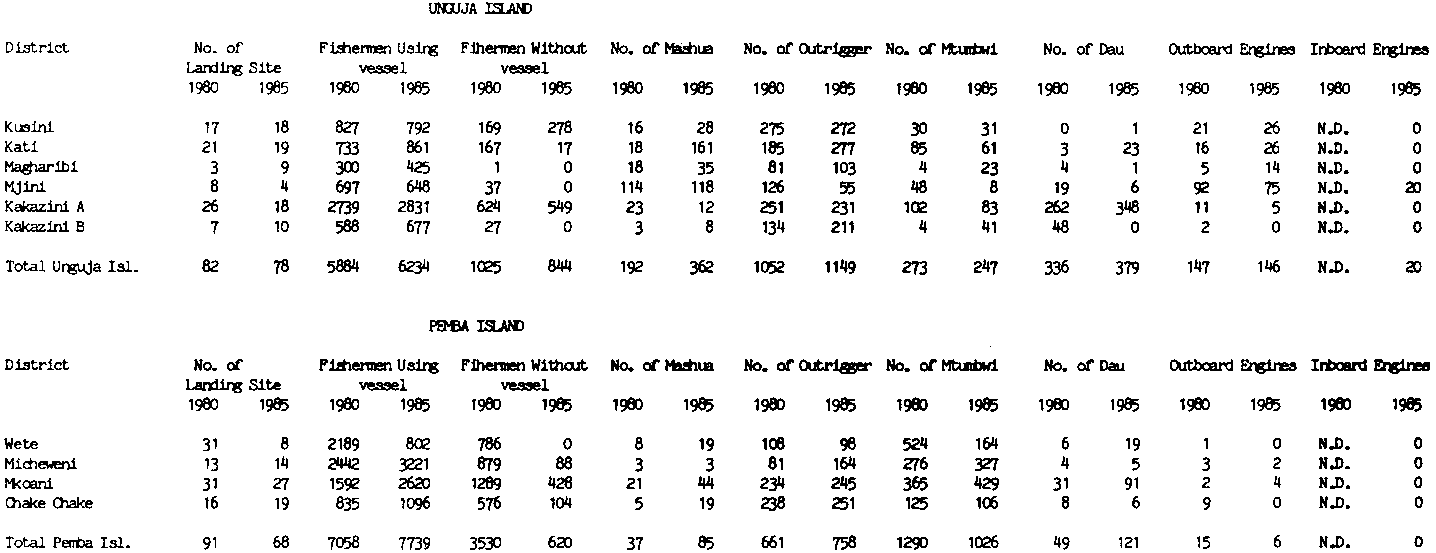
The following Catch Assesment Survey (CAS) Plan is based on the recomendations of the Technical Report URT/75/090 by L.K.Boerema (Consultant). A visit of 2 weeks by SWIOP staff (Travel Rep. no.) and the results of the 1985 Census of fishing units demonstrated that very few changes took place in the fishery since the visit of Mr. Boerema in 1981 and the previous census of 1980. The main results of the two Censuses are presented in appendix A.
The scope of the CAS is the continuous production of catch and effort statistics from the Artisanal Fishery by species group and by boat type in the two islands of Unguja and Pemba.
A sample survey approach will be used to obtain the relevant Information from the fishery.
The following hierarchy of units has been identified:
(i) Unguja
(ii) Pemba
Both islands are elongated on a North-South axe and have two characteristic types of coast:
a) The East coasts, characterised by the presence of an almost continuous fringing reef with the exception of Chwaka Bay in Unguja and Adamson Bay in Pemba. The East and South-East coast are also affected by rough seas during the South-East Monsoon.b) The West coasts, characterised by the presence of many bays, islets, coral banks, sandy cays and, especially in Pemba, by important Mangrove areas along the coastline. The West coasts are definetely more sheltered and allow the use of fishing techniques that cannnot be easily used on East and South-East coasts (e.g. surrounding nets for small pelagics and handlining on offshore banks).
Marketing opportunities and transportation facilities are, generally speaking, homogeneus in each of the two Islands apart from the area around Zanzibar town where demand for fish and concentration of fishing boats are higher.
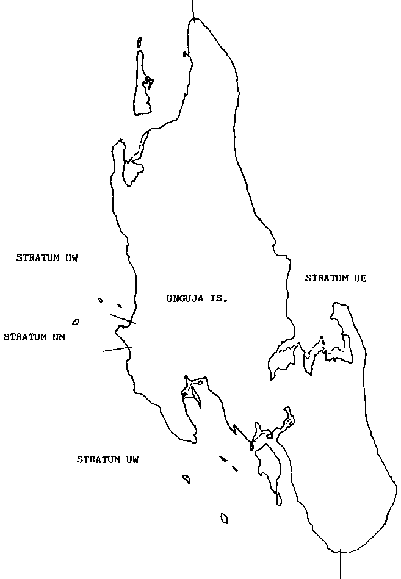
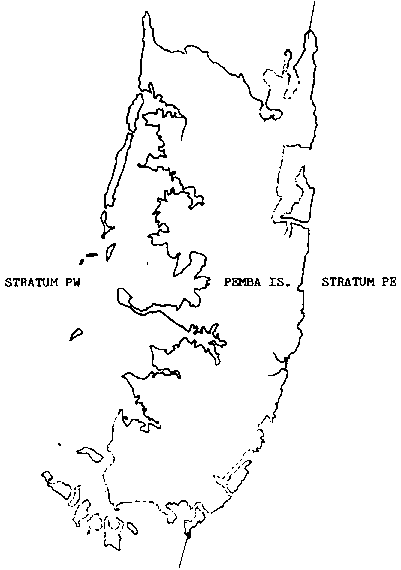
In consequence of the above mentioned factors it is suggested to divide Unguja Island in three strata and Pemba Island in two strata as follows:
Unguja
Unguja East (code UE)
Unguja West (code UW)
Mjini District (code UM)
Unguja East will comprise all the East coast from Ras Nungwi (Nungwi landing site included) to Ras Kizimkazi.
Unguja West will include the remaining West coast with the exception of Mjini District (Zanzibar town area) which will form a separate stratum.
Pemba
Pemba East (code PE)
Pemba West (code PW)
Pemba East will comprise all the East coast from Ras Kiuyu in the North to Ras Upembe in the South.
Pemba West will comprise the remaining South, West and North coast.
Landing sites are defined as places along the coast permanentely harbouring fishing vessels and where landings take place all the year round.
A list of landing sites by district and by strata is given in appendix B as for the Census Survey 1985 by Mr. Vuai Mrisho Pandu of the Static Unit, Ministry of Sea, Tourism and Forestry.
A Fishing Unit is any fishing boat or fisherman fishing without boat. Fishing Units will be divided in the following categories:
Boti:
Any fishing boat using an outboard or inboard engine as main or sole mean of propulsion.
Code: EB
Dau:
A Dau is a wooden planked boat with pointed bow and rounded stern driven by a latin sail.
Code: DA
Mashua:
The Mashua is a wooden planked boat, usually bigger than the Dau, with a short vertical bow and a flat transom. This type of vessel is propulsed by a latin sail.
Code: MA
Ngalawa:
The Ngalawa is a wooden dugout canoe with two outriggers to achieve stability especially when under sail. The usual latin sail is the main means of propulsion.
Code: NG
Mtumbwi:
This is a simple dugout canoe without outriggers usually driven by paddles or long poles and sometimes rigged with a rudimentary sail. Some Mtumbwi can be very big (8-10 m) particulary those used by kojani fishermen for seining.
Code: MT
Fisherman on foot:
A fisherman fishing with small seine or trap or spear or any other gear without using a boat.
Code: FF
As it has been noted in Boerema 1981, Ngoile 1981 and by SWIOP staff during visits in Zanzibar, there is a relationship between type of fishing boat and type of gear used. Furthermore there is also a relationship between type of boat and type of fishing ground exploited. It is therefore suggested not to subdivide the above Fishing Unit Categories by type of gear used.
The use of boat/gear categories would introduce sampling and processing difficulties that could not be coped with by the existing staff (all data processing is performed manually by two officers).
Sampling sites with resident Recorders have already been established under the existing statistical survey and there is no possibility of having recorders moving from one landing place to another.
It is therefore compulsory to use the existing sampling sites as PSUs. A list of PSUs is given in appendix C.
In each PSU the Fish Recorder will collect daily information on weight of catch by species group and crew size by directly weighing landings. The six Fishing Unit Categories will be treated separately.
The Recorder will also provide monthly information on the number of Fishing Units by category.
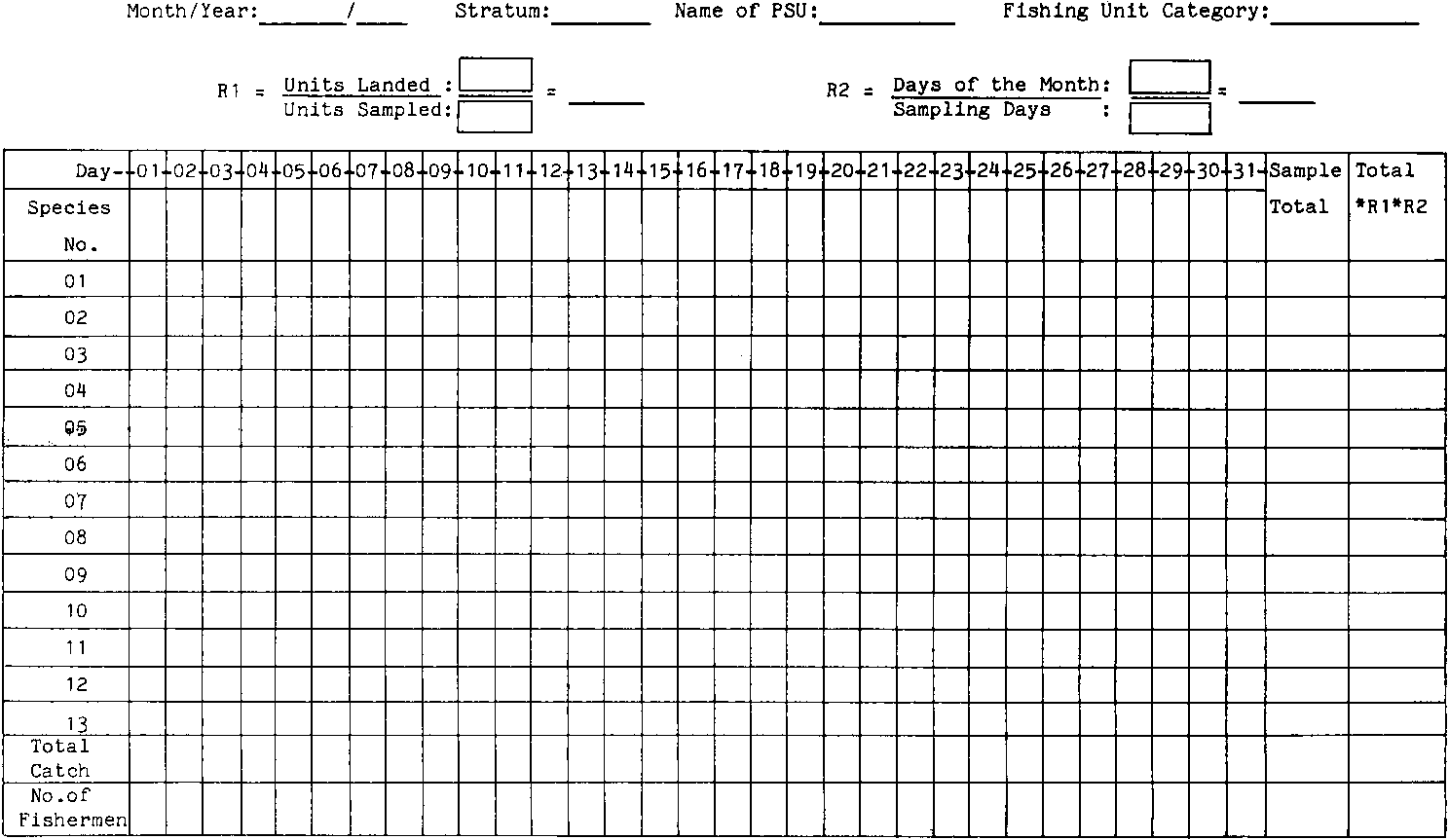
At each PSU the recorder will, each month, register on form CAS-ZAF 1 (Catch Assessment Survey - Zanzibar Artisanal Fishery) the number of each Fishing Unit Category operating from the landing site.
On the same form the recorder will mark, at the end of each day, the number of unit landings by category. He will also record the days in which he was absent or off duty.
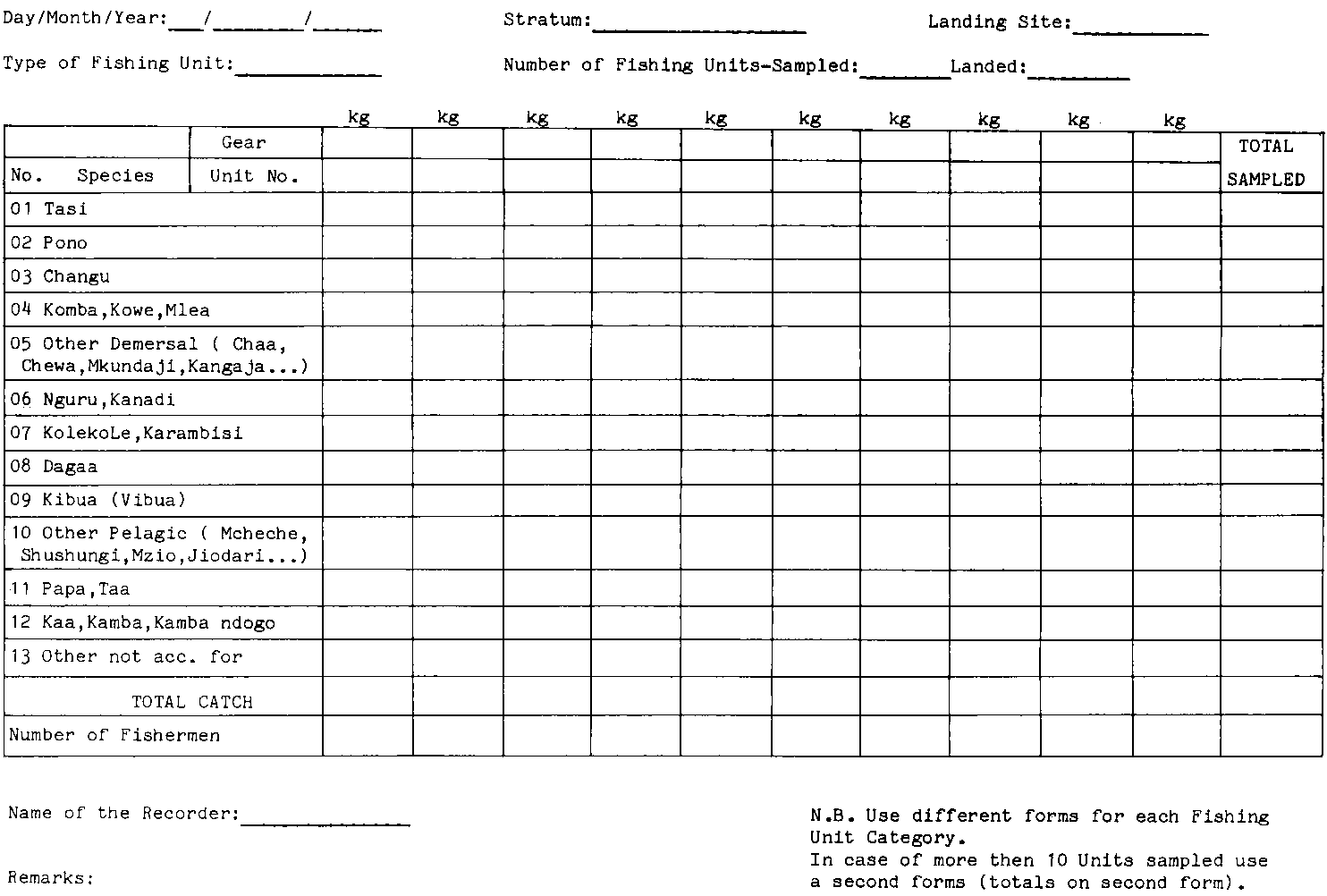
Each sampling day the recorder will register on form CAS-ZAF 2 catch by species and crew size of as many landings as possible. On the same form he will also enter the total number of landings and units sampled. All information will be recorded on separate forms for each Fishing Unit Category.
For details on data recording see the "Notes of implemantation" in appendix D.
Form CAS-ZAF 1 and 2 are attached in appendix E.
The species groups are presented in appendix F.
At the end of each month the completed forms will be sent to the CAS coordinator.
Monthly catch estimates for each species group (or number of fishermen) will be calculated through the following steps for each Fishing Unit Category within a stratum.
Step 1)
For each PSU add up the daily sample totals to obtain the monthly sample totals "A".
Step 2)
Calculate for each PSU the ratio "R1" as follows:
Step 3)
For each PSU calculate the ratio "R2" as follows:

Step 4)
Multiply "A" by "R1" and by "R2" to calculate "B" the estimated monthly totals for each PSU:
B= A * R1 * R2
Step 5)
Add up the estimated monthly totals for all "n" PSUs in the stratum:
B'= B1 + B2 + B3........ Bn
Step 6)
Calculate "R3" as follows:

The total number of Fishing Units by Category and Stratum is given in Table B1 in appendix B.
Step 7)
Calculate the estimated stratum monthly Total "Y" by multiplying "B"' by "R3":
Y= B' * R3
Island monthly estimated totals can be calculated by adding stratum totals.
The total number of fishermen will correspond to a measure of effort expressed in total man-trip or man-days if one assumes that an artisanal vessel goes out only for one-day trips. If possible for each Stratum month, average total per boat per day and average crew should be calculated from the sample data for each boat categories. For the category of fishermen on foot only the average catch per man should be calculated.
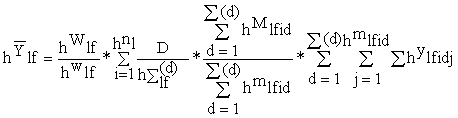
The above calculations can be described in Mathematical notation as follows:
Suffixes
h: a given island
l: the l-th stratum
i: the i-th PSU
f: a given Fishing Unit Category
j: a given landing
d: a given day of the month
S d) total number of sampling days
Symbols
h n i: number of PSUs in h-th island and l-th stratum
h W lf: total number of Fishing Units of the f-th Category in the h-th island in the l-th stratum
h w lfi: total number of Fishing Units of f-th Category in the i-th PSU....
h M lfid: total number of landings in the d-th sampling day in the i-th PSU....
h m lfid: total number of sampled landings in the d-th day....
D: number of days in the month.
The formula of the estimator to calculate estimated monthly stratum totals of any parameter (catch, number of fisherman trips) is:
The work of the Fish Recorders should be regularly supervised and checked by more senior staff. In each of the two Islands one Statistics Supervisor should be designated and means of transport should be made available to him (i.e. a motorcycle). The responsibilities of the supervisors would be the following:-
a) Regularly meet the Recorders to organise their working schedule and solve and clarify possible problems.b) Carry out random spot checks on the Recorders to ensure that they are regularly at work.
c) Collect the forms CAS-ZAF 1 and 2 from the Recorders and check them for accuracy and consistency.
d) Carry out surveys on fish prices, or other information as requested by Fishery Statistic Division.
e) Visit fishing sites not covered by fish recorders to update the census of fishing units on which part of the CAS estimation process is based. For this he should, at least, collect information on the number of boats by type and number of fishermen on foot.
Regular supervision of the Fish Recorders will have a double effect:
i) Ensure the quality of the information collected.ii) Give to the Recorders the feeling that the administration cares about the job they are doing and therefore that the quality of the information they collect is important.
Table A.1 presents the main results of the two censuses carried out by Ngoile in 1980 and Pandu in 1985.
It must be noted that Ngoile surveyed also temporary Landing sites, sometimes used by visiting Tanzanian fishermen, while Pandu surveyed only permanent landing sites.
All artisanal vessels can be adapted to the use of an outboard engine. During the two surveys, boats fitted with outboard engines are included in their respective boat category while outboard engines are counted separately. Inboard engines are used only in Mjini district (Zanzibar town).
Gillnets and seines are counted by operative units.
The group "seine" includes encircling nets used night time in conjunction with attracting lights mainly by motorised boats as well as other types of smaller seines.
It can be noted that there has been a general increase in number of fishing boats of all categories but the "Mtumbwi". This could be due to the increasing difficulties in finding big trees to build this type of canoe.
RESULTS OF 1980 AND 1985 CENSUSES
Unguja Island
|
STRATUM |
VILLAGE |
NO.OF MASHUA |
NO. OF NGALAWA |
NO.OF MTUMBWI |
NO. OF DAU |
NO. OF ENGINE BOATS |
NO.OF FISHERMEN ON FOOT |
|
U.MJINI |
Malindi |
37 |
18 |
6 |
5 |
25 |
0 |
|
" |
Kizingo |
0 |
21 |
1 |
1 |
13 |
0 |
|
" |
F/Mchanga |
0 |
0 |
0 |
0 |
40 |
0 |
|
" |
Kilmani |
0 |
16 |
1 |
0 |
3 |
0 |
|
|
Sub Total |
37 |
55 |
8 |
6 |
81 |
0 |
|
|
Percent. |
19.79 |
29.41 |
4.28 |
3.21 |
43.32 |
|
|
U.WEST |
Kendwa |
0 |
0 |
0 |
19 |
0 |
0 |
|
" |
Kigunda |
0 |
2 |
6 |
9 |
0 |
0 |
|
" |
Debuni |
0 |
8 |
5 |
0 |
0 |
0 |
|
" |
Fukuchani |
1 |
5 |
1 |
4 |
0 |
0 |
|
" |
Kitogani |
1 |
12 |
0 |
0 |
0 |
0 |
|
" |
M/Mle |
0 |
0 |
0 |
38 |
0 |
0 |
|
" |
Mkokotoni |
16 |
5 |
0 |
2 |
3 |
0 |
|
" |
T/Gomani |
0 |
0 |
41 |
19 |
4 |
200 |
|
" |
T/Jongowe |
2 |
0 |
29 |
55 |
1 |
45 |
|
" |
Kachongwa |
0 |
20 |
0 |
0 |
0 |
35 |
|
" |
Kitodi |
1 |
11 |
1 |
0 |
0 |
0 |
|
" |
Mwanda |
0 |
26 |
2 |
0 |
0 |
0 |
|
" |
K/Ndogo |
2 |
0 |
9 |
0 |
0 |
0 |
|
" |
K/Kubwa |
0 |
0 |
26 |
0 |
0 |
0 |
|
" |
Mwambaoni |
2 |
42 |
2 |
0 |
0 |
0 |
|
" |
Mnarani |
0 |
33 |
0 |
0 |
0 |
0 |
|
" |
Kwabuadau |
0 |
29 |
0 |
0 |
0 |
0 |
|
" |
Mangapwani |
1 |
16 |
0 |
0 |
0 |
0 |
|
" |
Fujoni |
1 |
13 |
0 |
0 |
0 |
0 |
|
" |
Kama |
4 |
13 |
11 |
0 |
4 |
0 |
|
" |
Chuini |
0 |
8 |
0 |
0 |
0 |
0 |
|
" |
Bububu |
0 |
9 |
1 |
0 |
0 |
0 |
|
" |
Mtoni |
4 |
13 |
11 |
0 |
4 |
0 |
|
" |
Chukwani |
4 |
21 |
1 |
1 |
2 |
0 |
|
" |
Nyamazi |
4 |
8 |
3 |
0 |
3 |
0 |
|
" |
Dimani |
5 |
10 |
2 |
0 |
2 |
0 |
|
" |
Fumba |
3 |
8 |
1 |
0 |
1 |
0 |
|
" |
Bweleo |
13 |
25 |
3 |
0 |
1 |
0 |
|
" |
Bungi |
2 |
2 |
3 |
0 |
0 |
0 |
|
" |
Kikungwi |
6 |
1 |
0 |
5 |
1 |
0 |
|
" |
Makimi |
5 |
6 |
0 |
0 |
0 |
0 |
|
" |
Tindini |
18 |
18 |
0 |
2 |
0 |
0 |
|
" |
Kaepwani |
16 |
30 |
2 |
0 |
0 |
0 |
|
" |
Chngambweni |
18 |
14 |
1 |
2 |
0 |
0 |
|
" |
Kichangachaa |
16 |
14 |
5 |
0 |
0 |
0 |
|
" |
Mchanga |
12 |
11 |
3 |
0 |
0 |
17 |
|
" |
Miulani |
15 |
9 |
9 |
11 |
0 |
0 |
|
" |
Mwanyali |
17 |
8 |
10 |
0 |
1 |
0 |
|
" |
Muungoni |
1 |
5 |
10 |
1 |
1 |
7 |
|
" |
Muyuni |
0 |
17 |
0 |
0 |
0 |
0 |
|
" |
K/Dimbani |
7 |
33 |
0 |
0 |
5 |
0 |
|
" |
/Mkunguni |
8 |
28 |
0 |
0 |
9 |
0 |
|
|
Sub Total |
205 |
533 |
198 |
168 |
42 |
304 |
|
|
Percent. |
17.89 |
46.51 |
17.28 |
14.66 |
3.66 |
|
|
U.EAST |
Nungwi |
7 |
11 |
0 |
32 |
0 |
0 |
|
" |
Muyuni |
0 |
25 |
0 |
0 |
0 |
12 |
|
" |
Matemwe |
0 |
30 |
0 |
0 |
0 |
25 |
|
" |
Mwanahayaza |
0 |
12 |
0 |
0 |
0 |
12 |
|
" |
Kizimiyani |
0 |
14 |
0 |
0 |
0 |
30 |
|
" |
Kilimajuu |
0 |
16 |
0 |
0 |
0 |
15 |
|
" |
P/M/Ndogo |
0 |
22 |
0 |
0 |
0 |
90 |
|
" |
P/Mchangani |
0 |
43 |
0 |
0 |
0 |
85 |
|
" |
Kiwengwa |
1 |
45 |
0 |
0 |
0 |
0 |
|
" |
Pongwe |
0 |
20 |
1 |
0 |
0 |
0 |
|
" |
Uroa |
5 |
46 |
1 |
0 |
9 |
0 |
|
" |
Marumbi |
11 |
29 |
0 |
0 |
7 |
0 |
|
" |
Chwaka |
1 |
48 |
16 |
1 |
1 |
0 |
|
" |
charawe |
1 |
2 |
5 |
0 |
1 |
0 |
|
" |
Ukongoroni |
0 |
0 |
2 |
0 |
0 |
0 |
|
" |
M/Pingwe |
1 |
5 |
2 |
0 |
0 |
0 |
|
" |
M/Kae |
1 |
9 |
1 |
0 |
3 |
0 |
|
" |
Donge |
0 |
10 |
2 |
0 |
0 |
0 |
|
" |
Bwejuu |
0 |
18 |
10 |
0 |
4 |
30 |
|
" |
Paje |
1 |
8 |
6 |
0 |
1 |
20 |
|
" |
Kibigija |
0 |
24 |
0 |
0 |
0 |
43 |
|
" |
Mbuyuni |
0 |
15 |
2 |
0 |
0 |
40 |
|
" |
Miuli |
0 |
4 |
0 |
0 |
0 |
30 |
|
" |
Kikadini |
1 |
11 |
1 |
0 |
0 |
38 |
|
" |
M/Wima |
0 |
4 |
0 |
0 |
0 |
20 |
|
" |
Mfumbwi |
2 |
0 |
0 |
0 |
2 |
30 |
|
" |
Shungi |
0 |
20 |
0 |
0 |
0 |
0 |
|
" |
Kigaeni |
1 |
19 |
0 |
0 |
0 |
0 |
|
" |
Kiweni |
0 |
13 |
0 |
0 |
0 |
0 |
|
" |
Mavua |
0 |
13 |
0 |
0 |
0 |
0 |
|
|
Mtende |
7 |
30 |
0 |
0 |
4 |
20 |
|
|
Sub Total |
40 |
566 |
49 |
33 |
32 |
540 |
|
|
Percent |
5.56 |
78.61 |
6.81 |
4.58 |
4.44 |
|
Pemba Island
|
STRATUM |
VILLAGE |
NO.OF MASHUA |
NO. OF NGALAWA |
NO.OF MTUMBWI |
NO. OF DAU |
NO. OF ENGINE BOATS |
NO.OF FISHERMEN ON FOOT |
|
P.WEST |
Uzini |
0 |
7 |
12 |
0 |
0 |
0 |
|
" |
K/Mjawiri |
0 |
35 |
10 |
0 |
0 |
0 |
|
" |
Wapape |
0 |
6 |
40 |
0 |
0 |
24 |
|
" |
Mitepeni |
0 |
20 |
19 |
0 |
0 |
0 |
|
" |
M/Taponi |
3 |
49 |
32 |
0 |
0 |
3 |
|
" |
Kigomasha |
0 |
8 |
26 |
0 |
0 |
0 |
|
" |
Gando |
0 |
7 |
35 |
1 |
0 |
0 |
|
" |
Wete |
5 |
8 |
21 |
6 |
0 |
0 |
|
" |
Mkunguwake |
1 |
6 |
10 |
0 |
0 |
0 |
|
" |
Kivumoni |
1 |
74 |
23 |
5 |
0 |
0 |
|
" |
Kimeleani |
4 |
0 |
4 |
3 |
0 |
0 |
|
" |
Uvinje |
0 |
3 |
4 |
3 |
0 |
0 |
|
" |
Ngagu |
8 |
0 |
3 |
1 |
0 |
0 |
|
" |
Pembeni |
0 |
0 |
3 |
0 |
0 |
0 |
|
" |
Kichuani |
5 |
21 |
0 |
2 |
0 |
0 |
|
" |
Kichanjaani |
4 |
21 |
40 |
0 |
0 |
0 |
|
" |
Wesha |
0 |
34 |
0 |
0 |
0 |
16 |
|
" |
Tenga |
9 |
8 |
22 |
0 |
0 |
0 |
|
" |
Vikutani |
0 |
4 |
2 |
0 |
0 |
0 |
|
" |
Misooni |
0 |
7 |
0 |
0 |
0 |
10 |
|
" |
Mwachewa |
0 |
25 |
0 |
0 |
0 |
10 |
|
" |
Ndagoni |
0 |
31 |
16 |
2 |
0 |
30 |
|
" |
Kilulu |
0 |
5 |
0 |
0 |
0 |
0 |
|
" |
Kilindi |
0 |
9 |
3 |
0 |
0 |
6 |
|
" |
Papani |
0 |
16 |
0 |
0 |
0 |
0 |
|
" |
Tandauwa |
1 |
14 |
7 |
1 |
0 |
12 |
|
" |
Muanzini |
0 |
6 |
1 |
0 |
0 |
4 |
|
" |
Kungeni |
0 |
9 |
2 |
0 |
0 |
8 |
|
" |
Chambuu |
0 |
5 |
0 |
0 |
0 |
8 |
|
" |
Wambaa |
0 |
31 |
4 |
0 |
0 |
0 |
|
" |
Jambangome |
0 |
1 |
4 |
1 |
0 |
40 |
|
" |
Kionwa |
0 |
5 |
0 |
0 |
0 |
0 |
|
" |
Makombeni |
0 |
13 |
0 |
0 |
0 |
0 |
|
" |
Ngazini |
3 |
16 |
19 |
0 |
1 |
0 |
|
" |
Makombwe |
21 |
0 |
20 |
1 |
0 |
0 |
|
" |
Shidi |
0 |
0 |
14 |
0 |
0 |
0 |
|
" |
Chem Chem |
0 |
0 |
22 |
0 |
0 |
0 |
|
" |
Shangiwi |
0 |
0 |
99 |
0 |
0 |
0 |
|
" |
Kizungu |
0 |
0 |
51 |
0 |
0 |
0 |
|
" |
K/Panza |
6 |
10 |
4 |
2 |
2 |
88 |
|
" |
Likokuu |
0 |
0 |
64 |
0 |
0 |
0 |
|
" |
Kangani |
0 |
15 |
31 |
0 |
0 |
0 |
|
" |
Kwakaimu |
0 |
0 |
11 |
1 |
0 |
0 |
|
" |
Mwaka |
0 |
4 |
13 |
0 |
0 |
50 |
|
" |
Fueni |
3 |
0 |
7 |
15 |
0 |
31 |
|
" |
Mbuzini |
4 |
18 |
10 |
14 |
0 |
15 |
|
" |
M/Boriti |
0 |
0 |
10 |
20 |
0 |
38 |
|
" |
Mtachoka |
0 |
4 |
5 |
16 |
0 |
46 |
|
" |
Mkumbe |
6 |
15 |
12 |
4 |
0 |
20 |
|
" |
Kiumbini |
0 |
12 |
3 |
0 |
0 |
60 |
|
|
Sub Total |
84 |
582 |
738 |
98 |
3 |
519 |
|
|
Percent. |
5-58 |
38.67 |
49.04 |
6.51 |
0.20 |
|
|
P.EAST |
K/Muyuni |
0 |
31 |
15 |
0 |
0 |
31 |
|
" |
Tandamtumbwi |
0 |
20 |
0 |
0 |
0 |
0 |
|
" |
Kwambwana |
0 |
0 |
12 |
0 |
0 |
0 |
|
" |
Kwamwana |
0 |
0 |
18 |
0 |
0 |
0 |
|
" |
M/Ng'ombe |
0 |
8 |
10 |
0 |
2 |
30 |
|
" |
Mpambani |
0 |
0 |
76 |
5 |
0 |
0 |
|
" |
Kiwani |
0 |
0 |
18 |
0 |
0 |
0 |
|
" |
Kilindi |
0 |
0 |
19 |
0 |
0 |
0 |
|
" |
Tamanda |
0 |
0 |
34 |
0 |
0 |
0 |
|
" |
Kilikoali |
0 |
8 |
0 |
0 |
0 |
0 |
|
" |
Mtimbu |
0 |
7 |
0 |
0 |
0 |
0 |
|
" |
Mapape |
0 |
21 |
5 |
0 |
0 |
0 |
|
" |
Mtangani |
0 |
12 |
1 |
0 |
0 |
0 |
|
" |
KIwani |
0 |
17 |
11 |
0 |
1 |
0 |
|
" |
Mpene |
1 |
36 |
4 |
0 |
0 |
0 |
|
" |
M/Chole |
0 |
20 |
0 |
0 |
0 |
0 |
|
" |
Jamvini |
0 |
16 |
1 |
0 |
0 |
0 |
|
" |
Babemkeka |
0 |
4 |
9 |
18 |
0 |
40 |
|
|
Sub Total |
1 |
200 |
233 |
23 |
3 |
101 |
|
|
Percent |
0.22 |
43.48 |
50.65 |
5-00 |
0.65 |
|
UNGUJA ISLAND
|
1. |
STRATUM |
STRATUM |
PSU |
PSU |
|
|
CODE |
NAME |
NAME |
CODE |
|
|
UE |
Unguja East |
Nungwi |
UE 1 |
|
|
" |
" |
Matemwe |
UE 2 |
|
|
" |
" |
Uroa |
UE 3 |
|
|
" |
" |
Chwaka |
UE 4 |
|
|
" |
" |
Bwejuu |
UE 5 |
|
|
" |
" |
Kibigija |
UE 6 |
|
|
" |
" |
Shungi |
UE 7 |
|
|
" |
" |
Mtende |
UE 8 |
|
2. |
UW |
Unguja West |
Fukuchani |
UW 1 |
|
|
" |
" |
T/Gomani |
UW 2 |
|
|
" |
" |
Mkokotoni |
UW 3 |
|
|
" |
" |
Mwanda |
UW 4 |
|
|
" |
" |
BUBUBU |
UW 5 |
|
|
" |
" |
Chukwani |
UW 6 |
|
|
" |
" |
Bweleo |
UW 7 |
|
|
" |
" |
U/Ukuu |
UW 8 |
|
|
" |
" |
Uzi |
UW 9 |
|
|
" |
" |
K'mkazi Bimbani |
UW 10 |
|
|
" |
" |
K'kazi Mkunguni |
UW 11 |
|
3. |
UM |
Unguja Mjini |
Kizingo |
UM 1 |
|
|
" |
" |
Malindi |
UM 2 |
PEMBA ISLAND
|
1. |
STRATUM |
STRATUM |
PSU |
PSU |
|
|
CODE |
NAME |
NAME |
CODE |
|
|
PE |
Pemba East |
Kiuyu Muyuni |
PE 1 |
|
|
" |
" |
Furaha Kilikoali |
PE 2 |
|
|
" |
" |
Mtangani |
PE 3 |
|
2. |
PW |
Pemba West |
Mitepeni |
PW 1 |
|
|
" |
"" |
Wete |
PW 2 |
|
|
" |
"" |
Kivumoni |
PW 3 |
|
|
" |
" |
Tenga |
PW 4 |
1. USE OF THE FORM CAS-ZAF 1
2. USE OF FORM CAS-ZAF 2
3. SPECIAL CASES
4. DATA PROCESSING
One form CAS-ZAF 1 should be completed each month for each PSU by the Fish Recorder.
Information on the month, year, fishing site and stratum to which the form refers to should be duly entered.
At the beginning of the month, the Fish Recorder should register the number of fishing units of the different categories operating from the fishing site surveyed. Boats undertaking maintenance work should be also included while boats abundoned should not be counted. Fishermen on foot usually landing their catch in the fishing site should also be counted.
At the end of each day the recorder should insert on the same form the number of landings for each Fishing Unit Category.
If no fishing activity took place for a certain Fishing Unit Category on a certain day the Recorder should insert 0 (zero) as number of landings.
If the recorder is, for any reason, absent or off duty he should insert an "A" (Absent) under the number of units landed for that day.
The recorder should take the days off he is entitled to on different days each week. His working schedule could be previously arranged with his Supervisor. The schedule should be organised regardless of fishing activity (e.g. days with no fishing activity should not be preferentially chosen as days off).
Each sampling day the recorder should complete one form CAS-ZAF 2 for each fishing Unit Category operating from the PSU.
Each form can contain information for up to ten landings, if more than ten landings are sampled a second form should be used.
On each form the recorder will enter the name of stratum and landing place and the name of the Fishing Unit Category which the form refers to.
The recorder should also enter, at the end of the day, the number of fishing units which landed and the the number of them he correctely sampled.
The form has ten columns, one for each sampled unit. In the first row the recorder will enter the name of the gear used by the unit sampled while, in the second row, he will enter the progressive sampling number (e.g. "1" for the first unit sampled, "2" for the second etc.).
In the next lines the recorder will then enter the weight of the catch for each species group. In the last row after the totals, he will insert the number of fishermen forming the crew of the unit.
The total by species and by landing will be calculated at the end of the day.
In case of more than ten units sampled, the recorder will, on the second form, enter "11" on the boat number for the eleventh boat sampled, "12" for the twelvth and so on. In the case of more than 10 boats sampled the totals should be entered on the second form.
1) If the recorder, on arriving at the station, notes that some fishing units have already landed, he should include these in the total number of units landed on the two forms. The same applies for units that landed while the recorder was temporarily absent.
2) If some of the units are still out fishing when the recorder leaves the station, the recorder should include these units in the number of unit landings since most probably they will return to the shore.
3) In some fishing villages the boats are harboured and land their catch in different beaches; in this cases it is important that the recorder surveys only the most important beach. In this particular case the information recorded on form CAS-ZAF 1 and 2 should refer only to the beach surveyed by the recorder; additional information on the other beaches can be included in the "remarks" of form CAS-ZAF 1 (e.g. number of fishing units by category).
4) If many fishing units come ashore at the same time and the recorder cannot sample all of them, he should concentrate his efforts on a randomly chosen sub-sumple by, for example, sampling each second or third unit coming in. In any case the recorder should count the total number of landings by category.
5) Catches are often unloaded in batches or strings of similar weight; if the recorder cannot weigh all the catch he should at least weigh a few batches or strings and count the total number of batches or strings. The total catch can then be calculated by multiplying the average weight of the batches or string sampled by the number of them. The same can be done in case of important landings of big fishes of the same species and similar weight.
6) In the case of a batch or string made up of several species, the recorder will weigh the string or batch and then estimate the fraction of weight of the most important species and register the rest under the categories "mixed demersal" or "mixed pelagic".
7) It often happens that several fishing units (particulary F. on Foot and Mtumbwi) fish together using one common gear. The whole catch could then be landed by one of the units. In this case the recorder should record all the catch under one unit and then record the other units as sampled units with catch equal 0 (zero).
8) Fishing trip with no catch should be recorded as normal trips by entering 0 (zero) in the row of the total catch and then record as usual the number of fishermen forming the crew.
Each month the CAS coordinator will collect the monthly and daily forms CAS-ZAF 1 and CAS-ZAF 2 for the 5 strata in the two islands.
The forms should be ordered by island, stratum, PSU and Fishing Unit Category before starting data processing.
Monthly and daily forms should be checked for consistency and accuracy, particulary important is to cross check horizontal and vertical totals in the daily forms.
For each PSU and for each Fishing Unit Category transfer the daily totals into form CAS-ZAF 3 and calculate the ratios R1 and R2 as follows:
- R1 is equal to the total number of landings during the sampling days divided the total number of sampled landings in the same period.- R2 is equal to the total number of days in the month divided the number of sampling days in the same month.
N.B. 1) The number of landings by day and by unit category reported on form CAS-ZAF 2 should match with the same information given on form CAS-ZAF 1 (recorder absent or off-duty).
N.B. 2) The number of sampling days is equal to the number of days in the month less the number of days marked with an "A" on the monthly form CAS-ZAF 1.
To calculate the PSU monthly estimates on the last column of form CAS-ZAF 3 multiply the monthly sample totals by R1 and R2.
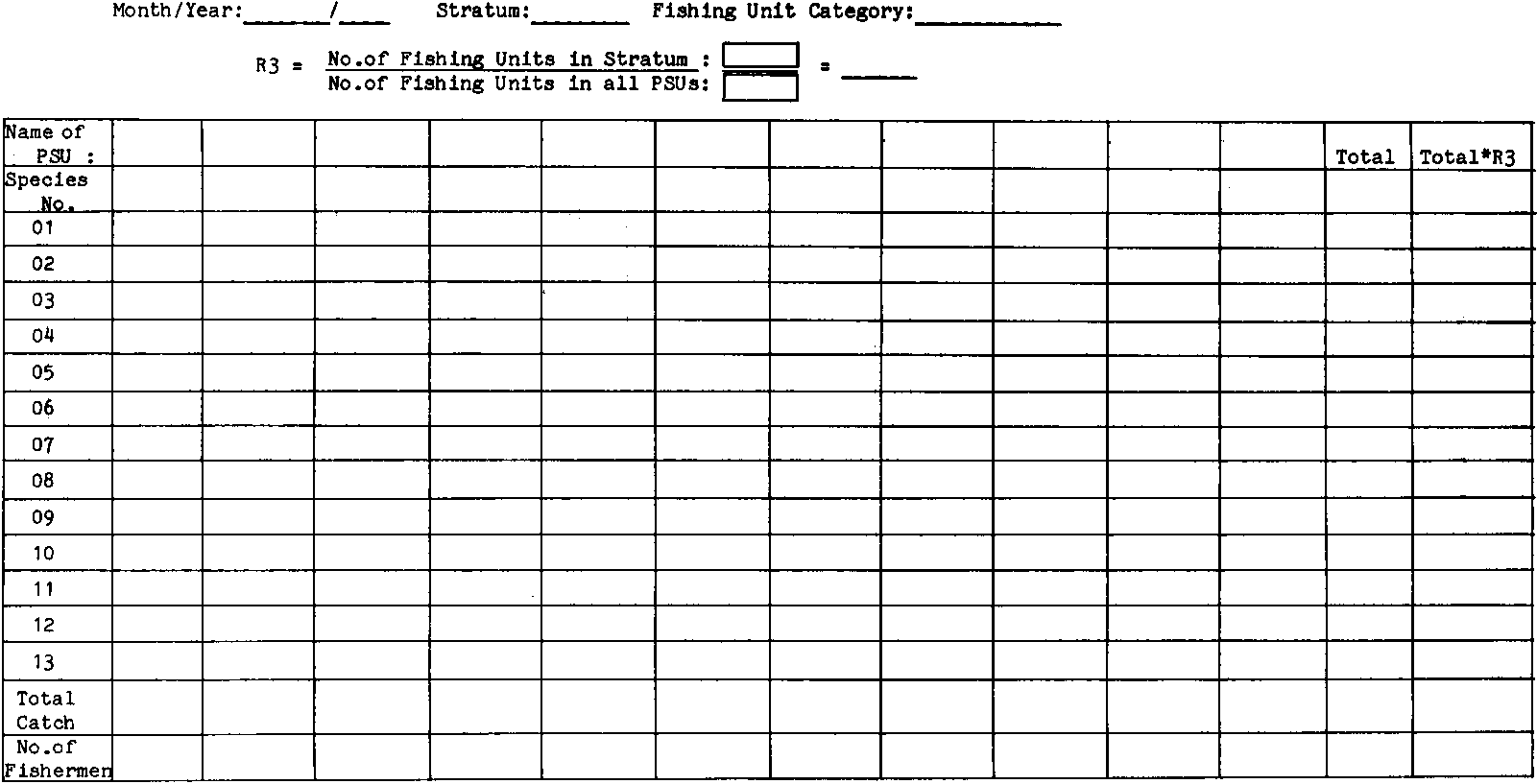
For each stratum and Fishing Unit Category, transfer the monthly estimates for each PSU into form CAS-ZAF 4.
Calculate the ratio R3 as the total number of fishing Units in the stratum divided the total number of fishing units in all the PSUs. The number of fishing units by category and by stratum is given in table B1 in appendix B, while the number of fishing units by category for each PSU is reported on the monthly form CAS-ZAF 1. To calculate the stratum estimates multiply the totals for all PSUs by R3.
The obtained months stratum estimates should be tabulated and totals by stratum or island can be calculated by simple summation.
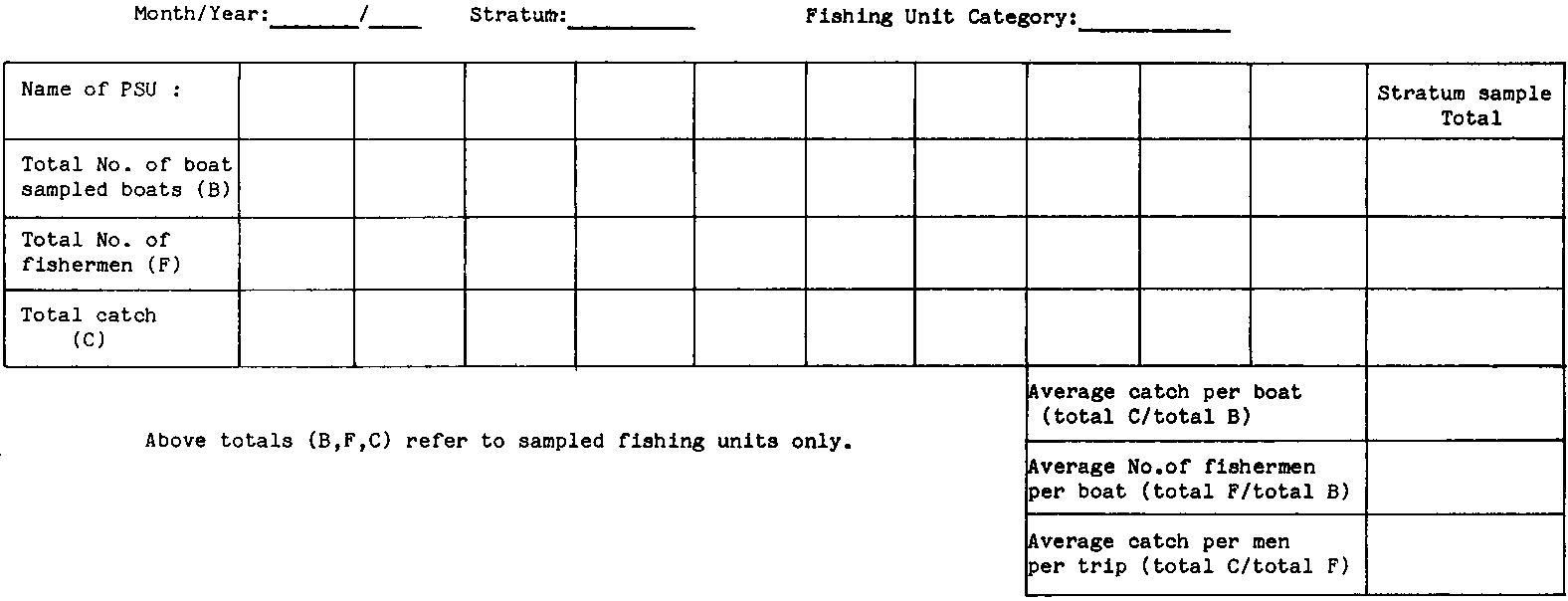
Average total catch per boat and average number of crew can be calculated using form CAS-ZAF 5. One form, CAS-ZAP 5 should be used for each stratum/month for each Fishing Unit Category. The total number of boats sampled (B), total number of fishermen for the boat sampled (F) and total catch for the boat sampled (C) should be transferred from form CAS-ZAF 3 for each PSU and the totals for F, C and F calculated on the right side of the the form.
The average catch per boat can then be calculated as the total C divided total of B, the average number of fishermen per boat will be obtained by dividing the total of F divided the total of B and the average catch per fisherman per trip by dividing the total of C by the total of F.
For the category of fishermen on foot only F and C will be entered to calculate the catch per fishermen per trip.
Form CAS-ZAF.1 Monthly Form
Form CAS-ZAF.2 Daily Form
Form CAS-ZAF.3 Working sheet
Form CAS-ZAF.4 Working sheet
Form CAS-ZAF.5 Catch Rates
MINISTRY OF SEA, TOURISM AND FORESTRY
FORM CAS-ZAF.1 (To be completed each month for each sampling site)
Month/year: _______/_____ Stratum: ________ Fishing site: ___________
Number of fishing units operating from this fishing site:
Boti: _____ Dau: _____ Mashua: _____
Ngalawa: _____ Mtumbwi: _____ Fishermen on foot: _____
Enter for each day the number of landings or "A" if recorder absent
|
Day |
01 |
02 |
03 |
04 |
05 |
06 |
07 |
08 |
09 |
10 |
11 |
12 |
13 |
14 |
15 |
|
|
Boti |
|
|
|
|
|
|
|
|
|
|
|
|
|
|
|
|
|
Dau |
|
|
|
|
|
|
|
|
|
|
|
|
|
|
|
|
|
Mashua |
|
|
|
|
|
|
|
|
|
|
|
|
|
|
|
|
|
Ngalawa |
|
|
|
|
|
|
|
|
|
|
|
|
|
|
|
|
|
Mtumbwi |
|
|
|
|
|
|
|
|
|
|
|
|
|
|
|
|
|
F.on Foot |
|
|
|
|
|
|
|
|
|
|
|
|
|
|
|
|
|
Day |
16 |
17 |
18 |
19 |
20 |
21 |
22 |
23 |
24 |
25 |
26 |
27 |
28 |
29 |
30 |
31 |
|
Boti |
|
|
|
|
|
|
|
|
|
|
|
|
|
|
|
|
|
Dau |
|
|
|
|
|
|
|
|
|
|
|
|
|
|
|
|
|
Mashua |
|
|
|
|
|
|
|
|
|
|
|
|
|
|
|
|
|
Ngalawa |
|
|
|
|
|
|
|
|
|
|
|
|
|
|
|
|
|
Mtumbwi |
|
|
|
|
|
|
|
|
|
|
|
|
|
|
|
|
|
F.on Foot |
|
|
|
|
|
|
|
|
|
|
|
|
|
|
|
|
Remarks:
MINISTRY OF SEA, TOURISM AND FORESTRY
Form CAS-ZAF.2 (To be completed each sampling day)
MINISTRY OF SEA, TOURISM AND FORESTRY
Form CAS-ZAF.3 (Working Sheet)
MINISTRY OF SEA, TOURISM AND FORESTRY
Form CAS-ZAF.4 (Working Sheet)
MINISTRY OF SEA, TOURISM AND FORESTRY
Form CAS-ZAF.5 (Calculation of mean catch per boat, mean crew size and mean catch per man.)
The following species groups will be used for catch data collection during the first year of implementation of the CAS. The final species grouping will be defined upon the results of the first year.
|
SPECIES NO. |
KISWHILI |
ENGLISH |
LATIN |
|
1 |
Tasi |
Rabbitfish |
Siganidae |
|
2 |
Pono |
Parrotfish |
Scaridae |
|
3 |
Changu |
Scavenger |
Lethrinidae |
|
4 |
Komba, kowe, Mlea |
Sweetlip, (Pouter) |
Haemulidae |
|
5 |
Chaa, Chewa, Mkundaji Kangaja, etc. |
Mixed Demersal | |
|
6 |
Nguru, Kanadi |
Kingfish |
Scomberomorus |
|
7 |
Kolekole, Karambisi |
Jack, Trevally |
Carangidae |
|
8 |
Dagaa |
Sardines and other small pelagics |
Clupeidae and others |
|
9 |
Kibua, (Vibua) |
Indian Mackerel and other Mackerel lyke |
Rastrelliger kanagurta and others |
|
10 |
Mcheche, Shushungi, Mzio, Jodari, etc. |
Mixed Pelagic | |
|
11 |
Papa, Taa, |
Shark, Rays |
Elasmobranchia |
|
12 |
Kaa, Kamba, Kamba ndogo |
Crab, Lobster Shrimps |
Decapoda |
|
13 |
Other not acc. for |
N.B. Names in parenthesis are sinonimous. Kiswahili names given for the two mixed categories (5 and 10) suggest the most important species but not all the species to be recorded under this categories.