


by Dr. D.F. GREBOVAL
SWIOP DOCUMENT OISO
RAF/79/065
RAF/79/065/WP/40/87/E
REGIONAL PROJECT FOR THE DEVELOPMENT & MANAGEMENT OF FISHERIES IN THE SOUTHWEST INDIAN OCEAN
PROJET REGIONAL POUR LE DEVELOPPEMENT ET L'AMENAGEMENT DES PECHES DANS L'OCEAN INDIEN SUD-OCCIDENTAL
c/o UNITY HOUSE, P.O. BOX 487, VICTORIA, MAHE, SEYCHELLES
TELEPHONE: 23773
TELEX: 2254 SWIOP SZ
This electronic document has been scanned using optical character recognition (OCR) software and careful manual recorrection. Even if the quality of digitalisation is high, the FAO declines all responsibility for any discrepancies that may exist between the present document and its original printed version.
2.
COMPLEMENTARITY AND CONFLICTS IN THE OBJECTIVES AND INTERESTS OF THE PARTIES
INVOLVED.
2.1 Objectives in fisheries joint ventures
2.2 Major complaints expressed by both partners
2.3 Reconciliation of objectives
3. THE NEED FOR LONG-TERM SECTORAL PLANNING FOR FISHERIES DEVELOPMENT
3.1 Pre-planning
3.2 Plan preparation
3.3 Major deficiencies in actual fisheries planning practices and recommendations
4. ECONOMIC APPRAISAL OF JOINT VENTURES AND MAJOR DEVELOPMENT ISSUES
4.1 Shadow pricing
4.2 Secondary benefits and costs
4.3 Long-term, intangible benefits
4.3.1 Appropriate technology
4.3.2 Training and manpower development
4.3.3 Accompanying measures4.4 Distribution of benefits within the host country
4.5 Concluding remarks on procedure and information requirements
5. TRANSFER PRICING AND OTHER RELATED-PARTIES TRANSACTIONS
5.1 Adequacy and pricing of inputs
5.2 Transfer pricing in marketing
APPENDIX: Issues affecting joint ventures and other forms of foreign investment*
This document is a revised and extended version of a paper presented by the author at the Regional Training Workshop on Joint Ventures and other Commercial Arrangements in Fisheries held in Mbegani, Tanzania on 21 -30 October 1986 under the auspices of the FAO/UNDP Regional Project for the Development and Management of Fisheries in the Southwest Indian Ocean. It is aimed at providing information and guidance to fisheries administrators and other persons responsible for fisheries development in general and for foreign participation in this development in particular. While the document was written with special reference to African fisheries, its scope is general enough for it to be relevant to non-African countries facing a similar challenge in developing their fisheries.
The author wishes to express his thanks to the Mbegani Workshop participants and lecturers for the fruitful discussions which followed the presentation of the first version of this document. Special acknowledgement goes to Dr. F.T. Christy, Mr. L.C. Christy, and other FAO Headquarters staff members who provided me with many valuable comments and suggestions. The author's thanks are extended to the staff of the FAO/UNDP Regional Project for the Development and Management of Fisheries in the Southwest Indian Ocean for their contribution to the preparation of this document.
The document addresses the major economic issues and some related financial considerations raised in the preparation, negotiation and implementation of fisheries joint-ventures by African coastal countries. The introduction is a reminder of the importance of foreign participation in the exploitation of fisheries resources which came under the control of coastal African states following the extension of their national fisheries jurisdiction, and of the hope placed in joint-ventures by these countries as a means to increase their participation in the exploitation of these resources.
The main economic issues addressed in this document largely relate to the role of the coastal States in ensuring:
- A proper assessment of the commercial and economic feasibility of the activities to be undertaken by the joint venture;- The accommodation of immediate commercial objectives with broader development goals;
- The respect of "economic fairness" in the investment and commercial transactions connected with the joint venture, as well as in the sharing of the benefits which it is expected to produce.
As developed in the second Section, these issues arise mostly from the fact that the partners to any joint-venture are bound to have both complementary and conflicting objectives when it comes to the nature of the activities to be undertaken and the sharing of responsibilites and benefits.
Section 3 analyses how proper planning could enable the coastal states to identify the fisheries in which joint-ventures could be encouraged and the conditions under which they could contribute to national development objectives. It further points to the need to formulate comprehensive policies for foreign participation in the framework of sectoral development goals and strategies.
Section 4 addresses the major elements which differentiate an economic appraisal of a joint-venture project from a commercial one, special emphasis being given to the assessment of secondary costs and benefits as well as to the ways and means to facilitate appropriate transfers of technologies and skill, and to reinforce the expected catalytic impact of joint-ventures.
Section 5 deals with transfer pricing and other related-parties transactions, providing guidance for the monitoring and enforcement of a fair pricing of major inputs and outputs.
The document concludes by identifying basic conditions and capabilities which the coastal states need to develop or strengthen in order to take full advantage of the development opportunities which joint-ventures can offer.
This document focuses on major economic issues and related financial considerations raised in the evaluation, negotiation and implementation of fisheries joint ventures by African coastal countries. As such, it generally reflects the point of view of the governments of these coastal states, although many considerations are relevant to the local partner as well. The document is a revised version of a paper presented by the author at the Regional Training Workshop on Joint Ventures and other Commercial Arrangements in Fisheries held in Mbegani, Tanzania, on 21 -30 October 1986 under the auspices of the FAO/UNDP Regional Project for the Development and Management of Fisheries in the Southwest Indian Ocean. The scope of the document and its rather tutorial aspects were dictated by the requirements of the workshop.
The importance of the issues addressed by this workshop arises from the fact that most African coastal states are still very much dependent on foreign participation to exploit part of their fisheries resources. Indeed, an estimated 50% to 60% of the total marine catch realised in African waters are still caught by foreign fleets operating under various types of fishing agreements. This is largely due to the fact that many coastal African countries have only recently started to develop their industrial fisheries. For most sub-Saharan countries in particular, this typically took place after they extended their national fisheries jurisdiction in the early 70's, with little or no prior involvement in industrial fishing activities. More specifically, the dependence of coastal African countries upon foreign participation in fisheries reflects a general lack of capital, infrastructure, markets, technical and managerial skills and other essential capabilities they require to develop their own industrial fisheries, especially in the case of the relatively complex and capital-intensive exploitation of offshore resources.
The main forms of foreign participation in African fisheries consist of commercial licensing agreements and international joint-ventures concluded with governments or private companies from developed countries. A growing inter-African cooperation in the development and management of fisheries has also led to the conclusion of similar arrangements among neighbouring countries and to intergovernmental agreements for reciprocal fishing rights. These constitute another form of foreign participation. Most noticeable since the mid 70's, has been the tendency for coastal African states to renegotiate commercial licensing under more favourable terms and to rely increasingly on international joint ventures as a means for developing their own industrial fishing industry.
Joint ventures do indeed allow the coastal developing countries to participate in industrial fishing activities according to their financial, technical and managerial capabilites while hopefully learning from their participation in order to further develop these capabilities. Unfortunately, as noted by Christy (1986), "the drawbacks of joint ventures may be as great as the hopes placed in them". They are indeed much more complex to evaluate, negotiate and implement than any other forms of foreign participation and involve a greater element of risk, as losses, as well as profits, will be "shared" under such an arrangement.
The risk involved relates both to the very nature of any fishing operation and to the many, more or less sophisticated, financial manipulations which the more experienced partner may use to evade a fair sharing of any profits or losses.
The preparation, negotiation and implementation of joint ventures raise many issues, as reflected in the Appendix. These range from general considerations on commercial viability, ownership and control, financing, etc. to the importance of specific provisions on such precise issues as: the valuation of assets, borrowing and credit terms, hiring and dismissal procedures, powers of executive officials, determination of fair pricing and the cost of sales, etc.. These issues further encompass many disciplines (law, technology, engineering, economics, biology, management, finance, marketing, etc...) for which appropriate skills many not be available in the coastal country. The recognition of these difficulties may lead some countries to avoid concluding joint venture agreements, especially if they have not yet developed the minimal capabilities which seem to be required. Generally, it should rather enable the coastal countries concerned to reduce the commercial risk involved through appropriate planning of the activities to be undertaken, and to avoid the major loopholes which allow financial manipulation by the foreign partner.
Economic issues raised in the preparation, negotiation and implementation of joint ventures relate essentially to three major considerations:
(i) The commercial and economic feasibility and scale of the activity to be undertaken;(ii) The need to accommodate immediate commercial objectives with broader development goals;
(iii) The monitoring and enforcement of "economic fairness", especially as it relates to the pricing of party-related transactions.
As developed in the next section, these issues arise mostly from the fact that the partners of any joint venture have both complementary and conflicting objectives when it comes to the nature of the activities to be undertaken and the sharing of responsibilities and benefits. The need to accommodate immediate commercial objectives with broader development goals calls, in our opinion, for the proper consideration of development objectives and of the many alternative ways and means which may be used for achieving them. As developed in Section 3, this points to the importance of proper planning and, more specifically, to the need to formulate comprehensive policies for foreign participation within the framework of sectoral development goals and strategies. Broader development goals also have to be addressed in more specific terms when assessing the commercial and economic feasibility of the activities to be undertaken by the joint venture.
The commercial viability of the joint venture itself may be the most fundamental element of success. Indeed, unlike many other aspects of its operation, the core activity of the joint venture can hardly be modified and renegotiated. The coastal state also has to ascertain that the Joint venture would indeed be beneficial to the nation as a whole and not only to the joint venture partners. The major elements which differentiate an economic appraisal of the joint venture project from a commercial or financial one are discussed in Section 4. This Section emphasizes in particular the importance of properly assessing short-term and long-term secondary costs and benefits.
The last Section of the document addresses the major ways and means available to the coastal state for the purpose of monitoring and enforcing a fair pricing of all major Inputs and outputs.
2.1 Objectives in fisheries joint ventures
2.2 Major complaints expressed by both partners
2.3 Reconciliation of objectives
While a Joint venture remains a business aimed primarily at realizing profit by bringing together complementary Inputs, resources, skills and market opportunities, it obviously calls for broader and generally conflicting considerations on the part of the parties Involved. The lack of a sufficient community of interests between the partners or at least a clear understanding and appreciation of each other's basic objectives in the venture has occasioned many of the problems encountered in the negotiation and operation of fisheries Joint ventures. This is especially the case when it comes to accommodating immediate commercial objectives with broader development goals generally sought by the coastal state, whether or not the government is directly Involved in the partnership. This section reviews the main objectives which both partners are likely to be seeking when entering into a fisheries joint venture, as well as the complaints they most often cite on the basis of past experience in similar ventures. Further emphasized is the need for a careful approach to reconciling the objectives of each partner and avoiding major conflicts through proper planning, negotiation and adequate contractual provisions.
The Coastal states generally have some of the following immediate objectives when seeking foreign participation in joint ventures:
Major immediate objectives of developing coastal states
(i) Contribution of risk capital, especially in hard currencies, infrastructure and equipment;(ii) Provision and progressive transfer to the coastal state of technology and technical skills for the harvesting and processing of fisheries resources which will otherwise remain unexploited or largely under-utilized;
(iii) Provision of basic Infrastructure which may be lacking for the operation of the joint venture Itself or for further development of the overall sector;
(iv) Access to Information about the fisheries resources which might have been acquired by the foreign partner through past fishing operations in the country or area;
(v) Provision of management, marketing, production and organizational skills and their progressive transfer to local personnel;
(vi) Access to foreign markets if production has to be primarily exported because of the lack of a remunerative (foreign exchange) domestic market (eg. tuna, shrimp, and cephalopod products) or because of limited local absorption capacity (eg. small pelagics);
(vii) Progressive national control of the joint venture and induced development of local entrepreneurial capabilities.
Major immediate objectives of the foreign partner
The single most important factor contributing to a foreign partner's decision to enter a fisheries joint venture is to get profitable access to fisheries resources which would not be available otherwise. Other factors include:
(i) Sales of inputs and services to the joint venture, inclusive of the opportunity to use capital equipment which may have few other opportunities for employment;(ii) Opportunities for exploiting local or neighbouring markets;
(iii) Creation of a base for the establishment of related local industrial activities or for servicing other regional fisheries activities;
(iv) Local partner's knowledge of business practices in the host country;
(v) Incentives provided by the host government and/or by the foreign partner's own government.
The complementarity of objectives is evident when one looks primarily at inputs, as done above. Indeed numerous joint ventures in fisheries have been created at the initiative of foreign fishing companies essentially seeking access to fisheries resources in an international context of rapidly decreasing opportunities for unrestricted distant-water fishing. The local partners, whether state-owned or private companies, have generally responded favourably to such initiatives, as joint ventures provide them with a unique opportunity to enter a hopefully profitable activity without first having to fully finance the initial investment and to master the required skills. If one considers such joint ventures as a business primarily aimed at realizing profits by bringing together complementary inputs, the most immediate source of conflict concerns the distribution of profits among partners. The less experienced the local partner is, the more important the role of the coastal state in assessing financial viability, compatibility of inputs, and in ensuring a fair distribution of profits. Presumably, the state would also ensure compliance with laws and regulations, as joint ventures have been known to facilitate illegal foreign exchange transactions, the import or export of products unrelated to the joint venture activity, and other illegal transactions.
Whatever the immediate objectives of the local and foreign partners, the achievement of broader development goals would remain a major concern of the coastal state. Indeed, an international fisheries joint venture should be - and generally is - seen by the coastal state as a short and medium-term tool aimed at achieving a certain degree of self-sufficiency for the exploitation of previously unexploited or underutilized stocks, with the long-term objectives of self-sufficiency and increased contribution to national fish supply, employment, foreign exchange earning or regional development. These considerations are generally seen by the foreign partner - and often by the local partner as well -as costly constraints conflicting with their own interests. Indeed, infrastructure, training, foreign exchange control, fiscal, landing and employment requirements are a burden to the joint venture. Both partners would especially resist or attempt to circumvent such requirements if these were unreasonably costly and if they implied a significant loss in efficiency.
Similarly, the foreign partner would be most reluctant to transfer technologies and skills (a major objective presumably shared by both the coastal state and the local partner) if it implied an untimely transfer of responsibilities and too great a loss of efficiency and control. Obviously, what would be considered as "reasonable" can only be determined through proper analysis and constructive negotiation.
The foreign partner may also have broader objectives. A private fishing company would primarily be interested in financial returns over the entire range of the activities in which the company and its affiliates are involved. This objective of global profit maximization may not therefore apply to the joint-venture itself. State-owned companies or private firms operating with the strong support of the home government may also have wider economic or political objectives. For example, the primary objective of many Eastern European state-owned companies is generally to supply their home market with relatively cheap fish and to secure foreign exchange through the exploitation of high-value species for sale on the international market. In such a context, as well as for fisheries joint ventures created essentially for political reasons, the foreign partner would often seek to minimize its costs rather than maximize its profits.
The complaints which are most often cited by both parties (see Crutchfield et al., 1975 and Christy et al., 1983, for more details.) reflect the aforementioned contradictions in objectives and the lack of real and constructive understanding on the part of the partners.
Major complaints expressed by the foreign partner
(a) High turnover rates among host country crew, excessive costs of hiring and training, overstaffing requirements on the part of the government;(b) Difficulties in local procurement and import of essential equipment;
(c) Restrictions on fisheries operations and other activities of direct commercial interest to the joint venture;
(d) High start-up cost (preliminary surveys, feasibility study negotiations, etc.);
(e) Excessive competition between projects of similar aim and character;
(f) Administrative delays and deficiencies of local infrastructure and services;
(g) Restrictions on the export of profits in foreign exchange.
Major complaints expressed by the developing coastal states
(a) Breaching of the terms of the joint venture agreement;(b) Failure to include elements essential to effective long term operation (procurement of spare parts, maintenance, etc.);
(c) Stringent repayment terms of loan agreements;
(d) High wages paid to foreign crews;
(e) Reluctance of foreign crews to train local men;
(f) Provision of equipment unsuitable for local operation;
(g) Unfair exploitation of inexperienced host country partners and failure to make clear the cost implication of repairs maintenance, price fluctuation on inputs and fish products, etc.;
(h) Excessively time-consuming survey required by the foreign partner;
(i) Interference of joint venture operation with local traditional fisheries and competition with already established local businesses;
(j) Unrealistic charges for services or equipment and other forms of transfer pricing.
Generally, business objectives and strategies call for both short-term and long-term profitability, with careful weighing of both with respect to the company's position in a particular sector and/or in the various activities in which it might be involved. In most international joint ventures, the foreign partner would, however, have for main objective the maximization of profit over a relatively short period of time (from five to seven years). Even if the activity of the joint venture is extended over a longer period of time, the strategy is likely to be the same in a succession of short-term strategies adapted to previous results and short-term expectations. In general, the time span of this short-term commercial strategy will be inversely related to the risk involved and thus vary with the political stability, the performance of the economic system, and the degree to which business can be conducted properly (infrastructure, administrative requirements, manpower qualifications and cost, etc.). One can say that the attitude of private partners from the host country will often be similar, even if the time span might be slightly longer.
Under these conditions the host government will have to carefully weigh the short-term requirement for profitability of the joint venture with the longer-term requirement of self-sufficient development. This is not necessarily the way commercial and development requirements are weighed by the host country.
Actually, the host government often weighs (wrongly in our opinion) immediate commercial requirements with immediate economic benefits such as employment, returns from various taxes, supply of fish to local markets etc. A more proper approach would be to consider these short and medium-term considerations in the context of a carefuly elaborated long-term plan for the self-sufficient and sustainable development of the fishing sector.
More specifically, the aforementioned complaints expressed by both parties and by the developing coastal state in particular reflect three major deficiencies:
(i) The inadequate assessment by the coastal state of the implications of the foreign partner's strategy, which would generally be based on the short-term maximation of profits over a wide range of activities controlled by the foreign partner's companies or affiliates. Abuses are inherent to such a strategy. In the absence of adequate contract clauses and proper monitoring and control, the foreign partner would tend to:
- Conduct commercial operations under the guise of "surveys";- Ignore in the feasibility study the cost implication of repair, maintenance and medium and long-term "expected" price fluctuations;
- Ignore the impact of its fishing operations on the sustainability of the resource and of other fisheries;
- Disregard costly training requirements or their actual efficiency and results;
- Practice transfer pricing whenever possible.
(ii) The lack of proper long-term planning especially with respect to manpower development, choice of technology and partners, global fisheries development and interaction between fisheries, the sustainability and profitability of fishing operations in relation to the amount of effort deployed, secondary requirements for strengthening the long-term impact of joint ventures, etc.. This explains misguided expectations such as the relative sustainability of catch rates in a changing environment and developing fishery, the real impact of "off-shore" operations on small-scale fisheries, and more important, the fact that the host government often expects the joint venture "to do it all" with respect to achieving long-term self-sufficiency in the development of a new fishery.
(iii) The a fortiori lack of confidence between partners: partners with different and often conflicting interests and objectives should certainly be extremely cautious in the preparation of a joint venture agreement but the conciliation of objectives and the resolution of potential conflicts should be dealt with through careful planning of the joint venture itself and through proper monitoring and control. It is often observed, however, that a priori lack of confidence (understandable if the country has had unsuccessful experience with joint ventures in the past) leads the host country instead to impose unrealistic or unnecessary requirements on manpower recruitment, landing obligations, taxes, etc., and to multiply a fortiori the amount of red tape on an ad hoc basis in attempting to control major infringements on the part of the foreign partner. Both practices result in excess cost, delays, and globally a lesser productivity and profitability without lasting benefits to the host country.
In summary, joint ventures cannot be expected to be other than both complementary and conflicting in nature, reflecting the fact that both partners need each other to achieve their own often divergent objectives.
However, the partners usually have one or more interests in common, the main issue being whether the joint venture can produce great enough benefits for their conflicting interests to be satisfied through constructive negotiation. The financial viability of the joint venture is fundamental to further consideration of the sharing of any potential benefits. Nevetheless, as noted by Crutchfield et al. (1975), "it is of the utmost importance to recognize at the very outset of negotiation the possible friction points and to define specifically the way in which they are to be resolved".
Actually there are three major means or steps by which the parties can reconcile their conflicting interests. First is the choice of the project to be undertaken by the joint venture, its analysis and careful elaboration. Next is the negotiation of the contracts which will establish and govern the basic joint venture partnership. Finally, there is control over the actual operation of the joint venture. As emphasized by Christy et al. (1983), the coastal state and the presumably inexperienced local partner should not primarily seek control as such but rather a combination of powers appropriate to protect their interest and to insure maximum local participation in the joint venture according to and strengthened by developing such capabilities.
In our opinion, the importance of the preparatory work corresponding to phase one of the aforementioned process is often overlooked by the coastal states. Indeed, too many joint ventures are organized and negotiated on the basis of a financial feasibility study generally conducted by the foreign partner, with ad hoc consideration being given a fortiori to all other issued related to development, fisheries management, control, specific fiscal and legal aspects, etc.. Thorough preparatory work and careful planning may not be sufficient but are certainly an essential step to the constructive reconciliation of objectives and, in general, to the negotiation and operation of successful joint ventures.
Most important at this level is the need for the coastal state to determine quite precisely its own objectives and priorities, what it can reasonably expect to achieve through the joint venture and its strategy for doing so. In our opinion, this calls for:
(i) proper planning of the sustainable development of the fisheries sector over the medium and long terms and(ii) more elaborate feasibility studies including a thorough economic analysis of the role and contribution of prospective joint venture to the fisheries development strategies and programmes prepared in the context of the above planning activity. These issues are the focus of the next two section of this document.
Also of importance and of direct relevance to the reconciliation of objectives is the need for the coastal state to carefully select the foreign and local partners, duly assessing their motivations, priorities, capabilities and likely strategies in the negotiation and operation of the joint venture. Together with expert knowledge of the many difficulties and loopholes associated with joint ventures (expertise which can be hired if not available locally), proper planning should enable the coastal state to assess the viability and relevance of the joint venture to broader development goals and also to determine its position and priorities vis a vis any conflicts of interest or eventual friction points for further negotiation of the contracts and related control issues and procedures.
3.1 Pre-planning
3.2 Plan preparation
3.3 Major deficiencies in actual fisheries planning practices and recommendations
Recent reviews of planning for fisheries development in West and Central Africa led to the following conclusion: "presently, in many African countries, planning for fisheries development is essentially limited to a series of projects with no global and coherent development perspective and strategy" (CIFA, 1985). There are certainly objective reasons for this, the first being that development issues in fisheries have only received the attention of the "developers" since the extension of fisheries jurisdiction. Other reasons identified by the Symposium on the Planning and Implementation of Fisheries Management and Development Programmes in Africa (Gaudet and Parker, eds, 1985) are:
- The absence of reliable data and statistics;- Inadequate research, seldom carried out to serve the decision-making process;
- Lack of trained staff and inappropriate staffing;
- Inappropriate planning methods and procedures, often resulting in non-realistic and static long-term blueprints for development indicating targets for sectoral investment and outputs with little top-down consultation;
- Lack of financial resources and relative lack of control of externally funded projects;
- Inadequate monitoring and lack of flexibility in the implementation of programmes.
The constraints cited above are not easy to overcome but some countries, like Senegal, for example, have to a large extent succeeded in doing so through a deliberate and coordinated effort in the area of training, research and innovative sectoral planning procedures (strategic sectoral plan to complement the relatively bureaucratic preparation of the national plan, setting up of monitoring and evaluation procedures and programmes etc.).
Planning is by no means a magic formula for making development progress but only a process for working out how to best achieve certain objectives. It mainly involves identifying and choosing among alternatives on the basis of a thorough appraisal of the situation and being in the position to revise some elements of the plan and its implementation according to performances and unforeseen changes in the sector and its environment.
The development planning system involves many tasks and phases which must be carefully coordinated. The major functional sub-divisions may include the following:
(a) Pre-planning
- Clarification of development values, goals and criteria;
- Inventory and assessment of fisheries resources;
- Identification and assessment of fisheries development opportunities and constraints;
- Identification and analysis of fisheries development objectives;
- Identification of international aspects related to fisheries planning.
(b) Plan preparation
- Translation of fisheries development objectives into specific goals and targets;
- Establishment of priorities;
- Formulation and analysis of alternative strategies;
- Formulation of key management and investment programmes;
- Decision-making on areas, scope and time frames of programmes.
(c) Plan implementation
- Allocation of development resources to programmes;- Preparation of budgets;
- Preparation of schedules;
- Preparation of the fisheries operational plan;
- Setting programme targets to be attained in the plan period;
- Setting up information systems, including feedback and adjustment mechanisms;
- Ensuring the availability of qualified management for the operational phase of programme implementation;
- Ensuring the creation of facilities for servicing on-going operations.
(d) Control of plan execution
- Monitoring operations;
- Choosing measures to ensure adherence to plan objectives;
- Choosing mechanisms that will encourage compliance with control measures;
- Evaluation of plan performance;
- Adjusting programme elements in view of changing circumstances and performances.
The above step-by-step outline should not be seen as a temporal sequence that must be followed in planning since there are tandem relationships, functions, overlaps, feedbacks and common threads between the various functions.
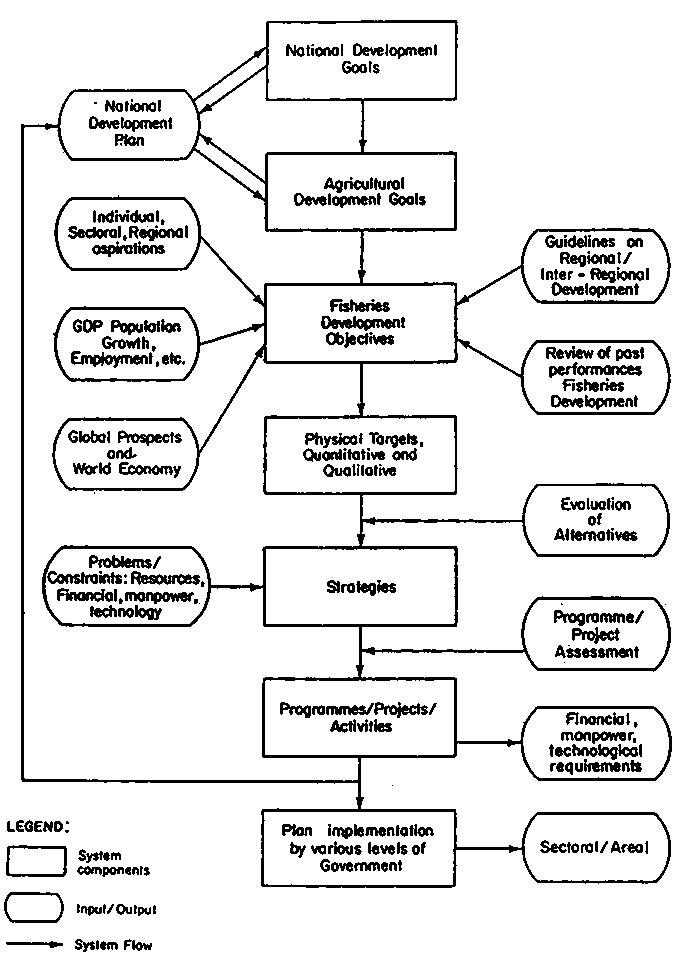
An example of how a developing country may organize its fisheries planning operations is shown in Figure 1, illustrating the main components as well as the system flows.
FIGURE 1: AN EXAMPLE OF A FISHERIES PLANNING SYSTEM
It is obvious that good planning requires good information in the various spheres relevant to fisheries development and management:
biology, technology, socio-economics, business management, etc.. The problem at this level is not only the lack of trained personnel and financial resources, but the fact that the data collection and information system which developing (and also developed) countries have at their disposal is seldom geared to decision-making.
Among the neglected sources of information are:
- the lessons learned from past mistakes (study of the history of sectoral development);- The exploitation of existing data, even if these are insufficient, including the exploitation of the knowledge accumulated by local fishermen and other people involved in the fishing sector;
- The exploitation of qualitative information available from existing documentation (from neighbouring countries, FAO, etc.) on stocks and species behaviour, international markets, fishing technology, development issues, etc.
Training, financial resources and technical assistance would, however, be required by most developing countries to improve their information system in the fisheries sector, especially with respect to:
(i) The sector as a whole and its relationship to other sectors and to the regional environment;(ii) Each main fishery, defined as fishing, processing and marketing activities which have in common a stock or group of stocks, a fishing technology or a market.
The information system should be geared to assess periodically and from a pluri-disciplinary point of view the structures (number and kinds of companies, vessels, fishermen, infrastructure, etc.), the conducts (relationships between inputs and outputs, use of technology, mode of production, products, pricing and investment practices and strategies, past and present government policies, etc.), the performance (production, profitability, contribution to employment, nutrition, foreign exchange earnings, etc.), the constraints (lack of gear, limited access to financial resources and trained personnel, resource limitation or competition between gear and markets, deficiencies of existing infrastructure or present governement policies, etc.), the opportunities for development and need for governement intervention to promote development or ensure the sustainability of certain fisheries through proper management.
As developing countries are generally confronted by a lack of trained personnel and of financial resources, the information system should be selective. This involves giving highest priority to the gathering of information on fisheries or activities which either are of major economic importance or have a priori the greatest economic potential. Although this can seem trivial, numerous countries in Africa and elsewheree are seen to collect extensive data and to conduct lengthy Surveys or studies on minor stocks or species. For an information system to be selective also involves the gathering of less but more accurate data, eg. in many countries comprehensive data collection on catch and effort are normally counter-productive and lead to overstaffing in lower rank personnel, inaccurate data and accumulation of unprocessed and sometimes irrelevant data.
With a good information system, pre-planning simply involves the systematic processing of the information and the formulation of a priori objectives and goals along broader sectoral and national priorities. Obviously, some objectives and goals will be contradictory in nature (eg. increase both national fish supply and foreign currency earnings) which will lead, together with the constraint of resources availability (financial, technical, etc.) to having to operate difficult trade-offs. This is the task to be undertaken in plan preparation.
In conclusion, during the pre-planning phase, the fisheries administration, with the assistance of the planning administration, will:
(i) Conduct a complete assessment of the present situation of the sector, enquire about future intentions and work out projections;(ii) Establish liaison and consultation arrangements that will facilitate plan implementation and canvass sources of potential development support;
(iii) Identify the opportunities and constraints to be considered in plan formulation.
Plan preparation is a complex iterative process for choosing a coherent set of the following items which will best achieve global political, economic and social objectives:
- Goals and targets: interpret the global national and sectoral objectives in physical and monetary terms;- Policies and strategies: indicate how the objective and the consequent goals and targets are to be achieved by providing the rules, direction or guidelines required for adequate tactical planning (ie. the design of programmes and projects);
- Policy instruments and measures: tools such as legislation, taxes, import/export limitations, etc., which are to be used to pursue strategies;
- Programme, protects and activities: concrete elements which translate the plan into actual development.
There is again no magic recipe for plan preparation. One can start by stating a priori goals and targets, or strategies or main project programmes and accompanying measures. In any case, several iterations,
appraisal of expected results and much consultation with the parties involved will be required. Hamlish (1987) on which much of this expose is based, proposes the following step-by-step procedure:
(1) Plan preparation should start with an analysis of the quantitative and qualitative information assembled during the pre-planning phase, which should aim at identifying opportunities and needs, as well as constraints likely to have an impact on fisheries management and development;(2) As a next step, a realistic inventory should be prepared of development resources - also including financial and other supporting services - likely to be available over the plan period;
(3) A further working document should summarize all relevant information from law of the Sea, national plan and fisheries law material which might have a bearing on the choice of objectives, strategies and measures;
(4) Based on the above three briefs, a list of tentative objectives should be drawn up, with priority indications, for programmes to be implemented under the sectoral plan;
(5) At this point the planner is advised to enter into negotiations with the appropriate sectoral and national authorities to reach agreement on final objectives. Among the matters discussed with these authorities should be problems connected with fulfilling expectations placed in the sector by non-fishery interests, opportunities in fisheries overlooked by national planners, priority rankings of objectives, budgetary allocations for fisheries, administrative support services for the sector, changes in laws and directives that might benefit fisheries and facilitate implementation of the sectoral plan. These discussions should give the planner the opportunity to finalize his draft on sectoral objectives and priorities and enable him to visualize the nature and amount of support that might become available during the plan period;
(6) Where conflicts of objectives and difficulties in assigning priority rankings and choosing strategies impede decision-making, balance statements and cost and benefits summaries (including non-monetary assessments) should be drawn up to facilitate comparisons and selection of optimal courses;
(7) Once priority rankings have been determined, the planner should fix targets to be attained during the plan period, with an eye to the size and quality of resources available for implementation;
(8) For each sectoral plan objective, a list detailing all strategies which could be employed for implementation might be useful for the next stage. Where incompatibilities between individual strategies exist, where certain strategies are known to have unacceptable features, or where costs connected with their employment are expected to exceed budgetary possibilities, etc., some strategies might be deleted from this list before a further evaluation is made; the strategies remaining in contention for possible adoption should be reviewed to determine possible impact on objectives other than the one which is primarily sought;
(9) In choosing a strategy, allowance should be made for contributions to the achievement of other objectives. However, the planner should never lose sight of the priority rankings of the various objectives and must make sure that the most important matters will be dealt with in the most efficient and least costly fashion;
(10) Policy instruments (measures) to be used in carrying out specific strategies should be analyzed in the same way as alternatively employable strategies;
(11) Thought must now be given to programmes for implementation of specific measures. Attention to detail will be necessary to avoid equivocal interpretations, the phenomenon of gray areas, where nobody seems to have jurisdiction and where overlapping may occur or nobody wants to assume responsibility;
(12) With the preparation of costing and staffing particulars for the individual programmes, the planners will have completed a first draft of their plan document, which can now be submitted to policy-makers for review;
(13) As the latter prepare comments on the draft, the planners, too, will once more review individual programme proposals from a cost-benefit stand-point in the hope of discovering possible economies in execution, achieving an improved inter-programme balance, or making desirable changes in phasing the workplan;
(14) Based on the above review of the workplan, and after changes ordered by the policy-makers have been taken into account, a final version of the plan document may be prepared. After programme proposals have been brought into harmony with resources at the disposal of the sector, final approval will have to be sought from the competent authorities.
With respect to the above, actual practices in plan preparation for - fisheries development and management in Africa now show four major I deficiencies:
(i) Lack of carefully established priorities
It is fairly common to see in project documents - and this is symptomatic - that the aim of the project is to achieve all the common long and short-term objectives (increased production, increased employment, increased fish and protein supply, etc.) without any indication of priorities, even if
the project activities will contribute only marginally to some of these objectives. Also very frequently observed is the discrepancy between recognized government objectives (generally stated in the plan document itself) and the projects and programmes proposed and/or implemented. For example, one will often observe stated objectives which refer globally to the development of small-scale fisheries (employment, fish supply, regional development, self-sufficiency, etc.) matched with a programme whose essential goal is the development of capital intensive and generally export-oriented industrial fisheries.
(ii) Insufficient attention to project strategic planning
Symptomatic of this problem is the fact, noted earlier, that planning is often limited to a series of uncoordinated and unharmonized projects, thus showing that attention is essentially limited to tactical planning. In the absence of a broader view of how the concrete interventions of the government will fit together, the programmes and projects which are implemented would generally be inadequate. Strategic planning is not only required to harmonize the proposed actions of the government at the sectoral level, but also:
(a) to ensure the complementarity of policy measures, programmes and projects,(b) to assist with the mobilization of international aid and assistance,
(c) to provide the operators of the fisheries sector with information concerning the governments medium and long-term strategy for the development of the sector, thus providing for a less uncertain politico-economic climate. This is especially important if planning is conducted at a rather indicative level rather than at a comprehensive level.
(iii) Insufficient assessment of policy measures
This is indeed one of the most serious flaws of the present planning practices, and certainly the consequence of the over-emphasis put on projects to achieve development goals. Very often it is not projects but good policies which are required for development of fisheries. There are at this level numerous examples of projects which are doomed to fail not only because of the lack of appropriate accompanying policy measures but because they are in direct contradiction with the existing policy measures, e.g. a small-scale fisheries development project and the absence of law or enforcement to protect small scale fisheries from infringements by industrial vessels; projects aimed at providing gear or fishing equipment which compete with existing national companies often unable to operate adequately because of import limitations; projects aimed at developing fisheries and price-fixing policies (low prices to consumers should be the result of development and are certainly a counter-productive ingredient to development in its initial stages) etc.. Furthermore, major policy measures such as subsidies on inputs and capital are often adopted without proper assessment (even if they often prove a useful tool), poorly monitored and too often continued even when no longer required.
(iv) Blueprint approach to planning
Plan preparation has too often been seen as a requirement rather than a tool for development. Thus the cumbersome preparation of huge documents which are either of little use or prove to be a constraint rather than tools for development in a rapidly changing environment. This is especially the case whenever comprehensive, directive planning is attempted which further results in certain biases in favour of over-ambitious goals, over-investment by the public sector, in large new projects and in administrative fiats, as noted by Agarwala (1985).
This author, based on trends and lessons from past experience, is of the opinion that more efficient planning requires greater qualitative judgement, close-check collaboration among the parties concerned, flexibility to adjust to changing circumstances, selectivity (thus directing planning efforts to key issues) and a strong information system. He further indentifies key trends in planning as being a growing appreciation of:
(i) The power of prices and markets;(ii) The importance of streamlining incentive systems;
(iii) The need for combining the programming of public investment with forecasting (not targeting) for the private sector;
(iv) The need to streamline completed and ongoing projects and programmes (if worthwhile) rather than to design new investment programmes.
In conclusion, if sectoral planning is conducted properly the proposed joint ventures will fit into a global development strategy with clearly defined objectives, expectations, and accompanying policy measures.
Policies for foreign investment and technologies should be formulated within the framework of both short-term and long-term development goals and strategies elaborated at national and sectoral levels. Before any investigation and negotiation of specific fisheries joint venture projects, this should allow the coastal state to:
(i) Identify areas for foreign participation in fisheries and the likely general impact of such participation on the sector;(ii) Set objectives and priorities with respect to foreign participation in general and for specific fisheries;
(iii) Assess the basic local requirements for successful foreign participation in terms of monitoring, control and surveillance (MCS); minimal level of infrastructure, services, capital and skills; experience and capabilities of local partners; status of information available on the resource base and potential yields, etc.;
(iv) Weigh alternative forms of foreign participation with respect to the identified objectives and priorities, the aforementioned requirements, and the development status of the sector and the specific fisheries which are involved;
(v) Formulate ground rules or policies with respect to key issues such as: ownership, foreign exchange remittances, employment of foreign and local personnel, transfer of technologies, management and control, fishing restrictions and other fisheries management issues, etc.;
(vi) Adopt any special laws which may be required, in particular if new forms of foreign participation are to be initiated;
(vii) Establish institutional mechanisms for handling all aspects of foreign participation and especially the formation of joint ventures (planning of the joint venture itself, screening and negotiation, implementation, monitoring and control).
The above would provide the framework and guidelines for further analysis and negotiation of specific joint venture projects. Such a "basic entry control system", as it is usually referred to, should obviously be tailored to the expected and actual interest of potential foreign partners and adapted periodically on the basis of careful monitoring and assessment of opportunities, constraints and performances.
Proper planning at the sectoral level should therefore enable the coastal state to orient foreign participation according to its own objectives, priorities and development strategies as well as to stipulate the basic rules, procedures and guidelines which would apply to various forms of foreign participation and to joint ventures in particular. This information is most useful to prospective foreign and local partners, providing guidance and allowing for the conception and elaboration of a priori relevant joint venture projects. For the coastal state, proper planning of foreign participation in the sector further allows for easy pre-screening of joint venture projects while avoiding all the limitations of an ad hoc assessment of such projects on a case by case basis as emphasized earlier in this section.
Once a joint venture project and a prospective partnership have been identified and judged adequate, a reliable feasibility study has to be undertaken. Especially if it entails extensive surveys of fisheries resources, the terms and conditions under which this study is to be carried out should be specified in a preliminary "Memorandum of Understanding". Customarily, the feasibility study is conducted by the foreign partner on a technico-financial basis reflecting the point of view of the joint venture as a firm. The coastal state would have, in this case, to conduct an independent assessment of such a study and a complementary economic analysis of the project which would focus on broader societal costs and benefits and relevant development issues.
Proper planning at the sectoral level would provide the framework and essential information for conducting this economic appraisal, whether it is done by the coastal state or by an independent consulting company. In the next section, we will review the major development issues related to fisheries joint ventures and the way they can be addressed in the context of complementary economic analysis.
A final brief remark is required before ending this section. As Dr. F. Christy pointed out to me, what has been outlined in this section as "Proper Planning" involved significant costs. This is indeed true but any increased cost must be seen in the light of the potential benefits which can be derived from a more rational, coordinated and long-term approach to development. The same can be said of the cost involved in further assessing the commercial and economic feasibility of any particular joint-venture project. Finally, and in spite of the constraints outlined at the beginning of this section, the major impediment to proper planning is often the lack of commitment to any long-term strategy or the lack of a clearly established methodological framework on the basis of which to work out how to best achieve some objectives, given available capabilities and means.
4.1 Shadow pricing
4.2 Secondary benefits and costs
4.3 Long-term, intangible benefits
4.4 Distribution of benefits within the host country
4.5 Concluding remarks on procedure and information requirements
The need for a careful economic appraisal of the joint venture follows from the trivial fact that private financial concerns do not necessarily coincide with broader societal concerns. Indeed, the individual financial entities which participate in the joint venture will be concerned with the direct and indirect return to the equity capital they contribute (profits) and, globally, with the financial viability of the project. As noted by Christy et al. (1983), "all parties are likely to share an interest in the financial viability of the joint venture", as it constitutes indeed the basic requirement for the production of other benefits the partners and the government might hope for. However, the government should be further concerned with the joint venturers expected contribution to development as measured by medium and long-term net social or economic returns to society as a whole (net economic benefits as compared to financial profitability).
Typically, the difference between financial and economic analysis will involve a longer term horizon for society as a whole than for any private company (especially if foreign) and a different assessment of cost and benefits. From a technical point of view, however, the same basic discounted cash-flow methodology will apply to both types of analysis.
There are four very important distinctions between economic and financial analysis:
(i) In economic analysis, certain prices may be changed to better reflect the social or economic value of essential factors of production such as labour and capital (shadow prices). In financial analysis, market prices including taxes and subsidies are always used.(ii) In economic analysis, taxes, subsidies and interest on capital borrowed nationally are treated as transfer payments and thus not accounted for, whereas these are actually costs or benefits to the joint venture.
(iii) In economic analysis secondary costs and benefits (those arising outside the project itself but which can reasonably be attributed to its existence) have to be appraised even if they often prove difficult to quantify.
(iv) In economic analysis the longer-term horizon of society as compared with private concerns involves using a somewhat lower discount rate and paying due attention to the long-term catalytic development capabilities of the project, even if, again, these are relatively difficult to quantify. Further, the nature of fishery resources requires that due consideration be given to the long term effects of increased fishing effort on the yields and profitability of the fishery.
This is not the place to further discuss project analysis and evaluation techniques. One can refer to basic manuals on this topic for further details: Gittinger, 1982; UNIDO, 1972, 1978a, 1978b. The major issues pertaining to the preparation of fisheries joint ventures must, however, be addressed.
Shadow pricing is required when market imperfection does not allow market prices to adequately reflect the "true" values of the major inputs. Such shadow prices are generally estimated in reference to "opportunity costs", that is, the value of the input in its best alternative use. For example, in a situation where crew wages are arbitrarily fixed by the government, the true value of employment can be estimated by the salary that these people would earn in the best alternative job they could find.
However, in reference to fisheries joint ventures, the employment factor can generally be expected to be of lesser consideration, as most joint ventures are relatively capital intensive. In cases where it is substantial and when there are clear indications of labour market imperfections, the use of shadow pricing might nevertheless be required.
More important is the use of shadow pricing for foreign exchange. Foreign exchange is not only a major concern to roost developing countries, but is furthermore of particular relevance to capital intensive, often export-oriented activities such as those likely to be undertaken by a fisheries joint venture. Such considerations lead first to the need to appraise all costs and benefits in terms of local and foreign currencies by estimating their foreign exchange content, in percentage terms, when conducting both financial and economic analysis.
For translating these percentages into actual foreign exchange values, one can, and usually does, use the shadow price (that is, the rate of exchange) which the central planning unit is using. In countries where this rate differs greatly from the parallel rate of exchange, which usually reflects more accurately demand and supply conditions, the shadow price can be adapted accordingly. In most countries, the central planning office or development banks or agencies, such as the World Bank, can provide relevant shadow prices or guidance in defining them.
Finally, fish being an input to the joint venture, access to the fishery resource should also be valued independently of whether specific fees are levied or not. The fishery resource, like public land, belongs as common property to society as a whole. As for public land cleared for settlement which is no longer available for alternative and future use, fish caught by the joint venture will no longer be available for alternative and future use (depending upon the species characteristics and state of exploitation). The value of the fish resource made available to the joint venture can be estimated as the net value of production foregone by the existence of this new fishing activity or by the opportunity cost entered each year as a cost to the project, thus reducing the incremented benefit which is realized.
In an already developed fishery it can be measured by the impact which the new joint venture activity will have at the margin on the future yields and net benefits of existing fishing operations in this fishery. In a fishery in which exploitation is mostly carried out through international licensing, the opportunity cost of the fish could be estimated on the basis of the fees charged to the foreign concerns, or their willingness to pay for the right to exploit the resource, considering the proposed increase in fishing effort. For fish stocks which would otherwise remain largely underexploited, the opportunity cost of the resource may be estimated as nil if no significant effect on existing fleets and markets is expected.
One can distinguish three major types of secondary effects:
(i) Those due to simultaneous multiplier effects of the new investment and activity;
(ii) Those due to economies of scale; and
(iii) The dynamic, long-term effect on the productivity of the resources involved.
Depending upon the kind of activities which the joint venture will be undertaking, two types of multiplier effects can be expected:
(i) "Forward linkages" or "stemming from" secondary effects related to post-production activities and involving increased costs or benefits to the processors, transporters, traders and retailers which may be affected by the project. These can be particularly important if the fish produced by the joint venture is partially processed and sold locally.(ii) "Backward linkages" or "induced" secondary effects which in contrast involve the secondary cost or benefits of supplying the joint venture with inputs or services. Thus the importance of carefully appraising the inputs and services which will be provided locally to the joint venture.
Generally speaking, a fishing joint venture not providing for significant net secondary benefits in the medium-term will not bring much more to the country than foreign licencing. It should first be noted that secondary benefits and cost can to a certain extent be assessed by using shadow prices to reflect true opportunity cost. One should, furthermore, pay due attention to possible secondary costs which may occur as a result of competition with the small-scale fishery sector. This can generally happen at two levels:
(i) Harvesting levelA priori, joint venture fishing operations could be seen as off-shore operations having little impact on the resources harvested by small-scale fishermen. This, however, will generally not be the case, with the exception of deep-sea fishing for tuna and a few other fishing operations. In the general case the resources will either be shared (eg. coastal pelagic) or the incentive to fish inshore, even when using 2,000 ton trawlers, will be such that in the absence of a strict monitoring, control and surveillance (M.C.S) scheme, the offshore fleet will often fish in the richer and closer inshore zone. This will generally be the case with large-scale, semi-pelagic fishing and with shrimping operations. This situation calls for careful assessment of the likely impact of the joint venture operation on the small-scale fishery and for the establishment of an adequate M.C.S system. The cost of M.C.S. should in this case be partially attributed to the joint venture operation and deducted from the likely net benefit of this operation.
(ii) Market level
Just as important but often ignored is the likely impact of local sales of fish by the joint venture on local markets. Many countries see in joint venture or foreign licensing an opportunity to provide cheap fish to the local markets. This, in our opinion, is only justified in obvious excess-demand situations (eg. in the case of Nigeria), when there are only very limited prospects for developing small-scale fisheries, or during periods of severe food shortage due to drought, war or other hopefully exceptional and short-term circumstances.
However, generally, the local landing requirement leads to severe and unproductive competition with small-scale producers and processors. This was the case in Guinea Conakry, for example, when under the former regime over 10,000 tons of fish were landed annually by foreign vessels, leading to reduced price to the consumer (a positive direct impact) but also to small-scale producers being no longer able to operate profitably and progressively leaving the industry. Furthermore, locally processed fish was to a certain extent replaced by frozen fish, leading to expensive use of electricity (cold stores) and to the reduction of employment in the local processing industry.
Thus the need to carefully assess the likely impact of joint-venture on the local markets and to plan its operation in the broader context of the contribution of all fisheries to national objectives. At this level, when the resources to develop small-scale fisheries exist, the benefits to be derived from supplying the local market through small-scale fisheries would generally be higher than through joint-venture operations. This results from the characteristically high value-added derived from small-scale fisheries in comparison with other capital-intensive industrial fishing operations.
Other types of indirect effects can clearly be assessed through a systematic identification of the likely linkages of the joint venture to the rest of the economy. For example, indirect benefits of fishing operations might include increased activity in or use of:
- bunkering and chandling;
- existing processing and cold storage facilities;
- stevedoring and other port activities;
- vessel repair and maintenance;
- export opportunities for small-scale fisheries which did not previously have any outlet for some species.
Obviously, the better equipped the recipient country is in terms of being able to provide inputs and services to the joint-venture, the greater the potential indirect benefits.
To conclude this section, let us say that secondary benefits have often been assessed in project analysis through the use of an aggregate investment "multiplier". The use of such a multiplier, often available for agriculture projects, is not however, recommended. Indeed, it is not only difficult to generalize the likely impact of a joint-venture or any other project on the fishery sector but the use of a multiplier also assumes ideal conditions on factor markets which are not likely to prevail.
It is, in our opinion, more appropriate to first identify the likely linkages of the joint-venture with the rest of the economy and then assess the potential net contribution that will result from these linkages in terms of employment created, reduction in operating cost through increased use of existing, often under-employed, infrastructure, increased profitability of related businesses and other connected costs and benefits. Parker (1987) provides a good example of the ways and means of assessing the secondary costs and benefits implied by a fishery project.
4.3.1 Appropriate technology
4.3.2 Training and manpower development
4.3.3 Accompanying measures
The direct and indirect medium-term benefits of a joint-venture might not be much more important than for foreign licensing which, it should be underlined, does not involve as much financial risk. However, a joint-venture has a development component and thus involves long-term intangible benefits which should be of primary concern to the coastal state. Indeed, one should expect the joint-venture activities to lead to some degree of self-sufficiency in industrial fishing activities through appropriate transfer of technologies and skills. Two major issues arise at this level: the choice of technology and training.
The choice of technology is crucial to the long-term success of the joint-venture in terms of related development prospects. The technology will be appropriate if one can reasonably expect local entrepreneurs, managers and fishermen themselves to adopt and master the technology over a reasonable period of time.
Two basic rules should prevail when opting for a technology with the long-term aim of self-sufficiency:
a) avoid large infrastructure and vessels, even if it means lesser immediate benefits through loss of economies of scale;b) avoid sophistication in technology even if, again, it entails reduced immediate benefits.
A global policy of joint ventures such as implemented in some countries, irrespective of the type of fishery and technology required to exploit the fishery, can be counter-productive. Indeed, very few countries with limited fishing traditions and experience can expect to master, even within a decade, the financial, managerial and technical requirements of some large-scale, capital-intensive operations such as tuna purse seining or large-scale semi-pelagic trawling (to say nothing about the risk involved). Thus the need for developing countries to carefully assess the fisheries/technologies which carry some development potential for the national fishing industry and the fisheries/technologies which are better left to direct foreign exploitation under proper licencing agreements (at least for some time). This should be done when planning for the development of the sector as a whole and when establishing priorities and options for each fishery.
On the issue of sophistication, expected difficulties in repair and maintenance should be carefully, assessed. Some loss in efficiency would generally be preferable to sophisticated equipment which might be costly and difficult to maintain under prevailing local conditions. However, outdated equipment should be avoided, in particular if one can foresee difficulties with future supply of spare parts. Generally, preference should be given to well-established suppliers of equipment with due attention being paid to supply conditions for spare parts. The coastal state may also require that some of the equipment to be acquired by the joint venture be similar to that used successfully by already existing companies. This is important in view of the heterogeneity of equipment presently characterizing African fishery industries. Finally, technologies which require an unnecessary duplication of skills and equipment should be avoided. The major example of such a technology is the multi-purpose vessels which have unsuccessfully been introduced in many African fisheries.
Related to the issue of technological sophistication is the relative importance of capital or labour intensity implied by the technologies to be used by the joint ventures. From the point of view of the joint venture as a firm, the capital intensity should be dictated by the relative cost and efficiency of capital and labour. Generally, the lesser the cost and the greater the qualification of labour, the greater the financial viability of less capital-intensive technologies. The foreign partner may, however, have its own interest in providing the joint venture with a sub-optimal, although more complex, technology if the equipment is produced by affiliates or if he owns second-hand vessels and equipment which he may want to sell to the joint venture. From a development point of view, the lesser the capital intensity, the greater the chance of a successful transfer of technologies and thus the greater the chance of the joint venture having the expected catalytic effect on the local fishing industry. Indeed, less capital intensive technologies mean a lesser reliance on scarce inputs (capital, foreign exchange, highly specialized skills), a lesser reliance on the foreign partner and a smaller gap between existing capabilities and skills and those required for the local control of the activity.
A final issue arising from the choice of technology and equipment is the scale and the timing of the investment itself. The short term financial horizon of the foreign partner, added to its direct interest in selling equipment, would generally lead him to prefer large scale realizations (as they usually involve economies of scale and greater profitability) and a faster build up of total planned capacity. The coastal state, on the other hand, should consider that the performance of the joint venture will remain quite uncertain especially in the longer run when the effect of its fishing activity on the stock is felt and when unrelated variations in abundance and prices are likely to occur. The best protection against this uncertainty and the risk attached is the gradual and timely build up of capacity based on actual performance. For shore facilities in particular, this may involve some loss of economies of scale which would nevertheless prove less costly than, as is too often seen, under-utilizing over-sized facilities.
Overall, the interest of the coastal state and the foreign partner vis a vis the choice of technology will seldom coincide. A major issue is that the technology to be used by the joint venture is often chosen implicitly at a very early stage in its formation, that is, well before any comprehensive assessment can be undertaken by the coastal state. In practice, the foreign partner will generally undertake experimental fishing on the basis of the technology it plans to use in the context of the joint venture (the choice of fishing vessels greatly influencing other related activities and technologies). The results of the survey would pertain to the technology and techniques used during the trials, any extrapolation to other vessels and fishing techniques being generally difficult and less reliable. It is therefore recommended that the coastal state consider the major issues related to the choice of technology before negotiating a memorandum of understanding. When appropriate, the coastal state may further require that experimental fishing be conducted on the basis of alternative fishing technologies reflecting at least a certain range of capital intensities.
As emphasized in Section 2, training and manpower development are usually seen by coastal states as a major means of achieving self-sufficiency, whereas the foreign partners consider the requirements imposed by the government at this level as a major impediment to the viability of the joint venture. Although specific contract provisions are required to ensure a timely and adequate transfer of skills and responsibilities, training and manpower development are generally determined by the viability of the joint venture - through the implied on-the-job training - and by the motivation of the joint venture partners in promoting local labour and expertise.
First and foremost the coastal state should avoid a quite pervasive tendency towards pressing for overpaying local labour and over-staffing. It is important to realize that:
(a) Industrial fisheries projects being quite capital intensive (whatever the choice of technology), the main labour-related issue is qualification not employment;(b) Overstaffing and overpricing of local labour are not benefits to society but a transfer payment from the joint venture to labour, and
(c) The high cost and reduced efficiency of labour which these measures imply are disincentives to local manpower development in the joint venture and a burden to further development in the sector.
A competitive and flexible policy for local recruitment and employment is, in our opinion, essential to the success of any complementary effort in the area of training and manpower development. It should result in the competitive costing of labour inputs and provide incentives for efficiency and effective participation by local staff.
The choice of a foreign partner is important with respect to training in particular. It is rather obvious, but often ignored, that the better the communication between foreign and local employees at all levels (management, crews, etc.), the better the chance of an effective transfer of skills. While it is not always easy to find a foreign partner with a certain community of language or "culture", the government can insist that part of the foreign labour required be recruited from countries with which the host country has greater affinities, even if this is only a common language. Particularly relevant to this issue is the possibility, generally overlooked, of using the expertise available in neighbouring countries. In West Africa, for example, some countries like Senegal and Ghana have indeed a surplus of trained personnel (captains, fishing masters, mechanics, refrigerations specialists, etc.) who are not only cheaper than expatriates from developed countries but can also transfer their skills more readily to local personnel.
Training is essential to the progressive control of the joint venture activities by nationals and to further development of the sector. To achieve its purpose, training has to be adquate and relevant to manpower development within the joint venture. This requires that contract provisions on training be quite specific about the type of training to be provided by the joint venture and by other training institutions. Training conditions should further be stipulated by occupational and skill level, specifying the number of employees to be trained, content and schedule of training programmes, costing and allocation of training expenses, conditions of employment after training, etc.. In general, the imposition of undue training requirements which would not be of direct benefit to the joint venture should be avoided. Furthermore, the training of skilled personnel should receive priority attention as it is the key to increased local responsibilities and control. Another consideration is the need to "unpackage" training requirements. Each training component has to be examined separately to assess how, where, and by whom it can best be provided and under what conditions. Preference should be given to on-the-job training, at least for developing low and intermediate skills. If training needs are important, the coastal state has to consider, however, that on-the-job training may be quite costly to the joint venture in terms of the reduced efficiency it induces. Academic training would nevertheless be required to develop certain skills. Local training facilities and programmes may exist or be developed if training needs are sufficient. This is likely to be the case only for training at low and intermediate levels. Such training should be well planned and relevant to the needs of the sector, with adequate funding and expertise to carry out the essential practical components of any training programme. The joint venture may provide some assistance at this level but, in our opinion, adequate local training facilities can best be developed by other means. For training outside of the host country, training institutions should be selected on their own merit. Systematic training in the foreign partner's home country should be avoided, especially if the language barrier greatly increases the length of the training programme. Regional training institutions may provide more appropriate training under conditions that are more similar to those prevailing in the host country. Finally, the conditions of employment of the trainees upon completion of their studies should be flexible enough to consider criteria other than academic performance alone.
As important as the adequacy of training programmes is the motivation of the joint venture and the foreign partner in providing such training. This may depend upon the costs and benefits of doing so and relates above all to the indirect benefits which the foreign partner may derive from hiring expatriate personnel, to the comparative efficiency of local and expatriate labor, and to the crucial issue of control.
A first step toward a greater motivation for increased local participation is to ensure that both local and expatriate labour is recruited and employed on a competitive basis, with proper incentives for efficiency. This would generally confer a decisive comparative advantage to local labour. It involves guaranteeing competitive pricing of labour and avoiding political influences upon staffing and undue restrictions on the dismissal of staff and on working conditions (eg. avoiding rigid working schedules, fixed salaries for crew members and other restrictions which do not recognize the particular nature of fishing operations). In general, the conditions applying to recruitment, wages, social security, working conditions, separation, etc., should be detailed in a subsdiary agreement covering the employment of expatriate and local staff. Special attention should be paid to the pricing of expatriate labour and on recruitment services. Separate recruitment arrangements with an independent contractor are advisable if acceptable to both partners. This may be the case for crew and technical staff, but the managing partner will certainly want to retain control of the recruitment of key managers.
Statutory provisions may further stipulate a schedule for the "naturalization" of the work force within given time periods. These usually specify minimum percentages or quotas for nationals, sometimes classified by occupational and skill levels. While apparently justified, such provisions disregard technical requirements and can lead to a serious loss of flexibility in operation when applied to skilled personnel. It is more appropriate to negotiate an employment and training agreement which would deal with high level management, financial and technical personnel on a case by case basis. Deadlines on work permits given to expatriates might be imposed to enforce transfer of responsibilities. Promotion from the ranks, and complementary training should also be given priority. In this connection, as well as on the fulfilment of other training obligation, specific monitoring and control provisions must be included in the contract.
It is likely that the existence of the joint venture will have a broader catalytic impact on the development of the sector, especially if the above key issues are carefully considered. However, it would be quite misleading to expect the joint venture to "do it all" and bring about by itself the expected transfer of technologies and skills needed to progressively achieve self-sufficiency.
For the joint venture to have such a catalytic effect and, in the first place, to ensure active local participation in the joint venture itself, accompanying measures are essential. At this level, the aim of the government should be to create a favourable environment for the development of the sector. This often would not require expensive infrastructure or large projects but, rather, the juxtaposition of proper incentives, sound management of existing infrastructure, training in key disciplines and a real commitment to an agreed-upon long term strategy. This last requirement is essential for any government action in the fishery sector to have the expected catalytic impact. Fishing is in itself a risky business and, in the absence of a clearly defined long term plan and strong commitment to it on the part of the government, the additional risk involved might far outweigh any short term incentives such as tax rebates or cheap credit.
As noted previously, existing planning procedures often give priority to new projects rather than to the strengthening and rationalization of existing projects and infrastructure after proper monitoring and evaluation. What is often needed, however, is better management of the existing infrastructure and services (including the administration) provided by the public sector. This could certainly contribute in many countries to significant reductions in cost and gains in efficiency to the industry as a whole.
Furthermore, a real commitment to training is required, taking into account the short- and long-term requirements of the sector. It is our opinion, based on the experience of many African countries, that training and research are better achieved through international or bilateral collaboration involving as few ties as possible with the companies and countries which have a strong involvement in the fisheries of the host country. Indeed, it is very common to observe that side requirements for academic training and research made by the host governments in negotiating access rights or joint ventures have been treated very lightly by the foreign partner as a price to pay for access to fisheries resources or markets. One can say the same of infrastructure which is of no direct relevance to the joint venture operations. At this level, the host country government can ensure proper delivery through careful appraisal and monitoring - something which is not easily done for training and research.
A wide range of incentives can be provided to the sector depending upon the nature of the constraints affecting its development. Among these are: soft loans to ease the burden of borrowing capital, reduced import taxes on capital goods or inputs such as fuel and gear to reduce investment and operational costs, limited export tax to ensure competitiveness on the international markets, adequate pricing (ie. generally competitive pricing) of fish and inputs (especially labour) on the local markets, etc.. These obviously should apply in priority to national development initiatives in key fiheries in which national involvement has remained marginal.
The effectiveness of the measures selected by the government will depend on many factors and cannot be guaranteed. However, the better the appraisal of the reason for a particular incentive and its expected outcome and the better the monitoring of actual results, the greater the chance of success. For example, a West African country provided for favourable credit opportunities in order to develop an offshore hake/shrimp fishery. It turned out that the offshore fleet which was initially developed under this scheme only contributed to increasing the amount of effort applied to the inshore stocks which were already over-exploited. Indeed, it proved that fishing inshore was financially far more profitable in the absence of direct access to export markets for the species and sizes caught offshore.
Similarly, the impact on incentive measures should be properly monitored to make sure that they do indeed benefit the target group and to ensure their cost-effectiveness. Fuel subsidies, for example, are hardly selective and cannot be applied to specific fisheries. At one point in the development of the sector, one would expect that the cost involved, in terms of over-capitalization in some fisheries, would outweigh the benefits derived from induced investment in under-exploited fisheries. Thus the need for careful appraisal and monitoring of all incentive measures.
Finally, proper fisheries management is required to ensure lasting long-term benefits. First, as noted earlier, the relatively short-term horizon of the foreign partner is such that the joint venture will generally have little concern for the sustainability of the resource. Furthermore, it will similarly have little concern for any impact it may have on other fisheries. As far as the fishing operation of the joint venture is concerned, the direct interference with small-scale fishermen in the nearshore zone should remain the primary concern of the government. Exclusion from the nearshore zone of all offshore vessels, whether foreign or national, and strict enforcement are called for at this level.
Gear restrictions and the protection of spawning grounds are possible complementary measures to ensure the long-term productivity of the resources. It is equally important that the government realizes that proper control of the total effort deployed in the fishery is called for not only to avoid over-exploitation but rather, and especially, to ensure the long-term economic viability of the fishery. The overall profitability of the fishery and of the vessels and processing plants involved is determined, amongst other things, by the level of exploitation of the fishery. By keeping the total effort deployed in the fishery at a proper level (as determined by sectoral objectives and the bio-economic characteristics of the fishery) it is possible to ensure a sustainable level of profitability which will provide an additonal incentive for national development. A strong commitment to keep effort or fleet size under a certain level will also reduce the risk of entering into the fishery.
In profitable fisheries, the user fee which the state should impose for access to the fishery (as a way to ensure economic efficiency and the sustainability of the fishery) might take several forms: taxes on input, landings, value of landings, value of exports; or a fixed access fee per vessel. In general the imposition of a fixed fee per vessel, calculated according to the vessel's main characteristics, is much easier to implement and requires little monitoring and enforcement. Such a fee should be imposed not only on foreign fishing or joint ventures but should apply to the national fleet as well even if temporarily waived or set at very low levels in the initial phase of national involvement in the fishery.
Regarding the distribution of the benefits to be derived from joint ventures, this document mainly focuses on the sharing of benefits between the foreign partner and the host country. Another important issue is the distribution of benefits within the host country.
First and foremost, the government should duly recognize that various arrangements for foreign participation in fisheries have different implications for the sharing of benefits within the host country. Under access-fee agreements, for example, the benefits generally go to the General Treasury and are presumably used in the best interest of the nation. Under a joint venture agreement, the benefits accrued by the host country will be shared mostly among the local partner, the local staff and the state, although the joint venture is expected to have broader secondary effects.
As noted earlier, the interest of all the parties concerned may not only be divergent but may also not necessarily coincide with the national interest. The local partner is often in a position to influence the decision making process but can hardly be expected to work in the best interest of the nation except if it coincides with its own interest or is compelled to do so by the state.
In this context, the role of the government is all the more important. Not only should it ensure that the joint venture is created in the best interest of the nation but also that the joint venture will indeed lead to increased national capabilities and a fair distribution of benefits. Proper planning, as discussed in Sections 3 and 4 should ensure that the joint venture is conceptually sound and capable of achieving the short and long-term objectives sought by the government. A priori, the distribution of benefits within the host country will depend on many factors which the government may influence: technology, location of the site (if regional development is an important consideration), import-export policies with respect to inputs and outputs, labor regulations and employment policies, financing conditions, and above all, taxation and fiscal obligations. At the planning stage, sensitivity analysis can be conducted to assess the impact of alternative measures on global results and on the distribution of benefits among various groups (e.g. local partner, labor, treasury) and to ensure a fair distribution of benefits which should nevertheless be conducive to economic efficiency and development.
Once the joint venture is operating, the number of factors which the state may influence towards this end is more limited: primarily, pricing, taxation and fiscal obligations. The role of the state is nevertheless crucial when it comes to enforcing the terms of the joint venture agreement and the relevant laws and regulations. Proper monitoring and control is at this level of primary importance and may lead the state to renegotiate part of the joint venture agreement or to amend national laws and regulations in order to ensure more efficient management or more appropriate distribution of benefits within the country.
Distributional aspects again point to the difficulty of negotiating and implementing successful joint ventures and to the many added requirements which joint ventures impose on the state in terms of planning, monitoring and control if compared to other forms of foreign participation.
The negotiation of a joint venture agreement involves three major steps, corresponding to an increasing commitment to the project:
(i) An initial informal agreement on a general project idea;(ii) The negotiation of a "memorandum of understanding" which covers in general terms the nature, scope and guiding principles of the project as well as the terms and conditions under which the feasibility work will be carried out, and
(iii) The negotiation and drafting of the joint venture contract.
Complementary economic analysis is required at each level of this decision making process. Many project ideas are submitted to the coastal stated fisheries authorities for their consideration. These projects may involve relatively new and underdeveloped fisheries, well developed fisheries which have so far remained exploited under licensing schemes or fisheries which are already exploited by one or several joint ventures. The requirements of the preparatory work will obviously depend upon previous experience and existing information. The weaker these are, the more important it is to approach the preparation of a joint venture agreement in a systematic way and with caution. As noted earlier, proper sectoral planning complemented by guiding principles for the formation of joint ventures should provide the basic framework for the elaboration and/or assessment of general project ideas. Further elaboration of the project idea at this stage requires the informal agreement of all parties concerned, committing them de facto to conduct their own independent pre-feasibility studies.
A preliminary feasibility investigation is essential before negotiating a memorandum of understanding. Indeed, such an agreement not only formalizes a preliminary understanding on the general project idea, but also determines the scope of the complementary studies which will be undertaken. Initially, each partner will generally envisage a range of activities wider than which will utimately be agreed upon, and may want to assess the feasibility of the project under alternative terms and conditions. This must be carefully analyzed and specified in the memorandum of understanding. It may lead to conducting feasibility studies for alternative project designs or conceptions and, in any case, requires extensive sensitivity analysis around mean values for key parameters
In the context of this preliminary feasibility investigation, it is most appropriate that a qualitative but thorough economic assessment of the project idea be conducted by the coastal state. The major issues addressed earlier in this Section are directly relevant to the identification and assessment of the projects performance and impacts under alternative conditions. More specifically, this investigation should enable the coastal state to:
(i) Appreciate the relevance and contribution the project idea and alternative designs to national and sectoral objectives and priorities - following the identification and qualitative assessment of both direct and secondary costs and benefits;(ii) Determine its position vis-a-vis the major issues on which there may be agreement or disagreement with the foreign partner, special attention being given to the scope, size and scheduling of the project and to key issues such as the choice of technology, the absorption capacity of the local industry, the likely impact of the project on other fisheries, etc. and;
(iii) Determine the scope, conditions and terms of the pre-investment study and the complementary surveys which would be undertaken prior to the negotiation of the joint venture contract. The coastal state should realize that the ultimate basic design of the project is to a large extent decided at this stage. Indeed, even if the memorandum of understanding does not legally commit the state and local partner to anything other than preparatory work (and it should not), the pre-investment study and the complementary surveys essentially provide information on the expected performance of the basic design. For example, if the basic design of the project calls for use of freezer-trawlers of about 300 GRT, the resource survey and pre-investment study conducted on this basis will provide little information on the use of smaller ice-trawlers and related shore activities, even though the impact of minor modifications of the basic design can still be assessed.
Lack of information is a major constraint to conducting such an investigation. As noted earlier, the coastal state should give the highest priority to developing its ability to monitor and periodically assess the state and performance of its major fisheries with the explicitly recognized aim of serving the decision-making process. Nevertheless, the information which is directly relevant to the joint venture project may not readily be available to the coastal state if the project involves fisheries resources, technologies, markets and capabilities which have remained mostly beyond its reach.
At this level, regional collaboration offers a major opportunity for the coastal state to complement its information on the fisheries resource concerned and on alternative ways of exploiting it. Regional collaboration in fisheries is required not only for shared stocks but also because the characteristics of fisheries resources and the related development and management issues are generally similar among neighbouring coastal states. Regional fisheries bodies, like the FAO Fisheries Committee for the Eastern Central Atlantic (CECAF). and the IOFC Committee for the Development and Management of Fisheries in the Southwest Indian Ocean, are playing a major role at this level by providing a forum for the dissemination of information and the analysis and discussion of common development and management problems. They have also encouraged the development of closer cooperation between the fisheries administrations of some of the countries involved, resulting in privileged access to information of a more confidential nature such as the terms of foreign participation, or in fuller cooperation involving reciprocal fishing rights and joint research and development projects. Should the information base developed on this basis remain inadequate, the coastal state may seek expert advisory services from specialized international agencies or consulting companies. If the joint venture project involves a sizeable investment, the interested parties may also agree to recruit an independent consulting company to conduct the overall preliminary investigation on a cost-sharing basis.
As noted earlier, the technical and financial aspects of the pre-investment study are generally best handled by the foreign partner. In this case, it is all the more important that the relevance of this work to the subsequent decision-making process be explicity guaranteed by carefully stipulating the terms of reference of the pre-investment study. For example, depending upon the activities of the contemplated joint venture and the result of the feasibility study, the determination of commercial feasibility may involve a wide array of survey operations:
(i) Evaluation of resource base and yields for target species and stocks;(ii) Determination of the nature, scale and phasing of fishing operations;
(iii) Plans for ex-vessel supply of fish and further processing;
(iv) Determination of the nature, scale and phasing of processing activities;
(v) Location of land-based facilities and terms and conditions of access to key services: port, roads, power, water, housing, bunker ing and chandling, etc..
(vi) Marketing prospects and plans for both international and local markets;
(vii) Details and timing of capital expenditure and related financing arrangements;
(viii) Schedule of staff and labour requirements and training programmes;
(ix) Detailed cash flow estimates.
A specific agreement should specify the terms of reference, as well as the conditions and terms of each survey. It should include specific provisions for the allocation of responsibilities and obligations to be assumed by the parties concerned, the financing and allocation of the costs involved, the participation of local authorities and/or supervisory controls by the government, conditions relating to delivery and eventual suspension of the survey as well as to follow-up work. Small joint venture projects may not require extensive survey work. The overall feasibility study may be conducted in this case by the foreign partner - the coastal state assessing the results afterwards. For projects which involve a sizeable investment, the coastal state may request that only part of the commercial feasibility study and related surveys be undertaken by the foreign partner, and that one or several independent consulting companies be recruited to:
(i) Conduct some of the surveys for which an independent appraisal seems more appropriate. This may be the case of the following surveys: marketing prospects and plans, manpower and training requirements and plans, impact study on existing fisheries, fisheries management and MCS considerations in relation to access conditions pertaining to the joint venture vessels; and(ii) To assess thereafter the results of the overall commercial feasibility study and conduct a complementary economic analysis of the project from the point of view of the coastal state.
Whatever the size of the project and the specific arrangements to which the parties have agreed for the feasibility work, the results of the overall commercial feasibility have to be put into proper perspective through a complementary economic analysis. At this stage, a quantitative analysis is required whose thoroughness should be commensurate with the stakes involved. Sensitivity analysis on both commercial and economic feasibility studies should further permit the identification of key parameters and test the impact of possible trade-offs which may be made in the subsequent negotiation of the joint venture contract. L. Christy pointed out to me that the preparatory phase (preliminary investigations and pre-investment studies) also serve to familiarize the partners with each other. Thus, while some parts of the preliminary studies can be entrusted to third parties, this should not be done at the expense of gaining experience in working with the prospective partner.
5.1 Adequacy and pricing of inputs
5.2 Transfer pricing in marketing
The adequacy and correct pricing of the goods and services provided to and by the joint venture should be of major concern to the coastal state. Indeed, these aspects greatly influence actual performance and, above all, the sharing of costs and benefits among the interested parties. At issue here is the generally well-founded assumption that the foreign partner will practice transfer pricing whenever and wherever possible if not limited by adequate measures. Transfer pricing generally refers to the pricing of transactions between the joint venture and other firms linked to the foreign partner through ownerships or undisclosed contractual arrangements. Transfer pricing does not only apply to visible inputs and outputs but also to a wide range of services as well as to other related-parties transactions involving, for example, discrepancies between the declared and actual transactions. To ensure a fair sharing of costs and benefits among the parties concerned, the coastal state should carefully address this issue when negotiating contract clauses related to material inputs and business operations.
The need to assess and precisely define the type and specifications of the equipment to be provided to the joint venture relates to the previously discussed concept of appropriate technology and to the general suitability of this equipment in terms of quality, price, serviceability, terms of delivery and recurrent costs involved.
With respect to shore facilities to be provided to the joint venture, size and expansion plans are major issues. As noted earlier, a phased installation of facilites based on fishing results and the fulfilment of certain conditions would generally be preferable. Clauses relative to the time schedule of such an investment plan and in general to the delivery of significant equipment should be stipulated in the contract, inclusive of any required penalities. Typically, motherships and chartered vessels are used by joint ventures awaiting completion of shore facilities and the acquisition or construction of fishing vessels. Strict clauses on the scheduling of this substitution are especially important, as the foreign partner may have a definite interest in delaying it (use of its own vessels, excessive charges for chartering, lesser control on operations at sea, etc.).
The suitability of the vessels should also be of major concern, especially with respect to their age, serviceability and adequacy to local conditions. Generally, it may be appropriate to acquire second-hand vessels, especially as these can now often be bought under quite favourable terms. Due attention should be paid, however to the recurrent costs involved, in particular with respect to repairs, maintenance and fuel consumption. The suitability of the vessels to local fishing and servicing conditions should also be assessed. This is particularly important in view of the many inappropriate vessels which can be observed in most African ports, either in disuse or barely operating. Apart from difficulties in repairs and maintenance due to poor management, this situation reflects two major problems:
(i) the inappropriate size and power of many vessels, resulting in poor harvesting performance if the vessels are undersized or in unnecessarily high operating and maintenance costs if the vessels are oversized, and(ii) the inappropriate design of many vessels originally conceived to operate in temperate waters or under quite different fishing and operating conditions.
The valuation of assets which will contribute to the capital of the joint venture is another major issue. For assets to be constructed, such as shore facilities or vessels, provisions should indicate how technical specifications and costs are to be assessed and adhered to. Other assets, such as vessels or equipment contributed in kind by the foreign partner, or bought on the international market, also require specific valuation procedures which should involve the services of specialized inspection and appraisal companies if second-hand processing plants and vessels are to be acquired.
For the valuation of assets, the United Nations Centre on Transnational Corporations (UNCTC, 1981) recommends, in general: "the development of appropriate evaluation procedures, the "depacking" and identification of different types of inputs, the drawing from the services and information of independent consulting firms, and insistence on comprehensive disclosure by the foreign firm of the content of their supplies". Such procedures should also apply to intangible assets, financing and to a certain extent, to procurements.
The procurement of goods and services for the joint venture by the foreign partner and its affiliates may indeed constitute a major source of transfer pricing. Special attention should, in particular, be given to:
(i) The interest rate paid on loan funds provided by the foreign partner. This is especially important if the coastal state is directly or indirectly seeking a major participation in equity as the foreign partner would then often favour a high loan-to-equity ratio (so-called "high gearing" practices) to take advantage of the fact that interest payments usually take priority over the distribution of benefits and are taxed less than profits;(ii) The terms of leasing or chartering of vessels - often cited as a major source of overpricing abuses;
(iii) The terms of the procurement of spare parts, miscellaneous equipment and foreign assistance for repairs and maintenance;
(iv) The terms of services rendered by the foreign partner for the management and operation of the joint venture: management contract, sales commissions, company secretary fees, expatriate recruitment and technical assistance fees, provision of transport and insurance, etc.. The cost of such services may represent a significant proportion of gross revenue (for example, the management contract and sales commissions may represent up to 10% of gross revenue regardless of profitability) and further provide opportunities to avoid taxes, fiscal obligations and foreign exchange regulations. These contracts, especially if they involve a broad delegation of powers, also imply a lesser control on general business operations and a missed opportunity for the local partner to learn how to perform these essential functions. A periodic reassessment of these contracts is therefore recommended.
In general, major abuses on procurement can be avoided through appropriate clauses for the control of specifications, the determination of needs and the valuation of purchases exceeding a certain threshold level.
Furthermore, the "unpackaging" of a general management services contract in favour of contracts providing only specific services may allow for greater control and learning opportunities for capable and motivated local partners. Unpackaging requires, however, a fair amount of ability to evaluate and arrange for separately provided services. This is reflected by the case studies of West African fisheries joint ventures conducted by Christy et al. (1983).
The aforementioned study also shows that "the most fertile possibilities of transfer pricing abuses lie in marketing, mainly because it is so difficult to ascertain the fair market price of fisheries products". Indeed, more than any other commodities, fishery products are characterized by their sheer number, reflecting a wide array of species, processing techniques and consumer preferences. Prices further include rebates or premiums according to the quality and terms of delivery of the product. While some species, like tuna and shrimp, are sold on major international markets which are well monitored and documented, it is generally difficult to assess whether the fish sales of the joint venture are correctly priced.
The pricing of fish sales is generally crucial to the foreign partner. In most cases, the foreign partner will enter into a joint venture agreement to supply its home market or related marketing companies. In this context, the foreign partner would certainly insist on exclusive rights to the catch or to target species. This may be acceptable to the coastal state if the product is paid for at a fair price. However, it is generally easier to ensure correct pricing if the sales are made on the international market and on a relatively competitive basis. One would assume that the local partner is generally interested in ensuring fair pricing of the joint venture products. There are, however, some exceptions. For example, some joint ventures are based on a common interest in fishing only as a source of fish for the respective markets and marketing networks of both partners (e.g. national and international markets). Neither of the partners is therefore much interested in the profitability of the joint venture, as profits are realized at the marketing level, based on an agreed upon sharing of the catch.
To avoid transfer pricing, prices could be determined regularly in reference to published prevailing world prices when these are available. The joint venture could also be obliged to sell at the "most favourable" price available, using agreed upon quotations or bidding procedures. However, such procedures apply essentially to long-term arrangements. Alternatively, the partners may agree that the joint venture sell only on one or a few major markets based on intelligence information provided by an independent company under contract. Sub-contracting marketing services to an independent company is also possible although it does not in itself ensure fair pricing. Some countries, where numerous local fishing companies and joint ventures are fishing for the export market, have established a national marketing clearing system. In Mauritania, for example, a national marketing company assumes total responsibility for the marketing of fisheries products on the international market. This is done on a commission basis, prices being determined with industry representatives every two weeks, based on quotations from alternative buyers. This system allows the industry as a whole to take advantage of favourable shipping conditions and market opportunities through economies of scale in shipment and information requirements. It also enables the state to exert greater control over transfer pricing at a relatively low cost. However, it should be emphasized that the efficiency of the system depends very much upon good management, effective industry participation, and strict but constructive government control. Finally, the coastal countries should take advantage of the fish marketing information and services provided by the FAO international fish market indicator system (GLOBEFISH) and the FAO regional fish marketing information services which were extended to Africa in 1985 through the creation of INFOPECHE. Whatever the procedure used to ensure fair pricing, contract provisions should allow for its periodic assessment as well as its eventual renegotiation if needed. Similar precautions should also cover transportation, insurance and other marketing-related services, especially if these are provided by the foreign partner.
Another major issue related to fish sales by the joint venture is the difficulty of assessing possible discrepancies between declared and actual exports. This is the case in particular when factory vessels or motherships are used by the joint venture in the context of large-scale and unselective fishing. Unfortunately, little can generally be done to overcome the difficulty of properly and speedily assessing the quantity and quality of the products on board these vessels. The best solution may be to avoid their use in the context of a joint venture, except as at temporary measure while awaiting completion of on-shore facilities. The local partner may meanwhile attempt to monitor catches and exports by using on-board inspection procedures. The coastal state can further reduce major motivations for misreporting by not directly taxing actual catches/exports, using instead a periodically negotiated access fee.
To conclude this section, it should be noted that adequate contract provision will not be sufficient to avoid the many abuses related to transfer pricing and other parties-related transactions. As noted by Christy et al. (1983): "The legal elements of corporate control, even when seen in the light of practical advantages that may be derived from them, are not enough to explain how control is really attained and exercised... The catalyst that turns formal control into effective control is no easier to characterize than "control" itself, but the most descriptive term seems to be knowledge". This underlines the importance of the motivation and training needed on the part of the local partner in order to acquire the relevant skills and responsibilities; as well as the need for the various government institutions involved to carefully monitor the joint ventures and their operations. The role of economic and marketing intelligence and research at this level is crucial but often overlooked, leaving both the government and the industry with little information for active planning, implementation, monitoring and control.
Generally, the coastal states should only consider joint ventures after having gained experience in the fisheries concerned through a successful licensing scheme or similar arrangement, and after due consideration of the costs and benefits associated with alternative forms of foreign participation. Comparatively, joint ventures make many additional demands upon the state in terms of planning, monitoring and control, training and infrastructure development. These are costly but essential if joint ventures are to bring about the expected development of national capabilities and are eventually to prove themselves a valuable instrument in achieving self-reliance and self-sufficiency in the exploitation of national fisheries resources. If joint ventures are to be used as such, it is of the utmost importance that the coastal state strongly commits itself to developing or strengthening the basic capabilities which may be required for the successful negotiation and implementation of joint venture agreements.
For developing coastal states, fisheries joint ventures not only raise complex economic issues, as discussed in this document, but also require the consideration of equally complex legal, technical, financial and fiscal aspects.
In view of the recognized need for such joint ventures, the range and complexity of the issues they raise and the general lack of expertise of the coastal states in the activities to be undertaken, a rather fundamental question is whether there are indeed basic steps which the coastal state may take to improve its chances of benefiting from such arrangements.
While there are no magic keys to success in such endeavours, past experience suggests a number of common sources of strength, reflected in case studies conducted in West Africa (Christy et al., 1983) and East Africa (Crutchfield et al., 1975). Among these are:
(i) The economic condition of the host country, especially with respect to related infrastructure and complementary services as well as to the general financial and technical capacity of the sector;(ii) A clear agreement upon objectives, with a proper identification and negotiation of inherent conflicts - such as those reflecting the trade-offs between short-term/commercial and long-term/development considerations - as well as due provisions for their resolution;
(iii) Goodwill between partners, mutual trust being easier to achieve if the foreign partner has been carefully selected and if explicit provisions are made in the contract for the prompt and orderly settlement of any dispute which may arise;
(iv) Proper estimation of the fisheries resource base; yields, capacities and the likely impact of joint venture activities on existing fisheries;
(v) The attitude of the host country government toward the joint venture, especially in reference to the adequacy of related laws and regulations and the efficiency of their implementation, and also with respect to the active and constructive participation of the government in accommodating the joint venture operations with broader development and management considerations;
(vi) Experienced local partners possessing basic technical and managerial skills and motivated to take increasing responsibility in the joint venture operations;
(vii) The careful drafting of the agreement with due provisions on key issues.
The elements enumerated above emphasize the need of the developing coastal states to develop basic capabilities in three major areas:
1) information and planning;
2) technical and managerial skills, and
3) infrastructure and fisheries administration.
Developing these basic capabilities may prove difficult for some countries. In our opinion, however, much can be achieved through the appropriate streamlining of existing capabilities.
With respect to information and planning, better performance can be achieved through the reorganization of existing monitoring and research programmes and a greater pluridisciplinarity - existing capabilities being made to serve the decision-making process according to major objectives, priorities and policy instruments. Fisheries Departments should also develop basic planning capabilities even if these are complemented by services provided by other specialized administrations.
The development of the local industry's basic technical and managerial skills is more difficult to achieve. Indeed, joint ventures are often seen as the way to develop these skills. Concrete steps may nevertheless be taken to guarantee a speedier acquisition and transfer of skills and responsibilities. First, the government should extensively involve the local industry in the overall sectoral planning process. Adequate accompanying measures, training programmes and incentives could be given priority over alternative public investment in the sector as these are usually more apt to promote real development.
It remains, however, that the local joint venture partners and the industry in general would usually require some technical assistance to increase their participation and contribution to the sector. Unfortunately, such assistance is seldom provided to the private industrial fishing sector - especially when it is a question of much needed complementary training and advisory services in key areas such as management, finance and marketing. At this level, a change of attitude on the part of governments, donors and development agencies would be called for.
The development of basic infrastructure and administrative capabilities raises a common issue: management efficiency. While some basic infrastructure may be lacking, more often than not the problem lies in the poor management and maintenance of existing ones. An example is the apparently limited capacity of crowded fishing ports which often reflect above all the unnecessarily lengthy immobilisation of fishing vessels. Similarly, fisheries administrations may lack some essential capabilities in certain areas such as enforcement or fisheries management. However, their major limitation is often the red tape and bureaucratic mentality which reduce general efficiency. While most countries would find it difficult to overcome this world-wide deficiency, steps can be taken: to streamline existing infrastructure through the provision of management support, more adequate funding, greater incentive to efficient management and operation, etc.; to simplify administrative procedures; to avoid overlapping requirements by various administrations through the coordination of government activities affecting fisheries joint ventures; to avoid unnecessary monitoring and control procedures whenever appropriate contract provisions can achieve similar results; and to speed up or alter the procedures which are most detrimental to the joint venture operations.
Further considerations for the success of fisheries joint ventures are related to the immediate reduction of the risk involved. First is the recourse to specialized independent consultants for feasibility work and the negotiation and drafting of the agreement. At this level it is often said that the best advice is generally the cheapest... in the long-term. Also to be considered is the possibility of splitting the risk through the creation of several smaller joint ventures rather than a large one, further avoiding "package deals" which link the joint venture with commercial licencing and other non directly-related activities. In some cases, it is not only a matter of splitting the risk but also of avoiding that a major joint venture becomes a burden to further development in the sector through abuses of a de facto monopoly or monopsony situation, as seen in some coastal African states. Finally, the risk involved in fisheries operations can be reduced through the adoption of management measures which will ensure the sustained profitability of these fishing operations.
|
Agarwala, R. |
Planning in developing countries: Using the lessons of experience to formulate a workable approach. Finance and Development. 22 (1): 13-16. |
|
Christy, L.C., |
Forms of foreign participation in fisheries: Coastal-state policy. FAO Fish. Law. Advisory Progr. Circ.. 2 (1):12p. |
|
Christy, L.C., R. McManus, R. Rackowe and H. Rambaud |
International joint ventures in fisheries: Case studies from West Africa (CECAF Region). Rome, FAO Norway -Funds-in-Trust, FAO/GCP/RAF/166 (NOR): 143 p. |
|
CIFA, |
Constraints and priorities in fisheries planning in Africa. FAO Committee for Inland Fisheries in Africa, Symposium on the planning and implementation of fisheries management and development programmes. Lusaka, Zambia 7-11 October 1985. CIFA/85/Symp. I: 7 p. |
|
Gaudet J.-L. and D. Parker (eds), |
Summary of proceedings and selected papers, symposium on the planning and implementation of fisheries management and programmes in Africa. Lusaka, Zambia 7-11 October 1985. FAO Fish Rep., (360): 155 p. |
|
Gittinger J.P., |
Economic analysis of agricultural projects. EDI-series in Economic Development. Baltimore and London, The Johns Hopkins University Press: 505 p. |
|
Hamlish R., |
Methodology and guidelines for fisheries development planning (with special reference to developing countries in the African Region). Rome, unpublished manuscript, FIPP, FAO |
|
Hamlish R. and G.K. Moore, |
Joint ventures in fisheries in the CECAF area. Rome, FAO/CECAF/ECAF Series/75/3 (En): 25 p. |
|
Parker D. |
The Economic Benefits to the Seychelles of the Industrial Tuna Fishery. (Unpublished S.F.A. working paper) |
|
UNCTC, |
Joint ventures and other forms of foreign direct investment. New York, United Nations Centre on Transnational Corporations |
|
UNIDO, |
Guidelines for project evaluation. United Nations Industrial Development Organization. New York, United Nations Publication. |
|
UNIDO |
Guide to practical project appraisal: Social |
|
1978 a |
benefit-cost analysis in developing countries. United Nations Industrial Development Organization. New York, United Nations Publication. |
|
UNIDO |
Manual for the preparation of industrial feasibility studies. United Nations Industrial Development Organization. New York, United Nations Publication. |
*Source: UNCTC (1981)
Issues/Elements
1. OBJECTIVES AND DEFINITIONS
a) Nature of venture, including scope, limitations and possible expansion of production programmes and durationb) definition
2. FORMATION OF VENTURE
a) legal status of venture
b) by-laws, including formation
c) financial contributions
d) additional financial contributions
e) withdrawal of contributions
f) respective interests in joint venture
g) transfer of interests in venture
3. OWNERSHIP AND CONTROL
a) limitation of liabilities
b) allocation of risks and responsibilities
c) allocation of profits/benefits
d) valuation and allocation of assets on termination or dissolution
e) methods of changing allocations
f) assignment and transfer
g) bankruptcy and insolvency
h) control arrangements
4. MANAGEMENT
a) voting rights and liabilities
b) representation on Board of Directors/Management Committee
c) powers of the Board/Management Committee)
d) approval of budgets, construction production and business plans
e) appointment of general manager and executive officials
f) powers of executive officials
g) technical committees
h) recommendation of executive officials
i) changing management relationships
j) workers' participation
5. FINANCIAL STRUCTURE
a) loan/equity ratio
b) contribution in cash, foreign or domestic
c) contribution in kind, including infrastructure, machinery and equipment
d) sources of loan capital
e) terms of borrowing
f) limitations on borrowing, foreign and domestic
g) security interests
h) guarantees
i) time schedule for completion of financing arrangements
j) enforcement of security interests and guaranteed
6. FINANCIAL POLICIES
a) reserves
b) replacement
c) expansion
d) retirement of debt
e) determination of profits
f) profit distribution and remittances
7. EMPLOYMENT AND TRAINING
a) hiring and dismissal of local employees
b) hiring and dismissal of expatriate employees.
c) preferential policies
d) training and education
e) limitation on expatriates
f) policies on taxation of expatriation income
g) wages, conditions and welfare measures for local and expatriate employees
h) safety standards for employees
i) labour relations
8. PRODUCTION OPERATIONS ARRANGEMENTS
a) feasibility study
b) product determination and capacity of production
c) obtaining sites, infrastructure and public services
d) procurement of domestic goods and services
e) selection and procurement of imported goods and services
f) civil works
g) installation of machinery and equipment
h) start-up of production
i) inspection and quality control
j) suspension and shut-down
k) import duty policy on original capital equipment and on maintenance imports
l) Insurance of plant and equipment and against liabilities
9. FINANCIAL OPERATIONS
a) determination of revenue gross and net
b) determination of cost of sales
c) determination of direct operating and production costs
d) allocation of indirect costs:
(i) general and administrative
(ii) research and development
10. TAXATION AND FISCAL OBLIGATIONS
a) depreciation and amortization, treatment and rates
b) valuation of property contributed in kind
c) allowance of expenses incurred outside host country
d) taxable income
e) rates of taxation
f) taxation of dividends
g) taxation of interest
h) taxation of income from technical and other services
i) taxation of income from industrial technology and proprietary rights
j) taxation of expatriate employee income
k) employment and employee welfare taxation
l) duties and excise duties
m) incentives, reductions and exemptions
n) tax consequence of liquidation
o) other fiscal obligations (eg. royalties)
p) counter-purchase compensation trade arrangements
11. FOREIGN CURRENCIES
a) importation of foreign currency
b) foreign currency expenditures
c) foreign currency revenues
d) maintenance of foreign currencies outside host country
e) expatriate personnel foreign+ currency arrangements
f) conversion requirements
g) rates of exchange
h) remittance of principal, interest, capital and profit
12. GOVERNMENT ASSISTANCE AND GRANT OF RIGHTS
a) infrastructural services and work
b) access to work sites
c) data
d) administrative authorization and approval
e) exclusivity
13. TRANSFER OF TECHNOLOGY
a) general terms and duration
b) payments
c) guarantees
d) use of patents and trademarks
e) purchase of inputs
f) access to improvements
g) confidentiality and sub-licencing
h) restriction on sales or production
i) local research and development
14. MARKETING ARRANGEMENTS
a) domestic
b) foreign
c) pricing policies and credit terms
d) affiliate transactions limitations
e) passage of title
f) distribution
g) selling costs
h) promotion and advertising costs
i) after sales servicing
j) export duties and limitations
k) insurance
l) domestic and international transportation
15. ENVIRONMENTAL PROTECTION
a) standards of environmental protection control
b) liability for pollution
c) restoration provisions
16. RECORD KEEPING, RECORDING AND INSPECTION
a) maintenance of records
b) bookeeping requirements
c) accounting principles
d) auditing
e) inspection
f) reporting requirements
17. GENERAL PROVISIONS
a) duration
b) default
c) force majeure
d) termination
e) applicable law
f) nationalization and compensation
g) amendments
h) review provisions
i) notices
j) filing and registration
k) renewals and extensions
18. SETTLEMENT OF DISPUTES
a) local courts
b) artibration
c) choice of law applicable to arbitration
d) enforcement of arbitral award