DRAFT RESTRICTED DISTRIBUTION
December, 1989
RAF/87/008/DR/50/89/E
Co-sponsored by the
Regional Project for the Development and Management of Fisheries in the Southwest
Indian Ocean (RAF/87/008) and the
Centre National de Recherches Océanographiques (CNRO)
FOOD AND AGRICULTURE ORGANIZATION OF THE UNITED NATIONS
UNITED NATIONS DEVELOPMENT PROGRAMME
CENTRE NATIONAL DE RECHERCHES OCEANOGRAPHIQUES
| The designations employed and the presentation of material in this publication do not imply the expression of any opinion whatsoever by the Food and Agriculture Organization of the United Nations concerning the legal status of any country, territory, city or area of its authorities or concerning the delimitation of its frontiers or boundaries. The views expressed are those of the authors. |
PRESENTATION OF THE DOCUMENT
This document is the supplement to the Report distributed to the participants at the Ninth Session of the Indian Ocean Fishery Commission. Its contents include a summary of the Workshop findings together with ten technical papers. These provide an assessment of the bio-economic benefits from exploiting the shallow water shrimp resources of Zone I in northwest Madagascar. They indicate the likely consequences of applying modifications to the existing management regime, and a description of situations justifying additional research.
Distribution:
Member States of SWIOP
Participants of the Workshop
UNDP
FAO Regional Fisheries Offices
FAO Fisheries Department
SWIOP Mailing List
Others as Selected
Bibliographic Entry:
SWIOP/CNRO 1989:
Proceedings of the Workshop on the management of the shallow water shrimp fishery of
Northwest Madagascar.
FAO/UNDP RAF/87/008/DR/50/89/E:95 p.
This electronic document has been scanned using optical character recognition (OCR) software and careful manual recorrection. Even if the quality of digitalisation is high, the FAO declines all responsibility for any discrepancies that may exist between the present document and its original printed version.
1. INTRODUCTION
2. SUMMARY OF WORKSHOP FINDINGS
3. LIST OF PARTICIPANTS
SUMMARY DESCRIPTION OF THE SHRIMP FISHERY AND MANAGEMENT REGIME IN ZONE I
REVIEW OF THE LIFE CYCLE OF PENAEUS INDICUS IN ZONE I
THE APPLICATION OF A MODIFIED "COHORT ANALYSIS" ON THE TRAWL CATCH AND EFFORT DATA FOR ZONE I IN 1988
THE APPLICATION OF THE "THOMPSON AND BELL" METHOD TO THE TRAWL FISHERY DATA FOR ZONE I IN 1988
THE APPLICATION OF A MODIFIED "SWEPT AREA" METHOD WITH THE TRAWL CATCH AND EFFORT DATA FOR ZONE I IN 1988
THE APPLICATION OF "PRODUCTION MODEL" ANALYSES WITH THE INDUSTRIAL TRAWL CATCH AND FISHING EFFORT DATA FOR ZONE I
SIMULATED FINANCIAL ANALYSIS FOR SHRIMP TRAWLERS OF DIFFERENT SIZE IN THE FISHERY OF ZONE I IN MADAGASCAR
STUDY OF THE ECONOMIC PERFORMANCE OF THE SHRIMP MINI-TRAWLER FLEET OPERATING FROM NOSY-BE DURING 1988
1. INTRODUCTION
2. REVIEW OF THE LEGISLATION
3. ORGANIZATION OF THE PRODUCTIVE SECTOR
4. FISHING EFFORT AND CATCHES
5. ECONOMIC ANALYSIS OF THE FISHERY
6. RATE OF RETURN ON INVESTMENTS
7. CONCLUSION
8.REFERENCESUMMARY DESCRIPTION AND ECONOMIC PERFORMANCE OF THE TRADITIONAL SHRIMP FISHERY IN ZONE I
1. Introduction
2. The Valakira Method of Fishing
3. Fishery Catch and Effort Data for 1988
4. Fishery Costs and Earnings Data for 1988
5. Economic Performance of the Fishery in 1988BIO-ECONOMIC MODELLING OF THE MADAGASCAR SHRIMP FISHERIES IN ZONE I
1. Introduction
2. Description of the fisheries
3. The model parameters
4. Results of the bio-economic analyses
PART 1
1. INTRODUCTION
2. SUMMARY OF WORKSHOP FINDINGS
3. LIST OF PARTICIPANTS
1. INTRODUCTION
Preamble
The Workshop on the management of the shallow water shrimp fishery of north-west Madagascar took place at the headquarters of the Centre National de Recherches Océanographiques (CNRO) in Nosy Be from 13-21 June, 1989. It was co-sponsored by theRegional Project for the Development and Management of Fisheries in the Southwest Indian Ocean (SWIOP) and the Centre National de Recherches Océanographiques. The FAO Office in Antananarivo provided additional local support.
Purpose of the Workshop
The objective of the Workshop was to analyse the magnitude of the catches and economic benefits accruing from the exploitation of the shrimp fishery of Northwest Madagascar under both current and alternative management regimes. It also provided the opportunity to test and compare improved stock assessment and bio-economic models designed specifically as aids to shrimp fishery management.
The specific objectives included the following:
(i) to assess the current state of the fishery and evaluate the potential effects of modifications in fishing patterns;
(ii) to determine the extent of interaction between the industrial trawler, mini-trawler and traditional method components of the fishery:
(iii) to analyse the extent and characteristics of the economic contribution from the fishery;
(iv) to provide experience training to national scientists in shrimp stock assessment, and in the application of bio-economic models using microcomputers;
(v) to identify the priority management-oriented research topics which might be the subject of study by scientists of the CNRO.
Scope and Organizational Aspects
Dealing with all ten management zones was not possible in the time allotted to the Workshop. It was thus decided that the data analyses and management considerations would be directed towards achieving a comprehensive understanding of the situation in Zone I. This choice was influenced by the availability of good quality resource and fishery data and by the presence in the fishery of industrial trawler, mini-trawler and traditional gear components.
The data available included the catch and effort statistics for each of the fishery components. Economic data for the industrial trawler fishery was provided directly by the company Pêcheries de Nosy-Bé (PNB) which has had exclusive rights to engage industrial trawlers in Zone 1. Economic data for the mini-trawler and traditional fishery components were obtained through recent investigations undertaken by staff of the CNRO under SWIOP-funded authors' contracts. Research reports by scientists of CNRO and ORSTOM (Institut Français de Recherche Scientifique pour le Développement en Coopération) previously based at Nosy-Bé, proved vital to the comprehension of the biology of the species comprising the catches.
The Workshop permitted the first field test of BEAM IV, the bio-economic model and associated micro-computer programmes developed by FAO staff. The programme is highly flexible in allowing for many interlocking fisheries and species. The fishing grounds can be divided, for example, into several sub-areas and the parameters of recruitment, growth, mortality and fishing effort can be varied over many short time intervals.
The conduct of the Workshop was in groups. These were given responsibility for analyses and report preparation in respect to each of the topics given below.
General
1. Description of the fishery characteristics (for the industrial, mini trawler and traditional fishery components).
2. Description of the current management regime applying to the fishery in Zone I.
3. Review of the biology and population dynamics of the principal shrimp species comprising the catches.
Stock assessment
4. Application of a modified 'cohort analysis' to determine exploitation and recruitment parameters.
5. Application of the 'swept area' method for the estimation of MSY.
6. Application of the 'production' model for the estimation of MSY.
Economic Performance
7. Simulation of the economics of various sized trawlers.
8. Study of the economics of the mini-trawler fleet.
9. Study of economics of harvesting shrimp by traditional methods.
Bio-economic Modelling
10. Simulation of the shrimp population structure and dynamics.
11. Simulation of the economic performance of the fishery under current and alternative management regimes.
A full-day Seminar took place on June 21 at which each group presented its results and conclusions. The management of PNB was present at the Seminar. A meeting with the Inter-Ministerial Committee responsible for the management of the shrimp fishery was planned for June 23 in Antananarivo. This was cancelled, but two other meetings were held on that day in which the findings were discussed with industry representatives. The latter included management staff of the companies engaged in industrial trawling in the other management zones, as well as representatives of companies involved in the collection of artisanal fishery produce.
2. SUMMARY OF WORKSHOP FINDINGS
Some Implications for Management:
The relative importance of the three fishery components within Zone I in recent years is indicated by annual catches of about 1,700 tonnes (whole weight) for the industrial trawlers, less than 100 tonnes from the mini-trawlers and possibly as much as 300 tonnes from traditional methods. About 60 percent of the catches are taken prior to mid-May from day-time fishing on the schooled while shrimp (P. indicus). Otherwise the fishing is largely at night-time on a variety of species.
The stock assessment modelling indicated several opportunities for increasing the annual catch from the industrial trawlers.
It appears from the analyses undertaken that roughly 100 tonnes of additional catch might result from minor adjustments to the beginning and end of the fishing season in each year. In 1988, the fishing season opened at mid-February and ended at the end of November. This matter is dealt with in Papers 4 and 10. In the later Paper it is suggested that the opening of the fishery should be delayed by between half a month and one month, and the closing date advanced by one month.
The present exploitation levels applying to the tiger and brown shrimps (P. semisulcatus and M. monoceros) seem relatively modest. These species are caught almost exclusively from night time fishing from about late May through to the end of the season. One of the findings was that an opportunity exists for increased annual catches of possibly 200 tonnes. According to the analysis reported in Paper 5, the attainment of an additional 100 tonnes would require some 50 percent more fishing effort. Whether there was sufficient economic justification in support of increasing the effort by this much requires further investigation.
It was noted that for the years since 1985, when the company PNB gained the exclusive right to engage industrial trawlers in Zone I, the catch has been roughly 100 tonnes over the previously determined MSY. It was conjectured in Paper 6 of these Proceedings, that the increase had resulted from reduced fishing effort at the beginning of each season (leading to increased catch rates throughout the season). It is probable that when fishing rights were shared between several competing companies, the strategy of each company trying to maximize its share of the catch led to excessive fishing effort being applied early in the season.
There appears to be two cohorts of white shrimp recruiting each year in Zone I. According to a review of previous work given in Paper 2 of these Proceedings, the trawler catches seem to be based mainly on the spring (spawned) cohort while the catches from traditional methods consist primarily of shrimp from the Autumn cohort. The Workshop thus concluded that the trawl and traditional components of the fishery are largely independent.
From bio-economic modelling, it was concluded that at the recent levels of fishing effort and associated costs (for both fishing and processing), PNB was being operated at close to the optimum both in terms of company profits and potential to contribute to the national economy (see Paper 10 of these Proceedings). The presumption underlying the latter comment is that the treasury will ultimately receive company dividends commensurate with its share (46 percent of the company). The company has not distributed dividends in recent years, but rather has engaged in further reinvestments.
The Workshop noted that the company is subject to no taxation and no duties are levied on imports of machinery, spares and consumables. It is authorized to retain 34 percent of the foreign currency earnings for the purchase of required imports. Advice was received that roughly half of the 66 percent retained by the Government (in exchange for the equivalent local currency) is being used to meet foreign currency costs directly associated with the fishery (e.g. fuel which is purchased by the Company for local currency).
The mini-trawlers were determined as highly profitable (see Papers 7 and 8 of these Proceedings), though to a large extent linked to the existence of PNB1. The fishing capacity of the existing fleets being adequate (for fully exploiting the stocks on the trawl grounds), the Workshop saw no justification in support of increasing the number of mini-trawlers. The recent Government directive requiring that the mini-trawlers be operated only in Zone2 was considered likely to result in a lower profitability for these vessels. This view is based on their possible inability to function at night-time, which is necessary during the later months of the year.
1 The company purchases the catch for processing and export, and provided duty free engines, spares, fuel and gear, as well as ice at subsidized price.
2 Previously they were also operated in the North of Zone II. There, they are able to fish close inshore in daytime in the latter part of the year as there are few valakira.
In investigating the possible negative consequences of the valakira fishery on the industrial fishery, the options investigated ranged from closing the valakira fishery to doubling the present level of fishing effort. According to the results described in Paper 10, it was concluded as unnecessary to place limitations on the valakira fishery at this stage. It seems also that because of space limitations, there is little possibility for the number of valakira to be substantially increased above present numbers.
Some Future Research Priorities:
In the context of the future workplan of the CNRO, the following situations were identified by the Workshop as justifying additional research.
(i) As previously mentioned, the analyses undertaken indicated that sustainable increases in annual- catch might result from a more careful timing of the opening (and closing) of the fishing season in each year. An appropriate way to realize this opportunity was considered to be through the conduct of pre-season surveys (in Zone I), during which the catch rates and the size composition of the shrimp caught would be recorded.
(ii) The end of the period of day time trawling for schooled white shrimp, which occurs in about April-May, is characterized by a sudden collapse in catch rates. It is not yet known whether this is a reflection of the combined effects of the completion of recruitment to the trawling grounds of the spring (spawned) cohort and very high exploitation levels, the consequence of the shrimp ceasing to form into schools and dispersing throughout the grounds at much lower densities, or caused by the shrimp migrating off the trawling grounds. (The utility of various stock assessment methods depends on which combination of these possible explanations is correct.)
(iii) Within Zone I the trawler catches seem mainly based on the spring cohort and the catches from the traditional methods on the autumn cohort. Part of the underlying mechanism was believed to be related to the environmental conditions (particularly salinity) in the near-shore waters.
The hypothesis put forward was that during the rainy season (December-January) the small shrimp from the spring spawning are induced to move quickly from the low salinity inshore waters to the more offshore trawling grounds, with the result that relatively few are caught by traditional methods. In contrast it was suggested that because the small shrimp from the autumn spawning occupy the nursery areas during the dry season, there is substantially less inducement to leave for reasons of changing salinity. As such, they are available for a longer period for capture by the traditional fishermen.
(iv) Concerning the possibility of a sustainable increase in the annual catches from increased fishing effort on the striped and brown shrimp, an important question remaining to be answered is whether it would be more beneficial to increase the night time fishing effort during the early months of the year (i.e. when the existing fleet is engaged in daylight fishing for white shrimp) or the later months. The answer to this in large part depends on whether higher catch rates could be achieved during the early months, which is apparently likely for P. semisulcatus but not M. Monoceros, and the extent to which fishing in the early months would depress the catch rates attained during the latter months.
Each of the suggestions so far described relate to research activities of relatively short duration that might be undertaken within Zone I some time over the next five years. The findings from these, were considered likely to have application to the management of the resources in the other zones, although the extent to which they will be useful cannot be determined in advance.
Having in mind the danger of spreading the research capability of the CNRO too thinly, as by undertaking the same type of research concurrently in the other zones, the Workshop considered the near term priority in respect to the other zones was to establish an improved system enabling much more detailed catch and effort statistics than available at present. An action considered most likely to result in the attainment of better statistics was the deployment of one or more CNRO staff at Mahajunga and Morondave, these being the bases of the other companies engaged in industrial shrimp trawling.
3. LIST OF PARTICIPANTS
Name
Address
KENYA Mr. E.O. WAKWABI Kenya Marine
Fisheries Research Institute (KMFRI)
P.O. Box 81651
MOMBASA
Coast ProvinceMADAGASCAR M. Laurie BOSWELL Directeur Adjoint
Les Pêcheries de Nosy-Bé
B.P. 96 NOSY-BEDr. Guy ANDRIAMIRADO RABARISON Directeur,
Centre National de
Recherches Océanographiques
B.P. 68 NOSY-BEM. Laurent Desire RABENOHANANA Chef,
Service de la Pêche Industrielle
MPAEF/DPA ANTANANARIVOMme. Hanta RAJOHARISON Chercheur Biologiste
C.N.R.O. Département
Océanographie Biologique
B.P. 68 NOSY-BEMme. Hajanirina RAZAFINDRAINIBE Chercheur Biologiste
Département Halieutique
C.N.R.O.
B.P. 68 NOSY-BEM. Herimamy Lalaniaina RAZAFINDRAKOTO Chef,
Département Halieutique
C.N.R.O.
B.P. 68 NOSY-BEMOZAMBIQUE Ms. Cristina SILVA Director
Institute de Investigacao
Pesqueira
B.P. 4603
MAPUTOTANZANIA Mr. James YONAZI Fisheries Officer (Research)
Fisheries Division
P.O. Box 2462
DAR-ES-SALAAMFAO ROME Dr. Serge GARCIA Chief, FIRM
FAO Headquarters
Via delle Terme di Caracalla
00100 ROME
ItalyMr. Per SPARRE Fishery Resources Officer
FIRM
FAO Headquarters
Via delle Terme di Caracalla
00100 ROME
ItalyMr. Rolf WILLMANN Fishery Planning Analyst
FIPP
FAO Headquarters
Via delle Terme di Caracalla
00100 ROME
ItalyFAO/SWIOP Mr. David ARDILL Project Manager
SWIOP
P.O. Box 487
VICTORIA, Mahé
SeychellesMr. Michael SANDERS Senior Fisheries
Development Specialist
SWIOP
P.O. Box 487
VICTORIA Mahé
SeychellesPART 2
SUMMARY DESCRIPTION OF THE SHRIMP FISHERY AND MANAGEMENT REGIME IN ZONE I
REVIEW OF THE LIFE CYCLE OF PENAEUS INDICUS IN ZONE I
THE APPLICATION OF A MODIFIED "COHORT ANALYSIS" ON THE TRAWL CATCH AND EFFORT DATA FOR ZONE I IN 1988
THE APPLICATION OF THE "THOMPSON AND BELL" METHOD TO THE TRAWL FISHERY DATA FOR ZONE I IN 1988
THE APPLICATION OF A MODIFIED "SWEPT AREA" METHOD WITH THE TRAWL CATCH AND EFFORT DATA FOR ZONE I IN 1988
THE APPLICATION OF "PRODUCTION MODEL" ANALYSES WITH THE INDUSTRIAL TRAWL CATCH AND FISHING EFFORT DATA FOR ZONE I
SIMULATED FINANCIAL ANALYSIS FOR SHRIMP TRAWLERS OF DIFFERENT SIZE IN THE FISHERY OF ZONE I IN MADAGASCAR
STUDY OF THE ECONOMIC PERFORMANCE OF THE SHRIMP MINI-TRAWLER FLEET OPERATING FROM NOSY-BE DURING 1988
SUMMARY DESCRIPTION AND ECONOMIC PERFORMANCE OF THE TRADITIONAL SHRIMP FISHERY IN ZONE I
BIO-ECONOMIC MODELLING OF THE MADAGASCAR SHRIMP FISHERIES IN ZONE I
SUMMARY DESCRIPTION OF THE SHRIMP FISHERY AND MANAGEMENT REGIME IN ZONE I
by
Guy ANDRIAMIRADO RABARISON
Centre National de Recherches Océanographiques B.P. 68, NOSY BE, Madagascar
and
Laurent Desiré RABENOHANANA
Direction de la Pêche et l'Aquaculture
B.P. 1699, ANTANANARIVO, MadagascarIntroduction
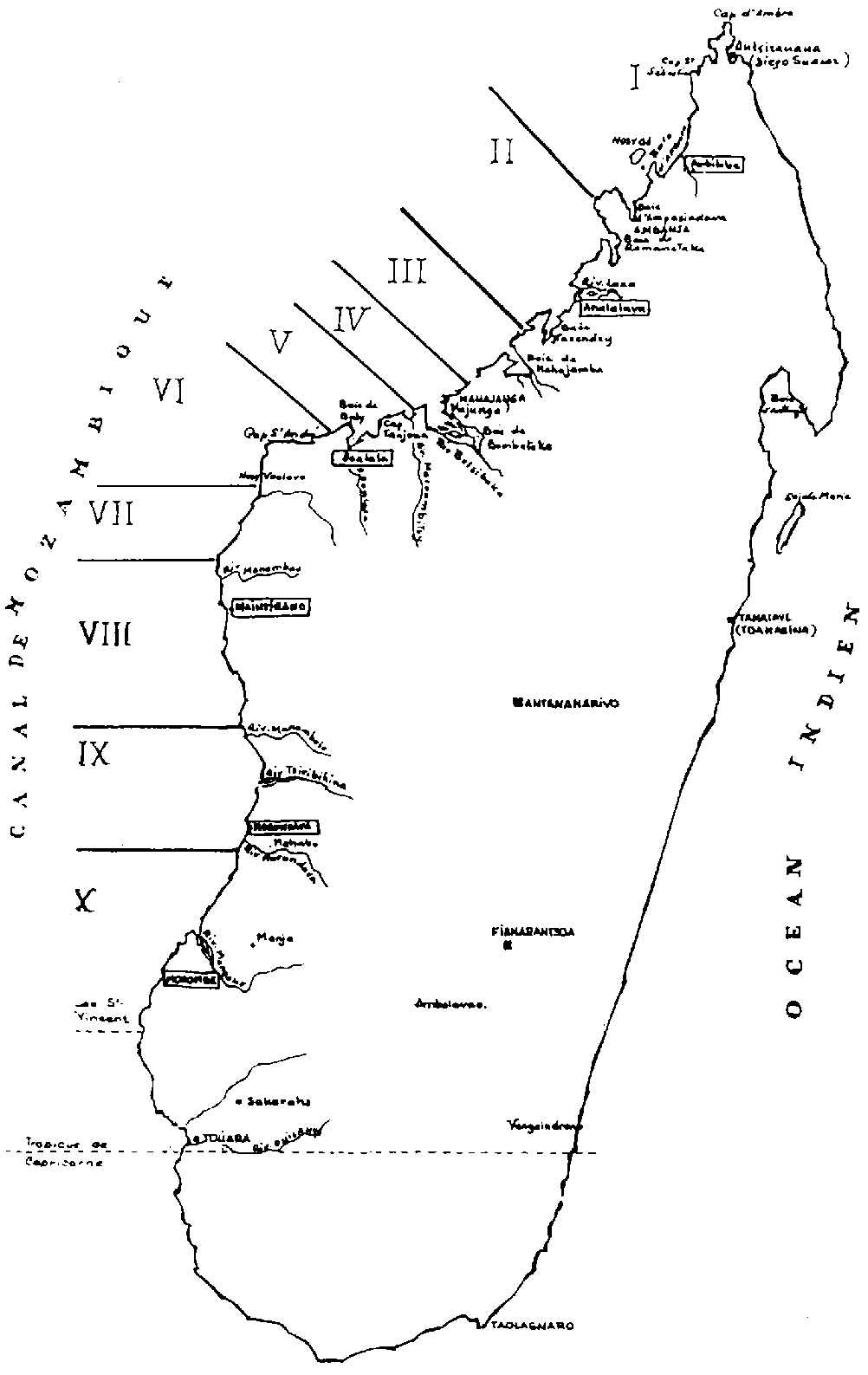
The shrimp fishery of Madagascar occurs along the north-west and west coasts. It is zoned to facilitate management (see Figure 1). The legislation establishes Zone I as extending from Cape St. Sebastien southwards to Cape Angadoka.
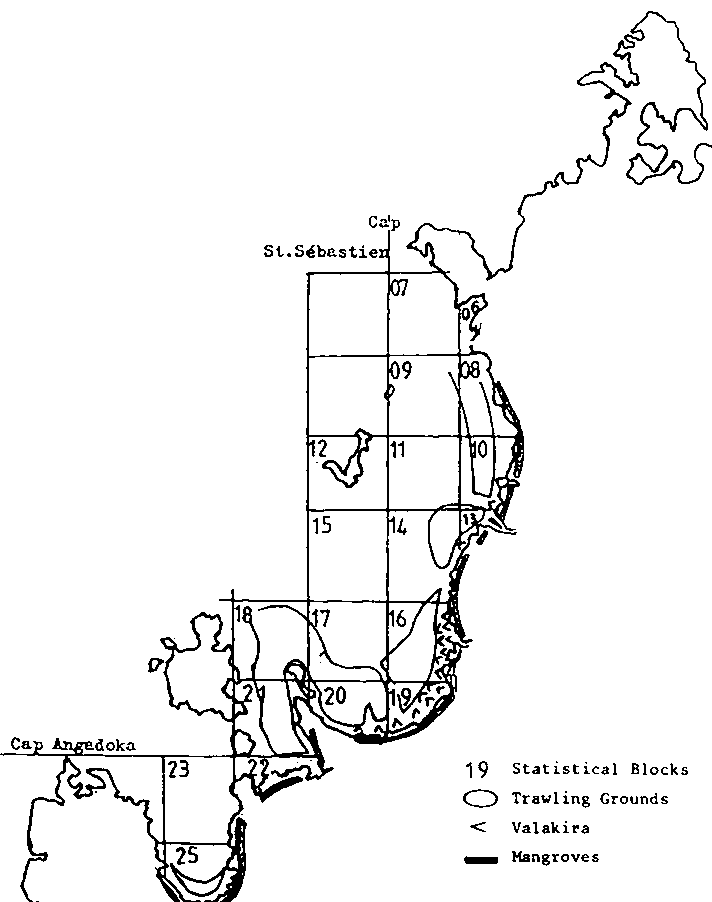
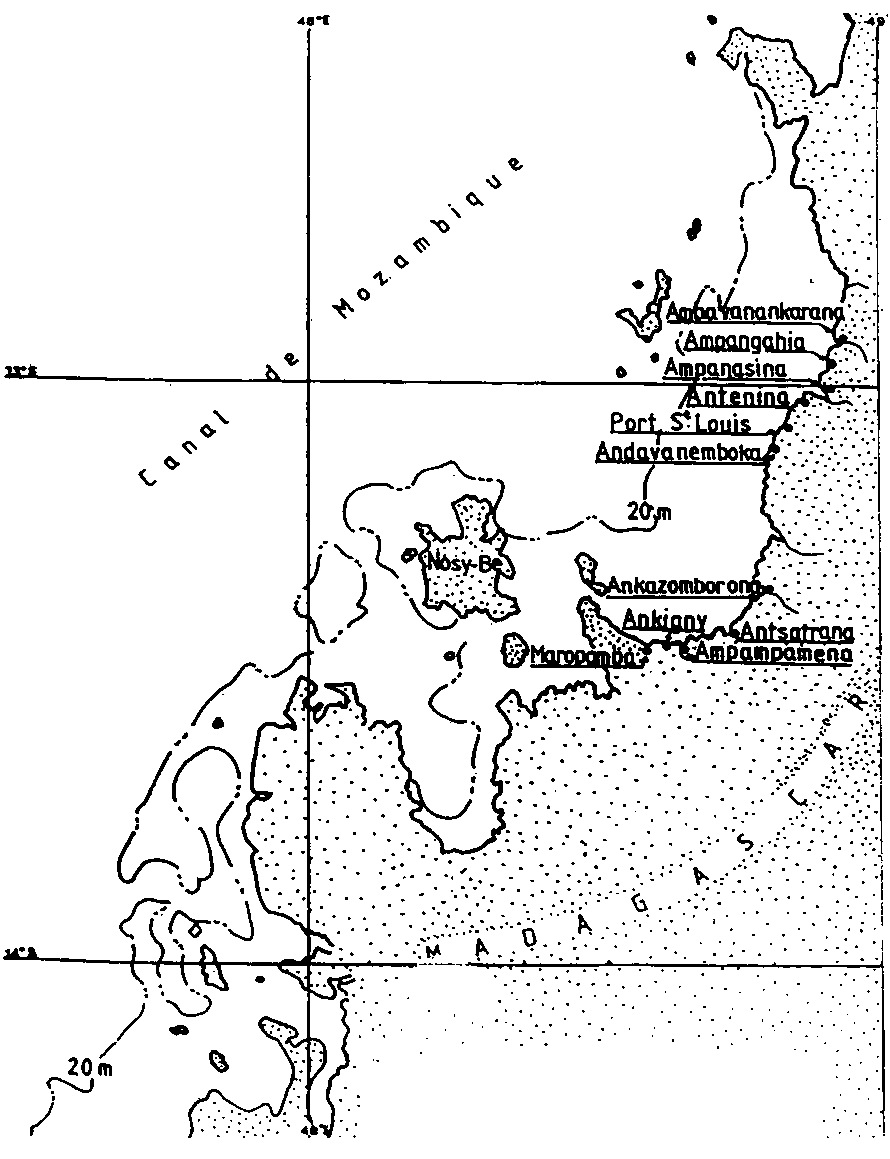
The main trawling areas within Zone I are located in Ampasindava, Tsimipaika and Ambaro Bays (see Figure 2). The trawlable area is estimated at 627 km2 the major part being at depths of 5 to 15 metres.
Fishery Types
The Traditional Fishery:
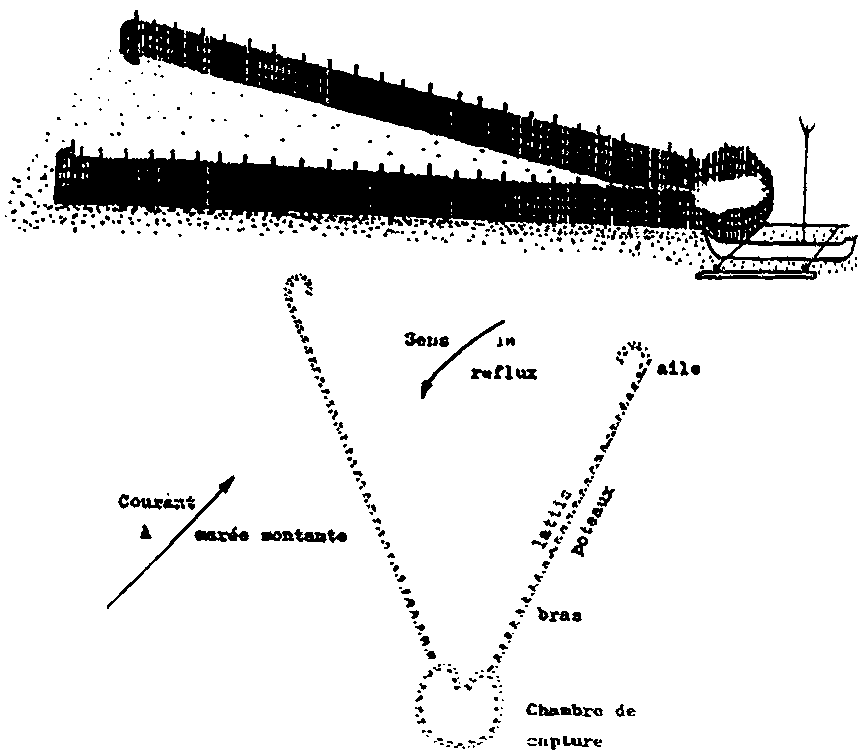
The principal traditional gears are fixed traps called valakira (see description in Rabarison, 1987) and beach seines, catching both shrimp and fish. Shrimp catches were given additional impetus from about 1974 when several companies began collecting part of the landings for subsequent export.
The number of valakira in use appears to fluctuate from year to year. In the absence of a system for collecting fishery statistics the number in use has often not been known. The tendency however, has been for the number to increase. In 1988, 326 valakira were counted (see Paper 9 in these Proceedings).
The valakira are not operated between December and February due to the flooding conditions and strong winds associated with the rainy season. The first placement of traps is undertaken in about March. The full level of activity starts in May with the arrival of seasonal workers from the hinterland and east coast (Antalaka and Vohemar).
The quantity of shrimp caught by traditional methods which is exported varies from 150 to 300 tonnes (whole weight). An additional about 21 percent of undersized shrimp are sold locally at the village level as boiled and dried products.
The Mini-Trawler Fishery:
About ten mini-trawlers are operated further offshore alongside the industrial trawler fleet. The legislation limits the size of the main engines to 25 Hp. These vessels which are based from Nosy-Bé were operated in both Zones I and II (Narindra Bay), however commencing in 1989 have been restricted to Zone I.
The owners of the mini-trawlers are obliged to sell their catch to the industrial trawler companies exploiting the same zone. In Zone I this is the Pêcheries de Nosy-Bé (PNB), while in Zone II it was SOMAPECHE. These companies provided ice, fuel and spare parts.
Typically a fishing trip is of 3 to 5 days duration, with each trawl haul lasting about one hour. In 1988, 25 percent of the total mini-trawler effort was in Zone I (see Paper 8 in these Proceedings) and generated landings of 73 tonnes (whole weight) of shrimp. The landings in that year from both Zones I and II was 203 tonnes.
The Industrial Trawler Fishery:
Since 1985, the company Pêcheries de Nosy-Bé has had the exclusive right to deploy industrial trawlers in Zone I. The company has licences for thirteen trawlers and has three categories of vessel from which to choose:
- ice trawlers of 15 in LOA and 150 Hp:
- ice trawlers of 17 m LOA and 260 Hp:
- freezer trawlers of 25 m LOA and 385 Hp.From the commencement of the fishing season (in about February) to about May trawling is done during the day-time. In the subsequent months to the end of the season in about November trawling is during the night.
Fishing trips of ice trawlers are generally of less than 24 hours, while trips of the freezer trawlers are of one week duration. The catch rates are high during the early months of the fishing season, with annual catches being in the order of 120 tonnes for the 15 m trawlers and up to 180-200 tonnes for the larger vessels. The catch from the industrial trawlers in 1988 was 1,391 tonnes (whole weight).
Management Institutions and Procedures
The Minister of Animal Production (Livestock and Fisheries), Waters and Forests (MPAEF), through the Directorate of Fisheries and Aquaculture (DPA) manages the fisheries resources under the jurisdiction of the state of Madagascar. On the matter of shrimp fisheries the DPA follows the recommendations made by the National Centre for Oceanographic Research (CNRO).
The trawlers engaged in catching shrimp are required to be licensed. In the case of the industrial trawlers the licences are issued jointly by the MPAEF and the Ministry of Transport, Meteorology and Tourism (MTMT). In this they follow the recommendations of the Inter-Ministerial Commission for Fisheries (CIP), which studies each licence application made to the MPAEF.
The Inter-Ministerial Commission for Fisheries is chaired by the Director of Fisheries and Aquaculture. The other members represent the following:
Ministry of Transport, Meteorology and Tourism
Ministry of Foreign Affairs
Ministry of Finance and Economy
Ministry of Industry and Commerce
Ministry of Information and Ideological Animation
Ministry of DefenceThe CNRO is also represented at the meetings and has the role of scientific advisor.
The Committee meets at the invitation of its Chairman as needed, and in a mandatory manner every two years between July 1st and October 30th. This is in order to evaluate the expansion plans of the industrial fishing companies for the coming biennium, the number of licences to be attributed to each company, and the number of mini-trawler licences.
The licences for the mini-trawlers are issued by the MPAEF on the recommendations of the DPA, subject however, to the approval of the MTMT within the biennial quota established by the Inter-Ministerial Commission.
Summary of Legislation Provisions
Law No. 85-013 of 11/12/85 promulgating Ordinance 85-013 of 16/09/85 determines the limits of the EEZ of the Malagasy Republic. Decree 71-238 of the 18th May 1971, certain provisions of which have been amended by decree 73-171 of the 22nd June 1973, determines the issue of trawling licences (issued jointly by the MPAEF and MTMT).
Under the Decree of the 5th June 1922 and the above mentioned decrees industrial boats can trawl only outside a limit of two nautical miles from the coast. An annual regulation promulgated by the MPAEF and MTMT jointly fixes the close season for trawling, as well as the attribution of licences by zone among the various fishing enterprises.
The same decrees fix the mesh size of the smallest meshes of the trawl nets at 20 mm bar, and at 70 mm stretched for the wings.
Fixed gear such as valakira can only be deployed following an authorization delivered by the Ministry responsible for navigation (Decree of the 5 June 1922).
MPAEF regulation 1093/86, completed by regulation 5751/88 obliges any person (physical or moral) wishing to collect shrimp to hold a provincial authorization delivered by the President of the Faritany.
Finally, marine products destined for human consumption or export, notably shrimp, are subjected to Decree 62-213 of 18/05/62 which regulate the control of quality standards as well as the conditions under which marine animal products can be stored.
Management Objectives for the Fishery
The broad objectives assigned to the fishery sector as a whole are as follow:
(a) the satisfaction of local protein requirements;
(b) improvement to the balance of trade;
(c) improvement in the standard of living of the fishermen;
(d) the creation of employment.As a valuable export commodity, shrimp is a substantial contributor to foreign currency earnings.- In recent years, marine products (of which shrimp contribute about 90 percent) have been in third place in terms of foreign earnings, behind coffee and vanilla. The shrimp fishery also makes a substantial contribution to the other sector objectives.
References
Rabarison, A.G.A.(1987): La Pêche de la Crevette par la Méthode du Valakira. In Proceedings of the Crustacean Management Workshop, organized by the FAO Project for the Development and Management of Fisheries in the Southwest Indian Ocean (SWIOP). RAF/79/065/WP/38/87: 60 - 65.
Figure 1: Locations of the shrimp fishery management zones.
Figure 2: Locations of trawling grounds and places where Valakira are set.
REVIEW OF THE LIFE CYCLE OF PENAEUS INDICUS IN ZONE I3
3 This paper is based on the joint work of Serge GARCIA and Herimamy RAZAFINDRAKOTO.
Introduction
The available published information has been reviewed and in part re-interpreted with the objective of obtaining a better understanding of the biology of the white shrimp Penaeus indicus. This was seen as an essential precursor to the stock assessment analyses reported on later in these Proceedings.
Particular attention was focussed on the chronology of the life cycle, aspects of the migration, and their inter-relationships with fishing success. Due recognition was given to the existence of an inshore traditional fishery and the more offshore trawl fishery, both of which generate catches which include the white shrimp (as well as other species).
Chronology of the Life Cycle
The chronology for P. indicus in Zone I has been reconstructed from available information (mainly from Le Reste, 1978) on the seasonalities of population fecundity and of the relative abundance of post-larvae (at sea), juveniles (in the estuaries), post-juveniles (in the intertidal zone) and recruits (to the offshore trawling grounds). The seasonality of the catches from traditional methods (valakira) and from trawling were also used.
This work was assisted by the availability of data on the length composition of the shrimp in the shallow near shore waters and on the trawling grounds, as determined from previous sampling of the catches from the valakira and industrial trawlers. Also useful were the previous estimates of the lengths at first recruitment and at first capture for both fishery types.
To a large extent the results are represented here as plots of the original data which have been "smoothed" so as to depict the general trends. The sources which are shown beneath the plots would need to be consulted by those seeking to investigate the data in more detail.
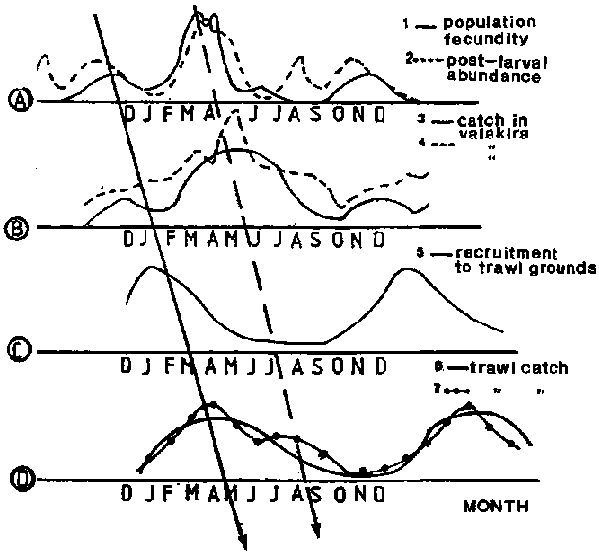
The first of these plots (Figure 1.A) shows the seasonality of the fecundity of the shrimp population and the relative abundance of the post-larvae. It seems there are two periods of high reproductive activity, in October-November, and in February-March-April. The lag of about one month which should exist between egg production and the appearance of post-larvae is not seen, possibly because the data have been compiled in intervals of one month.
The second plot (Figure 1.B) shows the seasonality of catches from the valakira set within the inter-tidal zone. There is general agreement between the two sources that much of the catches are taken in the period March-April-May-June, with a very secondary peak in December-January.
The next plot (Figure 1.C) shows the seasonality of recruitment to the trawling grounds. The curve of the percentages recruited by month is based on a mean for the age groups of 3, 4 and 5 months. This curve passes through a maximum in January-February, and has very low values from June to October.
The final plot in this series (Figure 1.D) shows the seasonality of the industrial trawler catches. These are maximal in March-April-May and very low from August to December.
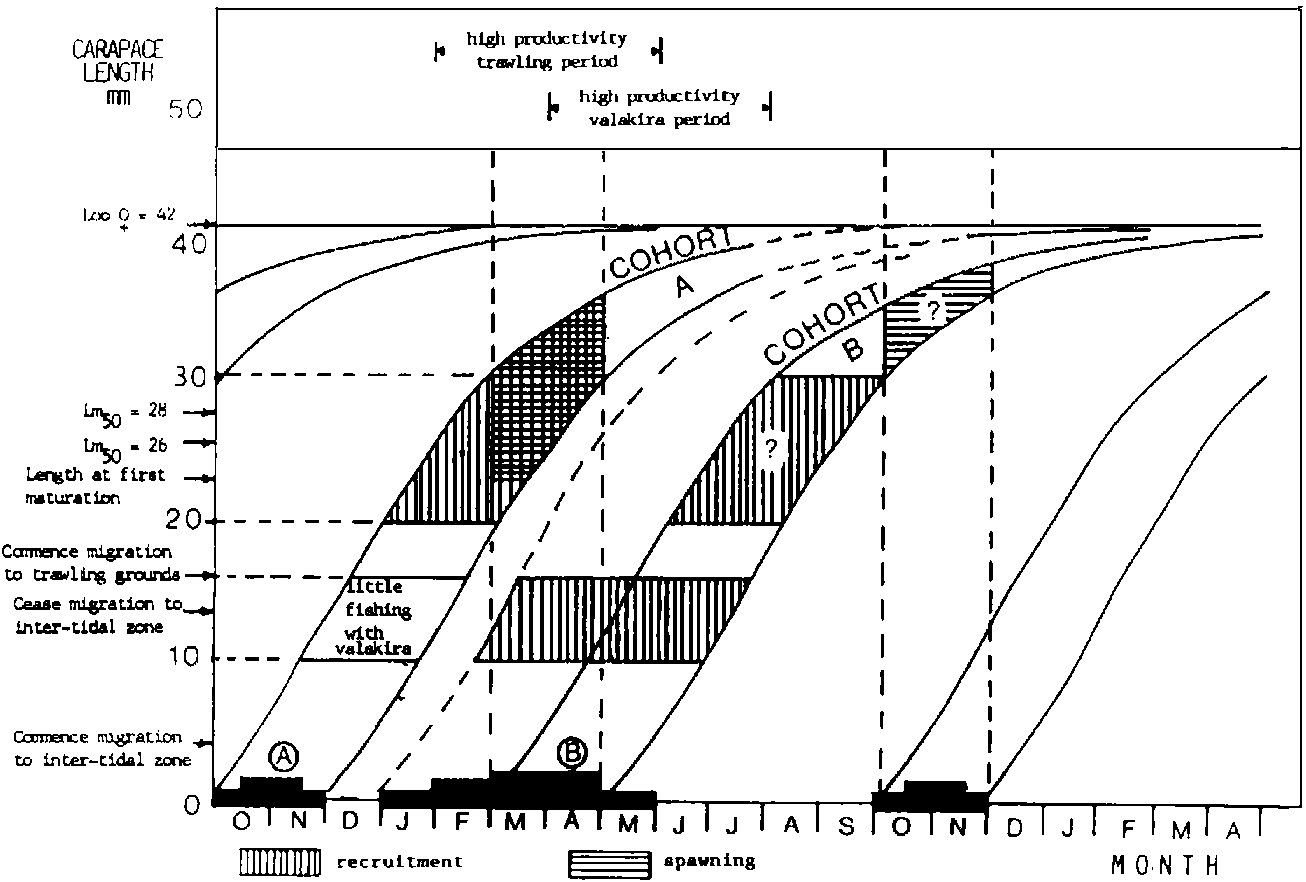
These general results were combined with length data in order to construct the two-dimensional diagram shown in Figure 2. The values for the growth parameters depicted in the diagram are for females from Le Reste (1978, Table 26, page 149). The same growth curve was used for the two cohorts, those from reproductive activity in October-November ("A" generation) and in March-April-May ("B" generation). The following is an interpretation of the chronology of these generations.
The "A" generation, hatched in October-November, passes through the intertidal zone (where the valakira are operated), in December-January at the time of the rainy season. Catches in the valakira are small or negligible, as the juveniles are flushed out of the intertidal zone by the floods. In addition the valakira are only marginally effective in this season due to the bad weather (high winds, rough seas) which prevail.
This generation is recruited into the industrial trawl fishery in January-February-March at between 20 and 30 mm carapace length (1.050 = 26 mm). It may be noted that the movement corresponds to the sexual maturation process (as from 23 mm with Lm50 = 28 mm). The highest catches from the industrial trawlers are obtained on this generation between March and June (the reproductive season for the "B" generation). At this time the shrimp are highly gregarious and the fishing takes place on dense schools.
It is uncertain what happens to the "A" generation after June. It is generally accepted that their vulnerability to capture drops as the shrimp cease to be gregarious and disperse. Another possibility is that this generation has been greatly reduced by capture and natural mortality.
Following the substantial drop in catch rates just prior to June, there is a change from day-time fishing on schooled shrimp (mainly P. indicus) to night-time fishing on dispersed tiger and brown shrimp (P. semisulcatus and Metapenaeus monoceros) and white shrimp.
The two possible hypotheses concerning the fate of the "A" generation after June are as follow:
(a) this generation has been subjected to very high levels of exploitation from the industrial trawlers, to the extent that the residual biomass is small after June, and hence the contribution to the reproductive activity in October-November is negligible;
(b) the drop in the abundance of the "A" generation (reflected by the decline in catch rates) is only apparent, and the residual biomass is still substantial although too dispersed to be effectively exploited. This stock could be present in the coastal zone (in the dry season after June) and constitute substantially to the October-November reproduction.
The "B" generation is hatched from January to May (peak in March-April). It grows rapidly in the estuaries, from where (according to Le Reste, 1978) their departure is delayed due to the rising salinity in the dry season.
This generation is exploited in the inter-tidal zone commencing from February-March, with the peak catches in the valakira occurring from April to July. These shrimp measure between 10 and 20 mm carapace length (Le Reste, 1978 Figure 32) and correspond to ages of 1.5 to 3 months.
The appearance of this generation in the catches from the industrial trawlers should occur from June-July-August. This recruitment however, does not appear in Figure 1.C, and according to Le Reste (1978), the "B" generation largely remains in the inter-tidal zone.
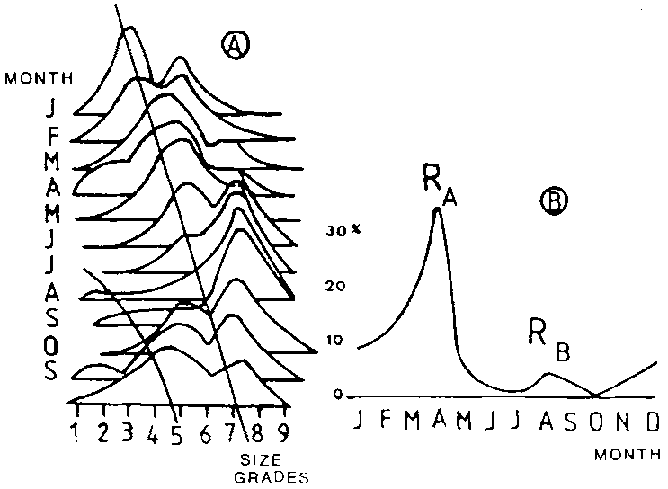
There is some contrary evidence in Marcille (1978) who used data from the industrial trawler company SOMAPECHE for the period 1970-1973 (probably operating in Zone II where there were few or no valakira). These data show a contribution from the "B" generation to the trawl catch. This is represented here in Figure 3A which shows small sized shrimp entering the catches from August: and in Figure 3B which shows a contribution of the 61-70 tails/lb grade categories also in August.
The Migration Phenomena
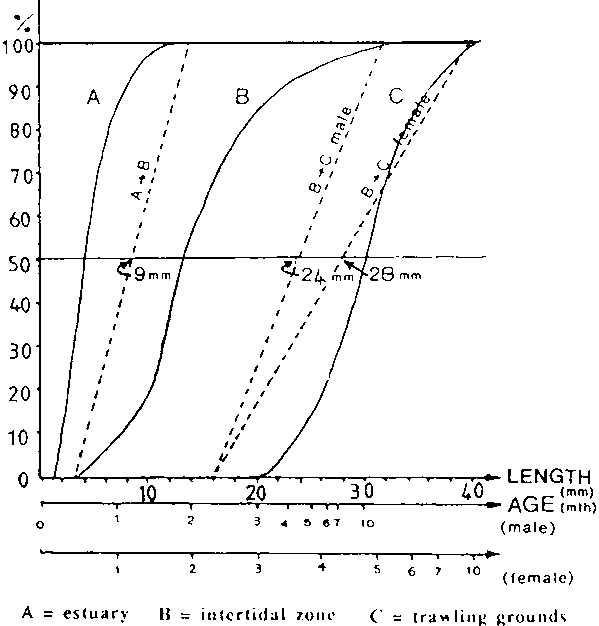
The data of Le Reste 1978, Figure 32 is referred to here to represent the migration of the shrimp from the estuaries through the inter-tidal zone to the open sea. These are represented as length ogives in Figure 4.
It appears that as from a carapace length of 14 mm nearly all the shrimp have passed to the inter-tidal zone. At less than 3 mm carapace length, few are found in the inter-tidal zone. The conclusion from this is that the migration from the estuary to the inter-tidal zone occurs at lengths between 3 mm and 14 mm.
As a first approximation, if it is assumed that the migrating population is distributed linearly between these two sizes, then the percentage having migrated from the estuaries to the inter-tidal zone can be determined (line AB, Figure 4).
Similarly, in respect to the migration between the inter-tidal zone and the sea, it appears that no shrimp of less than 16 mm carapace length are found at sea, while no females of more than 40 mm or males of more than 32 mm are found in the inter-tidal zone. Again it is possible to draw a linear ogive showing the percentages (by size) having migrated from the inter-tidal zone to the sea (lines BC in Figure 4).
On the basis of what has just been described, the estimates obtained for the mean size at migration (L(mig)50) are 9 mm for the migration from the estuary to the inter-tidal zone, 28 mm for females migrating to the sea, and 24 mm for males migrating to the sea.
It is interesting to note that the different L(mig)50 values for the migration to the sea of the males and females occurs at close to the same ages (about 4.5 months) and that the L(mig)50 for the females (28 mm) is the same as the mean size at sexual maturity (Lm50 = 28 mm, after Le Reste, 1978).
The length ogives of migration were transformed to their age equivalents, using the length-at-age relationship from Marcille 1978, page 149. The results are shown in Table 1. The mean ogive (males and females) was calculated for the migration to the trawling grounds. Knowing the percentages at each age having migrated to the succeeding biotype, it was possible to construct the age distribution in each biotype (Table 2).
In considering the contents of those tables, it should be appreciated that they represent a general (perhaps overly idealised) situation. As previously mentioned, there is some evidence in the case of Zone I that much of the "A" generation migrates rapidly through the inter-tidal zone, while much of the "B" generation remains within the inter-tidal zone (and contributes little to the trawl catches).
Concluding Comments
The principle general conclusion from this review is that, within Zone I, the traditional valakira fishery and the trawl fishery are largely independent. This is proposed in the sense that the trawl catches derive largely from the "A" generation, whereas the valakira catches are mainly of the "B" generation.
There remains the possibility of inter-dependence in the context of reproductive activity. As mentioned, the months when the trawl catches are highest are also those coinciding with the reproductive activity of the "B" generation.
There is no evidence as yet to suggest that the past levels of fishing effort by either the traditional or trawler fishermen have impaired the recruitment to either fishery. In later papers within these Proceedings, it will be seen that annual catches and catch rates have remained high.
References
Le Reste, L. (1978): Biologic d'une population de crevettes Penaeus indicus M.E. sur la côte Nord-Ouest de Madagascar. Trav. et Doc. de l'ORSTOM. No. 99:291 p.
Marcille, J. (1978): Dynamique des populations de crevettes pénéides exploites a Madagascar. Trav. et Doc. de l'ORSTOM. No. 92:197p.
Table 1: Percentages by length and age of the shrimp population having recruited to the inter-tidal zone and trawling grounds.
Age (Months)
Carapace
Length (mm)
Percentage of Population
having RecruitedIntertidal Zone
Trawling Grounds
Males
Females
Sexes Combined
Males
Females
Combined
0
-
-
0
0
0
0
1
(7.0)
(7.0)
35
0
0
0
2
(14.0)
(14.0)
~100
0
0
0
3
20.0
(20.0)
~100
25
15
20
4
23.3
26.5
~100
42
43
42
5
25.4
31.1
~100
58
63
61
6
26.8
34.4
~100
66
76
71
7
27.7
36.7
~100
72
87
79
8
28.4
38.4
~100
76
93
85
9
28.8
39.6
~100
80
98
89
10
29.2
40.4
~100
81
100
91
11
29.4
40.9
~100
85
100
92
12
29.6
41.4
~100
87
100
93
Table 2: Percentage by age of the shrimp population having recruited to the estuary, intertidal zone and trawling grounds.
Age (Months)
Estuary
Intertidal Zone
Trawling Grounds
0
100
0
0
1
65
35
0
2
0
100
0
3
0
80
20
4
0
58
42
5
0
39
61
6
0
29
71
7
0
21
79
8
0
15
85
9
0
11
89
10
0
9
91
11
0
8
92
12
0
7
93
Figure 1: Chronology of the life cycle of P. indicus in Zone I of Madagascar.
Source:
1. Le Reste, 1978: Fig. 43, P.] 50.
2. Le Reste, 1978: Fig. 46, P.161.
3. Le Reste, 1978: Fig. 48. P.161.
4. Marcille. 1978.
5. Le Reste, 1978: Fig. 49. P.162 (mean 1971-73).
6. Marcille, 1978: Fig. 14 (mean 1970-73).Figure 2: A two-dimensional interpretation of the life cycle of P. indicus.
Figure 4: Plots of comulative abundance (A, B and C) and migration/selection (AB, BC) against length and age. (The former were constructed from data depicted in Figure 32 of Le Reste, 1978)
THE APPLICATION OF A MODIFIED "COHORT ANALYSIS" ON THE TRAWL CATCH AND EFFORT DATA FOR ZONE I IN 1988
byMichael J. SANDERS
FAO Fisheries Project
P.O. Box 487, VICTORIA, SeychellesIntroduction:
In recent years, about twelve industrial trawlers, with engines mainly between 150 and 370 HP, and ten 25 HP mini-trawlers have been engaged in Zone I. The catches of these two groups of vessels in 1988 were 1,391 and 74 tonnes respectively.
As in previous years, the method of operating the trawlers differed substantially between the beginning and end of the fishing season. The mini-trawlers were operated in Zone I only in the months prior to July.
In the period from the beginning of the season to roughly the end of May, fishing is undertaken during the day-time, and is directed at schools of white shrimp, Penaeus indicus. Other species usually contribute less than five percent of the catches. The schools are located by echo-sounders and the catch rates are very high. The end of this period is signalled by a sudden collapse in catch rates.
During the remainder of the season, fishing is predominantly in the night-time. Tiger and brown shrimp (P. semisulcatus and Metapenaeus monoceros) contribute equally to about 60 percent of the catches, while white shrimp provide most of the remainder. Very few schools are encountered during this period and catching is hence not assisted by using echo-sounders. The catch rates are low and tend to decline further as the season progresses.
Method:
Data Requirements:
The data used in the analyses were the catch weights and fishing efforts for each half-month of the 1988 season. The catch weights were the sum of the catches from the industrial trawlers and mini-trawlers.
The effort units had previously been adjusted to standard trawling hours. The vessels taken as standard were the four industrial trawlers equipped with main engines of 260 HP and twin trawls each of 18 m headrope length.
It was necessary to convert catch weights to catch numbers. Estimates for the mean headless weight of individual shrimp in the catches for each half-month were obtained from the catch weights by species in each time interval and the proportion of these catches in each category of commercial grade. The grades were based on international trade practices according to the number of headless shrimp per unit weight.
The only other data input into the analyses was a value for the natural mortality coefficient (M). The value chosen was M = 0.1 per half month, close to the estimates provided in Le Reste (1978) and Marcille (1978). This is equivalent to ten percent of the mean population dying from causes other than fishing during each half monthly time interval.
Method of Analysis:
Separate analyses were undertaken for the day-time and night-time periods. For each period, a mean catchability coefficient (q) was first estimated, this being defined according to the relationship
F = q.X
Here, X is the fishing effort and F is the fishing mortality coefficient. The latter is the proportion of the mean population dying as a consequence of capture.
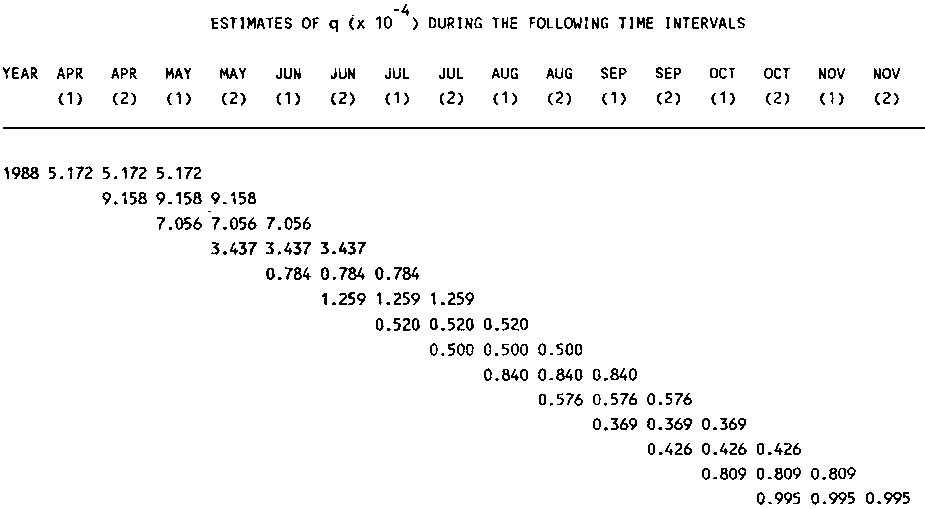
The method used for estimating the catchability coefficient was the second modification of the DeLury Method given in Sanders (1988). The input data required were the catch numbers and fishing efforts, both included in Table 2, and the assumed value for the natural mortality coefficient. This work was assisted by the availability of a micro-computer programme written by the author in Basic VI language.
In practice the method was applied fourteen times, once in respect to each overlapping group of three consecutive time intervals, starting with the half-month having the highest catch per unit effort (i.e. Apr(l)). A mean value of the catchability coefficient was determined for each of the two periods. The basis on which this was done is described later.
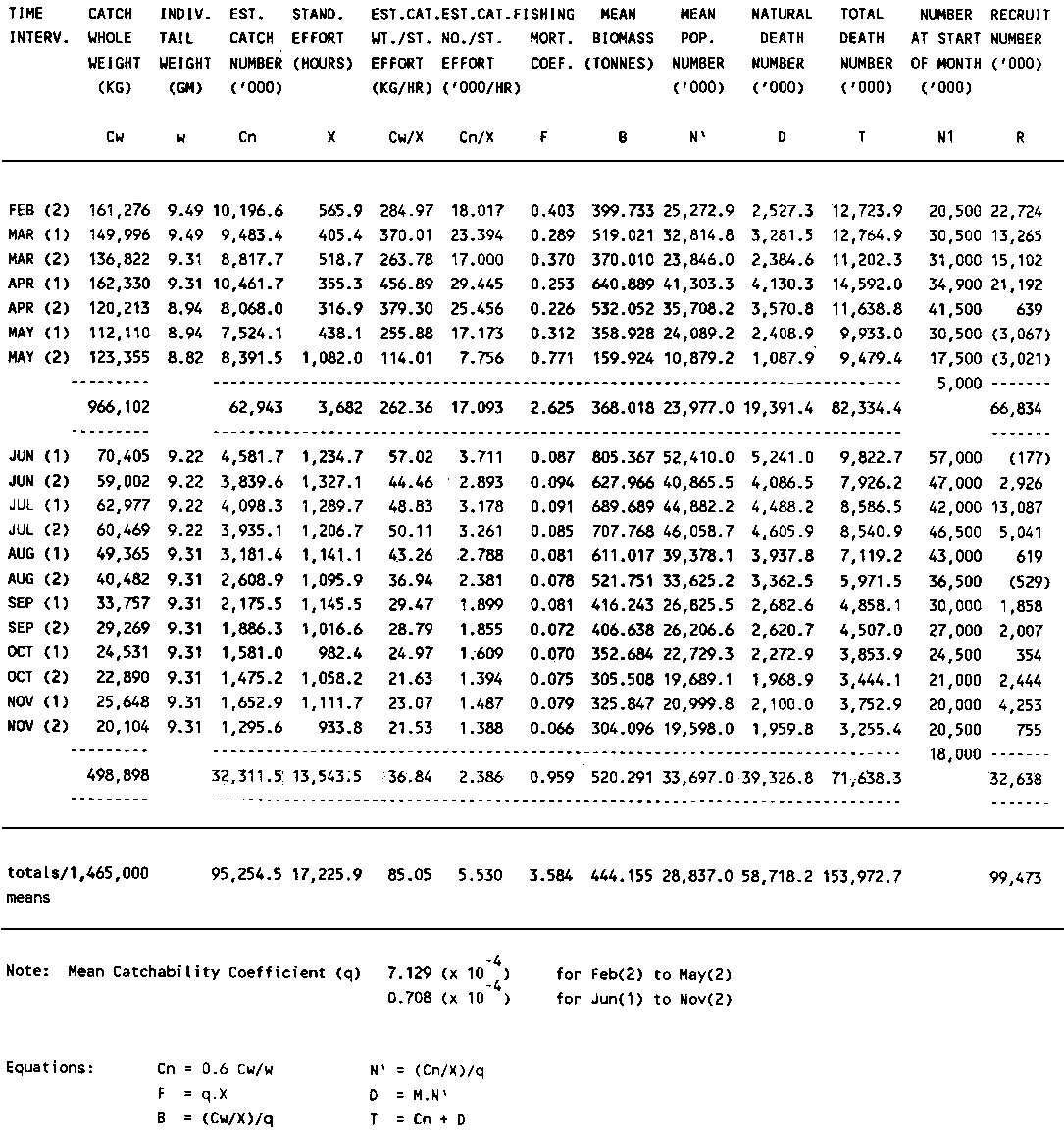
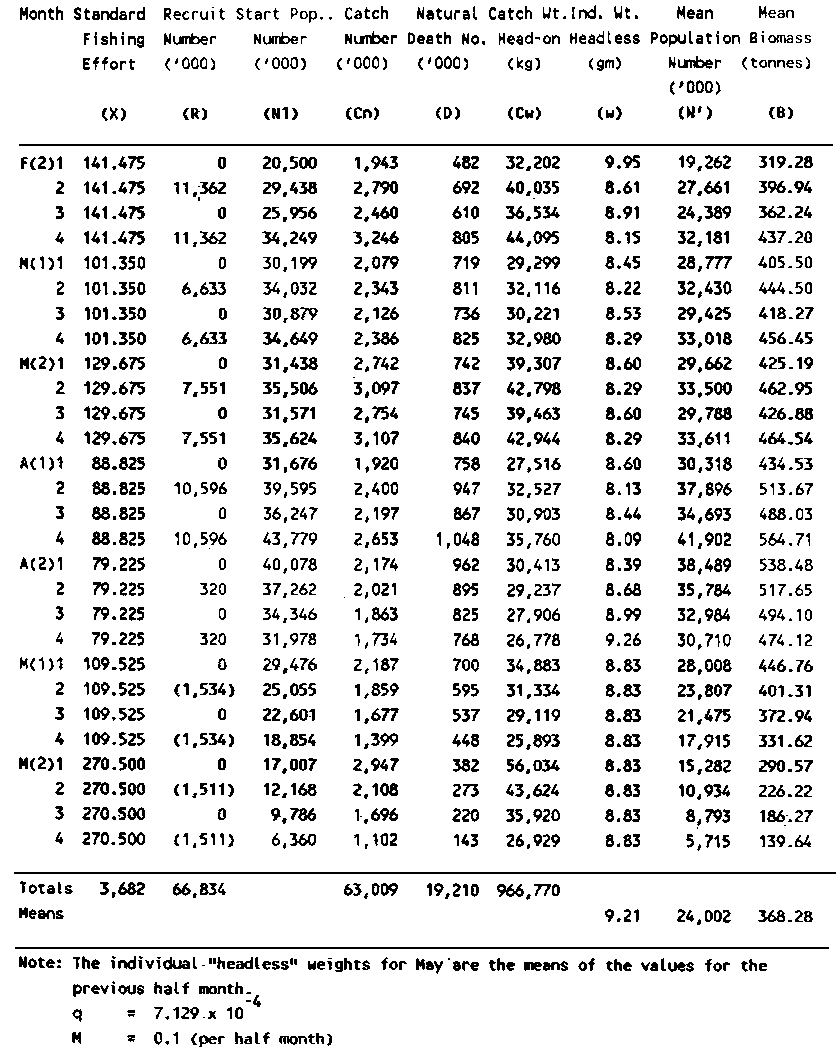
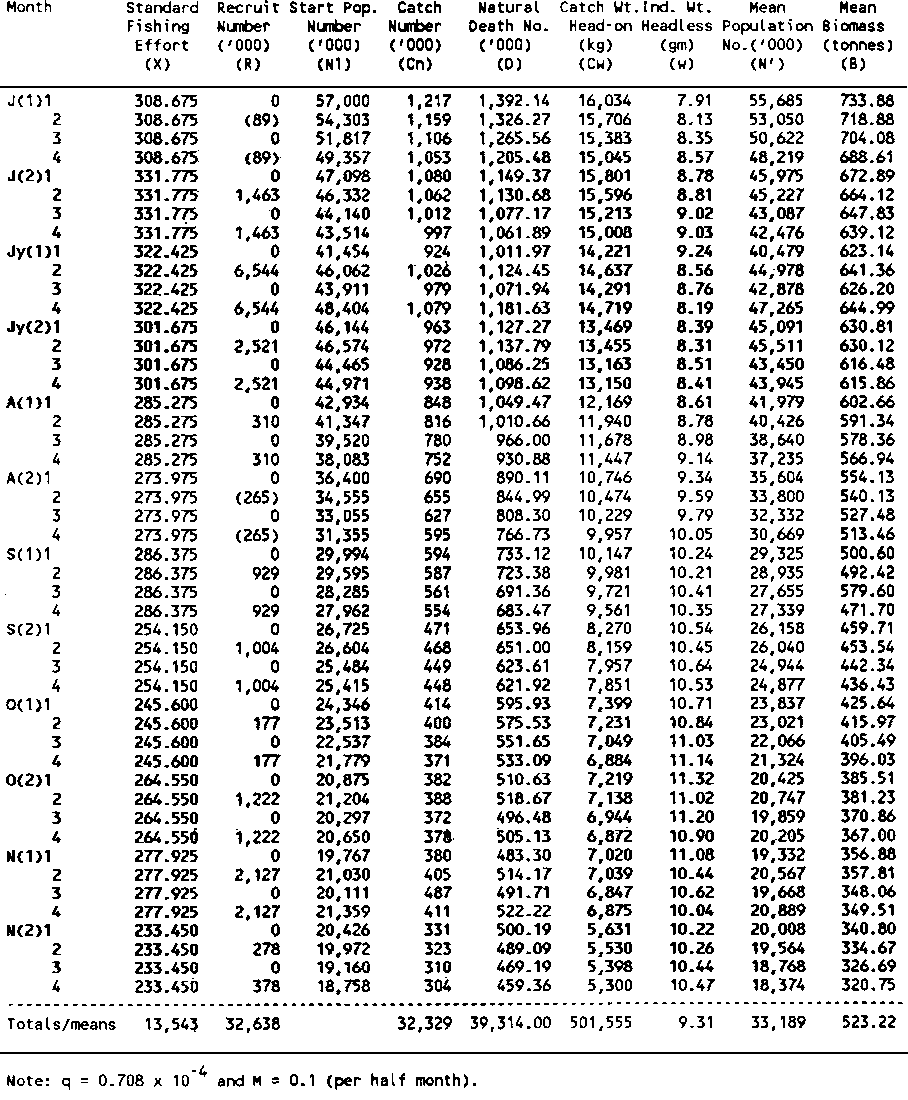
The next procedures involved preparing a micro-computer spreadsheet with the input data again being the half-monthly catches and efforts, the chosen value for the natural mortality coefficient, as well as the estimate for the mean catchability coefficients in each period. The values derived within the spreadsheet were estimates for the fishing mortality coefficient, the mean population number and biomass, and the number dying in each time interval. The equations used when obtaining these estimates are given below (Table 2).
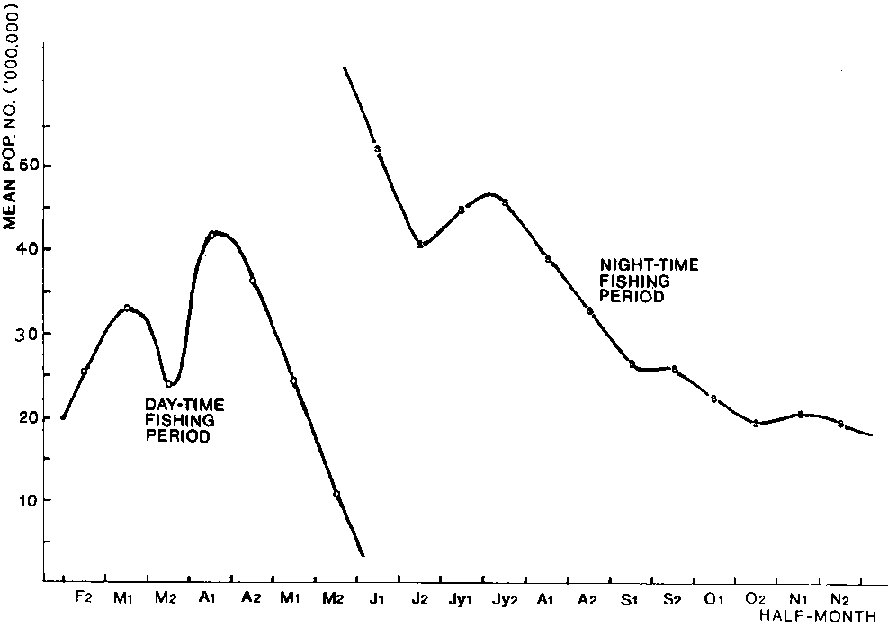
The final procedures were directed towards estimating the number of shrimp recruited to the trawling grounds. This involved plotting the previously estimated mean population numbers against the middle of each half-month interval. The plotted points were then joined by a Tree hand' line, and values for the population number at the beginning and end of each interval read directly from the graph. These values were used as input data within the spreadsheet.
Next, the recruit numbers were estimated (within the spreadsheet) by adding the total death number in each interval to the difference between the population numbers determined for the beginning and end of the interval. The operative equation is:
R = (N2 - N1) + T
where R is the recruit number, N1 and N2 are the population numbers at the beginning and end of the interval, and T is the total death number.
Results:
The estimates for the catchability coefficient in each interval are shown in Table 1. The uppermost nine values were taken as reflecting the catchabilities during the day-time fishing period, and the lowermost thirty values as reflecting the catchabilities during the night-time period. The means for these two periods are respectively q = 7.129 × 10⁻⁴ and q = 0.708 × 10⁻⁴. (The three intermediate values were not included in the means, on the presumption that both day-time and night-time fishing were occurring in these intervals).
A printout of the spreadsheet is shown in Table 2. The plots of the mean population numbers used in determining the number at the beginning and end of each half-month are shown in Figure 1. In both cases, the date chosen as separating the day-time and night-time fishing periods is June 1.
Discussion:
It is not surprising that the mean catchability coefficient for the day-time fishing period was found to be substantially higher than for the night-time period. The explanation lies in the schooling behaviour of the white shrimp during the early months and the ability to locate schools with echo-sounders.
The values obtained can be considered as the proportion of the shrimp population under consideration4 caught during an hour of fishing with a standard 260 HP trawler (hauling two nets of 18 m headrope length). Obviously, when fishing on schools, a greater proportion of the population is caught per unit of fishing effort than when fishing on dispersed shrimp.
4 In respect to the day-time fishing period, for example, the population under consideration are the schooled shrimp (mainly white shrimp) present on the trawling grounds in the time interval in question.
It was possible to use the values to estimate the efficiency of the trawl nets (see Equation in the Footnote5). Efficiency is defined here as the proportion of shrimp which are caught from the area of seabed passed over during one hour of trawling. The values obtained were p = 7.66 and p = 0.76 for the two periods respectively.
5 The equation used was: q = (s.h.p)/A where s is the speed of the vessel, h is the horizontal width of the nets, p is the efficiency and A is the area of the grounds occupied by the shrimp.
In obtaining these estimates, the area of the trawling grounds was taken as 627 km2 the horizontal width of the trawl nets as 35 percent of the headline length, and the speed of the 260 HP vessels when trawling as 2.5 knots (= 4.63 km/hr). The horizontal width of the nets had been determined from "tank tests" undertaken in Europe. All the values were obtained through personal communication with the company Pêcheries de Nosy Bé.
The estimate of efficiency obtained for the night-time fishing period is equivalent to 76 percent of the shrimp within the path of the nets being liable to capture, which seems reasonable. The efficiency determined for the day-time period is, however, too high.
At least a part of the explanation is that 627 km2 is an inappropriate area to use when estimating day time efficiency. As the fishing during this period was directed solely at schools, it would have been more appropriate to use only the area of grounds occupied by schools. This area was not known, but would certainly have been less than 627 km2.
It is possible, however, to use the equation in Footnote 2 to estimate what this area might have been, on the assumption that the efficiency of the nets during the day-time period was the same as that estimated for the night-time period. The area compatible with this is 62.2 km2 (= 4.63 × 12.6 × 0.76/0.7129) which is 10 percent of the trawling grounds. The validity of the assumption is unfortunately unknown.
The results in Table 2 indicate that the estimates of biomass were highest for the night-time fishing period. The contribution to the annual catch from day-time fishing during 1988 was nevertheless double that from night-time fishing.
A possible implication is that higher annual catches might be obtained by increasing the night-time fishing effort. It was not possible from the analyses reported here however, to know the extent of additional catch nor extra effort that might be required. These aspects were investigated in Papers 4 and 5 in these Proceedings.
Another question which also could not be answered is whether it would be beneficial to undertake night-time fishing during the day-time fishing period, using vessels specially for that purpose6. It is relevant to note here that, if the recruitment cycle of the tiger shrimp is the same as for the white shrimp, as seems likely, then night-time fishing during the early months of the year would probably be associated with higher catch rates (than later in the year).
6 The limiting factor for the vessels engaged in the daytime fishery is the processing capacity. The same vessels could not therefore be used day and night.
The estimates of recruit numbers given in Table 2 relate only to the time intervals identified. The values are also inclusive of the numbers that might be migrating from the trawling ground, and should therefore, be considered as "net" recruit numbers.
An indication of the total number of recruits arriving to the grounds is given by the sum of the total death number and the numbers remaining at the end of the day-time and night-time fishing periods. These are 87.3 million (= 82.3 + 5 million) and 89.6 million (= 71.6 + 18.0 million) for the two periods respectively. They are both under-estimates however, as they do not include shrimp dying prior to each of the periods (and the 'possible numbers migrating off the trawl grounds).
Concluding Comment:
A substantial difficulty with the methodology as applied here is the assumption (underlying the estimation of the q values) that the decline in catch rates is the consequence of mortalities only. As already mentioned in respect to the latter part of the day-time fishing period, (see Paper 2 in these Proceedings) there is a likelihood that the vulnerability to capture drops as a consequence of the shrimp ceasing to be schooled. There is also evidence, reflected by the 'observed' individual tail weights and estimated recruit numbers subsequent to April (1) (see Table 2), of recruitment to and migration off the trawl grounds.:
Unfortunately, it was not possible to investigate the extent of possible bias in the estimates from all these causes. It is worth noting however, that in almost all the fortnightly periods the total death numbers were greater than the "net" recruit numbers. Presumably the extent of bias was less than if the "net" recruit numbers had been the greater.
Notwithstanding the uncertainty concerning the estimates of q, the values were used in the analyses reported in the next two papers of these Proceedings. Some evidence is in fact presented in Paper 5 in support of the estimates having the correct order of magnitude.
References:
Le Reste, L., (1978): Biologie d'une population de crevettes, Penaeus indicus H. Milne Edwards, sur la cote nord-ouest de Madagascar. Trav. Doc. ORSTOM. (99): 291 p.
Marcille, J., (1978): Dynamique des populations de crevettes pénaeides exploitées a Madagascar. Trav. Doc. ORSTOM. (92): 197 p.
FIGURE 1. Plot of mean population number in each half-month.
THE APPLICATION OF THE "THOMPSON AND BELL" METHOD TO THE TRAWL FISHERY DATA FOR ZONE I IN 1988
by
Michael J. SANDERS
FAO Fisheries Project
P.O. Box 487, VICTORIA, SeychellesIntroduction
The analyses reported in this paper were undertaken as a complement to those presented earlier in. Paper 3. Output values for the catchability coefficients and recruit numbers from the previous paper were used for estimating the likely annual catches, catch rates, population biomass and the mean individual sizes of the shrimp in the catches from applying alternative levels of fishing effort. The consequence of delaying the opening date for the fishing season was also tested.
Again, in undertaking the analyses, recognition was given to the substantial differences in fishing practices between the early and latter months of the year. Prior to about June, day-time fishing on schooled while shrimp (Penaeus indicus) is assisted by the use of echo-sounders with resultant high catch rates. Much lower catch rates are achieved during the later months when night-time fishing is directed at non-schooling tiger and brown shrimp (Penaeus semisulcatus and Metapenaeus monoceros), as well as the white shrimp.
Method
Management Options Investigated
In the case of the day-time fishing period, the chosen range of fishing efforts was from 500 to 8,000 standard fishing hours, while for the night-time period it was from 2,000 to 32,000 St. fishing hours. In each half-month the fishing efforts were applied in direct proportion to the observed fishing efforts in 1988.
The other management options investigated, this time in respect to the day-time fishing period only, were delays of ½, 1 and 1½ months in the commencement of the fishing season. The delays were all relative to the middle of February, which was the date of commencement of the 1988 season.
The effects of the delays on the estimates of annual catch weight, catch rate, population biomass and mean individual weights were investigated for the range of fishing efforts previously mentioned. Again, the fishing efforts in the half-months subsequent to the commencement of the season were in direct proportion to the observed efforts.
Data requirements
The data used included the observed fishing efforts for 1988 and a value for the recruit number in each half-month. The latter were obtained as output from the analyses reported in Paper 3.
Other data inputs were a value for the natural mortality coefficient (M) and values for the mean catchability coefficient (q) applying in each of the two fishing periods.
The values used were M = 0.1 per half-month, q = 7.129 × 10⁻⁴ (February - May) and q = 0.708 × 10⁻⁴ (June - November). The latter were obtained as output from Paper 3.
In addition, it was necessary to have values for the von Bertalanffy growth constants (L¥ and K), the length at first recruitment to the trawling grounds (Lr) and the constants a and b in the power curve relationship (W = a.Lb) between whole weight (W) and carapace length (L). These are shown in Table 1.
Method of Analysis
Separate analyses were undertaken for the day and night-time fishing periods. A number of inter-linked spreadsheets were constructed, with one axis for identifying each of the groups of recruits and the other, the time intervals, each half-month being divided into four intervals. An example of the master (input/output) spreadsheet with which the others were linked is given in Appendices 1 and 2.
Separate estimates were made of the parameter values of interest (e.g. population numbers, catch numbers, etc.) in respect to each recruit group and sub-interval. These were subsequently summed across recruit groups to get estimates for the parameters in each sub-interval. The equations used for the estimations are shown in the Appendix 3.
The population number at the beginning of the first sub-interval of the day-time and night-time fishing periods had previously been determined as 20.5 million and 57 million respectively, as output from Paper 3.
In respect to the number of recruits (R), in each half-month, it was assumed that half would enter the exploited phase at the beginning of the first sub-interval and the other half at the beginning of the third sub-interval.
In order to estimate catch weights and biomass, the mean carapace length and then the mean individual weight (whole and "headless") were estimated for each recruit group in each sub-interval.
In doing this, it was assumed that each recruit group entered the exploited phase at the same length at first recruitment. These were chosen as Lr = 22.8 mm for the day-time fishing period and Lr = 18 mm for the night-time period. The mean carapace lengths of the population existing at the beginning of the first interval of each of the two fishing periods were assumed to be 27 mm and 25.5 mm respectively.
Results and Discussion
The results for the day-time fishing period (Tables 2, 3, 4 and 5 and Figures 1, 2, 3 and 4) suggest that the level of fishing effort applying in 1988 is close to optimal. The slightly greater catch that might result from increasing the fishing effort (and associated fishing costs) would be comprised of smaller, less valuable shrimp (unless there was an associated delay in the commencement of the fishing season).
If any change to the fishing effort regime were to be contemplated, the more defensible option would be to delay the, fishing season while maintaining the prevailing level of fishing effort. The possible benefits in terms of increased catch weights range from 30 to 70 tonnes. The catches would be comprised of more valuable shrimp. Also, the catch rates and population biomass would be marginally higher.
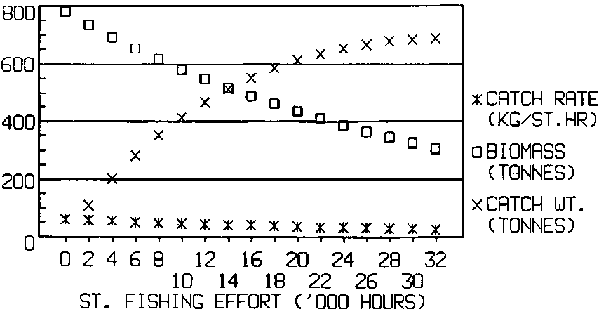
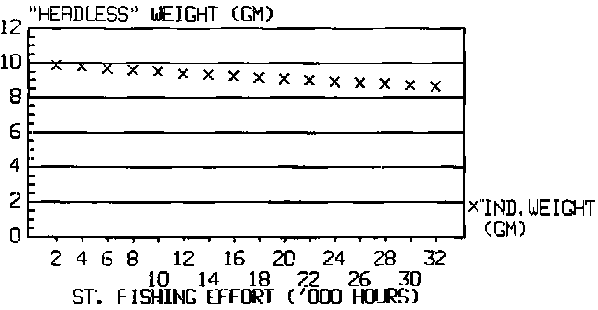
In respect to the night-time fishing period, the results (Table 6 and Figures 5, 6, 7 and 8) suggest the possibility of substantially increasing the catch. An additional catch of more than 200 tonnes could be achieved through increases in the fishing effort. The extent to which this would be economically justified, however, would need to be given advance consideration. This aspect is given some further consideration in Paper 5 of these Proceedings.
In examining the results for the night-time fishing period, it should be appreciated that they provide no information about the benefits of night-time fishing during the present day-time fishing period.
Concluding Comment
In applying the "Thompson and Bell" model to investigate the affects of delaying the commencement of the fishing season, there aspects of uncertainty which require further investigation.
As applied here, it has been assumed that the shrimp not caught or dying naturally in one half-month will be available and vulnerable to capture during the next. Some proportion of the surviving shrimp may cease to school or migrate (prior to the next half-month), in which case they would no longer be available or vulnerable to capture (at least during the day-time fishing period). This problem is to some extent accomodated by the recruit numbers being "net" values (see Paper 3).
Table 1: Values for the growth parameters used within the analyses
Day-time Fishing Period:
Females
Males
L¥ = 45
34 (carapace length in mm) K = 0.208
0.208 (per month) Lr = 22.8
22.8 (carapace length in mm) a = 0.0023
0.0023 (when whole weight is in gm b = 2.68
2.68 and carapace length is mm) Night-time Fishing Period:
Females
Males
L¥ = 42
28 (carapace length in mm) K = 0.208
0.208 (per month) Lr = 18
18 (carapace length in mm) a = 0.0023
0.0023 (when whole weight is in gm b = 2.68
2.68 and carapace length is mm) Table 2: Estimates of trawl catch weights for a range of seasonal standard fishing efforts and seasonal openings in the day-time fishing period.
STANDARD FISHING
EFFORT(HOURS)CATCH WEIGHT (TONNES) WHEN FISHING SEASON
NOT
DELAYEDDELAYED
MONTH ½DELAYED
1 MONTHDELAYED
1 ½ MONTH500
284
307
321
337
1,000
493
528
550
573
1,500
647
687
712
737
2,000
761
801
826
852
2,500
846
883
907
932
3,000
908
942
964
987
3,500
953
984
1004
1025
4,000
987
1014
1032
1051
4,500
1011
1035
1051
1068
5,000
1029
1049
1064
1080
5,500
1042
1059
1072
1087
6,000
1051
1065
1078
1092
6,500
1057
1070
1081
1095
7,000
1061
1072
1083
1096
7,500
1064
1073
1083
1097
8,000
1065
1073
1083
1097
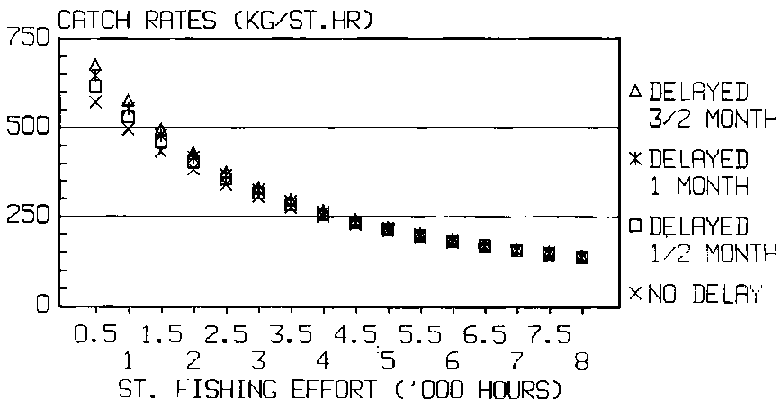
Table 3: Estimates of trawl catch rates for a range of seasonal standard fishing efforts and seasonal openings in the day-time fishing period.
STANDARD FISHING
EFFORT(HOURS)CATCH RATES (KG/HR) WHEN FISHING SEASON
NOT
DELAYEDDELAYED
½ MONTHDELAYED
1 MONTHDELAYED
1 ½ MONTH500
568
614
642
674
1,000
493
528
550
573
1,500
431
458
475
491
2,000
381
401
413
426
2,500
338
353
363
373
3,000
303
314
321
329
3,500
272
281
287
293
4,000
247
254
258
263
4,500
225
230
234
237
5,000
206
210
213
216
5,500
189
193
195
198
6,000
175
178
180
182
6,500
163
165
166
168
7,000
152
153
155
157
7,500
142
143
144
146
8,000
133
134
135
137
Table 4: Estimates of mean biomass for a range of seasonal standard fishing efforts and seasonal openings in the day-time fishing period.
STANDARD FISHING
EFFORT(HOURS)
BIOMASS (TONNES) WHEN FISHING SEASON
NOT
DELAYEDDELAYED
½ MONTHDELAYED
1 MONTHDELAYED
1 ½ MONTH500
797
861
902
945
1,000
692
740
771
803
1,500
605
642
665
689
2,000
534
562
579
598
2,500
474
496
509
523
3,000
424
440
451
461
3,500
382
394
402
411
4,000
346
355
362
368
4,500
315
322
328
333
5,000
289
294
298
303
5,500
266
270
273
277
6,000
246
249
252
255
6,500
228
231
233
236
7,000
213
215
217
220
7,500
199
201
203
205
8,000
187
188
190
192
Table 5: Estimates of mean individual "headless " weights for a range of seasonal standard fishing efforts and seasonal openings in the day-time fishing period.
STANDARD FISHING
EFFORT(HOURS)
INDIVIDUAL WEIGHT (GM) WHEN FISHING SEASON
NOT
DELAYEDDELAYED
½ MONTHDELAYED
1 MONTHDELAYED
1 ½ MONTH500
10.3
10.5
10.7
11.2
1,000
10.1
10.3
10.6
11.0
1,500
9.9
10.1
10.4
10.9
2,000
9.7
9.9
10.2
10.8
2,500
9.6
9.8
10.1
10.7
3,000
9.4
9.6
9.9
10.5
3,500
9.3
9.5
9.8
10.4
4,000
9.1
9.3
9.7
10.3
4,500
9.0
9.2
9.6
10.2
5,000
8.9
9.1
9.4
10.1
5,500
8.8
9.0
9.3
10.0
6,000
8.7
8.9
9.3
10.0
6,500
8.6
8.8
9.2
9.9
7,000
8.5
8.7
9.1
9.8
7,500
8.4
8.6
9.0
9.8
8,000
8.3
8.6
9.0
9.7
Table 6: Estimates of trawl catch weights, catch rates and individual "headless" weights for a range of standard fishing efforts in the night-time fishing period.
STANDARD FISHING
EFFORT (HOURS)CATCH WEIGHT
(TONNES)CATCH RATE
(KG/ST.HR)INDIVIDUAL"HEADLESS"
WEIGHT(GM)BIOMASS
(TONNES)2,000
103
51.5
9.84
728
4,000
194
48.5
9.75
685
6,000
274
45.7
9.64
646
8,000
345
43.1
9.55
610
10,000
408
40.8
9.47
576
12,000
463
38.6
: 9.37
545
14,000
512
36.6
9.28
517
16,000
556
34.8
9.21
491
18,000
594
33.0
9.12
466
20,000
628
31.4
9.04
444
22,000
658
29.9
8.96
423
24,000
685
28.5
8.88
403
26,000
709
27.3
8.81
385
28,000
730
26.1
8.74
369
30,000
749
25.0
8.67
353
32,000
766
23.9
8.60
338
Figure 1: Plot of trawl catch weights for a range of fishing efforts and opening dates (day-time fishing period)
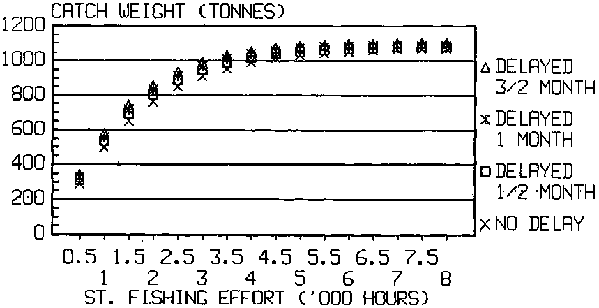
Figure 3: Plot of mean biomass for a range of fishing efforts and opening dates (day-time fishing period)
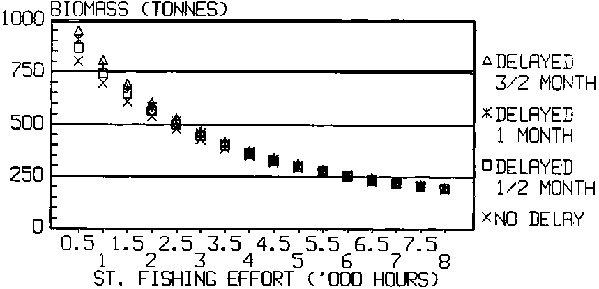
Figure 4: Plot of individual weights for a range of fishing efforts and opening dates (day-time fishing period)
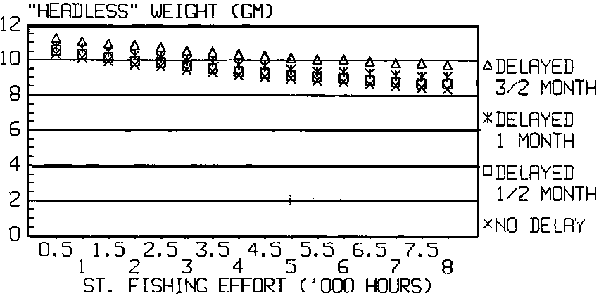
Figure 5: Plot of trawl catch weights for a range of fishing efforts (night-time fishing period)
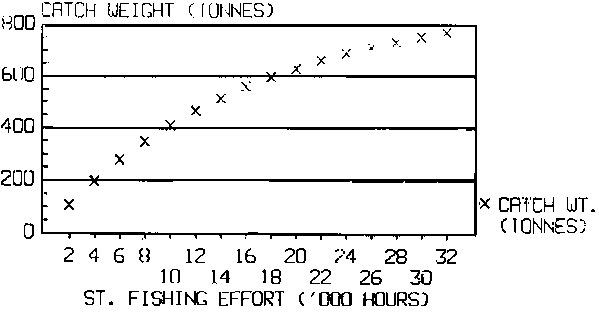
Figure 6: Plot of trawl catch rates for a range of fishing efforts (night-time fishing period)
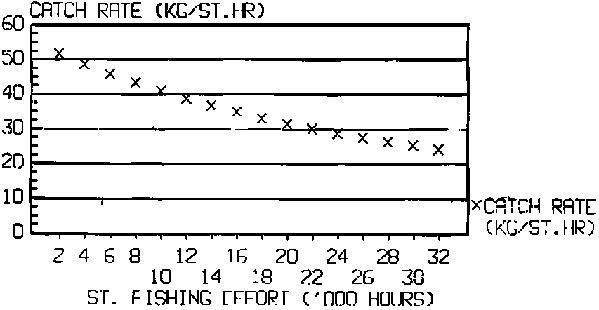
Figure 7: Plot of mean biomass for a range of fishing efforts (night-time fishing period)
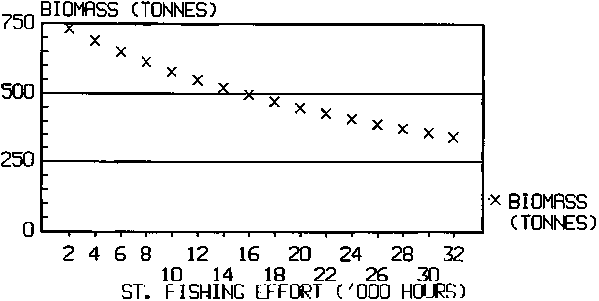
Figure 8: Plot of individual weights for a range of fishing efforts (night-time fishing period)
APPENDIX 1
APPENDIX 2
APPENDIX 3 Equations used in the "Thompson and Bell" Model Analyses
In the following equations the subscripts; i and j identify the time sub-interval and the recruit group respectively.
Nlij = (Nli-1,j.exp(-qi.Xi - M))
Nli = S (Nlij)
Cni = S (Nlij.(1-exp(-qi.Xi-M)).(qi.Xi)/(qi.Xi+M))
Di = S (Nlij.(1-exp(-qi.Xi-M)).(M)/(qi.Xi+M))
N'i = S (Nlij.(1-exp(-li.Xi-M))/(qi.Xi+M))
In these, the Nl is the population number at the beginning of the sub-interval, while Cn, D and N' are the catch number, natural death number and mean population number during the sub-interval.
Lij = (L¥ - Li-1,j).(1-exp(-K)+Li-1,j)
Wij = a.Lij
Cwi = S (Cnij.Wij.)
Bi = S (N'ij.Wij)
wi = (Cwi/Cni).0.6
In these, L is the carapace length, W is the individual "head-on" weight, Cw is the catch weight, B is the biomass and w is the individual "headless" weight.
THE APPLICATION OF A MODIFIED "SWEPT AREA" METHOD WITH THE TRAWL CATCH AND EFFORT DATA FOR ZONE I IN 1988
by
Michael J. SANDERS
FAO Fisheries Project
P.O. Box 487, VICTORIA, SeychellesIntroduction
The catches in Zone I during 1988 from the industrial trawlers and mini-trawlers were 1,391 tonnes (whole weight) and 74 tonnes respectively. Detailed catch and fishing effort data were available for each half-month period. These were used in a modification of the "swept area" method to estimate the potential annual catch (= maximum sustainable yield), the effort required to achieve MSY, and the associated catch rates. An underlying objective was to see if the results would be comparable to those of other methods.
In undertaking the analyses, due recognition was given to the substantial difference in fishing practices between the early and latter months of the year. Prior to about June fishing is undertaken during the day-time and directed at schools, mainly of the white shrimp (Penaeus indicus). The schools are located by echo-sounders and catch rates are high. During the remaining months, fishing is mainly done at night, not assisted by echo-sounders, and is directed at tiger and brown shrimp (P. semisulcatus and Metapenaeus monoceros) as well as white shrimp.
Method
Data Requirements:
The data used in the analyses were the catch weights and fishing efforts for each half-month of the 1988 season. The catch weights were the sum of the catches from the industrial trawlers and mini-trawlers. The efforts had previously been standardized to units of hours trawling with a 260 HP vessel towing twin trawls of 18 m headrope length.
The other data inputs included a value for the natural mortality coefficient (M), and values for the catchability coefficient (q) applying in each of the day-time and night-time fishing periods. The values used were M = 2.4 per year, and q = 7.129 × 10⁻⁴ (February - May) and q = 0.708 × 10⁻⁴ (June - November). The q values were taken from Paper 3 of these Proceedings.
Method of Analysis
Separate analyses were undertaken for the day-time and night-time fishing periods. In respect to each, a weighted mean biomass (B) was estimated from applying the following equation with the observed catches and efforts:
B = (S C/S X)/q Equation 1 In this C and X identify the catch weights and standard efforts respectively.
The biomass values were then used to obtain estimates of the maximum sustainable yield (MSY). The following equation from Garcia, Sparre and Csirke (1987) was used:
MSY = M.B exp ((Y/M.B)-1) Equation 2 where Y is the observed annual catch and the other symbols are as previously identified (see Footnote7).
7 This equation is based on the Fox (Production) Model which the author considers more appropriate for shrimp fishery assessments than the alternative Schaefer Model.
The value used for the natural mortality coefficient was M = 2.4 per year. The values used for the observed annual catch were the catches for the fishing period in question (i.e. not the total annual catch).
The estimates of MSY so obtained were used to derive values for the annual catches, mean catch rates and biomass for a range of hypothetical values for the annual fishing effort. To a large extent, the iterative approach used was the reverse of that already described..
Firstly, the MSY values were used in Equation 2 with assumed values for the biomass and M = 2.4 per year to obtain corresponding estimates for the catch. These were then used with the biomass values and relevant q's in Equation 1 to estimate the corresponding fishing efforts. The associated catch rates were obtained by dividing the estimated catches by the estimated fishing efforts.
Results and Discussion
The sum of the MSY estimates (Table 1) is 1,655 tonnes. This is very similar to that obtained from applying the Fox (Production) Model to the catches and efforts for the period 1968 through 1988 (see Paper 6, these Proceedings).
The estimates obtained were 970 tonnes for the day-time fishing period and 685 tonnes for the night-time period. The observed catches in the two periods were respectively 966 tonnes and 499 tonnes. By implication, the shrimp available during the first period were being fully exploited (under the current management regime) and about 190 tonnes in addition might be taken during the latter period. These results are also depicted in Figures 1 and 2.
The approach to realizing the additional catch during the night-time period is suggested from Table 2 and Figure 2 which show the estimated catches, catch rates and biomass for a range of hypothetical fishing efforts. It seems that it would be necessary to increase the fishing effort very substantially, however, (almost 2.5 times that prevailing at present) to attain the MSY. The economic justification for this is likely to be doubtful.
Concluding Comments
In the normal application of the "swept area" method, the catches per unit effort are converted to density (e.g. of shrimp), the product of the latter and the area occupied by the stock providing an estimate of biomass. The difficulty with applying this approach with the data for Zone I related principally to uncertainty about the area occupied by the stock. This is particularly so in respect to fishing during the day-time fishing period (see Paper 3, these Proceedings).
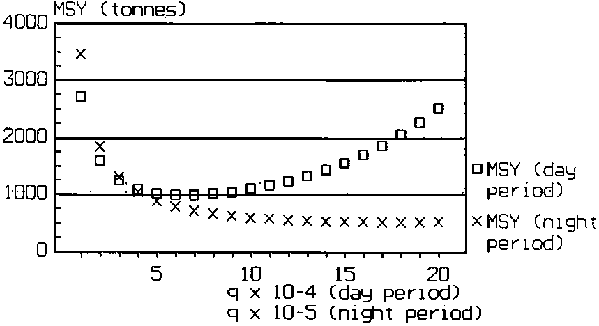
The modification of the "swept area" method applied here relies on having values for the catchability coefficient. Figure 3 shows plots of estimated MSYs obtained from repeating the analyses using a range of alternative q values. On the presumption that the MSY for the day-time fishing period is not greater than 1,100 tonnes, the range of likely values for q lie between about 3.5 × 10⁻⁴ and 11 × 10-4. The estimate of q = 7.129 × 10⁻⁴ from Paper 3 is within this range. Similarly, if it can be presumed that the MSY is not likely to be greater than 750 tonnes in respect to the nieht-time fishing period, the corresponding value for q will not be less than 0.6 × 10⁻⁴ (which compares with the estimate of q = 0.708 × 10⁻⁴ from Paper 3). It seems the lowest MSY possible is about 500 tonnes, which could be achieved with q values ranging from about 1.5 × 10⁻⁴ to 2 × 10⁻⁴.
Reference
Garcia, S., P. Sparre and J. Csirke., 1987: A note on rough estimators of fish resources potential. Fishbyte. Vol. 5(2): 11-16.
Table 1: Estimates of potential yield from catches and efforts of trawl fleets operated in Zone I during 1988, based on parameter values shown beneath the table.
TIME PERIOD
SHRIMP CATCH HEIGHT
(KG)STANDARD FISHING
EFFORT
(HOUR)BIOMASS
(TONNES)POTENTIAL YIELD
(TONNES)
FOX MODELFEB (2) 161,276
565.9
399.76
MAR (1) 149,996
405.4
519.00
MAR (2) 136,822
518.7
370.01
APR (1) 162,330
355.3
640.88
APR (2) 120,213
316.9
532.11
MAY <1) 112,110
438.1
358.96
MAY (2) 123,355
1,082.0
159.92
totals/means 966,102
3,682
368.02
970
JUN (1) 70,405
1,234.7
805.39
JUN (2) 59,002
1,327.1
627.96
JUL (1) 62,977
1,289.7
689.70
JUL (2) 60,469
1,206.7
707.78
AUG (1) 49,365
1,141.1
611.03
AUG (2) 40,482
1,095.9
521.74
SEP (1) 33,757
1,145.5
416.23
SEP (2) 29,269
1,016.6
406.65
OCT (1) 24,531
982.4
352.69
OCT (2) 22,890
1,058.2
305.52
NOV (1) 25,648
1,111.7
325.86
NOV (2) 20,104
933.8
304.09
totals/means 498,898
13,543.4
520.30
685
totals/means 1,465,000
17,225.7
1,655
Note:
q = 7.129 × 10⁻⁴ (Feb - May)
q = 0.708 × 10⁻⁴ (Jun - Nov)
M = 0.100 (per half-month)Table 2: Estimates of trawl fleet catch weights, catches per standard fishing effort and biomass for a range of annual efforts with M = 2.4 (per year) and the other parameter values as shown.
STANDARD FISHING EFFORT (HOURS)
CATCH WEIGHT
(TONNES)BIOMASS
(TONNES)CATCH WEIGHT PER STANDARD FISHING HOUR (KG/HOUR)
STANDARD FISHING EFFORT (HOURS)
CATCH WEIGHT (TONNES)
BIOMASS (TONNES)
CATCH WEIGHT PER STANDARD FISHING HOUR (KG/HOUR)
when q = 7.129 ( × 10-4) when q = 0.708 ( ×10-4)
MSY = 970 (tonnes)
MSY = 685 (tonnes)
M = 2.4 (per year)
M = 2.4 (per year) 0
0.00
1,098.6
783.2
0
0.00
775.8
54.9
500
337.57
947.0
675.1
2,000
103.55
731.4
51.8
1,000
581.95
816.3
581.9
4,000
195.26
689.5
48.8
1,500
752.49
703.6
501.6
6,000
276.12
650.0
46.0
2,000
864.80
606.5
432.4
8,000
347.07
612.7
43.4
2,500
931.79
522.8
372.7
10,000
408.97
577.6
40.9
3,000
963.83
450.6
321.2
12,000
462.64
544.6
38.6
3,500
969.25
388.4
276.9
14,000
508.82
513.4
36.3
4,000
954.82
334.8
238.7
16,000
548.19
483.9
34.3
4,500
925.91
288.6
205.7
18,000
581.39
456.2
32.3
5,000
886.83
248.8
177.4
20,000
608.98
430.1
30.4
5,500
840.86
214.5
152.9
22,000
631.50
405.4
28.7
6,000
790.69
184.9
131.8
24,000
649.44
382.2
27.1
6,500
738.41
159.4
113.6
26,000
663.25
360.3
25.5
7,000
685.44
137.4
97.9
28,000
673.35
339.7
24.0
7,500
633.04
118.4
84.4
30,000
680.11
320.2
22.7
8,000
582.02
102.1
72.8
32,000
683.88
301.9
21.4
Figure 1: Plot of trawl catch weights, catch rates and biomass for a range of fishing efforts (day-time fishing period).
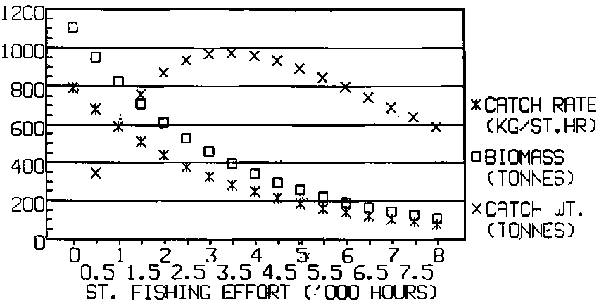
Figure 3: Estimates of MSY in Zone I for a range of values of q when M = 2.4 (per year).
THE APPLICATION OF "PRODUCTION MODEL" ANALYSES WITH THE INDUSTRIAL TRAWL CATCH AND FISHING EFFORT DATA FOR ZONE I8
8 This Paper is based on the joint work of Serge GARC1A and Herimamy Lalaniaina RAZAFINDRAKOTO.
Introduction
Industrial trawling commenced in Zone I during 1967. The expansion of the fishery was rapid, to the extent that within five years the annual catch had exceeded 1,500 tonnes (whole weight). Since that time, the catch has generally not exceeded about 1,600 tonnes. The highest catch was in 1987, at 1,889 tonnes.
Previous researchers have estimated the potential annual catch (= maximum sustainable yield) using production models from the available catch and fishing effort statistics. These include Marcille (1978), Ralison (1978) and Ralison and Razafindralambo (1984). The most recent of these obtained an MSY estimate of 1,600 tonnes.
In this paper, the results from applying production model analyses with the catch and effort data for the years 1968 through 1988 are given. Updated estimates of MSY are provided, along with estimates of the yields and associated catch rates from a range of annual fishing efforts.
Method
The data used in the analyses (Table 1), include those given in Ralison and Razafindralambo (1984) for 1968 through 1980. The catches and efforts in subsequent years were obtained directly from the Centre National de Recherches Oceanographiques.
In respect to the data for some of the years, it was necessary to use the relationship between engine horsepower and relative fishing power given in Marcille 1978) to transform the fishing efforts to new standardized units. The vessels chosen as standard were those of 260 HP.
Both the production models based on Schaefer (1954, 1957) and Fox (1970) were used. In respect to the first a linear regression analysis of catch per unit effort (c/x) against fishing effort (x) was undertaken. In the case of the latter, the linear regression was of the natural logarithm of the catch per unit effort against fishing effort.
The operative relationships, including those used to estimate the MSY, the effort to attain MSY (xmsy) and the catch per unit effort at MSY (c/xmsy) are given in Appendix.
The MSY values obtained (Table 2) are very similar to those by the earlier researchers. The correlation coefficients ® from the regression analyses are somewhat low. In part, this is likely to be the consequence of most of the data being for years when the fishing efforts were high. (It seems that the catches from the fishery have been oscillating around the MSY level since about 1970).
The results from the regression analyses were also used to estimate the annual catches and catch rates that might be expected from a range of fishing efforts. These are plotted in Figures 1 and 2, along with the observed data for the years 1986 through 1988. It is noticeable that the catches and catch rates for these three years are substantially higher at an equivalent fishing effort than for the previous years.
Discussion
The years 1986 through 1988 are all subsequent to the granting (during 1985) of the exclusive right allowing the company Pêcheries de Nosy-Bé to engage industrial trawlers in Zone I. Prior to 1986, there were several competing companies engaged in the fishery. It could therefore be suggested that the observed increase in productivity is the consequence of the new management regime.
The hypothesis is that, in the absence of competition, the Pêcheries de Nosy-Bé has been able to reduce the fishing effort at the beginning of the fishing season. Elsewhere in these Proceedings (Paper 4) it is shown that this is likely to be associated with increased annual catches. Some support to the hypothesis will be provided if these high catches persist into the future.
In this context, an attempt was made to estimate the likely catch in 1989. The catch to mid-June was 1,163 tonnes. Assuming that this has the same proportional relationship to the annual catch as in 1988, the estimate for the catch in 1989 is 1,655 tonnes (= 1,163 × 1,501/1,055). This is also substantially above the estimates of MSY and above the historical trajectory of the fishery.
Another hypothesis was tested to try and explain the high annual catches since 1985. This involved investigating firstly whether there was a relationship between the mean annual catch rate and quantities of rainfall in each of the wet seasons (December through March) and dry seasons (May through October).
The resultant plots (Figures 3 and 4) suggest there is no relationship. The annual catch rates have remained largely between 45 and 65 kg/standard hour whatever the rainfall regime. Hence, there seems no basis for explaining the high annual catches in recent years in terms of unusual rainfall pattern. Again, in this relationship, the years 1986, 1987 and 1988 are clearly out of the rest of the scatter, thus reinforcing the earlier assumption that their outlying position results from management.
This invalidates, of course, the use of a single model for the whole time series. The latter points would belong to a new relationship, with a different MSY (possibly) and xmsy (certainly), the parameters of which cannot be assessed with so little information (and without a large change in x under the new regime).
References
Fox, W.W., 1970: An exponential yield model for optimizing exploited fish populations. Trans. Am. Fish Soc. 99: 80-88.
Marcille, J., 1978: Dynamique des populations de crevettes penaeides exploitées à Madagascar: Travaux et documents de l'ORSTOM (92): 197 p.
Ralison, A., 1978: Caractéristiques et tendances de l'exploitation crevettière malgache de 1967 à 1977. Doc. Sei. Centre Nat. Rech. Oceanogre. No. 78/1.
Ralison, A. and N.Y. Razafindralambo., 1984: Bilan des connaissances sur la pêche crevettière malgache et propositions d'aménagement. Centre National de Recherches Oceanographiques (7): 35 p.
Schaefer, M.B., 1954: Some aspects of the dynamics of populations important to the management of the commercial marine fisheries. Inter-Am. Trop. Tuna Comm.. Bull. 1(2): 27-56.
Schaefer, M.B., 1957: A study of the dynamics of the fishery for yellowfin tuna in the eastern tropical Pacific Ocean. Inter-Am. Trop. Tuna Comm.. Bull. 2: 247-268.
Table 1: Catch weights, standard fishing efforts and catch rates from industrial trawling in Zone I.
Year
Catch Weight
Fishing Effort
Catch Rate
(tonnes)
(Standard Hours)
(Kg.St.Hr.)
1968
162
1,627
99.570
1969
337
4,215
79.953
1970
624
14,394
43351
1971
1,264
24,182
52.270
1972
1,522
34,020
44.738
1973
1,384
24,825
55.750
1974
1,229
27,794
44.218
1975
1,095
23,041
47.524
1976
1,106
21,035
52.579
1977
1,546
23,364
66.170
1978
1,581
29,124
54.285
1979
995
20,005
49.738
1980
1,457
33,084
44.039
1981
1,221
17,453
69.959
1982
1,315
23,174
56.745
1983
971
16,740
58.005
1984
1,437
26,274
54.693
1985
1,089
20,640
52.762
1986
1,627
21,767
74.746
1987
1,889
17,218
109.711
1988
1,501
17,890
83.902
25,352
441,866
1,295
Table 2: Results of regression analyses and estimates of MSY, Xmsy and C/Xmgy
Schaefer Model: a = 93.425 MSY 1,445 tonnes b = 0.00151 Xmsy 30,935 std. hours r = 0.646 c/xmsy 46.71 kg/std.hr. n = 21
Fox Model: a = 4.552 MSY 1,570 tonnes b = 0.000022 Xmsy 44,990 st. hours r = 0.654 c/xmsy 34.89 kg/st.hr. n = 21
Figure 1: Plot of estimated annual catches for a range of annual fishing efforts.
Figure 2: Plot of estimated annual catch rates for a range of annual fishing efforts.
Figure 3: Plot of mean annual catch rate against dry season rainfall.
Figure 4: Plot of mean annual catch rate against wet season rainfall.
APPENDIX
Equations used in the Production Model Analyses
Schaefer Model The underlying relationship is:
c/x = a - b.x from which Xmsy = a/2 b c/xmsy = a - b.xmsy MSY = Xmsy.c/xmsy Fox Model The underlying relationship is
In (c/x) = a - b.x from which
Xmsy = 1/b c/xmsy = exp (a - b.Xmsy) MSY = Xmsy.c/Xmsy SIMULATED FINANCIAL ANALYSIS FOR SHRIMP TRAWLERS OF DIFFERENT SIZE IN THE FISHERY OF ZONE I IN MADAGASCAR
byJ.D. ARDILL
FAO Fisheries Project
P.O. Box 487, VICTORIA, SeychellesIntroduction
Trawlers of four classes, 25, 150, 260 and 365 Hp, are operating in the shrimp fishery of Zone I of Madagascar. Detailed data on operational costs were available for only one of the classes. In order to obtain a comparative estimate of the economic performance of the other vessels, a computer simulation model was used. The results could be used, subject to several qualifications mentioned later in the text, preferably together with data on the quality of shrimp produced by each trawler class, to optimize investment in the fishery.
Input values
The data available included the observed mean annual catch and effort for each trawler class in 19889, as well as the vessel characteristics and basic cost elements for Madagascar(see Tables 1 and 2). Investment costs were provided by Pêcheries de Nosy-Bé (PNB). These, however, are estimates for new investment, as the present fleet is already amortized.
9 The 365 Hp class represents an exception as most vessels were operated in other zones. The catch and effort values used were extrapolated from the performance of one vessel within this class.
Crew costs, etc., were extrapolated from the detailed operational costs available for the 260 Hp trawlers provided by PNB, but not reported here for reasons of confidentiality.
No price differential was applied to shrimp coming from the different vessel classes, other than for the mini-trawlers where the actual prices applying to the catch in each zone was used. The price at which they sell the shrimp in Zone II is higher than for Zone I; this might have given a slightly favourable bias to this vessel class.
The price taken for the shrimp is derived from the mean export price for frozen tails, minus processing costs. No profit element is attributed to shore processing. The price, also, does not take into account any added value arising from improved processing, despite this being the present strategy of the enterprise is directed (these prices might thus be considered to favour the production level at the expense of the processing and marketing).
Simulation results
Table 1 gives an example of the inputs, as well as of the output operational parameters, production and costs for a trawler of 150 Hp. As a new investment is simulated, the investment period considered is 10 years, and the equity of the enterprise is taken to be 40%.
Table 1: Entry values, cost analysis and outputs of operational parameters for a trawler of 150 Hp fishing in Zone I in Madagascar. (values in FMG × 1 000)10
10 The following assumptions are made:
- Fuel consumption is estimated on the basis of the percentage power used by the propulsion and auxiliary engines while steaming, fishing and on standby, multiplied by 0.2 l/Hp/hour.
- Lubricants represent 5% of the cost of fuel.
- The weight of ice is the same as that of the catch.
- Miscellaneous costs are placed at 5X of operating costs.
INPUTS
ESTIMATED COSTS
RESULTS
Investment period 10 yr Capital cost 535,000 FMG TOT.CATCH VAL.
246,496 FMG% Capital borrowed 60 % Maintenance 10,000 FMG
Interest rate 8.5 % Gear replacement 35,000 FMG
Insurance rate 3.4 % Fuel 23,338 FMG EQUITY IRR
5.3%Engine power 3.4 % Lubricants 1,167 FMG
Auxiliary Power 0 Hp Crew 3,451 FMG
Standby power 0 % Insurance 17,000 FMG IRR
24.7%Fuel price/I 0.32 FMG Cost of Ice 3,557 FMG
Cost of Hull 500,000 FMG Miscellaneous 4,676 FMG
Cost of Gear 35,000 FMG
OPERATING SURPLUS
148,307 FMGReplacement gear 1.0 yr TOTAL OPERATING COSTS
98,189 FMG
Working capital 0 FMG
Maintenance hull 2 %
Residual value 0 FMG OPERATIONAL FACTORS DEBT SERVICE
48,923 FMGCost of Ice/tonne 31 FMG Days at sea 238 d
Days inactive/year 127 d Days in port 127 d
Hours/day fishing 8 h Total days fishing 238 d ANNUAL CASH FLOW
99,384 FMGCatch/hour 60 kg Days/trip 1 d
Days fishing season 238 d No. of trips 238 d
Catch per trip 0.5 t Catch(tonnes) 115 t
Shrimp price/t 2,148 FMG Gross return/d 1,036 FMG TOTAL CASH FLOW
1,244,684 FMGPower while fishing 80 % Fuel/trip 304 l
In Table 2, the simulations for all the trawler classes are summarised. The project Internal rate of return (IRR) takes no account of the origin of the investments, therefore of interest rates. These elements are considered in the Equity IRR.
TRAWLER CLASS (Hp)
25
150
260
385
Investment 53 500
535 000
904 578
2 022 300
Total Catch Val. 41982
246 496
377 972
498 764
Equity IRR 0.80**
0.45
0.31
-
Project IRR 0.40
0.25
0.18
-
Operating Surplus 22 108
148 307
204 760
3 466
Debt Service 4 892
48 923
82 718
184 928
Annual Cash Flow 17 216
99 384
122 042
-181 462
Project Cash Flow 211 800
1 244 684
1 552 553
-1 980 702
Annual Catch 18.8
115
175
232 11
Profit/tonne 916
864
697
-782
11 The effort of the single 385 Hp vessel fishing in Zone I was, at 208 days, much lower than the fleet average of 240 days. The catch of 201 t was thus raised to reflect an average effort.
This may not be a good measure of performance for the mini-trawlers where the owner might have difficulty in securing loan funds.
The outputs of the simulations are illustrated graphically in Figure 1. The figures for the 25 Hp trawlers of the artisanal fleet, however, include catches from both Zones I and II, as there was no fishing by these vessels in Zone I over the second half of the season.
Discussion
It is immediately evident that, despite the greatly increased landings of the larger vessels, the even more rapid rise in investment and operating costs result in little or no profit for the largest trawlers.
In the particular context of Zone I, where fishing is in proximity to the shore processing plant, the smaller trawlers show an apparent economic advantage. This conclusion could be invalidated in the short term for the 150 Hp and mini-trawlers, which are reported to produce shrimp which do not always meet quality standards for whole shrimp. These shrimp are sold as head-off and therefore have a reduced value-added.
The case of the mini-trawlers is particular in that the simulations take into account the period of fishing in Zone II. Few valakira are reported in that zone, and the mini-trawlers are able to fish in daytime close to the coast, catching mainly Penaeus indicus. If these vessels were obliged to confine their fishing to Zone I throughout the year, they might face some difficulties in the second semester due to the low catchability of brown shrimp in daylight trawling and reduced availability of white shrimp in the trawlable areas.
STUDY OF THE ECONOMIC PERFORMANCE OF THE SHRIMP MINI-TRAWLER FLEET OPERATING FROM NOSY-BE DURING 1988
byRAZAFINDRAINIBE HAJANIRINA
Centre National de Recherches Oceanographiques
B.P. 68, NOSY-BE, MADAGASCAR
1. INTRODUCTION
2. REVIEW OF THE LEGISLATION
3. ORGANIZATION OF THE PRODUCTIVE SECTOR
4. FISHING EFFORT AND CATCHES
5. ECONOMIC ANALYSIS OF THE FISHERY
6. RATE OF RETURN ON INVESTMENTS
7. CONCLUSION
8.REFERENCE
1. INTRODUCTION
Mini-trawler shrimp fishing is defined as being effected by "catcher" trawlers having inboard propulsion not exceeding 25 Hp. This fishery started with one boat in 1977. Since then, the fleet has increased steadily to attain five boats in 1982 and 10 in 1988. The catches, in parallel, have increased by a factor of ten, from 22.7 tonnes in 1977 to 203 tonnes in 1988.
This fishery, in which five parastatal and private companies are engaged, has not to date been examined in detail. After a brief review of the legislation and of the organization of the production sector, the results of the 1988 season will be presented.
2. REVIEW OF THE LEGISLATION
The evolution of the fisheries legislation of Madagascar has been described by BEURIER (1982). Under Decree No. 71-238, vessels having 25 Hp or less have to operate under licence, delivered by the Ministry responsible for Livestock and Fisheries.
The characteristics of the fishing effort are determined by regulations made in function of the evolution of the fishery and of knowledge of stocks. The nets have to be not less than 40 mm stretched mesh, measured when the net is wet with the help of a flat gauge (Regulation No. 3598 of the 8th October 1977). No distinction is made in the regulation between industrial and mini-trawlers.
The maximum number of boats for each industrial fishing company in each zone is fixed by the Inter-Ministerial Commission. No limit is established, however, for the mini-trawler fleet, other than that they are obliged to operate in the zone exploited by the industrial company to which they are obliged to sell their catch. Their operating range is rather limited, they only exploit Zone I and Narendry Bay in the North of Zone II (see map), depending on the season and the fishing skipper. As of 1989, the mini-trawlers of Nosy Be are only allowed to fish in Zone I.
The beginning and end of the fishing season are fixed by regulation, and are the same as for the industrial trawlers. In 1988, the season opened on 15 February and closed on 30 November.
3. ORGANIZATION OF THE PRODUCTIVE SECTOR
3.1. Boats and Gear
The mini-trawler fleet is composed of ten vessels of the catcher type between 8 and 9.9 m long, equipped with 25 Hp engines. Some of the boats have wooden hulls and some are in steel. The gear used is a stern trawl with a 12 - 14 m headrope.
3.2. Internal Organization of the Productive Sector
Each boat has four crew members, including the skipper. The owner is sailing on one vessel only. Subject to the restrictions listed above, the fishing area is determined by the skipper.
The costs of each cruise, as of repairs and maintenance, are borne by the armateurs. These include food, fuel, lubricants and ice.
The shrimps are headed aboard by the crew. The remuneration of the crew is on the following basis:
Skipper: 85 to 100 FMG/kg of headless shrimp landed Crew: 70 FMG/kg of headless shrimp landed.
One company however, provides a fixed salary plus a smaller production bonus:
Skipper: 50,000 FMG/month + 50 FMG/kg Mechanic: 30,000 FMG/month + 30 FMG/kg Crew: 20,000 FMG/month + 20 FMG/kg
Social services, evaluated at 15% of the crew remuneration are paid by the armateur.
3.3. Relationships with the Industrial Trawler Companies
Most of the catch of the mini-trawlers is delivered to the industrial trawler companies as headless unsorted shrimp. The sale is at a preferential price of 3,000 FMG/kg to Pêcheries de Nosy-Bé, despite current outside prices of between 3,700 and 5,500 FMG/kg depending on whether the product is sold on the spot or outside the Firondronana of Nosy Be. In compensation, they receive cheaper diesel oil (323 FMG/litre instead of.337 FMG/litre) and lubricants, as well as ice at a slightly cheaper rate than in town (45 FMG/kg instead of 50 FMG/kg). PNB also imports the spare parts needed for the maintenance and repairs of the vessels.
The legislation in force obliges the mini-trawlers to sell their catch to the industrial companies operating in the zone where the catch was made. The only armateur operating outside this system sells his production on internal markets (Antananarivo and Mahajanga).
4. FISHING EFFORT AND CATCHES
Fishing effort was obtained from vessel logbooks and statements of the owners. The information was completed from the archives of the "Maritime Arondissement" which registered, in principle on the occasion of each cruise, the level of activity and areas fished (as stated by the skipper or armateur), as well as by interview of crews. This information has permitted a detailed analysis of the fishing effort in Zones I and II.
A mini-trawler makes 4 to 7 cruises of 3 to 5 days per month. With 2 to 3 hauls per day, each of 1 hour to 1 hour 20 minutes, there are about 4 hours of effective fishing per day (varying from 1 hour to 7 hours 30 minutes).
During the 1988 season, the fleet totalled 463 cruises. This figure was obtained by totalling the number of cruises for each boat from logbooks, failing which the monthly mean number of cruises declared by the armateur was used. The fishing effort in boat-days comes from this figure multiplied by the mean number of days/cruise (i.e. 4 days).
Table 1: Number of cruises and fishing effort in boat/days of the mini-trawler fleet in 1988.
Number of cruises
Fishing effort
(in boat-days)Month
Total
Zone I
Zone II
Total
Zone I
Zone II
February 25 10 15 100 40 60 March 62 34 28 248 136 112 April 65 35 30 260 140 120 May 56 31 25 224 124 100 June 48 10 38 192 40 152 July 46 3 43 184 12 172 August 60 0 60 240 0 240 September 50 0 50 200 0 200 October 27 0 27 108 0 108 November 24 0 24 96 0 96 TOTAL 463 117 346 1,852 468 1,384 The effort in Zone I corresponds to 25% of the total fleet effort in 1988 exercised almost exclusively from February to June. After this period, all the mini-trawlers fish in Narendry Bay. The total fishing effort also drops in June and July, the low season for the industrial fleet also.
4.2. Catches
The catch was obtained from logbook records (when available) or from the statements of the armateurs (Pêche Maritime Statistics). From the logbooks, catches are expressed in headless shrimp (heading is carried out on-board). The conversion factor from headless to whole shrimp is 1.64. The data on landings given in Table 2 are as whole shrimp.
Table 2: Landings of the mini-trawlers in 1988.
Catch (kg)
Mean Catch/
Month
Total
Zone I
Zone II
Zone I
Zone II
February 14,648
8,849
5,799
221.2
96.7
March 28,900
19,200
9,700
141.2
86.6
April 34,740
21,903
12,837
156.5
107
May 30,582
16,337
14,245
131.8
142.5
June 32,904
6,087
26,817
152.2
176.4
July 21,213
1,279
19.934
106.4
116
August 19,187
0
19,187
0
79.9
September 9,989
0
9,989
0
49.9
October 5,914
0
5,914
0
54.8
November 4,985
0
4,985
0
51.9
TOTAL 203,053
73,655
129,398
The highest catches are from March to June. However, the highest catches per unit effort (kg/boat-day) in Zone I are at the beginning of the season. The CPUE then drops progressively, while those of Narendry Bay (Zone II) increase from February to June, only dropping significantly in July.
Zone I produces 36% of the total yearly catch. This figure amounts to 45% of the landings of the fleet for the first semester.
5. ECONOMIC ANALYSIS OF THE FISHERY
5.1. Marketing of the Product
Part of the mini-trawler catch is destined to the export market and is sold to the industrial companies and to several exporting companies. The other part of the catch is for the internal market, in particular in the capital. If we assume that 90% of the products delivered to the industrial trawler company and 40% to the collecting or marketing companies are exported, the destinations of the products will be as follow:
Table 3: Marketing of the shrimp product from the semi-industrial companies.
Total Catch
Exports
Local Market
Industrial Trawler Companies 124,630
112,170
12,460
Marketing or Companies Collecting 82, 204
32,882
49,322
TOTAL 206,834
145,052
61,782
The values given in Table 3 are as whole weight. 70% of the total production is for export. The export FOB price of the companies marketing headless shrimp is between 30 and 40 FF/kg (approximately US$ 6). The value of the sales for the export market is therefore US$ 530,676.
5.2. Production costs
Production costs are attributed to variable, semi-variable and fixed costs. They are calculated for the two zones together. Some of the production costs are in foreign currency, although not to the operating companies themselves. The fuel and lubricants, for example, are sold by the government in local currency.
Virtually the only fixed costs come from depreciation. As two zones are exploited, depreciation has been apportioned relative to the effort in each zone. The current level of depreciation for the hulls and the engine is taken as 10%. Depreciation is assessed on purchase prices which increased considerably between 1977 and 1987. This information was provided by the owners. The units completely depreciated in 1988 are assigned a zero depreciation. The purchase cost of a unit was about 70,000,000 FMG in 1989.
Table 4: Production costs of the mini-trawler fleet for 1988 (values in FMG).
Items
Total Expenses (FMG)
% in Foreign Currency
Amount in US $
VARIABLE COSTS Food 6,190,041
0
0
Fuel & lubricants 58,041,125
100
4,331
Ice 9,566,200
50
3,569
Maintenance and repairs 56,901,068
80
33,971
Crew share 37,167,880
0
0
Social charges 5,575,182
0
0
Others 44,087,311
0
0
FIXED COSTS Depreciation 30,240,000
60
13,540
TOTAL 247,768,807
55,411
30% of the costs are in foreign currency.
Taking into consideration the effort of the fleet for 1988, the production costs per day per boat is 133,779 FMG. The evolution of the variable production costs and the benefits per kg of headless shrimp are shown in Table 5. The profit is the difference between the sale price of the product (3,000 FMG/kg of headless shrimp or 1,829 FMG/kg of whole shrimp) and the variable costs.
Table 5: Variable production costs and benefit per kilo of whole shrimp caught by mini-trawlers in 1988
Variable production cost per kg
of whole shrimpProfit per kg of
whole shrimpMonth
Zone I
Zone II
Zone I
Zone II
February 531
1,215
1,298
614
March 832
1,356
997
473
April 751
1,098
1,078
731
May 892
825
937
1,004
June 772
666
1,057
1,163
July 1,102
1,014
727
815
August
1,469
360
September
2,352
-523
October
2,145
-316
November
2,262
-433
MEAN 746
1,256
1,083
573
The maximum profit is obtained at the beginning of the season for Zone I and in June for Zone II. Negative values appear at the end of the season in Zone II. They may arise from an under estimation of the catches (transshipment to industrial boats may occur at sea) or because of considerable differences in the production of various units.
5.3. Efficiency of Production
The efficiency of production can be measured by two parameters, profit and the rate of return on investment (ROI).
a. The Fishery Profit
This is determined by the difference between the total product value and production costs (total variable costs (Table 4) corresponding to Zone I).
Total (FMG)
Proportion in US $
Product value 371,439,000
530,411
Variable costs of production 217,528,807
41,871
Gross profit 153,910,193
488,540
Depreciation 30,240,000
13,540
Net Profit 123,670,193
475,265
6. RATE OF RETURN ON INVESTMENTS
This is the relation of the net profit to the total investment expressed in percent:
TOTAL (FMG)
Net Profit 123,670,193
Total Investment 315,900,000
ROI 39.1%
The ROI value obtained for the mini-trawler fishery is relatively high. However, it corresponds to the value of present investment. The ROI would be about 20% if the replacement value of these investments in 1989 were used.
7. CONCLUSION
In the preceding sections it has been shown that the mini-trawlers are profitable, with reasonably high rates of return on original investment. In this final section it is appropriate to provide a reminder of several of the difficulties encountered in undertaking the work.
The information used in the paper comes from several sources. In respect to the catch data, these were from company log books and official records kept by the local office of the "Maritime Arondissement". In attempting to reconcile the data provided from both sources, the author has formed the view that the catch data used in this paper are underestimates.
Some unknown quantity of catch may be transhipped at sea and not recorded within either of the data sources. There were also some instances in which catches noted in the log books were not found in the records of the "Maritime Arondissement".
The extent of underestimates in the catches however, is not thought to be large. Payments to the crew were claimed to be made on the basis of catch data recorded in the log books, so these data should presumably be reasonably representative of the real catch.
The price used was taken as 3,000 FMG/kg for headless shrimp. This was the price available from the Pêcheries de Nosy-Bé. It is likely that shrimp sold to other buyers were at higher prices. Again, the extent of consequential error in the estimation of profit and return on investment is small.
8.REFERENCE
Beurier, J.P., (1982): Les zônes sous juridiction, la legislation et l'organisation structurelle du secteur des pêches à Madagascar, Rapports sur la Législation des Pêches. DOC. FL/IOR/82/6, FAO Rome, 1982, 104 pp.
SUMMARY DESCRIPTION AND ECONOMIC PERFORMANCE OF THE TRADITIONAL SHRIMP FISHERY IN ZONE I
byGuy ANDRIAMIRADO RABARISON
Centre Nationale de Recherches Oceanographiques (CNRO)
B.P. 68, NOSY-BE, Madagascar
1. Introduction
2. The Valakira Method of Fishing
3. Fishery Catch and Effort Data for 1988
4. Fishery Costs and Earnings Data for 1988
5. Economic Performance of the Fishery in 1988
1. Introduction
The catching of shrimp with traditional gears such as tidal traps (valakira) and beach seines is an important activity along the coast of Ambaro Bay (North-West Madagascar). Since 1974, fish collecting companies have exported part of the shrimp production from these fishing activities. The number of collecting companies fluctuates from year to year, although there has been a tendency for them to increase.
Studies on the fishery have been undertaken by staff of the Centre Nationale de Recherches Oceanographiques (CNRO); see Rabarison, 1987. This report provides an up-date of the earlier study, and also includes an appraisal of the economic performance of the fishery.
2. The Valakira Method of Fishing
These tidal traps are "V'-shaped, with the apex oriented off-shore. They are placed in the inter-tidal zone and function, other than during the flood period of December to February, during spring tides.
Figure 1 shows the plan and elevation of a valakira. The trap has three parts: a capture chamber, arms and wings. The posts and lattice used in the wings is different from those of the arms and capture chamber. Valakira located near the mouths of rivers are rather less open (30° angle) and have shorter wings (10 to 15 panels per side) than those placed along the coastline (60°-80° angle) and having 20-25 panels on each wing. Generally, the panels are of bamboo or reeds braided with raphia rope, held upright by mangrove posts.
Depending on the width of the intertidal zone, two, three and even four ranks of valakira are found between the high and low water marks.
The tools of the valakira fisherman are his canoe and accessories, baskets for the collection and sorting of the catch and the trap itself. The canoe will normally last four years. Baskets are renewed every three months, and on each tidal cycle one or two latticework panels have to be replaced.
Few fishermen possess more than one trap. The owner often has an assistant, who sometimes works alone at sea. In each case, the catch share is two to one or half each. The assistant normally repairs the panels during the neap tides.
3. Fishery Catch and Effort Data for 1988
(a) Number of Valakira:
Collecting companies purchase the shrimp catch from the artisanal fishermen of the eleven villages of Ambaro Bay (Figure 2). In 1988, a survey by the CNRO gave the number of valakira for each village as shown in Table 1. The missing numbers (?) indicate the use of beach seines which were not counted in the last census
Table 1: Census of the tidal traps or valakira in Ambaro Bay in October 1988 (Source CNRO)
VILLAGE
No. of VALAKIRA
1. Ambavanankaran ?
2. Antenina 19
3. Ampanasina 4
4. Ampangahia 18
5. Port St. Louis ?
6. Andavanemboka ?
7. Ankazomborona 111
8. Antsatrana 97
9. Ampampamena 45
10.Ankigny 32
11.Maropamba 7
TOTAL 326
There are 326 valakira, slightly more than the 300 counted in 1975. This is not surprising as, if account is taken of the exploitable surface (the intertidal zone where valakira can be sited) and of the size of the traps, it appears unlikely that the 1975 figure could be much exceeded. There does, however, appear to be a tendency for the length of the wings to be increased.
(b) Catch per village:
Each collecting company has one or several suppliers in each village. The production of the village can be estimated by totalling the amounts collected by the companies.
The data presented in later tables have been grouped as either white shrimp or tiger shrimp. White shrimp include juveniles and sub-adults of Penaeus indicus, Metapenaeus monoceros and adults of Penaeus stebbingii (exceptional). The tiger shrimp are exclusively Penaeus monodon.
Table 2 gives the quantities collected per village. The total production is 187.9 tonnes: 174.7 t of white and 13.2 t of tiger shrimp. Most of the production comes from four of the eleven villages, each producing over 20 t. In order of importance, these are:
Ankazombrorona: 66.3 t. Antsatrana: 43.2 t. Ampangahia: 32.2 t. Port St. Louis: 20.5 t. The proportions of white and tiger shrimp are generally the same, except for the village of Port St. Louis where there are few tiger shrimp. Conversely, the area of Ambavanankarana appears rich in P. monodon.
Table 2: Annual production of white and tiger shrimp (in Kg) per village in Ambaro Bay (1988).
WHITE
P. indicus &
P. monocerosTIGER
P. monodonTOTAL
VILLAGE NAME
Weight
%
Weight % Weight % Ankazomborona 62,175
35.6
4,102.0
31.9
66,277.0
35.3
Antsatrana 41,765
23.9
1,448.4
11.3
43,213.9
23.0
Ampangahia 28,459
16.3
3,790.5
29.5
32,250.0
17.0
Port St. Louis 20,250
11.6
232.7
1.8
20,483.4
10.9
Ambavanankatrana 6,146
3.5
1,604.5
12.5
7,750.5
4.1
Andavanemboka 5,119
2.9
1,405.0
8.1
6,524.5
3.2
Antenina 4,310
2.5
28.6
0.0
4,338.6
2.3
Ampanasy 2,268
1.3
481.0
3.7
2,749.0
1.4
Maropamba 1,788
1.0
24.5
0.2
1,813.0
0.9
Ankigny 1,369
0.8
25.5
0.2
1,395.0
0.7
Ampampamena 986
0.6
56.0
0.4
1,042.5
0.5
Undetermined 60
0.0
32.0
0.2
92.0
Total 174,698
13,230.7
187,929.4
(c) Catch by month:
Summing the data from each company has permitted the estimation of the monthly production from the traditional fisheries in Ambaro Bay (Table 3). The industrial catch is also presented for comparative purposes. The catch of valakira amounts to only 12.7% of that of the industrial trawlers.
Table 3: Production (in kg) of traditional and industrial fisheries in Ambaro Bay (1988).
MONTH
TRADITIONAL FISHERIES
INDUSTRIAL
White
Tiger
Total
FISHERIES
January 1,133
105
1,238
February 1,908
1,786
3,694
165,893
March 2,191
1,988
4,179
294,115
April 4,264
1,764
6,028
289,001
May 5,531
99
5,630
221,188
June 23,288
166
23,454
124,076
July 26,419
1,077
27,496
125,350
August 29,142
611
29,753
96,980
September 21,457
902
22,359
68,030
October 14,814
1,506
16,320
51,186
November 11,979
2,140
14,119
49,384
December 32,573
1.086
33,659
-
TOTAL 174,699
13,230
187,929
1,485,203
From earlier CNRO studies, the figures (from the traditional fisheries) should be increased by some 21% to cover the shrimp not collected by the companies from the valakira catch. An estimate of the total production of the valakira fisheries would therefore give:
Amount collected
Amount not collected
Total catch
187,929 kg
39,465 kg
227,394 kg
4. Fishery Costs and Earnings Data for 1988
(a) Investment Costs
The investment costs include the value of the canoe and accessories, and of the valakira. At 1988 prices, these values are:
ITEM
UNIT
UNIT PRICE
TOTAL COST
Canoe Hull 1
50,000
50,000
Planking 2
15,000
30,000
Fastenings 2.5kg
15,000
45,000
Labour 4 men
1.75/d
7,000
Accessories total 2
1,000
2,000
Canoe total
134,000
Valakira Capture chamber 1
8,000
8,000
Arms 2
5,500
11,000
Poles 720
35
25,200
Wings 2
110,000
220,000
Valakira total
264,200
GRAND TOTAL
398,200
The total investment for a valakira canoe and accessories is thus of the order of 400,000 FMG, ie. US$ 226 at the present rate of exchange.
b) Production costs
The running and maintenance costs of a valakira can be estimated as follow:
ITEM
NUMBER
COST
Setting Daily 1
1,500
Ropes 10
2,500
Dismantling 20
4,000
Total running
8,000
Maintenance wings 2
8,000
TOTAL
16,000
The running costs of a valakira are very low and are negligible in the case of an owner doing the work himself. Taking into account the service life of the various elements of the trap, annual costs can be evaluated as follow:
- renewal of the poles 25,200 (×3) = 75,600 FMG - renewal of the baskets 4,500 (×3) = 13,500 FMG - renewal of the panels 8,000 (×12) = 96,000 FMG Total annual maintenance costs: 185,100 FMG
Annual costs are rather less than the initial investment, but still represent a very small sum, compared, for example, to the cost of a gillnet. This explains the popularity of this fishing method.
(c) Product value:
The total value of the 1988 catch is estimated as follows (in FMG 'OOO):
White shrimp
Tiger shrimp
Total
312,195
114,859
114,859
These figures have been obtained from the collecting companies, and not from using the mean prices listed in Table 4.
5. Economic Performance of the Fishery in 1988
(a) Investment and Operating costs:
The total investment is estimated by multiplying the number of valakira counted in October 1988 by the average cost of a valakira (in FMG '000):
- boats: 43,684
- fishing gear: 86,129
Total investment: 129,813
The cost of production (per valakira) is estimated as follows (in FMG '000):
- cost of setting and dismantling 8,000 (×24) 192
- total maintenance 185
Total production cost/valakira 377
Total production cost for all valakira 122,935
(b) Product value
Producer prices for shrimp vary between villages and seasonally. A mean monthly price has been estimated from data provided by the collection companies (total value/weight collected). The results are displayed in Table 4.
Table 4: Price fluctuation of white and tiger shrimp from Ambaro Bay
MONTH
WHITE SHRIMP PRICES
TIGER SHRIMP PRICES
January 2,007
2,790
February 2,141
6,445
March 2,558
6,128
April 1,924
6,824
May 1,581
6,458
June 1,475
9,662
July 1,700
6,207
August 1,769
11,344
September 1,687
10,768
October 1,884
9,315
November 2,002
10,959
December 1,977
11,562
Factors influencing the price of white shrimp are the relative isolation of the village, and the quantity and quality of the product. The price of tiger shrimp, however, has tended to rise regularly. According to the companies, this is because buyers from the capital who have no regular collecting agents seek to overbid the local companies.
(c) Profit and Rate of Return:
The estimate of profit can be made by comparing the product value and costs (in FMG '000):
Profit = 427,054 - 122,935
=
304,119
or, per Valakira 933
The rate of return on investment (ratio between the profit and the investment as a percentage) is evaluated at 234 percent.
REFERENCE
Rabarison, A.G.A., (1987): La pêche de la crevette par la méthode du valakira. Contribution to Proceedings of the Crustacean Management Workshop, held in Mauritius October 1-11, 1988. FAO/UNDP. RAF/79/065/WP/38/87: 60-65p.
Figure 1: Side and plan view of a valakira
Figure 2: Traditional fishing villages in Zone I
BIO-ECONOMIC MODELLING OF THE MADAGASCAR SHRIMP FISHERIES IN ZONE I12
12 This Paper is based on the joint work of Cristina Silva, Per Sparre, Enoch Wakwabi and Rolf Willmann.
1. Introduction
2. Description of the fisheries
3. The model parameters
4. Results of the bio-economic analyses
1. Introduction
The objective of the bio-economic analysis of the shrimp fisheries in Zone I is to assess the economic performance of the fisheries in response to various possible management measures, including seasonal or area closures, gear restrictions and regulation of effort.
The analysis was done with the help of BEAM IV which is a computerized bio-economic simulation model. The detailed description of this model is contained in a draft manual by Sparre and Willmann which was made available to the workshop participants. BEAM IV is based on the traditional Thompson and Bell model, extended to account for several fleets and several stocks and areas. It may be considered a generalized version of the bio-economic model by Willmann and Garcia (1985).
There are a number of possible criteria for evaluating economic performance, including profitability to the private investor, generation of incomes and foreign exchange earnings to the national economy and maximization of resource rent or economic yield. Depending on the specific criterion selected, costs and earnings data are differently defined. For example, a tax on fuel would be a cost to the private companies but an element of income to the national economy. Beam IV allows such differences to be taken into consideration.
2. Description of the fisheries
For management purposes, Madagascar's shrimp fishing grounds are divided into ten zones. Zone I is located in the northwestern part of the country, extending from Baie d'Ampasindana to the northern tip of Madagascar. In terms of average catch rates, it is among the most productive shrimping grounds in the country. According to the present management regime, the Ministry of Fisheries and Aquaculture and the Ministry of Transport issue each year a joint text which prescribes the trawlers to be licensed for each zone.
2.1 Pêcheries de Nosy-Bé (PNB)
During the past few years, only one company, namely Pêcheries de Nosy-Bé (PNB), has been entitled to operate industrial trawlers in Zone I. Out of a total number of 16 trawlers, PNB is allowed to operate 13 vessels in Zone I. In recent years, however, the company has opted to use only around 10 vessels, the rest being deployed in Zones VI to X. Technical details of PNB's fleet are given in Table 1.
Table 1: Technical details of PNB's trawler fleet
No. of vessels
Length
Horse Power
Category
4
15
150
Ice-boat
4
17
260
Ice-boat
3
25
370
Freezer
5
27
500
Freezer
While the company ice-trawlers are used exclusively in Zone I, the freezer-trawlers, especially the larger ones are expending most of their fishing effort in Zones VI-X. In the period 1986 to 1988, the average annual shrimp catch of PNB amounted to 2,700 tonnes out of which about 1,700 tonnes were contributed by Zone I. By international standards, the PNB fleet is realizing exceptionally high catch rates. The average annual catch of the 15 m and 150 Hp vessels in 1988 was close to 115 tonnes, while that of the 17 m and 260 Hp vessels was over 170 tonnes. Mexican vessels of similar sizes operated in the Gulf of Mexico, may barely catch 20 and 35 tonnes respectively.
PNB is a vertically integrated company encompassing shrimp harvesting, processing and exporting activities. Its shareholders comprise public and private entities, as well as the International Finance Corporation (IFC) which is an affiliate of the World Bank. The present split-up of shares is as follows: Government 46%; IFC 10%; private parties 44%. Full management authority and responsibility rest with the private parties, according to a contractual arrangement concluded with Government. This contract also specifies various exemptions from taxes and duties. Except on a few items, PNB is not required to pay duties on imported inputs or any other taxes or fishing license fees.
PNB is employing about 1,360 staff, of which about one half are involved in shrimp processing, about 200 on board the vessels and the rest in support services including repair and maintenance workshops and management and administration. The company is among the main sources of employment and incomes on the island of Nosy-Bé.
The two major markets for the company's exports of processed shrimp are Japan and France. The products consist mostly of smaller-sized 'white shrimps' (P. indicus) in the commercial category of 50-60 per lb head-off. With the expanding world production of cultured shrimps in recent years, PNB products face increasing competition and declining prices, particularly in the Japanese market for smaller-sized head-off shrimps. For maintaining its competitive edge, the company is shifting its product assortment towards better priced head-on shrimp in retail-ready packaging requiring higher quality and processing standards. The main market for these value-added products is the EEC, especially France, favoured by Madagascar's preferential access under the Lomé Accord.
2.2 Mini-trawlers
In addition to PNB's fleet, there are 10 mini-trawlers licensed to operate in Zone I. These vessels are 8 to 9.9 m long with engine power limited to 25 Hp. They are owned by five private companies. The boats employ about 40 people and operate in shallow near-coast waters, exploiting essentially the same size-classes of shrimp as the industrial fleet.
In 1988, out of a total shrimp catch of 200 tonnes, the mini- trawlers caught about 70 tonnes in Zone I and the rest in the neighbouring Zone II. While most of the catch is sold to PNB for further processing and exporting, a small share is sold in the internal market. Details of the operational and economic features of the mini-trawler fleet are given by Razafindrainibe (Paper 8 in these Proceedings).
2.3 Valakira fishery
The traditional form of catching shrimp in Madagascar is through tidal traps and beach-seines operated in the coastal areas, especially along the Bale d'Ambaro in Zone I. In recent years, about 300 valakira operated in Zone I employing about 600 people. The average annual catch amounts to about 200 tonnes of mostly smaller-sized shrimp. Except for a small share, the catch consists of the same species caught in the trawl fisheries with juvenile and sub-adult P. indicus prevailing.
The shrimp are sold to so-called collecting companies which undertake the processing and marketing, both for internal consumption and for export, mainly to Reunion. Details of the technical and economic aspects of the valakira fishery are provided by Rabarison (Paper 9 in these Proceedings).
3. The model parameters
3.1 The biological parameters
Based on the description of the fishery given above, the following components were included for modelling the shrimp fisheries of Zone I:
Three stocks:
Penaeus indicus (Female)
Penaeus indicus (Male)
"Other shrimps"Three fisheries:
Industrial fleet
Mini-trawler fleet
Artisanal fishery (Valakira + beach seine)Three areas:
Artisanal fishing grounds (0 - 4 m)
Southern industrial fishing area
Northern industrial fishing areaThe group "Other shrimp" accounts mainly for P. semisulcatus, M. monoceros and to a lesser extent P. monodon and some other species. As P. indicus constitute the major part of the catch only this species was modelled in detail.
Trawling was assumed to take place only in the area labeled "South". From here the shrimps are assumed to migrate into the area labeled "North" where no fishing takes place.
The growth parameters and length weight relationships for the three stocks are given in Table 2.
Table 2: Growth parameters
L¥ mm
K
to
a
b
Carapace
/year
year
*)
*)
P. indicus F 45
2.5
-0.04
0.0023
2.68
P. indicus M 34
2.5
-0.04
0.0023
2.68
Other shrimp 35
2.5
-0.04
0.0023
2.68
*) Length/weight parameter, W = a L ^ b, W in grammes, L in mm carapace.
Natural mortality was assumed to remain constant for all age groups and stocks and to have the value of 2 per year.
Table 3: Weight and length by age of P. indicus (Female)
Age Group
Age Years
Carapace
length mmWhole Weight
weight g1
0.0000
15.210
3.387
2
0.0833
20.813
7.850
3
0.1667
25.361
13.333
4
0.2500
29.055
19.193
5
0.3333
32.053
24.973
6
0.4167
34.488
30.387
7
0.5000
36.465
35.283
8
0.5833
38.070
39.600
9
0.6667
39.373
43.338
10
0.7500
40.432
46.531
11
0.8333
41.291
49.228
12
0.9167
41.988
51.489
Table 4: Weight and length by age of P. indicus (Males)
Age Group
Age Years
Carapace
length mmWhole Weight
weight g1
0.0000
11.492
1.598
2
0.0833
15.725
3.703
3
0.1667
19.162
6.290
4
0.2500
21.952
9.055
5
0.3333
24.218
11.782
6
0.4167
26.058
14.336
7
0.5000
27.551
16.646
8
0.5833
28.764
18.683
9
0.6667
29.749
20.447
10
0.7500
30.548
21.953
11
0.8333
31.197
23.226
12
0.9167
31.725
24.292
Table 5: Weight and length by age of "Other shrimp"
Age Group
Age Years
Carapace
length mmWhole
weight g1
0.0000
11.830
1.727
2
0.0833
16.188
4.003
3
0.1667
19.726
6.798
4
0.2500
22.598
9.787
5
0.3333
24.930
12.734
6
0.4167
26.824
15.495
7
0.5000
28.362
17.991
8
0.5833
29.610
20.192
9
0.6667
30.624
22.099
10
0.7500
31.447
23.726
11
0.8333
32.115
25.102
12
0.9167
32.658
26.255
Recruitment was estimated through cohort analyses based on length frequency data derived from mean catches by commercial size categories for the industrial fishery in 1987 and 1988. The mini-trawlers were assumed to catch the same size groups as the industrial boats. The length frequency composition of the valakira catch was derived from observations by Le Reste (1978). The total catch of valakiras for 1988 was used.
The catches by commercial size categories were converted into 5 mm carapace length groups using the relationship: whole body weight = 756/(number of tails per pound)
The data were then converted into length and age using the parameters shown in Table 2.
The P. indicus catch data were separated into males and females using the following sex-ratio distribution (derived from Marcille, 1978).
C. Length mm 5
10
15
20
25
30
35
40
45
50
55
% female 50
50
50
30
30
45
60
90
100
100
100
The parameters for Jones length based cohort analysis are given in Tables 4 and 5 and estimates of stock numbers and fishing mortalities by length group are given in Tables 6 to 9.
It was assumed that there are two cohorts per year. One main recruitment from spawning during September to November supporting mainly the industrial fishery, and a smaller recruitment from spawning in February to April supporting mainly the valakira fishery. Therefore, separate cohort analyses were made for the valakira fishery and the industrial fishery.
Table 6: Length based cohort analysis for female P. indicus caught by the industrial fleet.
Interval
C
X(*)
N
F/Z
F
Z
0- 5
0
1.0482
130 260
0.000
0.000
2.000
5-10
0
1.0549
118 546
0.000
0.000
2.000
10-15
824
1.0636
106 536
0.062
0.133
2.133
15-20
1455
1.0757
93 401
0.103
0.231
2.231
20-25
1455
1.0934
79 372
0.101
0.226
2.226
25-30
16559
1.1220
65 064
0.588
2.860
4.860
30-35
16291
1.1761
36 929
0.676
4.181
6.181
35-40
8140
1.3195
12 847
0.699
4.654
6.654
40 plus
847
0.0000
1 210
0.700
4.666
6.666
TOTAL
45571
*) X = (L¥ -L(i))/(L¥ -L(i+1)))^(M/2K)
Table 7: Length based cohort analysis for male P. indicus caught by the industrial fleet.
Interval
C
X(*)
N
F/Z
F
Z
0- 5
0
1.0657
139 112
0.000
0.000
2.000
5-10
0
1.0786
122 489
0.000
0.000
2.000
10-15
824
1.0980
105 281
0.044
0.092
2.092
15-20
3 394
1.1299
86 583
0.155
0.369
2.369
20-25
3 394
1.1933
64 812
0.153
0.362
2.362
25 plus
32 003
0.0000
42 670
0.750
6.000
8.000
TOTAL
39 615
Table 8: Length based cohort analysis for female P. indicus caught by the valakiras
Interval
C
X(*)
N
F/Z
F
Z
0-5
74
1.0482
20 260
0.039
0.081
2.081
5-10
1 705
1.0549
18 368
0.490
1.924
3.924
10-15
4 966
1.0636
14 890
0.776
6.942
8.942
15-20
2 713
1.0757
8 494
0.738
5.640
7.640
20-25
1 334
1.0934
4 819
0.664
3.958
5.958
25-30
881
1.1220
2 811
0.646
3.654
5.654
30-35
551
1.1761
1 447
0.633
3.458
5.458
35 plus
347
0.0000
578
0.600
3.000
5.000
TOTAL
12 571
Table 9: Length based cohort analysis for male P. indicus caught by the valakiras.
Interval
C
X(*)
N
F/Z
F
Z
0- 5
74
1.0657
33 686
0.018
0.036
2.036
5-10
1 705
1.0786
29 591
0.297
0.845
2.845
10-15
4 966
1.0980
23 853
0.578
2.741
4.741
15-20
6 329
1.1299
15 264
0.710
4.904
6.904
20-25
3 113
1.1933
6 354
0.691
4.486
6.486
25 plus
1 483
0.0000
1 853
0.800
8.000
10.000
TOTAL
17 670
Based on the cohort analyses the following recruitment figures were used in the model:
Feb. - April 64 millions Sep. - Nov. 260 millions Recruitment was assumed to take place only in the valakira area (0-4 meters) as shown in Table 10. The group "other shrimps" was assumed to constitute 10 percent of the P. indicus stock (sexes combined) and to recruit in the same seasons.
Table 10: Recruitment for P. indicus (in millions)
0-4 meter
South
North
January 0
0
0
February 10
0
0
March 44
0
0
April 10
0
0
May 0
0
0
June 0
0
0
July 0
0
0
August 0
0
0
September 52
0
0
October 156
0
0
November 52
0
0
December 0
0
0
The migration pattern was modelled through so-called "migration coefficients" (Table 11). The following example may facilitate an understanding of this concept. For age group 5, Table 11 gives in the first three lines the following figures:
0-4 meter 0.2 South: 0.8 North 0.0 These figures indicate that of the 5 month old shrimps in the area "0-4 meters", 20 % will stay there during age group 5, while 80 % will move to the area "South". No shrimp will move to area "North". The particular choice of migration coefficients shown in Table 11 is not based on direct parameter estimates but reflects the current qualitative knowledge on migration.
Table 11: Migration coefficients.
Age
1
2
3
4
5
6
7
8
9
10
11
12
From 0-4 meter to 0-4 meter 1
1
1
0.5
0.2
0
0
0
0
0
0
0
South 0
0
0
0.5
0.8
1
1
1
1
1
1
1
North 0
0
0
0
0
0
0
0
0
0
0
0
From South to 0-4 meter 0
0
0
0
0
0
0
0
0
0
0
0
South 1
1
1
1
1
1
0.7
0.7
0.7
0.7
0.5
0.5
North 0
0
0
0
0
0
0.3
0.3
0.3
0.3
0.5
0.5
From North to 0-4 meter 0
0
0
0
0
0
0
0
0
0
0
0
South 0
0
0
0
0
0
0
0
0
0
0
0
North 1
1
1
1
1
1
1
1
1
1
1
1
Table 12 shows the gear selection parameters L50% and L75% (the length at which 50 % and 75 % of the shrimps entering the gear are retained respectively). Table 12 gives also the catchability coefficients, which were estimated by adjusting the predicted catch to the observed catches (all other parameters kept constant).
Table 12: Gear selection parameters and catchability coefficients.
Artisanal
Mini-trawler
Industrial
L 50% 0.5
18.0
18.0
L 75% 0.75
19.0
19.0
Catch. Coeff. 0.002070
0.001752
0.002504
Tables 13 and 14 show the observed effort during 1988 for the different fisheries. The effort of the valakiras (area 0-4 meters) was expressed in numbers of active valakiras, while the effort of the mini-trawlers and industrial trawlers was expressed in fishing days and standard fishing hours, respectively. Standard fishing hours for each of the industrial trawlers were estimated as follows:
Standard fishing hours = fishing hours × relative fishing power
Relative fishing power = CPH/CPH of standard vessel
CPH = catch per hour
Standard vessel = 17 m freezer trawler with 260 Hp engineTable 13: Effort in area "0 - 4 meters" by fishery.
Month
Artisanal
Mini-trawler
Industrial
January 10
0
0
February 20
0
0
March 100
0
0
April 285
0
0
May 285
0
0
June 285
0
0
July 285
0
0
August 285
0
0
September 285
0
0
October 285
0
0
November 150
0
0
December 150
0
0
Table 14: Effort in area "South" by fishery.
Month
Artisanal
Mini-trawler
Industrial
January 0
0
0
February 0
40
796
March 0
136
1 362
April 0
140
1 104
May 0
124
1 545
June 0
40
2 053
July 0
12
2 078
August 0
0
2 135
September 0
0
2 193
October 0
0
2 088
November 0
0
1 892
December 0
0
310
The observed catches by the three fisheries in 1988 were used together with the above input data to simulate the situation for the Zone I shrimp fisheries.
The main problems encountered in modelling the shrimp fisheries were related to estimating catchability, recruitment periods and migratory behaviour of the shrimp stocks.
Model simulations were performed with the assumed migration pattern and with different catchability coefficients until the simulated catches were close to the observed catches in 1988. There are probably several different combinations of parameters which may produce the same results. It is important to note that the parameter estimates could be improved by comparing the simulated and observed catches for several years.
In the model, catchability was assumed to remain constant during all months. In fact, it seems that the catchability of P. indicus varies during the year (see Paper 3 in these Proceedings), being higher in the beginning of the fishing season due to schooling and lower in the second half of the year, either because of changes in fishing pattern or due to shrimps migrating out of the fishing area.
Two main cohorts were considered during the period of one year. It was assumed that the migration pattern for both cohorts is the same, which might not be true.
By varying the recruitment periods, it was possible to model a monthly catch pattern resembling the observed monthly catches in 1988. Details of the simulation results are presented below in Section 4.
3.2 The economic data
The economic data required for Beam IV include harvesting and processing costs of the various fleets and processing plants, ex-vessel and wholesale prices by commercial size categories, and taxes and/or subsidies on inputs or outputs. Further, the distribution of the catch over the different processing plants and final markets needs to be given.
In the case of the shrimp fisheries of Zone I in Madagascar, we have defined three fleets as described above, namely valakira, mini-trawlers and industrial trawlers, two processing plants, namely industrial and artisanal processing, and two final market destinations, namely local and export markets. As little information is available on artisanal processing, a value of zero processing costs was assumed and ex-vessel and wholesale prices set equal for small-sized shrimp.
The economic data for the valakira fishery were taken from Rabarison (Paper 9); and those for the mini-trawlers from Razafindrainibe (Paper 8). Economic data of the industrial trawler fleet and processing plant were kindly provided by PNB. All the data were rearranged to fit the model formats and categories, and all figures are given in US Dollars to make them more readily comparable with other fisheries, as well as to maintain their validity in a period of fast changing exchange rates. For modelling purposes, catches of the industrial and mini-trawler fleets taken in other zones were excluded and fishing effort and costs, as well as processing capacities and costs adjusted on a pro rata basis.
Summary data on harvesting and processing costs are presented in Tables 15 and 16. Harvesting costs are given per boat or valakira, while processing costs refer to PNB's entire throughput of about 2 400 tonnes of shrimp (wet weight). For each of the items, the foreign exchange component of the costs are also given, including direct and indirect foreign exchange costs. The latter include items such as fuel or power which are expenses in local currency for the companies but are foreign exchange costs to the country. No taxes, subsidies or duties were identified.
The harvesting costs given for the industrial vessel refer to a 17 m freezer-trawler equipped with a 260 Hp engine, which was taken as the standardized effort unit in the biological analysis. The costs encompass fleet management overheads which were split on a pro rata basis between Zone I and other zones.
The categories of the costs shown in Table 15 differ in some respects from conventional costs and earnings Tables. These categories were selected to model as accurately as possible the changes in costs in response to changes in effort or fleet size or both.
Table 15: Annual harvesting costs per boat for the three fleets (US $)
Industrial Fleet
Mini-Trawler Fleet
Artisanal Fleet
Total Costs
Foreign Exchange Costs
Total Costs
Foreign Exchange Costs
Total Costs
Foreign Exchange Costs
COSTS DEPENDING ON EFFORT UNITS (Variable costs) Fuel and Lubricants 41 630
41 630
4 331
4 331
0
0
Food 4 574
0
462
0
0
0
Ice 4 119
2 055
714
357
0
0
Repair and Maintenance 69 578
48 701
4545
3 636
138
0
Harbour and Landing Fees 0
0
0
0
0
0
Crew Wages 17 485
0
2 594
0
0
0
Miscellaneous 5 922
0
389
0
143
0
Total 143 309
92 386
13 035
8 324
281
0
COSTS DEPENDING ON NUMBER OF BOATS (Fixed costs) Depreciation Hull 29 379
29 379
3 209
1 359
25
0
Depreciation Engine 12 591
12 591
1 866
1 866
0
0
Depreciation Gear 0
0
0
0
0
0
Capital Interest 8.5% 53 683
53 683
4 440
0
19
0
Insurance 21 577
21 577
1 306
0
0
0
Overhead
Salaries 9 212
0
0
0
0
0
Other
Overheads 10 768
10 768
0
0
0
0
Licence fee 0
0
0
0
0
0
Total 0
8
0
0
0
0
GRAND TOTAL 280 519
220 384
23 856
11 549
325
0
INVESTMENT Investment Hull 421 045
421 045
32 090
12 836
100
0
Investment Engine 210 522
210 522
18 657
18 657
0
0
Investment Gear 0
0
0
0
223
0
Total Investment 631 567
631 567
50 747
31 493
323
0
EMPLOYMENT Crew Size 11
0
4
0
2
0
Shore Staff 2
0
0
0
0
0
Relative to the standard 260 Hp ice-trawler, the fishing power of the 150 Hp ice-trawlers is about 70 %,.and of the 370 Hp freezer-trawlers about 110 %. The model assumes that there are no economies or dis-economies of scale with regard to vessel size-classes. However, there are indications that trawling in Zone I is more profitably done with smaller-sized vessels, i.e. ice trawlers than with freezers (see Paper 7 in these Proceedings).
With regard to the industrial processing plant, total costs, as shown in Table 16, were divided by the quantities processed in 1988 and subsequently raised (in the model) to the quantities caught and processed in Zone I only. In the simulation runs, processing capacities were automatically adjusted to the quantities caught by the fleets; thus processing costs per kilogram remain constant and are independent from total throughput.
Table 16: Costs of industrial shrimp processing in 1988 (US $) (total throughput: 2,375 tonnes of head-on shrimp)
Total
Foreign Exchange
Transport and insurance 209,598
120,725
Packing material 500,092
475,088
Power and water 326,248
163,124
Repair and maintenance 51,788
14,306
Wages and salaries 868,988
9,093
Depreciation 352,730
282,184
Capital interest 324,627
324,627
Miscellaneous overheads 273,816
0
Total processing costs 2,907,887
1,389,147
TOTAL INVESTMENT 3,799,511
TOTAL EMPLOYMENT
(including workshops and administration, etc.)920
Prices
While wholesale prices reflect average FOB prices in 1988 as reported by PNB, ex-vessel prices were determined by deducting average processing costs per kilogram from wholesale prices. The latter implies that all profits are shown at the harvesting stage. All three fleets were assigned the same ex-vessel prices for the same commercial size categories, that is, quality differences between the valakiras and the trawler fleets were not taken into account and price differences between internally marketed and exported shrimps were omitted. The distortions caused by these omissions are very small as over 90 % of the total shrimp catch in Zone I is industrially processed and exported.
Table 17: Sale prices by commercial size category
Category
Count (tails/lb)
Ex-Vessel Price
Wholesale Price
1
111 90
0.30
0.30
2
90 70
0.62
0.62
3
70 60
1.32
2.52
4
60 50
1.50
2.70
5
50 40
1.68
2.88
6
40 35
2.27
3.47
7
35 30
2.63
3.83
8
30 25
3.60
4.80
9
25 20
5.22
6.42
10
20 15
6.78
7.98
11
15 1
7.65
8.85
4. Results of the bio-economic analyses
4.1 Results for the base year (1988)
The simulation results for the base year (1988) differ in some respects from the observed values. Table 18 and Figure 1 show the simulated together with the observed total catches by month and by fishery. As can be seen, there are some discrepancies, in particular, the distribution of the simulated industrial catches are in excess of the observed ones in the latter part of the year. This pattern in the simulated catches could be modified by introducing a faster migration out of the area. Alternatively, one could work with a higher catchability at the beginning of the year.
Table 18: Comparison of observed and simulated catches.
Month
ARTISANAL
MINI-TRAWLERS
INDUSTRIAL
Calc.
Obs.
% dev
Calc.
Obs.
% dev
Calc.
Obs.
% dev
1
3
3
10
0
0
0
0
0
0
2
4
6
40
5
9
44
139
197
30
3
8
6
-38
27
19
-38
372
357
-4
4
16
12
-33
25
22
-15
278
367
24
5
20
16
-24
14
16
17
237
255
7
6
22
23
4
2
6
63
160
139
-15
7
14
26
46
1
1
53
149
116
-28
8
4
29
85
0
0
0
160
94
-70
9
6
21
70
0
0
0
123
85
-44
10
29
14
-107
0
0
0
58
51
-14
11
30
11
-171
0
0
0
23
45
49
12
43
32
-33
0
0
0
2
6
66
TOT.
198
: 199
0
73
74
1
1 701
1713
1
The higher modelled catches in the later months of the year result in a greater share of larger-sized and higher priced shrimp in the catch. The figures shown in Table 19 of ex-vessel and wholesale values in the base year for the industrial and mini-trawler fleets are therefore inflated. The average wholesale price, i.e. FOB export-price per kg of headless shrimp (excluding valakira catches) amounts to US$ 7.23 that is US$ 2 higher than the average reported by PNB in 1988 (see Table 20).
Table 19: Shrimp catches, fishing effort, and ex-vessel and wholesale values: model results for the base year
Effort in units
Catch in tonnes
Ex-vessel (US'000)
Wholesale value (US'000)
Number of boats
Valakira 2,425
198
132
370
202.08
Mini-trawler 492
73
224
312
2.66
Industrial 17,556
1,701
5,469
7,511
9.09
Total
1,973
5,826
8,193
Table 20 shows for the period 1986-1988 average FOB prices as reported by PNB and average CIF prices of Japanese shrimp imports from Madagascar as reported by the Japan Marine Products Importers Association.
Table 20: PNB FOB prices and Japan CIF prices of Malagasy shrimp (in US $ per kg)
Year
Average Japanese
CIF priceAverage PNB
FOB price1986
7.90
6.40
1987
8.17
6.70
1988
7.84
5.20
The difference between CIF and FOB prices can partly be explained by transport costs to Japan which are US$ 1.2 per kg as reported by PNB, and partly by the, on an average, smaller sizes of the shrimp caught in Zone I when compared with other zones, particularly Zones VI-X. Only about 35% of PNB's production is sold on the Japanese market, the rest in Europe (including small quantities in Reunion). The average prices obtained on the European market are, however, reported to be higher than Japanese prices.
Table 21 shows the profitabilities of the three fleets in the base year. As mentioned above, ex-vessel values were adjusted in such a way as to depict all profits at the harvesting stage, i.e. average processing costs are equal to the difference between ex-vessel and wholesale prices. For this reason and also because of the greater share of higher-priced shrimp, the profitabilities may be overestimated.
Table 21: Ex-vessel value, harvesting costs and profitability of the shrimp fisheries in Zone I: model results for the base year
Ex-vessel
valueTotal
fishing costsProfit
Return on
investment (%)Artisanal 132,246
65,654
66,592
101
Mini-trawler 224,013
63,376
160,637
119
Industrial 5,469,283
2,541,692
2,927,591
52
Total 5,825,542
2,670,721
3,154,821
54
Table 22 shows summary results for the entire shrimp fishery comprising the three fleets and the industrial processing plant. Average return on investment is in the order of 35 %. Total incomes generated, i.e. net value added (composed of profits, wages and salaries and interest payments), amount to US$ 4.4 million, of which about US$ 2.4 million remain in the Malagasy economy; the rest is assumed to be transferred abroad comprising interest payments on foreign loans, parts of salaries paid to expatriate staff and profits accruing to the private parties in accordance with their share holdings.
The net foreign exchange earnings amount to US$ 3.4 million, that is about 44 percent of FOB value and comprising the net incomes which remain in the country plus local currency expenses for locally produced inputs such as food. By international standards, the share of the net foreign exchange earnings on total FOB value is believed to be high, reflecting the high profitability of the shrimp fisheries in Zone I. However, as already pointed out, these results may be inflated. If the modelled catch would better reflect the observed composition by commercial size categories, gross foreign exchange earnings would amount to US$ 5.5 million, and national net value added and net foreign exchange earnings would be approximately US$ 1.4 million lower than the figures shown in Table 22.
Table 22: Integrated analysis of shrimp harvesting and processing in Zone I: model results in the base year
Total investment US$ 8.8 million Gross revenues US$ 7.7 million (Gross foreign exchange) Profit US$3.0 million Gross value added US$ 5.1 million Net value added US$ 4.4 million National net value added US$ 2.4 million Net foreign exchange earnings US$ 3.4 million Return on investment 35%
Employment (persons) 2 000
4.2 Impact of changes in the valakira fishing effort
One of the concerns expressed by representatives of PNB is the potentially negative impact of the valakira fishery on the industrial fishery, and in general on the foreign exchange earnings and incomes accruing to the country. For assessing this impact, the valakira fishing effort was varied between zero, i.e., a complete closure or ban of this fishery, and twice the presently observed fishing effort.
The complete closure of the valakira fishery would result in a slight drop in the total shrimp catch from 1,973 to 1,953 tonnes, while the wholesale value would increase by 7 % from US$ 7.9 to 8.5 million. Net foreign exchange earnings would increase by 13 % from US$ 3.4 to 3.9 million and the overall profitability of shrimp harvesting and processing would augment from 35 % to 39 %. Considering the wider socio-economic benefits of the valakira fishery, especially in the rural areas, as well as the error margin of the simulation model, the increases in profitability and net foreign exchange earnings are not believed to be of a magnitude which could justify the closure of this fishery.
The doubling of the present valakira fishing effort would lead to a decline in the wholesale value by 6.6 % to US$ 7.4 million and of the net foreign exchange earnings by 12 % to US$ 3 million. Overall profitability would fall to 31 %. As the potential expansion of the valakira fishery is believed to be restricted owing to space limitations, these results do not suggest an immediate need for placing limitations on the valakira fishery of Zone I. The maximum number of valakira observed in the past was in the order of 300 (1975), which is not much less than in 1988. Rabarison reports (see Paper 9 in these Proceedings) that the current figure (326) is unlikely to be exceeded owing to space limitations.
4.3 Impact of changing the fishing effort of the industrial fleet
These model simulations were undertaken to assess if the industrial trawler fleet is operating at the optimum level of fishing effort and fleet capacity, both from the point of view of company profits and from the point of view of contributing to the generation of national incomes and net foreign exchange earnings. The results are presented in Table 23 and illustrated in Figure 2.
Table 23: Impact of changing industrial fishing effort: model results (in million US $)
Variation
FactorTotal catch
(tonnes)Wholesale
valueProfit
National net
value addedNet foreign
exchange earnings0.7
1 674
6.77
3.05
2.33
3.09
0.8
1 785
7.20
3.09
2.39
3.24
0.9
1 884
7.57
3.09
2.41
3.35
.0
1 973
7.88
3.04
2.41
3.44
1.1
2 051
8.15
2.96
2.38
3.50
1.2
2 122
8.39
2.85
2.34
3.54
1.3
2 185
8.59
2.72
2.28
3.56
1.4
2 242
8.76
2.57
2.21
3.56
In Table 23, the present situation corresponds to variation factor equal to 1, i.e. 17,756 hours of standard fishing effort. A variation factor of 0.7 is equal to 70 percent of present fishing effort. As can be seen, profit peaks at an effort level slightly lower than that presently observed, while national net value added reaches its maximum at present effort level. Maximizing net foreign exchange earnings would require a slightly higher fishing effort; however, the increase in earnings is of such a small magnitude that it is within the error margin of the simulation model.
The results indicate that the industrial fishing fleet is operating close to the optimum both in terms of company profits and contribution to the national economy. The latter, however, rests on the assumption that the treasury is receiving company dividends commensurate with the shares held by government.
4.5 Impact of changes in fishing effort of the mini-trawler fleet
In 1989, the management regulations for the mini-trawlers have changed. As against earlier years, they are not any more allowed to trawl in the neighbouring Zone II, where about three quarters of their total effort used to be expended. For assessing the potential impact of this change in policy, the simulation model was run with total mini-trawler effort allocated to Zone I. The results are presented in Table 25.
Table 25: Impact of allocating total mini-trawler effort to Zone I: model results
Total Catch
(tonnes)Wholesale value
Profit
National Net Value
Net foreign exchange earnings
Present situation 1,973
7.88
3.04
2.41
3.44
Total mini-trawler effort in Zone I 2,077
8.33
3.18
2.62
3.74
The results indicate that the overall impact of allocating the total mini-trawler effort to Zone I is beneficial. However, the model may not adequately reflect the technical limitations of the mini-trawlers which may prevent them from exploiting the shrimp resources in deeper waters during the second half of the year. Thus, it might be desirable to repeat the catch and costs and earnings survey which was done in 1988 (Razafindrainibe, Paper 8 in these Proceedings). Such a survey would allow comparing the performance of the mini-trawlers before and after the new regulation became effective.
5. References
Le Reste, L. (1978): Biologie d'une population de crevettes Penaeus indicus M.E. sur la côte Nord-Ouest de Madagascar. Trav. et Doc. de l'ORSTOM. No. 99:291 p.
Marcille, J. (1978): Dynamique des population de crevettes peneides exploitées a Madagascar. Trav. et Doc. de FORSTOM. No. 92:197 p.
Willmann, R. and S.M. Garcia (1985): A bio-economic model for the analysis of sequential artisanal and industrial fisheries for tropical shrimp (with a case study of Suriname shrimp fisheries). FAO Fish. Tech. Pap.. (270):49 p.
In comparison with many other shrimp fisheries of the world, the industrial shrimp fishery of Zone I is exceptionally well managed and highly profitable. This is likely to be the result of the Government management policy of allocating quasi-exclusive fishing rights to one company. By creating conditions comparable with 'sole ownership', overcapitalization and dissipation of resource rents are avoided which are commonly associated with open access fisheries.
4.4 Impact of changes in the opening and closing dates of the industrial fishery
In 1988, the closed season for the trawl fisheries in Zone I extended from early December to mid-February. This was used in the simulation model as the base case. In subsequent simulations, the opening and closing dates were changed. However, total annual fishing effort was kept constant by re-allocating effort over the open season. The results! of these simulations are presented in Table 24.
Table 24: Impact of changing closed season: model results(in US $ million)
Total Catch (tonnes)
Wholesale value
Profit
National Net Value
Net foreign exchange earnings
A. Present situation 1,973
7.88
3.04
2.41
3.44
B. Closure advanced by one month 2,080
8.17
3.20
2.52
3.58
C. As B and closure extended by half month 2,070
8.38
3.42
2.66
3.72
D. As C and closure extended by half month 2,006
8.34
3.46
2.68
3.72
E. As D but effort re-distributed to April and May only 1,995
8.57
3.70
2.83
4.05
Table 24 indicates that additional profits and national benefits might be achievable by fine-tuning the opening and closing dates of the trawl fishery. The improvements in economic performance are, however, relatively small and within the error margins of the simulation model. Therefore, while no firm conclusions should be drawn from these results, it might be desirable to test the impact of slight variations in closing and opening dates and in the allocation of fishing effort. The results indicate that the opening of the fishery should be delayed by between half a month and one month and the closing date advanced by one month. The effort should be reallocated, preferably to the second half of March and to April and May. Optimum utilization of the processing plant as well as marketing considerations may, however, speak against increasing fishing effort in these months.
Experiences from other, well-managed shrimp fisheries (e.g. Australia)suggest that the fine-tuning of the opening date may be greatly facilitated by test fishing during the closed season. Sampling activities may be called for at regular intervals, say once a week, from early January onwards. The data, especially once collected over a number of years, would allow estimating the level of recruitment into the fishery and the development of the size composition of the catch over time.
Figure 1a: Observed and estimated catch by month for the industrial trawler fishery.
Figure 1b: Observed and estimated catch by month for the mini-trawler fishery.
Figure 1c: Observed and estimated catch by month for the traditional fishery.