Zoning for coastal aquaculture
Shrimp farming is the only commercial aquaculture industry in the coastal zone of Sri Lanka, but several species have potential. Zoning for coastal aquaculture development can avoid many of the problems that confront the shrimp farming industry in Sri Lanka. While development has occurred only in the Northwestern Province, the lagoons and bays of the eastern and northern coasts have the greatest potential for future development of coastal aquaculture. The southern coast does not have any significant potential for coastal aquaculture development, although marine hatcheries could be sited on ocean beaches along this coast.
Species which are currently commercially cultured in Sri Lanka and other Indo-Pacific countries or have shown they have potential include Penaeus monodon, P. indicus, Scylla spp., Artemia, Crassostrea spp., Perna spp., Gracilaria spp., Holutherioidea, hybrid tilapia, and marine finfish (milkfish, sea bass, grouper, and threadfin).
Criteria were identified which impact the development of coastal aquaculture technology. These include elevation, soil pH and texture, vegetation and land use, user conflicts, access to infrastructure, salinity and water quality. Criteria were defined by subdividing them into parameters. The relative importance of each parameter was scored on a scale of 0 to 3. Zero is used to eliminate sensitive areas such as mangroves and wild life sanctuaries. The score of each parameter is the product of the criteria by parameter rank.
Potential areas for coastal aquaculture zones have been identified on the basis of maps, current distribution of the industry, past studies and field observations. A detailed GIS data base will be established for each of these areas. The data base will be constructed using sources including coastal survey maps, soil maps, hydrological maps, navigation charts, past studies (both published and unpublished) and primary data collected by the survey team in the field. A study area has been identified in the Northwest Province in collaboration with the Geographic Informations Systems (GIS) consultant. The survey of the study area will encompass the coast line from the southern end of Chilaw Lake to Dutch Bay, Puttalam.
A field survey of the western and southern coasts from Colombo to Hambantota indicate this portion of the coast has very little potential for coastal aquaculture. The most promising areas can be found on the north, northeastern and eastern coasts because of their extensive lagoon and bay systems.
The zoning process incorporates a number of tasks. The first task will be to digitize available map and survey data. The base map will be drawn from coastal survey maps at a scale of 1:50,000. Individual overlays will be constructed for each parameter, depending on what data is available. Field surveys should be undertaken only after the first task has been completed and gaps in the data base have been identified. The GIS data base will then be revised based on the results of field surveys.
The publication and dissemination of the coastal aquaculture zoning plan and its incorporation into coastal zone management regulations are the output of the zoning process.
Sri Lanka has a coastline of 1561 km encompassing lagoons, estuaries, bays and fringing reefs. Fisheries play a central role in supplying about 65% of the animal protein consumed by the populace. It also generates export earnings, mainly through the export of captured and farmed shrimp.
Coastal habitats have been classified into 7 categories. The district-wise areas of these habitats are shown in Table 1.
Table 1. Areas in ha of principle coastal habitats by province.
| District | Mangroves | Salt marshes | Dunes | Beaches, barrier beaches, spits | Lagoons, basin estuaries | Other water bodies | Fresh water Marshes |
| Colombo | 39 | 112 | 412 | 15 | |||
| Gampaha | 313 | 497 | 207 | 3442 | 205 | 1604 | |
| Puttalam | 3210 | 3461 | 2689 | 2772 | 39119 | 3428 | 2515 |
| Mannar | 874 | 5179 | 1458 | 912 | 3828 | 2371 | 308 |
| Kilinochchi | 770 | 4975 | 509 | 420 | 11917 | 1256 | 1046 |
| Jaffna | 2276 | 4963 | 2145 | 1103 | 45525 | 1862 | 149 |
| Mullativu | 428 | 517 | 864 | 9233 | 570 | 194 | |
| Trincomalee | 2043 | 1401 | 671 | 18317 | 2180 | 1129 | |
| Batticaloa | 1303 | 2196 | 1489 | 13682 | 2365 | 968 | |
| Ampara | 100 | 127 | 357 | 1398 | 7235 | 1171 | 894 |
| Hambantota | 576 | 318 | 444 | 1099 | 4488 | 1526 | 200 |
| Matara | 7 | 191 | 234 | 80 | |||
| Galle | 238 | 185 | 485 | 1144 | 783 | 561 | |
| Kalutara | 12 | 4 | 77 | 87 | 476 | 91 | |
| Total Area | 12189 | 23819 | 7606 | 11800 | 158017 | 18839 | 9754 |
The areas of interest for coastal aquaculture include lagoons and mangroves. Comparisons among districts for these habitats are depicted in Figs. 1 and 2. The distribution of mangroves parallels that of lagoons, as would be expected.
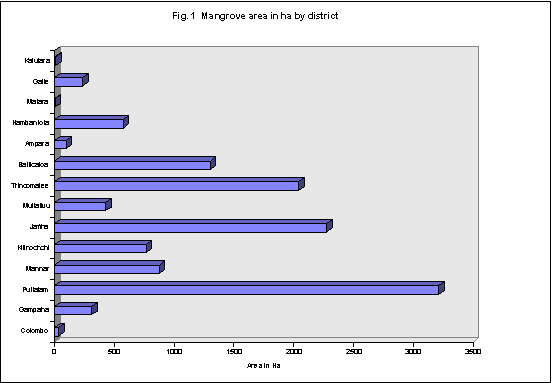

It is clear from the above that the majority of habitat suitable for coastal aquaculture development lies on the eastern and northern coasts.
Commercial coastal aquaculture is a relatively new undertaking in Sri Lanka and is limited to the production of the tiger shrimp, Penaeus monodon. One of the earliest attempts at shrimp culture was sited in Batticaloa, but had to be abandoned because of the security situation. Today, the industry is remarkably concentrated along Dutch Canal between Chilaw and Puttalam Lagoons. The nascent industry is confronting serious problems which bring into question its sustainability. Viral and bacterial diseases are rampant and have heavily impacted production. Productivity has shown a clear decline since the industry started.
The problems confronting shrimp farmers are the direct result of siting on inappropriate soils and environmental overload. The main source of water, the Dutch Canal, also receives shrimp farm effluent. The carrying capacity of the Canal is very limited by its low flushing rate. The Canal receives waste from agricultural and urban runoff in addition to the load put on it by shrimp farm effluent.
Inconsistent rainfall and reduction of freshwater runoff into Puttalam Lagoon are reflected in rising salinity, which is now beyond the optimum range for tiger shrimp. Some farms are drawing on ground water to try to control salinity. If this practice continues, the effect on freshwater supplies to local communities will be extremely negative.
The situation of the shrimp farming industry is a classic example of uncontrolled development with little or no regard for the environmental consequences. It is unlikely to be sustainable and the failure of many enterprises can be foreseen.
Haphazard development of aquaculture inevitably leads to environmental overload and serious economic losses to the industry. The uncontrolled expansion of shrimp farming in Sri Lanka is just one of many examples of the consequences of inappropriate siting, overcrowding and destruction of mangroves. Identifying zones with aquaculture potential is necessary for the rational development of the industry, and can be used as the basis for development planning and policy. Permit policy and monitoring should be used to keep development within the carrying capacity of the environment. Aquaculture zones should be incorporated in watershed management to prevent adverse impacts of development on water quality.
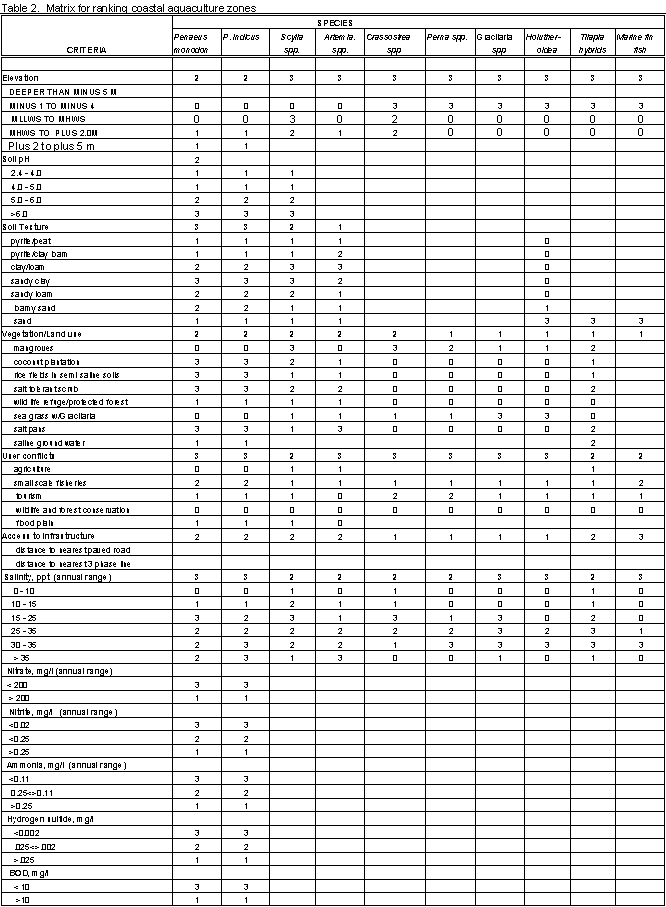
A matrix of species and environmental criteria impacting their culture systems has been constructed (Table 2, page 11). Only shrimp culture has developed as a commercially viable technology in Sri Lanka, but a number of other species have shown promising results in Sri Lanka and some are commercially produced in various tropical countries. Many are well suited to small scale production and could have a positive impact on the economies of small fisherfolk communities. Various criteria have been selected according to their impact on the technical feasibility of culture of the species included in the zoning matrix.
The species included in the matrix have been selected from a technical standpoint only. Although it may be technically possible to grow a species in the coastal zone of Sri Lanka, the special conditions which would favor commercial aquaculture may not be present. Zoning should take into account possibilities in the future, as well as present reality. The species included in the matrix are listed below.
There has been considerable experimental work with some of these species, such as oysters and seaweeds, which has indicated potential for development. Others will require further investigation and pilot field trials before commercial development can be undertaken. New species are discussed only from their technical potential. Detailed studies including social marketing and financial analysis of model enterprises are required to estimate the economic viability of the technologies.
Tiger shrimp farming is the only commercial technology developed in Sri Lanka's coastal zone. Development has been concentrated in the area from just south of Chilaw Lake to the mouth of Puttalam Lagoon. There was not control over the development of the industry which is now suffering the consequences of environmental overload.
The extensive lagoon systems and low relief coastal plain of the eastern sea shore will allow the shrimp farming industry to expand considerably. Innovative systems can be developed for open coastal sites. Sea water wells supplying water to closed systems may lead to the expansion of the industry in a much more sustainable manner.
The white shrimp, P. indicus, is not widely cultured but is well suited to high salinity environments beyond the optimum range for P. monodon. Salinity beyond 35 ppt is inimical to good growth of tiger shrimp, whereas P. indicus thrives up to 50 ppt. The average size after 150 to 180 days of culture is 20 g. The lower size is compensated for by much higher stocking densities with increased aeration which result in yields of 5 to 7 tons/crop. The white shrimp has the advantage of readily maturing and spawning in captivity. Larval survival in the hatchery is higher than P. monodon. Although higher stocking rates of 30 to 60 PL's/m2 are used, good hatchery survival and lower cost of brood stock should result in lower PL prices.
A management strategy could include tiger shrimp production during low salinity and white shrimp during high salinity. Intensive white shrimp culture might be possible in lined ponds constructed on sand on open sea coasts where moderate surf prevails. However, the economic feasibility of white shrimp production needs to be demonstrated in Sri Lanka.
Two species of mud crab are found in Sri Lankan waters, S. serrata and S. oceanica. S. serrata is smaller than S. oceanica and is sold locally. Crab fattening operations usually use S. oceanica . Mud crab "fattening" is increasingly popular in the shallow lagoons and bays around the country. Recently molted "water crabs" are held for 2 to 3 weeks and fed fish offal. The fattened crabs are exported through Colombo to SE Asian markets. Both sexes are used in fattening operations, so there is the danger of damaging the fishery if the capture of female crabs continues.
Mid crab culture has not yet developed in Sri Lanka, but is well suited to small scale operations and can be done in a way that minimizes environmental impact. Expansion of mud crab production confronts two major constraints: lack of hatchery produced seed and reliance on low value fish as feed. Commercial hatchery production has not been achieved anywhere, although the life cycle has been closed in captivity. Cannibalism at the megalopa stage seems to be the bottleneck in hatchery production.
The current reliance on juvenile wild crabs for seed stock is not sustainable and threatens the viability of the fishery. Hatchery research is underway in Australia, Malaysia and Taiwan. Successful technology developed in these countries could be transferred to Sri Lanka. Ceylon Grain Elevators has had promising results with artificial feeds for grow out which might lead to less dependence on low value fish.
Brine shrimp are widely used in the ornamental fish industry both in Sri Lanka and abroad and are vital to the shrimp and prawn hatchery business. Extensive field trials by NARA have demonstrated the feasibility of both biomass and cyst production in Sri Lankan salterns. Some commercialization developed to supply local markets in the ornamental fish and hatchery sectors. The production potential of existing salterns appears too small to enter the international market. The Great Salt Lake of Utah, USA continues to be the major supplier of brine shrimp cysts to the aquaculture industry.
Field trials by NARA have demonstrated the technical feasibility of culturing oysters. The most promising sites are to be found in the extensive lagoons and embayments of the east and northeast coasts of the country. Abundant spat are reported from Trincomalee Bay. Weak local market demand is the most important constraint confronting development of oyster farming in Sri Lanka. Tourism offers opportunities, provided the product can be certified as sanitary. Export to Singapore and Malaysia would also be possible if the oysters are depurated.
Farming systems for oysters are very diverse. Farmers adapt the system to their local environment. Intertidal culture is done on racks, rocks, cement poles and stakes. Long lines, racks and rafts are employed in deeper water. The spat source and market influence the culture method as well as the environment. The most common method in Thailand is intertidal cement poles to which spat are cemented. Intertidal racks and stakes are popular in Thailand, while in Malaysia long lines, rafts and racks are used for subtidal farming. In the western tropical Pacific, the majority of commercially cultured tropical oysters belong to the genus Crassostrea and include C. belcheri, C. irredalei and C. arakensis. There is more limited production of Saccostrea echinata and S. cucullata. Commercial culture has not yet developed in south Asia.
All species of the genus Crassostrea have similar characteristics. They tolerate moderate to high turbidity, are euryhaline but do best in a range of salinity from 15 to 25 ppt. They are also fast growing, reaching market size in 6 to 9 months. Species are difficult to differentiate from external shell characteristics and the taxonomy of Indo Pacific species is not very clear.
Oysters show promise as a component of biological treatment of shrimp pond effluent water. Provided sufficient spat are available, shrimp farms could become a major source of farmed oysters.
Mussels are another species which has been experimentally cultured in Sri Lanka but not yet commercialized. The market potential is not known, but probably has poor export prospects. It is reported that dried mussel meats from Trincomalee can be found in some fish markets. Mussels can be incorporated in biological treatment systems for shrimp farms, but are less tolerant of salinity fluctuations. They have been grown in Galle and Puttalam Lagoon, but are best suited to the lagoons and bays of the east and northeast coast.
Perna is grown subtidally on ropes suspended from rafts or on long poles pushed into the sea bed. Spat are sometimes collected from mussel beds on subtidal rocks or they may set directly on poles. Growth is rapid and thinning may be required. Marketable mussels are obtained in 6 to 8 months under normal growing conditions. Like oysters, mussels are well suited to small scale production and their culture is compatible with the mangrove environment.
Red algae of the genus Gracilaria are found associated with seagrass beds in the lagoons and bays around the coast of the country. Experimental work by NARA has been incomplete, but indicated there may be potential for its culture. The main product extracted from the seaweed is a phycocolloid known as agar. Agar has both a domestic and export market depending on its quality. A pilot project has been completed in Puttalam lagoon with support from the Canadian International Development Agency (CIDA). Gracilaria was propagated vegetatively and harvested by selective pruning. The results indicated that commercial development by poor fisher folk might be viable.
Gracilaria can be grown in open water or ponds. Open water culture is suitable for small scale production. It can be incorporated into treatment systems for shrimp farm effluents. Grazing by juvenile rabbit fish is the most serious constraint facing open water culture, while pond construction costs influence the economic viability of pond production unless it is part of a biofiltering system for closed system shrimp culture. Open water culture is done adjacent to natural stocks, usually in sea grass beds. The depth of culture is approximately 0.6m. Propagules are taken from the natural stocks. Spore setting has succeeded experimentally, but needs to be tried on a larger scale. The ideal salinity range for G. edulis in Sri Lankan waters seems to be from 18 to 35 ppt.
There are 2 open water systems currently in use for commercial Gracilaria culture. These are the stake and line method and the floating method. The stake and line method has been tested in Puttalam Lagoon and appears to be successful. The lines are set at a depth of 0.6 m below MLLWS.
The floating method enables seaweed culture in deep water, although the location should be sheltered. Any inexpensive floatation can be used. A bamboo frame supporting a grid of lines is used in the West Indies with success. Simple longlines can be made with plastic jerry cans, fish net floats or other locally available materials. Longlines are suitable for more exposed locations. The seed line should be set about 0.5 m below the surface. Floating methods are one way to avoid grazing fish, which usually inhabit reefs or shallow sea grass beds. It is not unusual to have to test many sites until a suitable location is found.
Sea cucumbers, also known as trepang or beche de mer, are highly prized in east Asian markets. Many stocks in the Indo-Pacific region have been over exploited to satisfy the growing demand from China, Taiwan and the SE Asian countries where ethnic Chinese live. The rising prices and increasing scarcity have prompted attempts to culture these animals. Some success has been achieved in China and experiments have had positive results in India. NARA scientists are currently investigating culture techniques, but probably a decade will be required to develop commercially viable culture technology.
The value of trepang depends very much on the species, since quality is species dependent. Culture would have to be developed for Holutheria scabra, H. scabra var. versicolor, H. nobilis and H. fuscogilva. These are the most valuable species. Their habitat requirements under culture conditions are not well known, but these species are found on muddy and muddy sand sea floors. They may be encountered in sea grass beds and occasionally in waters subject to river influence. H. scabra is an inner reef flat species, H. nobilis and H. fuscogilva are frequent reef passes and slopes, while H. scabra var. versicolor is found in lagoons (Conand 1990). Sri Lanka exports 60 tons per year, of which 20% are from Puttalam. This represents 0.01% of the world market of 600,000 tons. Dried trepang currently sells 3000 to 6000 SLR/kg, with about 20 pcs per kg.
Experimental culture of H. scabra and H. atra will be undertaken at the NARA Kalapitiya Field Station. Fisherfolk could do the farming from the juvenile stage using cages or pens. Sea cucumbers are stenohaline requiring about 32 ppt. The larval rearing temperature is 30.2 oC.
Hybrids of Serathrodon and Oreochromis spp. have been developed for brackishwater culture. Some breed in seawater, while others reproduce in freshwater. The fry of freshwater breeding varieties are acclimitized to brackishwater and may be sex reversed to provide all male fingerlings for stocking in pens or cages. Hybrids exhibit rapid growth and have high feed conversion ratios. They adapt readily to artificial pelleted feeds. Small scale culture in pens and cages has proved profitable in Malaysia, Thailand, Indonesia and Jamaica, to name a few countries of the many where hybrid culture has been tried.
Brackish ground water is common along the coast of Sri Lanka and could be used to culture hybrid tilapia in small ponds. While these fish can tolerate a wide salinity range, there should not be abrupt changes.
Culture technology has been developed for several species of marine fin fish, among which are mahi mahi (Coryphaenus hippurus), sea bass (Lates calcarifer), threadfin (Polynemus sexfilis) and snappers (Lutjanus spp.). Of these, only sea bass and snappers are commercially cultured. Pilot projects are underway in Hawaii and Belize to develop technology for the culture of mahi mahi. The threadfin, Polynemus sexfilis was bred and cultured experimentally in Hawaii, but has not been commercialized.
Marine fin fish may be reared in land based or cage systems. Only a very high market price can justify land based systems. The high cost of hatchery production is a further impediment to the development of marine fin fish culture in Sri Lanka, at least in the initial phase of development.
The milkfish, Chanos chanos, has been the object of experimental culture in Sri Lanka in the past, but there was no commercialization. Milkfish are cultured in tide fed ponds in the Philippines and Indonesia. A tidal range of at least 1.5 meters is required for adequate water supply, whereas the maximum tidal range in Sri Lanka is about 70 cms. A serious environmental constraint facing inter tidal pond development is its interference with the mangrove ecosystem.
It might be interesting to look at the viability of milkfish culture in abandoned shrimp ponds or pens. Supplementary feeding could possibly allow sufficient production to cover pumping costs in ponds. In any event, much less water exchange would be required compared to shrimp farming. Milkfish may also be cultured in pens with supplementary feeding using low cost inputs such as rice bran and oil cake. Resolving user conflicts would be an important component of developing pen culture of milkfish. Community-based or cooperative culture might be one approach. Women's groups could become involved in pen culture. The capital investment for pen culture is relatively low, but there is a high risk of social conflict.
Criteria which impact or control aquaculture systems development were identified and ranked. Ranking was done on a 4 point scale which will be represented on overlays by a monochrome shading scale. The ranking scale will be as follows:
0 Not suitable for development
1 Not optimal, affects the culture system negatively
2 Neutral, or favors the development of the culture system
3 Positive, successful development highly likely
Each criteria is, in turn, further refined by sub division into parameters. Parameters are ranked using the same scale as applied to criteria. The scoring of a zone is at the category level, with the score as the product of the parameter rank by the category rank. A sample matrix is shown in Table 2.
Physical, chemical and social parameters impact aquaculture development but obviously not all parameters are applicable to every system considered in our GIS data base. Ranking scores for parameters are shown in Table 2.
Elevation (or depth) in reference to mean sea level is a unique criteria in that it is germane to all coastal aquaculture systems. Shrimp culture in the supratidal zone is now the preferred technology but pumping costs and sea water intrusion into freshwater aquifers limit pond construction to elevations less than 5 m. The tidal range along most of the coast of Sri Lanka is less than 1 m, practically eliminating the possibility of intertidal pond construction. Furthermore, mangroves are often destroyed to accommodate intertidal ponds.
Submerged culture systems employing rafts or cages require sufficient clearance between the culture system and the sea floor. Fin fish cages should be sited in at least 5 m depth to allow adequate cage depth and water circulation.
Sea cucumbers are cultured in shallow water less than 5 m depth. Seaweed may be grown in less than 1 m but below MLLWS tides. Oysters can be cultured in the intertidal zone or completely submerged. The elevation depends on the degree of fouling which is usually higher in higher salinity water.
Acidic soils are common in the coastal zone, originating from anaerobic decomposition of organic matter. The end product is iron pyrite, which when oxidized by exposure to air yields sulfuric acid. Very low pH soils may produce toxicity through the release of aluminum ions. Primary production is also very poor because phosphate is precipitated as insoluble calcium phosphate.
The ideal pH range for shrimp farming is 6.5 to 7.5. Soils above pH 5 may be used, but more acid conditions cause problems. Reclamation of acid sulphate soils is possible, but may be costly if the pyrite load is high. Potential acid sulfate soil is one reason for avoiding mangrove forests, which usually have high potential sulfate acidity.
Soil pH is somewhat related to soil texture, but one often encounters pyritic loam and sandy loam slightly above the elevation of mangroves, such as along the western shore of Chilaw Lake.
Soil pH is of little relevance to aquaculture systems which do not involve pond construction or other excavations. Sea water is a highly buffered medium, consequently pH of the aquatic medium is seldom a limiting factor. In extreme cases of acidic runoff from disturbed mangrove forests or land clearing, excessive acidity could cause an acute problem.
The feasibility of pond culture is directly related to soil texture, but has little relevance to other technologies such as raft and cage culture. Mangroves develop on alluvial soils in which clay predominates. As elevation increases, pyrite content declines while pH normally rises. At the same time, particle size tends to increase unless alluvial soils dominate in which case clay would be the most common soil type. Clay to sandy loam soils are suitable for pond construction. Ponds constructed in sandy loam soils experience seepage water loss, but the loss may amount to only a few cms a week.
Pond liners can be used in sandy soils if high value crops like shrimp are to be cultured. There are examples of lined ponds in Saudi Arabia and Mexico. Pond liners have also been used in very acidic soils to isolate the culture system from the negative effects of high acidity.
Vegetation reflects soil texture, pH and influences pond development costs. The importance of the mangrove ecosystem to coastal fisheries and biodiversity precludes its occupation and destruction for pond culture. On the other hand, mangroves are ideal sites for non-intrusive forms of aquaculture such as bivalve mollusks, mud crab and cage culture. Similarly, the sanctity of wild life preserves must be respected.
Saline ground water underlies significant portions of the coastal zone. Coconut plantations, halophytic vegetation, salt pans and single crop padi lands can be found over saline ground water. These areas are ideal for pond development, particularly shrimp farms. Construction costs and environmental impacts are low. Shrimp culture usually is the most profitable use of these lands. Because of saline ground water and soils, irrigated agriculture is impossible.
Other than pond culture, vegetation is of minor importance. Holuthurians require sediments suited to their normal habitat, but this varies with the species. The most valuable species prefer muddy sand. Open water Gracilaria farming has more chance of success if done in its natural habitat. In Puttalam Lagoon, for example, it is found in association with sea grass.
User conflicts are serious impediments to aquaculture development and have led to conflicts in almost every country in which the industry has developed. The western coastal zone is heavily populated. Resources are already under pressure and in many cases over exploited. Mechanisms for resolving conflicts should be encouraged if aquaculture is to develop as a sustainable industry.
Open water culture, among which are rack and raft culture, need little infrastructure. Even remote areas accessible only by boat are quite suitable for these systems. Shrimp farming is the prime example of a technology requiring substantial infrastructure support in the form of all season roads and 3 phase electricity in sufficient quantity.
Marine organisms can be broadly characterized as euryhaline or stenohaline. Shrimp and oysters belong to the former, while mahi mahi are in the latter group. Even euryhaline organisms thrive only within a range, albeit wide, of salinity. Thus salinity is an environmental parameter controlling the selection of species and technologies. Very few brackishwater species grow well at either extreme (0 to 10 ppt and above 35 ppt), although they may be able to tolerate them for short periods of time.
The parameters selected in the salinity category reflect the optimum ranges for the various matrix species. There is overlap in many instances, particularly in the mid range of 15 to 25 ppt.
Water quality indicators include dissolved nitrogen, hydrogen sulfide and biological oxygen demand (BOD). Dissolved nitrogen is partitioned into ammonia nitrogen, nitrite and nitrate. The most critical parameter is dissolved ammonia due to its toxicity if tolerance limits are exceeded.
Optimum ranges and limits for some of these parameters are known for shrimp, but little data exists for other species. Data collected during the survey will be useful as a baseline against which to measure the impact of future aquaculture development.
The zoning process consists of 5 steps: 1) preparation of base maps and overlays, 2) field surveys, 3) GIS data base revision, 4) preparation and publication of zoning for each species, and 5) incorporation into CZM regulations.
There appears to be a substantial amount of data relevant to coastal aquaculture zoning, but it is dispersed among several ministries and departments. Maps, reports, studies and surveys from both the published and unpublished literature can be availed of to build a GIS data base. The first task is to find, collect and collate these materials in the Planning and Information Unit.
Digitized maps of the coastline of the country including lagoons, bays and harbors will serve as base maps on which specialized overlays will be superimposed to identify areas suitable for various culture species. These 1:50,000 scale maps currently not available in the PIU are listed in Annex 8.1 and are available from the Survey Dept. A valuable source of maps and aerial photographs is Bandara, C.M. Madduma. 1989. A survey of the coastal zone of Sri Lanka. Coast Conservation Dept.
Large areas of coastline may fall within certain isopleths of some parameters, for example, elevation. An exclusionary screening process has to be applied to reduce potential zones to a reasonable area. Very general criteria may be considered at this stage. Some obvious exclusionary criteria or parameters are urban areas, harbors, sea cliffs, swamps, navigation channels, irrigated padi, and heavily exploited lagoons.
After excluding obviously unsuited areas, the next step is to construct a series of digitized overlays of criteria relevant to each species or species group. The construction of the overlay will depend on the particular criteria. The vegetation overlay for P. monodon or P. indicus, for example, would consist of plots of the various vegetation parameters found within the zone. At this stage, plots are developed from data shown on 1:50,000 scale maps or from specialized maps of soils, ground water or particular types of vegetation. The overlay of some parameters like salinity will be a plot of isohalines.
After the overlays of criteria have been completed, the parameters can be ranked by the color coding scheme. The suitability of areas within a zone would be indicated by combinations of the primary colors or if unsuitable, blacked out.
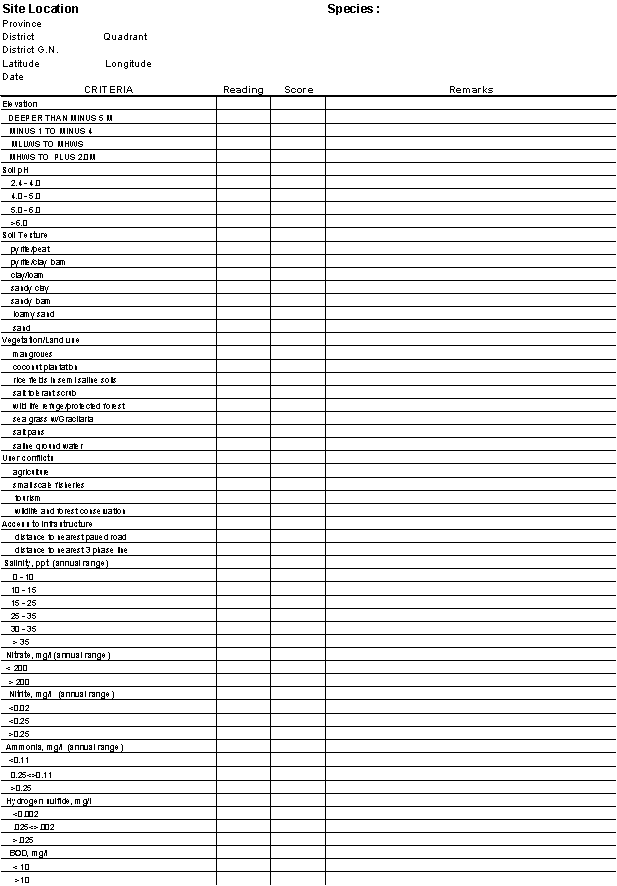
The field survey has a several roles: fill lacunae identified in the construction of the GIS data base, ground truth remote sensing data, and establish base line data. Field surveys are time consuming and expensive and should be limited to these functions. A sample survey form is shown in Annex 8.3.
The survey plan is developed prior to the field survey. Information needs are identified during the preparation of base maps and overlays as described in section 3.1. Sampling is based on transects perpendicular to the shoreline. Preliminary transects and station locations are identified on the base map according to the information to be acquired in the field. The coordinates of the sampling station are listed for GPS referencing in the field. If GPS is not available, triangulation must be used. The samples or measurements which have to be taken will be determined by the lack of corresponding data in the GIS data base. For example, contour intervals on 1:50,000 scale maps are 100 m, which is far too coarse for our purposes. Therefore, in zoning for shrimp culture, we will have to identify points along the transects where elevation will be measured with a transit or theodolite in reference to mean sea level at intervals of 0.5 m up 5 m or a distance of 2 km from the shoreline, whichever comes first. The precise positioning of the transect or sampling points along it may have to be adjusted in the field.
If soil data is required, sampling points can be tentatively identified on the basis of vegetation cover, each point representing a vegetation type since vegetation is a good indication of both soil texture and elevation. Bathymetry, salinity and undersea vegetation will require the use of small boats and water sampling apparatus such as Van Dorn bottles. Sampling can also be done while swimming with snorkeling gear. The terminus of the transect is marked with a stake or buoy referenced to 2 stakes set on the land side of the transect line. GPS positioning would greatly facilitate sampling point identification. Marine transects can be marked with a light line or raffia and sampling points marked and measured along the line. Defining salinity ranges may require repeated observations at the same sampling points over a long period of time. Dry and wet season peaks may be measured, but at least one year and two samplings would be required.
Acquiring base line data will enable development to be monitored and controlled. It is particularly important to establish water quality baseline data in zones that have not yet been developed for aquaculture. The base line data will tie the zoning process to regulatory measures through the granting of permits and monitoring of project performance. When water quality or other environmental standards begin to show signs of deterioration, development can be stopped permanently or until remedial measures are taken.
During the course of this mission, 3 brief field surveys were conducted. The objectives were to assess the state of aquaculture development in the northwestern, western and southern provinces and to indicate where detailed field surveys might be made.
Data acquired in the field will be incorporated into the corresponding overlay in the GIS data base. Data collected in on-going surveys in the context of other projects can be used to continuously update the GIS database.
Land use changes, sometimes rapidly and is an example of the kind of data which needs constant updating. Aquaculture itself may be a significant contributor. Shrimp farm development may occur very rapidly and should be carefully tracked by the PIU. Other forms of coastal aquaculture are likely to develop rather slowly in Sri Lanka, but nevertheless need to be monitored and included in the GIS database should development proceed.
The outputs of the zoning process are the publication and dissemination of results to the interested public and the incorporation of coastal aquaculture zoning into CZM regulations. A special publication could be produced explaining the methodology used to establish coastal aquaculture zones with presentation of maps indicating appropriate zones for different species. The publication could serve as a guide for investors as well as policy makers.
Zoning will only be effective if it is incorporated into enforceable CZM regulations. When the eastern and northern coasts become accessible for development, there may well be a "shrimp gold rush" to the area. If this occurs, it will be imperative to control development if over development of the industry, exemplified in the Chilaw - Puttalam area, is to be avoided.
General zoning for aquaculture is not feasible since each culture system or species has its peculiar requirements. Some criteria are common to several species, which we have referred to as a species group. Zoning parameters are, in general, discussed for grow out systems. Hatchery siting is discussed briefly in section 5 below.
Both P. monodon and P. indicus share most criteria necessary for successful culture. P. indicus may be better adapted to salinity above 45 ppt. Shrimp farming in Sri Lanka is restricted to the supratidal zone as a consequence of the very narrow tidal range of less than 1 m. After excluding areas obviously unsuited to aquaculture, one can identify potential shrimp culture zones from examination of siting for some of the existing shrimp farms as well as general site selection criteria and applying corresponding criteria to maps. Several local farms such as Indiwary and Link Aqua Farms have used innovative technology to expand the area suitable for shrimp farming.
The first step is to digitize the 1:50,000 map which includes the potential shrimp culture zone. Features of this base map will include the shoreline, including all water bodies (lagoons, channels, rivers, etc.) Other information on the 1:50,000 map can also be included in the base map. Vegetation, settlements, roads and highways, and land usage such as padi land and salterns are examples of information which can be digitized from the survey maps. The contour interval is 100 m which is far too low a resolution for siting shrimp farms, but it can be useful to include. The inland boundary of the zone map should be about 2 km from the shoreline, but this should not be rigid if suitable elevation, soil and ground water conditions are found further inland or the 5 m contour is reached in less distance.
When the base map is completed, overlays can be prepared for elevation, soils, aquifers, mangroves, salinity of adjacent water bodies, depth contours up to 5 meters and water quality parameters.
Two species of mud crab are found in Sri Lanka, of which only S. oceanica is being used for "fattening." There is no culture of either species at the moment. However, the criteria for culture and fattening should be similar for both species. Mud crabs are one of those species which is well suited for culture in the intertidal zone in or adjacent to mangroves or in other shallow, protected waters.
The first overlay on our base map would be the distribution of mangroves. The bathymetric overlay would contain the MLLWS isobath. The mud crab culture zone is that area encompassed by the intertidal zone within lagoons and bays.
The crab fattening zone coincides with the culture zone but also extends to elevations above MHHW. This is because shore based installations are possible. They may use tanks above ground level or shallow excavated lined pools. In heavily utilized lagoons such as Negombo, this may be the only practical way to do fattening or even culture. The higher limit of this zone would be the 1 m contour interval. Culture and fattening are possible anywhere along the lagoon shoreline. They can be so-called "back yard" operations which can be carried on even in lightly urbanized areas. Open sea coasts are not suitable, however.
Mud crab culture and fattening depends on a reliable source of fish offal and low value by catch. Proximity to fishing ports would be a definite advantage to the culturist, so the infrastructure overlay could show fishing ports, feeder roads and highways.
Artemia or "brine shrimp" occupies a unique niche in which it has few predators other than birds. Because it inhabits only extremely saline water, its distribution and culture is restricted to salterns, mainly the two large commercial operations in Puttalam and Hambantota, respectively.
The first overlay on the base map will plot existing salterns, both small and large scale. These mark the zones where brine shrimp can be cultured with some modification to the existing salterns, particularly if they are small scale operations. The second overlay should encompass the one meter contour adjacent to lagoons. The third overlay would be for soil. The brine shrimp zone is identified where soils of low permeability coincide with the area between the MHWS and the 1 m contour.
The first step in zoning for oyster culture is to select lagoons and bays where successful trials have been conducted and those sheltered water bodies which might be suitable. Zones for oyster culture should include depths from MLLWS to 5 meters in sheltered waters such as lagoons and bays. These isobaths can be plotted on the first overlay. The second overlay should show isohalines for the lagoon or bay selected for zoning. Another overlay can indicate mangroves, which are compatible with oyster farming when done around the fringes of the forest and in channels coursing through the trees. Oyster culture in Sri Lanka is likely to depend on natural spatfall, so the locations of oyster stocks should be mapped to the extent they are known.
Depth is a controlling criteria and can be plotted on an overlay. The overlay prepared for oysters may be suitable with minor modifications, as well as the overlay of isohalines. Mussels can be cultured from about 2 m to 5 m depths or more, depending on the culture method. Poles are used in shallow water and rafts or long lines in deeper water. Natural mussel beds can be plotted on overlays similar to those plotted for oyster stocks. The locations of natural mussel beds will be likely sites for mussel culture using either poles or suspension methods.
It is likely that Gracilaria will be produced from open water culture and as a by product of biofiltration and treatment in shrimp farms. Seaweed culture zones coincide with sea grass beds, which are the natural habitat of Gracilaria edulis. Therefore the first overlay for the seaweed culture zone will be a plot of the distribution of sea grass beds. The isohalines for 18 ppt and 35 ppt can be superimposed as the second overlay. Salinity within this range should occur at least 6 months of the year. Lines are set at 0.6 m depth when the stake and line system is used so the water depth must be at least 1 m below MLLWS tide.
The floating method allows seaweed culture in deep water so the most important criteria are salinity and exposure. Deep lagoons and bays are ideal and can be zoned for this technology provided salinity falls within the required range at least 6 months of the year. The area between the 2 m and 5 m isobaths can be used to define the depth overlay, although floating seaweed culture could be done in deeper water.
Sea cucumber culture is at the experimental stage in Sri Lanka so the parameters used to define potential zones are not well known at this point. However, we can use the known requirements for species which are harvested from wild stocks. For zoning, sediment data and salinity isopleths and depth of -1 to -5 m can be combined.
Isohalines enclosing water with a year round salinity of 32 ppt will be the first overlay. Isobaths of the -1 and -5 meter depth countours can be the second overlay, while sediment maps indicating the extent of muddy sand bottom are overlaid to indicate the area suitable for trepang culture.
Three culture systems can be zoned for: pen, cage and pond. Pen culture requires shallow water of 2 to 3 m below MLLWS, sandy to muddy sea floor.
Brackish ground water is a resource which could be used to culture hybrid tilapia in the coastal zone in ponds. The criteria to be plotted are ground water salinity, soil texture and land use. Where brackish ground water underlies seasonal, unirrigated rice fields, hybrid tilapia culture could be a profitable alternative. For these sites, it is critical to identify discharge points for pond effluent. Alternatives are to inject back into the aquifer after treatment or discharge into an existing brackishwater lagoon, again after treatment. Ground water salinity data is available from NARA studies and possibly from the Water Resources Board. Soil texture suitable for pond construction ranges from sandy loam to clay. The zone map for tilapia pond culture will consequently have four overlays: ground water salinity, soil texture and land use. The topography should also be taken into account to identify discharge routes for pond effluent.
Marine fin fish include species which require oceanic quality water for their hatchery and grow out phases. Brackish water fin fish include Lates calcarifer (sea bass) and Chanos chanos. Both species require oceanic water for hatchery fry production, but grow well in brackish water. Because marine fin fish require the highest water quality, culture systems must be located in deep bays witch have high exchange rates with the open sea. Land based culture systems are an alternative if sites can be found where open sea water can be supplied to the culture system.
The most common culture technology for marine finfish is cage culture. Cages are 2 to 5 m deep and require at least 2 m clearance between the bottom of the cage and the sea floor at MLLWS. Cages also require sheltered locations protected from open sea swell and storm waves. Only deep bays or deep portions of lagoons beyond 5 m should be zoned for cage culture. Shallower areas of lagoons and bays can be zoned for pen culture. At least one meter below MLLWS is required for milkfish, but should be deeper for sea bass.
There are abundant sites for marine fin fish hatcheries along the coast of Sri Lanka. The southern coast is promising, particularly in the dry zone. However, sites for cage culture appear very limited. Trincomalee Bay may have the necessary conditions, but other coastal lagoons are subject to wide variations in water quality, including salinity. Shore based systems are technically feasible, but are probably not financially viable because of high pumping costs.
Vast stretches of the Sri Lankan coast are suitable for hatcheries. The most important requirements are access to oceanic seawater and adequate distance from river mouths to avoid any freshwater influence. Sand beaches are preferable for the ease of constructing a seawater intake. The hatchery site must be within easy reach of 3 phase electricity and all - weather roads. Excellent sites can be found along the Northwest Province on the sea coast and the dry zone of the south coast from Tangalle east to the boundary of Bundala and Yala Wildlife Sanctuaries. The east and north coasts are also certain to have an abundance of sites, but for obvious reasons could not be visited.
The fry or juveniles of all of the species included in the matrix can be reared in hatcheries cited on oceanic beaches. Freshwater should be available in sufficient quantity to dilute ocean water in oyster larvae and freshwater prawn fry will be reared. Freshwater may have to be treated to reduce high dissolved iron content, a common problem with tube wells. Iron removal is not difficult or costly.
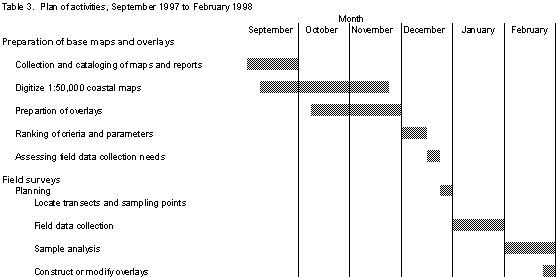
Table 3 is proposed as a plan of activities to be undertaken from September 1997 through January 1998. The objective of these activities is to establish a GIS data base on which a coastal aquaculture zoning system can be constructed. These activities will be undertaken in the pilot area established by Dr. Geoff Meaden, which encompasses the coastal zone from the southern end of Chilaw Lake to Dutch Bay, Puttalam.
Al-Thobaiti, S.; C.M. James. 1996. Shrimp farming in the hypersaline waters of Saudi Arabia. Infofish International 6/9 (26-31).
Anonymous. 1981. Coast conservation act, No. 57 of 1981.
Anonymous. 1994. Wetland Site Report. Puttalam Lagoon, Dutch Bay and Portugal Bay. Wetland Conservation Project. Central Environmental Authority/Euroconsult.
Anonymous. 1994. Wetland Site Report and Conservation Management Plan. Mundel Lake & Puttalam Corridor Channel. Wetland Conservation Project. Central Environmental Authority/Euroconsult
Anonymous. 1985. Coastal environment management plan for the west coast of Sri Lanka: preliminary survey and interim action plan. Econ. Soc. Comm. Asia and the Pacific. United Nations.
Arulananthan, K.; L. Rydberg; U. Cederlof; E.M.S. Wiyeratne. 1995. Water exchange in a hypersaline tropical estuary, the Puttalam Lagoon, Sri Lanka. Ambio V 25 No.7-8 (438-443).
Bandara, C.M. Madduma. 1989. A survey of the coastal zone of Sri Lanka. Coast Conservation Dept.
Bandara, C. M. Madduma; I.M. Ismail; R. Wijeratne; D. Jayawickrama; C. Wijenaike; R.S. Jayaratne.1986. Second Interim Report of the Land Commission. Strategies for conservation and development of coastal lands. Land Commission, Colombo, Sri Lanka.
Coastal Conservation Department. 1990. Coastal zone management plan. Sri Lanka Coast Conservation Dept. Colombo, Sri Lanka.
Conand. C. 1990. The fishery resources of the Pacific island countries. Part 2. Holothurians. FAO. Fisheries Tech. Paper 272.2 142 pp.
Corea A.S.L.E.; J.M.P.K. Jauasinghe; S.U.K. Ekaratne; R. Johnstone. 1995. Environmental impact of prawn farming on Dutch Canal: the main water source for the prawn culture industry in Sri Lanka. Ambio V 25 No.7-8 (423-427)
Coutts, R.R.; C.A. McPadden. 1994. The use of remote sensing and GIS techniques to survey and map the Malacca Straits coastal environment and shrimp aquaculture in North Sumatra Province. In Geographical Information Systems for natural resource management in South East Asia. S.T.D. Turner and R. White, eds.
Dayaratne, P.; A.B.A.K. Gunaratne; M.M. Alwis. 1995. Fish resources and fisheries in a tropical lagoon system in Sri Lanka. Ambio V 24 N 7-8 (402 - 410)
Dayaratne, P.; O. Linden; M.W.R.N. De Silva. 1995. Puttalam Lagoon and Mundel Lake, Sri Lanka: A study of coastal resources, their utilization, environmental issues and management options. Ambio V 25 No.7-8 (391-401)
Dayaratne, P.; O. Linden; M.W.R.N. De Silva. 1997. The Puttalam/Mundel estuarine system and associated coastal waters. NARA. Colombo Sri Lanka. 98 pp.
Funge-Smith, S. 1997. Disease prevention and health management in coastal shrimp culture. Sri Lanka. Field Document 1 TCP/SRL/6614, FAO Bangkok.
Ganewatte, P.;LA.D.B. Smaranayake; J.I. Samarakoon; A.T. White; K. Haywood. 1995. The coastal environmental profile of Rekawa Lagoon, Sri Lanka. Coast Conservation Dept. NARA, Coastal Resources Management Project.
Jayakody. S. 1997. MS. Shrimp fishery and related biological process Rekawa Lagoon, Tangalla. Working Paper No. 1/1997. NARA/Coastal Resources Management Project University of Rhode Island.
Jayasinghe, J.M.P.K. 1995. Regional study and workshop on aquaculture sustainability and the environment. Sri Lanka Study Report. ADB RETA 5534 NACA,
Jayasinghe, J.M.P.K. 1997. Treatment systems for shrimp culture. NARA. Colombo.
Jayasinghe, J.M.P.K. 1997. Investigations on the disease out-breaks in shrimp culture systems developed on problem soils. NARA Research Grant ARP/12/153/163. National Aquatic Resources Research and Development Agency Colombo 15 Sri Lanka.
Johnson, P.; R. Johnstone. 1995. Productivity and nutrient dynamics of tropical sea-grass communities in Puttalam Lagoon, Sri Lanka. Ambio V. 24 N 7-8 (411-417).
MOFARD. 1990. National Fisheries Development Plan
NARA. MS. Survey to identify suitable areas in the coastal belt of Sri Lanka for prawn culture. Phase I.
NARA. MS. Survey to identify suitable areas in the coastal belt of Sri Lanka for prawn culture. Phase I.
NARA. MS. 1995. Report on the preparation of a zonal plan and identification of land for further development for shrimp farming in Northwestern coast.
Olsen, S. D. Sadacharan, J.I. Samarakoon, A.T. White, H.J.M. Wickremeratne, M.S. Wijeratne. 1992. Coastal 2000: recommendations for a resource management strategy for Sri Lanka's coastal region, Volumes I and II. CRC Technical Report No. 2033., Coast Conservation Dept., Coastal Resources Management Project, Sri Lanka and Coastal Resources Center, The University of Rhode Island.
Rajasuriya, A.; M.W. R. N. De Silva; M. C. Ohman.1995. Coral reefs of Sri Lanka: human disturbance and management issues. Ambio V 25 No.7-8 (428-437).
Walberg, P.; R. Johnstone. 1995. Diurnal variations in pelagic bacterial and primary production during monsoon and intermonsoon seasons: Puttalam Lagoon, Sri Lanka. Ambio V 24 No. 7-8 (418-422)
White A. T.; M. Wijaratne. 1989. Are coastal zone management and economic development complementary in Sri Lanka?
Wiyeratne, E.M.S.; U. Cederlof, L. Rydberg; K. Arulananthan. 1995. The tidal response of Puttalam Lagoon, Sri Lanka: a large shallow tropical lagoon. Ambio V 25 No.7-8 (444-447)
Wanninayake, W.M.T.B.; A.A.D. Sarath Kumara;WV.F. Udaya. 1990. Settlement of oyster spat Crassostrea madrasensis (Preston) on four selected substrates in the Kala Oya estuary of Puttalam Lagoon, Sri Lanka. Proc. Inter. Interdisc. Symp. Ecology and Landscape management in Sri Lanka. Colombo, Sri Lanka 12-26 March 1990.
Wanninayake, W.M.T.B.; A.A.D. Sarath Kumara;WV.F. Udaya. 1990. Experimental studies on raft culture of oyster Crassostrea madrasensis (Preston) in Sri Lanka. Proc. Inter. Interdisc. Symp. Ecology and Landscape management in Sri Lanka. Colombo, Sri Lanka 12-26 March 1990.
Map list for 1:50,000 sheets covering the coastal area of Sri Lanka
| No. | Area Name | No. | Area Name |
| 1 | Manipay | 39 | Kalkudah |
| 2 | Point Pedro | 45 | Batticaloa |
| 3 | Jaffna | 51 | Paddirapu |
| 4 | Chavakachchen | 57 | Ampara |
| 5 | Mulliyan | 58 | Kalmunai |
| 6 | Delft | 59 | Negombo |
| 8 | Kilnochchi | 64 | Tirrukkovil |
| 9 | Iranamadu | 65 | Tampaddi |
| 10 | Mullaitivu | 73 | Kalutara |
| 11 | Talaimannar | 78 | Panama |
| 12 | Tunukkai | 79 | Alutgama |
| 14 | Alampil | 84 | Yala |
| 15 | Mannar | 85 | Balpitiya |
| 18 | Kokkilai | 86 | Amalangoda |
| 19 | Silawatturai | 89 | Tissamaharama |
| 23 | Nilaveli | 90 | Galle |
| 28 | Trincomalee | 91 | Matara |
| 33 | Kathiraaveli | 92 | Tangalla |
1. A.M. Jayasekera, Director, Aquaculture Development Division, MOFARD
2. R.K.U.D. Pushpakumara, National Project Director, TCP/SRL/6712
3. Dr. Geoff Meaden, FAO GIS consultant, TCP/SRL/6712
4. Dr. J.M.P.K. Jayasinghe, Research Officer, NARA
5. Dr. W.M.T.B. Wanninayake, Marine Biologist, NARA
6. Dr. Mathias Halwart, Fishery Resource Officer, Fisheries Resources Division, FAO
7. Dr. Sepalika Jayamanne, Research Officer, NARA
8. Ms. Marcella Nanni, acting FAOR, Colombo.
9. Dr. Rathin Roy, FAO Extension Communication Expert
10. Dr. J. Samarakoon, consultant, Wetland Conservation Project, Central Environmental Authority.
11. Mr. Semaranayake, Coastal Conservation Department, Ministry of Fisheries and Aquatic Resource Development
12. Dr. Henry Gunawardene, Chairman, NARA
13. Mr. Mahinda, Kulatika, Chilaw extension officer, MOFARD
14. Mr. Wannigama, shrimp farm manager, Aqua Gardens, Chilaw
15. Mr. Ramanayake, Project Officer, MOFARD, Chilaw, Northwest Province.
16. Mr. W. J. S. Janze, S.N.A. Enterprise, Chilaw
17. Mr. Rajamello, Materials Manager, Indiwary Aqua Pvt. Ltd., Kusula, Chilaw
18. Mr. Kamal, Farm Manager, Indiwary Aqua Pvt. Ltd., Kusula, Chilaw
19. W. A. Sumanadasa, NARA field station, Negombo
20. Mr.Mohideen, research biologist, NARA Field Station, Puttalam
21. Mr. S.M. A. Gamini Subasingha, Agar Canada Ltd. Pvt., Puttalam
22. Mr. M. Najamuthu, Production Supervisor, Puttalam Salt Ltd., Puttalam
23. Mr. Sarath Perrera, Laboratory assistant, Puttalam Salt Ltd., Puttalam
24. Mr. S. I. Sitsabesan, Manager, Link Aqua Farms (Pvt) Ltd.,Ismailpuram, Puttalam District.
25. Mr. Paul Fernando, Nawalanka Farm, Sembatta, Madurankuli, Puttalam.
26. Mr. Harrison, crab fattening, Negombo.
27. S. W. Pathirana, District Fisheries Extension Officer, Tangalle
28. Suminda Wickramaarachchi. Fisheries Assistant, Tangalle.
29. Anil Premaratne, Deputy Manager, Planning, Coast Conservation Department
30. W.A.D.D. Wijesooriya, Director, Central Environmental Authority.
31. Mr. G. J. Bernard, FAO Representative, Sri Lanka and the Maldives
32. Lalith Hettiarachchi, Additional Secretary, MOFARD
25/7 Friday. Arrive Colombo. Preliminary discussions of mission work plan with K.P. Sugatapala, FAO program officer, and Upali Pushpakumara, NPD.
26/7 Saturday
27/7 Sunday
28/7 Monday. Coordination with Dr.Geoff Meaden, GIS consultant. Discussions with J. M. Jayasekera, Director, Aquaculture Division and NPD. Review of problems of shrimp farming in Sri Lanka with Dr. J.M.P. Jayasinghe, Research Officer, NARA.
29/7 Tuesday. Discussed zoning issues with Dr. Meadean. Reviewed available literature in NARA library.
30/7 Wednesday. Designed zoning criteria and scoring in collaboration with Dr. Meadean.
31/7 Thursday. Meeting with J. Samarakoon, consultant, Wetland Conservation Project under the Central Environmental Authority. Discussion of coastal zone management and coordination among agencies with Mr. Samaranayeke, Coastal Conservation Department.
1/8 Friday. Field survey design and discussions with NARA staff.
2/8 Saturday
3/8 Sunday
4/8 Monday. Further development of zoning criteria. Discussions with Mr. Jayasekera and NPD.
5/8 Tuesday. Discussions with NARA Chairman, Dr. Henry Gunawardene.
6/8 Wednesday. Survey of aquaculture in Chilaw area including visits to large and small scale shrimp farms.
7/8 Thursday. Continued survey. Met with Mr. Ramanayake, Project Officer, MOFARD. More visits to small scale shrimp farms around Chilaw Lake. Observations of crab fattening operations.
8/8 Friday. Observations of shrimp farms using recirculating systems. Return to Colombo.
9/8 Saturday
10/8 Sunday.
11/8 Monday. Meeting with NARA research staff to discuss zoning methods for coastal aquaculture and data requirements for constructing a GIS data base.
12/8 Tuesday. Map studies at NARA.
13/8 Wednesday. Travel to Puttalam. Observations of shrimp farm development in Mundel Lake - Puttalam area. Review of sea cucumber culture with Mr. Mohideen, NARA research officer. Discussions of seaweed farming project in Puttalam Lagoon with Mr. Subasingha of Agar (Canada) Ltd.
14/8 Thursday. Review of Artemia production with staff of Puttalam Salt Works, Ltd. Observation of "inland" shrimp farm at Islamapura and small farm on Dutch Canal at Madurankuli.
15/8 Friday. Travel from Puttalam to Negombo Lagoon. Observation of crab fattening technology used and around the Lagoon.
16/8 Saturday
17/8 Sunday
18/8 Monday. Drafting of interim report, planning survey to southern coast.
19/8 Tuesday. Discussions with PIU staff, continued work on interim report.
20/8 Wednesday. Travel to southern coast. Site visits to several lagoons.
21/8 Thursday. Shoreline observation at Kisinda. Interview with management of small private salt works. Observation of Rekewa Lagoon, Malila Lagoon. Return to Colombo.
22/8 Friday. Interim report preparation.
23/8 Saturday
24/8 Sunday
25/8 Monday. Examination of maps at Coast Conservation Dept. Further discussion of zoning procedures with PIU staff.
26/8 Tuesday. Discussion with PIU staff regarding data requirements for coastal zoning. Debriefed FAOR.
27/8 Wednesday. Discussions with PIU staff on zoning and data acquisition in the field.
28/8 Thursday. Further discussions with PIU staff regarding zoning procedures, review of available data and potential data sources.
29/8 Friday. Revisions to interim report. Discussions with Additional Secretary, MOFARD.
30/8 Saturday. Departure for Bangkok.
31/8 Sunday
1/9 Monday. Debriefing at RAPA
2/9 Tuesday. Departure for Seattle.
1. Areas in ha of principle coastal habitats by province.
2. Matrix for ranking coastal aquaculture zones.
3. Plan of activities, September 1997 to February 1998.
1. Mangrove area in ha by district.
2. Area of lagoons by district.
