2. MAIN FINDINGS AND DISCUSSION
2.1 Liaison between the socio-economic study and field activities
2.2 Additional information to be collected simultaneous to the village trials.
Appendix 2 Schedule of meetings undertaken in Zimbabwe
Annex 2. Regional (RAF) draft project
document for
Southern Africa
1. Outbreaks of Newcastle disease in the communal areas of Zimbabwe have remained a problem despite the 1994 national mass vaccination campaign and the more recent initiatives under the FAO supported project TCP/ZIM/4553 (E). The socio-economic study conducted under the TCP/ZIM/4553 (E) project showed that there is poor understanding of the poultry disease problems by farmers. Further more, some farmers were not willing to have their chicken vaccinated against Newcastle disease in the on-going village vaccination trials. It is therefore recommended that; the on-going ND mass vaccination programme should strive to make use of available mass media that reach farmers in communal areas to increase farmer's awareness on the disease epidemiology and control strategy. Given the role of children in management of chickens, it may be beneficial to include primary schools in the awareness-raising programme.
2. The multidisciplinary team comprising of veterinarians, livestock economist, statistician and farmer's union representative formed at the start of the project, TCP/ZIM/4553 was not sustained in the project implementation period. Core project team members attributed this to lack of a well-defined linkage mechanism. In view of the importance of multi-disciplinary interaction in developing sustainable rural poultry improvement programmes, inter-departmental linkages among departments of Veterinary Services, Agricultural Extension and Training and the Research and Specialist Services should be strengthened.
3. The flock production, health and management data collected in the socio-economic study present the most recent data on village chicken production systems in Zimbabwe. However, some of the data such as; ownership, control and access of chicken products, division of labour, production constraints and opportunities obtained from group interview, require verification and farmer orientation using more Participatory Rural Appraisal (PRA) techniques. Follow up PRA techniques such as; focused group interviews transect walk and problem tree diagrams be employed in the trial villages to complement and verify findings from the group interview. The FARMESA National Co-ordinating Committee could be approached for technical assistance in this activity.
4. The socio-economic study gave the project team a more holistic understanding of the village chicken production system in Zimbabwe. Analysis of data from Part D of the formal survey, the women and poultry production showed that 89 % of the respondents kept the local chickens mainly as source of household food and income. The proposed National workshop at the end of the project (Oakeley, 1998) should be used to disseminate the findings. Results from the socio-economic study, laboratory and village trials should be published in relevant local and international journals. The African Network for Rural Poultry Development Newsletter and the FAO EMPRES Bulletin are among the potential periodicals to be considered. Extension messages or "Fact-sheet" papers on chicken production, health and management aspects should be produced in the national languages to reach farmers in communal areas. Finally, inclusion of rural household poultry in the FAO supported Special Programme for Food Security should be considered.
5. The findings from the poultry production, health and management data collected in the socio-economic study, and the laboratory and field trials, raised much concern on the effectiveness and appropriateness of the NDHRV V4 in rural Africa (Palya, 1998). Similar findings were reported in Ethiopia and The Gambia and in Tanzania. Furthermore, in the last decade there have been a number of international and non-governmental organisations working on Newcastle disease control in rural Africa. Co-ordinated efforts among national and international development agencies working on Newcastle disease in village chickens should be encouraged to make use of the accumulated knowledge and give guide to future direction on this aspect.
6. A research proposal on, "Improving performance of indigenous chicken reared under low input systems in the traditional sector of SADC countries" has been drawn up by a regional task force under the Southern African Centre for C-operation in Agricultural and Natural Resources Research and Training, Gaberone, Botswana. Future FAO support on rural poultry in the SADC region should be linked with the on-going regional activities for an efficient use of human and fiscal resources in the region
I would like to thank Mrs. V. Sekitoleko and Mr. J. de Castro of the FAO Sub-Regional Representation for Southern and Eastern Africa for making the necessary administrative arrangements in this assignment.
I am grateful to Mr. M. Mavhenyengwa, National Project Co-ordinator, Mrs. T. Munyombwe, Mr. F. Chitate and Mr. C. Ncube for their co-operation in the discussions held and for facilitating visits to the other GOZ departments and the trial villages.
I would also like to express my sincere thanks to FAO staff in AGAH, particularly Dr. M. Rweyemamu, Dr. K. Wojciechowski and Dr. B. Abela for facilitating my brief visit to Rome and final production of the report in the required computer programme.
Finally, I am grateful to Dr. V. Palya, Feed-based Vaccine specialist and Mr. R. Oakeley for the sharing of experiences in undertaking this assignment.
| AGAH | Animal Health Services, Animal Production and Health division of the FAO |
| AGRITEX | Department of Agricultural Extension and Training, Zimbabwe |
| ANRPD | African Network for Rural Poultry Development |
| DANIDA | Danish International Development Agency |
| FAO | Food and Agriculture Organisation of United Nations |
| FARMESA | Farm-level Applied Research Methods for East and Southern Africa |
| GOZ | Government of Zimbabwe |
| ND | Newcastle Disease |
| NDHRV | Newcastle Disease Heat Resistant Vaccine |
| NGO | Non-government Organisation |
| RAFR | FAO, Regional Office for Africa, Accra, Ghana |
| RSS | Department of Research Specialists Services, Zimbabwe |
| SADC | South African Development Community |
| SAFR | Sub-regional Office for Southern and Eastern Africa |
| SIDA | Swedish International Development Agency |
| SPFS | Special Programme for Food Security |
| TCDC | Technical Co-operation among Developing Countries |
| TCP/ZIM/4553 (E) | Project, "Emergency Assistance for the control of Newcastle disease |
| TCP/ZIM/8821 (A) | Project, "Assistance for the control of Newcastle disease (Phase II) |
Title: Back-Yard Poultry Production (TCDC) consultant: rural poultry production socio- economist.
Project: TCP/ZIM/8821 "Assistance for the control of Newcastle disease (Phase II)
Duration: 19 days (Initially planned. The consultant had to leave the duty station for 2 days in order to travel to Kenya on urgent personal matter)
Duty Station: Harare and Rome
Itinerary: Dar es Salaam - Harare (14 days work) -Rome (3 days work) -Dar es Salaam
Duties: Under the direct supervision of Animal Production and Health Services (AGAH) and the RAFR - Accra, SAFR - Harare and in close collaboration with the project personnel the incumbent will:
1. Ensure the liaison between the socio-economic studies under the project and field activities, considering the related Government of Zimbabwe projects including collaborative work of University of Zimbabwe and DANIDA - University of Copenhagen Projects and the work of on the subject by other NGOs,
2. Prepare the Regional (RAF) draft project document with the Animal Health Officer, SAFR on: "Animal Health and Production assistance to village-chicken production in rural Africa",
3. Finalise the project document in AGAH,
4 Prepare and submit a concise consultancy report (Word 6) and
5. Perform other related duties as required.
In 1995, the Government of Zimbabwe (GOZ) requested a technical support for control of Newcastle disease (ND) in communal areas from the Food and Agriculture Organisation (FAO) of United Nations. The assistance was called for because of increasing outbreaks of Newcastle disease in the country. Prior to the 1967 ND outbreak, Zimbabwe was reported to be a ND free country (Hutchzermeyer, 1973). The outbreak in 1967 was controlled in two years using a single vaccination with a killed aluminium hydroxide adsorbed ND vaccine and strict movement (Hutchzermeyer, 1993). From 1986 there were more sporadic outbreaks and in 1994 the GOZ executed a mass vaccination against ND in the whole country (Rushton, 1996. In response to the request for technical assistance, FAO approved a project, TCP/ZIM/4553 (E) "Emergency Assistance for the control of Newcastle disease" which was implemented during 1996 - 97.
The Government of Zimbabwe (GOZ) opted for the Newcastle Disease Heat Resistant Vaccine (NDHRV) V4 because of its apathogenicity and thermostability, which gives it relative advantages of handling and administration in free range chickens (Spradbrow, 1992). The project had three components namely: - laboratory and field testing of vaccine delivery methods including grain and water, mass vaccination of chickens in communal areas and a socio-economic study.
The mass vaccination component was delayed for two years due to problems of low potency of the vaccine batch received in March 1996. This delay necessitated phasing of the project to ensure implementation of the activities, which were not accomplished in the two years. Therefore in January 1998, FAO approved a Phase II follow up project TCP/ZIM/8821 (A)"Assistance for the Control of Newcastle disease".
The consultancy work in this report looked into linkage issues and particularly, liaison between the socio-economic study and field activities. The consultancy was conducted between 25 May 1998 and 12 June 1998. During the same period there were two other consultants in the field namely; Dr. V. Palya, Feed-Based Newcastle disease Vaccine specialist and Mr. R. Oakeley, Rural Poultry Production Socio-Economist.
The Mission was accomplished through the following approaches:-
Review of TCP/ZIM/4553 and TCP/ZIM/8821 project documents and secondary information from related documents.
Consultations and discussions with different persons at the FAO Sub-regional Office, government officers in various departments and officers working on related programmes as shown in Appendix 2
Field visits to villages participating in the programme
At the end of the mission there was a two days consultations and debriefing session at FAO Headquarters in AGAH.
The general objective of the socio-economic study was to increase understanding of the rural poultry production systems in Zimbabwe and enhance development of a community based Newcastle disease control programme in communal areas. The socio-economic study was conducted between December 1996 and June1997. Major areas covered in the study were: -
Flock structure and dynamics recorded in a questionnaire after every two weeks,
Flock management during the rainy season,
Flock management during the dry season,
Data on intra-household dynamics (chicken ownership, division of labour, access and control of chicken products), movement and exchange of chicken and chicken products between household, institutional factors and household interrelationships. This data was collected using the PRA technique,
Women and poultry production.
According to the TCP/ZIM/8821 project team, the socio-economic study was an eye opener to them. This was the first time the team had such interaction with the farmers. The team members noted that they increased their knowledge on the complex nature of poultry disease situation in rural areas. In some areas it was noted that other diseases such as fowl pox could be the main poultry health constraint. It was also noted that most farmers were not aware of availability of veterinary services on poultry production.
The women and poultry production survey highlighted the importance of gender issued in rural poultry. Women and children play key roles in the management of local chickens. The same survey showed that there were differences across the country in flock sizes and functions of chicken in rural areas. Whereas farmers in Gutu and Mutasa districts indicated that chickens were kept mainly as source of food, those in Mazoe indicated source of income as the first priority. Such information shows that with more probing factors triggering local chicken production can be identified. The significant difference in flock sizes between respondents who had training on rural poultry could also be an indication of importance of training in increasing production.
It is anticipated that more comprehensive analysis of the socio-economic data, which part was partially undertaken by Dr. R. Oakeley, Socio-Economist Consultant will be used in future planning of the vaccination calendar.
The PRA activity, which normally is used to ensure participation of farmers in assessing constraints/problems of a production system, was not conducted fully in this project. The information collected from group interviews did not capture on the advantages of other tools such as, focused group interviews, transect walk and problem analysis diagrams by farmers. It is therefore suggested that the team conduct debriefing sessions in the trial villages to incorporate more farmer orientation in the whole activity. Information to be collected in the different techniques include:
Ownership of village chickens, gender roles, access and distribution of chicken product from women, men, and youth groups.
Flock sizes across the transect, land use and main enterprises, chicken feed resources across the transect
Farmer ranking of village chicken production problems, problem analysis with causal effects and inter-relationships among the factors.
The Departments of Agricultural Extension and Training (AGRITEX) and that of Research Specialists Services (RSS) are the main government departments, working directly on poultry development. Discussions with key officers in these departments (Appendix 2) showed that extension and research support in rural poultry is targeted to the small-scale broiler and layer producers. AGRITEX offer training on intensive or semi-intensive poultry management and educational material Fact-sheets have been produced on:-
Management of laying chickens - "Fact-sheet" No. 16/95
Management of broilers - "Fact-sheet" No. 4/95
Poultry Housing - Deep litter - "Fact-sheet" No. 13/96
Poultry equipment - "Fact-sheet" No. 19/95
Discussion with the extension team on the activities of the project TCP/ZIM/8821, showed that there are areas of collaboration which could be strengthened. The recent introduction of guinea fowl in communal areas and peri-urban was brought up in relation to the on-going vaccination programme. There were indications that these species have not been considered in the on-going Newcastle disease vaccination campaign. During these discussion it was indicated that establishment of the Animal Health and Management Centres in the rural areas was meant to encourage inter-disciplinary interactions, of which not much has been achieved.
In one of the villages, Mutare (Watsomba) where the project team did the PRA activity, farmers were getting extension and training services from a primary school with some support from a charity focused non-governmental organisation, "Plan International". Development workers in such NGOs, who are normally closer to the community can be used as key informants and collaborators in developing a community based Newcastle Disease control programme. The Danish International Development Agency (DANIDA) is supporting thesis research on parasitology in communal chickens. Efforts to meet Research students at the University of Zimbabwe who are working on rural poultry parasitology were not successful. However, such studies could yield information, which can explain some of the production problems in the communal areas.
It is most probable that there are other government institutions or NGOs working on rural poultry. Strengthening linkages between the various institutions working on rural poultry would be beneficial through exploiting the comparative advantages in resource and expertise. The proposed National workshop at the end of this project can provide an avenue for the different institutions working on rural poultry to discuss and share experiences.
Discussions were held with the Animal Production and Health Officer (APHO), Dr. J. de Castro at SAFR regarding preparation of a Regional project on, Animal Health and production assistance to village chickens production in Africa. The view of the APHO was that there was already a project proposal formulated by SADC countries on Improving performance of indigenous chickens reared under low input systems in the traditional sector of SADC (a draft copy of the SADC proposal obtained from APHO , SAFR is included as Annex 1).
Therefore, FAO interventions in this filed should be linked with this initiative. Furthermore, on-going field trials, final analysis of data and the output of planned workshop may influence the shape of the proposal. It is therefore recommended that preparation of such proposal be deferred in order to establish necessary contacts with SADC and see how FAO could assist in this respect. Notwithstanding the above, a concept note was prepared by the consultant on the possible area to be covered and this is included in Annex 2.
Hutchzermeyer, F.W. 1973. Free ranging hybrid chicken under African tribal conditions. Rhodesian Agricultural Journal 70: 73 -75
Hutchzermeyer, F.W. 1993. Why is velogenic Newcastle disease endemic in some countries and not in others. Zimbabwe Veterinary Journal Vol. 24 (3). 111-113.
Kitalyi, A.J. 1997. Village-chicken production systems of Africa: Household food security and gender focus. FAO Animal production and Health Paper Series. In Press
Oakeley, R. 1998. Consultancy report, TCPIM/8821 (A) Project (Socio-economist).
Palya, V. 1998. Consultancy report, TCPIM/8821 (A) Project (Feed-based Vaccine specialist)
Rushton, J. 1996. Consultants' Report, Project TCP/ZIM/4553, "Emergency Assistance to Newcastle Disease control in Zimbabwe
SACCAR, 1997. Regional Research Priorities for crop and Livestock production. Livestock sector strategy document (SACCAR, 1997).
Spradbrow P.B. 1992. Newcastle disease vaccine for village chickens, control with thermostable oral vaccine. Proceedings International workshop held in Kuala Lumpur, Malaysia 6 -10 October 1991
Spradbrow, P.B. 1994 Newcastle disease in village chickens. Poultry Science Review 0964 -6604
Progress Report (1) Emergency assistance for the control of Newcastle disease in Zimbabwe Project TCP/ZIM/4553 December 1996
Progress Report (2) Emergency assistance for the control of Newcastle disease in Zimbabwe Project TCP/ZIM/4553 July 1997
Progress Report (3) Emergency assistance for the control of Newcastle disease in Zimbabwe Project TCP/ZIM/8821 April, 1998
| Date | Name | Organisation/Office |
| 26/5/98 | Mr. J. de Castro | Animal Production and Health Office, SAFR |
| 27/5/98 | Mrs. V. Sekitoleko | SAFR-Representative |
| Mr. J. Henriksen | Visiting Professor, University of Zimbabwe | |
| 28/5/98 | Mr. W. Madzima | Deputy Director, Field Service, Department of Veterinary Services |
| Mrs. T. Munyombwe | Statistician, TCP/ZIM/8821 Project | |
| Mr. J. Dixon | Programme Coordinator, FARMESA, FAO/SIDA Regional Project | |
| 29/5/98 | Mr. C. Nobbs | Chief Specialist, Animal Production, AGRITEX |
| Mr. W. Binali | Extension Specialist, AGRITEX | |
| Mr. E. Kanengoni | Small Livestock Specialist | |
| Mr. M. Mavhenyengwa | TCP/ZIM/8821 National Project Coordinator | |
| Mr. F. Chitate | Project team member, Epidemiologist | |
| Mr. C. Ncube | Project team member, Computer and GIS specialist | |
| Mrs. T. Munyombwe | Project team member, Statistician | |
| Mr. Kulube | Poultry Advisor, Research Specialist Services | |
| Mrs. U, Ushewokunze-Obatolu | Deputy Director, Research, Department of Veterinary Services | |
| 2/6/98 | Ms. Blessings | Plan International, Harare Office |
ANNEXES
PROJECT FOUR: INDIGENOUS CHICKENS
PROJECT TITLE: IMPROVING PERFORMANCE OF INDIGENOUS CHICKENS REARED UNDER LOW INPUT SYSTEMS IN THE TRADITIONAL SECTOR OF SADC COUNTRIES
Chickens are by far the most widely distributed of all livestock in the SADC countries (SACCAR, 1997). Over the past decade poultry production has dramatically increased by 23% in industrialized countries and by as much as 76% in developing countries (Branckhaert, 1995). A typical flock size in the traditional sector in SADC countries comprises 5-30 birds and their level of productivity is very low. Like other sub-saharan African countries, the SADC countries are endowed with a large number of breeds/strains of indigenous chickens. Chicken census data are difficult to gather in rural areas (SACCAR, 1997).
Three poultry production systems can be distinguished; the low input or extensive, the semi-intensive and the intensive or high input system. In the low input systems, chickens are kept as free range birds. Under this system there is little or no feed supplementation and the chickens reared are indigenous types. This system is common among rural farm families, although a few are found in urban and peri-urban areas. Poultry in this category forms about 700-. of the total population in some countries of the SADC region (SACCAR, 1997). Poultry management systems have been described in the Livestock Sector strategy document (SACCAR, 1997) .
In the SADC region there are large hatcheries for the production of day old chicks in South Africa, Zimbabwe and to a less extent Zambia and Botswana. The introduction of improved commercial breeds which are subjected to routine vaccination and high standard of hygiene and top management has tended to overshadow the importance of the indigenous chickens.
Poultry inputs sold in the market are packaged mainly for large scale commercial producers with vaccine doses for a minimum of 500 birds. Poultry research has mostly benefited commercial producers who can purchase better quality chicks, poultry equipment, high quality feeds, vaccines, mineral and vitamin supplements. There is therefore need to investigate the possibilities of improving poultry production in the traditional sector by identifying and evaluating constraints to production in order to plan strategies for intervention. The major constraining factors in the smallholder sector include high mortality rates, high parasite loads, diseases, poor housing and inadequate feeding (SACCAR, 1997).
From 1961 to 1992 egg production in the SADC region has increased from 10 billion to 30 billion units (SACCAR, 1997) Poultry products originate from both the traditional and commercial sectors. For commercial enterprises improved breeds are predominant and their production capacities and other potentials are well established. SADC Livestock statistics show that poultry is 1.5 times more than all the other livestock combined (SACCAR, 1997).
In some SADC countries chickens are the second only to goats in importance to the social and cultural life of rural farm families. Some households are moving towards small scale commercial production of chickens. In South Africa, following the new political dispensation there has been a shift of emphasis in research towards smallholder farmers (Kemp 1998) In the SADC region no meaningful research has been conducted and directed towards identification, documentation and evaluation of indigenous breeds of chickens in order to develop, utilize and conserve their productive potential. The major goal of research should be to produce a product that will be competitive in many markets. The research must encompass breeding strategies with emphasis on reproductive performance, efficiency of feed conversion, disease and parasite tolerance.
A study of the status of poultry diseases conducted in Lesotho established that Newcastle (ND) was the number one killer of chickens (Khomari, 1992) . The same author noted that indigenous chickens are preferred and fetch higher prices than exotics in Lesotho. This could be the case in other SADC countries. Newcastle is an acute, contagious and pathogenic disease of poultry with mortality rates of up to 100 % being recorded and is considered the most important poultry viral disease in the world (Heath et al., 1992) . Research ought to be given high priority in view of the high contribution indigenous chickens make to household income and human nutrition. The rural chickens are part of an integrated farming system in which it is estimated that 15 to 20 chickens produce about 2 kg of manure per day (730 kg/year) used as fertilizer in gardens (Mukiibi, 1992). This is also a direct contribution to soil fertility through the added organic matter.
Indigenous birds appear to possess enormous genetic diversity especially with regard to adaptive traits, the ability to survive harsh conditions and the ability to survive under minimum feeding regimes. These birds are hardly subjected to any health or disease control or prevention programmes. The challenge in the region is to develop an ideal Newcastle disease vaccine that should meet criteria appropriate to dry tropical conditions as described by Heath et al (1992) which are as follows;
a) Safety: The vaccine should not cause clinical signs when given by any route of vaccination in birds of any age.
b) Purity: The vaccine must be free of adventitious contaminants and the virus seed lot for production should contain only one ND virus strain.
c) Stability: The vaccine must have an acceptable shelf life. The vaccine strain must be genetically stable and not revert to a more virulent type on bird passage.
d) Efficacy/Potency: The inoculated dose of virus must be capable of stimulating a satisfactory immune response.
e) Transmissibility: Spread by direct contact will assist the flock ,vaccination take, when mass vaccination methods are employed.
There are many widely used vaccine strains in the world such as V4, La Sota (mesogenic), Bl (lentogenic) and Komarov (Komarov and Goldsmith, 1946). In Malawi Sagild and Haresnape (1987) concluded that chickens vaccinated with Komarov and La Sota mesogenic vaccine strains were often inadequately protected. Webster, (1984) noted that the safety performance of V4 (avirulent) is superior to both the B1 (lentogenic) and La Sota (mesogenic) vaccine strains. In Malawi, Sagild and Haresnape (1987) recommended strain V4 as an alternative to Komarov and La Sota vaccines for smallholder flocks where it had reduced the incidence of Newcastle. The Malawi study suggested that the success of the V4 strain was due to its thermostability, transmissibility and ease of administration. This indicates that there are opportunities in the SADC region for a search for effective thermostable vaccines for use by smallholder farmers within our hot climate.
Studies elsewhere in the tropics have concluded that the V4 vaccine strain is highly immunogenic, capable of protecting vaccinated birds against numerous mesogenic and velogenic viruses used as challenge strains throughout the world (Webster et al, 1970). In Thailand, Tanatswasdi et al., (1992) showed that V4 was superior to F strain in protecting against challenge with viscerotropic velogenic Newcastle disease virus using feed and intranasal routes of vaccine administration. This is further evidence that this vaccine may have potential use in the SADC region because it meets desirable criteria such as ease of administration (just add to feed), and has the required thermostability and transmissibility characteristics. Rapid in-contact spread has been referred to by many authors, for example French et al (1967) ; Turner et al (1976) Spalatin et al (1976) ; Kim and Spradbrow (1978) and Jayawardane (1990) . This characteristic is an important attribute of this strain for effective mass immunisation of flocks (Webster et al 197 0) such as in recent emergencies in some parts of the SADC region (South Africa, Zimbabwe, Malawi, Zambia and Mozambique) that experienced outbreaks of Newcastle disease. Such widespread outbreaks of Newcastle disease threaten intra-regional trade and exports to other parts of the world not only of chicken but other poultry as well (ostriches, ducks, turkeys, guinea fowls etc.).
If the SADC region is to operate economically viable poultry production enterprises particularly based on both exotic and indigenous chickens, effective control of Newcastle disease should form part of a major thrust towards achievement of that goal. It is therefore necessary for the SADC states to investigate (through this proposed project) the applicability of methods, vaccines and practices that will yield socially, economically, environmentally and culturally acceptable solutions to production problems facing the smallholder and large scale operators. Production methods for V4HR vaccine have been described by Claxton and Leonard (1987) offering a good starting point for regional effort.
It may not seem obvious that local chickens play a very significant role as a source of cash and a source of high quality protein to the rural households. Information on production potential of indigenous chickens is very scanty. There is urgent need for the characterization of the indigenous chicken genetic resources and evaluation of the performance of these birds under improved management conditions. An improvement in the management of these birds can contribute towards increased productivity and therefore improved living standards of the people in the rural areas of the SADC region.
To undertake poultry research in a wider context of food production so as to contribute to house hold food security and income through increased performance of indigenous chickens.
1. To measure and establish flock performance and productive efficiency of indigenous chickens by monitoring the following important production variables:
- Hen egg production, egg size/colour/shape/strength;
- Weight and age of the bird at point of lay,
- Feed conversion efficiency and growth rate
- Disease resistance and parasite tolerance
2. To establish the production/reproductive period of birds with a view to reducing age at marketing so as to maximize profits.
3. To investigate possibilities for selecting and cross- breeding indigenous chickens to improve production efficiency
4. To undertake epidemiological studies of poultry diseases of economic importance affecting indigenous chickens.
5. Survey of indigenous chickens and their distribution.
6. To investigate possibilities for application of a thermostable Newcastle vaccine suitable for use in rural areas.
7. To develop appropriate extension packages for poultry production in rural areas,
The project is expected to provide valuable information to rural people, traders and researchers for them to make informed decisions on the utilization of the indigenous chicken. The project will also help the stockholders to develop appropriate national and regional plans for the utilization of this genetic resource. The researcher will be able to identify and characterize the genetic potential of each strain of the backyard chicken and set the stage for the development of improved and sustainable breeding strategies.
The project will facilitate information exchange through networking among the researchers, Research Institutes/Centres in the SADC region by means of workshops, journals, newsletters and field trips. There will be human resources development in identified areas of priority focusing on training within research programs that use improved technologies which may create measurable economic impact at farm level.
It is envisaged that with improved production, the farmers will gain substantially from a sustainable and marketable surplus and an improved quality product that will yield increased revenue. One of the most important aspects among outputs is the provision of eggs and meat for enhanced nutrition within rural communities.
The specific results or outputs will include the following:
1. The flock performance and productive efficiency of the indigenous chickens will be determined.
2. Possibilities for selection and cross-breeding of indigenous chickens to improve production efficiency will be documented.
3. Diseases of economic importance affecting indigenous chickens will be identified and control strategies recommended.
4. Ways and means of applying a thermostable Newcastle vaccine suitable for use in rural areas will be at hand.
5. Appropriate extension packages for poultry production in rural areas will be developed outlining:
- The perceived prolific nature of the indigenous chicken which makes it an attractive investment to the resource poor farmers.
- Adaptive traits of the backyard chicken to tropical and harsh environments.
- The problems of productivity and management of the chickens.
The main beneficiaries are the resource poor farmers who depend on the indigenous chicken as their source of food and income. Research Institutions, farmer organizations, non-governmental organizations, universities, local and regional libraries will benefit from information generated through project implementation. Drug stores stand to gain from increased use of vaccines. Consumers, wholesale, retail shops and slaughter houses will benefit from increased tradeable meat and eggs. National and regional economies might experience a boom from increased trade in meat, eggs and other by-
products like feathers.
The project will be implemented as described in sections that follow.
The research project will be executed by all interested SADC member countries.
The SADC Livestock Sector Co-ordinating Unit in Botswana in conduction with SACCAR and NARS will co-ordinate the implementation of this research project. The implementation will be carried out by the NARS in their respective countries in collaboration with extension departments, farmers and non-governmental organisations.
Each country will appoint a national coordinator to oversee the implementation of the project. The national Co-ordinator will report in writing to the SADC Livestock Sector Co-ordinator who will in turn compile regional reports on project progress. For better coordination and monitoring of the programme, a steering committee with representatives from each member country will be formed. This committee should also have the mandate to discuss other poultry proposals and preferably be constituted by inclusion of all the project coordinators from each participating member state.
All the participating NARS will be required to produce plans of action for poultry research. The plans should provide details on all the activities to be undertaken with their respective time frames. With these plans, the steering committee can follow up the progress and problems faced by the different institutions. The committee will have to meet at least once a year to discuss all matters pertaining to the poultry research project.
Regular regional workshops convened by the Sector Coordinator to address unforeseen eventualities during the implementation period will be organized. It is in these workshops that approaches or research methodologies may be modified or refined. Preliminary experiences may also be shared in these meetings.
Progress will be measured through reported research findings which should be published in scientific journals and presented in research meetings and workshops. Where applied research projects are implemented, benefits accruing to the intended target group should be quantified in order to assess project success. Farmer field days will be an important component of project implementation and these are to be organized by country coordinators.
The SADC Livestock Unit's co-ordination expenses and travel costs are incorporated in this Research Project Proposal. Similarly SACCAR's co-ordination expenses are included. Very often these two institutions are not provided with funds to cover co-ordination costs for regional projects.
Due to lack of information about local indigenous poultry and
their distribution in the SADC region, it is necessary to conduct rural appraisals and comprehensive surveys. It is important to estimate the population trends of indigenous chickens in the region and the contribution they make to the economies of countries in the SADC region. In addition it will be important to identify the different characteristics of the free range or low input systems and their constraints. The information on chicken census will give some indication of the extent of indigenous chicken contribution to rural household income and the social and cultural impact on the community and how much work is being done at present to improve their production efficiency. Having established the distribution, constraints and identified the various production systems, detailed experimental designs can be worked out including workplans.
The activities undertaken will include the following:
1. Conducting a survey to cover:
.Types, strains or breeds and population trends of the indigenous chickens.
.Marketing arrangements for indigenous chickens.
.Technical skills for breeding.
2. Investigate possibilities for using non-conventional feeds to supplement indigenous chickens in low input systems e.g. shrub leaves, aquatic plants, termites, fruits, earthworms and snails.
3. Carry out literature review of poultry research in each SADC country.
4. Investigate possibilities of increasing production efficiency by manipulating the following;
Genetics
.Nutrition
.Reproduction
.Management and
.Disease control
5. Critically examine the various poultry management systems and collect quantitative data on livability of village chickens (causes of chick mortality etc.)
6. Undertake an inventory of all research institutions, centres and other research facilities in the region which are actively involved in conducting poultry research, particularly on the indigenous chickens.
7. Create a data bank for all research projects and foster collaboration within the region for all poultry research.
8. investigate the occurrence of Newcastle disease in indigenous chickens in all selected localities within the region. The
activity will assess disease tolerance and test a variety of vaccines for their efficacy. Utilisation of alternative sources of feeds will also be investigated.
Without a clear idea and plan of what is to be achieved a project may not succeed. The project must be environmentally friendly. The target group who are the resource poor farmers must be motivated because they are central to the success of this project. They have a meaningful role and their knowledge should be utilised for them to view the project as theirs. Such an approach will contribute to sustainability of the project.
It is assumed that National Governments will be fully committed and that they will give political and financial backing including staff time for project implementation. Government agents responsible for livestock production must be fully involved in the implementation of the project. Both the Project workers and key community participants should be encouraged to keep production records and prepare schedules of veterinary interventions, because without such records it will be impossible to evaluate the project. As long as the farmers are fully aware that the project will increase their farm income they will be fully involved and this could be a guarantee for future sustainability.
it is assumed that the project will foster establishment of an efficient extension service and a good linkage between research, farmers and extension. Another important component which can make the project successful is the involvement of NGOs usually assumed to be ineffective. Some of these organisations work well with local communities. They mobilise both local and international funding and their involvement can lend a hand towards achievement of sustainability. It is therefore assumed that these institutions
will be willing and able to participate.
Any project must be monitored continuously so that any problem which may arise can be quickly identified and rectified. Monitoring and evaluation of the project must take the same principles as those of project design and implementation.
It is essential to check progress on a regular pre-planned basis to allow timely interventions during the life of the project.
Monitoring of research activities in this project will focus on the overall goal of the project to ensure that appropriate techniques are used.
A variety of indicators can be used to evaluate this poultry project and these may include:
Production data (e.g. egg production / bird; growth rates; meat quality)
Comparison of project areas and non-project areas
Data on livability taken over project lifespan compared with livability data obtained at the beginning of the project.
Data on seasonal outbreaks of Newcastle disease and other diseases of economic importance identified through the suggested epidemiological studies.
Data relating to progress in the distribution of pullets and cockerels to resource poor farmers.
Records on disease prevention and control through vaccination and records of chickens that have been titrated for antibodies, Newcastle disease etc.
The formation of farmer groups interested in poultry production and the support they get as a group to enable them to access inputs.
Active involvement of the target group and their acceptance of the project and acknowledgment that productivity of their chickens can be raised through manipulation of genetics, nutrition, reproduction, husbandry and disease control.
The training of farmers in the theory and practice of poultry production (number of farmer seminars, workshops, field days etc.).
Availability of alternate feed resources, and vaccines in small dose vials suitable for use on small flocks.
Project reports, newsletters, published papers by the participating Agricultural Research Laboratories/Centres and research information from the centres on the improvement of indigenous poultry production.
Enthusiasm shown by the number and type of people that attend the project activities.
Observable changes in the status of households assisted by the project.
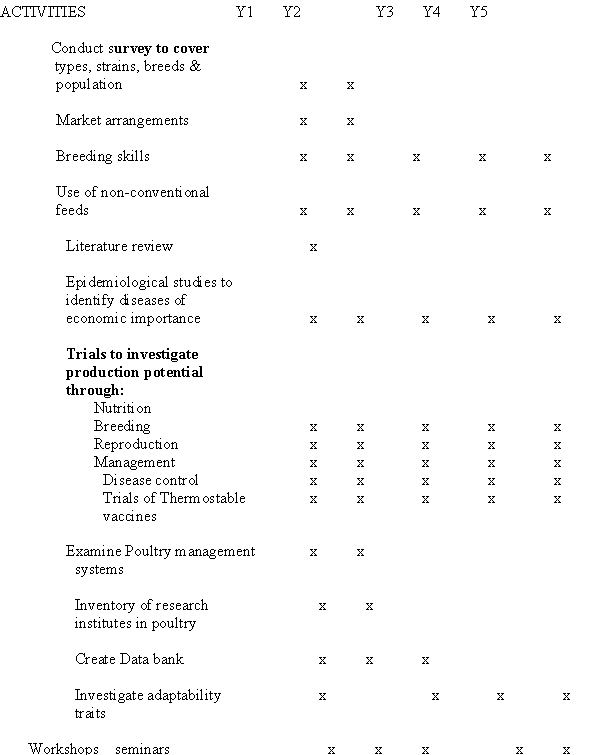
In order to undertake the various research projects both human and material resources will be required.
6.4.8.1 Human Resources
To undertake each research activity a multi disciplinary team of professionals will be required. The professionals required will include Poultry breeders, Veterinary surgeons, Social Scientists, and Animal Scientists. Support staff may include research assistants, administrative staff and drivers.
It is assumed that these professional and supportive staff will be paid by their own Governments except where external expertise will be required. Foreign experts will be in the form of short term consultancies.
6.4.8.2 Research Materials
In order to undertake the research activities, transport, laboratory reagents, biological substances, therapeutic agents, equipment and stationery will be required. It is assumed that NARS already have vehicles and are limited by operational funds.
The proposal therefore, only provides funds to supplement what is already available. The budget allocations cover vehicle maintenance and fuel costs and funds to cover other research costs and incidentals.
6.4.8.3 Workshops and Seminars
Workshops and Seminars will be required to develop and refine research methodologies as well as provide a forum to present research findings and share experiences. Research priorities will also be determined in these workshops where farmers are expected to make a contribution. It is important to note that these workshops will be at national and regional levels. The project proposal provides funds for these workshops and seminars for farmers including field days.
A set of budgets have been prepared showing the financial resources required to implement these research activities. A summary budget of research activities including contributions that should be requested from donor countries is presented. Budget details per country include personnel requirements, research materials, transport costs, workshop and seminar costs. A proposed expenditure trend over a period of five years in accordance with the time frame is presented as the last of the four tables that follow below.
BUDGET ESTIMATE IN US $: COMPONENT FOUR: PERFORMANCE OF INDIGENOUS
CHICKENS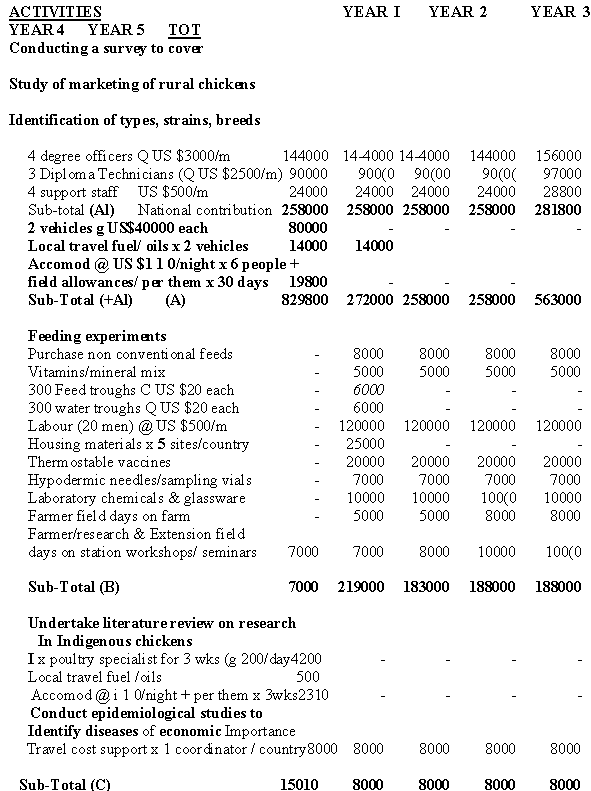
ACTIVITIES YEAR 1 YEAR 2 YEAR 3 YEAR 4 YEAR5 TOT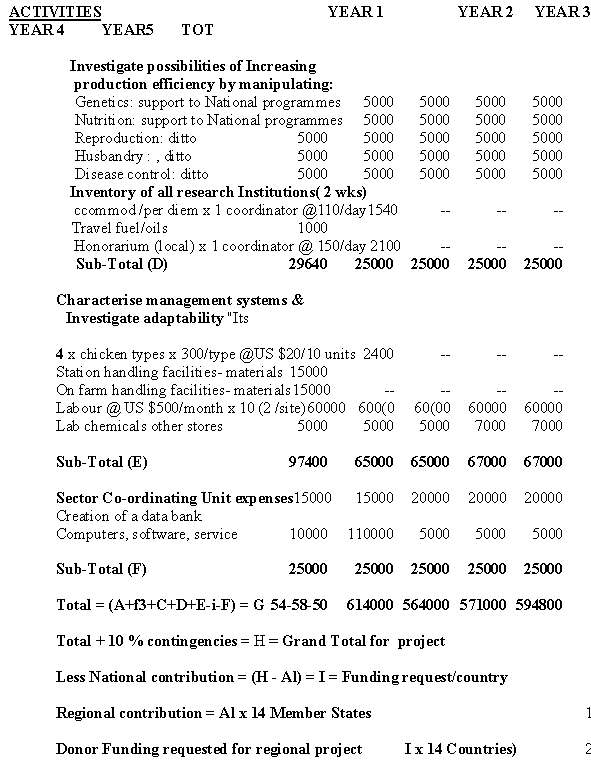
Project Title: Animal health and production assistance to village chicken in rural Africa
Countries: Mozambique, Tanzania, Uganda and Zambia
Background and justification
Village chicken production systems in rural Africa play a significant role in household food security, particularly among the poorer households and disadvantaged groups such as women and children (Khomari, 1992; Kitalyi, 1998). In the last decade there has been a growing interest among various international development agencies in support of village chicken production systems. Although Newcastle disease has been singled out as the most devastating rural poultry disease (Khomari, 1992; Kitalyi, 1998), the recent initiatives in village chicken improvement are advocating holistic and participatory approaches. A SADC regional project proposal titled, "Improving performance of indigenous chickens reared under low input systems in the traditional sector of SADC countries", reflect such initiative. Similarly, the FAO/SIDA FARMESA (Farm -level Applied Research Methods for East and Southern Africa - GCP/RAF/334/SWE) is supporting similar activities in Isangati - Tanzania and Kakamega - Kenya. There have been no evidence of strong linkages among the different developments agencies working on rural poultry development in the region (SACCAR, 1997). However, there have been an increase of small scale poultry production units in the rural areas as a result of these initiatives.
A regional programme on improvement of village chickens should be geared toward supporting the on-going national food security programmes and overall poverty alleviation. Various authorities have suggested stratified improvement packages, which take into consideration the high within and between country variations in socio-economic circumstances and their effect on rural poultry production. It is therefore suggested that interventions on village chicken production should be preceded by socio-economic studies to identify key health and production indicators in the village chicken production systems. The identified indicators should then be used to stratify the production system and undertake different interventions for different strata. FAO has relative advantages giving technical assistance on rural poultry development programmes using the holistic approach due to the wealth of experience on participatory methods developed over the years by the different departments of the Organisation.
PRINCIPLE OBJECTIVE
To study the effect of improved village chicken health and production practices on rural poultry and the socio-economic status of rural households
Immediate objectives:
1. To describe and characterise the different village chicken production systems in Southern Africa
2. To develop health and production packages for different village chicken production systems
3. To promote formation of rural farmer groups and associations for livestock production input supply and marketing
4. To promote formation of credit and saving schemes to support rural poultry production
5. To support development of village-chicken marketing channels and production of chicken value added products
6. To develop appropriate extension messages and promote use of existing media for farmer training and dissemination of information on village chicken production
PROJECT OUTPUT
Output 1 Documentation of the different village chicken production system
Output 2 Reduced bird losses in village chicken production system and consequently in creased and egg production
Output 3 Increased household food security and income form village chicken production system
Output 4 Increased farmer awareness on management and disease control in village chicken production system
Output 5 Rural poultry extension messages
Project activities
Activity 1 Socio-economic studies in selected project sites in project countries to stratify existing production systems on the basis of identified key indicators of village chicken production
Activity 2 On-farm experimentation testing different poultry health and production packages developed in collaboration with farmers in Activity 1. Suggested interventions: -
Hygienic shelter
Control of diseases of economic importance accompanied by seromonitoring studies
Preferential treatment of chicks
Promotion of unconventional feed resources
Improved feeding and disease control of birds on transit to markets
Activity 3 Farmer training and seminar sessions on poultry health and production, marketing and formation of farmers groups/associations
Activity 4 Development of rural poultry extension messages
MEASURABLE INDICATORS
Hen production data: Proportion of mature hens in lay, annual egg production, hatching rates, and chick mortality
Offtake rates: Mature bird Offtake
Disease status based on serology results
ASSUMPTIONS
National governments appreciate the importance of rural poultry in household food security
Farmers are willing to increase their investments in village chicken production either in time or other resources for increased production.
References
Khomari, L. 1992. The poultry industry in Lesotho. In Spradnrow, P.B. (Editor). Newcastle disease in village chickens: Control with thermostable oral vaccines. Proceedings of an international workshop held in Kuala Lumpur, Malaysia, 6 - 10 October 1991. ACIAR, Proceedings No. 39: 153 -154
Kitalyi, A.J. 1998. Village chicken production systems in Africa: Household food security and gender focus. FAO Animal Health and Production Paper Series, in Press.
SACCAR, 1997. Regional Research Priorities for crop and livestock production. Southern African Centre for Co-operation in Agricultural and Natural Resources Research and Training, Gaborone, Botswana
