EMERGENCY ASSISTANCE FOR THE CONTROL OF NEWCASTLE DISEASE
2. newcastle disease in zimbabwe
4. Review of production and socio-economic data collection
5. concluding discussion and recommendations
Appendix a
Persons met during visit
Appendix b
Recommended work plan; june - december 1998
Appendix C
Format for proposed workshop - december 1998
1. In light of current Project findings, delivery of NDHR V4 and I2 vaccines on feed carriers in Zimbabwe would not appear to be the most effective nor sustainable means of community-based Newcastle disease control.
2. The Project should quantify the thermo-stability of re-constituted I2 vaccine under field conditions as soon as possible, to determine its potential advantage over alternative vaccines.
3. An effective Newcastle disease control programme for extensive flocks in Zimbabwe should repeat vaccination at least every 3 months.
4. Monitoring and evaluation of the current mass vaccination programme in Zimbabwe will contribute to the identification of a transferable model for community-based Newcastle disease control.
5. Productivity data collected by the Project must be analysed at household level, to identify key productivity, management and husbandry variables.
6. A series of appropriate extension messages aimed at backyard scavenge-based poultry production should be identified from data analysis, and critically reviewed in collaboration with backyard poultry producers and veterinary extension assistants.
7. Extension messages should be developed into a series of appropriately formatted `extension pamphlets' for the backyard poultry sector, to be made available to backyard producers free, or at minimal cost.
8. An final report should be produced detailing and evaluating project activities and findings, with the objective of increasing awareness of the opportunities and constraints facing the scavenge-based poultry system, amongst policy makers and service providers throughout Zimbabwe.
9. Project findings should be presented for review and discussion in a workshop for all stakeholders, to be held in Harare in December 1998.
10. Selected findings and discussion conclusions from the workshop should be disseminated to a wider international audience through appropriate papers and publications.
11. A final socio-economic consultant mission should be timed to coincide with the final report and workshop, to support the process of finalisation of data analysis; the evaluation of Project activities; and the identification of appropriate conclusions.
Title: Rural Poultry Production - Socio-Economist Consultancy
Project: TCP/ZIM/8821 ["Assistance for the Control of Newcastle Disease (Phase II)"]
Duration: 16 days
Duty Station: Harare, Zimbabwe.
Qualifications: The candidate should be a postgraduate in Agricultural Economics, specialising in livestock economics and economics of disease control, including experience with Newcastle Disease. He/she should have 10 years experience including activity in developing countries.
Duties: Under the supervision of the Chief of RAFR and technical guidance of AGAH and the Sub-regional FAO office in Harare, and in close collaboration with the national authorities, the consultant will undertake:
� current assessment of the situation (poultry health cum production) and Newcastle disease impact on rural poultry production;
� preliminary assessment of other priority diseases of poultry and breeding factors' impact on rural poultry production;
� finalisation of statistical and socio-economic analysis of data generated by the project;
� prepare consultancy report to be submitted to FAO HQ as an attachment to e-mail.
Itinerary:
25th May 1998 London - Rome - Johannesburg
26th May 1998 Johannesburg - Harare
8th June 1998 Harare - Johannesburg - Rome
9th June 1998 Rome - London
I would like to thank all the Project team members for their help and support during my visit, and in particular Dr M. Mavhenyengwa, Mrs T. Munyombwe, Dr F. Chitate, and Mr C. Ncube for their readiness and patience in answering a constant stream of questions. I am also grateful for the support and input from fellow consultants Dr V. Palya and Dr A. Kitalyi.
The encouragement and co-operation of FAO staff in Rome and Harare, particularly Dr K. Wojciechowski, Dr J. De Castro and Dr N. Tebele, was greatly appreciated and meant for a smooth running mission.
Finally thanks go to staff and colleagues of PAN Livestock Services Ltd, UK for their support and facilitation of this mission.
Roger Oakeley, 11th June 1998
The consultant's mission and the following report aim to assess the current status and impact of the "Assistance for the control of Newcastle Disease" - Phase I (TCP/ZIM/4453) and Phase II (TCP/ZIM/8821-A)1 with reference to production and socio-economic issues. Phase I of the Project had the objective of testing and developing a programme of vaccinating chickens in the backyard poultry systems of Zimbabwe against Newcastle disease. Between 1996 and the end of 1997, a series of tests were conducted upon the heat-stable NDHR V4 vaccine and various application methods including feed-based delivery. In conjunction with these tests, data were collected on production and socio-economic parameters of the backyard poultry system. Due to problems of vaccine supply and quality, substantive field tests had not begun by the end of Phase I. In order to test the laboratory results under field conditions, the Project was extended until the end of 1998 under Phase II (TCP/ZIM/8821-A).
Phase II of the Project aims to define a sustainable model of community-based prevention of epidemics of Newcastle disease in rural chicken populations, through an appropriate vaccination programme. In the light of results from Phase I, field trials will be carried out on both feed borne and eye drop delivered vaccine, to compare the appropriateness of delivery methods and efficacy of the I2 strain of NDHR V4, and LaSota vaccines.
Zimbabwe has been suffering from a series of severe outbreaks of Newcastle disease since 1994. Figure 1 shows the distribution and frequency of outbreaks recorded in the first four months of 1998 which, together with recent news reports, suggests an escalation of the problem over the last few months. These outbreaks have been largely limited to the extensive rural flocks, with few cases reported amongst commercial flocks. Nevertheless, the presence of Newcastle disease threatens both the extensive and commercial sectors, not just in terms of the potential loss of birds if the disease spreads. The commercial sector also faces the loss of most, if not all its export outlets unless adequate controls can be shown to be in place.
Whilst accurate figures on the economic impact of Newcastle disease will always be difficult to establish, the export dimension of the problem should not be underestimated. All ostrich meat exports to the EU will cease in October unless Newcastle disease free `zones' can be established. These factors are putting the Government of Zimbabwe and the Department of Veterinary Services under extreme pressure to find an effective and sustainable means of controlling the disease.
Figure 1 Map of Newcastle disease outbreaks in Zimbabwe, January to April 1998
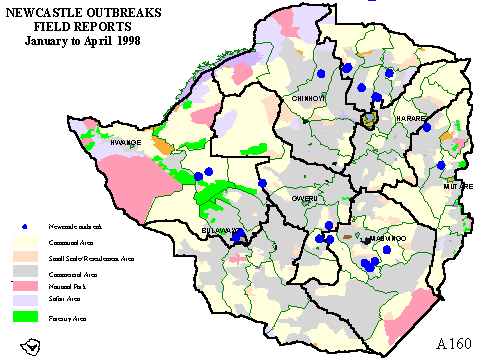
Source : Department of Veterinary Services, Zimbabwe, 1998
An immediate response to these pressures has been the introduction of a mass vaccination campaign in the worst hit communal areas, which began in May 1998. This campaign is utilising the supplies of NDHR V4 that arrived in April, and is being delivered by eye drop application. This decision has major implications for the Project, and the work that it does over the remaining months. It represents a significant commitment on the part of the Department of Veterinary Services to a Newcastle disease control programme based on intra-ocular vaccine delivery. This course has been chosen on the basis that preliminary findings of Phase I of this Project have been unable to confirm the heat-stability or efficacy of NDHR V4 delivered via poultry feed.
Of particular significance, is the fact that the campaign encompasses a farmer training component, whereby farmers are to be trained in the intra-ocular application of the vaccine during the first round of vaccinations. It is expected that this training will adequately equip rural poultry owners with the skills to apply subsequent vaccinations themselves, allowing the Department of Veterinary Services to focus upon the supply of the vaccine. Vaccination has begun in Mashonaland Central, and lessons learned will be incorporated into the programme when extended to other provinces in late June and July.
The remaining Project activities should now be viewed in the context of these developments. The mass vaccination campaign will be monitored primarily through blood sample tests to examine immunity levels. These tests will help determine efficacy and coverage of the vaccine, but they may not uncover the root cause of gaps in the programme. The campaign is a considerable undertaking in terms of the transfer of skills from staff in Harare to provincial officers and veterinary extension assistants (VEA), and in turn to village producers. This training process, covering various skills including vaccine handling and re-constitution, cold chain maintenance, dosage calculation and eye drop application, presents several points at which the chain of skills transfer might potentially breakdown.
Effectiveness and sustainability of the campaign depends on the training process, and the skills and motivation of VEA's. The impact and cover of the programme in the pilot province is being greatly enhanced by field level co-operation between extension staff from different government Departments. Application of the second vaccine dose by farmers themselves can be effectively monitored only through observation, and with the support of these field extension staff. The progress of this campaign strategy is of immediate value to the work and findings of the TCPZIM/8821 Project. The success of transferring these skills to farmers will have important lessons for the development of any model for sustained, community-oriented Newcastle disease control strategies.
Laboratory tests during Phase I of the Project on the use of NDHR V4 and I2 (a derivative of V4), using various feed grains as delivery vehicles have failed to confirm reported success of similar trials carried out in South East Asia. Phase II will continue field tests on I2 delivery via the most promising feed vehicle identified; rapoko, to determine its use in village conditions and compare its efficacy to conventional delivery of both I2 and LaSota vaccine. Whilst full conclusions cannot be drawn without the results of these tests, Project experiences have already identified several factors of significance in the consideration of a community-based Newcastle disease programme using feed delivery methods.
Most significantly, the heat stability of the re-constituted NDHR V4 and I2 vaccines has not been verified or quantified, either when applied on a feed vehicle, or conventionally through eye drop. Laboratory tests indicate the re-constituted vaccine can last for up to two weeks under refrigeration, but this may be reduced to only a few hours at temperatures over 30 degrees centigrade. The training programme for the current mass campaign is advising that the vaccine be used within one hour of leaving the cold chain, to guarantee effectiveness. Further evidence suggests the life of the vaccine may be reduced by exposure to bright sunlight or excessive shaking, both of which might be expected under field conditions.
Whilst intra-ocular delivery of both NDHR V4 and I2 direct from the cold chain have been shown to achieve 100 % immunity amongst birds, this has not been found using feed-based delivery. Controlled tests of NDHR V4 on rapoko necessitated six applications before adequate immunity levels could be achieved, whilst some birds vaccinated by eye drop had achieved this after only one application. It would be reasonable to assume that field conditions will only aggravate this problem. The time lapse between preparation of the vaccine and application will be considerably longer, and the preparation process less controlled.
Data on the backyard production system show that the majority of farmers rarely use supplementary feed grains, and those who do use a wide variety depending on access and the season. Finding a commonly available feed, that is also an effective vaccine vehicle, will be difficult. Considerable variation in feeding rates between different aged birds, aggravated by competition within multi-age flocks, makes the monitoring of adequate consumption rates among birds problematic. A variety of methods are used to provide feed, including tin, rubber, plastic and clay feeders, as well as spreading feed on the ground, and the impact of these materials on the vaccine in the feed is unknown.
The degree of uncertainty surrounding the use of feed as a vaccine delivery method confirms the findings of similar studies elsewhere in Africa. In the face of these factors, the decision to base a mass vaccination campaign on eye drop application is significant. The experience of this programme in the coming months may hold valuable lessons for Newcastle disease control campaigns in other countries.
The data collection activities undertaken during Phase I of the Project have amassed considerable information on poultry production, and production systems for extensive flocks in Zimbabwe. It represents the most comprehensive examination of backyard poultry in Zimbabwe, and potentially one of the most valuable studies of an extensive system in Africa. It is vital that this information is exploited to the full, and that the remaining months of the Project are used to draw out the important lessons contained in the data for the benefit of rural producers and those providing services to them.
The primary limitation of this data is that while collection activities were designed to coincide with the timing and location of vaccine field trials, the delay of those trials has meant none of the data correspond to the introduction of vaccination control strategies. It must therefore be recognised that analysis offers no direct insight into the interaction between various vaccine delivery strategies, and the backyard scavenge-based poultry system. Instead the data can only be used as a general background to the production system, from which predictions can be made as to the likely impact of the various strategies under consideration.
Undoubtedly these circumstances constrain the full worth of data and analyses, but limited time and resources remaining will restrict further data collection in conjunction with the planned field trials. Moreover, Project experience indicates the difficulties in isolating and thus quantifying the impact of Newcastle disease in the backyard sector, and this will remain a constraint to establishing the impact of any control strategy, irrespective of data quality. With these factors in mind, a pragmatic approach would be to focus upon thorough and effective use of the data already generated.
Production data has been collected from households in ten villages, spread over five provinces, including Mashonaland Central, East and South, Masvingo, and Manicaland. Between 20 and 30 households were surveyed in each village, every two weeks between January and November 1997. Surveys were carried out by VEA's from each district, with training and support from the Project team.
Detailed examination of the data collection process, and analysis completed to date is not appropriate in this report, and should be outlined in the final project documentation. Nevertheless, some preliminary analysis is outlined below, where such analysis is deemed of immediate relevance to the on-going activities of the Project and Department of Veterinary Services.
Initial evaluation suggests that the size and intensity of the survey, and the use of different enumerators has led to varied quality and content in parts of the data. This is neither an unusual nor insurmountable problem, and is to be expected from any survey of this nature. The data was subject to partial cross-checking, and would benefit from further inspection.
After initial involvement in developing the survey format, the livestock economist team member was unavailable to take part in data analysis. Data entry has been completed however, and considerable time during the consultants visit was spent in preliminary analysis of this and other data, and in developing plans for further analysis by the team statistician. Tables 2 and 3 summarise key productivity indicators generated at village level.
Figure 2 Aggregate egg productivity indicators
| Annual laying rate | Hatching rate | Egg loss (%) |
Egg consumption (%) |
Egg offtake rate (egg/bird/year) | |
| Average | 37.73 | 0.88 | 33.5% | 23.8% | 24.65 |
| St Dev. | 6.72 | 0.06 | 0.08 | 0.12 | 4.33 |
Figure 3 Aggregate bird productivity indicators
| Birds per flock |
Annual offtake rate (per hen) | Bird death rate (observed) | Bird loss rate (unobserved) | Mortality rate** |
||||||
| Average | St. D* | Birds | St. D | (%) | St. D | (%) | St. D | (%) | St. D | |
| Chicks | 8.01 | 2.28 | 4.77 | 1.56 | 37.9 | 0.13 | 16.7 | 0.14 | 54.7 | 0.14 |
| Growers | 6.42 | 2.00 | 2.88 | 1.26 | 13.4 | 0.09 | 6.5 | 0.10 | 19.9 | 0.12 |
| Hens | 4.42 | 1.78 | 0.70 | 0.29 | 11.8 | 0.08 | 4.6 | 0.05 | 16.4 | 0.09 |
| Cocks | 1.09 | 0.19 | 0.32 | 0.12 | 4.7 | 0.04 | 3.5 | 0.07 | 8.2 | 0.08 |
* St. D = Standard deviation ** Mortality rate = Death rate + Loss rate
The Project has also generated pricing information, although exact bird value is obviously a function of size and condition. A tentative economic evaluation of the backyard system has been made on the basis of the following average market prices available to producers.
Z$ (Zimbabwean dollars)2
Raw eggs 0.7
Chicks 6
Growers 26
Hens 35
Cocks 50
Based on the average flock size of 20 birds, and figures for flock age structure, egg and bird production and offtake, the annual value of output and loss for the average flock is shown in Figure 4. An average flock is producing gross output of approximately Z$ 829 per year. Reliable data on the cost of inputs could not be generated, but the greater proportion of this figure will represent profit in this low input system. However, with a loss to mortality valued at Z$ 748 per year, the system clearly has a much greater potential to generate profit. If estimates of a total backyard flock of 20 million birds are used, representing 1 million flocks; then the annual loss to the backyard poultry sector could be as much as Z$ 748 millions.
Figure 4 Backyard flock economic output and losses
| Total production (flock/year) | Value of production (Z$) | Total offtake (flock/year) |
Value of offtake (Z$) |
Value of loss (Z$/flock/year) |
|
| Eggs | 162 | 113 | 108 | 76 | 37 |
| Chicks | 72 | 432 | 23 | 138 | 294 |
| Growers | 27 | 702 | 15 | 390 | 312 |
| Hens | 6 | 210 | 4 | 140 | 70 |
| Cocks | 2.4 | 120 | 1.7 | 85 | 35 |
| Totals | 1,577 | 829 | 748 |
It must be noted that the losses and mortality rates established from the data cannot be directly attributed to any specific disease, management or husbandry factor. Dead or ailing birds are rarely available for examination, and even if they were, the combination and interacting of multiple contributing factors can be expected to make definitive conclusions impossible.
The levels of output and potential output offered by backyard flocks represent considerable income to the poorer families that raise chickens. These figures alone demonstrate the important income earning role of chickens, but examination of the system of production shows they greatly underestimate the full worth of poultry in terms of sources of protein for the family, food for ceremonies and celebrations, and a means of trade and barter within the rural community.
The high levels of loss and mortality, particularly for eggs and amongst chicks and growers support similar findings in other African studies. There is marked variation however, between villages and households, and it is here that the data holds its most value. Chick and grower mortality varies by 14 and 12 per cent respectively between villages, and the factors behind these differences may hold important lessons for producers. Mortality variation is reflected in very different offtake rates of young birds per mature hen, suggesting very different profitability between flocks. This variation is a function of several factors, including village location, predation and disease status, and husbandry and management levels. Since most flocks are a mix of indigenous and hybrid birds, the impact of breed on production levels could not be determined.
Analysis has so far been limited to village level aggregation. The data holds considerable production, management and husbandry lessons which can only be isolated by analysis at the household and flock level. If fully exploited, this data represents more detailed understanding of the key parameters determining backyard poultry productivity than is currently available elsewhere in Zimbabwe. The data itself, supplemented by additional investigations have highlight the absence of any significant extension, research or information services aimed specifically at backyard and indigenous chicken producers. This is perhaps the single most significant constraint to the backyard sector.
With respect to the age structure and bird turnover in extensive flocks, estimates suggest that from a specified point in time, an average flock of 20 birds can expect to comprise of 30 % `new' birds within 10 to 12 weeks. This has implications for Newcastle disease vaccination, since the disease can only be considered under control if a minimum of 70 % of the bird population is immunised (Dr Palya, pers. comm.). It is therefore apparent that any effective vaccination control strategy aim to vaccinate the entire flock at least every 3 months. There may be some indication that fewer chicks are hatched during the wet season, and that a longer gap between vaccinations in this period might be feasible. However, it is unlikely that a seasonal cycle can be universally confirmed, and such a strategy would include a substantial risk factor.
Data collection on the management and husbandry system was conducted in two segments for the dry and wet seasons, on the assumption that such practices were season sensitive. This information was then supplemented by a series of informal studies on women's roles in poultry production and marketing. The foci of these studies are complimentary, and are reviewed together.
The seasonal survey involved 420 questionnaires. The design and complexity of form used did not yield data of the same quality as that from the production survey. The data exhibited significant gaps, and the exact implications of answers generated in some places could not be determined. A survey of women producers was originally designed as part of a participatory appraisal (PRA), but resource levels and team experience meant this was rejected in favour of an interview schedule approach, involving 316 women. Consequently the data is not as detailed as it might otherwise have been. Despite their shortcomings, these two studies have generated valuable background information and analysis of the production system, and serve as a useful backdrop to the production information.
Little significant difference between responses according to season was found, suggesting that management input is not greatly influenced by seasonal conditions. There is however, clear variation amongst villages and households on the level of inputs to the system. Night accommodation is the primary input to the system, and three quarters of owners had fowl runs. Whilst men are largely responsible for run construction, it is women who tend to clean them, and frequency of cleaning can vary from daily to every few months.
Other inputs are limited, though almost all farmers provide water for their birds. Throughout, there is evidence that husbandry duties, which can involve up to 1 hour per day, are distributed amongst various family members. However, the primary poultry managers are women, three quarters of whom are considered to control poultry activities. As a consequence of this, women prioritise poultry activities much higher than other family members, and this holds important implications for the focus and responsiveness to poultry related extension information and services. It is significant however, that 25 % of households depend on men for key decisions concerning sales, purchases and feed and health care inputs.
Marketing of poultry products is clearly a situation specific issue, and characterised by informality. Most producers market their eggs and birds locally within villages and surrounding areas, whilst some have access to larger markets such as towns, schools and mines. Most producers interviewed (70 %) did not regard marketing as a constraint. Although producers may well benefit from better marketing opportunities and infrastructure, no immediate nor universal factors could be identified that would facilitate such a development.
All three studies examined the disease status in backyard flocks. Overall, the data generated was limited, and this should be seen as a reflection of the knowledge of poultry disease amongst most farmers. Common poultry health problems observed by veterinary staff, and discussed in the seasonal survey included fleas, mites and ticks; swollen head and joints; coughing; diarrhoea; twisted neck, paralysis; fowl pox and Newcastle disease. Few farmers were aware of their impact, symptoms or prevention, although understanding of Newcastle disease increased considerably in those areas where it has occurred in recent years. Even so, 20 % of farmers admitted using terramycin in trying to combat Newcastle disease, presumably to no effect. Although little time and resources are spent on health care in the backyard sector, 28 % of women use traditional herbs and remedies in caring for their birds. However, there is limited information on either the use or value of these practices.
Accurate figures on the incidence and impact of the various diseases are unlikely to be generated since birds are rarely available for comprehensive diagnosis or post mortem examination. There is no doubt however, that in combination these diseases account for the greater proportion of mortality amongst birds, especially the younger ones. Evidence suggests deaths are greater during the dry season, although there are contradictory opinions on this. It is likely that lower levels of nutrition during this period are a contributing factor.
The continuing outbreaks of Newcastle disease in Zimbabwe underline the need for both an effective and a sustainable vaccination control programme. Despite delays in the vaccination trials, the Project has highlighted some important issues of relevance to the development of an appropriate model of community-based Newcastle disease control.
Evidence so far has shown that feed-based delivery of NDHR V4 or I2 vaccines cannot be relied upon to control the disease in the backyard systems of Zimbabwe. The degree of protection from heat and light; the availability, application and consumption of feed amongst flocks; and the logistics of multiple doses to ensure immunity, are just some of the variables that cannot be controlled in field conditions. With respect to involvement of the farming community, feed-based delivery is clearly not as simple as it sounds. The levels of information, extension and training that would need to be provided to ensure vaccine was delivered correctly by farmers may well be greater than that needed to involve the community in conventional programmes. The combination of all these factors represent considerable constraints to the sustainability of a feed-based vaccination programme, irrespective of vaccine efficacy.
Based on these experiences, the Department of Veterinary Services has already decided to experiment with intra-ocular vaccine application for its mass vaccination campaign. The use of eye droppers represents a potentially more sustainable means of community participation. Flock structure data suggests that this programme will need to be repeated at least every 3 months to guarantee effective and sustained disease control.
The progress of this programme and success of its farmer training activities may offer valuable lessons in the development of a transferable model for Newcastle disease control. The Project should use the opportunity to monitor the success of this programme, both through the immunity tests on birds vaccinated, but also through the monitoring of farmers as they apply the second round of vaccinations scheduled for July. This will enable an assessment of the farmer training procedures, and the appropriateness of the delivery method. The development of a transferable model for other countries will need to draw lessons from this programme, but should bear in mind contributing factors including good physical infrastructure and networks of field extension staff, that may represent constraints to application of the approach elsewhere.
Longer term sustainability of this, or any other vaccine delivery programme, will be enhanced by accurate quantification of the relative heat stability of the NDHR V4 and I2 vaccines. If, once re-constituted, these vaccines last significantly longer in natural temperatures than alternative brands, then they still represent important advances in sustainable disease control, even under conventional delivery methods. The more heat stable the re-constituted vaccine, the greater the flexibility offered to VEA's and farmers between the time vaccine leaves the cold chain and its application. Remaining months should be used by the Project to determine the exact level of thermo-stability of I2, in terms of the number of hours the re-constituted vaccine can be kept out of the cold chain under field conditions, and its potency still guaranteed.
The production and socio-economic data collection activities of the Project have generated valuable information on the backyard poultry production system. Only selected issues of data collection and analysis are presented here. Due to delays in field vaccination trials, the production and socio-economic data offer no information with regard to the immediate impact of different Newcastle disease control strategies. Whilst regrettable, there is no practical means by which the data can be duplicated in conjunction with the field trails planned over the last few months of the Project. In recognition of this constraint, the effective use and application of the existing information available is considered to be of greater priority than filling the gaps identified through additional survey activities. The most effective and appropriate use of the data generated would be in the development and dissemination of appropriate services to meet the needs of all farmers involved in backyard poultry production. To this aim, a preliminary work plan is included in Appendix B, and the activities outlined are discussed in greater detail below.
To make full advantage of the data generated, it is recommended that the Project focus in the remaining months on finalising data analysis. Analysis needs to be extended to look at household level variations, and further compared with factors of management and husbandry, location, environment and season, access to services, and other key parameters of the production system. This analysis will identify those households exhibiting extreme characteristics of productivity and mortality rates, and other critical variables. In turn, the use of supplementary data, and discussion with the VEA enumerators and farmers involved in the study will generate vital lessons and extension messages, based directly on the knowledge and experience of the farming community.
It is further recommended that this information be used in the development of a series of `extension pamphlets', based on the extension messages derived from the data, and aimed specifically at backyard, scavenge-based poultry production. These pamphlets will address key management, disease and husbandry issues from egg production through to bird health and disease management. The pamphlets need to be in an appropriate format and language for rural producers, and would benefit from collaboration with other institutions including the Departments of Agricultural Technical and Extension Services, and Research and Specialist Services. Strategies for the production and distribution of these pamphlets need to be worked out with the support of the respective Departmental Directors. Ideally, these pamphlets will be made available to backyard producers free of charge.
The production of extension pamphlets, and the process of consultation between Project staff, VEA field staff, and backyard producers are felt to be the most constructive and valuable use of both the data and the remaining time available to the Project team. It is further expected that these activities can be combined in a final report highlighting the specific opportunities, constraints and needs of the scavenge-based poultry sector in Zimbabwe. There is an immediate need to identify the unique services and support required by backyard producers, and to raise awareness among all institutions involved in the provision of those services.
Whilst the production of such a report would be a logical output of the Project, this does not represent the only means of disseminating results. In particular, it is recommended that findings of the Project be presented in the form of a workshop, held in Harare, to which all interested stakeholders be invited. This would facilitate the wider discussion of Project findings and implications between all sectors of the poultry industry, including representatives of the extensive and commercial systems, the government services sector, non-governmental organisations, academic institutions, and other national and international donor and development interests. This type of forum would not only ensure a wider audience for the findings, it would serve as valuable experience for Project staff, and aid in the identification of topics and issues of relevance for wider international dissemination through papers and publications. The proposed form and content of such a workshop are set out in Appendix C.
A second socio-economic consultancy mission might be best timed to coincide with, and support the production of the final report and presentation of findings at a workshop. This support would include finalisation of data analysis; the evaluation of Project activities; and the identification of appropriate conclusions to be drawn for wider national and international dissemination.
FAO;
Dr K. Wojciechowski, FAO Rome;
Mrs V. Sekitoleko, FAO Representative, Harare;
Dr J. De Castro, FAO Animal Health Production Officer, Harare;
Dr V. Palya, FAO consultant;
Dr A. Kitalyi, FAO consultant;
Department of Veterinary Services, Zimbabwe;
Dr Hargreaves, Director of Veterinary Services;
Dr W. Madzima, Deputy Director of Veterinary Services;
Dr Ushewokunle-Oobatolu, Assistant Director of Veterinary Services, Diagnostics and Research;
Dr M. Mavhenyengwa, National Co-ordinator for Project TCP/ZIM/8221;
Mrs T. Munyombwe, Senior research Officer (statistician);
Mr C. Ncube , Research Technician;
Dr F. Chitate, Epidemiologist;
Mr C. Nobbs, Chief Specialist - Animal Production, Department of Agricultural Technical & Extension Services (AGRITEX);
Mr W. Binali, Extension Specialist, AGRITEX;
Mr Kalube, Poultry Advisory Unit, Department of Research and Specialist Services;
Dr A. Bishi, Provincial Veterinary Officer;
Dr R. Madekurozva, Principal Veterinary Research Officer;
Dr J. Nyika, Provincial Veterinary Officer, Bindura, Mashonaland Central;
Dr S. Choga, Provincial Animal Health Inspector, Bindura, Mashonaland Central;
Mrs J. Machuwe, Veterinary Extension Assistant, Bindura
Provincial Veterinary Officer and Veterinary Extension Assistants, Chegutu, Mashonaland East
| TIMING | ACTIVITY |
| June - July | Finalisation of household level productivity data analysis, and correlation analysis between key production parameters, and between these parameters and date of records |
| July | Drafting of extension messages under a series of key topic areas for backyard poultry production, management and disease; based on producer experiences drawn from the data analysis |
| Mid/late July | Series of observational studies of farmers applying eye drop vaccination in mass campaign, to determine effectiveness and appropriateness of the training programme |
| August | Review and discussion of extension messages developed with Project team, and selected VEA enumerators and producers involved in the survey, to verify applicability, accuracy and value of messages developed |
| September | Production of draft series of `extension pamphlets' based on findings |
| October | Verification of appropriateness of `extension pamphlet' content and format with selected VEA's and producers from a wide selection of provinces and districts |
| November | Finalisation of `extension pamphlets' and their production in
the main local languages Begin development of a final report consolidating data analysis and extension materials produced, for dissemination amongst service providers in Zimbabwe |
| December | Presentation of key Project findings at a workshop involving all interested stakeholders, to be held in Harare |
Working Title: Constraints and opportunities facing backyard poultry producers in
Zimbabwe
Objective:
To raise awareness of the special needs of the backyard sector based on the Project activities and findings, and instigate discussion of how those needs might best be met.
Participation:
The proposed workshop would involve a minimum one day of presentations and discussions, and is envisaged to be of benefit to all parties interested in poultry production in Zimbabwe. Those to be invited would include representatives of;
The Project team
The Department of Veterinary Services
AGRITEX
RSS
Commercial producer groups
Backyard producer groups
NGO's
Research institutions, FARMESA
Other donor groups; such as FAO and SADC
Content:
Specific topics for presentation and debate would include;
1. Poultry production in the backyard sector: productivity parameters and their implications;
2. Disease constraints and animal health extension and service requirements of backyard producers;
3. The socio-economic and gender structure of the backyard sector: implications for service provision;
4. Newcastle disease control in the communal areas: establishing an effective and sustainable strategy for Zimbabwe;
5. Marketing constraints: opportunities for strengthening the informal marketing system of the extensive system
Within the constraints of time and resources available, these topics would hopefully lead into a wider discussion of ways forward for the backyard sector and its service providers to exploit more effectively the economic and social potential of the backyard system in Zimbabwe.
