
|
||||||
 |
|
|||||
FAO. 2009.
Cirrhinus mrigala. In Cultured aquatic species fact sheets. Text by
Ayyappan, S.
Edited and compiled by Valerio Crespi and Michael New. CD-ROM (multilingual). |
||||||


IDENTIFICATION
Caractéristiques biologiques
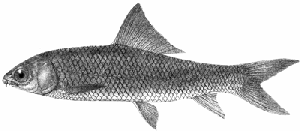
Corps bilatéralement symétrique et à la forme dynamique, sa hauteur environ égale à la longueur de la tête; corps couvert d’écailles cycloïdes, tête sans écailles; museau épointé, souvent avec des pores; bouche large, transversale; lèvre supérieure entière et non continue avec la lèvre inférieure, lèvre inférieure très indistincte; simple paire de courts barbeaux rostraux; dents pharyngiennes en trois rangées, disposition 5.4.2/2.4.5; mâchoire inférieure avec un petit bouton ou tubercule post-symphysial; origine de la nageoire dorsale plus près du bout du museau que de la base de la caudale; nageoire dorsale aussi haute que le corps avec 12 ou 13 rayons branchus; dernier rayon non branchu de la nageoire dorsale non ossifié et non dentelé; nageoires pectorales plus courtes que la tête; nageoire caudale profondément fourchue; nageoire anale ne s’étendant pas jusqu’à la nageoire caudale; ligne latérale avec 40-45 écailles; 6-7/5½-6 rangées d’écailles latérales transverses entre la ligne latérale et la base de la nageoire pelvienne; généralement gris foncé au dessus, argenté en dessous; nageoire dorsale grisâtre; nageoires pectorales, pelviennes et anale oranges à leur extrémité (surtout pendant la saison de reproduction).
Galerie d'images
 |
Cirrhinus mrigala |
PROFIL

Contexte historique
Mrigal (Cirrhinus mrigala), une carpe endémique des systèmes fluviaux indo-gangétiques, est l’une des trois espèces de carpe indienne largement cultivée dans les pays du Sud Est asiatique. Cette espèce a été importante depuis longtemps en polyculture avec d’autres espèces locales, principalement en Inde. Cependant, des traces de sa culture ne sont disponibles qu’à partir du début du 20ème siècle. La culture traditionnelle de cette espèce a été confinée aux régions orientales de l’Inde jusque dans les années 50. La technologie de propagation artificielle, qui a assuré la disponibilité d’alevins dans les années 60, a conduit à la fondation de l’élevage scientifique de la carpe. Le taux de croissance initialement élevé de la carpe mrigal, associé à sa compatibilité avec d’autres carpes, a aidé à établir cette espèce comme l’une des principales espèces de pisciculture. L’espèce a été transplantée vers les systèmes fluviauxpéninsulaires de l’Inde, où elle s’est établie. Ensuite, elle s’est répandue dans toute l’Inde. De plus, mrigal est devenue une composante importante des systèmes piscicoles du Bangladesh, Pakistan, Myanmar, République démocratique populaire lao, Thaïlande et Népal. Mrigal a aussi été introduite en Sri Lanka, Viet Nam, Chine, Maurice, Japon, Malaisie, Philippines et ancienne USSR.
Principaux pays producteurs
Principaux pays producteurs de Cirrhinus mrigala (FAO Statistiques des pêches, 2006).
* lao = République démocratique populaire lao
* lao = République démocratique populaire lao
Habitat et biologie
Les tout jeunes alevins de mrigal restent normalement dans les eaux de surface ou sub-surface, tandis que les alevins plus âgés ont tendance à migrer vers l’eau plus profonde. Les adultes sont des poissons de fond. Son régime alimentaire est illiophage et sa nourriture principale consiste en sténophages, détritus et végétation décomposée, tandis que le phytoplancton et le zooplancton forment le reste.
Mrigal est eurytherme et semble tolérer une température minimum de 14 ºC. En culture, l’espèce atteint normalement 600-700 g au cours de la première année, en fonction de la densité d’élevage et des pratiques de gestion. Des trois carpes indiennes, c’est mrigal qui normalement croît le plus lentement. La période d’élevage dure généralement un maximum de deux ans parce que le taux de croissance diminue ensuite. Cependant, dans la nature, mrigal est connue pour atteindre l’age de 12 ans.
En captivité, la maturité est atteinte en deux ans. Mrigal a besoin d’un environnement fluvial pour se reproduire et il ne se reproduit donc pas en étang. Cependant, la reproduction en captivité en écloserie a été rendue possible par la reproduction induite par hypophysation et l’utilisation d’hormones synthétiques.
Mrigal est un poisson très fécond. La fécondité augmente avec l’age et se situe normalement entre 100 000 et 150 000 oeufs/kg. La saison de ponte dépend de la date du début de la mousson du sud ouest et de sa durée, qui en Inde, Bangladesh et Pakistan s’étend de mai à septembre. Mrigal se reproduit généralement à 24-31 ºC.
Mrigal est eurytherme et semble tolérer une température minimum de 14 ºC. En culture, l’espèce atteint normalement 600-700 g au cours de la première année, en fonction de la densité d’élevage et des pratiques de gestion. Des trois carpes indiennes, c’est mrigal qui normalement croît le plus lentement. La période d’élevage dure généralement un maximum de deux ans parce que le taux de croissance diminue ensuite. Cependant, dans la nature, mrigal est connue pour atteindre l’age de 12 ans.
En captivité, la maturité est atteinte en deux ans. Mrigal a besoin d’un environnement fluvial pour se reproduire et il ne se reproduit donc pas en étang. Cependant, la reproduction en captivité en écloserie a été rendue possible par la reproduction induite par hypophysation et l’utilisation d’hormones synthétiques.
Mrigal est un poisson très fécond. La fécondité augmente avec l’age et se situe normalement entre 100 000 et 150 000 oeufs/kg. La saison de ponte dépend de la date du début de la mousson du sud ouest et de sa durée, qui en Inde, Bangladesh et Pakistan s’étend de mai à septembre. Mrigal se reproduit généralement à 24-31 ºC.
PRODUCTION

Cycle de production
Cycle de production de Cirrhinus mrigala
Systèmes de production
Mrigal est cultivé principalement comme une composante de systèmes de polyculture de carpes en étang, en Inde et Bangladesh, les principaux pays producteurs. En la République démocratique populaire lao, en Thaïlande, au Viet Nam, au Pakistan, au Myanmar et au Népal mrigal est aussi utilisé comme l’une des principales composantes en systèmes de polyculture de carpes. Mrigal est normalement cultivé avec les deux autres carpes indiennes - catla (Catla catla) et rohu (Labeo rohita). Il est aussi cultivé en systèmes de culture composés de carpes qui incluent les trois carpes indiennes ainsi que deux carpes chinoises - la carpe argentée (Hypophthalmichthys molitrix) et la carpe herbivore (Ctenopharyngodon idellus) - et la carpe commune (Cyprinus carpio). Se nourrissant sur le fond, mrigal est généralement stocké au taux de 20-30 pour cent du total des espèces stockées dans le cas de la culture de trois espèces, tandis qu’en culture de six espèces mrigal ne constitue qu’environ 15-20 pour cent. En Inde, la carpe est cultivée dans environ 900 000-1 000 000 ha d’étangs et de bassins (plans d’eau qui sont généralement plus grands qu’un étang mais d’une superficie inférieure à 10 ha) de propriété privée ou communautaire. Au Bangladesh cependant, la carpiculture se pratique principalement en petits étangs traditionnels, dont seulement environ 16 pour cent sont exploités en système semi intensif.
Dans tous les pays producteurs, la production en masse d’alevins de mrigal en écloserie par reproduction induite répond à presque toute la demande en alevins, bien que la collecte en rivière se pratique encore dans certaines petites régions. Mrigal ne se reproduisant pas en eaux confinées, des injections d’extrait pituitaire et d’autres formules commerciales sont nécessaires. Ces dernières années, l’on a utilisé avec succès de la gonadotropine purifiée de saumon et des antagonistes de la dopamine tels que Ovaprim, Ovatide et Wova-FH. Lorsque de l’extrait pituitaire est utilisé, les femelles sont injectées avec une dose stimulante de 2-3 mg/kg suivie d’une seconde dose de 5 à 8 mg/kg six heures plus tard; les males reçoivent une seule dose de 2-3 mg/kg au moment de la seconde injection de la femelle. Lorsque des formules synthétiques sont utilisées, une simple dose de 0,4-0,5 ml/kg (femelles) ou de 0,2-0,3 ml/kg (males) est administrée. Mrigal produit généralement de 100 000 à 150 000 petits alevins/kg. L’écloserie circulaire chinoise est le système le plus utilisé. Dans ce système, les géniteurs sont stockés à la densité de 3-5 kg /m3, avec un rapport femelle:male de 1:1 en poids (1:2 en nombre). Les œufs fertilisés sont obtenus après 6-8 heures et sont transférés vers le bassin d’éclosion à la densité optimale de 700 000-800 000/m3. La circulation de l’eau est continue et les œufs y sont maintenus pendant 72 heures au cours desquelles les embryons se développent en petits alevins d’environ 6 mm.
Nurserie
Les alevins de trois jours sont élevés en nurserie pour une période de 15-20 jours jusqu’à ce qu’ils atteignent la taille de 20-25 mm. Cela se fait normalement en petits étangs de terre de 0,02-0,1 ha, bien que des bassins en briques ou en béton soient aussi utilisés dans certaines régions. La densité de stockage varie généralement de 3-10 millions/ha en étangs de terre et 10-20 millions/ha en bassin. Bien que la monoculture soit recommandée en nurserie, les fermiers élèvent souvent mrigal avec les deux autres carpes indiennes. Dans ce cas la croissance et la survie de mrigal sont meilleures que pour les deux autres espèces. Les autres mesures de gestion incluent la fertilisation organique et l’apport d’un mélange de son de riz et de tourteau (1:1 en poids) comme aliment supplémentaire. Le taux de survie est normalement de 30-50 pour cent. Une bonne préparation d’un étang de nurserie comprend le contrôle des poissons prédateurs et des insectes Les fermiers négligent souvent ces contrôles ce qui résulte en une faible production d’alevins. Un autre facteur limitant est l’absence d’un aliment commercial ce qui force les fermiers à utiliser le mélange conventionnel son-tourteau.
Production d’alevins
Les alevins du système de nurserie sont ensuite élevés jusqu’à la taille de grand alevins (80-100 mm; 5-10 g). L’on utilise généralement des étangs de terre de 0,05 à 0,2 ha de superficie. Mrigal est stocké dans la proportion d’environ 30 pour cent avec d’autres espèces de carpe pour une densité totale de 200 000-300 000/ha. Alimentation et fertilisation sont similaires à celles de la phase de nurserie mais varient en fonction de l’intensité de l’élevage et de la productivité naturelle. La survie au cours de ce stade varie généralement de 60 à 70 pour cent, celle de mrigal étant supérieure à celle de catla et de rohu. L’élevage dure 2-3 mois, après lesquels les grands alevins sont transférés vers les systèmes de production de grossissement.
Le grossissement de mrigal en systèmes de polyculture se fait en étangs de terre. Les pratiques de gestion incluent normalement le contrôle des poissons sauvages et des prédateurs avec des produits chimiques ou des extraits de plantes; l’empoissonnement de grands alevins à la densité totale de 4 000-10 000 alevins/ha; la fertilisation avec des déchets organiques tels que fumier de bétail ou fientes de volaille et des engrais inorganiques; l’alimentation supplémentaire avec un mélange de son de riz/blé et tourteau; suivi de l’état de santé du stock et gestion de l’environnement. La période de croissance dure généralement un an au cours duquel mrigal atteint le poids d’environ 600-700 g. La production est normalement de 3-5 tonnes/ha/an et mrigal y contribue pour environ 20-25 pour cent.
Le manque de grands alevins d’une taille adéquate en quantité suffisante est le facteur le plus limitant, forçant les fermiers à stocker leurs étangs avec des alevins trop petits. Le prix élevé des aliments commerciaux et des ingrédients alimentaires contraint souvent les fermiers à ne pas nourrir les poissons suffisamment, limitant ainsi la production.
Mrigal est aussi l’une des importantes composantes du système de carpiculture en eauxusées pratiqué sur plus de 4 000 ha en West Bengal, Inde. Dans cette forme de culture, caractérisée par de multiples empoissonnements et de multiples récoltes de poissons de plus de 300 g, de l’eau usée de premier traitement est déversé dans les étangs comme apport principal. Même sans alimentation supplémentaire, ce système produit 2-3 tonnes/ha/an. En présence d’une alimentation supplémentaire, la production peut atteindre 4-5 tonnes/ha/an.
L’habitude de mrigal de se déplacer sur le fond empêche sa récolte efficiente par filet traînant, l’engin de pêche le plus utilisé en carpiculture. Une récolte complète n’est possible que par drainage. Ces difficultés de récolte font que mrigal est l’espèce la moins aimée des fermiers parmi les trois espèces de carpe indienne. Des éperviers sont souvent utilisés pour des récoltes partielles en petits étangs.
Mrigal est commercialisé surtout à l’état frais dans les marchés locaux. Cependant, en Inde, l’on transporte souvent sur de longues distances en camionnettes calorifugées des carpes mrigal mélangées à d’autres carpes dans de la glace pilée (rapport 1:1) dans des caisses rectangulaires (60 cm x 40 cm x 23 cm) en plastique. A présent, il n’y a pratiquement pas de transformation, ni d’ajout de valeur après récolte dans les pays producteurs. Au cours de ces récentes années, une petite quantité de carpes indiennes est exportée vers le Moyen Orient, étripées et congelées.
En général, les carpes sont des espèces de faible valeur dont le prix de vente chez le producteur est moins de 1 USD/kg; l’utilisation d’intrants importants comme alevins, engrais et aliment supplémentaire, en plus des coûts de main d’œuvre, est maintenue au minimum. En polyculture de carpes, l’alimentation supplémentaire représente plus de 50 pour cent du coût total de production; pour augmenter les profits, il est donc très important de gérer judicieusement cette alimentation. En systèmes extensifs, pour un niveau de production de 2-3 tonnes/ha, le coût de production est d’environ 0,30 USD/kg, alors que ce coût augmente jusqu’à 0,5-0,6 USD/kg en système semi intensif, où le niveau de production espéré est de 4-8 tonnes/ha.
Approvisionnement en juvéniles
Dans tous les pays producteurs, la production en masse d’alevins de mrigal en écloserie par reproduction induite répond à presque toute la demande en alevins, bien que la collecte en rivière se pratique encore dans certaines petites régions. Mrigal ne se reproduisant pas en eaux confinées, des injections d’extrait pituitaire et d’autres formules commerciales sont nécessaires. Ces dernières années, l’on a utilisé avec succès de la gonadotropine purifiée de saumon et des antagonistes de la dopamine tels que Ovaprim, Ovatide et Wova-FH. Lorsque de l’extrait pituitaire est utilisé, les femelles sont injectées avec une dose stimulante de 2-3 mg/kg suivie d’une seconde dose de 5 à 8 mg/kg six heures plus tard; les males reçoivent une seule dose de 2-3 mg/kg au moment de la seconde injection de la femelle. Lorsque des formules synthétiques sont utilisées, une simple dose de 0,4-0,5 ml/kg (femelles) ou de 0,2-0,3 ml/kg (males) est administrée. Mrigal produit généralement de 100 000 à 150 000 petits alevins/kg. L’écloserie circulaire chinoise est le système le plus utilisé. Dans ce système, les géniteurs sont stockés à la densité de 3-5 kg /m3, avec un rapport femelle:male de 1:1 en poids (1:2 en nombre). Les œufs fertilisés sont obtenus après 6-8 heures et sont transférés vers le bassin d’éclosion à la densité optimale de 700 000-800 000/m3. La circulation de l’eau est continue et les œufs y sont maintenus pendant 72 heures au cours desquelles les embryons se développent en petits alevins d’environ 6 mm.
Elevage de fingerlings
Nurserie
Les alevins de trois jours sont élevés en nurserie pour une période de 15-20 jours jusqu’à ce qu’ils atteignent la taille de 20-25 mm. Cela se fait normalement en petits étangs de terre de 0,02-0,1 ha, bien que des bassins en briques ou en béton soient aussi utilisés dans certaines régions. La densité de stockage varie généralement de 3-10 millions/ha en étangs de terre et 10-20 millions/ha en bassin. Bien que la monoculture soit recommandée en nurserie, les fermiers élèvent souvent mrigal avec les deux autres carpes indiennes. Dans ce cas la croissance et la survie de mrigal sont meilleures que pour les deux autres espèces. Les autres mesures de gestion incluent la fertilisation organique et l’apport d’un mélange de son de riz et de tourteau (1:1 en poids) comme aliment supplémentaire. Le taux de survie est normalement de 30-50 pour cent. Une bonne préparation d’un étang de nurserie comprend le contrôle des poissons prédateurs et des insectes Les fermiers négligent souvent ces contrôles ce qui résulte en une faible production d’alevins. Un autre facteur limitant est l’absence d’un aliment commercial ce qui force les fermiers à utiliser le mélange conventionnel son-tourteau.
Production d’alevins
Les alevins du système de nurserie sont ensuite élevés jusqu’à la taille de grand alevins (80-100 mm; 5-10 g). L’on utilise généralement des étangs de terre de 0,05 à 0,2 ha de superficie. Mrigal est stocké dans la proportion d’environ 30 pour cent avec d’autres espèces de carpe pour une densité totale de 200 000-300 000/ha. Alimentation et fertilisation sont similaires à celles de la phase de nurserie mais varient en fonction de l’intensité de l’élevage et de la productivité naturelle. La survie au cours de ce stade varie généralement de 60 à 70 pour cent, celle de mrigal étant supérieure à celle de catla et de rohu. L’élevage dure 2-3 mois, après lesquels les grands alevins sont transférés vers les systèmes de production de grossissement.
Techniques de grossissement
Le grossissement de mrigal en systèmes de polyculture se fait en étangs de terre. Les pratiques de gestion incluent normalement le contrôle des poissons sauvages et des prédateurs avec des produits chimiques ou des extraits de plantes; l’empoissonnement de grands alevins à la densité totale de 4 000-10 000 alevins/ha; la fertilisation avec des déchets organiques tels que fumier de bétail ou fientes de volaille et des engrais inorganiques; l’alimentation supplémentaire avec un mélange de son de riz/blé et tourteau; suivi de l’état de santé du stock et gestion de l’environnement. La période de croissance dure généralement un an au cours duquel mrigal atteint le poids d’environ 600-700 g. La production est normalement de 3-5 tonnes/ha/an et mrigal y contribue pour environ 20-25 pour cent.
Le manque de grands alevins d’une taille adéquate en quantité suffisante est le facteur le plus limitant, forçant les fermiers à stocker leurs étangs avec des alevins trop petits. Le prix élevé des aliments commerciaux et des ingrédients alimentaires contraint souvent les fermiers à ne pas nourrir les poissons suffisamment, limitant ainsi la production.
Mrigal est aussi l’une des importantes composantes du système de carpiculture en eauxusées pratiqué sur plus de 4 000 ha en West Bengal, Inde. Dans cette forme de culture, caractérisée par de multiples empoissonnements et de multiples récoltes de poissons de plus de 300 g, de l’eau usée de premier traitement est déversé dans les étangs comme apport principal. Même sans alimentation supplémentaire, ce système produit 2-3 tonnes/ha/an. En présence d’une alimentation supplémentaire, la production peut atteindre 4-5 tonnes/ha/an.
Techniques de récolte
L’habitude de mrigal de se déplacer sur le fond empêche sa récolte efficiente par filet traînant, l’engin de pêche le plus utilisé en carpiculture. Une récolte complète n’est possible que par drainage. Ces difficultés de récolte font que mrigal est l’espèce la moins aimée des fermiers parmi les trois espèces de carpe indienne. Des éperviers sont souvent utilisés pour des récoltes partielles en petits étangs.
Manipulation et traitement
Mrigal est commercialisé surtout à l’état frais dans les marchés locaux. Cependant, en Inde, l’on transporte souvent sur de longues distances en camionnettes calorifugées des carpes mrigal mélangées à d’autres carpes dans de la glace pilée (rapport 1:1) dans des caisses rectangulaires (60 cm x 40 cm x 23 cm) en plastique. A présent, il n’y a pratiquement pas de transformation, ni d’ajout de valeur après récolte dans les pays producteurs. Au cours de ces récentes années, une petite quantité de carpes indiennes est exportée vers le Moyen Orient, étripées et congelées.
Coûts de production
En général, les carpes sont des espèces de faible valeur dont le prix de vente chez le producteur est moins de 1 USD/kg; l’utilisation d’intrants importants comme alevins, engrais et aliment supplémentaire, en plus des coûts de main d’œuvre, est maintenue au minimum. En polyculture de carpes, l’alimentation supplémentaire représente plus de 50 pour cent du coût total de production; pour augmenter les profits, il est donc très important de gérer judicieusement cette alimentation. En systèmes extensifs, pour un niveau de production de 2-3 tonnes/ha, le coût de production est d’environ 0,30 USD/kg, alors que ce coût augmente jusqu’à 0,5-0,6 USD/kg en système semi intensif, où le niveau de production espéré est de 4-8 tonnes/ha.
Maladies et mesures de contrôle
Dans certains cas des antibiotiques et autres produits pharmaceutiques ont été utilisés comme traitement mais leur inclusion dans cette table n’implique pas une recommandation de la FAO.
Fournisseurs d’expertise en pathologie
Quelques exemples d’endroits où trouver de l’expertise:
| MALADIE | AGENT | TYPE | SYNDROME | MEASURES |
| Ulcère | Aeromonas spp.; Pseudomonas spp. | Bactéries | Ulcérations; exophtalmie; distension abdominale | Eliminer poissons fortement affectés; désinfecter étangs avec solution 0,5 ppm KMnO4; ajouter sulphadiazine (100 mg/kg) ou terramycine (75-80 mg/kg) à la nourriture pour 10-12 jours |
| Columnariose | Flavobacterium columnaris | Bactérie | Plaques blanches surélevées, souvent avec zone périphérique rougeâtre devenant des tâches hémorragiques sur le corps | Traitement par bain dans solution 500 ppm KMnO4 |
| Hydropisie | Aeromonas sp. | Bactérie | Ecailles du corps soulevées comme sur cône de pin; inflammation; ulcération; exophtalmie; distension abdominale | Désinfecter étangs avec 1 ppm KMnO4; traitement par bain dans solution 5 ppm KMnO4 pour 2 minutes |
| Saprolégniose | Saprolegnia parasitica | Champignon | Moisissure se développe sur corps comme coton, pénétrant dans le muscle; pourriture morbide du muscle | Bain dans 3-4% NaCl; bain dans 160 mg/litre KMnO4 pour 5 jours; bain dans 1-2 mg/litre vert de malachite pour 30 min à 1 heure; ajouter formol 20 ml/litre aux étangs affectés |
| Branchiomycose (pourriture des branchies) | Branchiomyces demigrans | Champignon | Champignon croît à travers vaisseaux sanguins des branchies et détruit les tissus environnants; décoloration jaune-brun; désintégration des tissus des branchies | Addition de chaux vive (50-100 kg/ha) aux étangs affectés; si infections limitées, bain dans 3-5% NaCl pour 5-10 min, ou dans 5 ppm KMnO4 pour 5-10 minutes |
| Ichtyophthiriase | Ichthyophthirius multifilis | Parasite (protozoaire) | Peau, rayons nageoires; opercule couverts de spores blanches; poissons malades se frottent à un substrat dur | Bain dans solution de formol 1:5 000 pour1 h pendant 7-10 jours ou dans 2% NaCl pendant 7-10 jours; désinfecter étangs atteints avec chaux vive à 200 kg/ha |
| Trichodiniase | Trichodina reticulata; T. negre | Parasite (protozoaire) | Invasion de parasites dans peau et région branchies | Bain dans NaCl 2-3% ou KMnO4 4 ppm pendant 5-10 minutes; traiter étangs avec solution formol à 25 ppm |
| Points blancs des branchies | Thenohanellus catlae; Myxobolus bengalensis; M. catlae; M. hosadurgensis | Parasite (protozoaire) | Faiblesse; émaciation; soulèvement des écailles le long bord postérieur; perte d’écailles; perforation des écailles; perte de chromatophores | Réduire densité; ajouter levure à aliment(1 g/kg); bain dans NaCl 2-3% |
| Dactylogyrose et Gyrodactylose | Dactylogyrus spp.; Gyrodactylus spp. | Parasites (trématodes monogénéens) | Branchies, nageoires, peau affectées; sécrétion excessive mucus | Bain dans NaCl 3-5% pour 5-10 min; bain dans solution formol 100 ppm; traiter étangs avec formol 25 ppm ou KMnO4 4 ppm |
| Points noirs ou Diplostomiase | Diplostomum pigmentata | Parasites (trématodes digénéens) | Nodules noirs (cystes métacercariens) dans le corps; infecte les yeux et cause cécité | Eliminer tous les mollusques |
| Argulose | Argulus sp. | Parasite (crustacé) | Parasites visibles à l’œil nu, attachés à la tête; rayons des nageoires; dans cas chroniques, présence de tâches hémorragiques | Drainer et assécher étangs avec infection sévère; bain court dans KMnO4 à 5 ppm; traiter étang au 'Butox' trois fois à 35 ml/ha-m à une semaine d’intervalle |
| Syndrome ulcératif épizootique | Aeromonas hydrophila; A. sorbia; Aphanomyces invadans | Bactéries et champignon | Grands ulcères peu profonds, rouges ou gris, avec zones nécrotiques sur la peau; champignon pénètre profondément dans la musculature; lésions de sévère dermatite et ulcères | Chaux vive 200 kg/ha ou CIFAX 0,1 ppm (formulation CIFA, Inde) |
Fournisseurs d’expertise en pathologie
Quelques exemples d’endroits où trouver de l’expertise:
- Central Institute of Freshwater Aquaculture, Inde.
- Central Institute of Fisheries Education, Mumbai, Inde.
- College of Fisheries, Mangalore, Inde.
STATISTIQUES
Statistiques de production
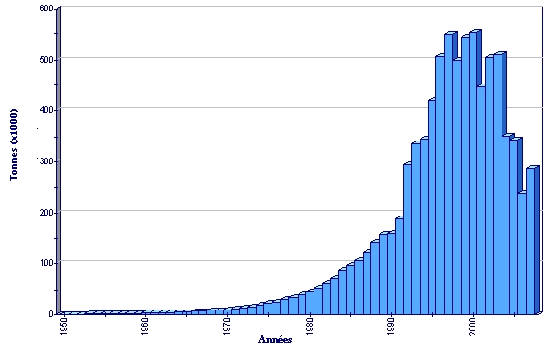
Production globale d’aquaculture de Cirrhinus mrigala
(FAO Statistiques des pêches)
(FAO Statistiques des pêches)
Marché et commercialisation
Dans tous les pays producteurs, presque tous les mrigal cultivés sont écoulés dans le marché local. Les règlements et contrôles gouvernementaux sur les marchés domestiques sont pratiquement inexistants dans ces pays et la valeur du produit dépend de l’offre et de la demande. Etant parmi les trois carpes indiennes l’espèce la moins appréciée, mrigal se vend à des prix relativement bas, généralement 10-20 pour cent sous celui de rohu ou catla. Cependant, la préférence du consommateur pour ces espèces fait que leur prix est toujours plus élevé que celui obtenu pour la carpe commune et les carpes chinoises.
SITUATION ET TENDANCES
Plusieurs facteurs ont augmenté le statut de la culture des carpes indiennes:
D’autre facteurs ont causé des problèmes. L’adoption de pratiques intensives, l’utilisation abusive d’intrants et le manque de connaissances scientifiques chez les fermiers ont résulté en une incidence accrue des maladies. Cependant, une confiance continue en une gestion sanitaire conduisant au développement d’agents thérapeutiques a aidé le secteur à surmonter de telles situations.
L’Inde a déjà préparé un plan stratégique en vue de doubler la production de l’aquaculture d’eau douce par l’augmentation de la productivité et de la surface. Mrigal étant une importante composante du système de polyculture de carpes, l’on peut s’attendre à ce que sa production soit doublée en Inde d’ici 2015. Le Bangladesh devrait aussi augmenter la production de mrigal cultivés. Le potentiel élevé de croissance des carpes indiennes a attiré l’attention de plusieurs pays tropicaux de l’Asie du Sud Est et du Moyen Orient.
D’autres facteurs devraient influencer la croissance future de la pisciculture de carpes indiennes, y compris:
- Améliorations de la reproduction induite et de la production d’alevins, qui ont éliminé la dépendance de la capture d’alevins de rivière.
- Technologie du grossissement améliorée.
- Améliorations dans l’alimentation et la gestion sanitaire.
D’autre facteurs ont causé des problèmes. L’adoption de pratiques intensives, l’utilisation abusive d’intrants et le manque de connaissances scientifiques chez les fermiers ont résulté en une incidence accrue des maladies. Cependant, une confiance continue en une gestion sanitaire conduisant au développement d’agents thérapeutiques a aidé le secteur à surmonter de telles situations.
L’Inde a déjà préparé un plan stratégique en vue de doubler la production de l’aquaculture d’eau douce par l’augmentation de la productivité et de la surface. Mrigal étant une importante composante du système de polyculture de carpes, l’on peut s’attendre à ce que sa production soit doublée en Inde d’ici 2015. Le Bangladesh devrait aussi augmenter la production de mrigal cultivés. Le potentiel élevé de croissance des carpes indiennes a attiré l’attention de plusieurs pays tropicaux de l’Asie du Sud Est et du Moyen Orient.
D’autres facteurs devraient influencer la croissance future de la pisciculture de carpes indiennes, y compris:
- Reproduction sélective.
- Pisciculture organique.
- Exportation vers des pays de l’Asie du Sud Est et du Moyen Orient.
- Développement de la transformation et de produits à valeur ajoutée.
PROBLÈMES ET CONTRAINTES MAJEURS
Les carpes sont généralement cultivées en système fermé qui comprend des espèces herbivores, dans lequel les matières organiques sont utilisées comme le principal intrant ce qui en fait une pratique généralement respectueuse de l’environnement. De plus, la compatibilité de mrigal dans les systèmes de polyculture en ce qui concerne préférence d’habitat et régimes alimentaires est bonne. Mais, la tendance des fermiers à augmenter le revenu par unité de surface a conduit à une utilisation excessive d’engrais, d’aliments riches en protéines et de produits chimiques qui peut avoir des effets néfastes sur l’environnement. La compatibilité de mrigal en systèmes de polyculture avec d’autres carpes a déjà été établie. Cependant, étant un poisson de fond, la récolte de cette espèce reste un problème, surtout en étangs que l’on ne peut drainer.
Pratiques pour une aquaculture responsable
Etant un système basé sur peu d’intrants, la carpiculture n’a généralement pas été considérée comme un danger pour l’environnement. Cependant, l’importance accrue donnée ces dernières années à l’intensification en vue d’augmenter la production a résulté en une utilisation accrue d’engrais chimiques, d’aliments, de produits thérapeutiques, de produits chimiques, etc., ce qui devient inquiétant. Il est donc nécessaire que les pays qui pratiquent cette culture formulent des directives et imposent de strictes règles concernant l’emploi judicieux de ces intrants critiques. L’application des principes de l’Article 9 du Code de conduite FAO pour des pêches responsables serait appropriée.
RÉFÉRENCES
Bibliographie
| Ayyappan, S. & Jena, J.N. 2001. Sustainable freshwater aquaculture in India.In: T. J. Pandian (ed.), Sustainable Indian Fisheries, pp. 83-133. National Academy of Agricultural Sciences, New Delhi, India. |
| Ayyappan, S. & Jena, J.K. 2003. Grow-out production of carps in India. Journal of Applied Aquaculture, 13:251-282. |
| Basavaraju, Y. & Varghese, T.J. 1980. A comparative study of growth rate of rohu - mrigal and mrigal - rohu hybrids and their parental species. Mysore Journal of Agricultural Sciences, 14(3):388-395. |
| Choudhury, S.N. 1995. Shrimp and carp aquaculture and the environment.In: Bangladesh Study Report. Regional Study and Workshop on Aquaculture Sustainability and the Environment. Manila, Asian Development Bank & Bangkok, Network of Aquaculture Centres in Asia-Pacific. [Draft report] |
| CIFA. 2004. Annual Report Central Institute of Freshwater Aquaculture. Bhubaneswar. CIFA. 99 pp. |
| FAO. 2005. FISHSTAT Plus - Version 2.30 for 2003 statistics. |
| Gopakumar, K., Ayyappan, S., Jena, J.K., Sahoo, S.K., Sarkar, S.K., Satapathy, B.B. & Nayak, P.K. 1999. National Freshwater Aquaculture Development Plan.CIFA, Bhubaneswar, India, 75 pp. |
| Gupta, S.D., Rath, S.C., Dasgupta, S.D. & Tripathi, S.D. 1995. A first report on quadruple spawning of Catla catla (Ham.). Veterinarski Arhiv, 65(5):143-148. |
| Hayat, M. 1995. Shrimp and carp aquaculture and the environment. Pakistan Study Report. In: Regional Study and Workshop on Aquaculture Sustainability and the Environment. Manila, Asian Development Bank & Bangkok, Network of Aquaculture Centres in Asia-Pacific. [Draft report] |
| Jayaram, K.C. 1981. The Freshwater Fishes of India, Pakistan, Bangladesh, Burma and Sri Lanka. Handbook of Zoological Survey of India, Volume 2. Calcutta, India. 475 pp. |
| Jena, J.K., Aravindakshan, P.K., Chandra, S., Muduli, H.K. & Ayyappan, S. 1998a. Comparative evaluation of growth and survival of Indian major carps and exotic carps in raising fingerlings. Journal of Aquaculture in the Tropics, 13:143-150. |
| Jena, J.K., Aravindakshan, P.K. & Singh, W.J. 1998b. Nursery rearing of Indian major carp fry under different stocking densities. Indian Journal of Fisheries, 45(2): 163-168. |
| Jhingran, V.G. 1968. Synopsis of Biological Data on Rohu, Cirrhinus mrigala (Hamilton, 1822). FAO Fisheries Synopsis No. 32, FAO, Rome, Italy. |
| Jhingran, V.G. 1991. Fish and Fisheries of India. Hindustan Publishing Corporation (India), Delhi, India. 727 pp. |
| Khoke, U.C. 1995. Shrimp and carp aquaculture and the environment. Myanmar Study Report. In: Regional Study and Workshop on Aquaculture sustainability and the Environment. Manila, Asian Development Bank & Bangkok, Network of Aquaculture Centres in Asia-Pacific. [Draft report] |
| Pathak, S.C. & Palanisamy, K. 1995. Shrimp and carp aquaculture and the environment. India Study Report. In: Regional Study and Workshop on Aquaculture sustainability and the Environment. Manila, Asian Development Bank & Bangkok, Network of Aquaculture Centres in Asia-Pacific. [Draft report] |
| Singh, D.M. 1995. Shrimp and carp aquaculture and the environment. Nepal Study Report. In: Regional Study and Workshop on Aquaculture sustainability and the Environment. Manila, Asian Development Bank & Bangkok, Network of Aquaculture Centres in Asia-Pacific. [Draft report] |
| Somalingam, J., Maheshwari, U.K. & Langer, R.K. 1990. Mass production of intergeneric hybrid catla (Catla catla x Labeo rohita) and its growth in ponds, small and large reservoirs of Madhya Pradesh. In: P. Keshavanath & K.V. Radhakrishnan (eds.), Proceedings of the workshop on carp seed production technology, pp. 49-52. Asian Fishery Society Indian Branch, Mangalore, India. |
| Talwar, P.K. & Jhingran, A.G. 1991. Inland Fishes of India and Adjacent Countries. Volume 1. Oxford and IBH Publishing Co. Pvt. Ltd., New Delhi, India. 541 pp |