


Ecuador strengthens forest-positive agroforestry value chains in cocoa and coffee
Ecuador is consolidating strategic actions to strengthen agroforestry value chains that are positively linked to forests in the cocoa and coffee sectors. A forest-positive agroforestry chain is a value chain based on agroforestry systems that generates economic, social and environmental benefits and actively contributes to the conservation and restoration of forests. This work is being carried out within the framework of the Technical Cooperation Programme implemented by the Food and Agriculture Organization of the United Nations (FAO), whose international mission took place in the country this week.
The objective of the Programme is to provide specialized technical assistance to support the transition towards production systems that integrate environmental sustainability, climate resilience and economic competitiveness, in line with Ecuador’s national and international commitments on sustainable development and climate action.
The cocoa and coffee value chains occupy a strategic place in this process. Both crops are predominantly grown under agroforestry systems that combine shade trees, commercial crops and native species, contributing to the conservation of tree cover, ecological connectivity and the stability of productive landscapes. Thousands of small-scale producers depend on these value chains for their livelihoods, managing diversified farms that constitute the basis for an effective transition towards production models that integrate agriculture and forests, thereby reducing pressure on deforestation frontiers.
The Programme’s approach recognizes that the transition to deforestation-free value chains does not start from zero. In the Ecuadorian Amazon, Kichwa communities have developed over generations the Amazonian Chakra System, an ancestral agroforestry model that integrates up to 150 species within a single plot, combining forest trees, food crops and medicinal plants. This system not only strengthens livelihoods and food security, but also conserves soil fertility, protects biodiversity and maintains forest integrity, constituting a concrete example of production in harmony with nature and sustainable landscape management.
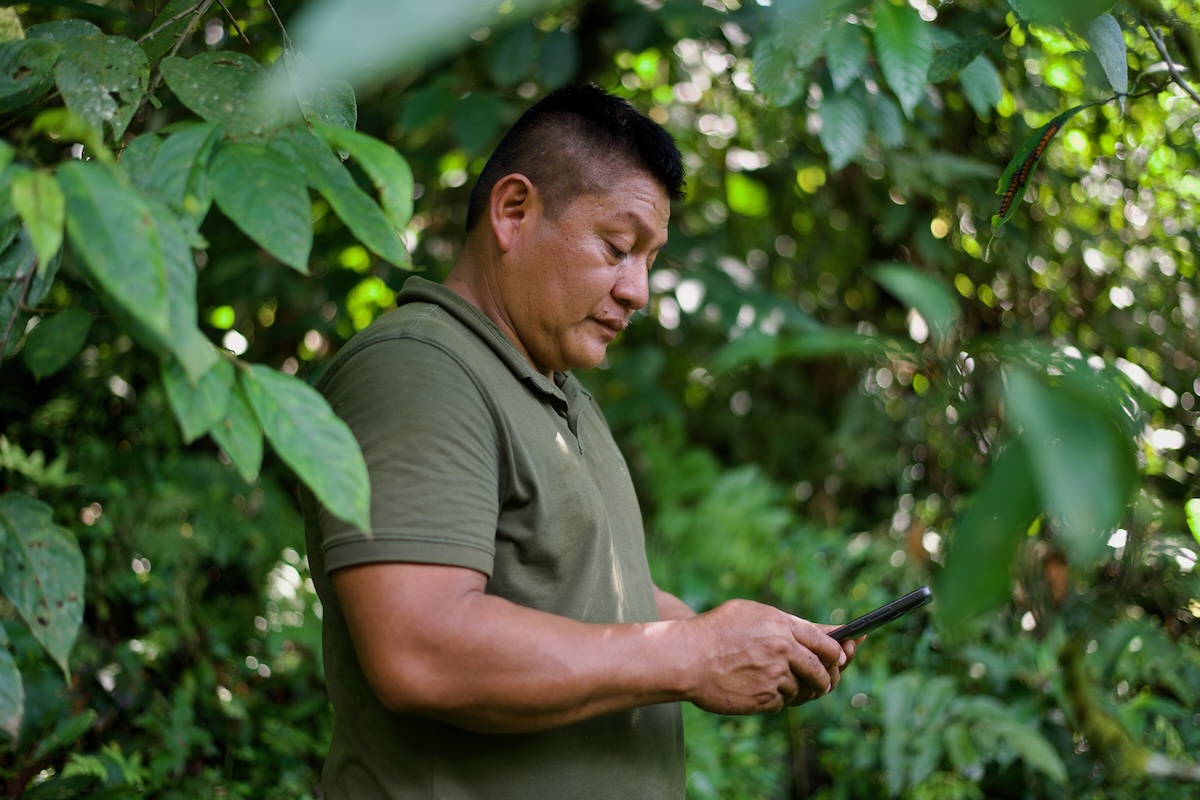
During the mission, territorial activities were also carried out to validate methodologies for the georeferenced mapping of cocoa and coffee plots using FAO-developed digital solutions such as Open Foris Ground, as well as deforestation risk analysis with Open Foris Whisp. Practical field training strengthened national technical capacities for capturing standardized and high-quality data, facilitating traceability, interoperability and the integration of information into national monitoring systems. The availability of reliable and verifiable data is a central element in demonstrating that agroforestry production is carried out without deforestation risk and in accordance with environmental due diligence criteria.
The Programme is implemented under the leadership of the Ministry of Agriculture and Livestock and the Ministry of Environment and Energy, in coordination with the Interinstitutional Committee for Sustainable Production and Marketing. This coordination has made it possible to strengthen alignment between the Programme’s technical actions and national efforts related to land registration, land tenure regularization, territorial planning and field verification.
The Programme also builds synergies with the Forest and Farm Facility (FFF), a global partnership between FAO, IIED, IUCN and AgriCord that provides direct financial support and technical assistance to organizations of forest and agricultural producers, including small-scale producers, rural women, local communities and Indigenous Peoples. Partner organizations from the Andean Landscapes and Río Blanco projects, as well as from the National AgroJoven Programme, are also participating, involving producers from the coastal region, the Andes and the Amazon. This collaboration reinforces the territorial, inclusive and organizational strengthening approach that underpins the transformation of agroforestry value chains.
FAO will continue supporting the country in building a model of sustainable rural development in which the production of cocoa, coffee and other agroforestry crops becomes a strategic ally for forest conservation, climate change mitigation and adaptation, and the resilience of productive systems at the landscape level.
This webstory was originally published in Spanish here.