


The national economy generally performed well in 1997 as shown by the main indicators.
Economic growth, as measured by change in Gross Domestic Product (GDP), was officially estimated at 6.5 percent . The Monthly Economic Activity Index drawn up by the Central Bank of Chile showed an increase in November of 6.5 percent. The same indicator pointed to 6.6 percent growth in 1996.
As regards inflation, the Consumer Price Index calculated by the National Institute of Statistics showed a year-on-year increase of 6 percent against 6.6 percent in 1996.
With respect to employment, the national workforce was estimated at 5 654 800 persons in September-November, of whom 3 373 00 or 6 percent were unemployed. The largest employment sector is Trade and Commerce with 18 percent, followed by Industry with 16 percent, Agriculture and Fisheries with 14 percent and Construction with 8.8 percent.
Unemployment has fluctuated between 5.4 and 7.8 percent in the last seven years, which is comparatively low in international terms.
Wages have increased significantly in real terms, rising by an average of 4.7 percent in the last five years. There is no final figure for 1997 but the increase is estimated at about 2 percent.
As regards external trade, Chile exports were valued at US$16 876 million in 1997, up 9.9 percent from 1996, and imports at US$18 218 million, up 10.4 percent from 1996, leaving a trade deficit of US$1 342 million. The forest sector contributed US$1 900 million to the export market.
This is the second consecutive year of trade deficit, in contrast to the run of surpluses from 1982 to 1995.
The country’s international reserves amounted to US$17 841 million, which is
US$2 367 million higher than in 1996.
Finally, Chile’s external debt totalled US$26 668 million in 1997, 81.5 percent of which is contracted by the private sector.
The 1988 outlook for the main economic indicators is given below, although there may be changes on account of the Asian crisis.
|
Projections for 1998 |
|
|
Growth |
5%-5.2% |
|
Inflation |
4.8% |
|
Unemployment |
6.2% |
|
Exports (US$ million) |
16 865 |
|
Imports (US$ million) |
19 639 |
|
Trade balance (US$ million) |
(2 774) |
|
International reserves (US$ million) |
15 341 |
|
External debt (US$ million) |
30 918 |
Logwood consumption amounted to 33.9 million m3 in 1996, of which 23 million were for industrial use and 10.4 million for fuelwood.
The following table indicates total roundwood consumption by the forest industry.
|
Consumption of industrial roundwood (million m3) |
||
|
PRODUCT |
1996 |
19971 |
|
Pulp |
7.4 |
|
|
Sawnwood |
8.7 |
|
|
Panels and veneer |
0.9 |
|
|
Sawlogs export |
1.4 |
|
|
Pulp logs export |
0.2 |
|
|
Wood chips |
4.0 |
|
|
Other |
0.4 |
|
|
TOTAL |
24.0 |
|
Source: INFOR
1 Estimate
|
Production of sawnwood, chipboard, panels and veneer (thousand m3) |
||
|
PRODUCT |
1996 |
19972 |
|
Sawnwood1 |
4 140.0 |
|
|
Chipboard 3 |
6 184.2 |
|
|
Hardboard |
52.4 |
|
|
MDF |
339.0 |
|
|
Particle board |
379.4 |
|
|
Plywood |
69.2 |
|
|
Veneer |
87.5 |
|
|
TOTAL |
11 251.7 |
|
Source: INFOR
1 90% of sawnwood is from Monterey pine
2 Estimate
3 Production of chipboard from residues
|
Production of paper and paper board (metric tons) |
||
|
PRODUCT |
1996 |
19971 |
|
Printing and writing paper Newsprint Other |
279 961 197 456 82 505 |
279 450 118 050 91 400 |
|
Corrugated paper |
97 086 |
79 106 |
|
Kraft paper |
40 990 |
38 396 |
|
Folding boxboard |
63 863 |
66292 |
|
Other container and wrapping paper and paperboard |
20 300 |
13 796 |
|
Domestic and sanitary paper |
84 427 |
94 300 |
|
Other paper and board not included |
10 100 |
11 344 |
|
TOTAL |
596 727 |
582 860 |
Source: CORMA
1 Estimate
|
Production of woodpulp (metric tons) |
||
|
TYPE OF PULP |
1996 |
19971 |
|
1. Mechanical |
190 551 |
186 844 |
|
2. CTMP |
23 000 |
20 000 |
|
3. Chemical 3.1 Sulphite 3.2 Sulphate and soda
3.2.1 Long fibre Bleached Unbleached
3.2.2 Short fibre Bleached Unbleached |
1 932 333 14 204 1 918 129
1 586 183 1 252 878 333 305
331 946 329 870 2 076 |
1 811 972 1 198 1 810 774
1 484 396 1 222 370 262 026
326 378 324 250 2 128 |
|
TOTAL |
2 145 884 |
2 018 816 |
Source: CORMA
1 Estimate
|
Itemized forest exports |
|||||
|
PRODUCT |
1996 |
January-November 1997 |
|||
|
|
UNIT |
thousand |
million US$ FOB |
thousand |
million US$ FOB |
|
Chemical pulp |
metric ton |
1655 2 |
764 4 |
1 539 5 |
672 2 |
|
Paper and board |
metric ton |
196 1 |
174 9 |
183 7 |
128 5 |
|
Sawnwood |
m3 |
1 087 1 |
185 6 |
1 096 2 |
191 5 |
|
Wood chips |
metric ton |
2 906 1 |
170 9 |
2 458 9 |
129 9 |
|
Hardboard |
metric ton |
26 3 |
7 3 |
24 6 |
6 7 |
|
MDF |
metric ton |
138 8 |
56 8 |
151 5 |
61 1 |
|
Particle board |
metric ton |
40 0 |
9 8 |
39 0 |
9 3 |
|
Plywood |
metric ton |
2 5 |
1 9 |
3 2 |
3 0 |
|
Veneer |
metric ton |
40 5 |
19 4 |
46 3 |
22 9 |
|
Saw/pulp logs |
m3 |
1 615 8 |
103 5 |
1 594 4 |
98 5 |
|
Other |
metric ton |
291 7 |
313 4 |
424 3 |
386 4 |
|
TOTAL |
|
|
1 807 9 |
|
1 709 8 |
Source: INFOR
Note: Approximately 95% of exported sawnwood is Monterey Pine. Exports in 1998 are expected to be 10% down from 1997
|
Trade in paper and board (metric tons) |
||||
|
TYPE |
1996 |
19971 |
||
|
|
Imports |
Exports |
Imports |
Exports |
|
Printing and writing paper Newsprint Other |
139 212 0 139 212 |
168 046 152 250 15 796 |
112 037 24 155 87 882 |
154 821 138 218 16 603 |
|
Corrugated paper |
135 366 |
6 |
162 305 |
1 361 |
|
Kraft paper |
82 |
5 684 |
1 059 |
4 702 |
|
Folding boxboard |
9 674 |
0 |
10 223 |
0 |
|
Other container and wrapping paper and board |
1 464 |
74 |
764 |
25 |
|
Household and sanitary paper |
1 092 |
11 886 |
40 332 |
6 421 |
|
Other paper and board not included |
9 110 |
1 354 |
7 764 |
520 |
|
TOTAL |
296 000 |
187 050 |
334 484 |
167 850 |
Source: Central Bank-INFOR
1 Estimate
|
Trade in woodpulp (metric tons) |
||||
|
TYPE OF PULP |
1996 |
19971 |
||
|
|
Imports |
Exports |
Imports |
Exports |
|
1. Mechanical |
1 |
0 |
1 |
0 |
|
2. CTMP |
0 |
0 |
0 |
0 |
|
3. Chemical 3.1 Sulphite 3.2 Sulphate and soda
3.2.1 Long fibre Bleached Unbleached 3.2.2 Short fibre Bleached Unbleached |
6 154 96 6 058
6 005 5 982 23
53 53 0 |
1 655 164 0 1 655 164
1 384 101 1 106 035 278 066
271 063 271 063 0 |
3 574 0 3 574
3 570 3 570 0
4 4 0 |
1 761 430 0 1 761 430
1 529 410 1 226 210 303 200
232 020 232 020 0 |
|
TOTAL |
6 155 |
1 655 164 |
3 574 |
1 761 430 |
Source: Central Bank -INFOR
1 Estimate
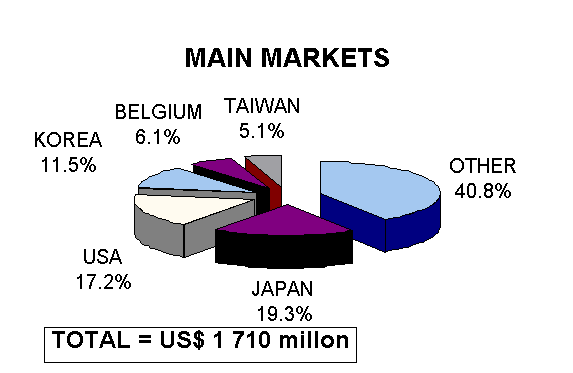
Forest exports were shipped to 88 countries between January and November 1997. The main destination was Asia which accounted for 45.3 percent of the total export value. Next were Europe (19.8 percent), North America (18.6 percent), and South America (15.8 percent), followed by Africa (0.4 percent) and Oceania (0.1 percent). The main markets are illustrated in the chart below:
The forestry sector is second only to the mining sector in terms of investment, which has been significant in the past five years from both national and foreign companies. CORMA estimates the total investment for this period of US$2 440 million, the primary target being the pulp and paper sector, followed by timber processing and plantations. Investment is expected to increase to about US$3 650 million for the period up to 2003.
|
Future investments in the forestry sector (us$ million) |
||
|
|
Historical 1991-1995 |
Estimated 1996-2003 |
|
Plantations |
270 |
390 |
|
Pulp and paper |
1 700 |
2 565 |
|
Sawmills and manufactures |
200 |
355 |
|
Panels and veneer |
150 |
280 |
|
Other |
120 |
60 |
|
TOTAL |
2 440 |
3 650 |
Source: CORMA
The sustainable annual of felling of 17.7 million m3 of Monterey pine in the period 1996-1998 is expected to double by the year 2016. Eucalyptus is expected to yield a sustainable harvest of 7 - 8 million m3 at the beginning of next century. This is of great interest to the pulp industry as there would be greater eucalyptus pulp production potential, which would enable the industry to operate on a larger scale than that hitherto permitted by Monterey pine.
|
Projected supply of monterey pine and eucalyptus wood 1996-2016 (million m3/a) |
||
|
Three-year period |
Monterey pine |
Eucalyptus |
|
1996-1998 |
17.7 |
2.15 |
|
1999-2001 |
22.2 |
4.25 |
|
2002-2004 |
23.3 |
7.07 |
|
2005-2007 |
22.9 |
8.49 |
|
2008-2010 |
23.1 |
9.34 |
|
2011-2013 |
23.1 |
9.78 |
|
2014-2016 |
30.1 |
9.88 |
Source:INFOR
Note: At present some 3 million m3 of native timber species are consumed. Added to Monterey pine and eucalyptus, this makes a grand total of 23 million m3.
The first Working Group on Sustainable Forestry was set up in July 1996 with the signing of a formal agreement by the Forest Institute (INFOR), the Chilean Timber Corporation (CORMA), the National Forest Corporation (CONAF), the National Commission on the Environment (CONAMA), the Ministry of Foreign Affairs and the Association of Foresters.
The principal purpose of the group is to advise government and private bodies on the technical aspects of sustainable forestry resulting from agreements signed by the Government.
It also aims to evaluate effective enforcement of trade treaties, advise on negotiations for future agreements on forest sustainability and formulate a package of instruments that will constitute the Chilean Code of Sustainability.
The Working Group has an executive board made up of the heads of the signatory institutions, one of whom acts as technical secretary on a rotating basis, the first period of office being served by the Forest Institute (INFOR).
The Group is currently working on two areas through its Commissions on: i) Reaching a Consensus for Sustainable Forest Management and ii) Forest Certification. The first Commission is trying to find a definition for sustainable forest management in Chile, while the second is working on a system of forest management certification that can be internationally recognized. The Commission members are from the bodies mentioned above.
In Chile, companies are being certified on the basis of ISO 14.001 for forest management and the sawnwood, panel and pulp industry. There are three certified enterprises and a further two in the process of certification.
The tendency is for companies to acquire certification for environmental management through ISO 14.001 rather than through the Forest Stewardship Council (FSC). Some companies are applying "best forest management practices".
