


The figure above were calculated using the prices reported to DJPH. However, these prices are often internal (transfer) prices between HPHs and factories in an industry group rather than true market prices. An alternative way to examine economic rent is to calculate plymlls and sawmills ability to pay for logs (ie.the maximum transfer price they could pay and remain profitable), then using this figure, calculate the maximum levy HPHs could pay. This can be done with two simple graphs.
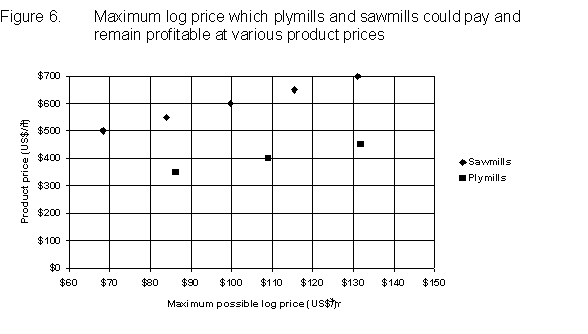
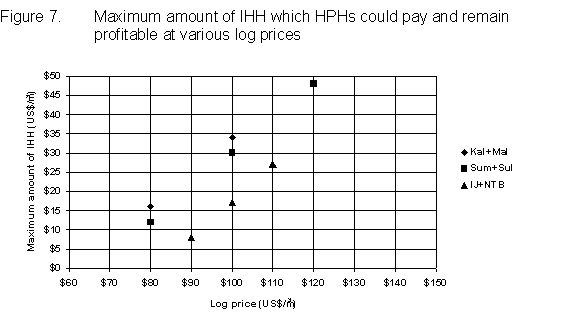
Figure 6 shows the maximum log price which plywood mills and sawmills could pay and earn a real rate of return of 15%, at different product prices. Thus, for example, at an export price of US$550/m3 moulding, sawmills could pay US$85/m3 log for their logs. These lines have been calculated using the SMAT models by calculating, for a given product price, the log price at which the real rate of return from the plymill or sawmill investment is 15%.
Figure 7 shows the maximum amount of IHH which HPHs in the 3 different locations could pay and earn a real rate of return of 15%, at different log prices. These lines were calculated in the same way as above, but by entering a log price and changing the level of IHH until the real rate of return in the HPH is 15%. Thus, for example, at the log price of US$85/m3 log calculated above, IHH could be set at US$16/m3, US$20/m3, and US$4/m3 in Sumatera/Sulawesi, Kalimantan/Maluku, and Irian Jaya/NTB respectively. These two charts can, therefore, be used to link IHH to product prices.
