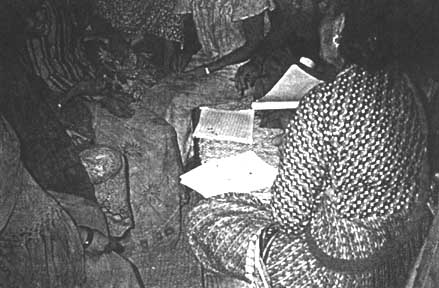
Gender Analysis
(National Consultant)
1. Under overall supervision of the Director, Forestry Operations, the technical guidance of the designated technical Adviser and in collaboration with the relevant national authorities, the national consultant will be responsible for a gender analysis and related training requirements. More specifically he/she shall undertake the tasks outlined below.
2. Based on the gender analysis framework of and with the use of PRA tools, conduct a gender analysis in one of the areas where leasehold forestry is ongoing, and prepare a report in the form of a case study.
3. Based on existing modules on PRA and gender analysis prepare training material including a trainers guide for a gender analysis training for rangers, JTA's, group organisers and other leasehold forestry field staff. Training are planned by the district forest officers the consultant is expected to conduct the training if considered appropriate.
4. Plan, organise and implement a five day workshop on gender analysis for central and district level staff. This workshop will focus both on the philosophy of gender analysis (i.e. why gender analysis is important and gender analysis as an integral part of the participatory approach) and the tools (introduce the profiles as well as PRA/RRA tools and show their gender specificity). The consultant will use field examples that will show the relevance of gender analysis to leasehold forestry and a minimum of two field days will be included to practice the use of the profiles and tools.
5. Prepare a workshop report, including recommendations for follow up training or on the job support.
6. Suggest the project on improvements regarding a reassessment of assumptions made during appraisal, gender specific monitoring and the strategy applied during initial implementation in order to make the project more gender sensitive.
7. Submit a technical report at the end of the assignment giving the consultants main activities, findings, conclusions and recommendations with attached to it the before mentioned case study and workshop report. The report should be supplied in three hard copies and a diskette (Word Perfect 5.1)
8. For this short term position, the duty station will be Kathmandu with travel to project districts and elsewhere as appropriate. The duration of the contract will be three months,
(A case of Leasehold Forestry Group at Gupteshwori Village of Ramechchap District, Nepal)
NOTE:
The case study is not a monitoring report neither an evaluation of the project activities. It is not a critique, comment or recommendation. This is a gender specific study report of a particular group which is meant to be used as a training material in the trainings on Gender Analysis and leasehold forestry projects.
The Hills Leasehold Forestry and Fodder Development Project
The project was initiated with the twin objectives of raising incomes of families in the hills who are below the poverty line and contributing to the improvement of the ecological conditions in the hills. Accordingly, blocks of degraded forest have been leased to groups of poor households having less than 0.5 hectare (10 ropani) of private land and/or an annual per capita income of less than Nits. 2,500 (US$ 50). Special attention for female headed households and ethnic groups like Chepangs and Tamangs is being given.
The project is being jointly implemented by the Department of Forest (DF), the Livestock Division of the Department of Agricultural Development (DAD), the Agricultural Development Bank of Nepal (ADB/N) and the Nepal Agricultural Research Council (NARC).
A technical assistance unit has been established within the DF which includes among others, the lease process, adapting research, extension, training, input supply, monitoring and evaluation. Group formation and mobilisation, group planning, land development, conflict management, NGO involvement, formation of mobile task force within the technical assistance unit are being the major areas of activities seriously undertaken by the project with regard to smooth implementation of the project.
128 groups (April 1995) have so far been formed by- the project. The project policy clearly indicates the requirement of the involvement of both husband and wife in the groups. However, the widows, the separated wives, the single women are also being included as part of such groups depending on the specific requirement. The training are participated by one male and one female from among the group members' families. In some cases, sons, daughters, daughters-in-law are being included while delivering project inputs such as training, inputs for nursery development etc.
Case Study
The case study was carried out in a remote village of Ramechchap district, namely "Dudhilo tole" of Guptehwori village Development Committee. There are two leasehold forestry groups of targeted farmers involved in the project's activities in the area. The study was done intensively to analyze the case of one group from a gender perspective. The project has been working here for the last one year.
Gupteshwori VDC
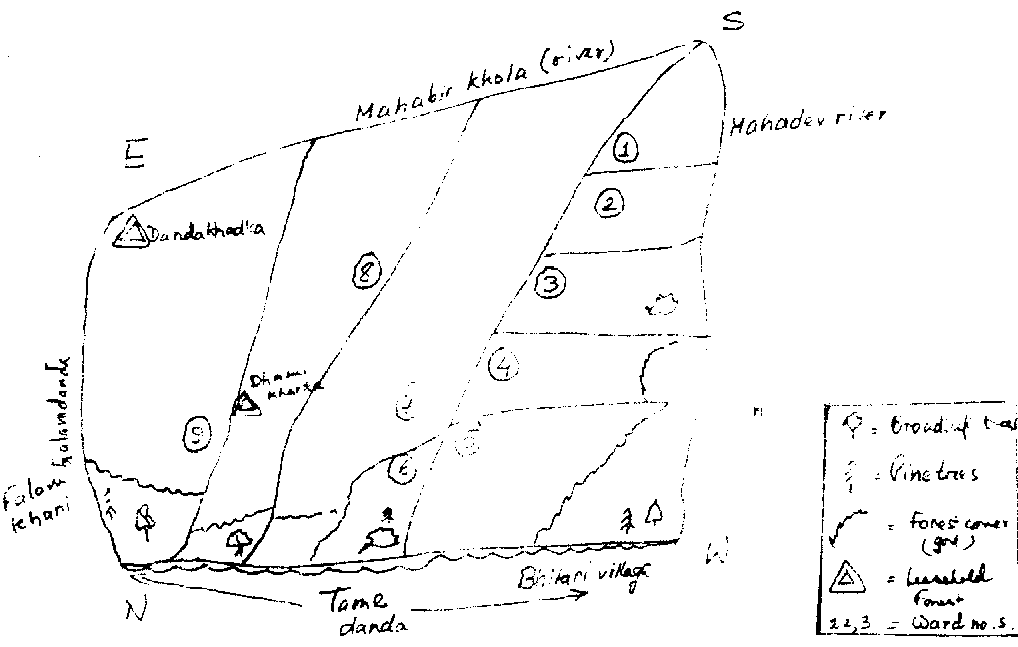
Gupteshwori VDC is surrounded by the Mahabirkharka village in the east, the Mahadevkhola to the south, Hatidhunga to the north and Bhitarikhani danda to the west. The place is full of green thick forests all around. However, the forestry context has been changing in many aspects. The deteriorated forest of ten years ago has been changed into a thick green forest at present.
The villagers used to see the forest to be the government's property only. However, with the message of the community forestry adapted by the Ministry of Forestry (Panchayat ban concept) had reached the villagers, they have been motivated to change their perspective towards the forest from a constructive angle. They now take care of the forests around them and manage the natural resources by themselves. This VDC has iron mine, stone mine, expensive herbs mainly Chirainta (Swertia Chirata) many productive bushes like "lokta" (Daphne papyracea) in the forest and a number of apple gardens on private land. Iron mine has been declared banned by the government whereas the stone mines are private property and are being extensively used to make money. The VDC is fortunate to have a number of rivers and streams which keep full of water throughout the year. However, the organised system of drinking water supply is still very poor within the VDC except a few taps constructed by the Gorkha British Company. The Gupteshwori VDC itself has a population of about 4,000 only. The villagers build up village level road, trails and tracks by themselves in the month of Falgun and Chaitra ( March-April) when they are comparatively free from other regular farming activities. In the winter they get heavy snowfall. In the monsoon irregular rainfall has been causing trouble for the last three years.
Dudhilo tole
The village referred to here where the study was carried out is "Dudhilotole" situated at ward number 8 of Gupteshwori Village Development Committee of Ramechchap District. It is a remote village situated at a height of 2500 metres from the sea level. It is about ten hours' walk from Jiri, the nearest motorable road head of Dolkha district.
The family system is extended. However, nuclear families with husband, wife and children also exist. There are fifty households in this village. Most of them are Chhetris, two households consist of Damai (tailor) and eight households of Sunar caste. The tole is named after "Dudhilo" meaning full of milk since the inhabitants of this place were rich in milk cultivation in their past. But presently as the children started going to school the workforce consisted of children is less available in the daytime for cattle grazing the villagers have decreased the number of livestock to a very minimum rate.
Population/Education/Health:
The village here is thinly populated. However, as reported by the villagers, there has been a significant rate of increase in the population during the last ten years. Except a few cases of permanent sterilisation by females, the villagers are not familiar with family planning methods. Only a few females have started adopting permanent family planning methods. A number of economically better-of-families migrate almost every year to the terrain or the capital city in order to have better education and health facilities for their children and themselves. No health post exists within the VDC.
However, both men and women occupy immense knowledge about the herbs available in the local forest which make local treatment possible by the local people of both human beings and animals. Some women know the use of certain herbs for reproductive health problems of women. There are two primary schools and one secondary school in the VDC. The middle school being very far from Dudhilo (two hours walk) very few girls attend the same. Since the girls have a major role to play in the household activities by helping their mothers which consumes a significant part of time of the day.
Most of the boys have gone to the town or the capital city for higher education whereas the girls are seldom sent for such an opportunity. Marriages take place for couples within the nearer villages. The system of arranged marriage is the most preferred and appreciated both by the boys and the girls.
Religion/Festivals
The villagers consist of mainly Hindus, then Buddhists and then only very newly baptised three Christian families. The temple of Gupteshwori Mahadev (temple of Lord Shiva) is famous for its historic identity. Both the Buddhists and the Hindus go to the temple for worshipping. The males and the females of the village get together in the temple at several times of the year. The females celebrate their most important religious festival "Teez" (which is day of fasting for the women for the welfare of their husbands) collectively in the temple premises every year. Likewise, the Buddhists also celebrate their communal worshipping in this temple where both males and the females including their children attend the festivals. Both the males and the females participate for the maintenance of the temple by cleaning its area when they come to the temple to worship. During the day of "Bala Chaturdashi", all the villagers come for worshipping. Moreover, the temple is famous for offering rituals through holding "rudri" (ritual) which is a family ritual. Dashain and Tihar for the Hindus, Lhosar for the Buddhists and Christmas for the Christians are the main festive days in the year.
Economy/Employment
There is no any employment opportunity such as wage earning, service etc. within the village. A number of grown up boys and girls have started going to the towns in search of wage earning opportunities mainly in carpet industries. They go out for this kind of activities during the winter and come back to their homes during the rainy season for farming activity.
Livestock is the main livelihood of this village. Buffaloes, cattle and goats are the main livestock raised by the villagers. Agriculture is the second important source for livelihood. Wheat, maize and potato are the main crop of the area. The main constraint the farmers face from time to time is those of hailstones, minor draught, excessive rain, storm and severe wind causing harm to the farm production. Most of the villagers don't have "khetland" (for cultivating paddy). They only have "bariland" where they grow maize, millet, potato and vegetables. Maize is the staple food. Potato is the main cash crop over here. Mustard is produced by the farmers mainly for consumption. A few farmers sell mustard which is very insignificant in quantity. Jiri is only the nearest market place which is a one day's walk. Mostly the male farmers sell the product like potato and mustard in the market. The females are busy with the raising of large and small livestock including household activities which limit their mobility into the outward world like marketplace.
Institutions
Besides the schools and the temple, there is Small Farmers Development Bank office in the VDC which is the only government (line agency) office within the easy access of the people. The Hills Leasehold Forestry and Fodder Development Project started its implementation one year before (1994) in this area through this bank, together with the District Agriculture Office, District Livestock Office and District Forest Office.
The Bank officers, the working staff of the line agencies, namely, the GO (group organiser), the IT (Junior Technician), the ranger are males only. There is one female community health motivator (CHV) promoted by the Ministry of Health in the past who has some skill of motivating people for adaptation of family planning methods. All the teachers of the schools are males. 5% of the students enroled in the schools are females. The VDC and the Ward Development Committee are consisted of the males only.
The females however, caste their vote but do not participate in the VDC or WDC meetings. However, the HLFFDP project (through the bank) has been able to mobilise the females for group formation, attending meetings and making collective decision regarding the plan of execution and all such other matters related to the project activities. The group formation among the females by the bank has actually started in the year of 1993. It formed two women groups and gave credit to them for livestock raising. The groups used the credit very successfully and paid the loan back in time. These two groups were later on converted into leasehold forestry groups and have been given credit of Rs. 5,000 per woman. Both the groups have been working for the last one year.
Dhamikharka group
The group referred to here is that of Dhamikharka. The group is formed around 5 (five) women. The criteria was set by the SFDP staff. The members of the group are closely related to each other but live separately in their own families. Since this kind of leasehold forestry activity was totally a new concept in the village it was very difficult to motivate the poorer section of the population to form group. Since this group was in contact with the SFDP through loan involvement prior to this project, this HLFFDP activities were concentrated in this group.
The group has received training from the project on forestry, nursery development, SFDP bank related matters, livestock development and leasehold forestry concept specific to this project. The training were attended by one female and one male member from each family. One intensive training was organised one year ago in the district headquarters at Manthali. The women found it a bit difficult and prefer to get training in their own village in smaller groups. One woman from this group had joined in exposure study tour to different places of Nepal organised by the project for the participants of leasehold forestry groups.
Presently this group is engaged in forestry development activities in a plot of 74 ropanis (approximately 4 hectares) of land. This group has already received the certificate of lease from the government authority for this plot of land. They received loan from the SFDP for forestry development which is however spent on buying buffaloes and goats.
The most immediate benefit received from this project as is seen by the women of this group is the provision for their easier access to group loan from the government bank. A group saving scheme is also being organised by this group under the guidance of the SFDP.
The Dhamikharka group has completed five meetings where they decided their plan of action, requirement and other relevant matters. One year later after the formation of the group, they planted saplings of fruit trees, nigalo (Aurundinaria species) and a few fodder trees. The group has received training on nursery development. Being an innovative idea the group was not fully convinced about the benefits of this activity.
The Chairperson Ms. Manju Khadka, the daughter of the VDC chairperson initiated a nursery under the guidance of the project personnel in 1994. The group members feel proud and confident if the matters are taken over by Manju. She is the only girl to pass the school final examination (S.L.C.) in this village.
The nursery is now able to provide saplings to the forestry groups and to other villagers. The nursery has a plantation of altogether 9,600 saplings. Paiyuin (Prunus cerosoides), uttis (Alnus nepalensis), khasru (Quercus Semecarpifolia), dudhilo (ficus nemoralis), Banjh (Quercus incana), lapsi (Choerospondias Axillaris), dbupisalla (Cupressus torulosa), and khotesalla (Pinus Roxburghii), have been planted in the nursery. Some seeds were given by the project forestry staff whereas some of them were collected by the women of the group. Manju's experience shows now that the saplings of pine species would not be preferred by women. Rather the local fodder and fuelwood species plantation is being appreciated. Men also have taken interest in this nursery by giving their ideas for promoting timber species. Looking at the successful demonstration of the nursery, now the other group of the project and also other villagers have started thinking positively about it as a very feasible income generation activity within the village.
Farmland management and production
The average farm size is 3-4 ropanis ( hactre) per household. A few of them have 10-15 ropanis of land. Most of the farmers own only "bari" land which is rainfed land near the homestead. Roughly 1% of them only have "khet" land, the irrigated land down the hill. Almost all the farmers have bariland except the "tailor families" who make their living by the donated crop by the farmers' families every year at a fixed rate for their service. Very little amount of paddy is grown in the khet. Wheat and maize are the main crops grown in the bariland. Millet is the secondary crop planted with maize. Potato and mustard are grown as the cash crop and also for home consumption. Winter and summer vegetables are also grown on the "bari" land along with other crops.
For wheat cultivation, the land preparation, buying and applying chemical fertilizer is performed by the males while the females perform the other activities such as sowing, harvesting, storing and grinding.
For maize cultivation, the process of manuring, harrowing, sowing, harvesting and transporting are done mainly by women, whereas ploughing, digging the terrace corners, slicing the terrace rise (bunds), procurement and application of chemical fertilizer are mainly done by men. In the total activities for a 0.05 ha of plot males spend about 18 person hours per year. Women spend 64 person hours a year while children labour engaged is 8 person hours for the activities involved in maize cultivation.
Millet, the third important crop is inter cropped with maize. In millet cultivation, the seed bed preparation, ploughing and digging are done by men. Harrowing, manuring, seed sowing, transplantation and weeding, harvesting and storing are done by women. The task of going to the mill for grinding is performed by women and children. Thus with regard to the activities involved in millet cultivation and processing, men spend almost 16 person hours, women 48 person hours and children 16 person hours.
Exchange labour system exists in the village. Among neighbouring farms, both male and female farmers work as exchange labour depending upon requirement.
Fruit tree plantation
The farmers have started plantation of apple and plum trees in their bariland. The men do the cleaning of the site, dig the pit and the women plant the saplings. Continuous care taking of the plants is done by the women. This activity engages the women for three hours a week while for men, it takes only one or two days at the digging time and at the time of putting fertilizer.
Vegetables production
Potato is the main cash crop in this area. it is also regarded as the main vegetable. Both women and men are involved in growing potato in the month of February-March. Both have to spend about one and a half hour for the plantation of potato in 0.05 ha plot of land. In the month of July-August, mostly women harvest potatoes. It takes them two hours for a plot of 0.05 ha of land. In the winter, farmers grow mainly broadleaf mustard, radish and a few of them grow cauliflower’s. Men are involved in land preparation and women are involved in sowing, watering, weeding, manuring and harvesting. In the monsoon, farmers grow pumpkin, gourd, bittergourd, beans, chilly and such other vegetables which can grow under rainfed condition. All the activities involved in cultivation of such vegetables are done by the females only.
Livestock management
The farmers raise buffaloes, cows, goats and poultry. Bullocks are owned by a few farmers. Women and children are responsible for taking care of the cattle, buffaloes, goats and poultry. Mainly children are responsible for grazing the animals. However, with the increased rate of school going children, specifically girls, the farmers face the problem of looking after their animals and the number of livestock has decreased due to this social change. During the monsoon, the buffaloes and the cattle are taken care by the males in a place away from the normal shed ("goth") in order to get animal dung spread throughout the bariland where there is an empty space. The large animals are left exposed in the monsoon rain day and night under the belief that if they are exposed to the monsoon rain, they will be strong enough to resist the cold of the winter days.
During monsoon, the females and the girls spend two hours daily for fodder collection, animal/poultry feeding, bringing goats and poultry back into their sheds. As the market is not in easy access to them, both male and female farmers do extensive use of the locally available herbs for treatment of the animals when they are sick. However, the farmers feel a strong need to get trained in veterinary skill. Even if during the monsoon the farmers get access to fodder around their own bariland, in winter the case is different. The women and the girls have to collect fodder from all the distant forests around the VDC which takes them at least five hours per day. There is no any market for milk. Milk is consumed mostly by children, elderly aged and the male household heads. Women make butter (ghee) out of the milk which is used for frying purpose. Ghee (butter) is occasionally sold by the males in the market of Jiri.
Natural Resource Management and Utilization
Farmers depend heavily upon the government forest surrounding the village for fuelwood, fodder and leaf litter. The villagers have their own system of managing the forest according to their community decision. The importance of having a thick forest is realised by the women and men of the area.
One educated girl says that once they have connection with the outsiders through a comfortable road the forest will be destroyed; now the town area is so far that it is totally impossible to get trees or fuelwood out of this village easily for sale.
Since there is no such hindrances to go inside the forest, many farmers think the government forest to be their own private property. The farmers have been protecting the forest with their own system rather than destroying it. Although the concepts of private forest and leasehold forest seems to be clear for the women and men (those who are involved), the awareness level of the women seems to be very low about the differences lying between government forest and community forest. There is no any community forest in the VDC so far. The farmers, specifically the women regard the government forest as their community forest.
In the month of Falgun-Chaitra (March-April), the male members of all the families collect fuelwood by cutting dry trees. It takes two days for 8 persons to fell one tree. To cut the tree into smaller pieces takes three to four days for 4 persons which is also done by the males a few days later after felling the tree. The fuelwood is carried from the forest towards home mainly by the males. The female headed households have to hire somebody to get this done by paying wage which is normally Rs. 40 per person per day (8 hrs.).
The females prefer "Khasru" (Quercus Semecarpifolia) for fodder and Gurans (Rhodendron orboreum) for fuelwood most of all. Dudhilo (Ficus Nemoralis), Nimaro (Ficus Nemoralis) are also preferred species for fodder and fuelwood to plant in their private land. Farmers have limited land area and also because of the easier access to the government forest, very limited efforts have been demonstrated by the farmers for private plantation of fuelwood and fodder. The members of the leasehold forestry group have planted fruit trees and bamboo species for income purpose. However, they are very much fond of planting more apples, plums, bamboo species and "Amliso" (broomgrass) as cash crop. A few farmers have private plantation.
The herbs and certain wild vegetables are occasionally collected mostly by the females. Dry trees are occasionally collected by the males for constructing community buildings such as school buildings and also for constructing their own houses.
The natural water springs are in abundance in this area which are used by the women and men for washing and also for irrigating their land when there is a necessity.
Certain medicinal herbs, such as Chirainta (Swertia chirata) and Baso (Eragrotis tenella) are collected by the farmers for sale through Jiri to Kathmandu. This is controlled by the better off contractors who live in Kathmandu. Likewise, "lokta" ( Daphne papyracea) is collected by another better off person for making paper. The "stones" are cut out from the mines by private owners for sale for use as the roof of the houses. A section of male farmers only get wage earning opportunities from these types of activities within the village. However, all these activities are not organised at a formal status.
Home maintenance/Reproductive activities
Day to day household chores like cooking, cleaning, washing dishes and clothes, baby care, nursing the sick and the elderly, fetching drinking water, chopping firewood are done by the females. The girls help their mothers in performing all these activities. Besides these, the females and the girls water the plants in the kitchen garden, do the weeding of the fruit trees and/or the crops. Mostly the girls take out the small livestock for grazing.
The males are mainly responsible for house construction, house repairs, construction of simple furniture for personal use and the making of agricultural tools. They are also involved in the tasks of bamboo basket (doko) making, bamboo tray (Nanglo) making and rope making which is done on an seasonal basis. They have access to the raw materials required for such activities within their private plantation as well as from the forest.
Community activities
In this village, males are engaged in most of the community activities like trail construction and their maintenance, school building construction, attending funeral processions, participating marriage processions, organising community meetings on different subject matters including taking decisions about the use of the government forest. This kind of activities engage the males for roughly 50 days per year.
The leasehold forestry group has however developed the habit of holding monthly meetings among themselves in order to decide upon the matters related to the leasehold forest. One of the major topic covered in these meetings is the monthly saving of the group. The male partners have so far are not being involved in making collective decisions except the project personnel who guide them in such activities. The females feel free to talk in these meetings amidst the presence of the females only.
Access and Control of Resources
Land is the most important resource, is owned by the male household head. Although the females and the children have access to the use of land, it is controlled legally by the male household head. In case where the male household head dies and where there is no other adult male in the family, then only the controlling authority of land is transferred to the female member. However, if any male member (say son) of the family becomes eligible to hold land asset by age then the authority on land is controlled by the male only.
Livestock is the second most important asset. Small livestock like goats and poultry are sold by the farmers mostly at the time of annual festival "Dashain" in order to meet the expenses of the festival. They sell these within their village. Goats, buffaloes, cattle are sold by the males whereas poultry is often sold by the females on their own decision. The money the females and the males earn from such selling is often spent in fulfilling the family need. Unlikely to most of the villages in Nepal, the farmers of this village do not make or drink wine. The males go to the next village to get wine if and when they feel for it. Community gambling among males takes place only during the festival time, twice in the year.
The females own the "Pewa". "Pewa" is the wedding gifts or things given by the parents or relatives or purchased by their own money. It can be in the form of livestock, jewellery, cash and utensils. Jewellery is controlled by the females whereas control over cash, livestock and utensils is influenced by the decision of the males. Sometimes in the joint families the husband and the wife buy assets in the form of the wife's "Pewa" the control of which remains on a common understanding of both of them.
In the leasehold forestry group, the control of the land lies with the government while the use of it for the leased period (for 25 years) is done by the females and the males of the group. Very often the group members and others show deep concern about the long term controlling authority of the leased land. In this case, the nursery is controlled by the female owner and thus, the money earned from the selling of the saplings is under her control. However, the plot of land where the nursery has been established is owned by the male household head.
The government owned forest is regarded as one of the most important source of livelihood on the ground that the livestock raising depends heavily on the forest.
The SFDP provides credit to the groups of small farmers formed according to its own policy. Most of the farmers have taken loan for buying buffaloes. A few families are facing the problem of failure to pay the loan back and thus, their land which is the only mortgage they had are recently being declared to be auctioned by the bank. The lack of marketing facilities and having limited land for production activities have given rise to this kind of problem. The farmers, however feels the need to get trained in veterinary skill. Both the males and the females prefer to buy improved variety of buffaloes in place of the local ones. The credit is given to the group in group guarantee but every body has to mortgage his land for that on individual basis.
The training, study tour and other inputs such as seeds, fertilizer and technical advice given by the project staff have proved to be very fruitful resources for the female members of the leasehold forestry group.
This has been regarded by them as the transfer of forest development skill for the first time. The information about the policies of bank, technical tips on livestock development and nursery management provided by the project have proved to empower the members of the group. They can see their role as the decision makers for their long term benefits from the leasehold forestry development. However, being the secondary decision makers in their own families, they face the problem of putting the priority for the use of the agricultural tools like "Kuto-Kodalo", axe, spade etc. which limits their time management. They also feel being deprived of sufficient knowledge and skill required for creating access to and management of improved breed of livestock.
The expectations of the males and those of the females differ from one another in the same community. The males prefer to get the road constructed first and then to have employment opportunities within the village such as government offices, cottage industries etc and then market centres established nearby. The females prefer to have improved variety of seed for crops and vegetables, improved breed of livestock (so as men), facilities of drinking water taps in the nearest sites, grinding mills established nearby, non-formal education classes and female extension workers. The females also like to have more training on forestry development exercises. However, they genuinely express concern over getting regular veterinary services at the door to save their livestock in time from diseases. They also express their desire to get intensive training on veterinary skill.
Bibliography:
1. Appraisal Report (Implementation Edition) Main Report Hills Leasehold Forestry and Forage Development Project July 1990
2. Nepal Technical Assistance to the Hills Leasehold Forestry and Forage Development Project (GCP/NEP/049/NET) Fifth Project Progress Report (September 1994 -February 1995)
3. Gender Sensitivity and The Project / Project Sensitivity and The Project/Project Discussion Paper 4, By Laurent Umans, APO
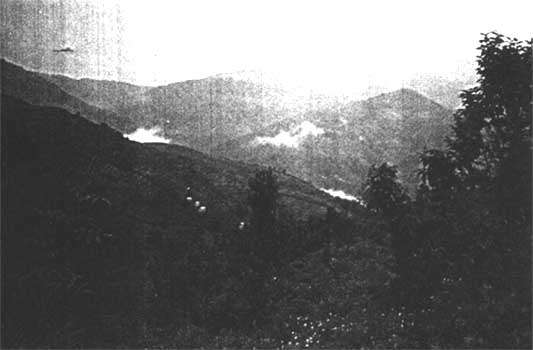
A view of Gupteshwori Village
The two leasehold forestry groups of Gupteshwori Village with the consultant

The poorest of the poor group
Live very close to the lease hold forestry group but very far from the activities!
A landless Danai (Tailor) woman of the project area: “I would have liked to go for leasehold forestry but…!”
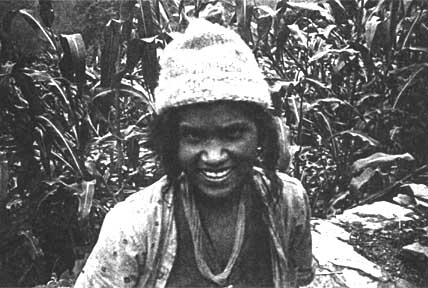
Working for others at dawn for the meals of the day….(Wage earner?)
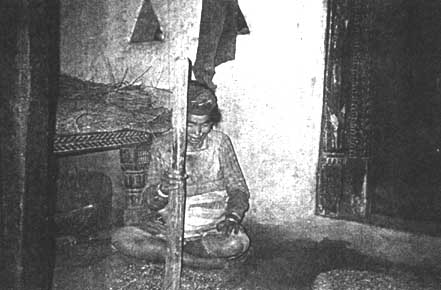
Nursery establishment by leasehold F. GR. (Dhamikhara)
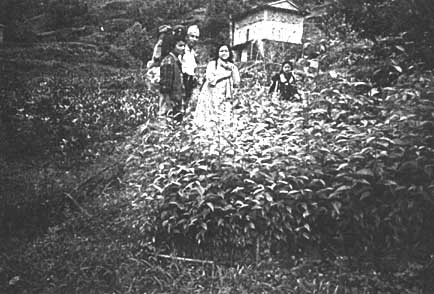
Assessment exercise (PRA): Level of awarness about the types of forest among the members of the target groups.