


The Secretariat staff devoted all their efforts to fulfilling the work plan of the Programme for the year 2005, in collaboration with a number of central partners, local institutions and governments; and of course with the support of our donors. In this section and throughout the report, the reader can identify the different actors that intervened.
The activities undertaken are reflected in these pages, including results and some impacts obtained. The activities are presented in three categories: completed, ongoing and forthcoming. Thus, the reader can have a rapid and clear idea of IPTRID's main efforts. The first category includes those activities that have been fully terminated within the year, many of which represent international or regional events such as workshops or seminars. It should be noted however, that in some cases, publications - including proceedings - related to these events may still be in the pipeline. The second category, or ongoing, represents those activities that spill into the next or coming years. The third and final category, the forthcoming, indicate those activities that are at an advanced stage of initiation and where some preliminary efforts may have taken place but where the main thrust is to take place in the forthcoming year or years.
More in-depth information on the activities to be presented in this section as well as the corresponding publications can be found in the IPTRID main web page http://www.fao. org/iptrid/. The web site also provides information about the IPTRID Secretariat and the now terminating Partnership Programme; it describes the services offered to developing countries and to development institutions and informs about the IPTRID projects worldwide. Furthermore, other IPTRID webpages where more specialized information can be obtained are presented later in the report.
International Forum on Performance Benchmarking in the Irrigation Sector, 19–20 January 2005, Aurungabad, India
This workshop was organized by HR Wallingford as part of final stages of a three-year DFID funded project evaluating the objectives and performance of the irrigation sector benchmarking initiative, led by ICID, IPTRID, IWMI, WB and FAO. The workshop had 53 participants drawn from eight countries. Country summary papers were presented from Malaysia, Sri Lanka, China, Australia and Mexico, with keynote papers on the DFID project objectives (Wallingford); workshop objectives (Wallingford) and Irrigation system classification (IWMI) in the opening technical session. The second technical session was a facilitated discussion to identify key questions to be considered in the working groups on the following day. These discussions identified some 40 plus questions which were synthesized under six main topics related to benchmarking issues: Objectives and scope, Indicator selection, Institutional arrangements, Methods and projects comparisons, Achieving active participation and Adoption and sustainability.
A main conclusion of the event, concerning the Programme, is that there is a strong case for a review of the IPTRID performance indicators, probably leading to the redefinition of some, the exclusion of others and the introduction of new indicators. However, such a review should ensure that the main objective of providing coherent and easily measured and analysed indicators that are focused on performance improvement through comparison with peer organizations must be maintained. The data generated by a well focused benchmarking programme will contribute to the provision of sound data for the wider demands for performance measurement. However, the Benchmarking programme should not seek to address all requirements of all parties interested in irrigation, drainage and agricultural performance.
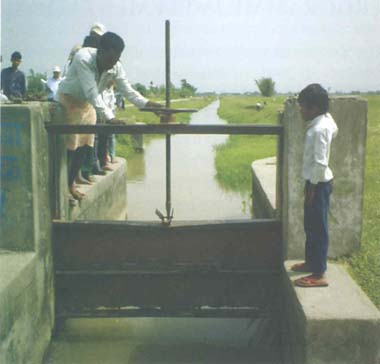
South East Asia Regional Workshop on Management and Prioritization of Research, Malaysia
Continuing the series of workshops organised by IPTRID's partner HR Wallingford, this event was hosted by the Department of Irrigation and Agricultural Drainage (JPS) of the Ministry of Water Resources in Malaysia. Attendees were drawn from nearby countries in the region and were linked by their involvement in IPTRID's ADPHT initiative (Asia Drainage Programme for the Humid Tropics).
The event was hosted in central Kuala Lumpur from 24 to 27 January 2005 and enabled delegates to exchange information on their research projects of mutual interest as well as participating in the training offered on modern management methods for research centres in the irrigation and drainage sector. The workshop identified some key priority issues for research that are of concern throughout the region - these included: assessment of water resource base and better understanding of sustainable utilization; quantification of water use for various demands (benchmarking); and better analysis of climate trends especially with respect to rainfall patterns and climate change. Many more were identified.
Workshop Appropriate Water-Lifting Technologies in West Africa
Three Workshops have been held in Burkina Faso, Mali and Niger in March 2005 to present the outcomes of the project formulation on the “Appropriate Water-lifting Technologies in West Africa” and discuss the issues related to the potential implementation of the project. The project formulation and the workshops have been funded by the International Fund for Agricultural Development (IFAD). The workshops have been organized with the assistance of the National Committees of the International Commission on Irrigation and Drainage (ICID) of the respective countries. In each country between 30 and 40 participant attended the event and suitable comments were collected about the water-lifting technologies classification applicable in West Africa, the criteria for choosing appropriate technologies, the current status of water-lifting technologies (figures, needs and prospective); and the pros and cons related to the implementation of the strategy to promote appropriate water-lifting technologies in West Africa.
IPTRID internal guidelines for defining areas of interventions
The definition of selection criteria for identifying programmes and countries suitable for IPTRID interventions are perceived as one of the targeted outputs of the core activities of the programme. The identification of indicators to help IPTRID in orienting its activities depends first of all on the objectives pursued by the programme, as manifested by its mission. In addition, the selection of the programmes and projects suitable for IPTRID support depends also on three types of criteria: (1) the importance of the need for support, (2) the willingness and interest of the country towards agricultural water management improvement and (3) the consideration of the strategy by the donor involved.
The objective of the present exercise was to identify criteria and related indicators that can guide IPTRID in defining the priority countries for intervention and the type of service that IPTRID might be able to deliver. It also provides a methodology to use these indicators in a flexible way, following demand, thanks to maps and reports or graphic representation.
The graph below shows a basic approach for selection of interventions whereby target countries are identified through an “overlapping” criteria methodology. The area in red is equivalent to countries that would meet criteria A, B and C.
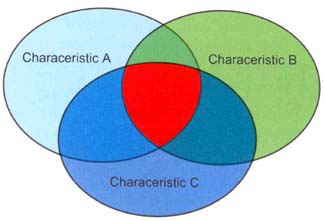
IPTRID is basing the choice of indicators on the work already undertaken particularly by UN agencies(FAO, UNDP, UNESCO, World Bank, etc.)for producing international statistics, relying on long and conscientious processes. Selecting accurate indicators to evaluate criteria requires a regular update of the available data. The data used have to be reliable and comparable.
Workshop on Design and Implementation of Capacity Development Strategies, Beijing
Capacity Development (CD) has been a central interest of IPTRID activities. Two recent events have shaped the Programme's direction on this matter: a workshop held in Montpellier in 2003 by the ICID and FAO on “Capacity-Building in Irrigation, Drainage and Flood Control: Issues, Challenges and the Way Ahead”; and a second IPTRID/ICID workshop held in Moscow in 2004 on “Capacity needs assessment” which brought together many of the important practitioners in the field and established the basic framework and principles. The general consensus of the workshops was that a “lack of capacity is constraining irrigation development in many developing countries and that capacity development rather than infrastructure should be the central focus of future irrigation development strategies”. A five-phase approach for a CD exercise was agreed upon, namely:
The success of the two mentioned events prompted IPTRID-FAO to support a third event on “The Design and Implementation of Capacity-Development Strategies” held in Beijing in September 2005 during the 19th ICID Congress.
The central feature of the workshop was presentations from key institutions at the forefront of capacity development in agricultural water management. Discussions after each presentation enabled the methodology to be taken further. The workshop included one keynote paper, discussing the concepts, the steps involved in the design and implementation of capacity development strategies and some of the difficulties and challenges when passing from theory to practice.
The keynote paper looked at defining a principal approach towards designing and implementing an Integrated Capacity Development Strategy in developing countries. The challenge was to propose a “how to” methodology; difficulties and challenges were also discussed when passing from theory to practice. It is eventually expected that the paper will contribute to the creation of an innovative draft of guidelines that will serve as an IPTRID methodology for successive engagements in Capacity Development (CD) in developing countries.
A general review of capacity development for agricultural water management in China was presented. The average water use efficiency (WUE) in China is about 45 percent which results as a consequence of the gap in their capacity which is partly due to the ongoing institutional transition in China, market rules are replacing administrative rules while seeable and non-seeable hands are out of work simultaneously. In order to ensure food security, reduce poverty and improve farm livelihoods, the Government of China is reforming its management policy on agricultural and water resources. Some measures for this purpose were presented.
The Katepurna project is a major irrigation project in India which was completed in 1975 having irrigation potential of 8 325 hectares and which could only provide irrigation hardly to 2 027 hectares (average) in the last 25 years. Under utilization of water for irrigation prompted the Government to allocate water for non-irrigation purposes. Among many odd reasons, non-participation of farmers in irrigation management was major a one. A critical analysis of the problem was made and a strategy for improvement was formulated.
Since 1999, the major responsibilities to provide public services by the Government of Indonesia have been devolved to regional governments which imply moving the delegation of authority and responsibilities from central to regional governments. Yet, it seems that the regional capacity to perform in this new role is insufficient at the regional level for all sectors including the water resources and irrigation ones. A network development strategy has been developed in order to provide sustained capacity development services to the water resources and irrigation sector.
Promoting Farmer Innovation (PFI) was a project implemented in Kenya, Uganda and Tanzania with the basic objective of improving rural livelihoods and ecosystem dynamics through the identification, verification and diffusion of local innovations related to soil and water conservation, water harvesting and natural resource management. PFI embarked on a programme to: (i) promote farmer to farmer exchange visits; (ii) build the capacity of supporting organizations to experiment and innovate; and (iii) promote a policy at the national level to use innovative farmers in the diffusion process for the rapid adoption of improved resource management techniques.
Since 2002, Action Against Hunger is implementing a project in Madriz, Nicaragua, with the reduction of poverty as the strategy of intervention. The project is based on agricultural diversification and alternative solutions to improve poor farmers' incomes and to reduce food insecurity. Some identified needs were training in irrigation systems and in market gardening, however, as regards capacity building, the farmers did not see organizational support as a need within their community which was a major problem faced.
The South African National Guidelines on Agricultural Water Use describe government policy to transfer the management of smallholder irrigation schemes to farmers and to broaden opportunities for multiple agricultural water uses to rural communities. The Limpopo Department of Agriculture has taken the lead in implementation of this policy by launching a major programme for the Revitalization of Smallholder Irrigation Schemes (RESIS). The Water Research Commission Guidelines “Developing Sustainable Small-Scale Farmer Irrigation in Poor Rural Communities” were expanded and tested as a means to increase the accessibility of meaningful training and capacity building where small-scale irrigation forms part of integrated sustainable rural development initiatives.
The unity of water resources of the Central Asia states - two principal rivers of the Aral Sea basin - requested by five States of the former Soviet Union (Kazakhstan, Kyrgyzstan, Tajikistan, Turkmenistan and Uzbekistan). They organized a strong partnership for mutual management and development of transboundary water resources immediately after independence (September 1991). The creation of the Interstate Coordination Water Commission was the first step in the formation of such a capacity. Capacity building (CB) in ICWC was developed in different directions: CB of cooperation; CB of regional organizations and CB of national organizations.
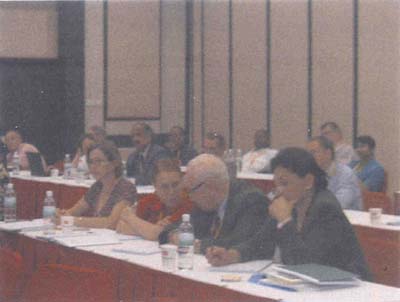
The workshop concluded with associated plenary discussions which are meant to support the process of establishing guiding principles for capacity development planning. A wide range of points were made during the general discussions. The key issues, which were brought up by several participants at different times, focused on:
Workshop on benchmarking In Irrigation and Drainage, Beijing
IPTRID, FAO, ICID and IWMI have collaborated since 1999 to develop and implement guidelines for benchmarking in the irrigation and drainage (I&D) sector. The ICID Task Force 4 (TF 4) has organized workshops at the annual ICID international meetings to promote discussion of benchmarking amongst I&D professionals. In Moscow 2004, the members of TF 4 agreed to close the task force and transfer responsibility for the continued promotion of benchmarking to the ICID Working Group on Design and Management of irrigation Systems (WG-DMIS).
The issue of the Beijing Workshop was defined as “Diversity of the perception of performance management: heterogeneity of the objectives, variety of the indicators”.
The eight presentations delivered and the discussions that took place during the workshop showed a continued commitment in many countries to the benchmarking initiative, with various levels of achievement. The main lessons learnt are the following:
At this meeting it was agreed that there is now sufficient experience to take stock of the present state of the programmeand review the role played by the various partners to be later followed by a more detailed review of the direction of the programme. There is also a need to design a programme with some activities, outputs and time frame, which may be used to seek some funding for benchmarking efforts.
Workshop: Financing Water for Agriculture
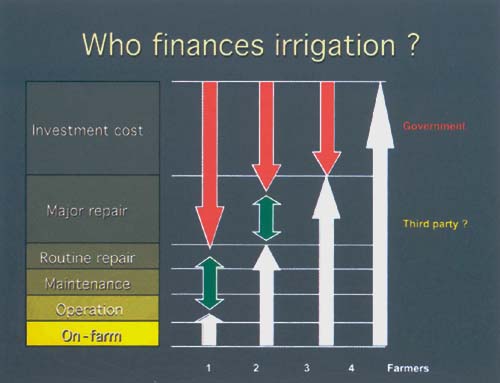
The World Panel on Financing Water Infrastructure considered the need to double annual investment to ensure global water security by 2025. This included all the major water-using sectors, such as households and municipalities, agriculture, industry and commerce, wastewater treatment, environmental uses, flood control and various other functions of water management. In line with the Panel's proposed activities, the 1st Consultation on Financing Water for Agriculture was held in Hyderabad, India from 3 to 5 October 2005. IPTRID funded twenty-five regional participants representing 10 countries (India, Pakistan, Nepal, Sri Lanka, China, Vietnam, Thailand, Malaysia, Laos and Indonesia). Seven participants representing international organizations brought the total attendance to 32 persons. The workshop's presentations were divided into three main categories to reflect the financing needs perspectives of: a) farmers, b) financial institutions, and c) governments.
The Working Group on Financing Water for Agriculture is being supported by a large number of international organizations, mainly WWC, GWP, World Bank, IFAD, IWMI and FAO
– via both AGLW and IPTRID. The Group has agreed to hold three consultations on this issue: (i) Hyderabad, India as herein reported; (ii) Alexandria (Egypt); and (iii)Pretoria (South Africa) leading to a fourth “integrating” meeting to be held in Mexico, within the context of the World Water Forum # 4, in March 2006.
Source: Jean-Marc Faures (FAO)
Virtual Centre for Water in Agriculture
The first year of the CISEAU was dedicated to analysis of the requirements, the functional design of the prototype, identification of the focal point in the pilot partner countries, identification of the pilot themes, the data modelling, and development of the Internet prototype.
The major 2005 achievements were the set up of the CISEAU platform (http://www.ciseau. org) and the formalization of official relationships with focal points in North Africa and West Africa; the ‘Association Nationale pour les Améliorations Foncières de l'Irrigation et du Drainage’ (ANAFID) in Morocco; and the ‘Association Nigérienne pour l'Irrigation et le Drainage’ (ANID) in Niger. Both organizations are national committees of the ICID.
The first theme dealt with by the project and implemented in the CISEAU platform was soil salinity issues in irrigated agriculture. This theme has been developed in close collaboration with the Land and Plant Nutrition Management Service of FAO (AGLL). A set of around 30 web pages presents an overview of salinization issues in irrigated areas, the origins of salinity, and the potential preventive and curative solutions to reclaim affected land. A specific focus on the West Africa and North Africa experiences in the implementation of preventive and curative solutions will be provided through the project's focal points.
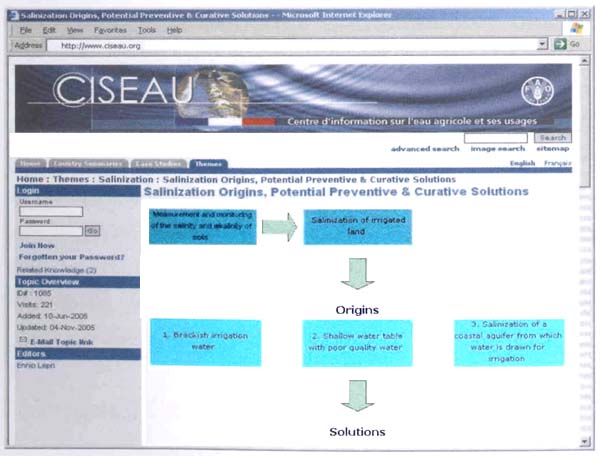
A brochure has also been published and an electronic conference will be held in January/ February 2006 for feedback about the suitability of the information for Southern countries and to promote knowledge sharing.
East Africa Regional Workshop on Management and Prioritization of Research, Tanzania
The most recent Research Management Workshop was carried out at the Morogoro Sokoine Agricultural University, near Dar-es-Salaam. Again organised by IPTRID Partner HR Wallingford, the event brought together nearly 30 senior professionals from 8 East African countries to a three-day meeting (6–8 December 2005) that combined exchange of experience on national projects with updates on project management techniques.
The workshop focused on a range of subjects varying from the IWRM issues that concern Tanzania (through for instance demonstration of the “River Basin Game”) to a frank discussion on the priority issues that should be implemented from the Commission for Africa Report on evolving a development strategy for the whole continent. The main focus of prioritizing and coordinating research was the focus of a continuing series of work sessions.
Training workshop for the NWRC in Egypt on Project preparation and proposal writing
IPTRID's activities in Egypt have been enhanced thanks to the close association with the country's National Water Research Center (NWRC), a unique organization developed in Egypt to operate as a central water-related research body for studying, analysing and solving problems. The NWRC has become a model not only for Egypt but also for the region.
Upon a request from the NWRC, IPTRID facilitated a three-day face-to-face training workshop for a selected number of middle-to-high-level water professionals on project preparation and proposal writing.The training workshop aimed at increasing the knowledge and skills of the professionals on the development of effective proposals in the area of water resources management. The training module was guided by real case studies and covered the development and refinement of a project concept, identification of key project actors, identification and approaching potential funders, and preparing a draft proposal (project management, methodology, monitoring and budgeting). The workshop was held at the premises of the NWRC during the period from 5 to 7 December 2005. The training was provided by the Leadership for Environment and Development (LEAD), a global capacity development network that promotes and contributes to changes towards sustainable development based in the United Kingdom.

Virtual Centre for Water in Agriculture
Funded by the French Ministry of Foreign Affairs (MAE), the two-year feasibility study of the Virtual Centre for Water in Agriculture project is one of the components of the “enforcement of food security in developing countries” of the French strategy. The feasibility of the project has been delegated to the IPTRID Secretariat and officially started in October 2004.
The project emphasizes the use of Internet technology to promote activities focusing on experience sharing and knowledge networking for a sustainable development of irrigation in developing countries. The feasibility of the project analyzed three main components: (1) the setting up of a global internet-based information system; (2) the creation of thematic information giving an expertise of the impact of the irrigation projects on the environment in order to mitigate the negative externalities; and (3) the networking of farmers, extension agents and researchers. The expected results of the two-year period match respectively the three above components; a web site prototype, the modelling of pilot thematic information, and the identification of the focal points in the pilot partner countries.
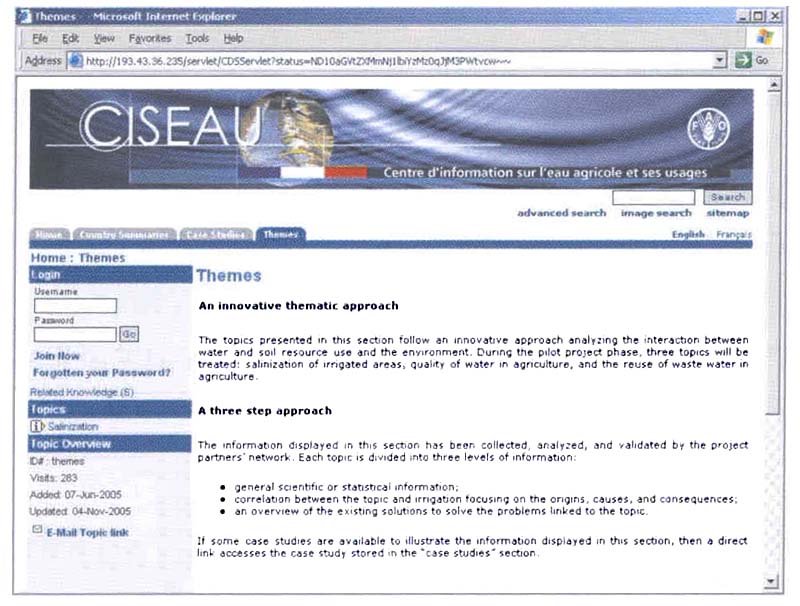
According to the schedule, the analysis of the requirements, the functional design of the prototype, identification of the focal point in the pilot partner countries, the pilot themes, the data modelling, and the development of the Internet prototype were completed during the first year.
The project started its second and final year in September 2005, which will focus on the promotion of the information system and the cost-management analysis of the operation of the information system and the networking activities. The major expected outputs of the project are:
The following activities are being organized for 2006:
Evaluation Study of Paddy Irrigation under Monsoon Regime (ESPIM)
The Water Resources, Development and Management Service of FAO (AGLW) is currently implementing the Japanese-funded project, ESPIM, which promotes an integrated water resources management approach with special emphasis on paddy rice production. The long-term objective of the project is to contribute to enhance world food security and socioeconomic development, to reduce poverty and to seek sustainable agricultural systems through the integrated and equitable management of water resources.
In this context, AGLW, as one of the main partners of IPTRID, requested the Programme to collaborate in the implementation of the ESPIM project, specifically to reinforce the activities which are under the immediate Objective Two, namely, “To promote and develop improved national monitoring capacities regarding irrigation and drainage”.
Currently, IPTRID is developing capacity development guidelines. As part of that process, the Programme has conducted some specific activities, including two international workshops in Moscow and Beijing in 2004 and 2005 respectively, addressing this particular subject. An important element of the guidelines is to study the capacity needs at the institutional level involved in irrigation and drainage; this will allow identification of both strengths and gaps of the existing capacities at the institutional level and set the stage for a full assessment. Thus, the intervention in the ESPIM project would provide IPTRID with additional opportunities to draw lessons learnt from real case studies and to advance and reinforce the development of the guidelines.
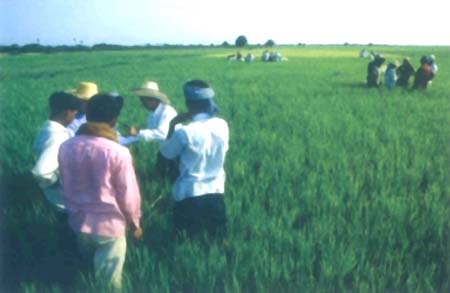
Consequently, under the overall supervision of the ESPIM Project Coordinator, IPTRID has been responsible for undertaking an activity on “Institutional Mapping of Water Management directly related to Paddy Rice Production”. The institutional mapping consists of showing, through a series of charts, graphs, schematic representations, etc. the different existing institutions dealing with paddy production systems and the interactions among them.
In support of this activity, IPTRID engaged two highly qualified national consultants from Cambodia and Viet Nam who produced both reports including an institutional mapping and a first draft of a needs assessment study.
The activity started by conducting a survey on the government institutions, national R&D institutions and universities and two of the most relevant water user associations dealing directly with water management related to paddy rice production in their respective countries. The survey addressed the following issues: i) role of the institution, the functions and responsibilities; ii) organizational structure; iii) financial resources; iv) human resources and level of expertise; v) inter-institutional linkages; and vi) relevance, importance and impact of the institution to the field of paddy rice production.
With the results of the survey the consultants created an institutional mapping consisting of a set of graphics including charts, graphs, diagrams, descriptive tables, etc. showing the information collected from the different institutions and their linkages. A text accompanying the graphics was presented in order to express the things which may not result obvious from the schematic forms.
As a result of the study, a SWOT analysis (Strengths, Weaknesses, Opportunities and Threats) was the next step to initially estimate or perceive the overall institutional country study. This made possible the creation of a first draft, which was indicative in nature, of a capacity needs assessment at national level based on the previous survey, the study and the SWOT analysis.
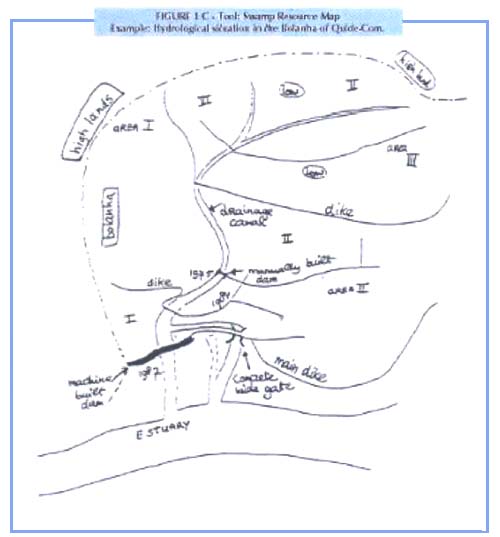
APPIA MANUAL: Participatory Rapid Diagnosis and Action Planning for Irrigated Agricultural Systems (PRDA)
The manual is developed under the “Improving Irrigation Performance in Africa (APPIA)” project, based on the results of the “Identification and Distribution of the good practices in irrigated schemes in West Africa” project initiated by IPTRID. The APPIA project is funded by the French Government, and aims to constitute irrigation professional networks that share information to improve irrigation performance. The project consists two activities:
The analysis and the comparison of performances obtained on African irrigated schemes (benchmarking).
The support to new forms of advice for water users required by the economy liberalization.
The project effectively started in April 2003 and will last four years. It covers five countries in West Africa: Burkina Faso, Mali, Mauritania, Niger and Senegal, and two in East Africa: Ethiopia and Kenya. In West Africa the coordinating organization is ARID of which the headquarter is hosted by the EIER-ETSHER group in Ouagadougou, and in East Africa the IWMI Sub-regional Office in Addis-Ababa coordinates the project.
This manual has been used, within the project, as a guidebook for an on-the-job training course to do a rapid diagnosis and action planning for irrigated agricultural systems using participatory methods and tools. IPTRID joined IWMI in the publication of this Manual and will offer its network contacts for a wide distribution of the document.
IPTRID-IWMI Collaborative Research and Knowledge Networking
In 2000, IPTRID and IWMI signed a Memorandum of Understanding to formalize IWMI's membership as an IPTRID core partner. In 2001, it was agreed that IWMI would provide support to the IPTRID Programme. This agreement was implemented under a Letter of Agreement (LOA) between IPTRID/FAO and IWMI, funded under an agreement between the Netherlands Governement and IPTRID/FAO. This IPTRID-IWMI collaboration has the following objectives:
The following four major activities of the LOA continued as foreseen.
Programme Development: two main issues have progressed during the year to provide strategic research input to national programmes on investment, performance evaluation and capacity and institution building in the area of smallholder water management:
Support to Programme: three main activities were carried out as follows:
Research and Analytical Tools: The first half of 2005 saw the consolidation of the PODIUM activities in China and India and the expansion of activities in other countries. The first version of PODIUMSIM for Pakistan is now available; however more calibration is required before the model can be used to generate future water supply and demand scenarios. Adaptation of the model for three African countries (South Africa, Tanzania and Ethiopia) is continuing. PODIUMSIM Tanzania has been completed.
Networking: IWMI facilitated and participated in an IPTRID mission to Ethiopia in June 2005 with the purpose of identifying potential areas of collaboration with Ethiopian institutions and preparing a proposal.
IWMI nominated and funded through the LOA the attendance of two African professionals at the Workshop on “Design and Implementation of Capacity Development Strategies” held during the ICID Congress in Beijing in September 2005. They presented papers on: “Capacity Development Strategies: Lessons from Promoting Farmer Innovation (PFI) Project in East Africa” and “Revitalization of Smallholder Agriculture: A Guide for Farmer Trainers and Facilitators”.
Finally, under the LOA, a number of publications dealing with water management in Africa were completed during this reporting period. More information on this can be obtained through IWMI or the IPTRID Secretariat.
Formulation of the Pro-AGIRE research uptake and capacity development programme for West Africa
The purpose is to formulate the first phase of a Programme to be known as Pro-AGIRE for a total amount of €120 000 in West Africa. Pro-AGIRE is in line with the AGRIMA Programme. As the latter one, its overall objective is to improve the sustainability and the economic viability of integrated water resources management in countries where water demand exceeds supply. Through indicators and tools to be locally defined the programme aims to rationalize the decisions concerning water resources management, especially when there are conflicts among different uses.
The exploratory phase through field visits, local and regional workshopsandregularexchanges, will permit identification of the different stakeholders involved in the Programme. The results expected are reports at country and basin level on shared water resources strategies.
Fourth World Water Forum, Mexico
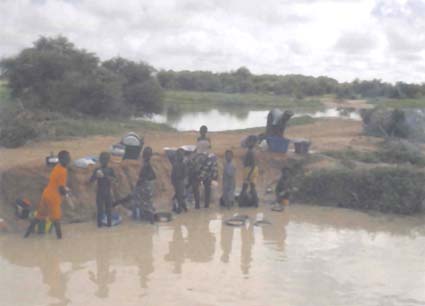
The World Water Forum (WWF) is an initiative of the World Water Council that has the aim of raising the awareness on water issues all over the world. As the main international event on water, it seeks to enable multi-stakeholder participation and dialogue to influence water policy making at a global level, thus assuring better living standards for people all over the world and a more responsible social behaviour towards water issues in line with the pursuit of sustainable development. The main theme of the Fourth World Water Forum which will be held in Mexico in March 2006 is “Local Actions for a Global Challenge”. In this context, IPTRID was invited during the Beijing ICID Congress to participate in this event by jointly collaborating with UNESCO-IHE (Institute for Water Education) in the crosscutting perspective on “Capacity Building and Social Learning”. This two-hour conference will present from three to four local action cases on Capacity Building which will end with an open plenary discussion. IPTRID's contribution to the event will be a presentation of a local action project implemented by Action Against Hunger titled “Capacity development for food security in Nicaragua”. The project is based on agricultural diversification and alternative solutions to improve poor farmers' incomes and to reduce food insecurity. Insufficient National capacities to ensure an adequate support, sustainability and farmers' organizational capacities were the challenge of the project. In order to improve this some measures such as strengthening the organization of the farmer groups and the management of the irrigation systems were proposed.
Workshop on Monitoring and evaluation of capacity development programmes, Malaysia, September 2006.
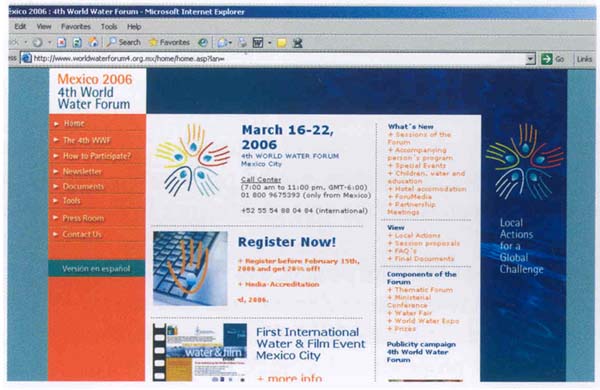
As a follow-up of the workshops held in Moscow in 2004 and Beijing in 2005 on the different stages of the Capacity Development cycle, it is expected that IPTRID will support a third Workshop on “Monitoring and evaluation of Capacity Development Programmes”. The event will be held in Kuala Lumpur, Malaysia, in September 2006 within the framework of the 57thInternational Executive Council meeting (IEC) of the International Commission on Irrigation and Drainage (ICID). The workshop will be organized jointly with the ICID Working Group on Capacity Building, Training and Education (WG–CBTE). This will complete the sequence of steps needed in the capacity development methodology. The proceedings will be published in due course as it has been done for the previous events.
Pilot project to revamp smallholder irrigation schemes in the Chipapa and Katuba dams in Zambia
There exists substantial opportunity to increase small-scale irrigated agriculture production in Zambia. However, the effective exploitation of irrigation resources and realization of the potential depends on a number of issues, such as: improving the performance of these irrigation schemes and projects; reducing the high investment cost of irrigation development per unit area; increasing capital investment in irrigation; managing the the competition for scarce water resources between agriculture and other sectors; improving poor management capacity among farmers and extension staff; improve the poor linkages to inputs and output markets; and seeking better integration of irrigated farming with other enterprises.
The Zambian Ministry of Agriculture and Co-operatives (MACO) has realized the importance of building the small farmer self-help capacity and enterprise development related to irrigated farming as one of the ways out of vulnerability to poor and unpredictable weather conditions. Accordingly, it has requested IPTRID to support a pilot project to improve current management of irrigation around two existing small-scale dams. The study will determine what the farmers in “the area of influence of the dams” are doing and how.
The output of the pilot project will be the identification of problems and needs of traditional irrigators in two areas in Zambia, and how to solve them based on an in-depth description of the situation. As a second step (both objective and output), the study will allow the preparation of a project proposal and to seek funding to carry out a real intervention with this type of farmer in different areas in the country.
Support for Ethiopia on research and development strategy
IPTRID has in the past targeted Ethiopia for possible collaboration given its condition of being one of the least developed countries and its manifold problems associated with the management of its water resources. Currently, a number of water-related organizations in the country led by the government have established a Working Group to produce a strategy for Research and Development (R&D) which includes elements of capacity development needs and the corresponding financial requirements. The Programme is now committed to seek partnerships with other R&D oriented organizations and institutions and offer support to the Government.
IPTRID has agreed to provide some expertise to produce a strategic document on the identification of R&D priorities in the water sector. The study will provide assessment of the existing R&D activities and institutional capacities as well as the identification of the best means to assure the uptake of research and its dissemination. This will cover a synthesis of organizational, infrastructure, and human resources requirements and the means for providing them. This activity will be carried out in collaboration with IWMI and the Working Group already established for this purpose.
In this context, a national workshop will be organized in order to identify relevant R&D issues in the country. The results of this event will constitute the basis for the Strategy document.
Research uptake in Senegal
In close collaboration with the Senegalese ICID national committee, namely the “Association Sénégalaise pour la Promotion des Irrigations et du Drainage” (ASPID), the IPTRID Secretariat will conduct a study documenting the Senegalese experience in terms of research uptake, institutional roles and project support and appraisals.
Technology transfer and innovation management for small-scale irrigation in West Africa - Regional Workshop
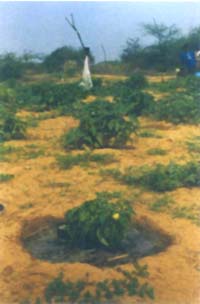
In close collaboration with the ICID national committee of Mali, namely, the “Association Malienne pour les Irrigations et le Drainage (AMID)”, the IPTRID Secretariat will support the organization of a regional workshop promoting experience sharing in technology transfer between West African countries.
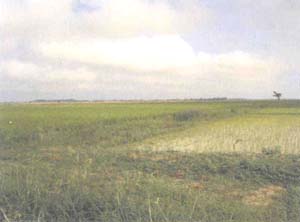
Support to the irrigation modernization process in Syria
In 2001 the Government of Syria through the Ministry of Irrigation and the Ministry of Agriculture started in 2001 an ambitious plan investing about 32 billion Syrian Pounds (US$600 million) for the following four years in the rehabilitation and modernization of old irrigation projects. It also adopted the modernization policy at field level and encouraged farmers to change to modern irrigation techniques. The progress made with this plan is still low not exceeding 20 percent of the country's total irrigated area most of which is on groundwater. The delay in the implementation of its plan has urged the Syrian Government to revise, identify constraints to the process of modernization and thus propose a second plan for a mega modernization project of 1.2 million hectares with an estimated investment of more than US$ one billion.

IPTRID has been, for some time, exploring possible collaboration with national and international partners for activities in Syria. The following key areas have been proposed for priority actions to support the modernization process in the country:
Organizing a national symposium on the constraints and solutions of irrigation modernization; a forum that will bring expertise into the country and allow exchange of knowledge with the local professionals in the field of irrigation modernization. The Symposium is planned for the end of March 2006 and will be held in Damascus. The event will be financed by IPTRID/FAO, ICARDA, ACSAD, UNEP, Damascus University and the Supreme Council of Science. It will be organized by NOSSTIA (IPTRID local counterpart) under the honorary chair of the Minister of Irrigation.
Organizing the Rapid Appraisal Process exercise jointly with staff from the Ministry of Irrigation and the Ministry of Agriculture. The exercise is a two-week mission of a joint international and national team working together on 2–3 basins in the country. Enhancing the capacity of the local staff would be a major output of the exercise which will be jointly done by IPTRID and AGLW with the involvement of international experts known in this field.
Developing a groundwater irrigation management project (pilot project) on the basis of group operation of well fields within a basin suffering from overdraft. To face the threatening groundwater overexploitation in the Al-Jazeera region, in particular in Ras El-Ain, it is proposed to support the technicality of well consolidation (collective well management) linked to modernized on farm irrigation system, and the institutional and social arrangement for the new setting, i.e. the establishment of a Water User Association. IPTRID together with the GEF-SGP/UDND would implement consolidation in conjunction with a modernized distribution and on-farm irrigation system, coinciding with the social dimension by establishing a Water User Association on the specific scheme of consolidation.
| Date | Country | Staff | Purpose |
| January | India | Carlos Garces | Review the DFID benchmarking activities |
| January | Malaysia | Jean Verdier | Monitor IPTRID Research Managers workshop and appraisal of ADPHT Network |
| January | Cuba | Sonia Tato | Evaluation mission of SPFS project in Cuba |
| February | Tunis/Morocco | Franck Besseat | Requirement Analysis & data collection of the Virtual Centre for Water in Agriculture project |
| March | West Africa | Franck Besseat | Promote/dissemination of WLT through workshops in Mali, Niger & Burkina Faso |
| May | Ethiopia/Zambia | Carlos Garces | Visit partners and potential partners, governments, especially the Ministry of Water Resources and Ministry of Agriculture. |
| June | United Kingdom | Carlos Garces | Visit DFID and high level government officials concerning ongoing and future support to IPTRID. |
| June | France | Carlos Garces | Meet donors in the MAFA in Paris and partners and institutions AFEID, Cemagref, AFD to discuss ongoing and future collaboration |
| June | France | Jean Verdier | Meet with AFEID, Cemagref etc to introduce new IPTRID Programme Manager |
| June | Cuba | Sonia Tato | Identification mission for the expansion phase of the SPFS in the country |
| July | Syria/Egypt | Carlos Garces | Hold consultations with partners and local institutions and follow-up with government officials on Syrian proposals and contacts with local institutions |
| July | Senegal Mali Niger | Franck Besseat | Follow-up of the VC activities in West Africa; identification of new opportunities for the initialization of IPTRID activities in West Africa |
| August | USA/Costa Rica/ Brasil/ Colombia | Carlos Garces | Visit partners and donor agencies for future collaboration |
| September | China | Carlos Garces | IPTRID CG, MC and ICID AC meetings |
| September | China | Pasquale Steduto | MC Meeting |
| September | China | Sonia Tato | Workshop on Design and implementation of Capacity Development strategies |
| September | China | Sara Fernandez | Workshop on Benchmarking |
| September | Syria | Maher Salman | Symposium on support for irrigation modernization |
| October | India | Carlos Garces | Joint GWP/WWC/IPTRID workshop on Financing Water for Irrigation in Hyderabad; hold discussions with IPTRID-CG chair on the results of the 3 IPTRID meetings in Beijing |
| October | The Netherlands | Sonia Tato | External training on Household food security from a sustainable livelihood perspective |
| November | Tunisia | Franck Besseat | Support for the definition of the strategy on research in water in Tunisia and review of the activities of the Virtual Center (VC) project. |
| December | France | Franck Besseat | Mid-project discussions with the French Ministry of Foreign Affairs on the VC project |
| December | Burkina Faso | Franck Besseat | Attend the First African Show on Irrigation and Drainage (SAFID) |
| December | Tanzania | Carlos Garces | Attend the joint IPTRID/HR Wallingford sponsored R&D workshop |
| December | South Africa | Carlos Garces | Hold consultations with partners and local institutions and follow-up with government officials on South African proposals and contacts with local institutions |
| December | Egypt | Maher Salman | Supervise the training workshop for NWRC; follow-up NWRC further collaboration. Follow-up with MWRI and WB officials proposal for evaluation of IIMP |
| Title | Date | Venue | Attendees | Collaborators | IPTRID contact |
| International Forum on Performance Benchmarking in the Irrigation Sector | 19–20 January | Aurungabad, India | 53 | HR Wallingford; IWMI; ICID; WALMI-India | Carlos Garces |
| Regional event on Management and Prioritisation of Research | 24–27 January | Kuala Lumpur, Malaysia | 28 | HR Wallingford; MANCID | Jean Verdier |
| Water Lifting Technologies | 9 March | Niamey, Niger | 30 | Association Nigérienne pour l'Irrigation et le Drainage (ANID) | Franck Besseat |
| 11 March | Ouagadougou, Burkina Faso | 20 | Association Régionale pour l'Irrigation et le Drainage (ARID) | ||
| 16 March | Bamako, Mali | 35 | Association Malienne pour l'irrigation et le drainage (AMID) | ||
| "Benchmarking in Irrigation and Drainage" | 13 September | Beijing, China | 45 | ICID Working Group on Design and Management of Irrigation Systems | Sara Fernandez |
| "Design and Implementation of Capacity Development strategies" | 14 September | Beijing, China | 35 | ICID: Working Group in Capacity Building, Training and Education IWMI | Sonia Tato |
| Training event on Project preparation and proposal writing | 5–7 December | Egypt | 20 | National Water Research Center (NWRC) | Maher Salman |
| Regional event on Management and prioritization of research | 5–8 December | Morogoro, Tanzania | 30 | HR Wallingford; Sokoine University | Carlos Garces |
