


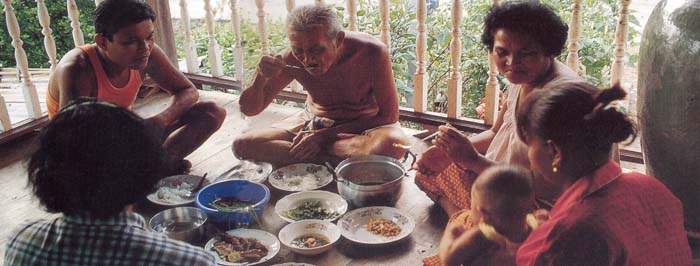
At Bunyong Sirisalung's house, family, friends and neighbours gather to celebrate her wedding. Thai folk dance music “Sao Ram Wong” competes with the murmur of many voices, wishing the bride and groom a happy marriage. In a dance area decorated with flags and multicoloured lights, young children, teenagers and elders alike, dance, share moments of joy. Love and intimacy fill the air.
This is Ban Khok Salung, a village on the reservoir rim. The reservoir threatened to inundate it - and its way of life. Ban Khok Salung is a large, liveable community with well-planned infrastructure. Its people have access to standard education, stable work and enjoy a rich social life.
Most residents of Ban Khok Salung are descended from the Thai-Beung, an ethnic group which emigrated from Vientiane, Laos, during the reign of King Mongkut (1851–1868). They are a close-knit community with distinctive traditions, a unique architecture and handicraft items; their temples - Wat Khok Sam Ran, Wat Khok Rakang and Ban Khok Ban - have become major tourist attractions.
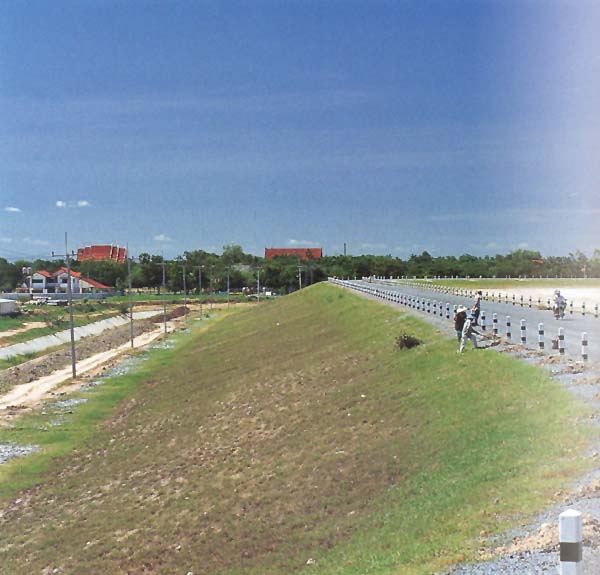
The reservoir was not meant to submerge the history, archaeology or traditions of these long-established communities. Royal Irrigation Department civil engineer Nit Nuchanart sympathized with the affected families. “It's tough to be relocated,” he said, “especially when families are so closely-knit and neighbours have lived together for so long.”
The Royal Irrigation Department decided to protect and preserve this community and its culture by building a dike. Traditions, families and friendships of 167 families in Tha Luang and Nern Tha Luang sub-districts are now physically protected by a dike nearly two kilometres long (1716 m). “The dikes will help these families retain their traditional culture, their families and their friendships,” the RID engineer said.
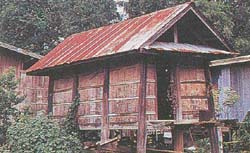 | Houses and rice silos built of woven bamboo are typical Ban Khok Salung buildings. The Thai-Bueng have a traditional lifestyle: rice and lan forming hand looming, mats and wickerwork. In the Pa Sak River Basin their communites are found along the river from Wang Muang in Saraburi to Sra Bot, Khok Charoen Chaibadarn and Pottna Nikhom districts of Lop Buri. |
 | In daily life many Thai-Beung men still wear tradition sarongs, while women use the Chongkraben, both typical traditional Thai-Bueng dress. |



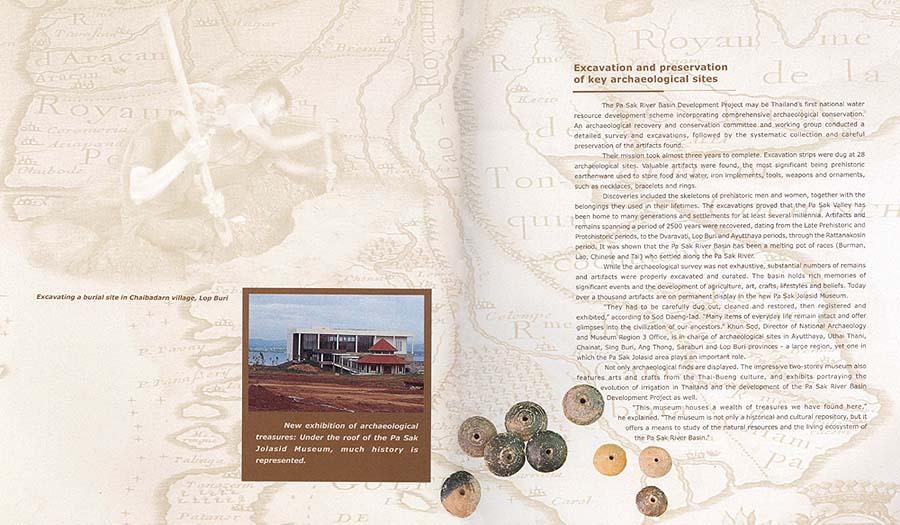
The Pa Sak River Basin Development Project may be Thailand's first national water resource development scheme incorporating comprehensive archaeological conservation. An archaeological recovery and conservation committee and working group conducted a detailed survey and excavations, followed by the systematic collection and careful preservation of the artifacts found.
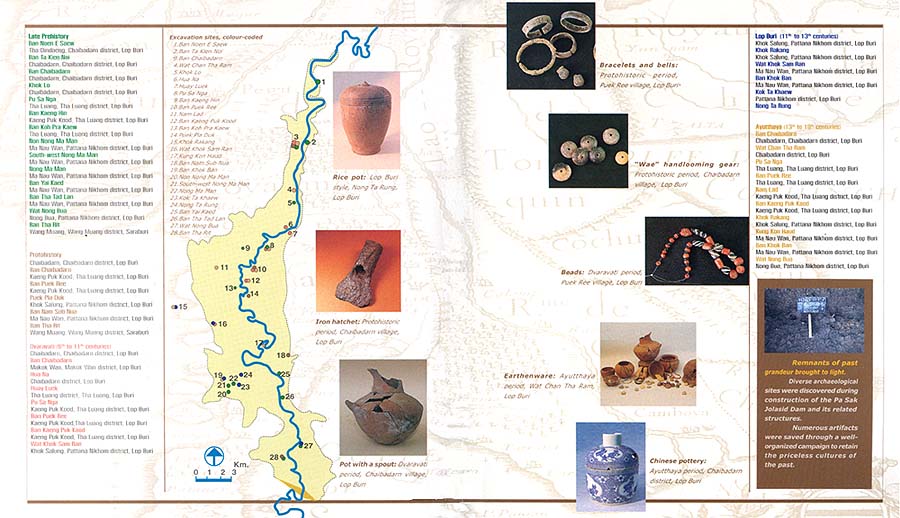
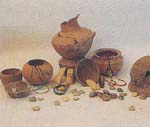
Their mission took almost three years to complete. Excavation strips were dug at 28 archaeological sites. Valuable artifacts were found, the most significant being prehistoric earthenware used to store food and water, iron implements, tools, weapons and ornaments, such as necklaces, bracelets and rings.
Discoveries included the skeletons of prehistoric men and women, together with the belongings they used in their lifetimes. The excavations proved that the Pa Sak Valley has been home to many generations and settlements for at least several millennia. Artifacts and remains spanning a period of 2500 years were recovered, dating from the Late Prehistoric and Protohistoric periods, to the Dvaravati, Lop Buri and Ayutthaya periods, through the Rattanakosin period. It was shown that the Pa Sak River Basin has been a melting pot of races (Burman, Lao, Chinese and Tai) who settled along the Pa Sak River.
While the archaeological survey was not exhaustive, substantial numbers of remains and artifacts were properly excavated and curated. The basin holds rich memories of significant events and the development of agriculture, art, crafts, lifestyles and beliefs. Today over a thousand artifacts are on permanent display in the new Pa Sak Jolasid Museum.
“They had to be carefully dug out, cleaned and restored, then registered and exhibited,” according to Sod Daeng-Iad. “Many items of everyday life remain intact and offer glimpses into the civilization of our ancestors.” Khun Sod, Director of National Archaeology and Museum Region 3 Office, is in charge of archaeological sites in Ayutthaya, Uthai Thani, Chainat, Sing Buri, Ang Thong, Saraburi and Lop Buri provinces - a large region, yet one in which the Pa Sak Jolasid area plays an important role.
Not only archaeological finds are displayed. The impressive two-storey museum also features arts and crafts from the Thai-Bueng culture, and exhibits portraying the evolution of irrigation in Thailand and the development of the Pa Sak River Basin Development Project as well.
“This museum houses a wealth of treasures we have found here,” he explained. “The museum is not only a historical and cultural repository, but it offers a means to study of the natural resources and the living ecosystem of the Pa Sak River Basin.”
Late Prehistory
Ban Noen E Saew
Tha Dindaeng. Chaibadarn district, Lop Buri
Ban Ta Kien Noi
Chaibadarn, Chaibadarn district, Lop Buri
Ban Chaibadarn
Chaibadarn, Chaibadarn district, Lop Buri
Khok Lo
Chaibadarn, Chaibadarn district, Lop Buri
Pu Sa Nga
Tha Luang, Tha Luang district, Lop Buri
Ban Kaeng Hin
Kaeng Puk Kood, Tha Luang district, Lop Buri
Ban Koh Pra Kaew
Tha Luang, Tha Luang district, Lop Buri
Non Nong Ma Man
Ma Nau Wan, Pattana Nikhom district, Lop Buri
South-west Nong Ma Man
Ma Nau Wan, Pattana Nikhom district, Lop Buri
Nong Ma Man
Ma Nau Wan, Pattana Nikhom district, Lop Buri
Ban Yai Kaed
Ma Nau Wan, Pattana Nikhom district, Lop Buri
Ban Tha Tad Lan
Ma Nau Wan, Pattana Nikhom district, Lop Buri
Wat Nong Bua
Nong Bua, Pattana Nikhom district, Lop Buri
Ban Tha Rit
0
Wang Muang, Wang Muang district, Saraburi
Protohistory
Chaibadarn, Chaibadarn district, Lop Buri
Ban Chaibadarn
Kaeng Puk Kood, Tha Luang district, Lop Buri
Ban Puek Ree
Kaeng Puk Kood, Tha Luang district, Lop Buri
Puek Pla Duk
Khok Salung, Pattana Nikhom district, Lop Buri
Ban Nam Sub Nua
Ma Nau Wan, Pattana Nikhom district, Lop Buri
Ban Tha Rit
Wang Muang, Wang Muang district, Saraburi
Dvaravati (6th to 11th centuries)
Chaibadarn, Chaibadarn district, Lop Buri
Ban Chaibadarn
Makok Wan, Makok Wan district, Lop Buri
Hua Na
Chaibadarn district, Lop Buri
Huay Luek
Tha Luang district, Tha Luang, Lop Buri
Pu Sa Nga
Kaeng Puk Kood, Tha Luang district, Lop Buri
Ban Puek Ree
Kaeng Puk Kood, Tha Luang district, Lop Buri
Ban Kaeng Puk Kood
Kaeng Puk Kood, Tha Luang district, Lop Buri
Wat Khok Sam Ran
Khok Salung, Pattana Nikhom district, Lop Buri
Excavation sites, colour-coded
1. Ban Noen E Saew
2. Ban Ta Kien Noi
3. Ban Chaibadarn
4. Wat Chan Tha Ram
5. Khok Lo
6. Hua Na
7. Huay Luek
8. Pu Sa Nga
9. Ban Kaeng Hin
10. Ban Puek Ree
11. Nam Lad
12. Ban Kaeng Puk Kood
13. Ban Koh Pra Kaew
14. Puek Pla Duk
15. Khok Rakang
16. Wat Khok Sam Ran
17. Kung Kon Haud
18. Ban Nam Sub Nua
19. Ban Khok Ban
20. Non Nong Ma Man
21. South-west Nong Ma Man
22. Nong Ma Man
23. Kok Ta Khaew
24. Nong Ta Rung
25. Ban Yai Kaed
26. Ban Tha Tad Lan
27. Wat Nong Bua
28. Ban Tha Rit
 Rice pot: Lop Buri style, Nong Ta Rung, Lop Buri |  Bracelets and bells: Protohistoric period, Puek Ree village, Lop Buri |
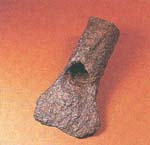 Iron hatchet: Protohistoric period, Chaibadarn village, Lop Buri | 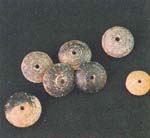 “Wae” handlooming gear: Protohistoric period, Chaibadarn village, Lop Buri |
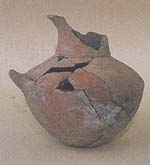 Pot with a spout: Dvaravati period, Chaibadarn village, Lop Buri | 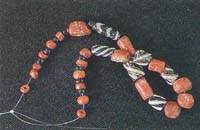 Beads: Dvaravati period, Puek Ree village, Lop Buri |
 Earthenware: Ayutthaya period, Wat Chan Tha Ram, Lop Buri | |
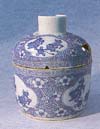 Chinese pottery: Ayutthaya period, Chaibadarn district, Lop Buri | |
Lop Buri (11th to 13th centuries)
Khok Salung, Pattana Nikhom district, Lop Buri
Khok Rakang
Khok Salung, Pattana Nikhom district, Lop Buri
Wat Khok Sam Ran
Ma Nau Wan, Pattana Nikhom district, Lop Buri
Ban Khok Ban
Ma Nau Wan, Pattana Nikhom district, Lop Buri
Kok Ta Khaew
Pattana Nikhom district, Lop Buri
Nong Ta Rung
Ayutthaya (13th to 18th centuries)
Ban Chaibadarn
Chaibadarn, Chaibadarn district, Lop Buri
Wat Chan Tha Ram
Chaibadarn district, Lop Buri
Pu Sa Nga
Tha Luang, Tha Luang district, Lop Buri
Ban Puek Ree
Tha Luang, Tha Luang district, Lop Buri
Nam Lad
Kaeng Puk Kood, Tha Luang district, Lop Buri
Ban Kaeng Puk Kood
Kaeng Puk Kood, Tha Luang district, Lop Buri
Khok Rakang
Khok Salung, Pattana Nikhom district, Lop Buri
Kung Kon Haud
Ma Nau Wan, Pattana Nikhom district, Lop Buri
Ban Khok Ban
Ma Nau Wan, Pattana Nikhom district, Lop Buri
Wat Nong Bua
Nong Bua, Pattana Nikhom district, Lop Buri
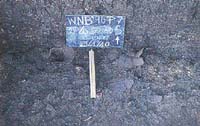 |
| Remnants of past grandeur brought to light. |
| Diverse archaeological sites were discovered during construction of the Pa Sak Jolasid Dam and its related structures. Numerous artifacts were saved through a well-organized campaign to retain the priceless cultures of the past. |
